Watching an infant transition from wordless coos to meaningful conversation remains one of the most rewarding parts of early childhood. Understanding when babies learn to speak often sparks questions for parents hoping to track progress or simply grasp what happens during this rapid period of development. Language milestones help set expectations for the first 24 months, though every child follows a unique path toward their first word. Whether you are navigating a teething phase or planning a festive holiday gathering, recognizing the signs of communication progress helps you support your growing child.
Quick Questions and Answers
Question: When do babies usually say their first word? Answer: Most babies say their first word around 12 months, though some start a little earlier and some later. Several pediatric sources place the common range between 9 and 18 months, which is why a wide spread is considered normal. The important factor is whether the child is also babbling, responding to voice, and using gestures.
Question: How early do babies start babbling? Answer: Babbling often begins around 4 to 6 months, when babies start repeating syllables like ‘ba-ba’ or ‘ma-ma.’ This stage is not the same as true speech, but it is a major language milestone because babies are practicing sound patterns. Reputable pediatric sources describe babbling as a bridge between cooing and first words.
Question: What counts as a baby’s first real word? Answer: A first real word is usually a sound used consistently with meaning, such as ‘mama’ for a parent or ‘up’ to request being picked up. Some babies say these sounds before they fully understand them, so clinicians look for consistent use in context. That is why a child may babble ‘dada’ before it becomes a true word.
Key Takeaways
- First words typically emerge around the first birthday.
- Intentional communication, including gestures like pointing, often precedes spoken vocabulary.
- Receptive language—what a child understands—frequently moves faster than their ability to produce words.
- Consistent, daily interaction supports language health more effectively than rigid academic exercises.
Babies Talking: Understanding Language Milestones and Developmental Timelines
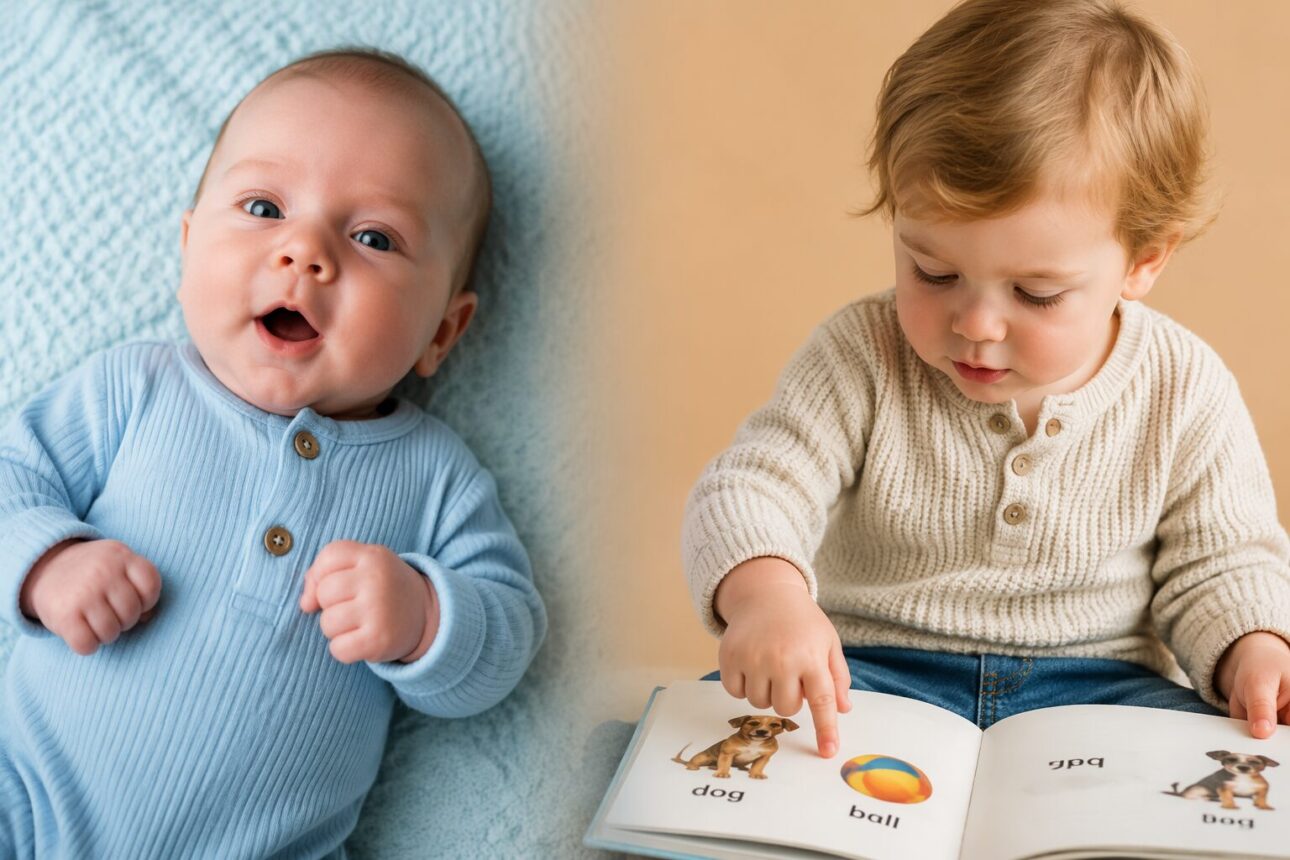
Language growth is not just about the first word. It is a long-term process that starts long before verbal speech arrives. Recognizing these stages helps you identify how your baby builds their communication base, allowing you to provide the right social stimulation.
Regardless of whether you are curious about how technology plays a role in modern communication or simply tracking your child’s biological development, understanding these phases is essential. Most hospitals and clinics view these milestones as tools for screening, not deadlines that dictate every child’s success.
The Spectrum of Early Vocalization: From Birth to 6 Months
Development begins with reflexive vocalizations. Newborns do not speak, but they communicate through crying and physical cues that signal their basic needs to caregivers.
By the time a baby reaches 3 months, they often begin cooing and showing excitement when they hear a familiar voice. Research from the Children’s Hospital of Philadelphia highlights that babies in this early window start to quiet down or turn their heads to locate sound sources. By 4 to 6 months, this behavior shifts into intentional sound play. They begin experimenting with their vocal cords, often repeating syllables like “ba-ba” or “ma-ma.” These babbles are not yet meaningful, but they serve as critical practice for the complex motor movements required for speech.
Intentional Communication: The 7 to 12 Month Transition
Somewhere between 7 and 12 months, communication becomes focused and directed. Babies start to realize that their noises and movements can influence the world around them.
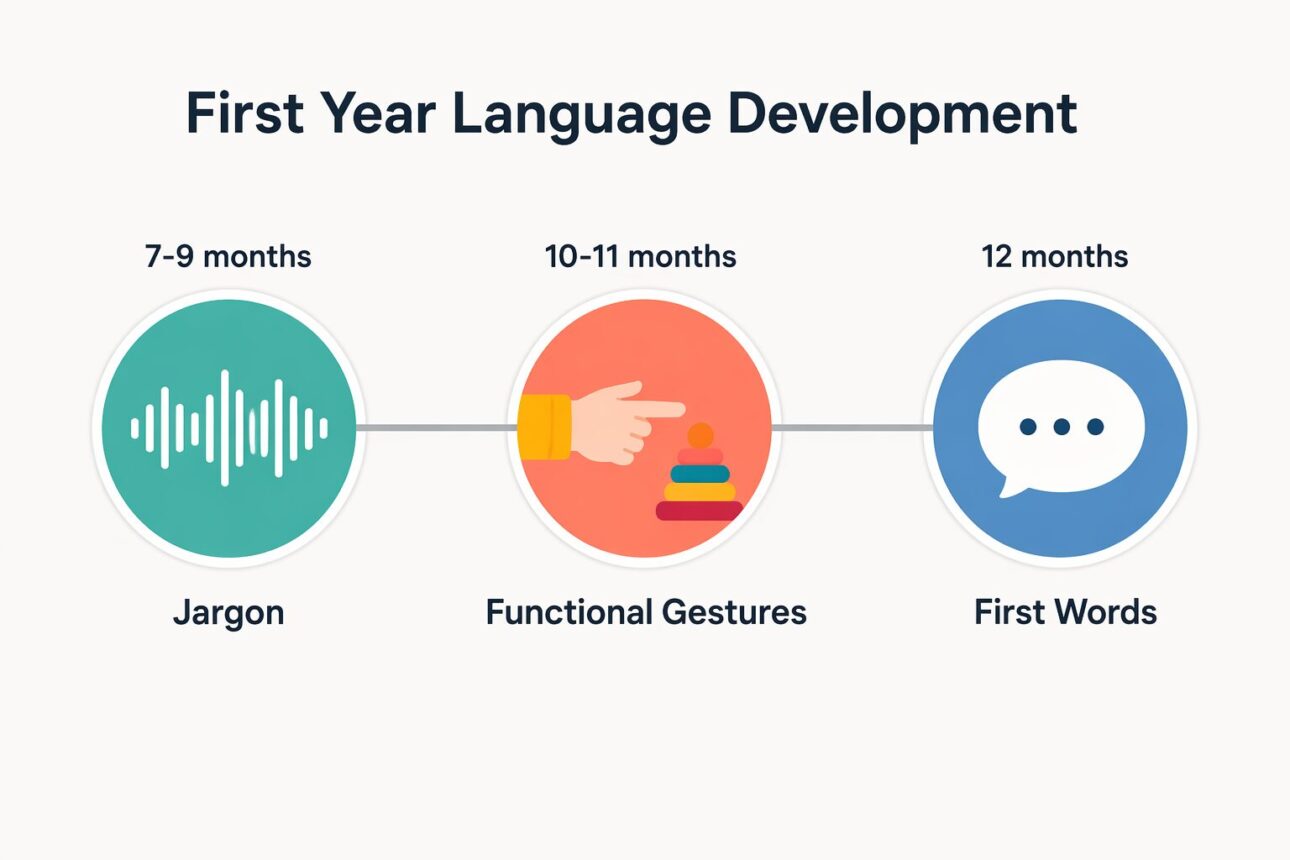
The 7 to 9-month range often brings a stage known as jargon. Your baby may string together various syllables that sound like they are having a conversation, complete with the rhythm and inflection of adult speech. These long, rhythmic vocal strings are a sign of healthy neurological growth. By 10 to 11 months, gestures take center stage. You might notice your baby pointing at a toy to request it, waving hello, or using grunts to refuse a type of food. The National Institute on Deafness and Other Communication Disorders notes that this intentionality is a key precursor to actual word use. By their first birthday, many infants have one or two clear words in their vocabulary.
The First Year and Beyond: Vocabulary Expansion and Meaningful Speech
Entering the second year marks an explosion in language abilities for many children. Once that first word arrives, the pace at which they add new labels for their world often increases exponentially.
Between 12 and 18 months, most toddlers build a steady repertoire of meaningful words. The Mayo Clinic notes that by 12 months, many children say simple terms like “dada,” “mama,” or “uh-oh” with genuine intent. By 18 months, it is common to see a vocabulary of 10 to 15 words. As they hit the 18-to-24-month window, language growth accelerates significantly. Toddlers often reach a milestone of 50 or more words by their second birthday. At this stage, they begin to combine words into simple two-word phrases such as “more juice” or “want up,” signaling the beginning of syntax.
The Gap Between Comprehension and Expression
One fact that surprises many parents is that a child’s understanding of language is vastly ahead of their ability to produce it. This gap is perfectly normal.
A 24-month-old may be able to easily point to their nose or toes when asked, or fetch a specific book from across the room, yet they might only say a few dozen words aloud. As noted by the Children’s Hospital of Richmond, a child this age can often understand 200 to 300 words. Expression, or the ability to articulate those thoughts, requires complex coordination of the tongue, lips, and breath. The Mayo Clinic observes that by age two, a caregiver should be able to understand at least 50% of what a toddler says, even if the pronunciation is still developing.
Distinguishing Normal Variation From Developmental Concerns
Variation is the rule, not the exception, in development. Because children grow at different rates, milestone charts function as general guides.
Identifying potential concerns usually involves looking at the broader picture of development. Healthy language acquisition involves eye contact, responding to one’s name, and imitation. If a child shows little interest in interacting with others, refuses to make eye contact, or does not seem to hear sounds, these are signs that a professional evaluation is appropriate. Pediatricians use these established guidelines to monitor hearing health and language development. Screening is meant to ensure that if a child needs early extra support, they get it as soon as possible. While there is a natural range, consistent progress is the best indicator of overall communication health.
Key Takeaways for Parents and Caregivers
Language starts in the home through everyday routines. You do not need expensive tools; talking to your child during play, mealtime, and diaper changes is highly effective.
| Milestone Stage | Primary Focus | Typical Sound/Behavior |
|---|---|---|
| 0–3 Months | Reflexive Needs | Crying, Cooing |
| 4–6 Months | Exploration | Intentional Babbling |
| 7–11 Months | Intentionality | Jargon, Gestures |
| 12–18 Months | First Words | Meaningful Vocabulary |
| 18–24 Months | Phrase Building | Two-Word Combinations |
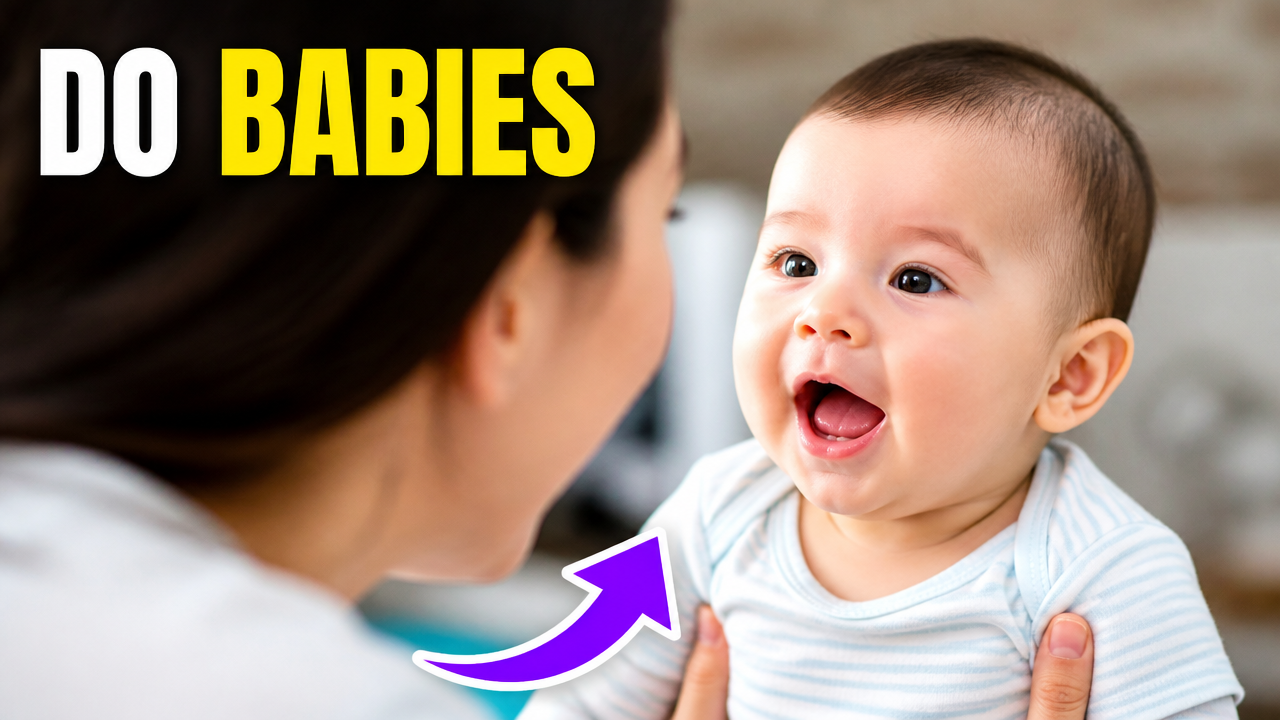
Encourage your child by reading books together and narrating the world around you. Narrating simple daily activities helps reinforce word meaning in context. Responding to your child’s babbles is also important, as this turn-taking interaction teaches them the social nature of conversation. As in matters of improving long-term cognitive health, building a strong foundation during these early stages sets the stage for future milestones. Focus on consistent, face-to-face interaction rather than rushing to reach specific word counts on a calendar.
FAQ
Q: Is it normal if my 12-month-old is not talking yet?
Yes, it can be normal if your child is still babbling, responding to sounds, using gestures, and understanding simple words or commands. Many babies say only a few words by 12 months, while others do not begin until later in the first or second year. Developmental range is broad, but loss of skills or no response to sound is more concerning.
Q: How many words should a 18-month-old say?
Many 18-month-olds say around 10 to 15 words, though some will say more and some fewer. Mayo Clinic notes that by 18 months children may know names of people, objects, and body parts, while other hospital guidance gives roughly 15 meaningful words as a common benchmark. Understanding and gestures matter as much as raw vocabulary.
Q: When do babies start understanding language?
Understanding starts before speaking. By around 7 to 12 months, many babies recognize familiar words like ‘cup’ or ‘shoe,’ respond to their name, and follow simple requests such as ‘come here.’ These comprehension skills often appear before a child can produce the same words aloud.
Q: What is the difference between babbling and talking?
Babbling is repetitive or playful sound-making, usually without clear meaning, such as ‘bababa’ or ‘dadada.’ Talking means using words with intent and consistent meaning, like asking for milk or naming a person. The transition from babbling to talking typically happens during the first year, but timing varies widely.
Q: When do toddlers start combining words?
Simple two-word combinations often begin around 18 to 24 months, such as ‘more milk’ or ‘want juice.’ Many children also reach a vocabulary of about 50 or more words during this period. Once word combinations start, language usually becomes faster and more flexible.
Q: Should I worry if my baby does not respond to sounds?
Yes, lack of response to sound is more concerning than delayed speech alone because hearing is essential for language development. Pediatric milestones expect newborns and young infants to react to loud sounds and later to turn toward voices. If a baby does not seem to hear, a hearing evaluation is typically important.
Q: What can help babies talk sooner?
The sources emphasize talking, reading, singing, and responding to the baby’s sounds and gestures. Babies learn language through repeated social interaction, so back-and-forth conversation, face-to-face attention, and naming everyday objects are all helpful. These activities support both comprehension and speech production.
My Experience With When Do Babies Talk? A Complete Guide to Language Milestones
I remember waiting for that “first word” like it was a major prize in a high-stakes game show. My eldest was a silent observer who seemingly studied every word I said for months before ever letting one out. Then, one Tuesday, out came “dog.” Just like that, the floodgates opened. It is funny how we stress about the exact milestone dates, yet we often miss the tiny, brilliant ways they communicate before the dictionary starts forming.
One expert insight that stuck with me is that comprehension is the real engine of growth. When you tell your child to “bring me the ball,” and they actually do it, they are talking—just not with their mouth. My mistake was assuming silence meant nothing was happening. In reality, their brains are processing enormous amounts of data. I also learned that narrating my day—”I am putting on your socks now”—turned out to be the most effective way to help my kids learn labels naturally. It feels silly to talk to yourself, but it works wonders. Do you have a favorite memory of the first time your child said something clear, or are you still in that exciting waiting phase?
References
- Children’s Hospital of Philadelphia. (n.d.). Age-Appropriate Speech and Language Milestones. https://www.chop.edu/health-resources/age-appropriate-speech-and-language-milestones
- Children’s Health. (2024, January 23). When Do Babies Start Talking?. https://www.childrens.com/health-wellness/when-do-babies-start-talking
- Mayo Clinic. (2024, May 22). Language development: Speech milestones for babies. https://www.mayoclinic.org/healthy-lifestyle/infant-and-toddler-health/in-depth/language-development/art-20045163
- National Institute on Deafness and Other Communication Disorders. (2024, May 08). Speech and Language Developmental Milestones. https://www.nidcd.nih.gov/health/speech-and-language
- The Bump. (2024, July 10). When Do Babies Start Talking: Timeline and Tips. https://www.thebump.com/a/when-do-babies-start-talking
- Raising Children Network. (2024, August 14). Baby language development: 3-12 months. https://raisingchildren.net.au/babies/development/language-development/language-3-12-months
- Children’s Hospital of Richmond. (n.d.). Speech/language skills: birth to 2 years. https://www.chrichmond.org/services/therapy-services/developmental-milestones/speechlanguage-skills-birth-to-2-years/
- Cleveland Clinic. (2024, February 15). When Do Babies Start Talking?. https://health.clevelandclinic.org/when-do-babies-start-talking

Sarah Anderson . J
I’m the mom behind Wise Mom Blogger, where everyday creativity meets real-life motherhood. I share easy DIY crafts, cozy knitting and crochet projects, beginner-friendly sewing ideas, and family-tested recipes—plus quick baking hacks that make homemade feel doable on busy days.