

What makes a truly great board game idea for kids stand out from every other tabletop option you have tried? Selecting the right board game is about matching the play style of your child to the mechanics of the box. Whether you are planning a summer cookout or a quiet holiday evening, these tabletop choices encourage learning through play. You can find options that build foundational skills while keeping family game night engaging. Making the right choice transforms how your child interacts with challenges. Let’s look at the best ways to turn your next family session into a success.
Quick Questions and Answers
Question: What board games are best for kids aged 5 to 7? Answer: Games in this range often emphasize simple rules, short turns, and visible goals. Commonly recommended examples include Zombie Kidz Evolution, Outfoxed, Rhino Hero: Super Battle, ICECOOL, and The Magic Labyrinth, all of which are designed around quick play and kid-friendly mechanics. Many lists also favor titles that work with 2 to 4 players and finish in about 15 to 25 minutes.
Question: Which board games help kids learn strategy? Answer: Strategy for kids usually starts with light planning, pattern recognition, or resource management rather than complex optimization. Examples from the results include Kingdomino, My First Stone Age, Karuba, Race to the Treasure, and The Hare & the Tortoise. These games introduce decision-making and long-term thinking in formats that still feel approachable for younger players.
Question: Can younger kids play family board games independently? Answer: Yes, but usually only with games that minimize reading and have strong visual cues. The Tabletop Family says Ticket to Ride First Journey uses a larger map and icons at each city to help developing readers play independently. Wirecutter also notes that children often need some assistance with simpler family games until around age 8.
Key Takeaways
- Focus on games with short, clear turns to maintain engagement for children under 8.
- Cooperative play minimizes frustration during the early stages of learning sportsmanship.
- Dexterity games provide a physical outlet that balances out more cerebral card or board tasks.
- Age recommendations on boxes are guides; many games remain fun for years as children grow.
1. Max
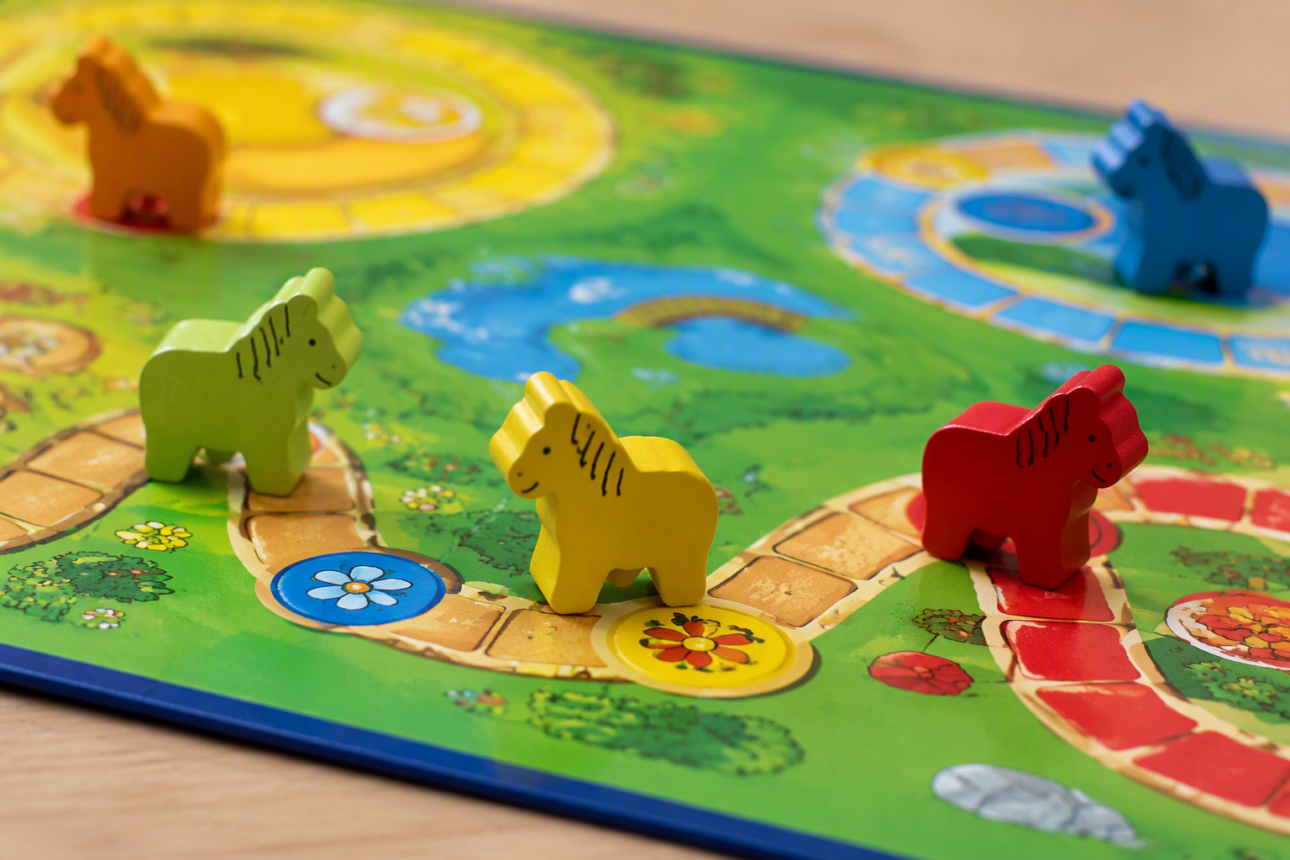
Max is a perfect gateway game for children aged 5 and up. It introduces basic turn-taking and rule adherence in a way that feels natural. The sessions last between 5 to 15 minutes. This brevity keeps kids focused. Because it is a cooperative game supporting 2 to 5 players, nobody feels like they are losing. Instead, everyone works together to solve problems. The New York Times Wirecutter explains that these gateway games help teach sequential logic and decision-making. You will find that playing as a team takes the pressure off younger players. It is a solid starting point for any family collection.
2. My First Stone Age
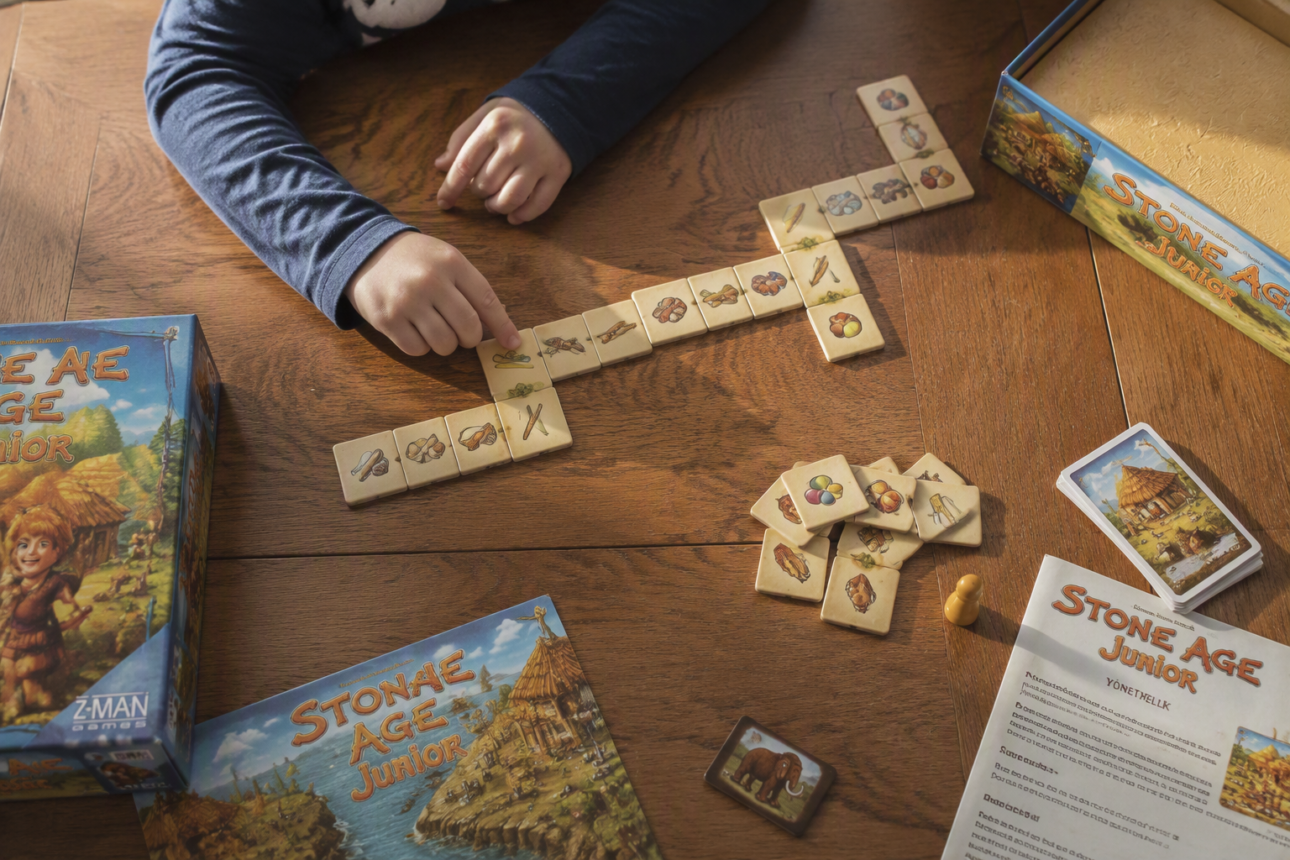
If you want to introduce your child to strategy, this is the place to start. It acts as a simplified version of more complex resource-gathering games. Children as young as 5 can learn the mechanics. It supports 2 to 4 players and runs for about 15 to 20 minutes. The game introduces the concept of managing goods and planning ahead. My First Stone Age bridges the gap between simple roll-and-move games and deeper strategy titles. You might find it surprising how quickly kids grasp the logic once the pieces are on the table. It is an effective way to prepare them for more advanced family tabletop nights in the future.
3. Race to the Treasure
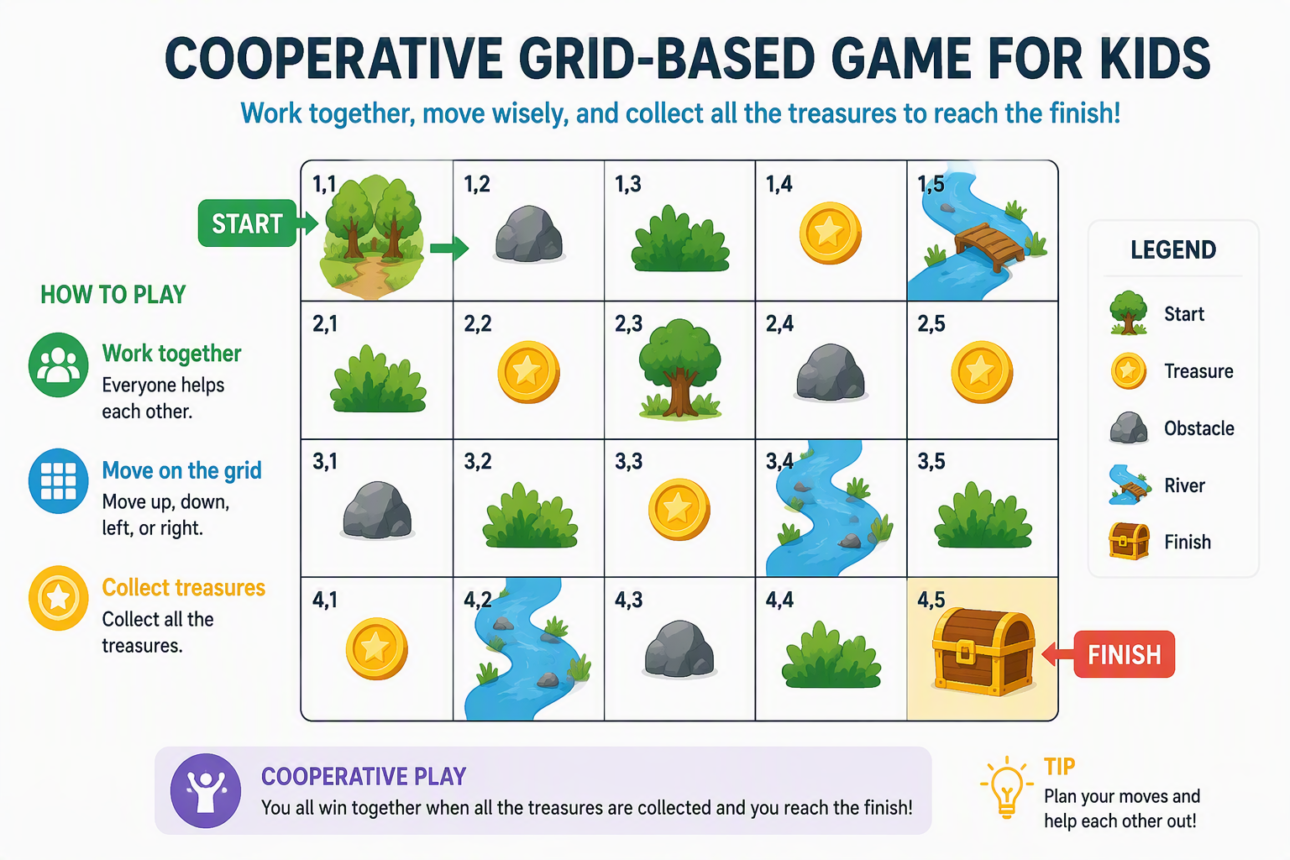
Cooperation is the heart of this game. Designed for children aged 5 to 8, it asks players to work together against a common threat. You are trying to reach the goal before an opponent gets there. It supports 2 to 4 players and takes about 15 to 20 minutes. This structure forces players to use grid movement, which helps develop spatial awareness. It is a fantastic tool for building teamwork skills. Kids learn to communicate their moves clearly. Since everyone wins or loses as a group, the stress of competition disappears. It turns the living room into a place of shared accomplishment.
4. Sushi Go
Sushi Go is a fast-paced card game. It uses a pick-and-pass mechanic that is simple to learn. You do not need a lot of setup time. This makes it a great choice for a busy school night. It is meant for 2 to 4 players and usually wraps up in 20 minutes. Kids aged 5 and up handle the rules well. It introduces the idea of hand management and making choices based on what other players are doing. Managing Screen Time for Kids: A Complete Guide to Healthy Limits is often easier when you have fun, screen-free alternatives ready to go. It keeps the energy high and the focus sharp.
5. The Fuzzies
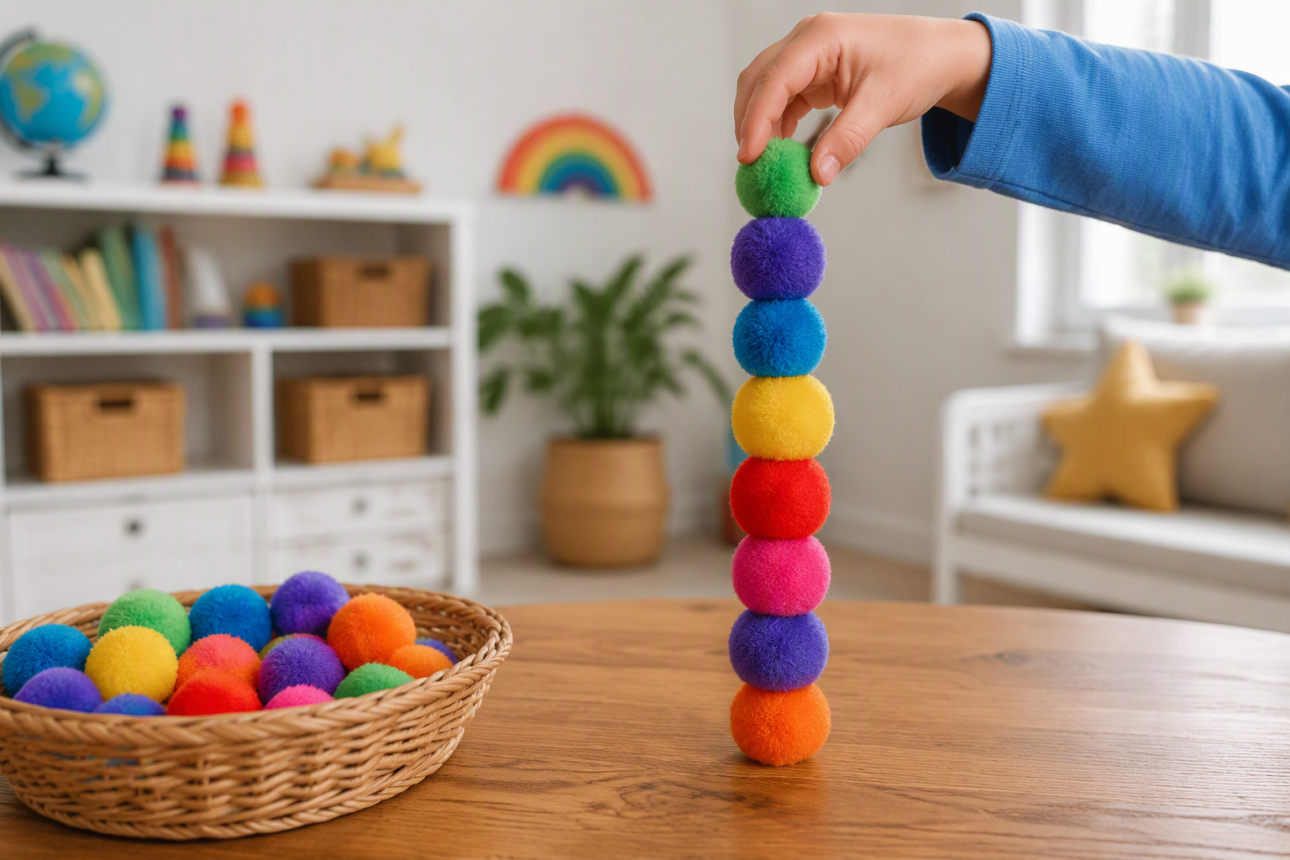
Sometimes, you just need a game that uses your hands. The Fuzzies is a dexterity party game for 2 or more players. The goal is to remove fuzzy balls from a pile without toppling the tower. It requires steady focus and fine motor control. Designed for ages 6 and up, it offers a different kind of challenge compared to card games. You can play this one anywhere. The physical interaction keeps everyone laughing. It is a great way to break up the monotony of academic tasks. Watching a tower fall is half the fun here.
6. Outfoxed
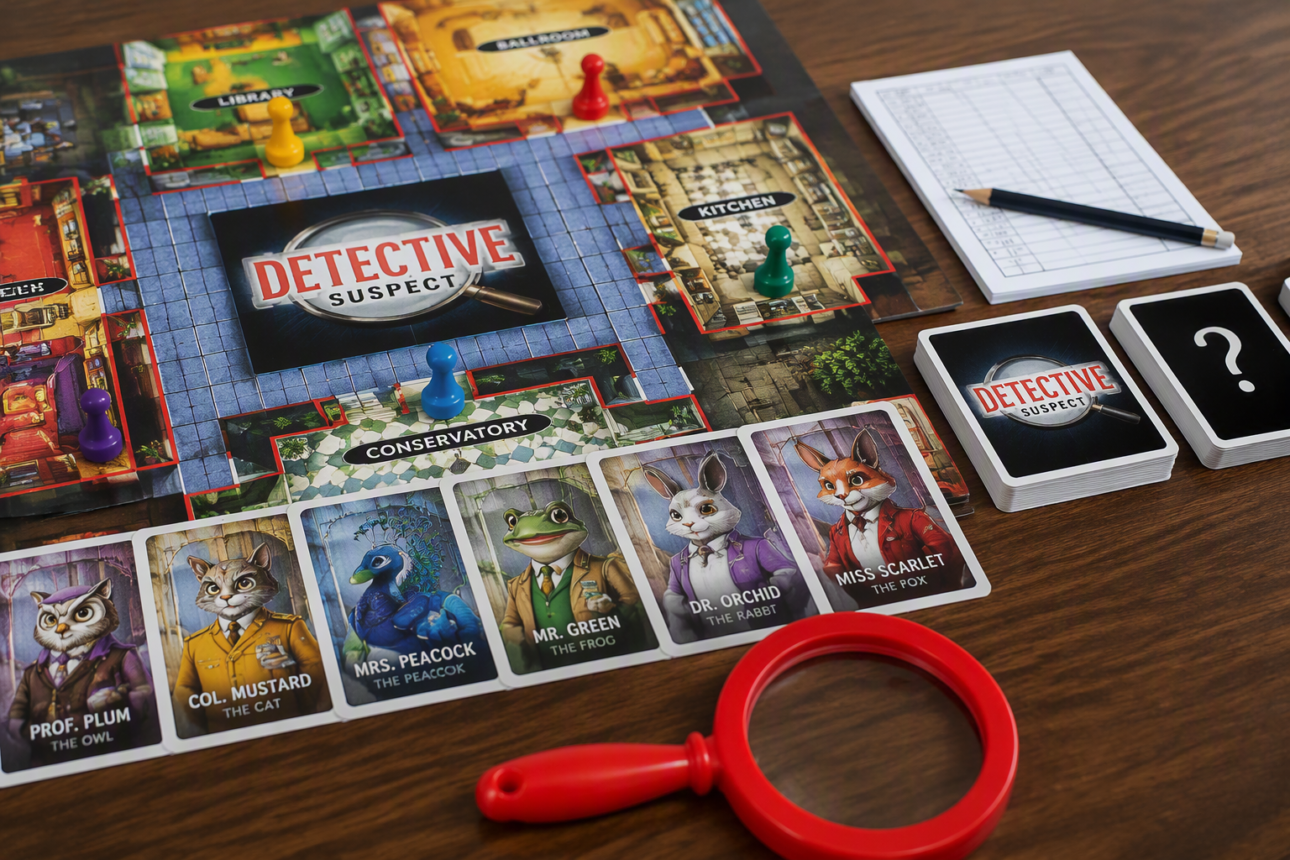
Outfoxed is a cooperative deduction game that turns players into detectives. You are hunting for clues to figure out who stole the pie. The game includes a clever visual clue checker tool. This helps children learn how to process evidence and use logic. It supports 2 to 4 players and takes about 20 to 25 minutes. According to Tabletop Bellhop, this mystery theme is easy for younger kids to follow. It keeps the mystery grounded in a fun story. Every game feels like a short adventure. You will likely find yourself just as invested in the outcome as the children are.
7. Ticket to Ride: First Journey
This is a junior version of the classic train strategy game. It features a larger, simplified map designed for younger kids. The icons at each city help those who are still learning to read. It teaches basic route planning without the complexity of the adult version. Children can build their own rail empire early on. It is an excellent way to introduce map reading and goal setting. If your kids are interested in 12 Top-Rated Back to School Shoes for Boys Worth Buying, they might also enjoy the sense of exploration this game provides. It is perfect for those ready to move toward more complex strategy.
8. Rhino Hero: Super Battle
This is a 3D stacking game that demands precision. Players build a tower while navigating their superhero characters. It is a high-energy experience. The game supports 2 to 4 players and lasts 15 to 20 minutes. It tests fine motor skills in a way that feels exciting rather than like a chore. You have to balance the pieces carefully. The tower gets taller and more precarious with every turn. It is a fantastic way to develop physical confidence. Kids get a real sense of achievement when they place a piece without causing a collapse.
9. Zombie Kidz Evolution
This legacy-style game changes as you play. The rules and board evolve based on your performance. It is designed for 2 to 4 players and offers high replayability for kids 5 and up. The 15-minute average playtime is just right for keeping them engaged. Children love the sense of progress that comes from unlocking new content. It encourages consistency and long-term interest. As you play more, the game grows with the players. It is a unique concept that keeps the tabletop experience fresh for a long time. It shows kids that their choices matter over the course of the whole experience.
| Game | Best For | Focus | Typical Time |
|---|---|---|---|
| Max | Ages 5+ | Cooperation | 5-15 mins |
| Sushi Go | Ages 5+ | Strategy/Cards | 20 mins |
| The Fuzzies | Ages 6+ | Dexterity | 15 mins |
Common Mistakes
One common error is picking games that are too long. If a game takes 45 minutes, a 5-year-old will likely lose interest. Look for games under 20 minutes for this age group. Another mistake is ignoring the player count. Some games are designed for 3 or more players and do not work well as a head-to-head duel. Always check the box to ensure you have the right group size. Finally, avoid forcing competitive games on kids who struggle with losing. Cooperative games exist for a reason. Use them to build confidence before moving into competitive play. Don’t worry if a game doesn’t stick the first time. Keep it on the shelf and try it again in a few months.
FAQ
Q: How do cooperative board games work for children?
Cooperative games let all players work toward one shared goal, which can reduce conflict and make it easier for kids to learn the rules. Examples in the results include Outfoxed, Castle Panic, Flash Point Fire Rescue, The Crew: Quest for Planet Nine, and Slide Quest. This style is often recommended for kids who are still learning sportsmanship or game flow.
Q: Are dexterity board games good for kids?
Dexterity games are often a strong fit because they turn board gaming into a physical challenge rather than a reading or math challenge. The results highlight The Fuzzies, Rhino Hero: Super Battle, ICECOOL, PitchCar, and Slide Quest as examples. These games can be especially appealing for active kids who enjoy stacking, flicking, balancing, or aiming.
Q: What is a good first board game for a 5-year-old?
Good first games for age 5 usually have short playtimes, simple turns, and a low reading burden. Wirecutter lists Max, My First Stone Age, Race to the Treasure, and Sushi Go as age-appropriate options, and The Tabletop Family points to Ticket to Ride First Journey and the Eye Found It series for that age. The best choice depends on whether the child prefers teamwork, collecting, or light competition.
Q: Why do some kids’ board games have age 10 plus ratings?
An age 10+ label often reflects reading, planning, or rule complexity rather than content. Wirecutter says many children can be fully absorbed in simpler family games by age 10, and it also notes that some younger children can play team-based versions of harder games with help. That means the box age is a guide, not a strict cutoff.
Q: What should parents look for in board games for kids?
The strongest criteria across the results are age fit, player count, playtime, reading level, and whether the game teaches a useful skill like turn-taking or planning. Parents also need to think about whether they want cooperative play, competitive play, or a dexterity game. Shorter games in the 15 to 20 minute range are often easier for younger children to finish happily.
Q: Which board games are fun for both kids and adults?
Games that combine simple rules with enough depth for adults tend to work best across ages. The results point to Sushi Go, Kingdomino, Dixit, The Crew, and Chameleon as examples that can stay interesting for older players while remaining manageable for kids. Wirecutter explicitly notes that some of these are simple enough for younger children but still engaging for adults.
Q: Do board games help children with learning skills?
Yes, many kids’ board games are designed to reinforce skills like turn-taking, following rules, problem-solving, sequential logic, and decision-making. Wirecutter explicitly describes gateway games this way, and several recommended titles add reading, deduction, or strategy practice. The most educational games are usually the ones the child will actually want to play repeatedly.
My Experience With 12 Creative Board Game Ideas Kids Will Love
I have spent many afternoons losing at Sushi Go or frantically holding my breath during a game of The Fuzzies. Honestly, the most important lesson I learned is that the game’s duration matters more than the theme. If you choose something that takes an hour, you are setting yourself up for failure with a preschooler. My kids usually have about 20 minutes of prime focus before they start building block towers with the game pieces instead of playing.
I found that cooperative games like Max or Outfoxed saved our game nights from becoming a battlefield. They force everyone to talk through their decisions, which is a surprisingly deep skill for a 5-year-old to practice. Experts often point to these as gateway experiences, and I can confirm they actually work. You don’t just teach rules; you teach patience. Plus, it is way more fun when you aren’t trying to beat a child at a game they barely understand. We keep our collection simple and accessible, letting them choose the adventure. Have you discovered a specific game that finally helped your kids understand the concept of taking turns?
References
- Busy Toddler. (n.d.). 50+ Best Board Games for Kids. Busy Toddler. https://busytoddler.com/best-board-games-for-kids/
- Friday We’re in Love. (n.d.). Board Games for Kids: The best board games for 5-10 Years Old. Friday We’re in Love. https://fridaywereinlove.com/board-games-for-kids/
- Meeple Mountain. (n.d.). 7 Great Board Games for Kids. Meeple Mountain. https://www.meeplemountain.com/articles/7-great-board-games-for-kids/
- Tabletop Bellhop. (n.d.). The best cooperative kids board games that are also fun for adults. Tabletop Bellhop. https://tabletopbellhop.com/gaming-advice/cooperative-kids-board-games/
- Tabletop Info. (n.d.). Best Board Games for Kids 5-7 years old [2025 list]. Tabletop Info. https://tabletopinfo.com/best-board-games-for-kids-5-7-years-old/
- The New York Times Wirecutter. (2025). Board Games We Love for Kids and Families. Wirecutter. https://www.nytimes.com/wirecutter/reviews/board-games-for-kids/
- The Tabletop Family. (n.d.). Best Games for 5 Year Olds: Tested by Our Family of 9. The Tabletop Family. https://thetabletopfamily.com/great-games-for-5-year-olds/
Conclusion.

Sarah Anderson . J
I’m the mom behind Wise Mom Blogger, where everyday creativity meets real-life motherhood. I share easy DIY crafts, cozy knitting and crochet projects, beginner-friendly sewing ideas, and family-tested recipes—plus quick baking hacks that make homemade feel doable on busy days.