Easy quilt patterns let beginners and busy sewists finish a project without frustration. These 14 simple easy quilt patterns rely on straight seams, large pieces, or precut fabrics so the top comes together quickly. Most work well as throws, baby quilts, or lap sizes and can be completed over a weekend with basic sewing skills.
Quick answer: Top simple easy quilt patterns include Rail Fence, Four-Patch, Nine-Patch, Log Cabin, Half-Square Triangle layouts, Charm Square patchwork, Jelly Roll strip quilts, and panel-based designs. Choose patterns with large blocks or strip piecing for the fastest, most forgiving results.
Recent free pattern roundups emphasize strip piecing, precuts, and oversized blocks because they reduce cutting errors and keep seam matching simple. The patterns below draw from those current lists and focus on designs that still look polished when finished.
| Pattern | Main Technique | Fabric Type | Speed | Best For |
|---|---|---|---|---|
| Rail Fence | Strip piecing | Yardage / Jelly Roll | Fast | Beginners |
| Four-Patch | Simple squares | Yardage / Precuts | Very fast | First quilt |
| Nine-Patch | Grid blocks | Charm packs | Fast | Color play |
| Log Cabin | Center-out strips | Scraps / Strips | Medium | Scrap use |
| HST Layout | Half-square triangles | Layer cakes | Medium | Modern look |
Relative Speed to Finish
Green = fastest • Blue = a bit more piecing
1. Rail Fence Quilt
The Rail Fence quilt uses strips of fabric sewn into sets, then cut into blocks and rotated. The result is a dynamic, zig-zag or fence-like layout that relies almost entirely on straight seams.
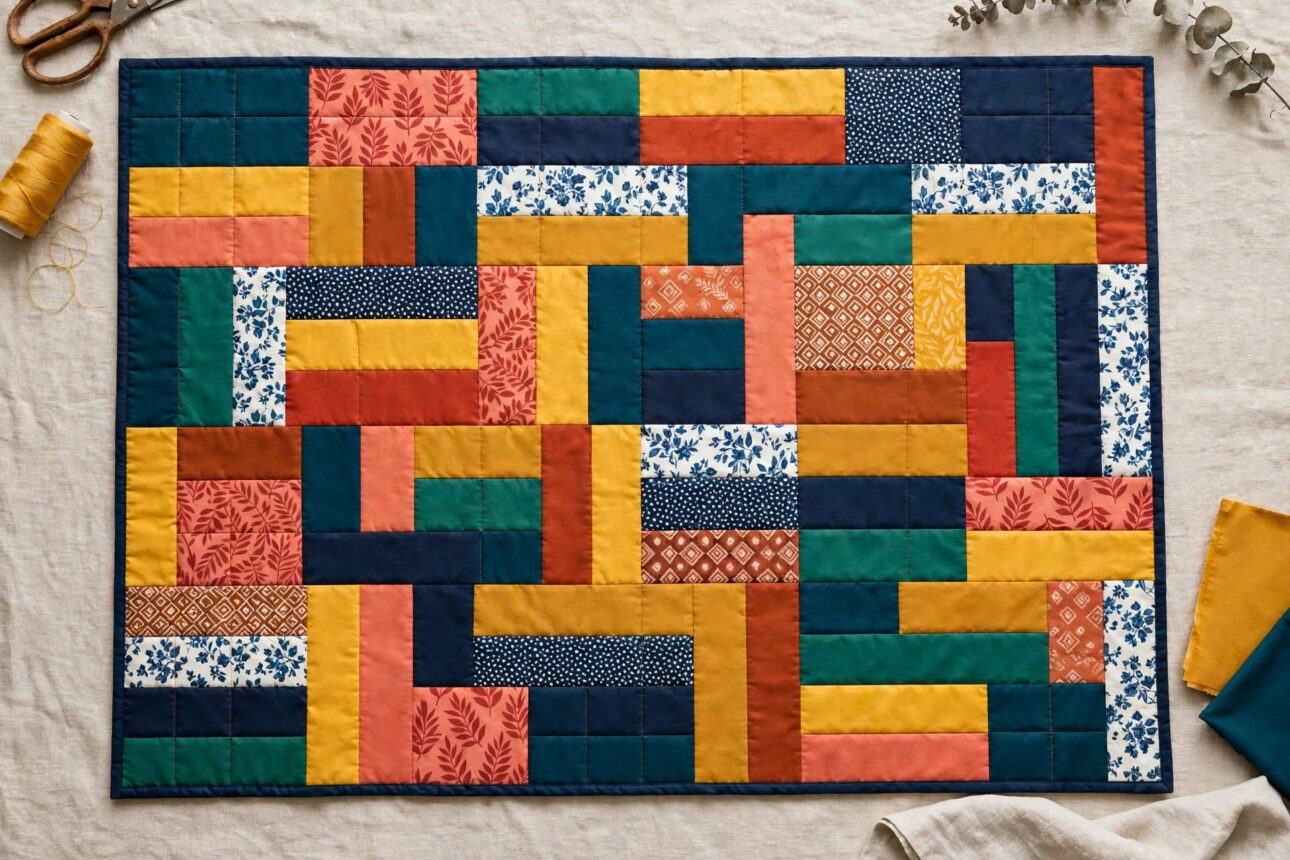
This pattern is ideal for first-time quilters because strip piecing reduces the number of times you start and stop the machine. It also hides minor measurement inconsistencies better than complex blocks.
Use three coordinating fabrics or a jelly roll for speed. Press seams consistently and nest them when joining blocks. A lap or throw size finishes quickly with larger strip widths.
Current beginner pattern lists consistently rank Rail Fence near the top for its simplicity and visual impact. It teaches accurate ¼-inch seams while still looking finished and intentional.
2. Four-Patch Quilt
A Four-Patch quilt is made from blocks of four equal squares arranged in a 2×2 grid. The blocks are then set in rows to form the full top. It is one of the most basic and fastest patterns available.
The design builds confidence with matching seams and pressing. Large finished block sizes keep cutting and sewing to a minimum. Precuts such as charm squares eliminate most measuring.
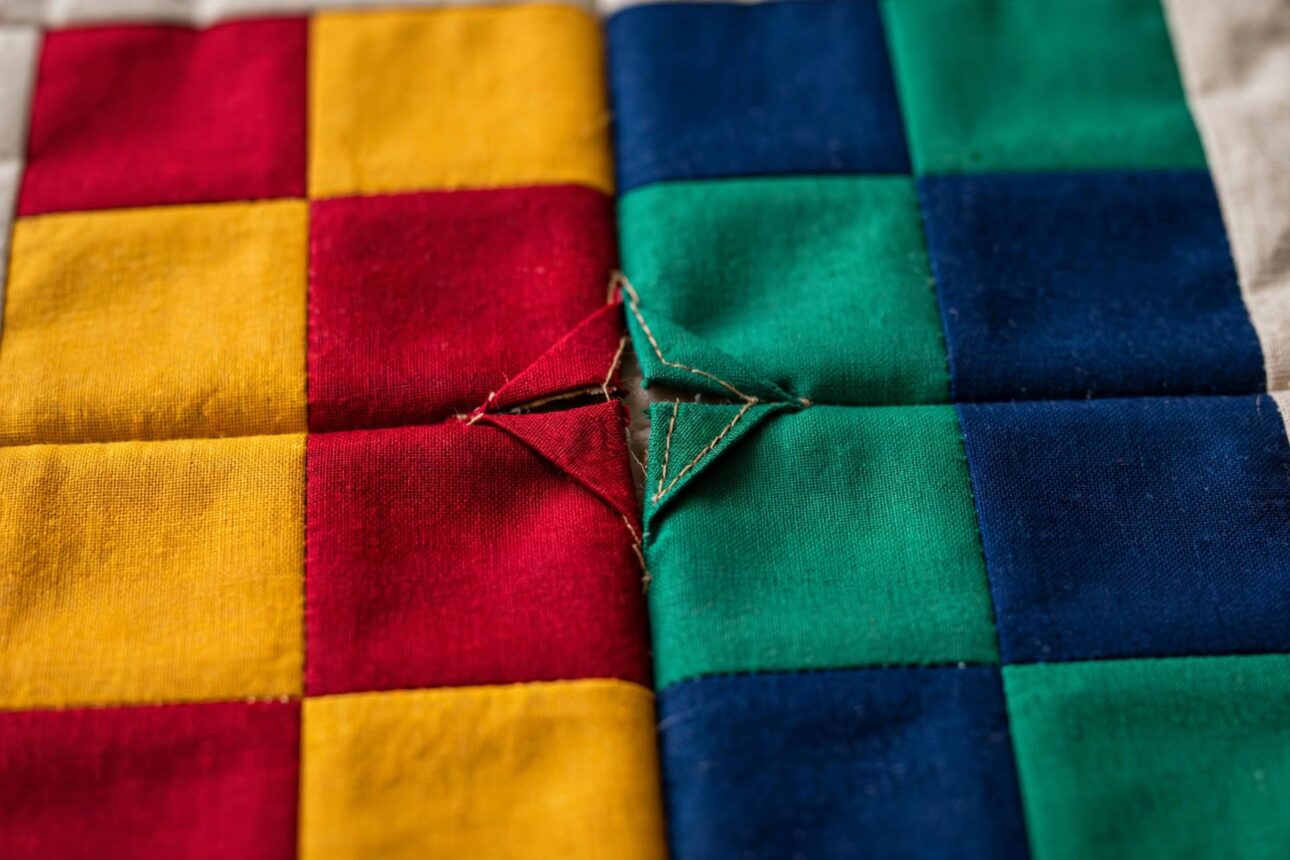
Choose high-contrast fabrics for clear definition or tone-on-tone for a softer look. Nest seams at the center of each block for flatter joins. Add a simple border if the top feels small.
Recent free pattern collections list Four-Patch among the quickest weekend projects. It is an excellent first full quilt because every step is straightforward and the results look tidy.
3. Nine-Patch Quilt
The Nine-Patch block consists of nine equal squares arranged in three rows of three. Repeating the block creates a classic grid that showcases fabric choices and color placement.
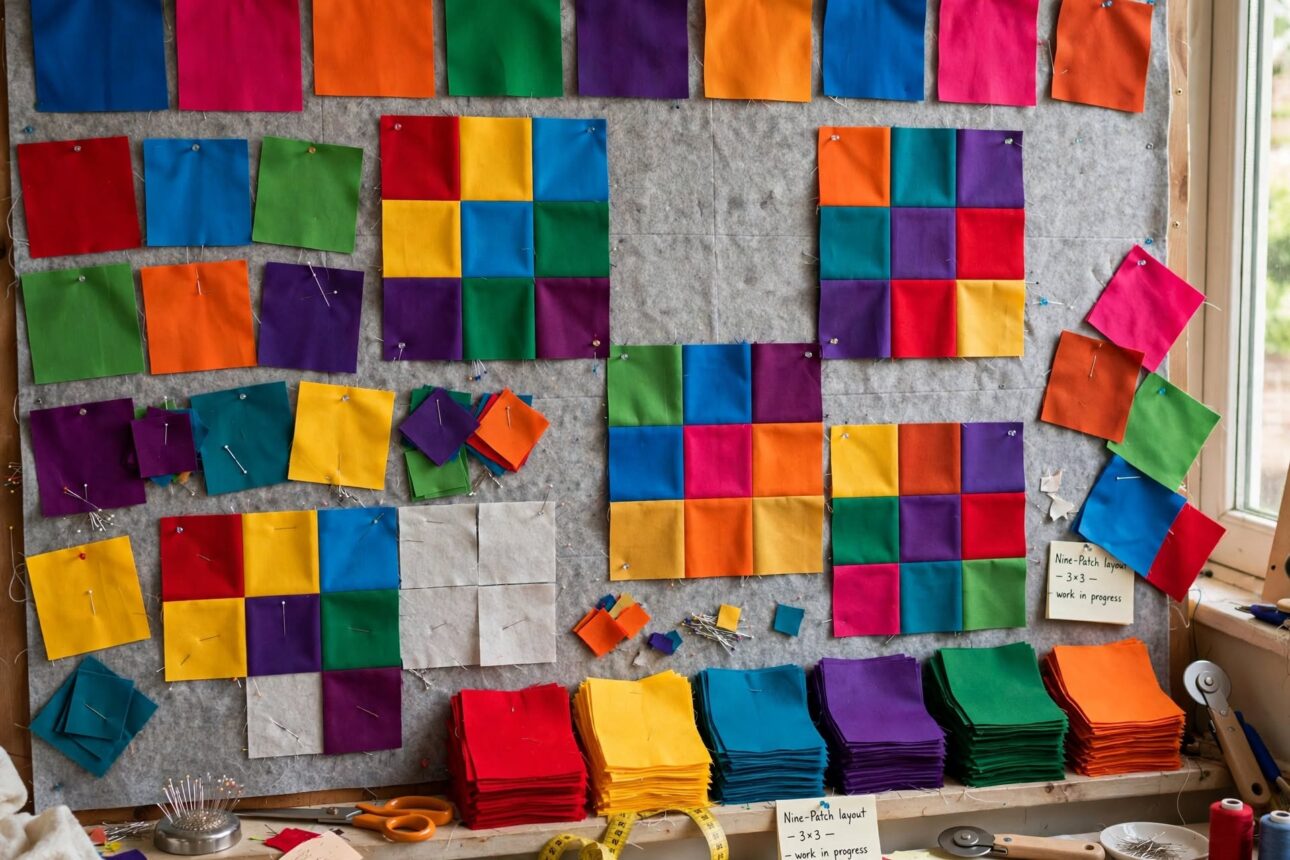
This pattern teaches accurate cutting and consistent seam allowances. It is forgiving enough for beginners yet flexible for more experienced sewists who want to play with value and contrast.
Charm packs or cut squares speed the process. Alternate light and dark fabrics for a traditional look or use a controlled palette for modern results. Press seams open or to the side consistently.
Nine-Patch variations appear throughout current beginner and easy pattern roundups. The simple structure still produces a polished finished quilt when the seams are neat.
4. Log Cabin Quilt
Log Cabin blocks start with a center square and add strips (the “logs”) around it in a clockwise or alternating fashion. The finished blocks can be arranged in traditional or modern settings.
The pattern grows quickly once the first few logs are sewn. It uses scraps efficiently and hides small measurement differences. Larger log widths make the process even faster.
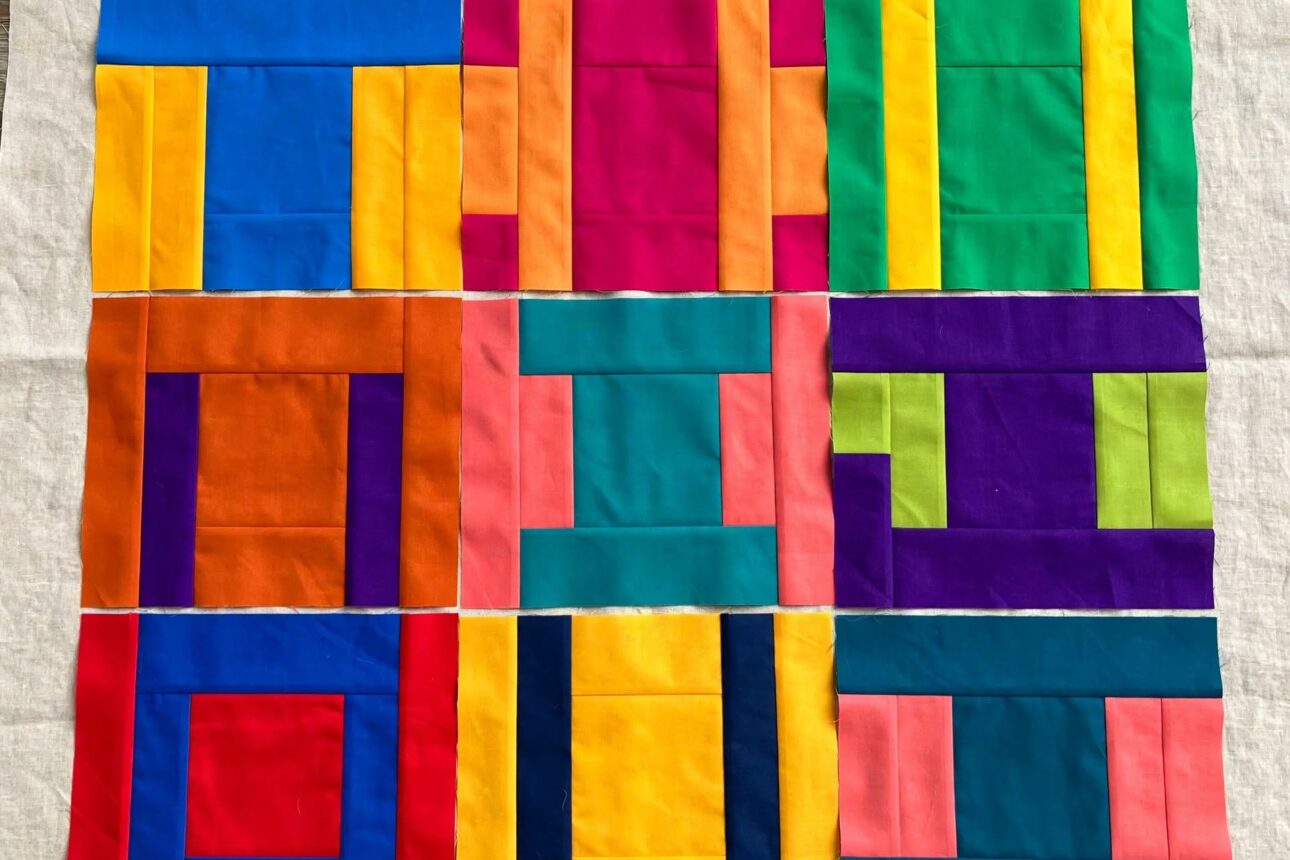
Begin with a consistent center size and press after each addition. Keep the light and dark sides organized if you want a classic barn-raising or straight-furrow layout. Modern versions use fewer, wider strips.
Log Cabin remains a staple in 2025–2026 beginner recommendations because it scales easily and looks sophisticated even with imperfect seams. It is also an excellent scrap-busting project.
5. Half-Square Triangle (HST) Quilt
Half-square triangles are made by sewing two squares together, cutting on the diagonal, and pressing open. The resulting triangles can be arranged into countless layouts, from simple zig-zags to larger geometric designs.
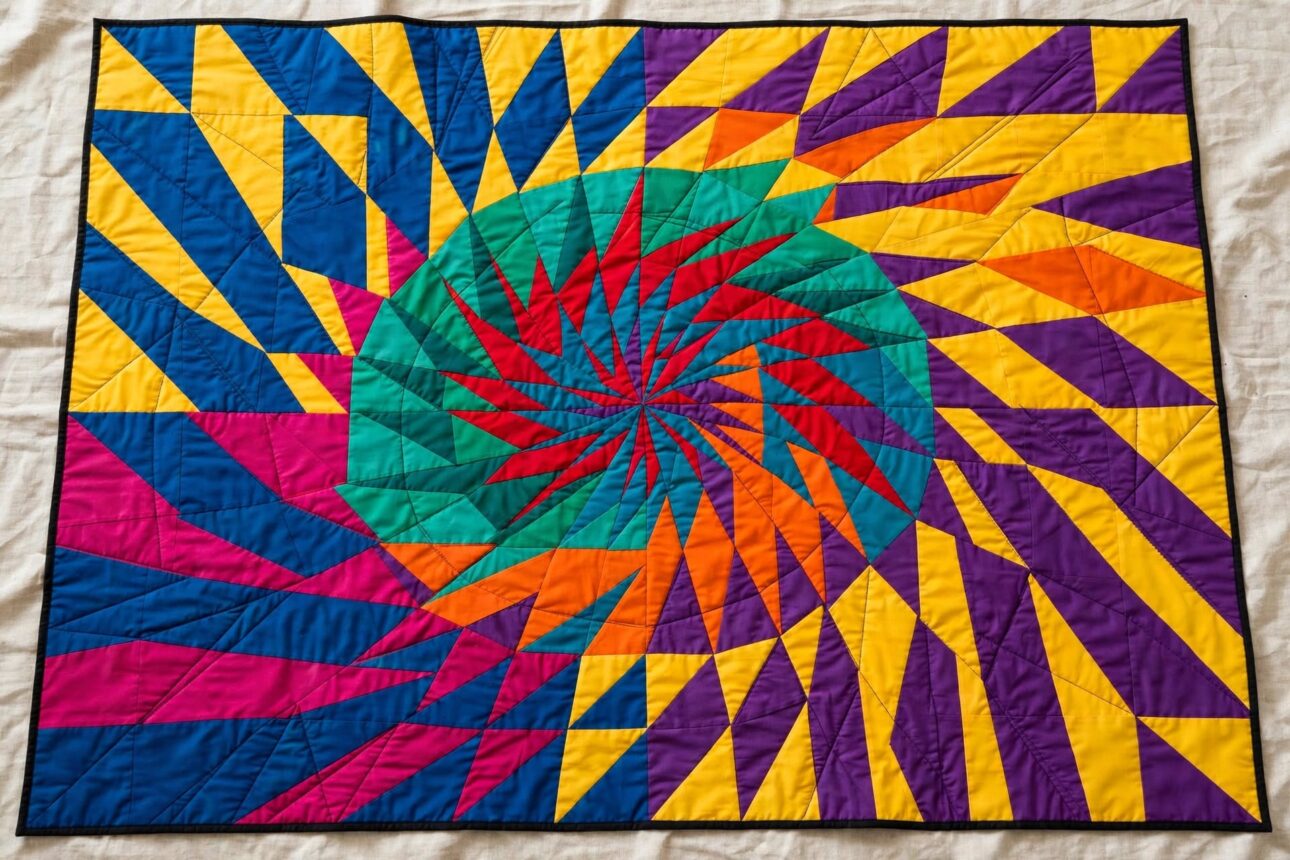
Modern HST quilts often use large-scale triangles so the piecing stays manageable. The technique introduces bias edges carefully and builds confidence with pressing and matching points.
Layer cakes or 10-inch squares speed cutting. Trim the units to a consistent size after pressing. Arrange the blocks on a design wall or floor before sewing the rows together.
Large-scale HST patterns appear frequently in current easy and modern quilt lists. They showcase bold fabrics well and still remain approachable for newer quilters.
6. Charm Square Patchwork
Charm square patchwork uses 5-inch precut squares sewn edge to edge into rows, then joined into a full top. Minimal cutting and simple straight seams make this one of the fastest options.
The coordinated prints in a charm pack create an instant scrappy or coordinated look. The pattern focuses on accurate seaming rather than complex cutting.
Press seams carefully so the grid stays square. Add a border if the finished size needs adjustment. Binding finishes the project cleanly.
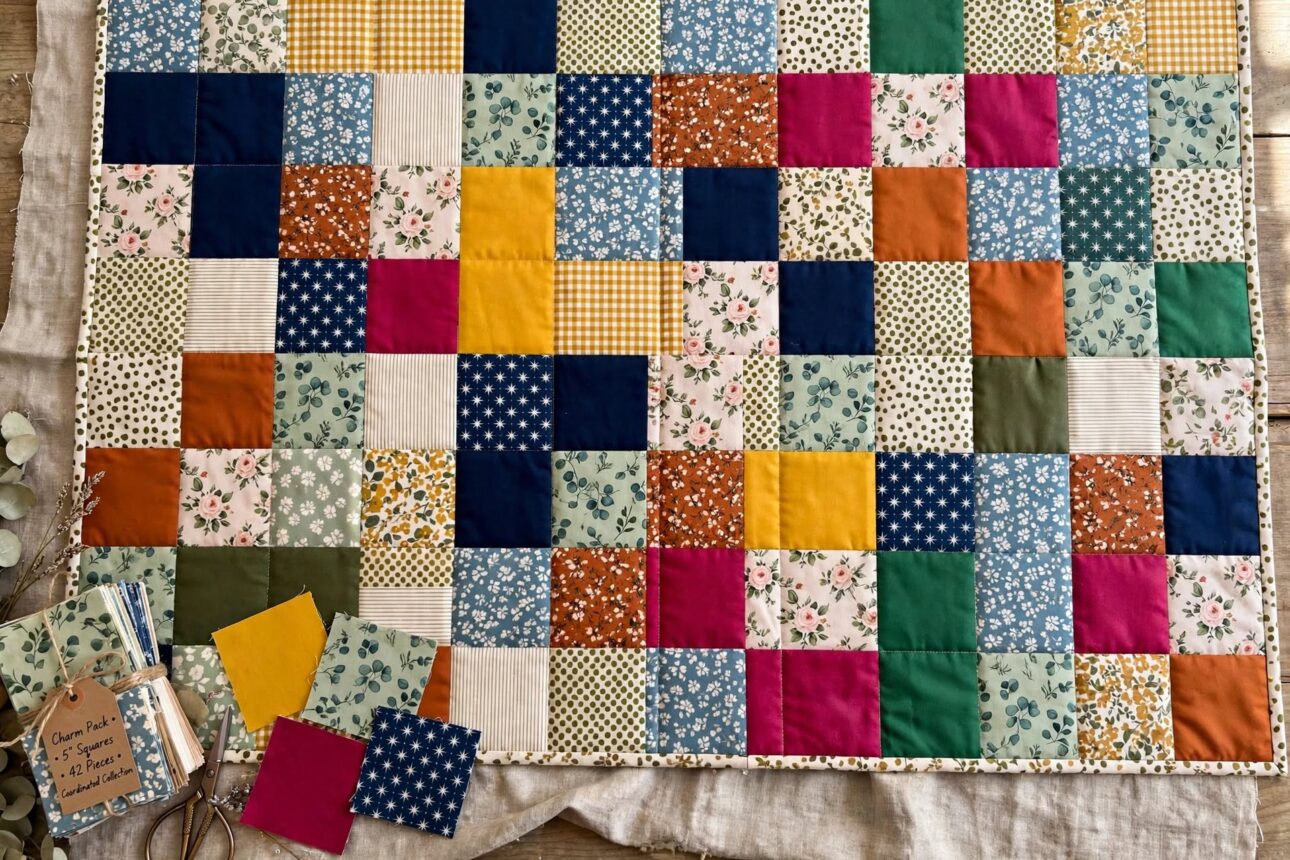
Charm-pack quilts rank high in recent beginner and budget-friendly pattern collections. They eliminate most measuring errors and still produce a satisfying finished quilt.
7. Jelly Roll Strip Quilt
Jelly roll patterns use 2½-inch precut strips sewn into sets or simple layouts. Many designs rely on strip piecing and quick joining of the resulting units.
The uniform width removes cutting variables. Coordinated strips from a single collection give a polished appearance with almost no planning.
Sew long strip sets, cut them into segments, and rearrange as the pattern directs. Press consistently and square the units before assembly.
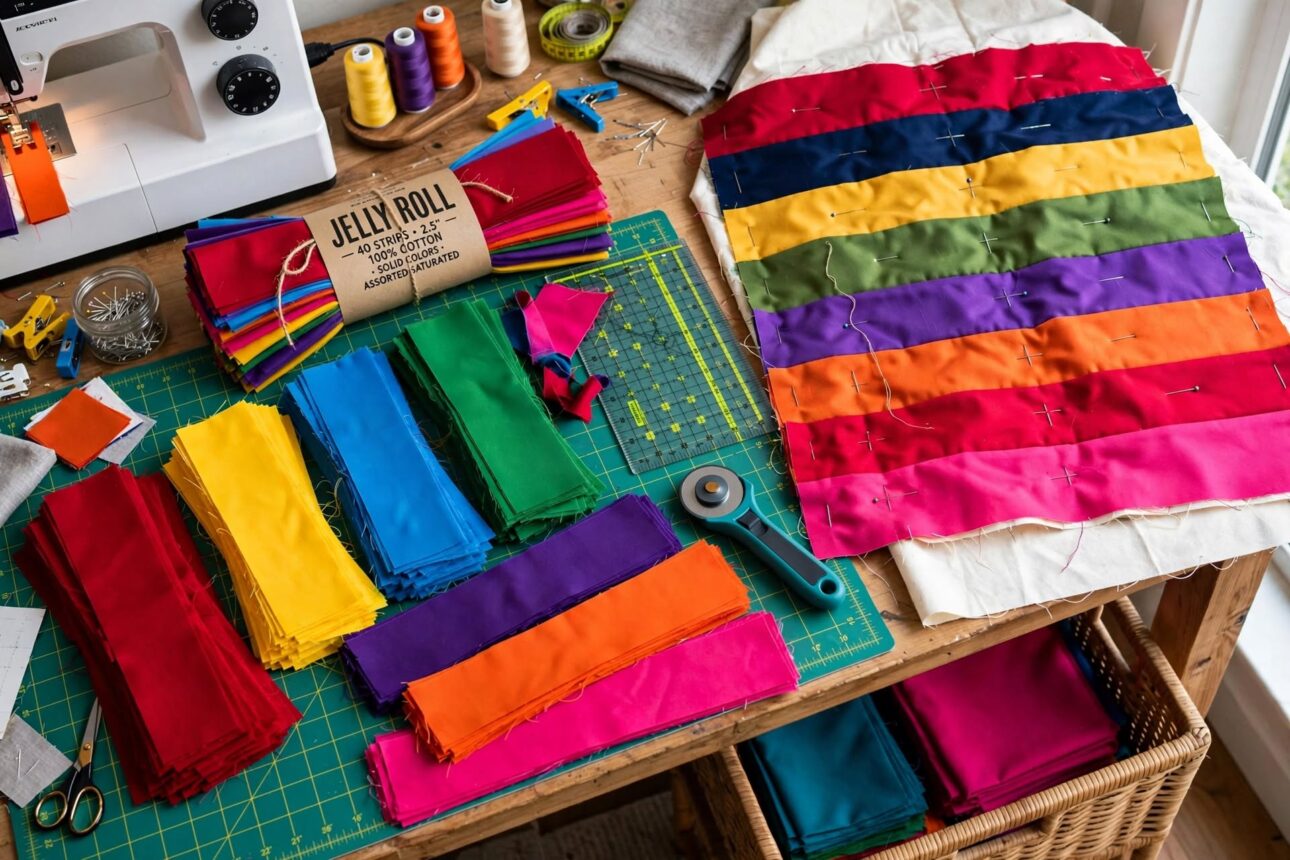
Jelly roll projects dominate many current free and easy pattern lists because they move quickly from fabric to finished top. They are especially popular for throws and baby quilts.
8. Simple Squares or Patchwork Grid
A simple squares quilt uses equal-sized fabric squares arranged in a straightforward grid. No triangles or complex units are required—only straight seams and careful pressing.
This pattern highlights the fabric itself. Large squares reduce the number of seams and speed construction. It is an ideal choice when the fabric prints are the main feature.
Cut accurately and keep the grain consistent. Join rows carefully so the vertical seams align. A single border can frame the design cleanly.
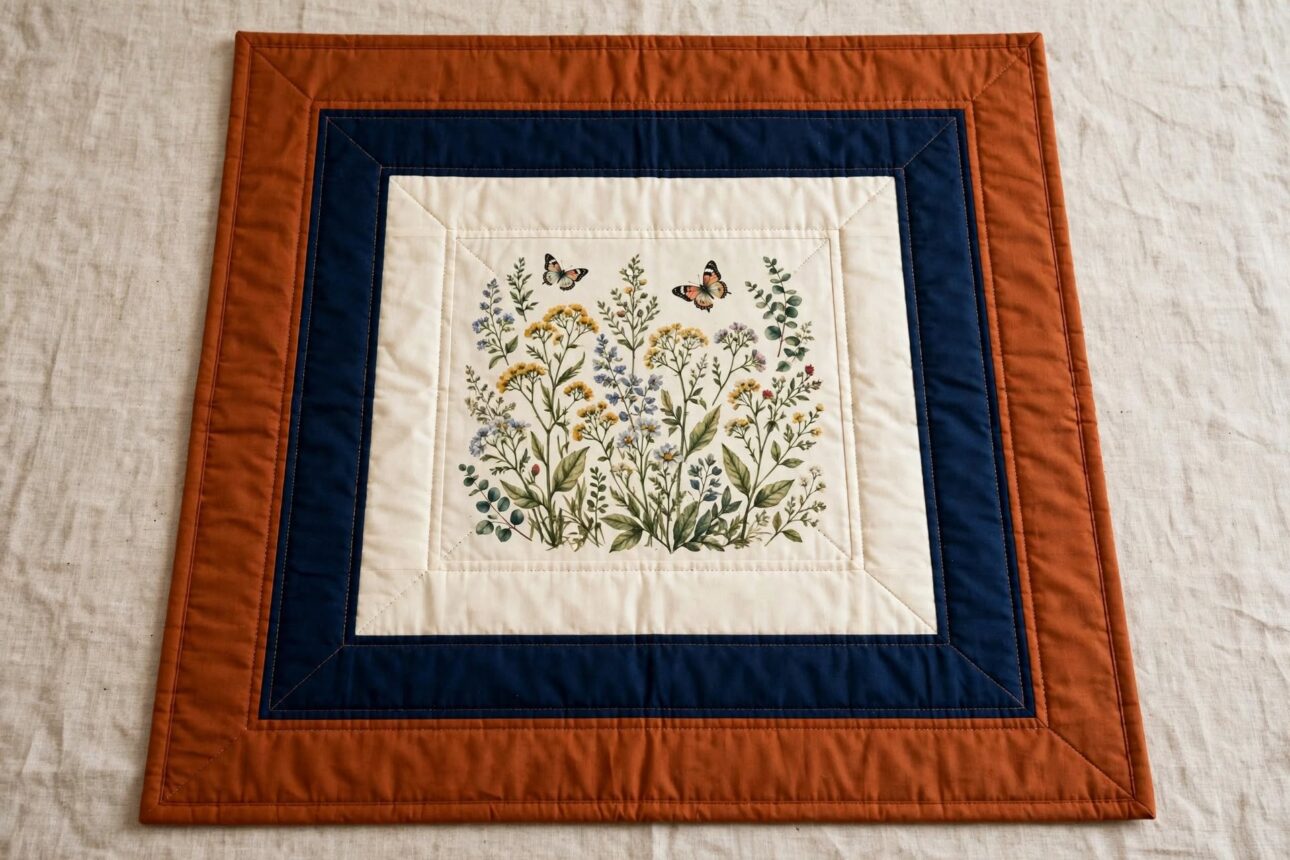
Basic patchwork grids appear in nearly every beginner-friendly collection. They deliver reliable results and build essential skills without overwhelming new sewists.
9. Disappearing Nine-Patch
A Disappearing Nine-Patch starts as a standard nine-patch block that is then cut into smaller units and rearranged. The secondary design that appears looks more complex than the actual piecing.
The technique introduces a creative twist while still using only straight seams. It is an excellent next step after a basic nine-patch.
Sew the initial nine-patches accurately, then cut and rearrange according to the pattern instructions. Press carefully after each stage so the new units stay square.
This variation shows up regularly in current easy pattern lists because it delivers visual interest without advanced skills. It is a favorite for scrap or charm-pack projects.
10. Panel Quilt
A panel quilt centers a printed fabric panel and surrounds it with simple borders or minimal piecing. The panel provides the main design so cutting and sewing stay limited.
This approach is ideal when a strong focal print is available. It produces a finished quilt with very little piecing time and still teaches basic border construction.
Square the panel carefully before adding borders. Keep border seams consistent and press toward the outer edges. Binding completes the project quickly.
Panel-based designs rank high for instant gratification in recent beginner recommendations. They are especially useful for themed or seasonal quilts.
11. 3-Yard Quilt
3-yard quilt patterns are designed to use exactly three yards of fabric, often cut into large pieces or simple strip sets. The limited yardage keeps cost and decision-making low.
These patterns are popular for stash-busting and quick gifts. Large pieces mean fewer seams and faster assembly.
Follow the cutting diagram carefully so every piece is used efficiently. Press as you go and join the sections in the order given by the pattern.
3-yard designs appear frequently in current weekend and easy pattern roundups. They are practical, budget-friendly, and still produce full-size throws or lap quilts.
12. Flying Geese Layout
Flying Geese units are triangles that form a directional “goose” shape. Simple layouts arrange these units into rows or larger blocks for a classic yet approachable design.
Shortcut methods allow multiple units to be made at once from squares. The finished look is more interesting than plain squares while remaining beginner-accessible.
Use consistent sizing and trim carefully after pressing. Arrange the geese so the points align neatly across rows. A solid background fabric helps the shapes stand out.
Flying Geese patterns continue to appear in easy and classic block collections. They introduce triangle piecing in a controlled way and create strong visual movement.
13. Strip-Pieced Throw
A strip-pieced throw is built from long fabric strips sewn side by side or into simple sets that are then cut and rearranged. The construction is almost entirely straight seams.
This method is fast and uses fabric efficiently. It works especially well with coordinating solids or subtle prints.
Cut strips of equal width for a clean look. Sew long seams carefully and press after each join. Square the finished top before binding.
Strip-pieced designs dominate many “quick and easy” lists because they minimize handling and deliver a finished top in a short time. They are ideal for weekend projects.
14. Friendship Star or Simple Star Block
A Friendship Star or similar simple star uses a combination of squares and half-square triangles arranged in a nine-patch style layout. The star shape appears without complicated Y-seams.
The block introduces a recognizable motif while staying within basic techniques. It is a natural step after mastering four-patches and simple HSTs.
Make the half-square triangles first and trim them accurately. Assemble the block in rows and press carefully so the star points stay sharp. Repeat the block across the quilt top.
Simple star blocks appear in classic and beginner pattern collections because they look more advanced than the skills required. They make excellent gift or sampler quilts.
FAQ
What is the easiest quilt pattern for a complete beginner?
Rail Fence or a simple Four-Patch using precuts are usually the most forgiving. Both rely on straight seams and large pieces, which reduce opportunities for error.
Do I need special tools for these easy patterns?
A rotary cutter, ruler, mat, sewing machine with a ¼-inch foot, and an iron cover the essentials. Precut fabrics further reduce the need for extensive cutting tools.
How long does an easy quilt usually take?
Many of the patterns listed can produce a throw-size top in a day or weekend once fabric is prepared. Quilting and binding add additional time depending on method.
Should I prewash fabric for beginner projects?
Prewashing is optional. Many modern quilters skip it for small projects to preserve fabric size and prevent distortion. Test a scrap if colorfastness is a concern.
What size should a first quilt be?
A baby quilt or small throw (approximately 40–60 inches on a side) is manageable and still useful. Larger bed sizes can wait until the process feels comfortable.
Can I use a regular sewing machine?
Yes. Most easy patterns work on any machine that can sew a consistent straight stitch. A walking foot is helpful later for quilting the layers together.
Conclusion
These 14 simple easy quilt patterns give new and returning sewists clear starting points. Rail Fence, Four-Patch, Nine-Patch, Log Cabin, HST layouts, charm and jelly-roll designs, and panel or strip-based options all emphasize straight seams and manageable pieces. The result is a finished quilt top that looks intentional without demanding advanced skills.
Choose one pattern that matches the fabric you already have or a precut collection you like. Focus on consistent seam allowances and careful pressing. The process becomes more enjoyable once the first few blocks are complete.
Pick a design, gather the fabric, and begin. A finished quilt is closer than it may seem when the pattern stays simple and the steps stay clear.
References
- SewCanShe. “13 Quick Quilt Patterns You Can Easily Finish in Single Weekend.” 2026. https://sewcanshe.com/quick-quilt-patterns-you-can-finish-this-weekend/
- SewCanShe. “15 Free & Easy Quilt Patterns for Beginners.” 2026. https://sewcanshe.com/15-free-easy-quilt-patterns-for-beginners/
- SewCanShe. “45 Easy Quilt Patterns That Sew Up Fast — All Free.” 2026. https://sewcanshe.com/46-free-easy-quilt-patterns-for-beginners-yes-even-you/
- Nebraska Quilt Company. “Best Beginner Quilt Patterns for New Sewists: 7 Top Picks 2026.” 2026. https://www.nebraskaquiltcompany.com/blogs/welcome-to-nqc/best-beginner-quilt-patterns-for-new-sewists-7-top-picks-2026
- AllPeopleQuilt. “26 Free Jelly Roll (2 1/2” Strip) Quilt Patterns & Sewing Projects.” 2026. https://www.allpeoplequilt.com/26-free-jelly-roll-2-1-2-strip-quilt-patterns-and-sewing-projects-12074084
- Simply Quilting. “13 simple quilt patterns that are perfect for beginners.” 2026. https://simply-quilting.com/quilting-patterns/easy-simple-quilt-patterns-to-sew
- Missouri Star Quilt Co. “Free Beginner Quilt Patterns (PDF Download).” 2026. https://www.missouriquiltco.com/blogs/missouri-star-blog/free-beginner-quilt-patterns-pdf
- SewCanShe. “How Many of These 35 Classic Quilt Blocks Have You Made?” 2026. https://sewcanshe.com/35-classic-quilt-block-patterns-every-quilter-should-know-all-free-2/

Sarah Anderson . J
I’m the mom behind Wise Mom Blogger, where everyday creativity meets real-life motherhood. I share easy DIY crafts, cozy knitting and crochet projects, beginner-friendly sewing ideas, and family-tested recipes—plus quick baking hacks that make homemade feel doable on busy days.