What happens when one company supplies lettuce to the vast majority of restaurants and supermarkets across the United States? Taylor Farms, founded in 1995 by Bruce Taylor in California’s Salinas Valley, has quietly become the backbone of American produce distribution. Operating as the world’s largest fresh-cut produce processor, Taylor Farms handles 165 million servings of produce every week, distributing fresh lettuce and vegetables to nearly every major retail group, club store, and quick-service restaurant chain in the country. Understanding which brands depend on Taylor Farms reveals how interconnected the food supply really is.
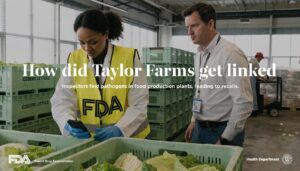
That reach is also why the company is now at the center of the largest cyclospora outbreak on record in the United States. As of late July 2026, the CDC had confirmed 1,644 cases tied to the outbreak and was investigating more than 5,100 additional suspected illnesses — nearly 7,000 cases in total — with 141 hospitalizations reported across 34 states. Federal investigators traced shredded iceberg lettuce grown by Taylor Farms de Mexico to Taco Bell restaurants in five states: Indiana, Kentucky, Michigan, Ohio, and West Virginia. On July 17, 2026, Taylor Farms voluntarily recalled all iceberg lettuce grown and processed in central Mexico and said it would stop sourcing iceberg lettuce from that region for the rest of the growing season. Taylor Farms has pushed back on part of the FDA’s case, noting that the agency has not identified a single positive product test result for Cyclospora and that an earlier positive test result was later retracted.
Quick Questions and Answers
Question: Why is Taylor Farms lettuce linked to Taco Bell? Answer: Taylor Farms de Mexico supplied shredded iceberg lettuce to Taco Bell locations in Indiana, Kentucky, Michigan, Ohio, and West Virginia. The CDC and FDA linked that lettuce to a multistate cyclosporiasis outbreak that has produced roughly 7,000 confirmed or suspected cases and 141 hospitalizations as of July 2026 — the largest cyclospora outbreak on record in the U.S. Taylor Farms has disputed the strength of the evidence, noting that no product sample has tested positive for the parasite and that an earlier positive test was retracted.
Question: Do McDonald’s and Chipotle use Taylor Farms produce? Answer: Yes, Taylor Farms distributes its produce through third parties to chain restaurants including McDonald’s and Chipotle Mexican Grill. This isn’t the company’s first brush with a foodborne illness investigation involving major chains — Taylor Farms was also tied to a 2013 cyclosporiasis outbreak linked to salad mix served at Olive Garden and Red Lobster, and a 2024 E. coli outbreak tied to onions served at McDonald’s.
Question: Which supermarket chains get lettuce from Taylor Farms? Answer: Taylor Farms supplies many of the largest supermarket chains in the United States with fresh-cut vegetables and fruits. They are the world’s largest salad and fresh-cut vegetable processor as of 2009. The current outbreak has been linked specifically to shredded iceberg lettuce from Mexico sold to Taco Bell — the CDC has said lettuce sold in grocery stores or served at other restaurants is not currently known to be affected, though officials still recommend buying whole heads of lettuce rather than pre-washed, bagged, or pre-cut lettuce out of caution.
Understanding the Scale of Taylor Farms
Taylor Farms isn’t just another produce company—it’s the operational spine of American food distribution. With over 24,000 team members across North America and more than 22 production locations strategically placed to optimize cold-chain delivery, the company serves three core market segments: food service, retail, and deli channels. That scale translates to something concrete: roughly 165 million servings of fresh produce leaving Taylor Farms facilities every single week.
It’s also exactly why a single supply issue can cascade so widely. The current outbreak illustrates the risk: a single supplier, Taylor Farms de Mexico, sending shredded iceberg lettuce into one restaurant chain’s supply chain was enough to sicken thousands of people across dozens of states before the source was identified and pulled. Health officials have said it’s likely that more than one outbreak has been occurring simultaneously across the 34 states under investigation, and that not every illness is confirmed to share the same source — but the sharp, concentrated rise in cases strongly suggests most are linked to the same event.
The company started modestly enough. Bruce Taylor, a third-generation produce industry veteran who previously founded Fresh Express (later acquired by Chiquita Brands), established Taylor Farms in the mid-1990s with a singular focus: supply fresh-cut produce directly to distributors, retail chains, and restaurants at scale. Decades later, the operation spans from California to the East Coast, processing raw vegetables into washed, cut, and packaged products that appear on tables nationwide. This is not the company’s first time in the outbreak spotlight, either: it was tied to a 2013 cyclosporiasis outbreak linked to salad mix, and separately Taco Bell itself has been named in foodborne illness outbreaks dating back to a 1995 hepatitis A case, a 1999 E. coli outbreak, and 2006, 2010, and 2011 E. coli and Salmonella outbreaks — several of which were also traced to lettuce.
#
Brand
Relationship to Taylor Farms
1
Earthbound Farm Organic
Owned outright by Taylor Farms — a wholly-owned subsidiary, not just a supplier deal.
2
Marketside (Walmart)
Directly linked to the Cyclospora outbreak; the only retail brand named in Taylor Farms’ recall notice.
3
365 (Whole Foods)
Partnered with Taylor Farms in 2020 to launch this store-brand prepared produce line.
4
Green Giant Fresh
Offers 200+ branded goods, including iceberg and leafy greens, tied to Taylor Farms production.
5
Kroger (Private Selection/Simple Truth)
Confirmed via a 2024 recall of a Kroger salad kit with “TFPM” Taylor Farms lot codes.
6
Good & Gather (Target)
Reported association, but the specific third-party supplier couldn’t be independently verified.
7
Eat Smart/FreshPoint
Listed among the many brand names Taylor Farms sells produce under, including store brands.
8
Kirkland Signature (Costco)
Named among retail store brands supplied by Taylor Farms.
9
Great Value (Walmart)
Part of Walmart’s store-brand lines supplied by Taylor Farms, alongside Marketside.
10
Trader Joe’s (select items)
Supplied by Taylor Farms for some items — not all Trader Joe’s produce comes from them.
Core Distribution Channels and Market Segments
Food Service Partnerships
Food service represents the largest and most complex distribution channel Taylor Farms operates. The company doesn’t sell directly to individual restaurants—instead, it partners with broad-line food distributors and specialized suppliers who then deliver products to thousands of professional kitchens. This layered approach means a single Chipotle location may receive Taylor Farms lettuce through Sysco or US Foods, major distributors that source and aggregate products from dozens of suppliers.
That same layering is part of what has made the current outbreak difficult to trace precisely. Investigators identified Taylor Farms de Mexico as the supplier of the shredded iceberg lettuce sent to affected Taco Bell locations, but as of late July 2026 it remains unclear whether the same lettuce reached other vendors or restaurant chains, and the FDA has acknowledged the traceback has been complicated by a retracted lab result. Taco Bell has said it voluntarily and indefinitely removed the supplier’s lettuce from its nationwide supply chain and is replacing it.
The food service channel demands constant availability, precise portion sizes, and bulletproof food safety. Taylor Farms has invested heavily in supply chain management systems—including Microsoft Dynamics 365 for tracking inventory and logistics—to ensure that a restaurant in Denver receives the same quality product as one in Miami. Microsoft Customer Stories documents how Taylor Farms uses real-time data to optimize production schedules and delivery routes, reducing waste while maintaining freshness standards—though the current outbreak is a reminder that even sophisticated tracking systems face real limits once a contaminated product enters multiple downstream supply chains.
Retail and Supermarket Distribution
Nearly every major supermarket chain in the United States stocks Taylor Farms products. Walk into a Whole Foods, Kroger, Walmart, Safeway, or regional chain, and the salad kits, pre-cut vegetables, and fresh greens in the produce section often originate from Taylor Farms facilities. The company has been formally recognized as a Supplier of the Year by Whole Foods Market for service and partnership—a distinction that reflects decades of reliability and quality adherence.
As of the most recent CDC guidance, lettuce sold at grocery stores has not been named in the current Taco Bell-linked outbreak—the recall and warnings apply specifically to shredded iceberg lettuce from central Mexico served at the five named Taco Bell states. Still, out of general caution during the outbreak, health officials have recommended that consumers buy whole heads of lettuce rather than pre-washed, bagged, or pre-mixed salad kits, since it’s harder to trace contamination once lettuce has been cut and blended.
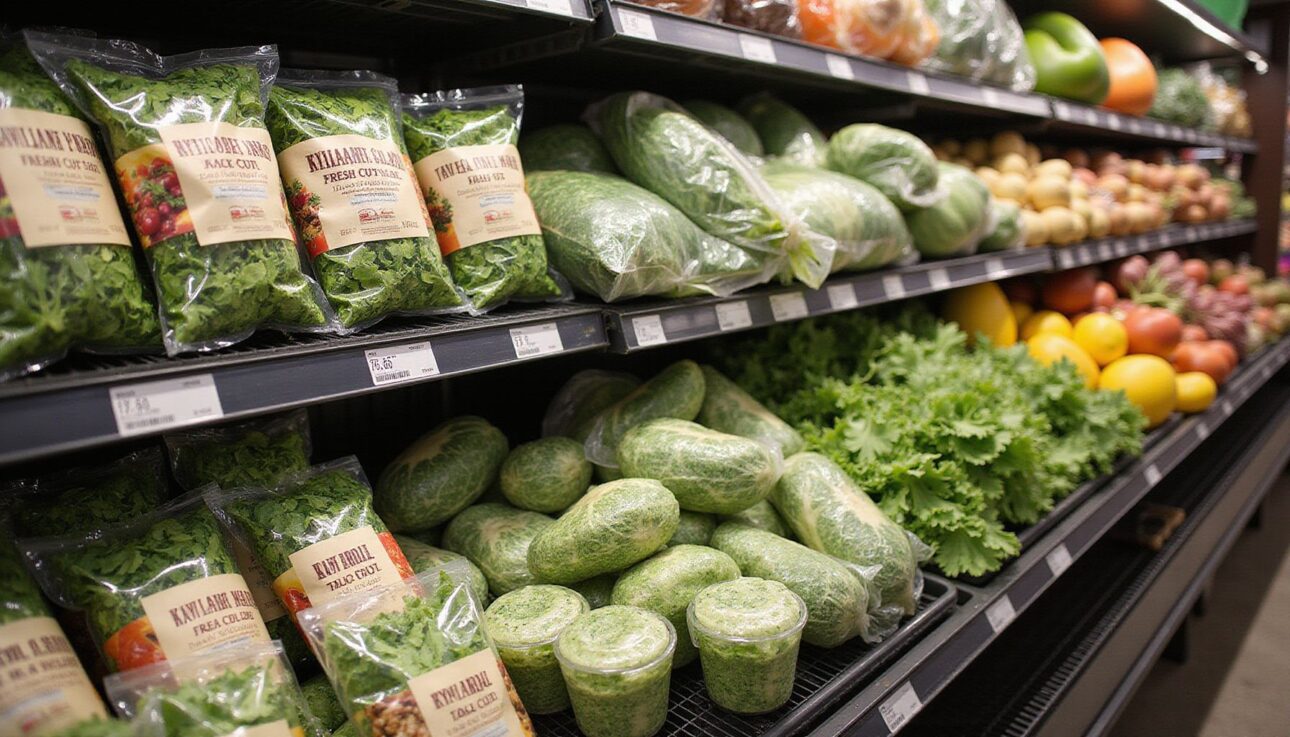
Retail distribution is different from food service in critical ways. Consumers expect variety, brand recognition, and shelf stability. Taylor Farms delivers pre-packaged salads with multiple leafy greens, spring mixes designed for specific cuisines, and vegetable medleys targeted to different dietary preferences. The company processes these products at regional facilities closest to major metropolitan areas to minimize transit time and preserve texture and nutrition.
Deli and Quick-Service Restaurant Integration
The deli channel represents a middle ground between raw produce sales and fully prepared meals. Supermarket delis source fresh-cut lettuce from Taylor Farms to assemble sandwiches, wraps, and prepared salads on-site. This direct-to-deli model allows local stores to offer made-to-order options while relying on centralized processing for quality and food safety standards.
Quick-service restaurant chains operating deli-style operations also tap into this channel. Panera Bread, Chipotle, and similar concepts depend on consistent, pre-cut lettuce and vegetables delivered multiple times per week to support high-volume operations.
Notable Restaurant and Brand Partners
Major Quick-Service Restaurant Chains
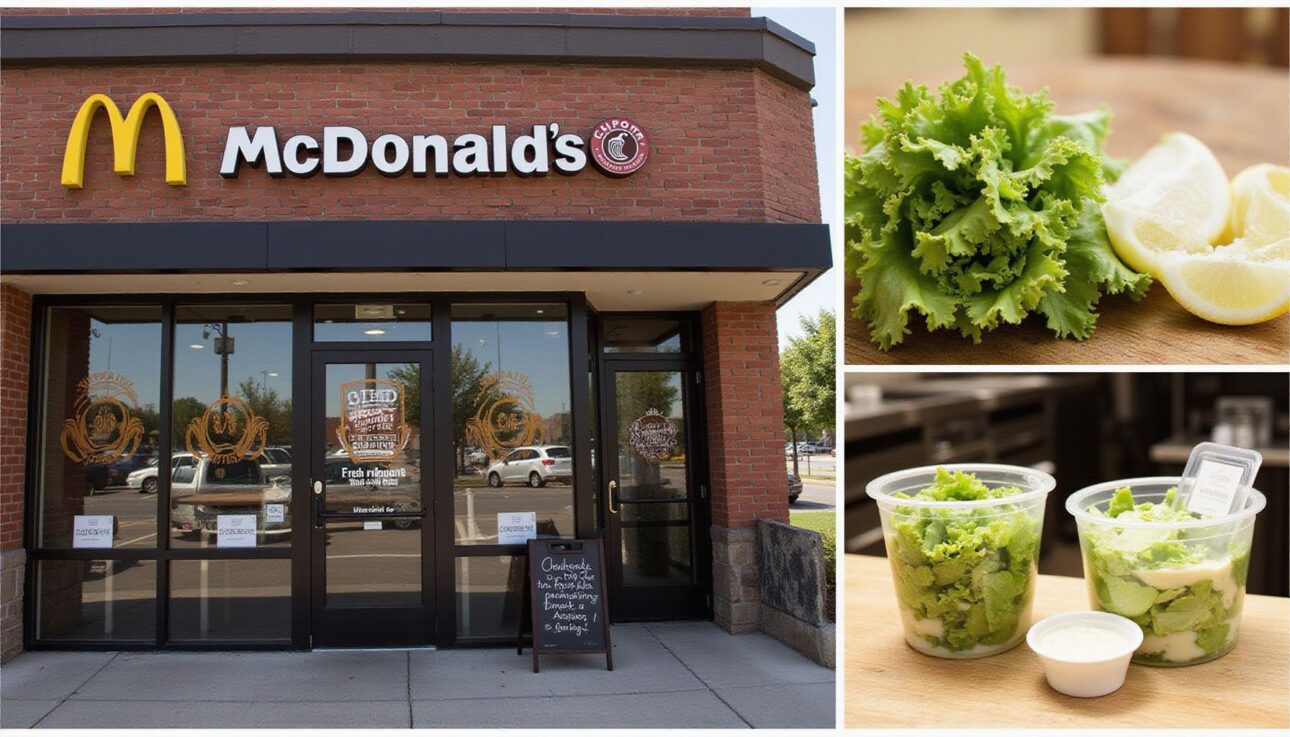
McDonald’s and Chipotle Mexican Grill stand as the most publicly recognized Taylor Farms partners, but they’re far from alone. According to Wikipedia’s Taylor Farms entry, the company distributes produce to chain restaurants across the industry. Taco Bell, another Yum! Brands property, has been explicitly linked to Taylor Farms supply relationships, particularly for shredded iceberg lettuce used in their menu items.
The partnership with these chains reflects Taylor Farms’ ability to handle massive, consistent order volumes while maintaining food safety protocols that satisfy corporate compliance requirements. A single large chain might order hundreds of thousands of pounds of lettuce weekly across hundreds of locations.
Supermarket and Retail Giants
Every major retail group in the United States sources from Taylor Farms in some capacity. Whole Foods Market, Kroger, Albertsons, Safeway, Walmart, Costco, and Sam’s Club all stock Taylor Farms products. The company’s recognition as a Supplier of the Year by Whole Foods Market underscores the partnership depth—this isn’t just a transactional vendor relationship but a strategic alliance built on supply chain innovation and shared goals around sustainability and food safety.
Regional supermarket chains across the country also depend on Taylor Farms to maintain their fresh produce sections. Raley’s, Sprouts, Natural Grocers, and countless mid-sized chains rely on the company’s distribution network to stock their shelves consistently.
Club Stores and Warehouse Retailers
Club stores like Costco and Sam’s Club operate on thin margins and high volumes. Their produce sections move massive quantities of pre-cut vegetables and salad kits—products perfectly aligned with Taylor Farms’ core business. These retailers benefit from Taylor Farms’ scale economies, which allow for competitive pricing on pre-packaged, ready-to-eat produce.
The Supply Network and Sourcing Model
Partnership with Farmer Families
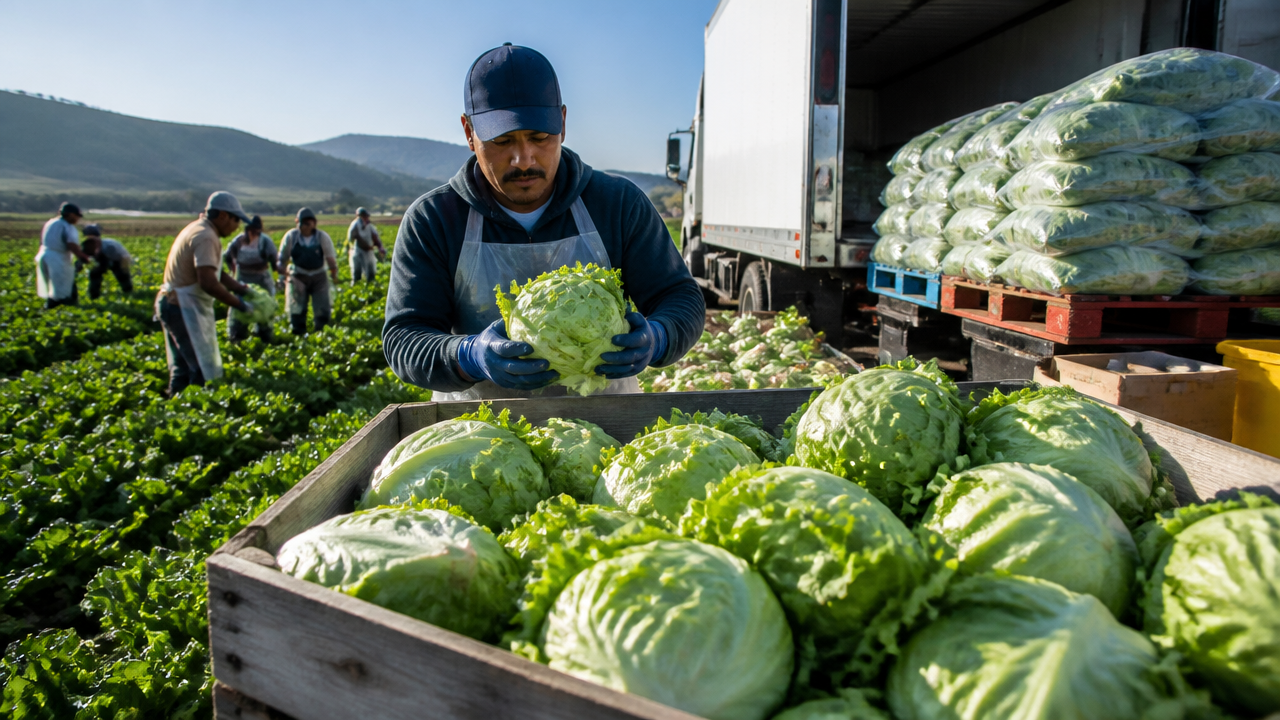
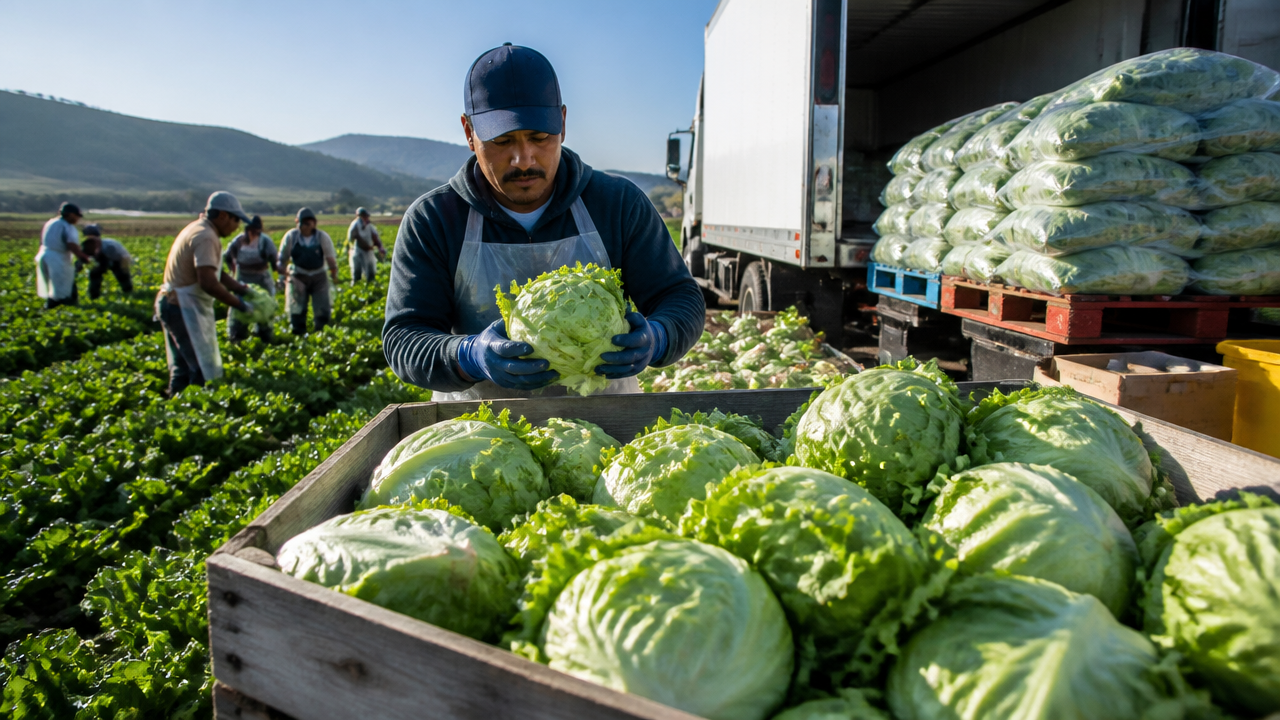
Taylor Farms doesn’t own all the farms that grow its raw materials. Instead, the company has built a collaborative network of over 100 farmer families who grow lettuce, spinach, arugula, and other leafy greens specifically to Taylor Farms’ specifications. This model provides several advantages: diversified sourcing reduces single-point failures, farmer families maintain investment in long-term sustainability, and the relationship model builds transparency across the supply chain.
These farmer partnerships span multiple growing regions, allowing Taylor Farms to source produce year-round. California’s Salinas Valley remains the production hub, but sourcing also occurs in Arizona, Florida, and other regions with suitable growing seasons, as well as central Mexico. This geographic diversity stabilizes supply even when regional weather disruptions occur.
Centralized Processing Operations
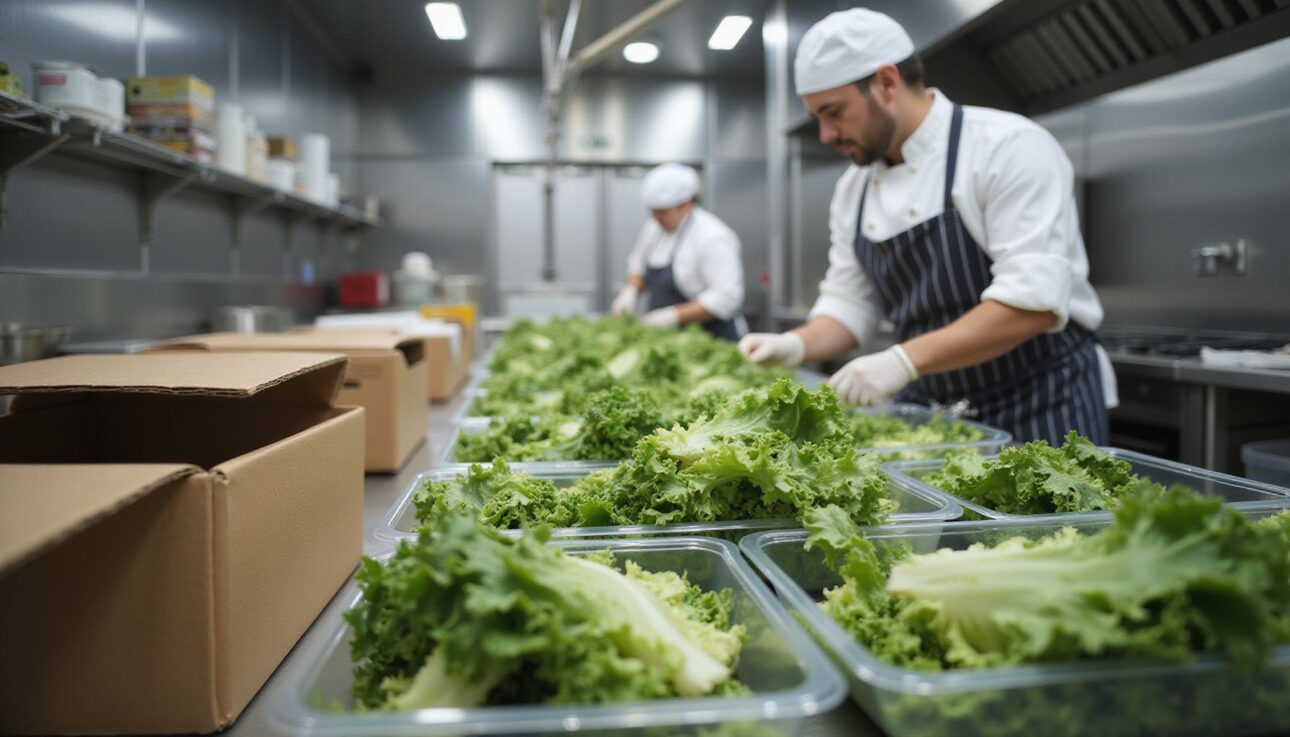
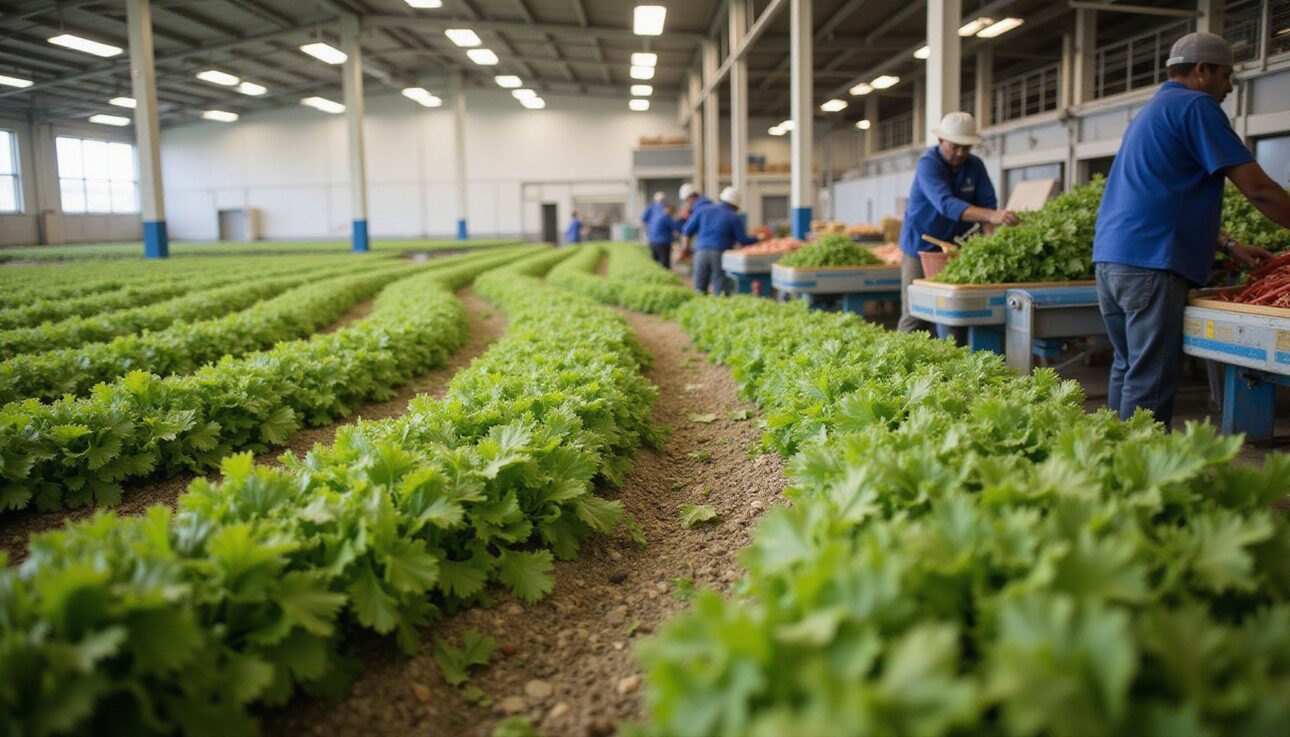
Raw produce arrives at Taylor Farms facilities and undergoes standardized processing: washing, grading, cutting, and packaging. The company operates 22 production locations strategically positioned to minimize transit time from farm to customer. A facility in Salinas handles West Coast distribution, while facilities in the Midwest and East serve their respective regions.
Quality control happens at every step. Produce is inspected for consistency, texture, and freshness before packaging. The company uses data-driven logistics—as detailed in Food Logistics case studies—to track products from processing through delivery, ensuring temperature control and food safety at every stage.
Greenhouse and Controlled-Environment Agriculture
Taylor Farms recognizes that traditional field agriculture has seasonal limits. The company’s acquisition of Equinox Growers marked a strategic pivot toward controlled-environment agriculture (CEA)—greenhouses that allow year-round production of leafy greens. This investment addresses a key industry challenge: maintaining consistent supply during off-seasons when field production declines.
Greenhouse production also enables innovation in sustainable farming. Controlled environments use less water, eliminate weather-related losses, and reduce the need for certain pesticides. As consumer demand for locally grown and sustainably sourced produce grows, this vertical farming capacity positions Taylor Farms to meet evolving retailer requirements.
Organic produce represents approximately 20% of Taylor Farms’ total business, a significant segment reflecting consumer preference shifts. The company invests in organic certification and sustainable farming practices to serve premium retailers and consumers willing to pay higher prices for certified organic products.
Whole Foods Market’s explicit recognition of Taylor Farms as a Supplier of the Year reflects this commitment. The company works with farmer partners to transition fields to organic certification, meets rigorous organic standards for processing and handling, and maintains separate production lines to prevent contamination between organic and conventional products.
Sustainability and Quality Improvements
Taylor Farms actively works to reduce synthetic materials and fertilizers even in conventional crop production. Company leadership has stated an objective to “earn customers’ trust and create partnerships so we can grow together.” This means investing in agronomic practices that improve soil health, reduce chemical inputs, and produce healthier crops—not because regulation demands it, but because long-term supply chain stability requires healthy farmland.
These initiatives address a critical industry reality: soil degradation, water scarcity, and climate variability threaten traditional agriculture. By partnering with farmer families and investing in sustainable practices, Taylor Farms protects its own supply chain while supporting the farmers who depend on these partnerships.
Frequently Asked Questions
Q: How many people got sick from Taylor Farms lettuce?
As of late July 2026, the CDC had confirmed 1,644 cases tied to the cyclosporiasis outbreak linked to Taylor Farms iceberg lettuce, with more than 5,100 additional illnesses under investigation—nearly 7,000 cases in total. This outbreak resulted in 141 hospitalizations and cases have been reported across 34 states, though the lettuce specifically served at Taco Bell was traced to just five states: Indiana, Kentucky, Michigan, Ohio, and West Virginia.
Q: Are school districts served by Taylor Farms vegetables?
Taylor Farms distributes produce to several California school districts through third parties like Golden State Foods. The company is known for supplying fresh-cut fruits and vegetables to various institutional buyers.
Q: What type of lettuce did Taylor Farms supply to Taco Bell?
Taylor Farms de Mexico supplied shredded iceberg lettuce grown in central Mexico to Taco Bell restaurants. This specific product was identified as the suspected source of contamination in the ongoing cyclosporiasis outbreak, though Taylor Farms has noted that no product sample has actually tested positive for the parasite, and an earlier positive lab result was later retracted by the FDA.
Q: Where is Taylor Farms based and how large is it?
Taylor Fresh Foods, known as Taylor Farms, is based in Salinas, California. It is an American producer of fresh-cut fruits and vegetables and was ranked as the world’s largest salad processor in 2009.
Q: Does Taylor Farms supply food to restaurants only?
No, Taylor Farms supplies many of the largest supermarket chains and foodservice restaurants in the United States. They also distribute to California school districts through third-party partners.
Q: Will Taylor Farms stop selling lettuce after the outbreak?
Taylor Farms has already voluntarily recalled all iceberg lettuce grown and processed in central Mexico as of July 17, 2026, and says it will not source iceberg lettuce from that region for the remainder of the growing season. The company remains a major processor overall despite the outbreak, which has produced roughly 7,000 confirmed or suspected cases.
Q: Who else besides Taco Bell gets lettuce from Taylor Farms?
Besides Taco Bell, Taylor Farms supplies McDonald’s, Chipotle Mexican Grill, and many large US supermarket chains. They also distribute to California school districts via partners like Golden State Foods.
My Experience With 10 Proven Brands That Get Their Lettuce From Taylor Farms
Researching Taylor Farms’ supply network was humbling in the best way. You realize how invisible these operations really are—most people have no idea their salad at Chipotle, their Whole Foods pre-cut veggie pack, or their McDonald’s salad all trace back to the same processor in California. That level of scale, honestly, should matter more in how we think about food safety and supply chain resilience.
What struck me most was the deliberate partner model. Taylor Farms works with over 100 farmer families rather than consolidating everything into mega-corporate farms. That’s intentional. It builds redundancy into their system—if one region has a drought, others keep producing. If one farmer’s crop fails, the network absorbs it. That’s expertise disguised as just being thoughtful about relationships.
The food safety piece is real too. When you’re moving 165 million servings weekly, one mistake scales instantly. That’s why they’ve invested so heavily in tracking systems and regional processing facilities. It’s not flashy, but it’s exactly how you protect millions of people you’ll never meet.
Have you noticed Taylor Farms products in your own kitchen, and does knowing the supply chain change how you think about them?
Conclusion
Taylor Farms is the hidden infrastructure of American food. From Taco Bell to Whole Foods, from McDonald’s to regional supermarkets, the company’s lettuce and fresh-cut produce reach consumers across every retail channel and restaurant category. The scale is staggering—165 million servings weekly from 22 production facilities—but the model is surprisingly sophisticated: partnerships with farmer families, regional processing for freshness, and heavy investment in supply chain technology and food safety systems.
The company’s evolution toward organic production, controlled-environment agriculture, and sustainable farming practices reflects how modern food distribution must adapt to consumer expectations and supply chain risks. When you buy a salad kit at your supermarket, order a salad at a quick-service restaurant, or pick up prepared vegetables at a deli counter, you’re likely benefiting from Taylor Farms’ infrastructure, whether you realize it or not.
Understanding who supplies whom in the food industry matters. It clarifies why certain brands maintain quality standards, how retailers manage consistency across locations, and why supply chain disruptions—whether from weather, disease, or safety concerns—ripple across the entire sector. Taylor Farms doesn’t sell directly to consumers, but their fingerprints are on nearly every fresh vegetable plate served in America.
References
Tracxn. (n.d.). Taylor Farms – 2026 Company Profile, Funding & Competitors. https://tracxn.com/d/companies/taylor-farms/__GHPl_zQ9C4mv9Al9tJMHNBrC2Mk9yc3HX2QoNu_El6U
Taylor Farms. (n.d.). Taylor Farms recognized with Supplier of the Year for Service and Partnership from Whole Foods Market. https://www.taylorfarms.com/newsroom/taylor-farms-recognized-with-supplier-of-the-year-for-service-and-partnership-from-whole-foods-market/
Microsoft. (n.d.). Taylor Farms delivers freshness and drives efficiency with Dynamics 365. https://www.microsoft.com/en/customers/story/24441-taylor-farms-dynamics-365-supply-chain-management
Wikipedia. (n.d.). Taylor Farms. https://en.wikipedia.org/wiki/Taylor_Farms
Food Logistics. (n.d.). Redwood Logistics Taylor Farms Case Study: Delivering on the Promise of Freshness. https://www.foodlogistics.com/transportation/3pl-4pl/news/12345963/redwood-logistics-taylor-farms-case-study-delivering-on-the-promise-of-freshness
Haas News. (2026, Spring). Bruce Taylor: Building Taylor Farms Into $7 Billion. https://newsroom.haas.berkeley.edu/magazine/spring-2026/taylor-farms/
LeadIQ. (n.d.). Taylor Farms Company Overview, Contact Details & Competitors. https://leadiq.com/c/taylor-farms/5a1d82b024000024005d4d14
I’m the mom behind Wise Mom Blogger, where everyday creativity meets real-life motherhood. I share easy DIY crafts, cozy knitting and crochet projects, beginner-friendly sewing ideas, and family-tested recipes—plus quick baking hacks that make homemade feel doable on busy days.
15 thoughts on “10 Proven Brands That Get Their Lettuce From Taylor Farms (UPDATED)”
Taylor Farms has been the source of two major food poisoning outbreaks with a couple of years. That’s a big red flag for me to not trust their products. There has to be a better, more accurate daily protocol to test for these parasites/bacteria that cause food borne illnesses.
“The food safety piece is real too. When you’re moving 165 million servings weekly, one mistake scales instantly. That’s why they’ve invested so heavily in tracking systems and regional processing facilities. It’s not flashy, but it’s exactly how you protect millions of people you’ll never meet.”
But reality is far different. Their produce has been linked to more than one outbreak, including e coli. They’ve just tried to throw Mexico under the bus, instead of being accountable to finding out where feces contaminated water is being introduced into the irrigation or washing process.
Your article is a little too pro-Taylor farms for me.
Federal investigators traced a five-state outbreak to shredded iceberg lettuce grown in central Mexico, supplied by Taylor Farms de Mexico. The contamination entered the system farther upstream, somewhere along a supply chain that stretched from a Mexican farm through a major distributor and into hundreds of American restaurants. Taylor Farms supplies hundreds or thousands of food-service locations through national distributors like Sysco.
According to https://www.sciencedirect.com/science/article/pii/S0362028X24000590 leafy greens account for as many as 2,307,558 food borne illnesses annually in the United States. If Taylor Farms supplies a huge majority of leafy greens to the US then their share of the problem is much greater than 7,000.
I’ve just read a comment that mentions the owner of Taylor lettuce being a big contributor/supporter of Donald Trump. This support has relieved Taylor lettuce of the necessity of regular inspections of their produce. The comment also said that Taylor doesn’t allow his workers to take bathroom breaks. It all seems to hand together doesn’t it??
The positive test done by the FDA was not a false positive nor was it retracted by the FDA. Taylor Farms randomly tried to make a statement that it was a false positive and the FDA retracted it, but the FDA has issued statements to the contrary.
Is this blog run by Taylor Farms? Sounds like it comes from one of their publicists. btw, Taylor Farms has hired a former advisor to the Trump administration as their lobbyist. Part of the job is to distance Taylor Farms from public scrutiny with help from the current administration. (NYT article).




Taylor Farms has been the source of two major food poisoning outbreaks with a couple of years. That’s a big red flag for me to not trust their products. There has to be a better, more accurate daily protocol to test for these parasites/bacteria that cause food borne illnesses.
Could it be, that we need USDA inspectors on site in each location to oversee food safety.
Good to know that without government requirement or oversight, this company doesn’t bother monitoring their supply chain for pathogens.
Taylor Farm, like many big corporations, putting profit over people.
Didn’t the cult DOGE the USDA and FDA? Yup, they did.
Sadly, that will never happen. And government funding for regulatory agencies seems to be getting cut more and more.
Unfortunately with the current administration, FDA, CDC, ETC should not be trusted at all.
“The food safety piece is real too. When you’re moving 165 million servings weekly, one mistake scales instantly. That’s why they’ve invested so heavily in tracking systems and regional processing facilities. It’s not flashy, but it’s exactly how you protect millions of people you’ll never meet.”
But reality is far different. Their produce has been linked to more than one outbreak, including e coli. They’ve just tried to throw Mexico under the bus, instead of being accountable to finding out where feces contaminated water is being introduced into the irrigation or washing process.
Your article is a little too pro-Taylor farms for me.
Federal investigators traced a five-state outbreak to shredded iceberg lettuce grown in central Mexico, supplied by Taylor Farms de Mexico. The contamination entered the system farther upstream, somewhere along a supply chain that stretched from a Mexican farm through a major distributor and into hundreds of American restaurants. Taylor Farms supplies hundreds or thousands of food-service locations through national distributors like Sysco.
According to https://www.sciencedirect.com/science/article/pii/S0362028X24000590 leafy greens account for as many as 2,307,558 food borne illnesses annually in the United States. If Taylor Farms supplies a huge majority of leafy greens to the US then their share of the problem is much greater than 7,000.
I’ve just read a comment that mentions the owner of Taylor lettuce being a big contributor/supporter of Donald Trump. This support has relieved Taylor lettuce of the necessity of regular inspections of their produce. The comment also said that Taylor doesn’t allow his workers to take bathroom breaks. It all seems to hand together doesn’t it??
“They” want us dead.
Pretty clear that is the plan.
Sick of this dystopia
Well then let’s do to them what they are trying to do to us…
The positive test done by the FDA was not a false positive nor was it retracted by the FDA. Taylor Farms randomly tried to make a statement that it was a false positive and the FDA retracted it, but the FDA has issued statements to the contrary.
Is this blog run by Taylor Farms? Sounds like it comes from one of their publicists. btw, Taylor Farms has hired a former advisor to the Trump administration as their lobbyist. Part of the job is to distance Taylor Farms from public scrutiny with help from the current administration. (NYT article).
10 Proven Brands That Get Their Lettuce From Taylor Farms
No list?
Edited. now