What makes the One Big Beautiful Bill Act so divisive that it passed by just one vote in each chamber? Signed into law on July 4, 2025, this sweeping piece of legislation reshapes tax policy, federal spending, and social assistance in ways that will ripple through the economy for years. The One Big Beautiful Bill—officially House Bill 1 of the 119th Congress—represents one of the largest overhauls of U.S. fiscal policy in recent memory, touching everything from small business taxes to health coverage to food assistance. Whether you’re a business owner, student, or someone relying on social programs, this law affects you. Let’s break down what’s actually in it and why people are so split on whether it’s a win or a loss.
Quick Questions and Answers
Question: Why is the One Big Beautiful Bill Act called controversial? The One Big Beautiful Bill Act is controversial because it makes the largest cuts to U.S. food assistance, health care, and education programs in history while funding over $4.5 trillion in tax breaks mostly for billionaires and corporations. Critics argue it slashes the social safety net to pay for wealthier tax cuts, creating a stark trade-off between public needs and private gains.
Question: What does the One Big Beautiful Bill Act do for taxes? The bill extends and expands more than $4.5 trillion in tax breaks, primarily for the ultrawealthy and corporations, while making many Tax Cuts and Jobs Act provisions permanent. It also permanently raises the estate tax exemption to $15 million per individual and lowers green energy tax credits by about half to offset costs.
Question: How does the One Big Beautiful Bill Act affect Medicaid? The Act cuts Medicaid spending by 12% and expands work requirements, while shifting 75% of administrative costs to states instead of the federal government. Enrolled individuals may face higher copayments of up to $35 per service, making health care less affordable for many beneficiaries.
Key Takeaways
- The bill passed Congress narrowly (215-214 in the House, 51-50 in the Senate) after weeks of negotiation and floor amendments.
- Over $4.5 trillion in tax breaks go primarily to wealthy individuals and corporations, while social programs face historic cuts.
- The Congressional Budget Office projects 11.8 million people will lose health coverage by 2034 due to the bill’s provisions.
- Small business tax deductions increase from 20% to 23%, benefiting about 26 million entrepreneurs.
- Renewable energy tax credits are accelerated, phased out, or terminated, reshaping clean energy financing.
- Medicaid faces a 12% cut and expanded work requirements; SNAP benefits tighten with new state cost-sharing.
- Student loan borrowing limits are capped at $257,000 lifetime and certain loan forgiveness programs are paused.
One Big Beautiful Bill Act: Overview and Legislative Origins
On July 4, 2025, President Donald Trump signed the One Big Beautiful Bill Act into law—a legislative accomplishment that required intense negotiations between House and Senate Republicans. The bill cleared the House with a 215-214 vote on May 22 and squeaked through the Senate 51-50 after Democrats and a handful of Republicans threatened to block it. This razor-thin margin reveals just how contested the priorities in this law truly are.
The bill is framed as a comprehensive restructuring of both tax codes and federal spending. It touches individual income taxes, business deductions, charitable giving incentives, and the funding mechanisms for social safety net programs. For a single piece of legislation to reshape so many different areas of the federal budget is unusual—which is partly why it drew such sharp opposition and equally passionate support.
According to reporting on the act’s implementation, the legislation was positioned as an economic stimulus and deficit-reduction tool. Supporters pointed to business tax cuts and small business relief. Critics countered that the bill represents a massive transfer of wealth upward while gutting programs that millions of Americans depend on. Understanding the bill means grasping both what it gives and what it takes away.
Core Concepts of Business and Tax Reform

At its heart, the One Big Beautiful Bill Act is a business-focused piece of tax legislation. The most immediate change for entrepreneurs is the increase in the small business income deduction from 20% to 23%—a bump that affects roughly 26 million small business owners annually. For a sole proprietor or partner earning $200,000 in business income, this change could mean a deduction increase of about $6,000, lowering taxable income and the federal tax bill.
The bill also expands key provisions from the earlier Tax Cuts and Jobs Act (TCJA). This includes more generous treatment of qualified small business stock, which allows certain investors to exclude gains from taxation under specific conditions. Employee retention credits—tax breaks designed to encourage businesses to keep workers during downturns—are also modified to make them easier to claim in some cases and harder in others, depending on business size and sector.
Beyond sole proprietors, the act tinkers with interest deductions and Section 179 expensing, both of which affect how businesses deduct the cost of equipment purchases. These changes were made permanent, meaning businesses don’t have to worry about these provisions expiring and reverting to older, more restrictive rules. For accountants and tax planners, this stability simplifies future planning.
Charitable organizations face a different set of changes. The bill modifies how deductions work for donations, which could affect fundraising strategies and donor incentives going forward. Nonprofits are still digesting exactly how these changes will reshape giving patterns, but the consensus is that some donors may see reduced tax incentives for charitable contributions.
Energy Tax Policy Revisions
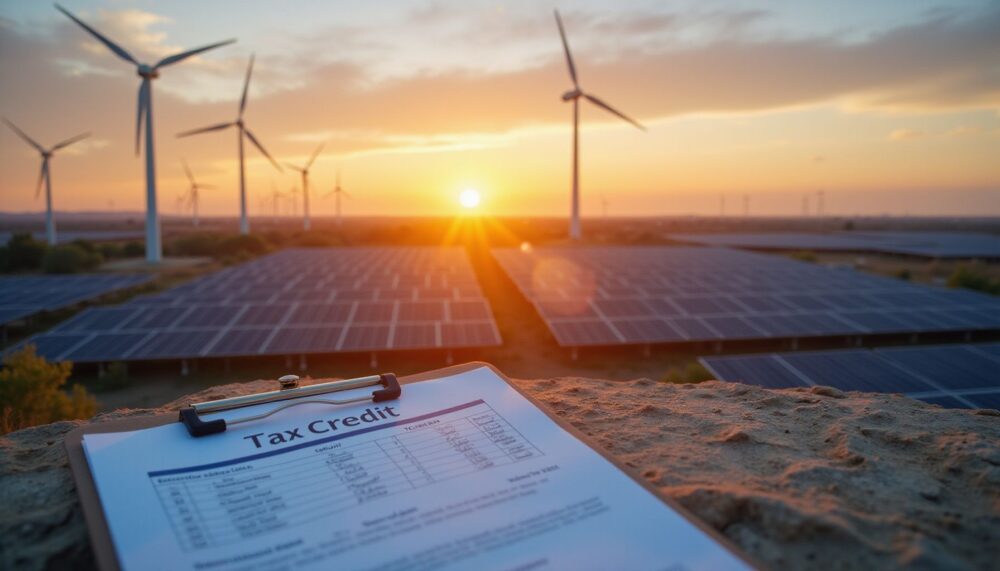
The One Big Beautiful Bill Act made significant changes to how the government incentivizes clean energy development. The renewable energy tax credit landscape shifted dramatically: some credits were accelerated toward phase-out, others were terminated entirely, and new restrictions on foreign entities were added.
For solar, wind, and energy storage projects, this means the financial picture changed overnight. Developers and investors who rely on these credits to make projects pencil out had to recalculate returns and project timelines. Some installations that were planned for 2025 or 2026 may no longer make financial sense if the tax credit they were counting on no longer exists or has been reduced.
The bill also restricted which countries’ materials and components qualify for tax credits. This added a layer of complexity to supply chain decisions for renewable energy manufacturers and installers. A solar panel company that sources components from a country on the restrictions list may no longer qualify its customers for certain credits, which could affect pricing and competitiveness.
The rationale, according to supporters, is that these changes help offset the cost of the bill’s massive tax breaks. By reducing long-term commitments to renewable energy incentives, lawmakers freed up budget room for business and individual income tax cuts. Critics argue this trade-off undermines climate goals and leaves the clean energy sector confused about long-term policy direction.
Social Impact and Health Coverage Projections

Here’s where the One Big Beautiful Bill Act becomes deeply personal for millions of people. The Congressional Budget Office estimated that 11.8 million individuals will lose health coverage by 2034 due to the act’s provisions. An additional 5.1 million people could lose coverage due to related policy shifts outside the bill itself.
This happens partly because Medicaid—the federal-state health program for lower-income Americans—faces a 12% spending cut. States are also being shifted 75% of administrative costs that the federal government previously covered. This means states have to choose: absorb higher costs or trim enrollment and benefits.
The act also expands work requirements for Medicaid and food assistance programs. People who were previously exempt (parents, students, people with disabilities under certain conditions) may now need to document work hours to stay eligible. For some, this is doable. For others—parents working irregular jobs, people with health barriers to work, caregivers—it could mean losing coverage.
On the Medicaid side specifically, copayments increase to as high as $35 per service. When you’re already stretching a tight budget, an extra $35 for a doctor visit or prescription adds up quickly. The bill’s architects argued that higher copays encourage more careful use of health services. Opponents worry it will simply keep sick people from seeking care, leading to worse health outcomes down the line.
Debate: Benefits and Socioeconomic Trade-offs

Supporters of the One Big Beautiful Bill Act point to genuine economic incentives embedded in the law. The expanded small business deduction puts more cash in the pockets of millions of entrepreneurs. The permanent estate tax exemption at $15 million per individual protects family businesses and farms from being forced to sell to pay taxes—a real concern for some agricultural operations.
Proponents also note that the bill provides new savings tools, like “Trump Accounts,” which offer a $1,000 government baby bonus for children born in the next few years. The child tax credit is expanded and made permanent at $2,000 per child (rising to $2,200 between 2025 and 2028). For middle-class families with multiple kids, this translates to real money.
On the flip side, critics call this “the largest cuts to social safety nets in U.S. history.” The bill slashes food assistance (SNAP), expands work requirements, and shifts costs to states that can’t afford them. Education funding drops. Student loan programs tighten with new borrowing caps and paused forgiveness rules. Health coverage shrinks. All of this, they argue, disproportionately harms people who can least afford to lose support—low-income families, seniors on fixed incomes, people with disabilities.
The Urban-Brookings Tax Policy Center and other independent analysts continue to publish detailed distributional analyses showing how much of the tax benefit goes to different income groups. The broad finding is consistent: the wealthiest Americans and largest corporations capture the majority of tax savings. Conversely, the people most likely to lose benefits are those with lower incomes.
This tension—massive tax cuts financed by historic social program cuts—is why the bill passed by just one vote in each chamber. It’s a real choice between two visions of government’s role, and Americans remain sharply divided on which vision is right.
Tax Breaks and the Wealth Gap
The $4.5 trillion in tax breaks that dominate the bill deserve a closer look. Over half of these benefits flow to the wealthiest 1% of households and to large corporations, according to early analyses. The bill makes the Tax Cuts and Jobs Act’s lower corporate tax rate (21%) permanent, extends and expands business deductions, and raises the estate tax exemption so high that only the wealthiest families pay it.
Meanwhile, middle-class and working-class tax provisions are more modest. The child tax credit expansion helps families but phases out at relatively low income thresholds. The expanded small business deduction is valuable for entrepreneurs but doesn’t help workers who don’t own businesses. And while there are new overtime pay deductions (up to $12,500 or $25,000 for married couples), these only help people with specific types of income.
The bill also introduces new savings accounts—called Trump Accounts—that allow tax-free growth on savings. The government seeding these accounts with a $1,000 baby bonus sounds generous until you realize that wealthy families can contribute far more to these accounts than poor families can afford to save. Over decades, the wealth gap compounds.
Economists across the political spectrum debate whether these tax cuts stimulate economic growth enough to offset the lost revenue and reduced social spending. Some argue that businesses and entrepreneurs will invest and hire more with lower tax bills. Others contend that wealthy individuals and corporations mostly save or invest in financial markets rather than spending in ways that create broad-based job growth. That debate is still unfolding as the bill’s provisions take effect.
SNAP, Medicaid, and Education Cuts
Food assistance took one of the biggest hits in the bill. SNAP (the Supplemental Nutrition Assistance Program, formerly called food stamps) faces expanded work requirements and shifts more costs to states. States that previously received full federal reimbursement for certain SNAP administrative costs now have to cover some of those costs themselves. When state budgets are tight—and they often are—something gives. Usually it’s enrollment outreach or benefits.
Medicaid’s 12% cut is substantial, but the real pain comes from shifting administrative costs to states. Imagine if you ran a small business and suddenly the vendor you buy from told you to cover 75% of the costs they used to cover. You’d have to cut something else or raise prices. States face that exact bind.
Education funding also declined. The bill reduces federal education spending, which means less money for schools in lower-income districts that depend on federal dollars. Student loan programs tighten: there’s now a $257,000 lifetime borrowing limit for undergraduates, and rules that would forgive loans for people defrauded by their schools are paused. For students from families without money to spare, this means less access to college or more debt upon graduation.
These cuts sound abstract in policy terms. In practice, they mean fewer school counselors, higher out-of-pocket health costs for poor families, and tighter budgets for colleges trying to serve low-income students.
Border and Defense Spending Increases
While the bill cuts social spending, it allocates substantial new money to border enforcement and defense. The act includes $150 billion for border security and deportations and another $150 billion for defense spending. Immigration and Customs Enforcement (ICE) funding increases dramatically, rising from $10 billion annually to over $100 billion by 2029. This makes ICE the most funded federal law enforcement agency—more than the FBI, DEA, or any other.
This spending reflects priorities that dominate Republican messaging: border security and national defense. Whether these investments are effective or necessary is contested, but the point is that while programs helping poor people shrink, spending on enforcement and military grows. It’s a direct reflection of what Congress chose to prioritize.
Implementation Timeline and What Changes When
The bill doesn’t take effect all at once. Tax changes for businesses and individuals begin in the 2025 tax year (filed in 2026). Health coverage losses will stretch over the next decade. Work requirements for SNAP and Medicaid take effect at different times depending on state readiness. The $15 million estate tax exemption is permanent starting now.
For most people, the biggest immediate change is in their tax refund or bill for tax year 2025. Small business owners see the increased deduction right away. Families notice the expanded child tax credit. On the flip side, people covered by Medicaid may see higher copays soon. SNAP recipients in states moving quickly to implement work requirements might lose benefits if they can’t document work hours.
This staggered rollout means the bill’s effects accumulate over time. By 2034, when the CBO’s 11.8 million people have lost health coverage, the full impact will be visible. But for the next couple of years, it’s more piecemeal: some winners emerge quickly (businesses, wealthy taxpayers), while others (people on Medicaid, SNAP recipients) face changes more gradually.
Comparison of Who Pays and Who Benefits
| Group | Main Benefits | Main Costs | Net Effect |
|---|---|---|---|
| Small business owners (under $5M revenue) | 20% to 23% income deduction increase; permanent Section 179 expensing | Possible state-level tax increases; reduced green energy credits if they use renewable energy | Mixed; small gains in tax cuts offset by possible state cost-shifting |
| Wealthy individuals ($1M+ income) | $4.5 trillion in tax breaks; $15 million estate tax exemption; new Trump Accounts | Minimal | Large gains; primary beneficiaries of the bill |
| Large corporations | Permanent 21% tax rate; expanded deductions; lower energy compliance costs | Possible climate pressures; reduced renewable energy incentives | Large gains; major beneficiaries |
| Middle-class families ($75K–$150K) | Expanded child tax credit (temporary); small overtime pay deduction | Possible reduced school funding; higher Medicaid copays if enrolled | Small gains; benefits phase out at higher incomes |
| Low-income families (below $50K) | Temporary child tax credit (if they qualify) | 12% Medicaid cut; higher copays; stricter SNAP work requirements; reduced education funding | Major losses; hit hardest by cuts |
| Students and recent graduates | Temporary child tax credit if parents claim them | $257,000 lifetime student loan cap; paused loan forgiveness for defrauded borrowers | Losses; reduced college access and loan options |
My Experience With the One Big Beautiful Bill Act in Simple Terms
When I first read through the bill’s text and the early analyses, I was struck by how cleanly it split along existing political lines. Republicans saw it as overdue tax relief for “job creators” and fiscal discipline through spending cuts. Democrats saw it as a regressive wealth grab at the expense of vulnerable people. Both sides had numbers to back them up—and both were, in a narrow sense, right.
What surprised me most was how little media coverage focused on the sheer scale of the cuts. When you’re talking about 11.8 million people losing health coverage, or the largest food assistance cuts ever, those are seismic shifts. Yet because they’re phased in over years, they don’t feel urgent in the same way a stock market crash does.
The estate tax exemption piece is worth noting because it shows the bill isn’t entirely cartoonish. A $15 million exemption does protect some genuine family businesses and farms. The problem is that it also means the ultra-wealthy pay nearly zero estate taxes. A family with a $50 million business pays nothing. That’s the gap the bill creates.
If you own a small business or employ people, you likely feel some tangible benefit. If you rely on Medicaid or SNAP, the next few years are going to be tighter. The bill basically asks: whose economic security matters more? And it answered that question loudly.
How are you thinking about the bill? Does it feel like it’s aimed at people like you, or against them?
FAQ
Q: Does the One Big Beautiful Bill Act change student loans?
Yes, the bill establishes a lifetime student loan borrowing limit of $257,000 and pauses a rule that would cancel loans for schools engaging in deceptive recruiting. These changes are expected to raise the costs of higher education and restrict borrowing access for many students looking to fund their degrees or graduate programs.
Q: What impact does the bill have on food stamps or SNAP?
The One Big Beautiful Bill Act expands work requirements for SNAP recipients and makes states responsible for some costs related to the food assistance program. These changes represent a significant reduction in federal food assistance support, contributing to the largest cuts to nutrition programs in U.S. history. States will need to decide whether to absorb costs or reduce enrollment.
Q: Are there new tax breaks for families in the bill?
The bill makes the $2,000-per-child tax credit permanent starting in 2026 and increases it to $2,200 per child for tax years 2025 through 2028. It also introduces “Trump Accounts,” a new savings vehicle that includes a $1,000 government baby bonus for children born in the next four years, designed to encourage long-term family savings.
Q: How much does the One Big Beautiful Bill Act raise the debt ceiling?
The Act raises the statutory debt limit by $5 trillion, allowing the federal government to borrow more to fund its operations and programs. This increase is part of a reconciliation bill designed to address spending and deficit levels across the federal government and provide fiscal flexibility for the next several years.
Q: Does the bill affect border enforcement and defense spending?
The law includes $150 billion in new defense spending and an additional $150 billion for border enforcement and deportations. It also increases funding for Immigration and Customs Enforcement (ICE) from $10 billion to over $100 billion by 2029, making it the most funded federal law enforcement agency in the process.
Q: What changes does the bill make to overtime pay taxes?
The bill allows an above-the-line deduction of up to $12,500 annually for qualified overtime compensation, or $25,000 for married couples filing jointly. This deduction phases out when a taxpayer’s income exceeds specific thresholds, such as $150,000 for most returns, making it most valuable for middle-income workers.
Q: Who benefits most from the One Big Beautiful Bill Act?
The Act primarily benefits the ultrawealthy and corporations through over $4.5 trillion in tax breaks and permanent estate tax exemptions raised to $15 million per individual. In contrast, it imposes the largest cuts to social safety net programs relying on health care, nutrition, and student loans for average Americans, creating a stark wealth-skewed outcome.
Latest Updates
As of mid-2026, states are actively implementing the bill’s provisions. Some Republican-led states moved quickly to expand SNAP work requirements, while Democratic-led states have sought waivers or delays to protect enrollment. The Treasury Department released guidance on how the new Trump Accounts would function, and early adoption has been mixed—the baby bonus is popular, but the accounts themselves appeal mainly to higher-income savers.
The CBO released updated estimates in 2026, confirming that health coverage losses are on track with earlier projections. Medical providers and hospitals are bracing for higher uninsured rates and more bad debt. The impact on local and state budgets is becoming clearer as Medicaid cost-shifting takes hold; some states are considering tax increases to cover the gap.
On the business side, the tax cuts have shown modest economic effects so far. Some small business owners report investing in equipment or hiring, citing the expanded deduction and permanent expensing rules. Larger corporations, meanwhile, have used tax savings for stock buybacks and dividends, not broad-based hiring—a pattern that tracks with prior tax cut cycles.
Renewable energy developers continue to adapt to the new tax credit landscape. Some projects have been scrapped or delayed; others have found new financing models that don’t rely as heavily on tax credits. The clean energy sector is growing, but at a slower pace than it would have with stronger incentives.
Conclusion
The One Big Beautiful Bill Act is not a mystery once you strip away the political theater. It’s a straightforward choice: roughly $4.5 trillion in tax cuts for wealthy people and corporations, financed by historic cuts to food assistance, health coverage, and education. The bill passed because Republicans control Congress and saw this as their mandate. It will reshape American life over the next decade in ways we’re only beginning to measure.
Whether it’s good policy depends entirely on what you value. If you believe lower taxes on the wealthy and businesses drive growth and that individuals should rely less on government, you likely support it. If you believe the government has an obligation to ensure basic food, health, and education for all, and that wealth inequality is already too extreme, you oppose it. Both views are coherent. The bill just made a choice between them.
For now, the practical reality is that the law is here. Tax filers benefit if they’re wealthy or run businesses. Medicaid enrollees and SNAP recipients face tighter conditions. Students have fewer loan options. Schools receive less federal funding. States scramble to cover new costs. This won’t change until either Congress passes new legislation or the political balance shifts. Understanding what’s actually in the bill—not the rhetoric around it—is your first step to figuring out how it affects you personally.
References
- NAACP Legal Defense and Educational Fund. (n.d.). President Trump’s ‘One Big Beautiful Bill Act,’ Explained. https://www.naacpldf.org/case-issue/trumps-one-big-beautiful-bill-act-explained
- Merrill Lynch. (n.d.). One Big Beautiful Bill Act Summary and Tax Implications. https://www.ml.com/articles/one-big-beautiful-bill-act-summary.html
- Stinson LLP. (n.d.). One Big Beautiful Bill Explained. https://www.stinson.com/newsroom-publications-one-big-beautiful-bill-explained
- Brookings Institution. (n.d.). One Big Beautiful Bill? A Preliminary Assessment. https://www.brookings.edu/articles/one-big-beautiful-bill-a-preliminary-assessment
- Center for American Progress. (n.d.). The Implementation Timeline of the One Big Beautiful Bill Act. https://www.americanprogress.org/article/the-implementation-timeline-of-the-one-big-beautiful-bill-act
- Tax Foundation. (n.d.). The Good, the Bad, and the Ugly in the One Big Beautiful Bill Act. https://taxfoundation.org/blog/one-big-beautiful-bill-pros-cons
- White House. (n.d.). The One Big Beautiful Bill. https://www.whitehouse.gov/obbb
- Association of State and Territorial Health Officials. (n.d.). One Big Beautiful Bill Law Summary. https://www.astho.org/advocacy/federal-government-affairs/leg-alerts/2025/one-big-beautiful-bill-law-summary

Sarah Anderson . J
I’m the mom behind Wise Mom Blogger, where everyday creativity meets real-life motherhood. I share easy DIY crafts, cozy knitting and crochet projects, beginner-friendly sewing ideas, and family-tested recipes—plus quick baking hacks that make homemade feel doable on busy days.