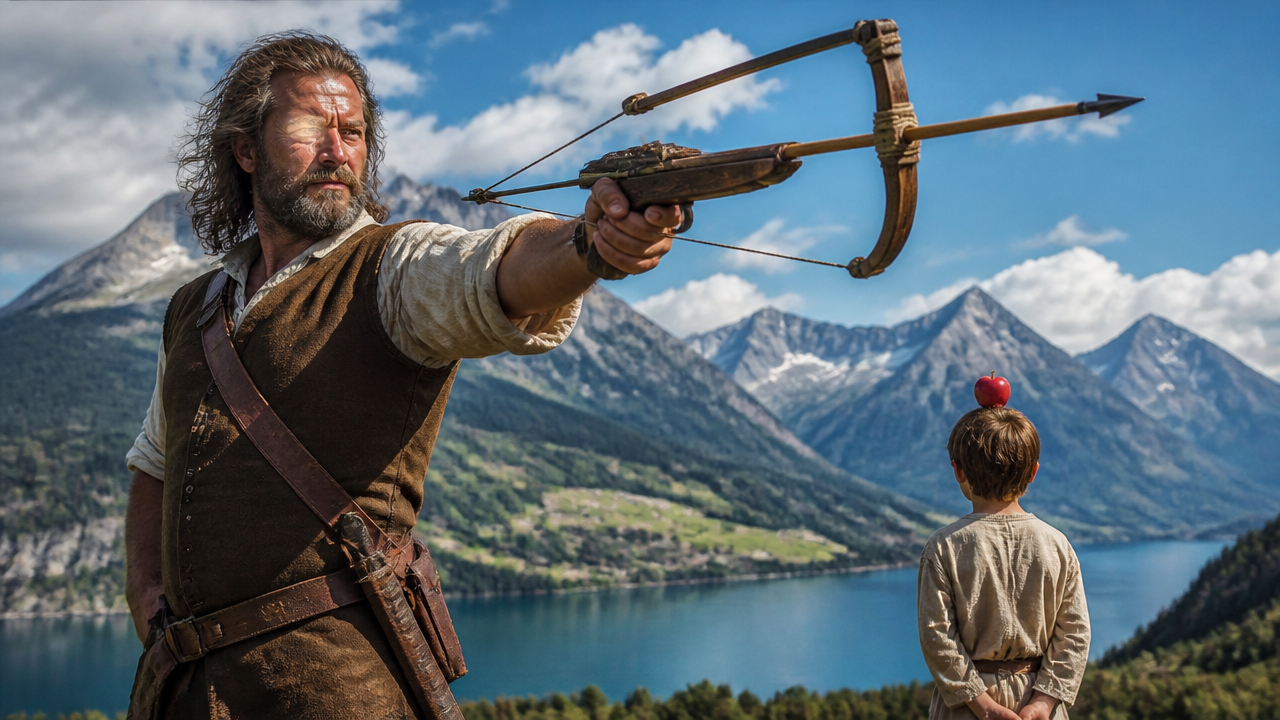
What makes a story powerful enough to inspire one of the world’s most recognizable classical compositions? The legend of William Tell—a Swiss peasant who refused to bow to tyranny—captured the imagination of composers and audiences for centuries. Rossini’s 1829 opera Guillaume Tell, built on this legend, gave the world an overture so electrifying that it became the heartbeat of pop culture, from The Lone Ranger to modern films. This exploration covers the 12 most fascinating facts about William Tell and the genius behind Rossini’s masterpiece.
Quick Questions and Answers
Question: Why is the William Tell Overture so famous today? The overture is famously recognized for its high-energy finale, the March of the Swiss Soldiers, which served as the theme music for The Lone Ranger on radio and television. While the full opera is rarely performed today, this exciting final three minutes remains irrevocably remembered by audiences and has been used in numerous films like A Clockwork Orange. Its enduring appeal makes it the most famous piece from Rossini’s last opera.
Question: Can the William Tell Overture be played without the opera? Yes, the famous overture is often heard independently of the complete four-hour opera work. The overture functions almost like a symphony with four distinct sections that depict scenes from the Swiss Alps, allowing it to stand alone as a complete musical piece. Audiences frequently recognize the high-energy finale without having seen the full opera.
Question: Does the William Tell Overture have four parts? Yes, the overture consists of four distinct parts that follow each other without pause, resembling movements of a symphony. Each section represents different episodes in the Swiss Alps, including a calm morning, a storm, and a final martial march. Composers like Berlioz even described it as a symphony in four parts due to its structure.
1. The Legend Roots Back to 14th-Century Swiss Folklore
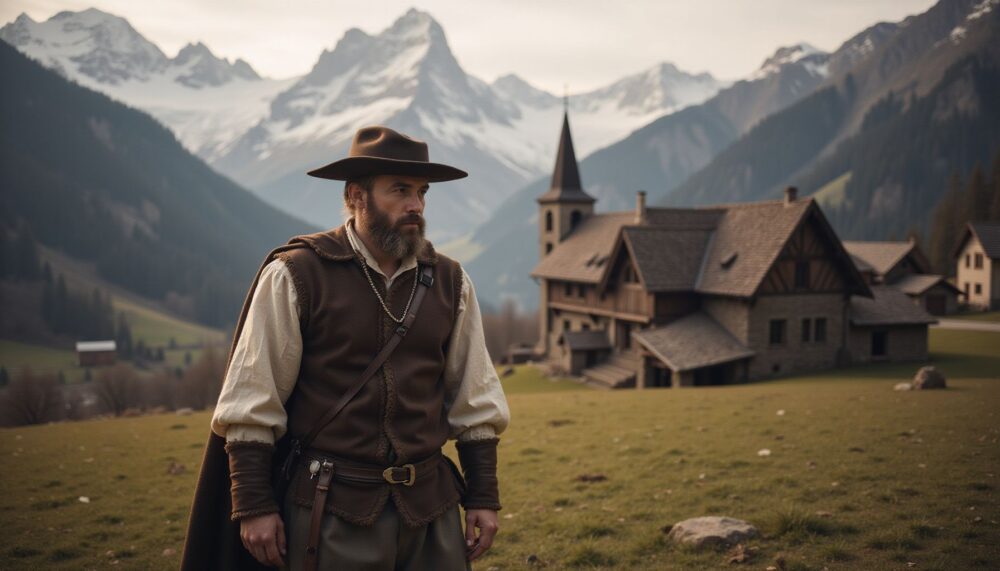
William Tell wasn’t born from Rossini’s imagination—he emerged from centuries of Swiss folklore. According to legend, Tell was a peasant archer who lived in the Alps during the early 14th century, a time when Austria’s Hapsburg nobility ruled the region with an iron fist. The story goes that Tell refused to bow or salute a tyrannical government official named Gessler, an act of defiance that cost him dearly. His courage became a symbol of Swiss resistance against oppressive foreign rule.
The historical accuracy of William Tell remains disputed among scholars. Some argue he was a real person whose deeds were exaggerated over generations; others believe the entire story is purely mythological. Regardless, the legend captured something true about the Swiss spirit—the willingness to resist tyranny, no matter the personal cost. Monuments and statues erected throughout Switzerland celebrate him as a national hero, even if his exact existence remains shrouded in mystery.
2. Friedrich Schiller’s 1804 Play Brought the Legend to the Stage
Long before Rossini composed a single note, German dramatist Friedrich Schiller transformed the William Tell legend into a powerful five-act play. Schiller’s Wilhelm Tell, published in 1804, became one of the most performed plays in European theater. The drama deepened the emotional weight of the legend, adding layers of political struggle, personal sacrifice, and national awakening that resonated with 19th-century audiences hungry for stories about freedom.
Schiller’s interpretation influenced everything that followed, including Rossini’s operatic version. The play’s structure, character development, and moral clarity provided the perfect blueprint for an opera libretto. When Victor-Joseph Étienne de Jouy and L. F. Bis adapted Schiller’s work into French for Rossini, they maintained the core themes while adjusting the narrative to fit operatic conventions. This lineage from legend to stage play to grand opera shows how a single story can evolve across centuries and art forms, each generation adding its own meaning.
3. Rossini Composed the Opera Specifically for the Paris Opera’s Demanding Standards

Gioachino Rossini didn’t write Guillaume Tell by accident—the Paris Opera commissioned it, and that institution had a reputation for demanding grandiose, large-scale compositions. The Paris Opera in the 1820s was the epicenter of European musical prestige, and composers understood that work written for its stage had to be spectacular. Rossini, already famous for his comic operas, accepted the challenge to create something on an unprecedented scale.
The resulting opera stretched across four acts and nearly four hours of music—far longer than Rossini’s previous works. The Paris Opera’s appetite for spectacle, elaborate staging, and orchestral richness forced Rossini to expand his compositional ambitions. He crafted not just memorable melodies but an entire world of sound. The overture alone demonstrates this commitment to grandeur, with its layered orchestration, dynamic shifts, and emotional range. After completing Guillaume Tell in 1829, Rossini largely withdrew from composing, as if the effort of meeting the Paris Opera’s standards had exhausted his creative drive.
4. The Opera Was Rossini’s Last Work After 39 Operas
Here’s a remarkable fact: Guillaume Tell was Rossini’s final opera. The composer had already written 39 operas before tackling this masterpiece at age 37, yet he chose to end his operatic career with it. After the premiere on August 3, 1829, Rossini entered what historians call his “silence”—decades where he composed very little despite living another 40 years. The effort required to meet Paris’s expectations apparently satisfied something in him, closing a chapter he never reopened.
This retirement from composition raises intriguing questions. Was Rossini exhausted? Had he said all he needed to say musically? Or did he simply recognize that Guillaume Tell represented the pinnacle of what he could achieve? The answer likely combines all three. By the time Rossini died in 1868, his final opera had become the most celebrated of his entire catalog, proving that sometimes an artist’s last work defines their entire legacy.
5. Rossini Recycled Melodies from His Earlier Operas

One of the less glamorous but utterly fascinating facts about Guillaume Tell is that Rossini didn’t compose it entirely from scratch. With the premiere just weeks away and the Paris Opera demanding an even grander score than anticipated, Rossini scavenged his own earlier works for musical ideas he could adapt or reimagine. This wasn’t plagiarism in the modern sense—composers in the 19th century often repurposed their own themes—but it reveals the practical pressure behind the masterpiece.
Several motifs in Guillaume Tell echo melodies from earlier Rossini operas. The composer essentially recycled his greatest hits, arranging them into new contexts that fit the William Tell narrative. This approach allowed Rossini to meet impossible deadlines while maintaining compositional quality. Rather than diminishing the final product, the reuse of proven melodic material actually strengthened it. These were melodies audiences already loved, now woven into a new tapestry. It’s a reminder that genius isn’t always about creating entirely new ideas—sometimes it’s about recognizing which existing ideas belong together.
6. The Overture’s Four Sections Paint a Musical Picture of the Swiss Alps
The overture isn’t just a thrilling piece of music—it’s a programmatic work that tells a story through sound. Composed as four distinct sections that flow without pause, the overture paints a vivid musical landscape of the Swiss Alps and the drama unfolding there. Understanding these four movements transforms how you listen to the piece.
The first section begins with a calm, serene depiction of sunrise over the mountains. Gentle oboes and flutes introduce a pastoral tranquility that captures the beauty of the Alpine setting. Then the weather changes. The second section builds tension with storm imagery—rolling timpani and agitated strings convey brewing conflict and danger. The third movement shifts to a pastoral interlude, giving listeners a moment to breathe before the finale. Finally, the fourth section explodes into the famous March of the Swiss Soldiers, a galloping triumph that represents the hero’s victorious resolve. This four-part structure mirrors a classical symphony in scope and ambition, which is why some musicologists have called it “a symphony in four parts” rather than merely an overture.
7. The Cor Anglais (English Horn) Is the Star of the Alpine Landscape
Among the many instrumental innovations in Guillaume Tell, one instrument stands out: the cor anglais, also known as the English horn. This double-reed instrument pitched lower than the standard oboe creates a warm, woody, slightly melancholic tone that Rossini used to evoke the Swiss landscape. In the pastoral sections of the overture, the cor anglais sings above the strings like a shepherd’s call across the mountains.
The cor anglais became one of the defining colors of Rossini’s orchestration in this opera. Its presence in the overture contributes significantly to the work’s emotional depth and geographic authenticity—or at least the sense of authenticity. The instrument’s unique voice helps listeners feel transported to Alpine valleys and mountain meadows. Rossini’s choice to feature the cor anglais demonstrates his sophisticated understanding of orchestral color, how different instruments can evoke specific places and moods. This attention to instrumental detail is part of what makes Guillaume Tell feel so vivid, even to modern ears separated by nearly two centuries from its premiere.
8. The Overture Became The Lone Ranger Theme in 1949
No classical composition has had a stranger journey through pop culture than the William Tell Overture. In 1949, radio producer George W. Trendle needed a theme for a new adventure series called The Lone Ranger. Someone suggested the finale of Rossini’s overture—specifically, the galloping March of the Swiss Soldiers. Trendle adopted it, and suddenly a 19th-century operatic climax became the sonic identity of a masked cowboy vigilante.
This marriage of Rossini’s Alpine warrior and a Wild West hero seems absurd in hindsight, yet it worked perfectly. The overture’s galloping rhythm, its triumphant energy, its sense of righteous action—all fit the Lone Ranger’s heroic character. When the radio series moved to television in the 1950s, the overture followed, introducing millions of viewers to classical music through primetime broadcasts. Ironically, Rossini never intended his overture to underscore tales of frontier justice. Yet this association has endured for 75 years, making the piece simultaneously one of the most famous and most misunderstood classical compositions in the world.
9. Stanley Kubrick Used the Overture in A Clockwork Orange
The William Tell Overture’s reputation took another unexpected turn when director Stanley Kubrick featured it prominently in his 1971 dystopian masterpiece A Clockwork Orange. Kubrick’s use of the overture—juxtaposed against scenes of graphic violence—created a jarring, provocative contrast that became iconic. The film’s protagonist, Alex, and his gang attack victims while classical music plays, forcing viewers to confront uncomfortable feelings about art, morality, and beauty.
Kubrick’s decision to use the William Tell Overture wasn’t random. He understood that audiences carried decades of associations with the piece—adventure, heroism, triumph. By pairing it with violence and moral corruption, Kubrick weaponized those associations, turning the music into something unsettling. This use of the overture demonstrates how context shapes meaning. The same 12 minutes of music that soundtracked The Lone Ranger could suddenly feel sinister and corrupting in Kubrick’s hands. It’s a powerful reminder that classical music isn’t neutral; it carries cultural weight that filmmakers can manipulate for their own purposes.
10. The Opera Was Set in the 13th Century, Not the 14th
Here’s a detail that trips up casual listeners: the William Tell legend places the hero in the 14th century, but Rossini’s opera sets the action in the 13th century. This shift wasn’t accidental—it was a deliberate choice to align the opera’s timeline with broader themes of Swiss independence and national awakening that resonated with 1829 audiences. The century difference also gave Rossini and his librettists more creative freedom in adapting the story for the stage.
The 13th-century setting placed William Tell during a period of significant political upheaval in the Alpine regions, making the narrative of resistance against Austrian Hapsburg rule feel more historically grounded, even if the actual dates were adjusted. This compression and rearrangement of history is common in opera, where dramatic truth often matters more than historical accuracy. Schiller’s play had also taken liberties with the legend, and Rossini followed that precedent. The result is an opera that feels timeless—the specific century matters less than the universal themes of freedom, courage, and resistance to tyranny.
| Aspect | Schiller’s Play (1804) | Rossini’s Opera (1829) | Modern Pop Culture |
|---|---|---|---|
| Time Period | Early 14th century | 13th century | 20th-21st century (anachronistic) |
| Primary Setting | Swiss Alps, Uri Canton | Swiss Alps with operatic grandeur | Films and TV broadcasts |
| Central Conflict | Personal and political freedom | Enhanced operatic drama | Heroic theme applied to fiction |
| Audience | European theater-goers | Paris Opera elite and European audiences | Mass audiences via radio/TV/film |
| Artistic Medium | Stage drama | Grand opera (4 acts, 4 hours) | Orchestral excerpt (12 minutes) |
| Cultural Impact | Defined the legend for stage | Defined the legend for music | Defined heroic archetype for media |
11. The Complete Opera Is Rarely Performed Today, But the Overture Is Everywhere
A curious paradox haunts Guillaume Tell: while the complete opera remains a rarity in modern opera houses, the overture has never been more popular. Most classical orchestras program the overture regularly, and it appears in film soundtracks, concert halls, and even sporting events. The full opera’s length, demanding vocal parts, and dated libretto make it challenging for contemporary companies to produce, yet the overture’s 12 minutes stand as a perfect, self-contained musical statement.
This imbalance reveals something about how repertoire evolves. Not every piece created as part of a larger work remains tied to that work over time. The William Tell Overture transcended its operatic origins to become a standalone masterpiece. Audiences and musicians embraced the overture precisely because it’s complete in itself—it doesn’t require knowledge of the opera’s plot or characters to move a listener. The four-hour commitment of the full opera asks too much of modern audiences accustomed to shorter attention spans. The overture, by contrast, delivers maximum emotional and musical impact in a fraction of the time. This selective survival actually honors Rossini’s achievement; it suggests the overture was so strong that it didn’t need the opera to sustain it.
12. The Opera Exists in Both French and Italian Versions, Confusing Collectors
For those seeking to purchase or stream Guillaume Tell, a complication awaits: the opera exists in multiple language versions. Rossini originally composed it as a French-language work, Guillaume Tell, specifically for the Paris Opera. Later, the opera was translated into Italian and performed as Guglielmo Tell. Each version carries subtle musical and textual differences, and collectors debate the merits of each.
The French version remains historically authentic—it’s Rossini’s original conception for the Paris Opera’s singers and audience. Recordings of the French version tend to feature singers trained in the French operatic tradition, with different vocal techniques and interpretative approaches compared to Italian singers. The Italian version, while further removed from Rossini’s original intent, sometimes offers clarity and familiarity to singers and audiences more accustomed to Italian opera. When selecting a recording, listeners face a choice: prioritize historical accuracy and Rossini’s original vision by seeking the French version, or choose the Italian translation for accessibility and performance tradition. Serious collectors often acquire both.
Common Mistakes
One frequent misunderstanding is assuming the overture is the complete opening to the opera—it’s not. The overture ends, then the opera begins, with the first act introducing the characters and plot. Another mistake is conflating the legendary William Tell with the operatic version; Schiller’s play and Rossini’s opera both adapted the legend, adding theatrical elements the original folklore never contained. Listeners also sometimes believe the entire opera matches the overture’s energy, which it doesn’t; the opera contains quiet arias, ensemble pieces, and dramatic speeches alongside spectacular orchestral moments.
A third error is thinking the Lone Ranger connection diminishes the overture’s classical significance. Some purists dismiss the piece because of its pop culture associations, but this reflects a limited view of how music lives in culture. The overture’s strength lies partly in its ability to work in multiple contexts—whether in a concert hall or as a theme for a masked vigilante. Finally, many people assume Rossini composed Guillaume Tell quickly, when in fact he worked intensely to meet the Paris Opera’s demanding standards, drawing on earlier works to manage the enormous scope.
FAQ
Q: Are William Tell a real historical figure or just a legend?
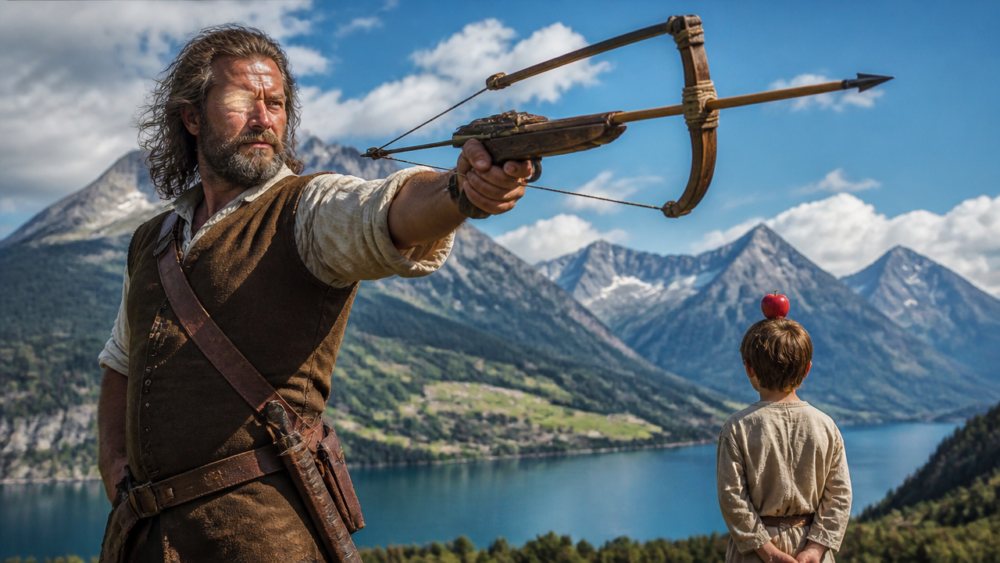
William Tell is a Swiss folkloric hero of disputed historical authenticity who is said to have lived in the canton of Uri in the early 14th century. The legend tells of him shooting an apple from his son’s head to save himself and his people from Austrian tyranny. While statues and monuments exist, his existence is primarily known through folklore and later dramatic works.
Q: How long does the William Tell Overture last?
The overture lasts for approximately 12 minutes, painting a musical picture of life in the Swiss Alps. It serves as the introductory dozen minutes of Rossini’s last opera, Guillaume Tell. This substantial length makes it unusual for a standard overture, which is typically shorter.
Q: What instrument is featured prominently in the overture?
The overture features the cor anglais, also known as the English horn, which is an alto oboe pitched lower than the normal oboe. This instrument is part of the specific orchestration that includes flutes, oboes, clarinets, and strings. Its unique sound contributes to the programmatic depiction of the Swiss landscape.
Q: When did Rossini write the William Tell Overture?
Rossini composed the overture in 1829 for his opera William Tell, which premiered in Paris on August 3, 1829. It was the introductory piece to his last of 39 operas, after which he entered semi-retirement. The composition was a last-minute job, with Rossini recycling ideas from an earlier opera.
Q: Which movie is the William Tell Overture used in?
The overture was prominently featured in the 1935 Walt Disney cartoon The Band Concert starring Mickey Mouse and Donald Duck. Several portions were also used in the Stanley Kubrick film A Clockwork Orange and the movie The Princess Diaries. Additionally, Dmitri Shostakovich quoted the main theme in his 15th symphony.
Q: Who wrote the play that Rossini based his opera on?
Rossini based his opera on Friedrich von Schiller’s 1804 drama William Tell, which was inspired by the Swiss legend. Schiller’s play was itself influenced by Johann Wolfgang von Goethe, who learned of the Tell saga during his travels through Switzerland. The opera uses Schiller’s play as the basis for its French libretto.
Q: Why is the Lone Ranger theme the most famous part?
The finale, known as the March of the Swiss Soldiers, became the theme song for The Lone Ranger in 1949, making it the most recognizable segment. This high-energy galloping music is particularly familiar to audiences compared to the rest of the opera. Ironically, Rossini had no intention of it becoming the theme for a masked avenger of the Wild West.
My Experience With 12 Genius Facts About William Tell and Rossini’s Famous Overture
When I first researched this piece, I expected a straightforward story: legendary hero, famous composer, immortal overture. Instead, I discovered something messier and more human. Rossini, facing impossible deadlines from Paris’s most demanding opera house, literally raided his own back catalog for melodies. He didn’t see this as cheating—he saw it as pragmatism. That detail changed how I listen to the overture. Every time I hear it now, I recognize not just genius but desperation, resourcefulness, and the pressure of living up to elite expectations.
What genuinely surprised me was learning that the complete opera almost nobody performs anymore. The overture achieved immortality while the full work faded into obscurity. There’s something both tragic and perfect about that. Rossini spent four hours composing an entire opera, yet history remembered only the 12-minute introduction. You could argue he failed to hold attention; I’d argue the overture was simply that good, self-sufficient enough to abandon its parent work.
The Lone Ranger connection still delights me. A Hapsburg-era Swiss resistance fighter transformed into a Wild West vigilante through a classical excerpt—it’s exactly the kind of absurd cultural alchemy that makes music history endlessly entertaining. Rossini never intended this. Yet his overture was flexible enough to become both a concert hall staple and the sonic identity of a radio cowboy.
Here’s what I kept circling back to: How many pieces of music do you know that work equally well in a concert hall, a film soundtrack, a cartoon, and an advertising jingle, without losing their power? The William Tell Overture belongs to a tiny, elite group.
What’s your first memory of hearing this overture—did you know it was Rossini?
Latest Updates
As of 2024-2026, renewed interest in lesser-known operas has sparked occasional productions of Guillaume Tell in European opera houses, though full performances remain uncommon in North America. Digital streaming services have made complete recordings more accessible than ever, allowing modern listeners to experience Rossini’s full operatic vision) without traveling to major opera centers. Meanwhile, the overture continues its cultural ubiquity—it appeared in Disney’s 2023 theatrical releases and remains a staple in orchestral programming worldwide.
Scholarship on the William Tell legend itself has also evolved. Recent historical research suggests that while the 14th-century Tell of folklore likely never existed as a single individual, the stories surrounding Swiss resistance to Habsburg rule contain genuine historical kernels. This blending of myth and history adds another layer to understanding why Schiller, Rossini, and countless others felt compelled to retell the legend—because it captured something emotionally true even if factually disputed.
Recording technology has improved dramatically, allowing modern orchestras to capture the overture’s orchestral color with unprecedented clarity. Contemporary performances emphasize the programmatic elements Rossini embedded in the piece, helping listeners hear the storm, the galloping horses, and the Alpine landscape with new vividness. Meanwhile, connections between Bonnie Tyler’s power ballad legacy and classical music’s enduring cultural impact have demonstrated that dramatic, emotionally resonant music transcends genre and era—Rossini understood this principle two centuries before Tyler recorded her defining anthem.
Conclusion
The William Tell Overture endures not because Rossini set out to create a timeless masterpiece, but because he responded to practical pressures with genius. Commissioned to write something grand for Paris’s most demanding opera house, pressed for time, and willing to borrow from his own earlier works, Rossini created something that transcended its origins. The overture survived the opera it introduced, leaped across centuries, and found new life in contexts Rossini never imagined.
Understanding the 12 facts explored here—from the Swiss legend’s disputed authenticity to Schiller’s dramatization to Rossini’s resourceful composition process—enriches every listening experience. You hear not just brilliant music but the history embedded within it. The overture becomes more than a concert piece or a film soundtrack; it becomes a conversation between the past and present, between Rossini’s Alpine ambitions and modern pop culture’s endless appetite for memorable melodies.
The genius of William Tell lies not in complexity but in inevitability. Once you hear it, you can’t unhear it. Once Kubrick paired it with violence or the Lone Ranger’s producers chose it for a masked hero, those associations stuck. The overture proved flexible enough to contain all these meanings while remaining unmistakably itself. Few works of classical music can claim such staying power, such cultural reach, such pure, enduring appeal. That’s what makes it a true genius—not perfection, but vitality.
References
- Britannica. (n.d.). William Tell: Opera by Rossini. Encyclopædia Britannica. https://www.britannica.com/topic/William-Tell-opera-by-Rossini
- Study.com. (n.d.). William Tell: Legend, Play & Composer. https://study.com/academy/lesson/william-tell-story-legend-music-composer.html
- Interlude. (n.d.). The Swiss Hero: Rossini’s William Tell Overture. https://interlude.hk/the-swiss-hero-rossini-william-tell-overture
- Medici.tv. (n.d.). William Tell, Gioachino Rossini. https://www.medici.tv/en/works/william-tell-rossini
- Galaxy Music Notes. (n.d.). The Story Behind the Opera “William Tell” by Rossini. https://galaxymusicnotes.com/pages/the-story-behind-the-opera-william-tell-by-rossini
- Wikipedia. (n.d.). William Tell (opera). https://en.wikipedia.org/wiki/William_Tell_(opera)
- Irish National Opera. (2022). William Tell: Breaking Down the World’s Most Famous Overture. https://www.irishnationalopera.ie/news/2022/william-tell-breaking-down-the-worlds-most-famous-overture

Sarah Anderson . J
I’m the mom behind Wise Mom Blogger, where everyday creativity meets real-life motherhood. I share easy DIY crafts, cozy knitting and crochet projects, beginner-friendly sewing ideas, and family-tested recipes—plus quick baking hacks that make homemade feel doable on busy days.