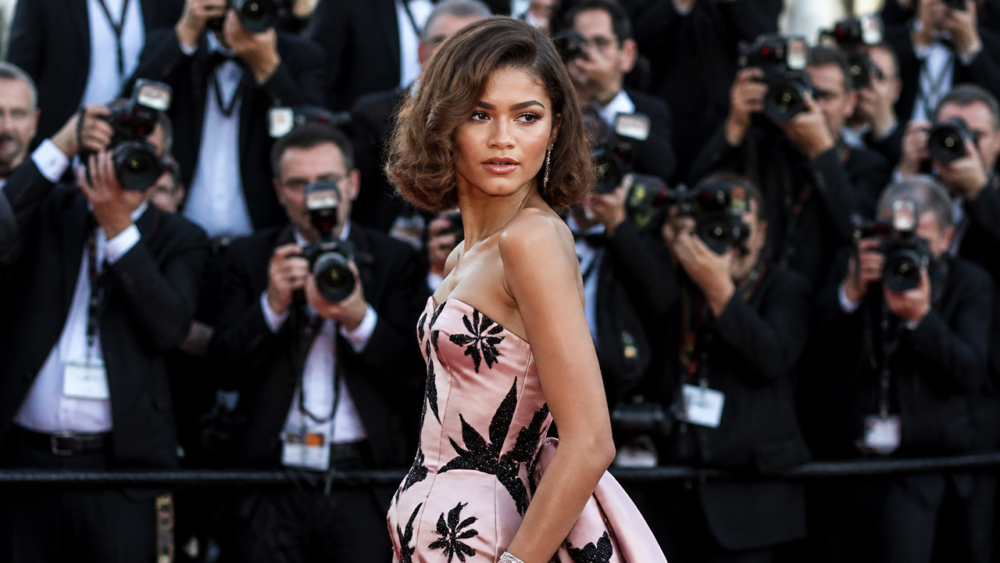
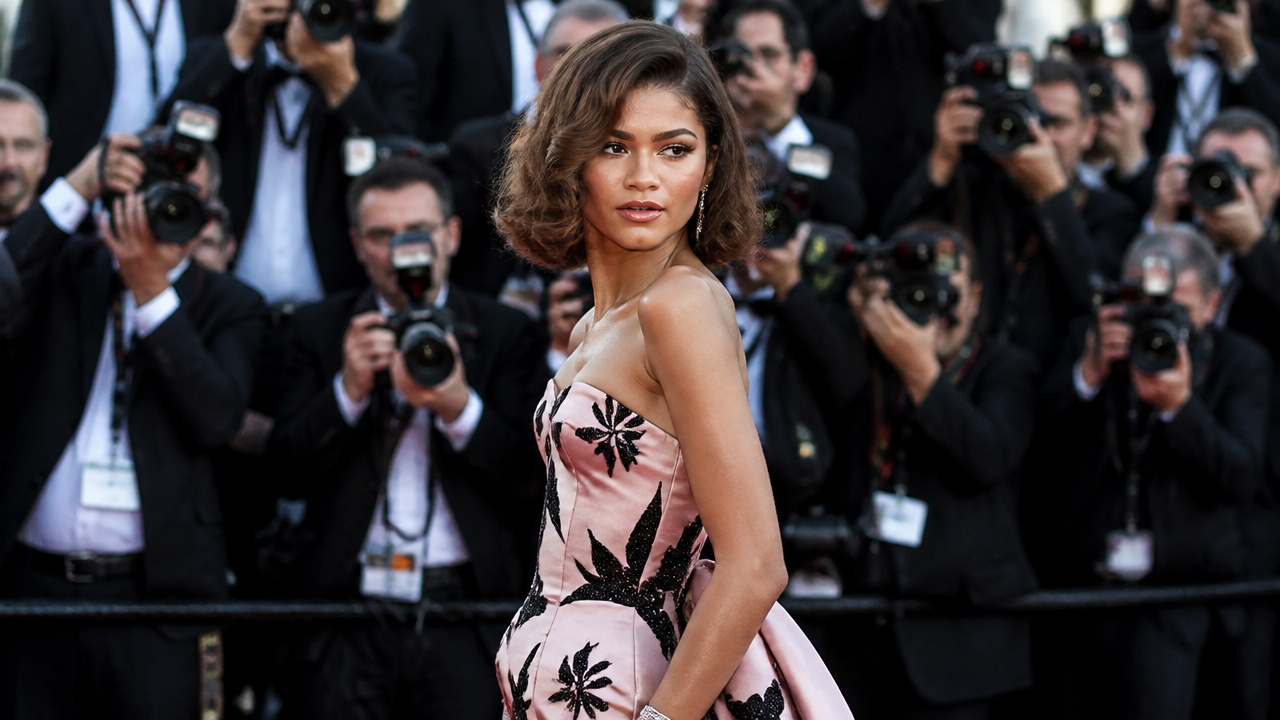
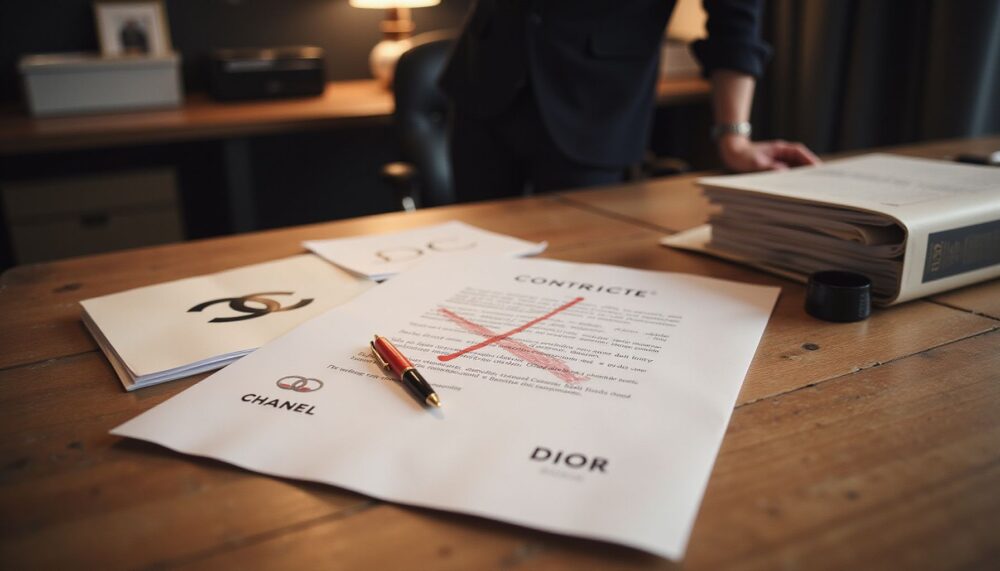
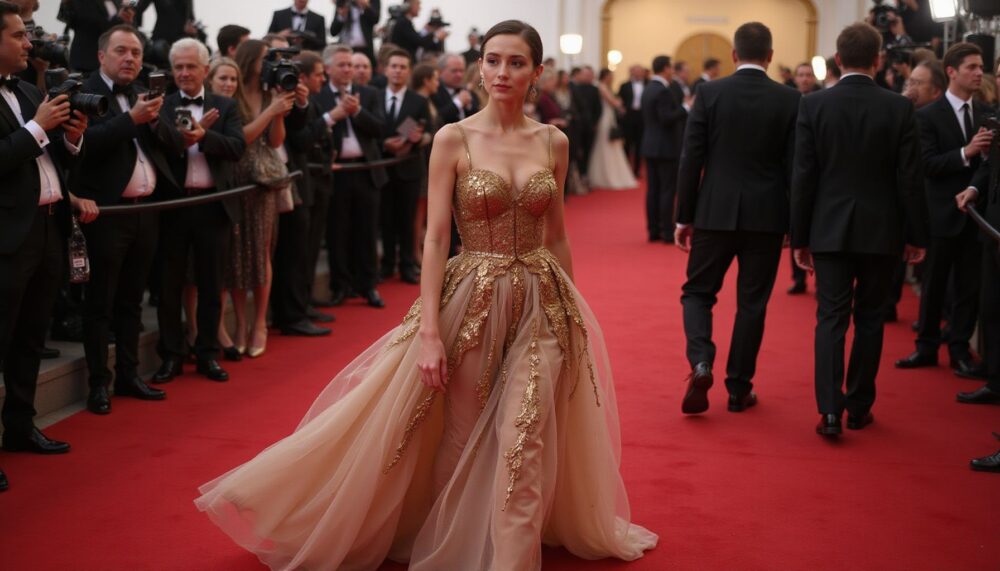
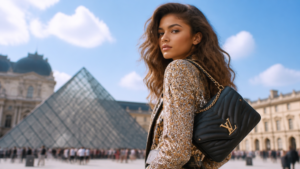
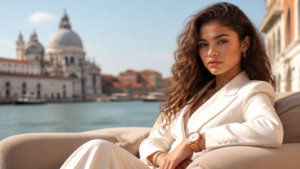
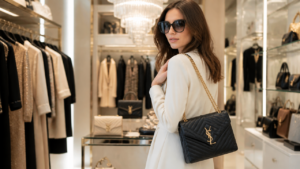
What happens when a rising star gets rejected by the biggest names in fashion? For Zendaya, that rejection became the foundation of one of the most intentional and powerful personal style stories in modern celebrity history. Her stylist Law Roach famously documented which designers refused to dress her during her early years, creating what’s now known as the “Big Five” exclusion—a decision that shaped her entire approach to red carpet fashion. Rather than accepting the industry’s gatekeeping, Zendaya and Roach pivoted to archive fashion, emerging designers, and experimental couture, turning rejection into rebellion and building a legacy that today’s fashion industry can’t ignore.
Quick Questions and Answers
Question: Why did designers refuse to dress Zendaya early in her career?
Early designers refused Zendaya because they told her stylist she was too inexperienced and not on their calendar. They labeled her as “too green” and said she needed to try again next year. This rejection lasted until she became a major star, proving the initial dismissal wrong.
Question: Which five designers never dressed Zendaya on the red carpet?
The five designers are Saint Laurent, Chanel, Gucci, Valentino, and Dior, often called the “big five.” Zendaya’s stylist Law Roach confirmed that despite her fame, she has never worn any of these brands on a red carpet or public press appearance.
Question: Did Zendaya ever wear Dior or Gucci publicly?
No, Zendaya has never worn Dior on a red carpet and has never worn Gucci in any press or appearance. Her stylist Law Roach confirmed these facts, stating she still has the evidence of the original refusals from these major fashion houses.
Zendaya and Designer Rejection: The Origins of the “Big Five” Exclusion
Law Roach didn’t mince words when he revealed the backstory of Zendaya’s early styling challenges. As her longtime stylist—he’s been working with Zendaya since she was 14—Roach became intimately familiar with the gatekeeping mechanisms of luxury fashion. Back then, the industry operated on a strict hierarchy: established celebrities got first access to coveted designer pieces, while newcomers waited on the periphery.
The Big Five—Chanel, Saint Laurent, Dior, Gucci, and Valentino—were the gatekeepers. According to The Hollywood Reporter, Roach explained his early attempts to secure looks from these houses: “I would write to the big five… and they would all say no.” They didn’t want to take a chance on someone they deemed too inexperienced, too young, or simply not yet famous enough to justify their resources.
This wasn’t personal rejection of Zendaya herself—it was structural gatekeeping. Fashion houses operate on calculated risk assessments. Lending a custom gown to an A-list celebrity guarantees red carpet exposure and earned media. Lending to an emerging actress meant uncertainty. For houses obsessed with brand prestige, that uncertainty felt like an unacceptable gamble.
Roach recalls the dismissals with clarity. Designers would tell him to “try again next year” once she had more recognition. It was conditional support wrapped in polite refusal—a promise that never materialized. Year after year, the same names came back with the same answer: no.
The Roach Rule: Why Some Designers Remain Excluded Today
Here’s where Zendaya’s story pivots from frustration to strategy. Rather than harbor resentment or nurse the hope that these brands would eventually come around once she was famous, Law Roach made a decision that defined both their futures: if a major house said no during the building phase, it would remain no forever.
Roach didn’t see this as petty vindication. He framed it as loyalty. The luxury houses that did say yes when Zendaya was unknown—the designers who took a chance, who sent pieces, who believed in her potential—those were the partners worth keeping. The ones who waited for guaranteed success didn’t deserve a seat at the table.
“If you say no, it’ll be a no forever,” Roach stated plainly during an appearance on The Cutting Room Floor podcast. This wasn’t a threat. It was a principle. And it’s one that has held firm as Zendaya became one of the most influential style icons of her generation.
Today, Zendaya still has never worn Chanel on a red carpet. She still has never worn Dior at any public appearance. Gucci, Saint Laurent, Valentino—all remain absent from her official looks. Roach keeps receipts. Literally. He still possesses documentation of the rejections, evidence of those early dismissals. For him, maintaining this boundary is a matter of principle in an industry built on opportunism.
The rule has evolved with Zendaya’s career. She’s appeared on Vogue covers (three times), dressed designers that took risks on her, and built an aesthetic that’s become unmistakably her own. The Big Five could have been part of that journey. They chose not to be.
Overcoming Industry Barriers: Strategies for a Style Icon
When designers wouldn’t cooperate, Roach got creative. And sometimes, creative meant personal financial sacrifice. There’s a now-legendary story about a $9,000 Dolce & Gabbana dress that Roach charged to his own credit card when he was starting out with Zendaya. He couldn’t secure the look through official channels, but he knew she needed it. So he bought it himself.
That level of commitment defined their early partnership. Roach wasn’t just a stylist managing a client’s wardrobe—he was an architect building a visual identity under resource constraints. When the big houses said no, he found alternatives.
This is where vintage fashion entered the equation as a strategic choice, not a fallback. Archive pieces gave Zendaya access to designer quality without the gatekeeper approvals. Vintage Yves Saint Laurent, rare archival finds, pieces with history—these became her signature. The irony wasn’t lost: she wore Saint Laurent through archive hunting when Saint Laurent the house wouldn’t dress her for red carpets.
Roach’s strategy also embraced emerging and experimental designers. Mugler became a cornerstone of Zendaya’s red carpet identity, particularly that now-iconic “robot” gown from the 2016 Met Gala. Maison Margiela dressed her in gardens and sculpture-like constructions. Louis Vuitton leaned into bridal-inspired minimalism. These weren’t second-choice designers—they were visionaries willing to take narrative risks alongside her.
The philosophy shifted what Zendaya’s style could become. Rather than adhering to the “safe celebrity uniform” that major houses often dictate, she developed what insiders now call “method dressing”—an approach where every outfit mirrors the themes and emotional landscape of her film roles. That’s much harder to achieve when you’re locked into a brand’s seasonal collections. But when you’re curating independently, pulling from archives, and collaborating with designers who trust your instincts, method dressing becomes possible.
Alternative Success: How Zendaya Redefined the Red Carpet
The rejection shaped an aesthetic that proved far more distinctive than what the Big Five might have offered. Walk through Zendaya’s red carpet timeline, and you see a coherent narrative that most celebrity stylists never achieve.
There’s the Mugler robot—a sculptural, androgynous statement that plays with gender and form. There are the Maison Margiela pieces that look like wearable art installations, incorporating live flowers and experimental silhouettes. There’s the Louis Vuitton bridal suit, which reframes femininity on her own terms. There’s the reliance on vintage pieces that carry history and authenticity.
Designer
What They Offered
Strategic Outcome
Chanel
Classic luxury, brand prestige
Stayed excluded; Zendaya built alternative luxury identity
Saint Laurent
Understated elegance
Accessed through vintage; became archive signature
What would Zendaya’s style have looked like if the Big Five had said yes? Honestly, probably safer. More palatably luxe. More in line with what celebrity styling typically produces—beautiful, expensive, and somewhat interchangeable with a dozen other A-listers.
The rejection forced differentiation. Without access to Chanel’s safe elegance or Valentino’s romantic conventions, Roach and Zendaya had to ask harder questions: What does Zendaya actually want to communicate? How can fashion support her acting choices? What does risk-taking look like in wardrobe?
Those answers produced one of the most intentional style identities in contemporary celebrity. You know a Zendaya look when you see it. That’s not common.
Recent Updates on Brand Relations and Style Evolution
Zendaya’s relationship with fashion has continued to evolve since those early rejections. In 2024, she participated in Vogue’s “Life in Looks” series, breaking down 23 outfits spanning her career—from her child actor days to major film roles. That retrospective wasn’t just nostalgia; it was documentation of a journey that deliberately excluded the Big Five.
Her partnership with Law Roach has deepened into creative collaboration rather than standard stylist-client dynamics. They’ve recently unveiled collaborative projects that highlight their methodology and shared vision for how fashion serves storytelling. The rejection narrative, once painful, has been recontextualized as proof of principle.
Zendaya has continued wearing the same brands today that supported her early—you can explore the evolution of her most iconic red carpet looks through fashion archives documenting her career. The Big Five remain absent, but not because Zendaya can’t access them now. They’re absent by design. The rule holds: if you said no, it stays no.
Her loyalty has become its own form of currency in the industry. Designers who took risks on her have reaped enormous visibility and cultural capital. That’s a lesson not lost on other fashion houses when they’re deciding whether to invest in emerging talent.
My Experience With What Designers Refused to Dress Zendaya?
When I first learned about the Big Five exclusion, I’ll admit my instinct was to view it as unfortunate—celebrity snubs, industry gatekeeping, the typical fashion world nonsense. But the more I dug into Law Roach’s explanation, the more I realized this wasn’t really a story about rejection at all. It’s a story about choice made under constraint.
What stuck with me was Roach’s clarity about the rule. “If you say no, it’ll be a no forever.” That’s not bitterness. That’s the kind of boundary-setting that most people talk about but never actually enforce. He could have let it go once Zendaya became massive. Could have accepted a Chanel collaboration, a Dior moment, some vindication dressing. Instead, he held the line.
The real insight here is how artificial the fashion industry’s hierarchy actually is. The Big Five have incredible craftsmanship and heritage, sure. But Zendaya’s most iconic looks came from Mugler, Margiela, and archive hunting. That’s not because those designers are “better”—they’re not. It’s because they were available when it mattered, which forced Roach and Zendaya to think more creatively about what her style could be.
I think there’s something genuinely powerful in watching someone build success not despite industry rejection, but actually through it. The constraint became the catalyst.
What’s your take—do you think the Big Five ever regrets sitting this out, or is the principle worth more than access to one of the most influential celebrities alive?
FAQ
Q: How did Zendaya react when designers said no to dressing her?
Zendaya and her stylist Law Roach decided to never wear those designers again after they received a “no.” Roach stated that if you say no, it will be forever, and Zendaya has maintained that stance even after becoming a global icon. Rather than holding onto hope that the Big Five would eventually come around, she channeled that energy into building a distinctive aesthetic with designers who believed in her potential from the start.
Q: Was Zendaya rejected by Chanel for being too inexperienced?
Yes, Chanel was one of the five brands that rejected Zendaya early in her career, telling her stylist she was “too green.” They claimed she was not on their calendar and suggested she try again the following year before she became famous. This wasn’t unique to Chanel—it was the standard response from all of the Big Five houses during Zendaya’s rise.
Q: What did Law Roach say about the designers who refused Zendaya?
Law Roach said he wrote down the “big five” names: Saint Laurent, Chanel, Gucci, Valentino, and Dior, and they all said no. He emphasized that he still has the receipts and that Zendaya had never worn them by her 2017 Vogue cover, a fact that remains true. Roach framed the rejections not as personal failures but as calculated decisions by fashion houses unwilling to take risks on emerging talent.
Q: Did Zendaya wear Valentino before signing a contract with them?
The first time Zendaya wore Valentino publicly was after she signed a contract with the brand. Before that, Valentino had refused to dress her early in her career, just like the other four designers in the “big five” group. The pattern was consistent across all five houses: no access until she proved her commercial viability elsewhere.
Q: Are there any designers Zendaya still refuses to wear today?
Yes, Zendaya still refuses to wear Saint Laurent, Chanel, Gucci, Valentino, and Dior on the red carpet. Even though she has worn them in editorial photoshoots, her stylist says she has never showcased them in public or at red carpet events since their initial rejection. This boundary remains a core part of her styling philosophy and professional partnership with Roach.
Q: Why hasn’t Zendaya worn Chanel at any carpet event?
Zendaya has never worn Chanel at a carpet event because Chanel refused to dress her when she was young and considered “too green.” Her stylist Law Roach confirmed that this refusal has never been reversed, and Zendaya maintains she will not wear the brand. The decision reflects a broader principle about loyalty and reciprocity in professional relationships.
Q: What happened when designers told Zendaya to try next year?
When designers told them to try next year, Zendaya and Law Roach decided that a “no” would be permanent. They stopped asking those five brands, and Zendaya has never worn Saint Laurent, Chanel, Gucci, Valentino, or Dior at any red carpet event. The “try again later” response was interpreted not as a future opportunity but as a rejection that would define their ongoing relationship.
Latest Updates on Zendaya’s Style and Industry Impact
Zendaya’s influence on fashion has only grown since the Big Five era. Her refusal to reconcile with those houses has become a statement about creative autonomy and principles in an industry often defined by compromise. The narrative has shifted from “rejected rising star” to “fashion visionary who built something better.”
Recent years have seen increased documentation of her styling process through platforms like Vogue and fashion archives. These retrospectives highlight the deliberateness of her choices and the strategic brilliance of working outside traditional luxury gatekeeping. What might once have been framed as a limitation has become proof of concept—evidence that you don’t need the Big Five to build an iconic personal style.
The Big Five themselves have watched this play out. For some designers facing emerging talent today, the Zendaya precedent serves as a cautionary tale: saying no to potential has consequences. Not in the form of petty vindication, but in genuine missed cultural moments.
Conclusion
Zendaya’s story with the Big Five designers isn’t ultimately about rejection. It’s about what happens when gatekeeping forces someone to become more intentional, more creative, and more distinctly themselves. Law Roach’s refusal to let the industry’s early dismissals slide—his decision to hold a hard boundary—protected something more valuable than brand associations.
The designers who said no missed an opportunity. But Zendaya and Roach didn’t waste energy on resentment. They built an alternative: archive shopping, emerging designers, experimental couture, and a method of dressing that actually meant something beyond luxury signaling.
That’s the real victory. Not in eventually “winning over” the Big Five, but in proving they were never necessary in the first place.
I’m the mom behind Wise Mom Blogger, where everyday creativity meets real-life motherhood. I share easy DIY crafts, cozy knitting and crochet projects, beginner-friendly sewing ideas, and family-tested recipes—plus quick baking hacks that make homemade feel doable on busy days.