

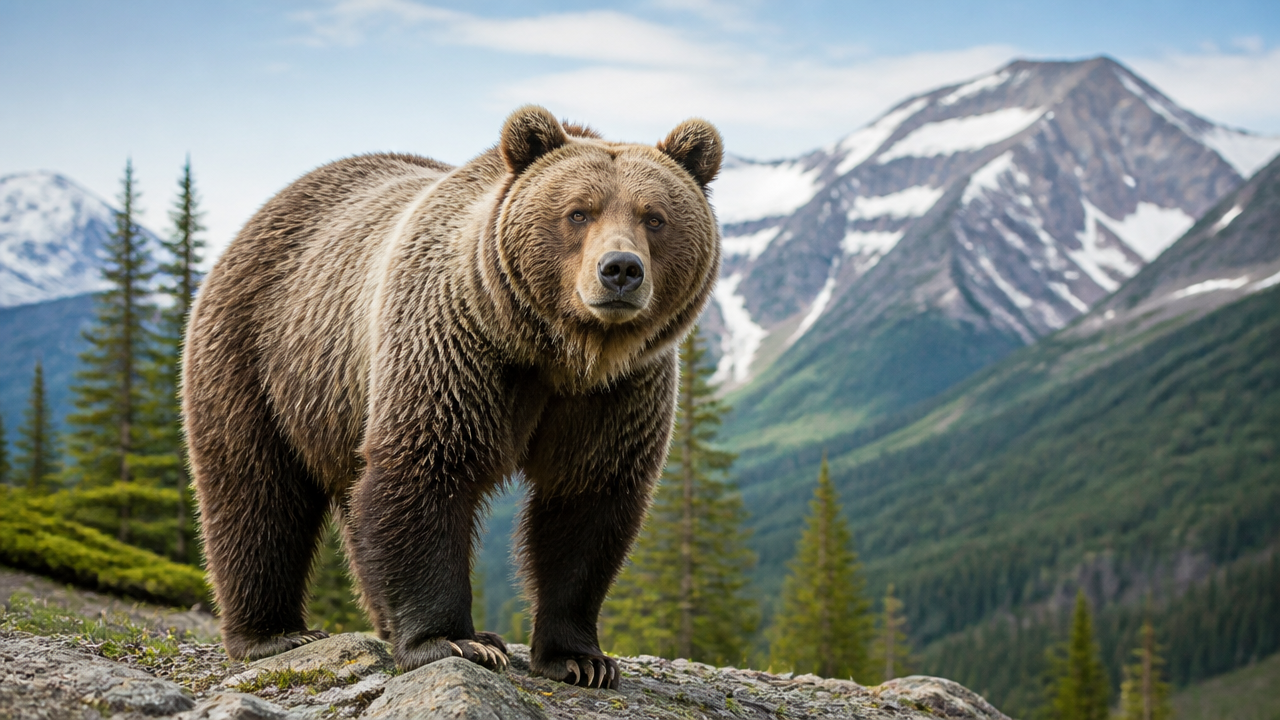
What draws you to words that capture something bigger than their individual letters? Ursine is one of those quiet, powerful adjectives that instantly conjures an image—a hulking presence, thick fur, raw strength. Whether you encounter it in biology class, classic literature, or describing someone’s lumbering gait, ursine carries centuries of linguistic weight. This guide explores the meaning, origins, and practical uses of ursine, showing you exactly when and how to apply it.
Quick Questions and Answers
Question: What does ursine mean in simple terms? Ursine means of, relating to, or characteristic of a bear. It describes anything that has bear-like qualities such as being big, furry, muscular, or lumbering. The word is an adjective used to compare animals or people to bears.
Question: Why is ursine used to describe people? People use ursine to describe someone who is big, hulking, or moves with a lumbering gait like a bear. It can be a compliment when describing a large football player but may sound odd if applied to smaller individuals. The term emphasizes bear-like physical traits.
Question: Can ursine refer to animals other than bears? Yes, ursine can describe animals that resemble bears even if they aren’t true bears, such as koalas, though koalas are actually related to kangaroos. The word highlights bear-like features like size, fur, and movement rather than biological classification.
Key Takeaways
- Ursine is a formal adjective dating back to the 1540s–1550s, borrowed directly from Latin ursinus (meaning “of a bear”).
- The word functions similarly to bovine (cows), equine (horses), and feline (cats)—classifying things by their relationship to a specific animal.
- Common descriptors paired with ursine include big, muscular, furry, powerful, and lumbering.
- In biology, ursine refers strictly to members of the family Ursidae; in everyday speech, it describes bear-like physical traits in any subject.
- The term has remained consistent in meaning and usage across major dictionaries for over 475 years.
Core Definition and Scope

Ursine is an adjective—a word that describes or modifies something. Specifically, it qualifies anything as relating to, pertaining to, or resembling a bear. According to Merriam-Webster, the definition breaks into two parts: first, “of or relating to a bear or the bear family (Ursidae)”; second, “suggesting or characteristic of a bear.” That second part opens the door to figurative usage—you’re not limited to talking about actual bears.
The word serves the same linguistic function as other animal-based adjectives. Just as bovine refers to cattle and equine refers to horses, ursine anchors itself to bears as its root. This pattern, borrowed from Latin, gives English a precise vocabulary for discussing animal-related traits without constantly saying “like a bear” or “bear-like.” It’s economical, formal, and lends weight to whatever you’re describing.
In strictly biological contexts, ursine pertains only to members of Ursidae—the family that includes grizzly bears, polar bears, black bears, and other true bears. But the term’s reach extends beyond taxonomy. When a sportswriter describes a linebacker as ursine, they’re not claiming he’s biologically related to bears. They’re painting a picture of size, power, and deliberate movement.
Historical Etymology and Origin

The story of ursine begins in Latin. The term entered English between 1540 and 1550—a period when scholars were actively borrowing classical vocabulary to enrich the language. Etymonline traces it directly back to the Latin ursīnus, the adjectival form of ursus, which simply means “bear.” That Latin root itself connects to ancient Greek terms for the animal, showing just how far back the linguistic thread runs.
Why did English speakers adopt ursine instead of creating their own adjective? The 16th century was an era when learned people—clergy, physicians, naturalists—frequently turned to Latin for precision and authority. Latin had already built an entire ecosystem of animal adjectives: ursinus for bears, equinus for horses, bovinus for cattle. Borrowing these ready-made terms was faster and more prestigious than inventing alternatives. By the mid-1500s, ursine appeared in English texts, and it never left.
That 475-year presence matters. Unlike slang or trendy coinages, ursine has proved its staying power. Every major dictionary—the Oxford English Dictionary, Merriam-Webster, Dictionary.com, Wiktionary—lists it with consistent definitions and dates its earliest recorded use to the 1540s–1550s. This consistency signals linguistic legitimacy. The word has earned its place.
Physical Characteristics and Figurative Meaning

When you call something ursine, you’re invoking a specific set of mental images. Bears are big—sometimes very big. A grizzly can weigh over 700 pounds. They’re covered in thick, dense fur. They move with a distinctive gait: powerful but deliberate, heavy but controlled. That lumbering walk—slow, rolling, unstoppable—is quintessentially bearish.
These physical traits become the toolkit for ursine description. Describe a linebacker’s movement as ursine, and you immediately convey mass, power, and a certain brute confidence. Call a person’s build ursine, and you’re saying they’re large and muscular, with a physical presence that commands space. In winter, when someone dons a heavy fur coat and moves through snowy streets, the setting invites ursine language—the figure becomes almost bear-like in silhouette.
But there’s a subtlety here. Ursine doesn’t just mean “big.” A sumo wrestler might be enormous without being ursine. An ursine presence carries an implication of strength yoked to deliberate, sometimes slow movement. It’s the quality of controlled force. When a hockey player plants himself in front of the net with an ursine stance, he’s not just large—he’s imposing, anchored, immovable.
The figurative reach can extend into personality and temperament. Someone with an ursine temperament might be gruff, suspicious, protective of their territory. Bears are often portrayed as solitary and territorial; calling human behavior ursine can hint at these qualities. But use it carefully—it can veer into unflattering territory if misapplied.
Identifying Ursine Traits in Biological Contexts

In scientific and naturalistic writing, ursine refers strictly to the bear family Ursidae. This includes all true bears: black bears, grizzlies, polar bears, Asian bears, sloth bears, sun bears, and giant pandas. Yes—giant pandas are technically ursine. For decades, taxonomists classified pandas separately, but genetic evidence proved they belong in Ursidae, making them officially ursine members.
When biologists study ursine behavior, they’re examining how bears hunt, den, hibernate, and interact with their environment. Ursine diet varies widely—some species are primarily carnivorous, others omnivorous or even herbivorous (pandas eat bamboo almost exclusively). Ursine anatomy includes powerful limbs, sharp claws, and impressive jaw strength. In academic papers, the word ursine appears in phrases like “ursine fossils,” “ursine evolution,” or “ursine conservation strategies.”
Students encounter ursine in biology classes when learning taxonomic classifications. Teachers might assign chapters on ursine species or ursine ecological niches. Museum displays label bear exhibits as ursine collections. The word carries authority in these contexts—it signals that the speaker is discussing bears from a position of formal knowledge, not casual observation.
Interestingly, some historical definitions of ursine included the detail “covered in stiff bristles,” a direct reference to a bear’s coat texture. While modern definitions focus on the broader relationship to bears, this bristly descriptor reminds us that ursine encompasses physical specificity. It’s not abstract. It points to actual, measurable traits.
Ursine in Literature and Language

Writers have loved ursine for centuries. It appears in poetry, fiction, and formal prose to conjure powerful imagery without resorting to cliché. When a novelist describes a character as ursine instead of merely “large” or “bearish,” the word elevates the description—it suggests the writer knows their animal taxonomy and chooses their words with intention.
The term works particularly well in character descriptions. A detective novel might introduce a police captain as ursine in build and manner—immediately establishing him as physically imposing and potentially gruff. A fantasy epic might describe a barbarian warrior with ursine strength and ursine cunning. The word does heavy lifting on behalf of characterization.
In everyday language, ursine remains rare enough that using it signals education and precision. Many people will recognize it or guess its meaning from context (the -ine ending suggests connection, much like bovine, equine, or canine). Others might need to look it up. That slight friction—that moment of checking a dictionary—can make the word memorable and impactful.
Seasonal writing often reaches for ursine language. Winter stories naturally invite bear imagery. Whether describing someone’s ursine appetite (bears eat heavily before hibernation), their ursine hibernation habits, or their ursine fur coat, winter creates the perfect context for the term to feel natural and evocative.
Common Misconceptions and Clarifications
One misconception: ursine applies only to actual bears. False. The word describes anything bearing bear-like qualities. A koala might be described as ursine in appearance despite not belonging to Ursidae. The trait being highlighted is resemblance or characteristic quality, not strict biological classification.
Another misconception: ursine is archaic or obsolete. It isn’t. Major dictionaries list it as current English. Scientists use it in contemporary research. It may not appear in casual conversation, but that’s because it’s formal, not because it’s dead.
Some assume ursine always carries a complimentary tone. Not necessarily. Describing someone as ursine when they’re smaller or when the context is unflattering can sound insulting. Context and intent matter enormously. A football coach calling a defensive lineman ursine is likely complimenting strength. Calling a slim person ursine would be odd and potentially mean-spirited.
There’s also confusion about pronunciation. Ursine is pronounced UR-sine (stress on the first syllable), with the phonetic form ˈər-ˌsīn. It rhymes with “per-sine,” not “ur-see-nay.” Getting this right matters if you’re speaking aloud—stumbling over pronunciation undermines the authority the word carries.
How to Use Ursine Correctly
Using ursine correctly means matching the context to the meaning. Ask yourself: Is what I’m describing physically large or powerful? Does it move or exist with bear-like qualities? Am I in a formal, educational, or literary context where a classical adjective fits?
In biology and science writing, use ursine when referring to bears or bear-family characteristics. “Ursine populations face habitat loss” or “The ursine skeleton reveals adaptation for omnivory.” This usage is straightforward and unambiguous.
In descriptive writing—fiction, personal essays, journalism—use ursine to evoke a specific image. “Her ursine frame settled into the chair” tells the reader someone large and powerful has just sat down. “His ursine gait carried him slowly across the lobby” suggests deliberate, impressive movement. The word does work that simpler adjectives cannot.
Avoid using ursine casually or ironically. It’s not slang. Using it to mock someone (“That guy has such an ursine physique”) risks coming across as mean. The word’s formal tone demands respect for its target.
When in doubt, consider whether “bear-like” would work. If “bear-like” fits your thought, ursine might too—and it would sound more polished. But if you’re stretching the description, stop. Forcing ursine into a sentence where it doesn’t belong makes writing worse, not better.
| Context | Usage | Example | Tone |
|---|---|---|---|
| Biology/Science | Describing Ursidae family or bear traits | “Ursine fossils indicate a Miocene origin.” | Formal, academic |
| Literature/Fiction | Characterizing physical presence or movement | “The old man’s ursine shoulders hunched against the cold.” | Literary, elevated |
| Everyday speech | Describing large, powerful appearance or gait | “The linebacker’s ursine build made him impossible to move.” | Formal but accessible |
| Historical texts | References to bear-related symbolism or heraldry | “The ursine coat of arms hung above the throne.” | Archaic formality |
| Figurative/Personality | Suggesting bear-like temperament or behavior | “His ursine nature meant he preferred solitude.” | Formal, slightly metaphorical |
My Experience With Ursine Meaning
I’ll admit, my first real encounter with ursine came reading a sports article years ago—a columnist describing a defensive end as “ursine in build but graceful in movement.” I had to look it up. That moment of discovery hooked me. The word was precise in a way that ten simpler adjectives couldn’t match. It wasn’t just saying someone was big; it was saying something specific about how they were big—powerful, deliberate, commanding.
Since then, I’ve noticed ursine tucked into unexpected places: a nature documentary narrated with enough formality to deploy it, a fantasy novel where it described a warrior’s bulk, even a historical fiction piece where it captured the presence of a medieval king. Each time, the word worked. It did something that “large” or “bear-like” couldn’t quite manage.
The sharpest insight I’ve picked up is this: ursine separates precision from laziness. Using it means you’ve thought about your description instead of grabbing the first adjective that came to mind. It signals you respect your reader’s vocabulary. That respect—that assumption that someone cares about exactitude—is surprisingly rare in writing. When people encounter ursine, they sense the care behind it.
Have you run into ursine in your own reading, and did the word land the way the writer intended, or did it feel like a reach?
FAQ
Q: Are ursine and bearlike the same word?
Yes, ursine and bearlike are synonyms meaning of or resembling a bear. Both are adjectives used to describe bear-like qualities. Ursine is more formal and derives from Latin, while bearlike is a straightforward English compound.
Q: How do you pronounce the word ursine?
Ursine is pronounced as UR-sine, with the stress on the first syllable. The phonetic spelling is ˈər-ˌsīn, sounding like “ur” followed by “sine.” It flows smoothly in speech and is commonly used in scientific contexts.
Q: Does ursine come from a Latin word?
Yes, ursine originated in the 16th century from the Latin word ursus, which means bear. It entered English through the Latin adjective ursinus. This etymology directly links the word to its meaning of relating to bears.
Q: When was ursine first used in English?
Ursine first appeared in English in the 16th century, borrowed from the Latin ursinus. It has been used consistently since then to describe bear-related traits in biology, literature, and general description. The word remains standard in modern English.
Q: Is ursine ever used in science classes?
Yes, ursine is commonly used in biology classes to refer to the bear family Ursidae or to describe bear-like characteristics in animals. Students might study the ursine diet, ursine behavior, or ursine anatomy when learning about bears specifically.
Q: Which animals are considered ursine?
True bears like grizzlies, polar bears, and black bears are ursine by definition. Animals like koalas are sometimes called ursine due to their bear-like appearance but are not biologically ursine. The term applies best to members of the family Ursidae.
Q: What are some synonyms for ursine?
Common synonyms for ursine include bearlike, arctoid, and brachyuran. These words all describe things resembling or relating to bears. Bearlike is the most direct synonym, while arctoid is more technical and used in scientific contexts.
Conclusion
Ursine is a word with staying power. Over 475 years of consistent usage—from the 1540s to today—proves it earned its place in English. It isn’t trendy. It isn’t slang. It’s a formal, precise adjective that does a specific job: capturing the essence of bear-like qualities, whether in biology, literature, or character description.
Understanding ursine enriches your vocabulary and shows you one small corner of how English borrowed from Latin to build precision into language. When you encounter it—whether in a scientific paper, a novel, a sports column, or a documentary—you’ll recognize it instantly. And when you use it yourself, you’ll be choosing a word with real substance behind it.
The next time you want to describe something with the power, presence, and deliberate strength of a bear, ursine is waiting.
References
- Merriam-Webster. (n.d.). Ursine. https://www.merriam-webster.com/dictionary/ursine
- Oxford English Dictionary. (n.d.). Ursine, adj.. https://www.oed.com/dictionary/ursine_adj
- Etymonline. (n.d.). Ursine. https://www.etymonline.com/word/ursine
- Dictionary.com. (n.d.). Ursine definition & meaning. https://www.dictionary.com/browse/ursine
- Wiktionary. (n.d.). Ursine. https://en.wiktionary.org/wiki/ursine
- Vocabulary.com. (2023, November 13). Word of the day: ursine. https://www.vocabulary.com/word-of-the-day/2023-11-13

Sarah Anderson . J
I’m the mom behind Wise Mom Blogger, where everyday creativity meets real-life motherhood. I share easy DIY crafts, cozy knitting and crochet projects, beginner-friendly sewing ideas, and family-tested recipes—plus quick baking hacks that make homemade feel doable on busy days.