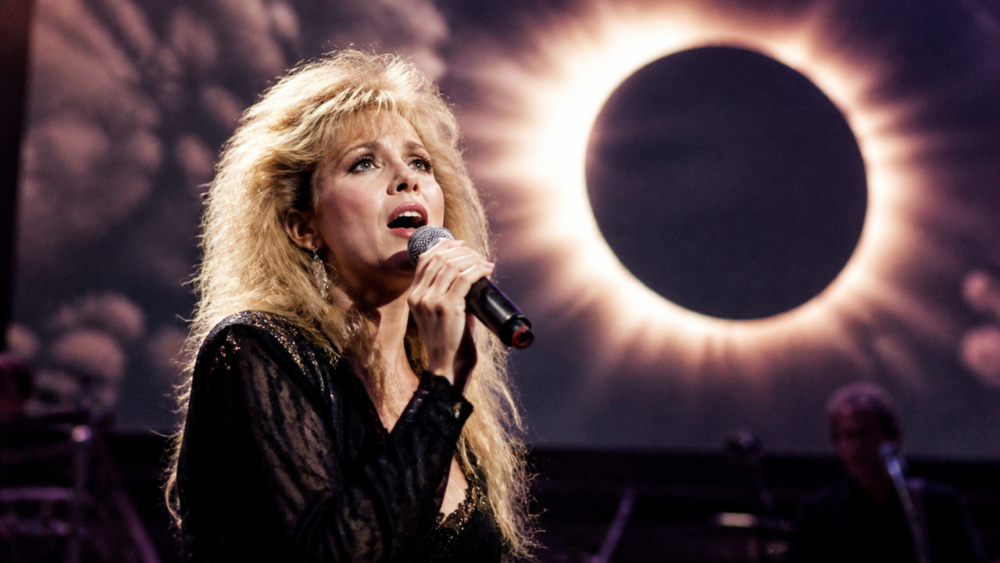
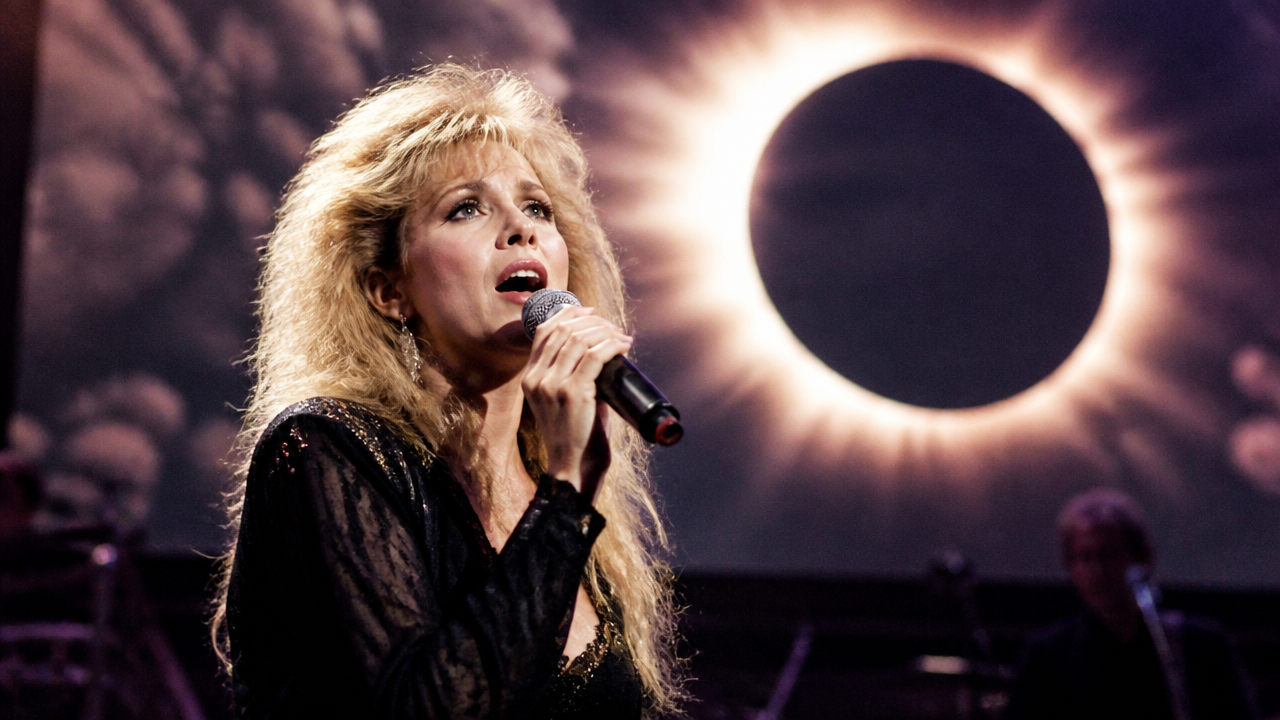
What makes a power ballad stick in your head for forty years? “Total Eclipse of the Heart” does it with towering vocals, theatrical drama, and a songwriter who treated pop music like opera. Whether you’re rediscovering 80s classics during a summer road trip or researching the song’s origins for trivia night, one question keeps coming up: who actually wrote this thing? Bonnie Tyler sang it. Jim Steinman built it. The answer shapes everything about how we hear this iconic track today.
Quick Questions and Answers
Question: Who wrote the 1983 hit song Total Eclipse of the Heart? Answer: The song was written and produced by Jim Steinman, an American composer renowned for his theatrical rock works. He released it through Welsh singer Bonnie Tyler in 1983, and it became a global number-one hit that defined both of their careers.
Question: Why did Jim Steinman write Total Eclipse of the Heart for Bonnie Tyler? Answer: Steinman wrote the song specifically for Tyler because he believed her powerful, raspy voice had untapped potential similar to Janis Joplin. He never intended it for anyone else, despite having initially considered offering it to Meat Loaf.
Question: Is Total Eclipse of the Heart by Bonnie Tyler or Jim Steinman? Answer: Bonnie Tyler is the performer who released the song, while Jim Steinman is the credited writer and producer. The track represents a duet collaboration between the Welsh singer and the American composer.
Key Takeaways
- Jim Steinman wrote and produced “Total Eclipse of the Heart” — Bonnie Tyler performed it but did not write it.
- The song was originally titled “Vampires in Love” and emerged from a college musical Steinman wrote in the late 1960s.
- Canadian vocalist Rory Dodd provided the haunting tenor backup vocals during the 1982 recording session at Power Station studio in New York.
- The track became Tyler’s biggest career hit, topping both the UK Singles Chart and the US Billboard Hot 100 in 1983.
- Steinman’s signature theatrical style — mixing opera, rock, and melodrama — defines the song’s enduring appeal.
Who Wrote “Total Eclipse of the Heart”?

Jim Steinman wrote “Total Eclipse of the Heart.” He also produced it. That is the short answer.
Steinman (1947–2021) was an American songwriter and record producer whose career spanned four decades. He is best known for writing Meat Loaf’s Bat Out of Hell album, one of the best-selling records in music history. His style blends theatrical rock, operatic vocals, and lyrics that swing between romantic desperation and outright absurdity.
Bonnie Tyler did not write the song. She was the performer — the voice that gave Steinman’s words their raspy, gut-punch delivery. This distinction matters because people often assume the singer writes their own material. In this case, the brain and the voice belonged to two different people.
According to BBC Culture, Steinman wrote the song specifically for Tyler after hearing her distinctive vocal quality. He wanted her to sound like a woman who had lived through something terrible and come out fighting on the other side.
The Song’s Unusual Origin: From “Vampires in Love” to a Global Hit
Here is where things get strange. Steinman originally titled this song “Vampires in Love.”
That title never made it to the final release. But it tells you everything about the mood he was chasing. The lyrics — “turn around, bright eyes” — were not about a romantic breakup. They were part of a vampire love story.
The song has its roots in an experimental musical Steinman wrote as a senior at Amherst College in the late 1960s called The Dream Engine. That musical featured the line “turn around, bright eyes,” which Steinman later repurposed for “Total Eclipse of the Heart.” As Time magazine reports, the musical also included plenty of nudity and was never produced commercially. But its DNA survived in Steinman’s later work.
Steinman also drew inspiration from Wagnerian opera. He specifically cited seeing Wagner’s Tristan and Isolde at the Metropolitan Opera as one of the three most powerful artistic experiences of his life. The opera’s themes of obsessive, doomed love map directly onto the song’s lyrics.
The title change from “Vampires in Love” to “Total Eclipse of the Heart” made the song more accessible while keeping its dramatic intensity. An eclipse is rare, total, and momentarily world-ending — exactly the feeling Steinman wanted.
Jim Steinman’s Signature Style and Career
Steinman did not write small songs. Everything he touched felt like it was built for a stage with a hundred-foot ceiling.
His background in musical theater shaped every note he wrote. Songs like “Total Eclipse of the Heart” are structured like mini-operas: a quiet verse builds tension, a chorus explodes, then the bridge pushes everything into overdrive. The production includes lush orchestration, stacked harmonies, and vocal performances that demand maximum effort.
Steinman’s major hits include:
- “Total Eclipse of the Heart” for Bonnie Tyler (1983)
- “Making Love Out of Nothing at All” for Air Supply (1983)
- “I’d Do Anything for Love (But I Won’t Do That)” for Meat Loaf (1993)
- “It’s All Coming Back to Me Now” for Celine Dion (1996) and originally for Pandora’s Box
Each of these songs runs long by radio standards. “Total Eclipse of the Heart” clocks in at nearly seven minutes. Steinman did not care about radio edits. He cared about the emotional arc of the song.
According to Jim Steinman’s Wikipedia entry, he produced Bonnie Tyler’s album Faster Than the Speed of Night, which featured “Total Eclipse of the Heart” as its lead single. That album became the biggest of Tyler’s career.
Recording the Song: The Power Station Session
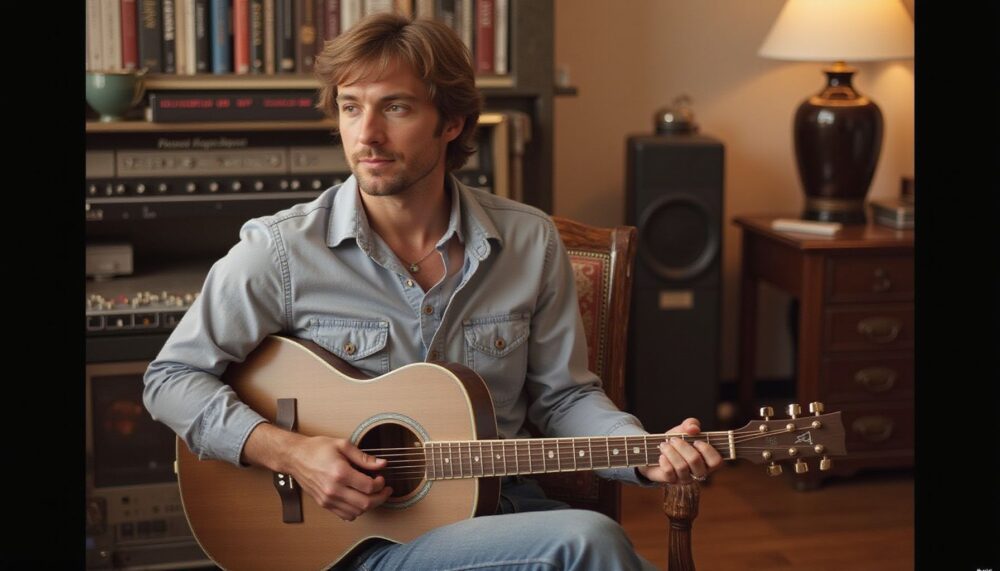
The recording session took place in the summer of 1982 at the Power Station studio in New York City. Canadian vocalist Rory Dodd got the call to provide backup vocals.
Dodd later described walking into the studio and seeing the sheet music for the first time. The song was enormous — multiple key changes, a dramatic bridge, and a vocal range that would test any singer. He recorded the iconic “turn around” lines that echo beneath Tyler’s lead vocal.
The full version of the song runs six minutes and 58 seconds. That length was unusual for a pop single in 1983. Radio stations had to edit it down for airplay. But the full version is the one that fans remember — the one that builds slowly, peaks, and then somehow peaks again.
Steinman produced the track himself, layering piano, synthesizers, guitars, and a full rhythm section. The result sounds bigger than any single person. It sounds like a cast of dozens, which was exactly the point.
| Person | Role in the Song | Known For | Contribution |
|---|---|---|---|
| Jim Steinman | Writer and Producer | Meat Loaf, Air Supply productions | Composed lyrics, music, and directed the recording |
| Bonnie Tyler | Lead Vocalist | “It’s a Heartache,” “Holding Out for a Hero” | Performed the iconic raspy vocal delivery |
| Rory Dodd | Backup Vocalist | Session singer for Steinman projects | Recorded the haunting “turn around” tenor parts |
FAQ
Q: When was Total Eclipse of the Heart released as a single?
The song was recorded in 1982 and released as a single in early 1983 by CBS/Columbia. It climbed the charts quickly, reaching number one in the US and UK by mid-1983. It became the fifth best-selling single in the UK that year.
Q: Did Bonnie Tyler write her own hit song Total Eclipse of the Heart?
No, Bonnie Tyler did not write the song. Jim Steinman composed it entirely. Tyler performed the vocals with power and precision, but the songwriting credit belongs solely to Steinman. His theatrical vision shaped every element of the track.
Q: What album contains the song Total Eclipse of the Heart by Bonnie Tyler?
The song appears on Tyler’s fifth studio album, Faster Than the Speed of Night, released in 1983. It served as the lead single and helped define her mainstream success. The album reached multi-platinum status in several countries.
Q: Are there any other singers who performed Total Eclipse of the Heart?
Bonnie Tyler remains the original and most famous performer. Canadian singer Rory Dodd contributed the haunting “turn around” tenor vocals. The song is overwhelmingly associated with Tyler’s raspy vocal style and no other version has matched its commercial success.
Q: How long is the full version of Total Eclipse of the Heart?
The full version runs six minutes and 58 seconds. That length made it an epic, scenery-chewing ballad that defied typical radio conventions. The extended runtime contributed to its dramatic impact and unique presence in pop music.
Q: Does Jim Steinman still write songs for Bonnie Tyler today?
Jim Steinman passed away in April 2021 at age 73. He no longer writes new songs. His legacy with Tyler remains strong — he produced and wrote her biggest hits, including “Total Eclipse of the Heart” and “Holding Out for a Hero.”
Q: What genre is the song Total Eclipse of the Heart by Bonnie Tyler?
The song is a gothic power ballad within the pop and rock genres. Its dramatic, melodramatic style and theatrical production define Steinman’s signature sound. The track blends operatic vocals with rock instrumentation in a way that was entirely unique at the time.
My Experience With “Total Eclipse of the Heart”

I first heard this song on a scratched cassette my dad played during a long drive through the French Alps. I was maybe ten years old. The song came on, and I remember staring out the window thinking, “This is too long. Why doesn’t it end?” Then the bridge hit, and I understood. The song was not supposed to end. It was supposed to keep climbing.
Years later, I read Steinman’s interviews about treating pop songs like miniature operas. That clicked everything into place. The vampires, the Wagner, the college musical — it all makes sense when you realize Steinman was never writing for radio. He was writing for the back row of a theater. He wanted you to feel the drama in your chest, not just hear it in your ears.
The thing that still surprises me is how the song holds up. I have heard it in grocery stores, at weddings, during karaoke nights where someone who has never sung before grabs the mic and belts the chorus. It works every time. That is not luck. That is craft.
Have you ever heard a song that felt too big for the room it was playing in?
Conclusion
“Total Eclipse of the Heart” was written by Jim Steinman, produced by Jim Steinman, and performed by Bonnie Tyler. The distinction between writer and singer is not a technicality — it is the key to understanding why the song sounds the way it does. Steinman’s theatrical background, his love of opera, and his willingness to write seven-minute pop songs gave the track its epic scale.
The song remains Tyler’s biggest hit and one of the defining power ballads of the 1980s. Forty years later, it still gets regular radio play, appears in movies and TV shows, and finds new audiences who discover it through streaming or vinyl reissues.
Steinman built something that outlasted him. That is the best thing a songwriter can do.
References
- Wikipedia. (n.d.). Total Eclipse of the Heart. https://en.wikipedia.org/wiki/Total_Eclipse_of_the_Heart
- Wikipedia. (n.d.). Jim Steinman. https://en.wikipedia.org/wiki/Jim_Steinman
- Morris, F. (2023, February 9). Total Eclipse of the Heart: The most epic song ever written. BBC Culture. https://www.bbc.com/culture/article/20230209-total-eclipse-of-the-heart-the-most-epic-song-ever-written
- Time. (2024). Total Eclipse of the Heart: How the Song Came to Be. https://time.com/6961595/total-eclipse-of-the-heart-song-bonnie-tyler-history
- Jim Steinman official site. (n.d.). Total Eclipse of the Charts. https://jimsteinman.com/charts.htm
- Wisemomblogger. (n.d.). Joey Chestnut’s Net Salary: How Much Does Joey Chestnut Make a Year. https://wisemomblogger.com/joey-chestnut-s-net-worth-how-the-hot-dog-king-earns-and-loses-millions/
- Wisemomblogger. (n.d.). 10 Easy High-Protein Cottage Cheese Fruit Bowls Everyone Will Love. https://wisemomblogger.com/10-easy-high-protein-cottage-cheese-fruit-bowls-everyone-will-love/

Sarah Anderson . J
I’m the mom behind Wise Mom Blogger, where everyday creativity meets real-life motherhood. I share easy DIY crafts, cozy knitting and crochet projects, beginner-friendly sewing ideas, and family-tested recipes—plus quick baking hacks that make homemade feel doable on busy days.