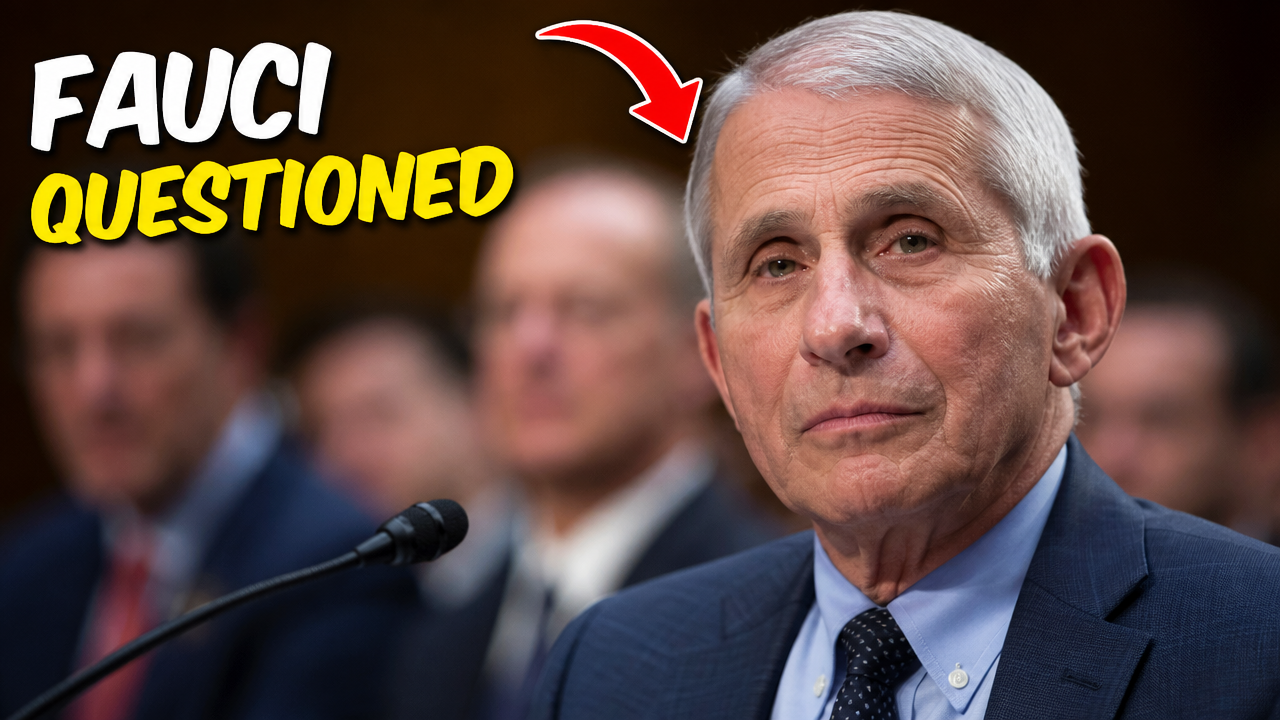
What makes the ongoing scrutiny of Dr. Anthony Fauci so intense for Americans tracking public health policy this winter? The answer lies in a complex mix of political oversight, congressional investigations, and long-standing debates over pandemic-era decisions. When you examine why Fauci faces such sharp questioning, you see how scientific advisory roles inevitably intersect with legislative accountability. I will walk you through the timeline, the legal strategies, and the evidence that keeps this story active in 2026. Let us look at the facts.
Quick Questions and Answers
Question: Why is Anthony Fauci being questioned now?
Answer: He faces renewed scrutiny because Republican lawmakers launched formal investigations targeting his pandemic management and statements about NIH funding in Wuhan. The core focus involves alleged misinformation and claims that he misled Congress during previous sessions. Supporters and critics alike acknowledge the inquiry carries heavy political weight alongside scientific debate.
Question: Did Fauci lie to Congress about COVID origins?
Answer: That accusation drives many Republican inquiries, particularly from senators tracking NIH grant data and laboratory communications. Fauci consistently denies hiding evidence or providing false testimony. Congressional investigators reviewed massive document sets without finding proof, yet the political narrative persists because the debate blends scientific uncertainty with partisan accountability.
Question: Can Fauci refuse to answer Senate questions?
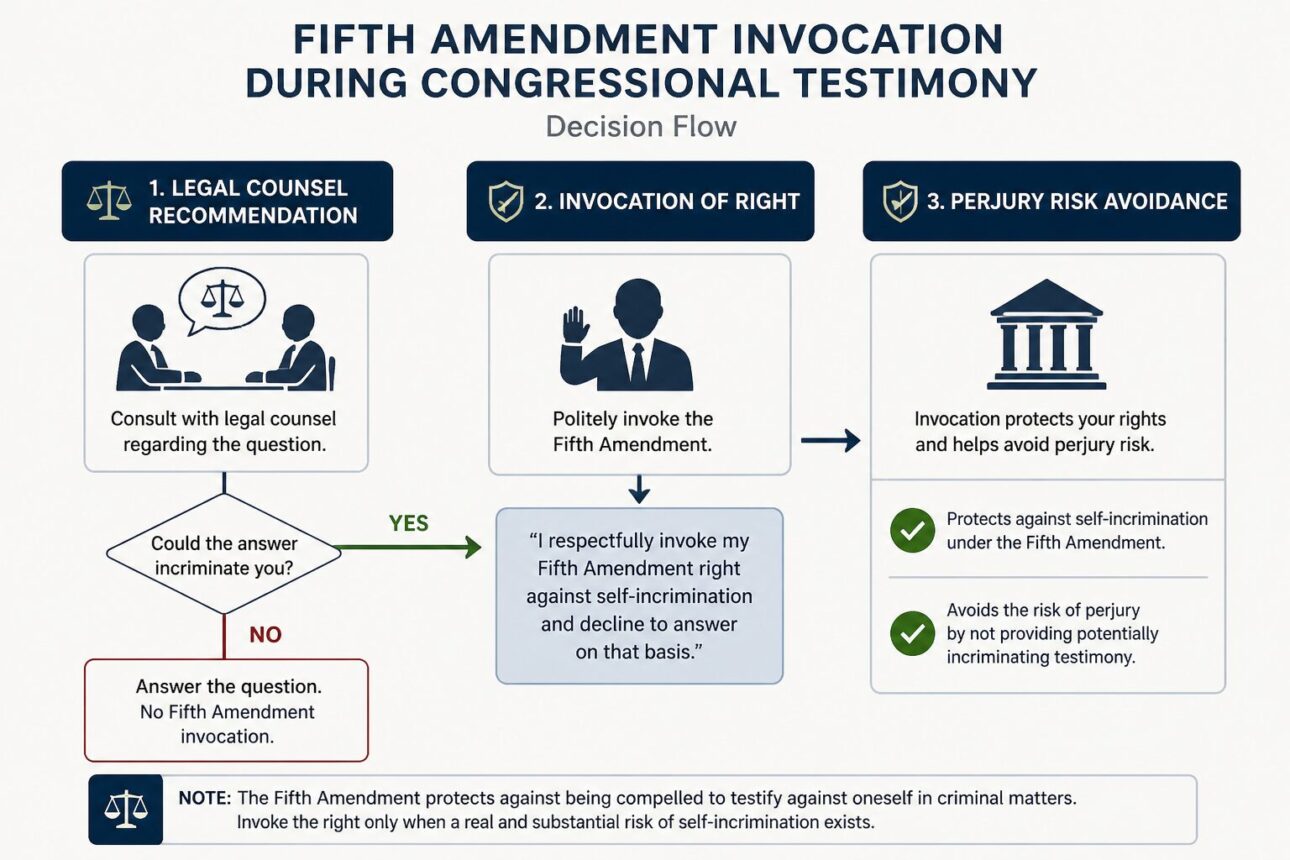
Answer: He can invoke the Fifth Amendment to avoid self-incrimination. Legal counsel advised him that testimony might get used in a future perjury case. Invoking constitutional protection against self-incrimination does not automatically prove guilt, but it inevitably fuels public speculation and intensifies media coverage.
Key Takeaways
Congressional committees launched formal inquiries into pandemic-era decisions and NIH funding in Wuhan.
Legal advisors recommended invoking the Fifth Amendment to prevent potential perjury prosecution.
Investigators reviewed hundreds of thousands of documents without finding evidence to support cover-up claims.
Scientific experts widely reject the allegations while political pressure continues to drive legislative hearings.
Fauci and Congressional Oversight: Origins of the Investigation
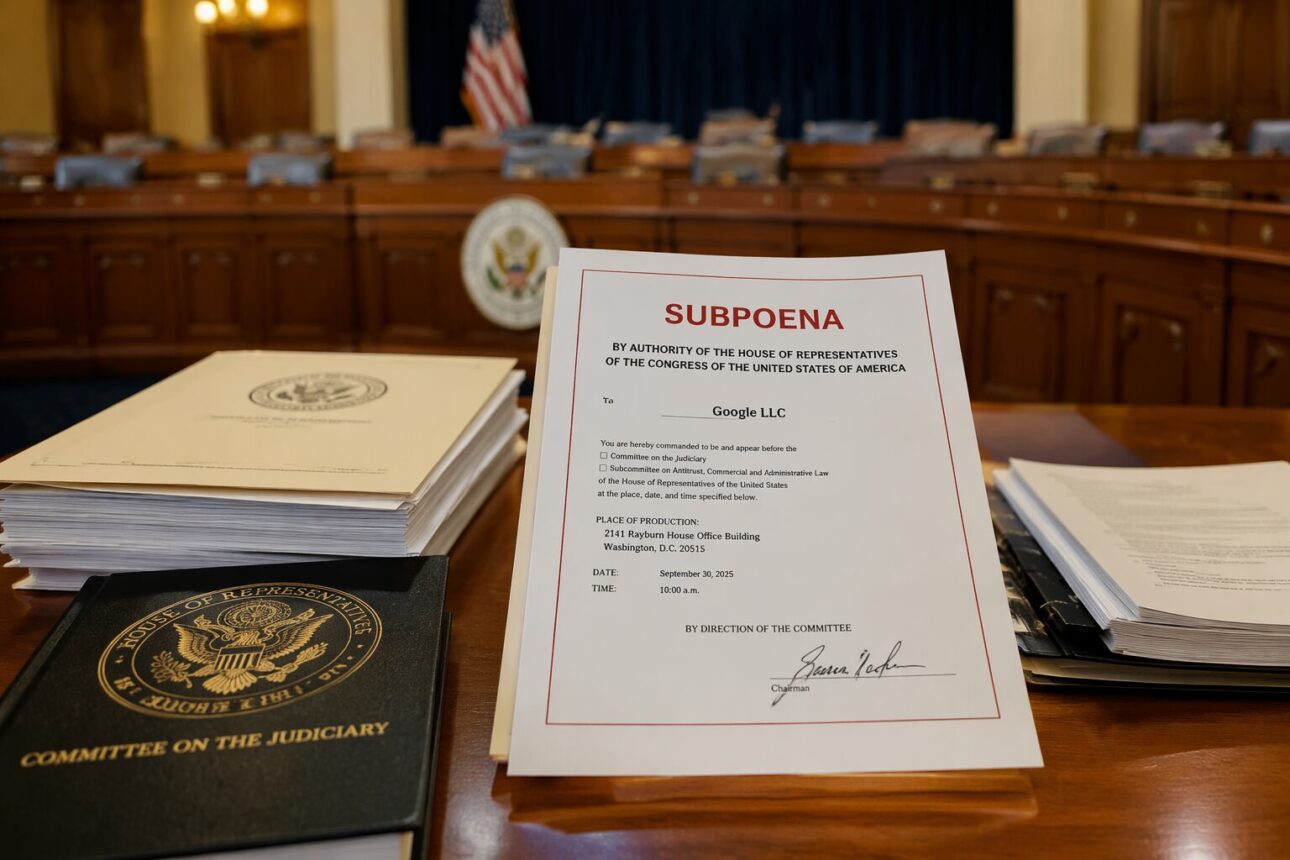
The Senate Homeland Security and Governmental Affairs Committee issued a 2026 subpoena that placed Dr. Anthony Fauci under direct legislative review. Lawmakers wanted answers about pandemic origins and how federal scientific agencies handled early virus research. This inquiry did not appear out of nowhere. It grew from a long-standing partisan disagreement about whether US-funded laboratory work in China contributed to the SARS-CoV-2 outbreak.
Republican leaders targeted specific claims about National Institutes of Health grants. They argued that Fauci either misunderstood his role or actively misdirected testimony during previous congressional sessions. The committee focused on how the National Institute of Allergy and Infectious Diseases managed international research partnerships. This administrative framework became the focal point for lawmakers demanding institutional accountability.
The investigation also traces back to broader debates about federal transparency during public health crises. Lawmakers wanted to know who approved specific laboratory protocols and how information flowed between scientific advisors and government officials. Those structural questions naturally led investigators to examine administrative records, email correspondence, and public statements from the early pandemic months.
Tracking how these oversight committees operate reveals one consistent pattern: legislative reviews expand once investigators uncover new documents or contradictory timelines. The Fauci case fits that pattern almost immediately. Researchers started pulling funding applications and interagency communications, which created a feedback loop of scrutiny that kept committee members active for years. This dynamic connects directly to documented legislative procedures detailed in the House Oversight Committee report on pandemic response protocols. Lawmakers treat internal administrative shifts as potential transparency failures, regardless of crisis conditions.
The Fifth Amendment Invocation: Legal Strategy and Rationale
Sitting in a Senate hearing room carries specific legal risks for former high-ranking officials. Fauci’s legal team advised him to invoke the Fifth Amendment right against self-incrimination before the committee began its written and recorded questioning. His prepared remarks explained that Republican prosecutors might try to use his testimony to build a perjury case.
He made his position clear in a public statement. Fauci argued that Senator Rand Paul’s main objective in calling him to testify was to find a verbal misstatement that could land him in federal prison. That framing shifted the hearing from a routine oversight session to a constitutional legal standoff. The Fifth Amendment provides a standard legal shield, but politicians rarely expect it from top scientists.
Legal experts note that invoking constitutional protection changes how committees operate. Subpoenaed witnesses can still refuse to answer specific questions about activities that might expose them to criminal charges. Committees usually accept that boundary, though they often criticize the refusal as evasive. That tension defines the current Fauci hearings.
Investigators record everything, and transcripts become permanent public records. A minor phrasing error months later can trigger criminal referrals. Fauci’s advisors recognized that risk immediately and prioritized legal safety over political theater. I see this pattern repeatedly in federal investigations. Government officials weigh public explanation against long-term legal exposure, and silence often wins when the documentation is incomplete or ambiguous.
Core Areas of Congressional Scrutiny
The House Select Subcommittee on the Coronavirus Pandemic directed its questioning toward internal agency management and public health messaging. Committee members wanted to know how Fauci ran the National Institute of Allergy and Infectious Diseases during peak crisis periods. They focused on communication protocols, decision-making chains, and how scientific data translated into federal guidelines.
One major topic involved the six-foot social distancing recommendation. Fauci testified that the specific distance lacked hard scientific backing and essentially appeared during emergency response planning. Republicans seized on that admission to criticize federal guidance consistency. They argued that arbitrary metrics undermined public trust and complicated early pandemic compliance.
Investigators also examined how senior aides handled official communications. The oversight committee scrutinized the use of personal email accounts by Fauci and his top advisor, Dr. David Morens. Lawmakers wanted to know whether private messaging platforms bypassed federal record-keeping requirements. Those transparency questions connect directly to administrative law and public sector accountability standards. Federal communication protocols during health emergencies often mirror public safety recall systems, a principle you can also observe in Egg Salmonella Recalls: What Consumers Must Know Now. Agencies must maintain strict documentation trails even when crisis timelines compress standard reporting windows.
Scrutiny Focus
Committee Finding
Official Response / Context
Six-foot distancing guideline
Lacked strict scientific basis
Emerged quickly during emergency planning
NIAID administration
Management structure questioned
Faced intense partisan oversight
Personal email usage
Transparency concerns raised
Denied attempts to hide communications
Wuhan NIH funding links
Alleged oversight failures claimed
Denies involvement in pandemic origin
The committee structured its arguments around administrative consistency. Lawmakers expected scientific leaders to maintain rigid record-keeping protocols even during chaotic crisis periods. When real-world emergency responses deviated from standard operating procedures, investigators treated those deviations as potential accountability failures. I view that approach as standard legislative review, though it rarely feels comfortable for agency directors facing live television cameras.
Evidence and Investigations: Fact vs. Allegation
Investigators spent years reviewing nearly five hundred thousand pages of documents. They conducted twenty closed-door interviews, including one fourteen-hour session with Fauci himself. Democratic committee members tracked that massive evidence haul closely. Their analysis concluded that the documents did not support claims that Fauci funded virus research or orchestrated a cover-up to suppress the lab-leak hypothesis.
Investigators followed standard federal review methods outlined in the Congress.gov hearing transcript. They cross-referenced financial applications, interagency memos, and public testimony logs. The sheer volume of paper made it difficult for investigators to locate a single coordinated directive linking NIH grants to viral emergence. That absence of evidence stands as the central finding for Democratic lawmakers.
The released private emails from 2021 intensified public scrutiny. Those messages showed early pandemic confusion, internal debates, and routine administrative discussions. Conservative commentators used the email transcripts to argue that Fauci downplayed laboratory origin theories. The messages themselves contained no smoking gun, but they provided plenty of fuel for ongoing political narratives.
Congressional investigators also looked into the EcoHealth Alliance grant structure. That organization coordinated early viral surveillance research in Wuhan. Republicans argued that NIH funding streams indirectly supported risky virology work. Democratic analysts countered that the grant supported standard wildlife virus monitoring and never touched the specific laboratory research that sparked pandemic origin theories. The disconnect between allegations and documented evidence drives most of the current controversy. I usually recommend looking at document volumes first. Five hundred thousand pages of records rarely hide a coordinated conspiracy.
The Professional Divide: Scientific Consensus and Political Pressure
More than one hundred fifty infectious disease experts signed a formal letter rejecting the allegations against Fauci. The scientists described the congressional hearings as politically driven efforts that ignore established virology research. Their public statement emphasized that no credible evidence emerged from the massive document reviews to support cover-up claims.
This scientific pushback reveals a deeper societal rift. Republican lawmakers view pandemic-era agency decisions through the lens of legislative oversight and public accountability. Many scientists view those same decisions as necessary emergency responses grounded in evolving epidemiological data. Both sides operate inside legitimate frameworks, but their foundational priorities rarely align. The scientific community’s unified response aligns with expert statements published by PBS NewsHour.
The credibility gap widens when investigators cite administrative protocol failures while experts point to rapid data analysis. Public health emergencies require fast decisions that standard bureaucratic systems were not designed to handle. When committees treat emergency improvisation as negligence, tensions naturally escalate. I have watched this exact dynamic play out in multiple federal health commissions. Lawmakers want paper trails; scientists want rapid adaptation.
Political pressure also shapes how the public consumes scientific testimony. Committee hearings air on live television, and soundbites travel faster than peer-reviewed journals. That media environment rewards dramatic accusations over nuanced explanations. Fauci’s scientific career rests on decades of peer-reviewed research, yet television formats strip away that context. The result remains a prolonged public debate that mixes valid oversight with partisan performance. Understanding this structural tension helps explain why investigations rarely conclude, even when document reviews find no wrongdoing.
FAQ
Q: Why do Republicans keep investigating Fauci?
Republicans argue that legislative oversight requires accountability for every major pandemic decision, including public health guidance, internal communications, and funding allocations. The House Oversight Committee specifically targeted discussions around the six-foot distancing rule, agency management practices, and accusations that Fauci promoted a single narrative about virus origins. Democrats and numerous scientific organizations contend that these investigations lack factual support and function primarily as partisan political maneuvers rather than genuine fact-finding missions.
Q: Did US-funded research in Wuhan cause COVID-19?
The debate over laboratory origins continues because investigators have not produced definitive proof linking US-funded grants to the viral emergence. Congressional records indicate that committee investigators reviewed extensive financial documentation without finding evidence that Fauci or NIH officials funded research that directly caused the pandemic. International intelligence assessments also report a lack of concrete evidence supporting a Chinese laboratory leak. The question remains unresolved in public discourse despite extensive document reviews.
Q: What is gain-of-function research in this case?
Gain-of-function research describes laboratory techniques that modify pathogens to better understand how viruses might transmit or infect human hosts. Republican lawmakers argued that NIH-supported work in Wuhan potentially involved those modification methods before pandemic emergence. Fauci and scientific advisors deny that any funded projects caused the outbreak or violated federal biosafety guidelines. The controversy centers heavily on how investigators define the research category and whether early pandemic studies fit that technical classification.
Q: Are Fauci’s emails why people criticize him?
Thousands of private email transmissions became public property and immediately intensified public examination of early pandemic decision-making. Conservative commentators used the message transcripts to argue that Fauci concealed information or minimized concerns about laboratory origins. The emails revealed routine administrative discussions, internal uncertainty, and rapid response coordination rather than hidden conspiracy. Those documents still drive criticism because they provide concrete material for political arguments about transparency during crisis periods.
Q: What did the House hearing say about Fauci?
House Republican members argued that Fauci deserves formal accountability for pandemic response failures and alleged public misdirection. Committee transcripts record that Fauci confirmed the six-foot distancing recommendation lacked strict scientific backing and functioned more as an administrative placeholder. Democratic representatives responded by pointing out that investigators reviewed hundreds of thousands of documents without uncovering proof that he fabricated data or deliberately misled policymakers. The hearing highlighted a clear split in how each party interprets the same administrative records.
Q: Who is accusing Fauci of wrongdoing?
Senator Rand Paul stands as the most prominent legislative figure leading these accusations, working alongside Republican members of the House Select Subcommittee. They assert that Fauci provided false testimony regarding NIH funding structures and potentially helped suppress laboratory origin discussions. Fauci has consistently denied those claims, and a large coalition of infectious disease professionals backs his position by stating that investigative efforts have produced no verifiable evidence of misconduct or administrative cover-ups.
Q: Will Fauci face charges from these hearings?
No criminal charges stem directly from the congressional testimony or committee reports. Legal advisors recommended the Fifth Amendment invocation to prevent future perjury prosecutions based on spoken statements. Congressional investigators have not submitted recommendations for federal prosecution because their comprehensive document review did not substantiate the core allegations. Any criminal proceeding would require separate legal jurisdiction, independent evidence collection, and prosecutorial review far beyond legislative committee authority.
My Experience With Why Is Dr. Fauci Being Questioned? The Political and Scientific Context
I have spent years reading through committee transcripts, scientific briefings, and public health communications. The sheer volume of paperwork coming out of these investigations surprises most casual readers. People assume a government agency operates like a well-oiled machine, but crisis response often looks more like duct tape and careful guesswork. I remember reviewing early pandemic guidance drafts myself. The documents were messy, heavily debated, and constantly updated. That reality rarely makes it onto cable news. The legal strategy Fauci’s team adopted makes perfect sense when you understand how federal prosecutors build perjury cases. They look for exact phrasing differences between a sworn statement and a written record. One shifted adjective can trigger a referral. I found myself nodding along to the legal analysis rather than the political theater. The real question sitting behind all these hearings is whether we actually want scientists to answer complex virology questions on live television or inside closed technical briefings. Have you noticed how the media formats these hearings, and does it change how you track the evidence?
Conclusion
The investigation into Dr. Fauci blends legislative oversight, constitutional law, and long-standing debates about pandemic management. Lawmakers demand administrative accountability, while scientific professionals emphasize the constraints of emergency response protocols. Investigators reviewed massive document sets without finding proof of cover-ups or fabricated data. The Fifth Amendment invocation shifted the hearings into legal territory, highlighting the risks former officials face under congressional subpoena. Public debates continue because political narratives often outpace scientific nuance. Understanding the evidence, the legal strategies, and the structural limits of crisis management provides a clearer picture than daily headlines usually deliver.
References
Al Jazeera. (2026, July 30). Why did Anthony Fauci invoke the Fifth Amendment? Senate hearing explained. Al Jazeera. https://www.aljazeera.com/amp/news/2026/7/30/why-did-anthony-fauci-invoke-the-fifth-amendment-senate-hearing-explained
BBC News. (2024). Dr Anthony Fauci grilled by House Republicans on Covid origins. BBC. https://www.bbc.com/news/articles/cmllvz7nj3no
Congress.gov. (2026). A HEARING WITH DR. ANTHONY FAUCI. Library of Congress. https://www.congress.gov/event/118th-congress/house-event/LC72977/text
House Oversight Committee. (2026). Hearing Wrap Up: Dr. Fauci Held Publicly Accountable by Select Subcommittee. US House of Representatives. https://oversight.house.gov/release/hearing-wrap-up-dr-fauci-held-publicly-accountable-by-select-subcommittee/
NBC News. (2026). Anthony Fauci invokes Fifth Amendment right not to answer questions at Republican Senate hearing. NBC News. https://www.nbcnews.com/politics/congress/anthony-fauci-5th-amendment-testify-covid-hearing-rand-paul-rcna589793
PBS NewsHour. (2026). WATCH: Fauci invokes 5th Amendment in GOP-led hearing about COVID-19 origins. PBS. https://www.pbs.org/newshour/politics/watch-live-senate-panel-questions-fauci-on-diary-entries-about-covid-19-origins
The Washington Post. (2026, July 29). 5 takeaways from the Senate hearing where Fauci refused to answer questions. The Washington Post. https://www.washingtonpost.com/politics/2026/07/29/5-takeaways-senate-hearing-where-fauci-refused-answer-questions/
Sarah Anderson . J
I’m the mom behind Wise Mom Blogger, where everyday creativity meets real-life motherhood. I share easy DIY crafts, cozy knitting and crochet projects, beginner-friendly sewing ideas, and family-tested recipes—plus quick baking hacks that make homemade feel doable on busy days.