When was the last time you checked your refrigerator for a specific carton code or production date? Egg Salmonella recalls have become frequent enough that knowing how to spot them and respond correctly could mean the difference between a normal dinner and a serious illness. These recalls happen across the country regularly—from small regional actions to nationwide warnings affecting millions of eggs. Whether you’re buying eggs at the grocery store during a holiday dinner preparation or stocking your pantry for the week, understanding how recalls work, what symptoms to watch for, and which groups face the highest risk is essential information every household needs.
Quick Questions and Answers
Question: What does an egg Salmonella recall mean? Answer: An egg Salmonella recall means a producer or regulator has identified shell eggs that may be contaminated with Salmonella, or has linked them to illness through testing and traceback. FDA and CDC recall notices usually include brand names, carton codes, date ranges, and production sites so consumers can identify affected products. The safest response is to stop eating the eggs and follow the recall instructions.
Question: Why are eggs recalled for Salmonella contamination? Answer: Eggs are recalled when contamination is found or suspected in the production chain, often because lab, epidemiologic, or traceback evidence links the eggs to illnesses. The FDA said the June 2025 August Egg Company outbreak was supported by epidemiologic, laboratory, and traceback data, and the CDC said the eggs were contaminated with Salmonella Enteritidis. Recalls are meant to remove the product before more people get sick.
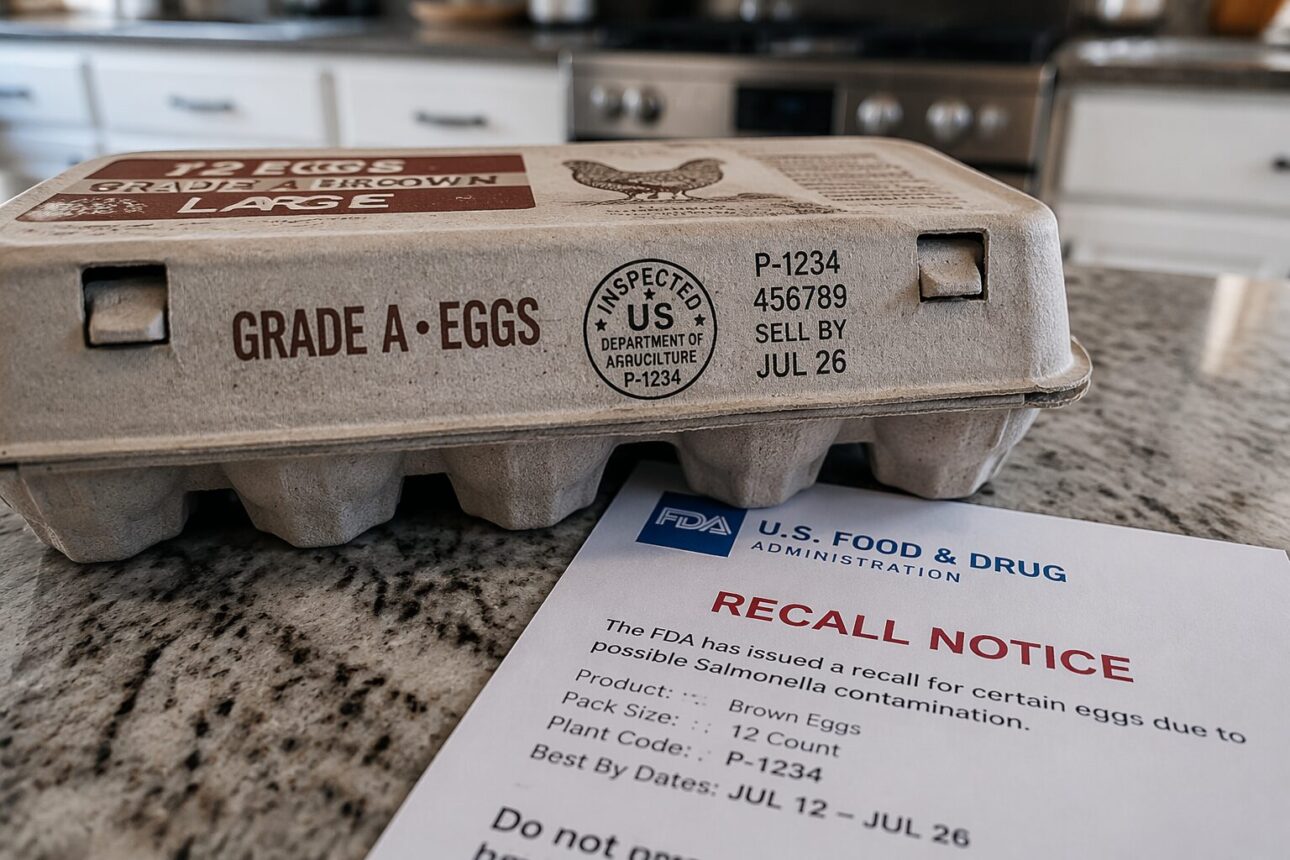
Question: How can I tell if my eggs are part of a recall? Answer: Check the carton code, plant number, and sell-by or best-by dates listed in the recall notice. FDA and CDC recall pages often name specific codes such as P-1950, 0840962, or CA 7695, along with date ranges and brand names. If you stored eggs without the original carton and cannot identify them, CDC advises throwing them away.
Key Takeaways
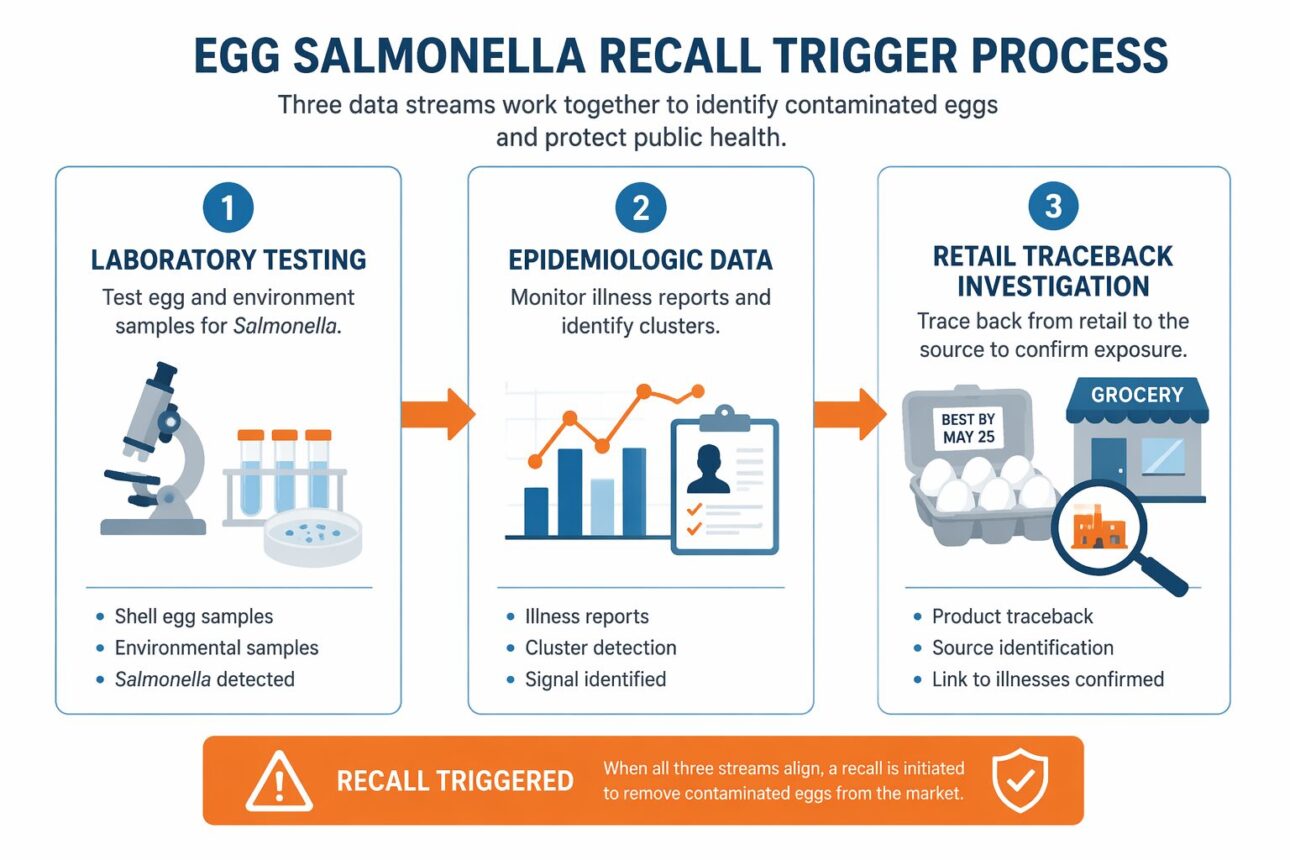
- Egg Salmonella recalls are triggered by laboratory testing, epidemiologic data linking illnesses to specific egg batches, and traceback investigations confirming the production source.
- Recent recalls have affected millions of eggs nationwide: a July 2026 recall involved approximately 19 million eggs across 17 states with 98 illnesses and 26 hospitalizations.
- Salmonella symptoms—diarrhea, fever, stomach cramps, nausea, and vomiting—typically appear 12 to 72 hours after exposure and last four to seven days.
- Children under five, adults over 65, and people with weakened immune systems face the greatest risk of severe or potentially fatal infections.
- Recall identification relies on specific carton codes and sell-by dates, not just brand names—checking these details is essential.
- Consumers must dispose of or return recalled eggs and sanitize any surfaces, containers, or refrigerator areas that may have touched them.
What Defines a Salmonella Recall
Salmonella Enteritidis is a bacterial pathogen found in chicken intestines and can contaminate eggs during laying or after the shell is laid. When public health agencies detect evidence of contamination in a specific production batch, they issue a recall. This is not a guessing game—recalls are triggered by real data.
The evidence comes in three forms. First, laboratory testing identifies the bacteria in a product sample. Second, epidemiologic investigation connects a cluster of illnesses to a specific food source through patient interviews and traceback. Third, investigators work backward from the distribution chain to pinpoint which farms, plants, or product codes are involved.
According to the FDA, when Midwest Poultry Services recalled shell eggs in July 2026, the notice specified that eggs produced between June 6, 2026, and July 3, 2026, with sell-by dates from July 20 to August 17, 2026, were affected. The company was not aware of illnesses at the time of the recall, but the potential for contamination was enough to trigger the action.
Consumers often assume a recall is about a brand name. That’s backwards. A recall is about specific production windows, plant identifiers, and carton codes. You might see a brand name on store shelves, but only certain batches from that company are at risk. That’s why the FDA and CDC list precise details like carton code “CA 7695” or sell-by date ranges rather than telling everyone to avoid eggs entirely.
Clinical Risks and Symptoms of Salmonella Infection
When someone eats eggs contaminated with Salmonella Enteritidis, the bacteria multiply in the intestines and can move into the bloodstream. Healthy individuals often recover on their own; vulnerable people can face severe complications.
Symptoms typically show up between 12 and 72 hours after eating contaminated eggs. According to CDC guidance, the most common signs are diarrhea (which may be bloody), fever, stomach cramps, nausea, and vomiting. Abdominal pain ranges from mild discomfort to severe cramping. The illness usually lasts four to seven days. For most healthy adults, that means staying home, resting, and drinking plenty of fluids until the infection clears.
But here’s where it gets serious. The June 2025 August Egg Company outbreak infected 134 people across 10 states. Of those, 38 people were hospitalized. One person died. That outbreak shows the real stakes when contaminated eggs reach vulnerable populations.
Children under age five are at much higher risk than older children or adults. Their immune systems are still developing, and their smaller body size means the bacterial load affects them more intensely. Adults over 65 face similar danger—their immune response weakens with age. Anyone with HIV, cancer undergoing treatment, chronic digestive disease, or any condition requiring immunosuppressant medication is also at significantly higher risk.
For these groups, Salmonella can spread beyond the intestines into the bloodstream, causing sepsis. It can settle in joints (reactive arthritis), the heart lining (endocarditis), or bones (osteomyelitis). These systemic infections require hospitalization, antibiotics, and sometimes surgery. Death is rare but not impossible, especially in the very young or very old.
The tricky part is that you cannot tell if an egg is contaminated just by looking at it. The shell may be clean. The yolk may look normal. Contamination happens on or inside the shell during laying and cannot be detected without laboratory testing.
Understanding the Scale of Recent Outbreaks
Egg Salmonella recalls are not rare events—they recur often enough that public health agencies maintain active recall pages and outbreak investigations year-round.
The July 2026 Midwest Poultry Services recall involved 1,589,577 dozen shell eggs, which equals approximately 19 million individual eggs. These eggs were distributed to retailers in six states. According to FDA outbreak data, the investigation linked those eggs to 98 illnesses across 17 states, 26 hospitalizations, and no deaths. Of 44 ill people with exposure information available, 40 reported eating eggs before becoming ill. This is not coincidence—this is epidemiologic evidence.
The June 2025 August Egg Company outbreak was even larger. The FDA identified 134 infections in 10 states, with 38 hospitalizations and one confirmed death. The CDC determined that epidemiologic, laboratory, and traceback data all pointed to eggs distributed by August Egg Company as the source. The company recalled brown cage-free eggs and brown certified organic eggs, and the FDA later expanded the recall to cover products that may still be sitting in home refrigerators.
A separate 2025 recall by Country Eggs, LLC involved large brown cage-free and omega-3 golden yolks eggs sold under brand names like “sunshine yolks.” The recall identified specific carton code CA 7695 and sell-by dates from July 1 through September 18, 2025. This example is important because it shows consumers that the carton code and date range matter far more than the brand name alone.
Beyond these cases, ABC News reported that Black Sheep Egg Company voluntarily recalled more than 6 million eggs over potential Salmonella contamination. The scale of these recalls—millions of eggs disappearing from store shelves and home refrigerators—shows how widespread the risk is and how quickly a single contaminated batch can affect multiple states and dozens of retail locations.
| Recall Event | Year | Producer | Estimated Eggs | States Affected | Illnesses | Hospitalizations | Deaths |
|---|---|---|---|---|---|---|---|
| Midwest Poultry Services | 2026 (July) | Midwest Poultry | ~19 million | 17 | 98 | 26 | 0 |
| August Egg Company | 2025 (June) | August Egg | Unknown | 10 | 134 | 38 | 1 |
| Country Eggs, LLC | 2025 (August) | Country Eggs | Unknown | Multiple | Linked | Unknown | 0 |
| Black Sheep Egg Company | 2026 | Black Sheep | 6+ million | National | Unknown | Unknown | 0 |
Mandatory Safety Steps for Consumers
If you own eggs, your first action is to check your carton. Look for the producer’s plant number and the sell-by or best-by date. Then check the FDA and CDC recall pages to see if your specific eggs match the recall details. Do not rely on brand name alone.
If your eggs are on the recall list, do not cook or eat them. Washing the shell or cooking the eggs does not make them safe. Salmonella Enteritidis can be inside the yolk and white, not just on the outside. The FDA advises consumers to return recalled eggs to their place of purchase for a full refund or to discard them in a sealed container.
After handling suspected or confirmed contaminated eggs, sanitize your kitchen. Wash your hands with hot, soapy water for at least 20 seconds. Wash any utensils, plates, cutting boards, and countertops that contacted raw eggs. Wipe down refrigerator shelves and drawers with hot, soapy water or a mild bleach solution (one part bleach to ten parts water). Do not forget the door seals or handles—bacteria can linger on high-touch surfaces.
The CDC recommends the “Clean, Separate, Cook, and Chill” protocol for all food safety:
- Clean: Wash hands, utensils, and surfaces with hot water and soap.
- Separate: Keep raw eggs away from ready-to-eat foods and use separate cutting boards.
- Cook: Heat eggs until both yolks and whites are firm, or until the internal temperature reaches 160°F (71°C).
- Chill: Refrigerate eggs promptly at 40°F (4°C) or below.
If you stored eggs without the original carton and cannot identify which batch they came from, the safe choice is to throw them away. It’s not worth the risk. Similarly, if you purchased eggs from a restaurant or prepared food source and later learn there was a recall, contact that establishment immediately.
For people who have eaten recalled eggs but show no symptoms, monitor yourself for 72 hours (the longest typical incubation period). If diarrhea, fever, stomach cramps, nausea, or vomiting develop, contact a health care provider. Be prepared to tell them what you ate and when.
Why Recalls Remain a Persistent Public Health Challenge
Even after a recall is announced, contaminated eggs can remain in circulation for weeks. People may not notice the recall. Eggs may sit in a refrigerator past the sell-by date. Restaurants and institutional food services may have purchased eggs before the recall and not discovered them until later. Small stores in rural areas might not receive the recall notice immediately.
The July 2026 Midwest Poultry recall showed this challenge. The investigation began detecting illnesses in November 2025, but the recall was not announced until the eggs had already been distributed and consumed. By the time the FDA and Midwest Poultry issued the recall notice, the product was already in millions of kitchens.
Cross-contamination also poses a risk. If someone handles recalled raw eggs and then touches other foods without washing their hands, Salmonella can spread. If a contaminated egg breaks on a cutting board and that board is then used for salad vegetables without proper cleaning, the bacteria transfers to the raw produce.
This is why public health agencies emphasize that consumers must actively check recalls rather than passively waiting for retailers to pull products. Stores are required to remove recalled items, but gaps exist. A consumer who checks the recall list weekly is far more likely to catch a problem than someone who assumes everything in the store is safe.
The good news is that recalls are becoming more transparent. The FDA and CDC publish detailed recall notices with specific information. Consumers who learn to read a recall notice—by finding the plant number, carton code, and date range—can protect themselves and their families.
FAQ
Q: Can I still eat eggs after a Salmonella recall?
Yes, only if your eggs are clearly outside the recall. Check your carton code and sell-by date against the recall notice. If your eggs do not match the recalled batch, they are safe to eat if handled and cooked properly. If you are unsure, throw them away.
Q: What are the symptoms of Salmonella from eggs?
Most common symptoms are diarrhea, fever, and stomach cramps, along with nausea, vomiting, and abdominal pain. Illness usually starts 12 to 72 hours after exposure and lasts four to seven days. Seek medical care if symptoms are severe or you belong to a high-risk group.
Q: How serious can Salmonella illness from eggs be?
Most infections in healthy people are self-limited, but Salmonella can cause serious disease in vulnerable groups. Young children, frail or elderly people, and those with weakened immune systems can develop severe infections, bloodstream infections, and in rare cases, fatal complications. The 2025 August Egg Company outbreak included one death.
Q: What should I do if I already ate recalled eggs?
Monitor yourself for symptoms such as diarrhea, fever, abdominal cramps, nausea, or vomiting. Contact a health care provider if symptoms appear, especially if you are in a high-risk group. If no symptoms occur within 72 hours, no treatment is typically needed, but stay alert for signs during the incubation window.
Q: How do I clean my kitchen after handling recalled eggs?
Wash your hands and any utensils or surfaces with hot, soapy water. Wipe down refrigerator shelves, drawers, and handles with hot water and soap or a mild bleach solution. Clean and sanitize any containers or cutting boards that touched the eggs to reduce cross-contamination risk.
Q: Which groups are most at risk from Salmonella eggs?
Children younger than five, adults 65 and older, and people with weakened immune systems are most likely to develop severe infection from Salmonella. These groups may experience systemic infections, require hospitalization, or face fatal outcomes. Pregnant people and those with chronic digestive conditions also face elevated risk.
Q: Are Salmonella egg recalls common in the United States?
Yes, they recur regularly enough that CDC and FDA maintain dedicated outbreak investigation pages. Recent recalls include actions by Midwest Poultry Services, August Egg Company, Country Eggs, and Black Sheep Egg Company. The pattern shows the issue is ongoing rather than isolated to a single producer or year.
My Experience With Egg Salmonella Recalls: What Consumers Must Know Now
I started following egg recalls about two years ago after a friend got genuinely sick from a batch she didn’t realize was affected. What struck me was how easy it was to miss. She tossed the original carton in the recycling, stored the eggs in her fridge without any packaging, and only found out about the recall when I texted her a link. By then, she’d already eaten half the dozen.
That taught me something important: the recall notice itself is useless if you can’t match it to what’s in your fridge. The plant codes and carton numbers feel like alphabet soup at first, but they’re actually the only real protection you have. I now take 30 seconds when I buy eggs to photograph the carton code and store it in my phone. It sounds paranoid until you’re the person calling a store at 10 p.m. to find out whether your eggs match a recall.
The other lesson was understanding risk tiers. I have a nephew with a compromised immune system, and learning that he’s in the group where Salmonella can actually become systemic and life-threatening changed how I talk about food safety with my family. It’s not just about “don’t eat raw eggs.” For some people, it’s about avoiding the risk entirely. That matters.
Have you ever caught a recall notice in time, or did you find out after the fact like my friend?
Conclusion
Egg Salmonella recalls happen because contamination is real, tracking is imperfect, and millions of eggs move through the supply chain daily. Understanding what a recall means, knowing how to identify your eggs, and taking swift action if you find yourself holding a recalled carton is how you protect yourself and your family.
The data is clear: recent recalls have affected tens of millions of eggs, sickened hundreds of people, and hospitalized dozens. The June 2025 August Egg Company outbreak resulted in one death. These are not hypothetical risks—they are documented public health events.
Your defense is simple. Check your carton code and sell-by date against the FDA and CDC recall pages. If your eggs match a recall, do not cook them. Return them or discard them. Clean any surfaces they touched. And if you eat eggs that later turn out to be recalled, monitor for symptoms and see a doctor if fever, diarrhea, or abdominal pain develops.
Eggs are a staple protein in most kitchens. That does not make them risk-free. A few minutes of attention to recall notices and carton details can mean the difference between a normal week and a week spent sick in bed—or worse.
References
- U.S. Food and Drug Administration. (2026, July). Midwest Poultry Services, L.P. Recalls Shell Eggs Due to Possible Salmonella Enteritidis Contamination. FDA. https://www.fda.gov/safety/recalls-market-withdrawals-safety-alerts/midwest-poultry-services-lp-recalls-shell-eggs-due-possible-salmonella-enteritidis-contamination
- U.S. Food and Drug Administration. (2026, July). Outbreak Investigation of Salmonella: Eggs (July 2026). FDA. https://www.fda.gov/food/outbreaks-foodborne-illness/outbreak-investigation-salmonella-eggs-july-2026
- Centers for Disease Control and Prevention. (2025, August). Salmonella Outbreak Linked to Eggs. CDC. https://www.cdc.gov/salmonella/outbreaks/eggs-08-25/index.html
- U.S. Food and Drug Administration. (2025, June). Outbreak Investigation of Salmonella: Eggs (June 2025). FDA. https://www.fda.gov/food/outbreaks-foodborne-illness/outbreak-investigation-salmonella-eggs-june-2025
- Centers for Disease Control and Prevention. (2025, June). Investigation Update: Salmonella Outbreak, Eggs, June 2025. CDC. https://www.cdc.gov/salmonella/outbreaks/eggs-06-25/investigation.html
- CBS News. (2026). More than 19 million eggs voluntarily recalled over potential salmonella contamination. CBS News. https://www.cbsnews.com/video/1-6-million-eggs-recalled-possible-salmonella-contamination/
- CBS News. (2026). 1.6 million cartons of eggs recalled at Kroger and other stores over salmonella concerns. CBS News. https://www.cbsnews.com/news/egg-recall-salmonella-midwest-poultry-kroger/
- ABC News. (2026). Millions of eggs recalled nationwide amid salmonella concerns. ABC News. https://abcnews.com/GMA/Food/6-million-eggs-voluntarily-recalled-fda-warns-potential/story?id=126769449

Sarah Anderson . J
I’m the mom behind Wise Mom Blogger, where everyday creativity meets real-life motherhood. I share easy DIY crafts, cozy knitting and crochet projects, beginner-friendly sewing ideas, and family-tested recipes—plus quick baking hacks that make homemade feel doable on busy days.