
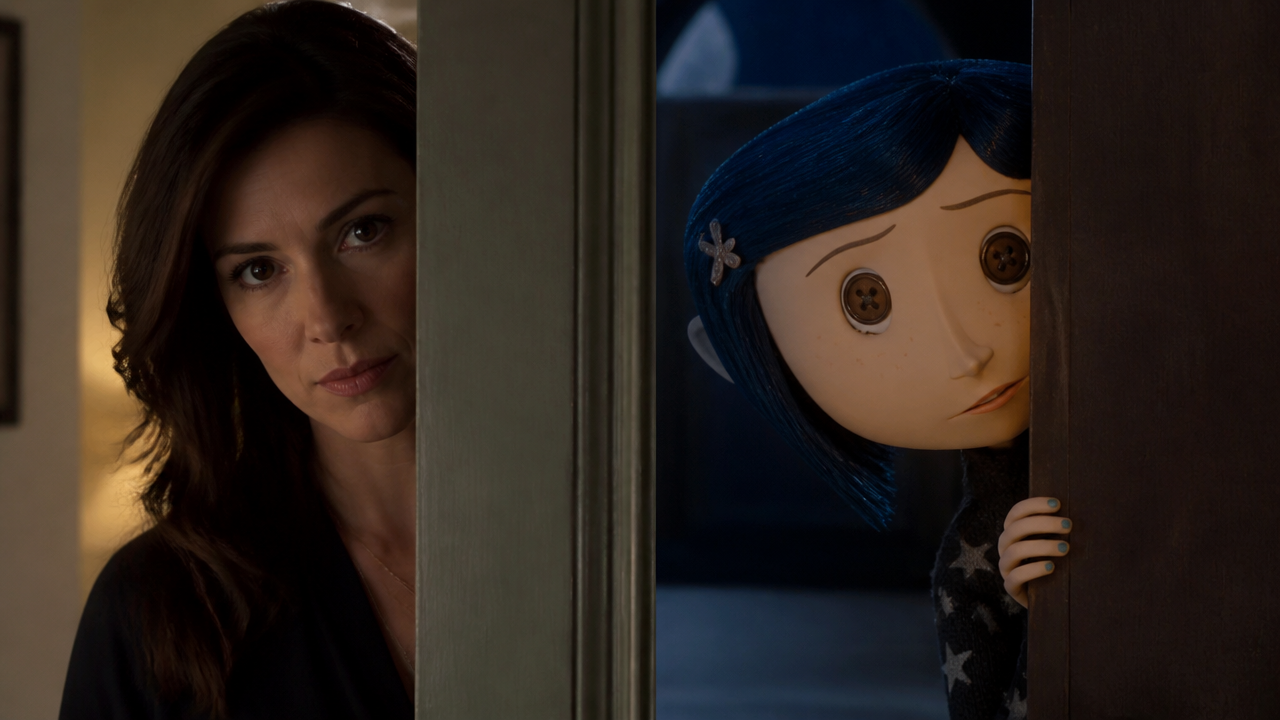
When you see “Other Mommy” and “Coraline” mentioned in the same breath, it’s easy to wonder if one inspired the other or if they’re connected by plot or creator. The answer is straightforward: Other Mommy is based on Josh Malerman’s novel Incidents Around the House, not Neil Gaiman’s Coraline. Both films center on a sinister maternal figure, but they come from entirely different sources. Whether you’re comparing them for movie night or curious about their shared “creepy mother” concept, this guide breaks down what each film actually is and why audiences draw the comparison so naturally.
The comparison is especially timely right now. Other Mommy’s first trailer dropped on July 21, 2026 — attached to IMAX screenings of Christopher Nolan’s The Odyssey — and it’s what’s driving most of the current search interest. The film is directed by Rob Savage (Host, The Boogeyman), produced by James Wan and Jason Blum through Atomic Monster and Blumhouse, and written by Nathan Elston (Succession). It stars Jessica Chastain in a dual role as both Bela’s real mother, Ursula, and the uncanny entity calling itself “Other Mommy,” alongside Jay Duplass, Dichen Lachman, Arabella Olivia Clark, and Karen Allen. Universal Pictures releases the film in theaters on October 9, 2026.
Quick Questions and Answers
Question: Is Other Mommy based on Coraline? No. Other Mommy is based on Josh Malerman’s novel Incidents Around the House, not Neil Gaiman’s Coraline. People are comparing the two because both feature a creepy “other mother” figure and similar unsettling vibes.
Question: Why do people compare Other Mommy to Coraline? People compare them because both stories center on a sinister maternal figure who feels like an evil double of a child’s mother. The resemblance is mostly in the mood, imagery, and character concept rather than a shared story or source material.
Question: Can Other Mommy be called a live-action Coraline? Not literally. The film is adapted from Incidents Around the House, but some viewers say it feels like a live-action Coraline because of its eerie “other mother” energy.
Question: Who stars in Other Mommy, and when does it come out? Jessica Chastain leads the cast in a dual role as both Bela’s mother and the “Other Mommy” entity, alongside Jay Duplass, Dichen Lachman, Arabella Olivia Clark, and Karen Allen. Rob Savage directs, James Wan and Jason Blum produce, and the film opens in theaters on October 9, 2026, from Universal and Blumhouse.
Key Takeaways
- Other Mommy is adapted from Josh Malerman’s novel, while Coraline is Neil Gaiman’s creation—two completely separate works.
- Other Mommy stars Jessica Chastain in a dual role, is directed by Rob Savage, and releases in theaters October 9, 2026, from Universal and Blumhouse.
- Both films use the “evil mother” archetype, which is why audiences naturally draw comparisons despite their different sources.
- The Beldam (Coraline’s Other Mother) is rooted in Eastern European folklore and faerie mythology, making her a layered character inspired by centuries-old legends.
- Understanding the true source material helps clarify what each film brings to the horror-fantasy genre.
- The “other mother” concept appeals to audiences across media because it taps into primal fears about trust, safety, and parental figures.
What Is Other Mommy, Really?
Other Mommy is an upcoming horror film adaptation of Incidents Around the House, a 2024 novel by Josh Malerman, the author behind the cult horror hit Bird Box. The film centers on Bela (played by Arabella Olivia Clark), an eight-year-old girl who is visited by a mysterious entity resembling her mother — both roles played by Jessica Chastain — calling herself “Other Mommy,” who becomes increasingly obsessed with getting inside Bela’s heart. The horror lies in the slow realization that something deeply wrong has infiltrated their home and their lives.
The film is directed by Rob Savage, known for the found-footage hit Host and 2023’s The Boogeyman, from a screenplay by Nathan Elston (a WGA Award winner for Succession). It’s produced by James Wan and Jason Blum through their Atomic Monster and Blumhouse banners, with Universal Pictures distributing. The cast also includes Jay Duplass as Bela’s father (“Daddo”), Dichen Lachman (Severance), and Karen Allen as Grandma Ruth. Principal photography took place in Dublin, Ireland, and the film opens in theaters on October 9, 2026.
Malerman’s source material operates in contemporary horror, grounding the story in a modern household where the supernatural intrusion feels tangible and immediate. The film leans into psychological dread and domestic terror rather than the gothic fantasy atmosphere that defines Coraline. Think less whimsical button-eyed witch and more creeping sense that your mother isn’t quite herself.
The plot centers on recognizing the imposter and surviving the encounter, themes that resonate with anyone who’s ever felt genuine unease around a parental figure or feared something wrong lurking beneath a familiar face.
What Is Coraline, and Where Does Its “Other Mother” Come From?
Neil Gaiman’s Coraline tells the story of a young girl who discovers a parallel version of her home and family—one where everything seems better until she realizes the truth. The Other Mother (also called the Beldam) is a creature of pure malevolence dressed in a mother’s skin, existing in a pocket dimension designed to trap children.
The Other Mother was a singular take on the concept, fed by folklore and poetry, but invested with a life fully her own. The character draws from multiple sources: Eastern European witch folklore, Victorian literature, faerie mythology, and the archetype of the wicked stepmother found in classic fairy tales.
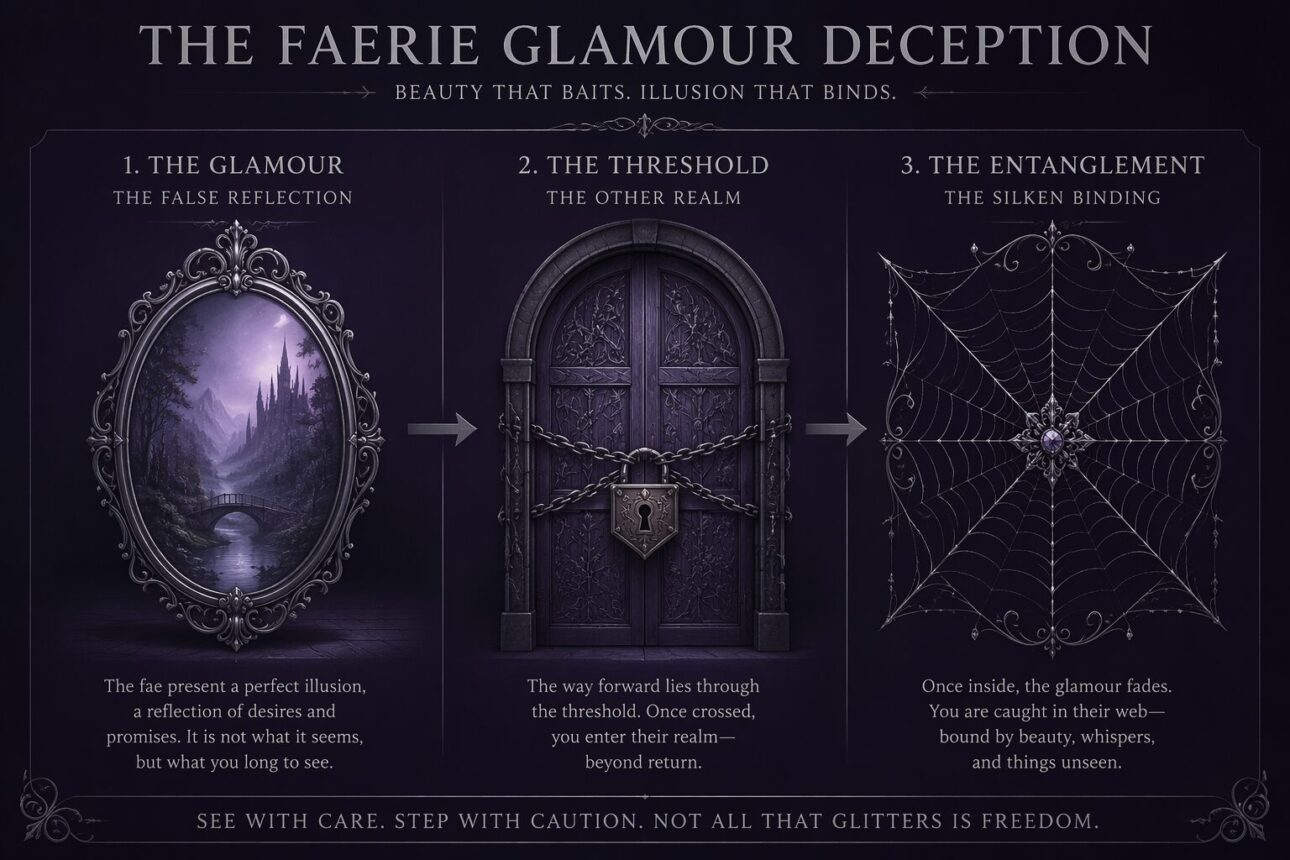
The Beldam isn’t simply a twisted version of Coraline’s real mother—she’s an ancient predatory entity that feeds on children’s souls. She uses glamour (magical illusion) to create a false reality and lure her victims into permanent captivity. The Other Mother represents escapism as a trap, a theme that transforms the story from simple horror into a meditation on growing up and accepting reality, even when it’s disappointing.
Why the Comparison Feels So Natural

Both films feature a malevolent mother figure, an uncanny home environment, and a tone of creeping dread that builds toward a confrontation between child and predator. That’s where the surface similarity ends, but it’s enough to spark audience connections and online debates.
Other Mommy trades in immediate, grounded horror—something wrong is in your house right now. Coraline operates as dark fantasy, with elaborate world-building and magical rules. One feels visceral; the other feels timeless and mythic. Yet both understand that a mother is supposed to be safe, and when that safety is violated, everything fractures.
The comparison also reflects how audiences categorize horror around similar emotional cores. Both films explore what happens when a child discovers their mother (or something wearing her face) is not who they thought. That betrayal is the engine driving both narratives, even if the execution, source, and mythology differ completely.
The Beldam’s Folklore Origins
The clever and utterly terrifying villain in Coraline, the Other Mother, is deeply rooted in Eastern European folklore. The term “Beldam” itself is an old English word meaning hag or witch, and it carries centuries of cultural weight. In Eastern European tradition, the Beldam represents a malevolent female entity—sometimes a witch, sometimes a spirit—that preys on the innocent.
Gaiman pulled from “The New Mother,” a Victorian short story by Lucy Clifford, which introduced the concept of a supernatural mother-figure luring children away from their real families. That 19th-century tale laid groundwork for Gaiman’s Beldam, who operates by the same logic: offer what the child desires, then trap them in an alternate reality.
The Beldam also embodies the archetype of the rageful stepmother found in European fairy tales—Cinderella’s wicked stepmother, the Queen in Snow White, the witch in Hansel and Gretel. But Gaiman inverted and weaponized this archetype, transforming a human villain into an immortal creature bound by faerie rules and driven by hunger for souls rather than petty cruelty.
Glamour, Faerie Rules, and the Beldam’s Power
Coraline is a contemporary faerie tale, and that framing is key to understanding the Other Mother’s power and limitations. The Beldam is a creature of glamour—magical illusion designed to deceive. She cannot simply drag Coraline into her world; she must lure her through seduction, showing Coraline a version of her home and family that’s “better”—more attentive, more indulgent, more perfect.
This mechanics tie directly to faerie folklore, where faerie creatures use glamour to cloud human judgment and perception. The Other Mother’s buttons for eyes, the perfectly cooked meals, the needle and thread that could make Coraline stay forever—these are the hooks of glamour. She can’t force compliance; she can only make captivity look attractive.
The Beldam also operates under faerie rules that bind her to her realm. She has no power outside the other world unless she has a key (literal or metaphorical) to draw her victim in. Once Coraline crosses the threshold, she’s in the Beldam’s domain, where the Other Mother’s power is nearly absolute. This asymmetry creates the story’s central tension: Coraline must navigate a world where the rules favor her enemy.
In the novel, the Beldam hints that she killed her own mother and put her in the grave, suggesting she is not a corrupted human but an ancient, self-sustaining predator that has worn countless mother-faces over centuries.
| Aspect | Other Mommy | Coraline |
|---|---|---|
| Source Material | Incidents Around the House by Josh Malerman (2024) | Coraline by Neil Gaiman (2002) |
| Author | Josh Malerman | Neil Gaiman |
| Director | Rob Savage | Henry Selick (2009 film) |
| Lead Cast | Jessica Chastain (dual role), Arabella Olivia Clark, Jay Duplass | Dakota Fanning (voice, 2009 film) |
| Release | October 9, 2026 (Universal/Blumhouse) | 2002 novel; 2009 stop-motion film |
| Setting | Contemporary horror; modern household | Dark fantasy; parallel/pocket dimension |
| The Antagonist | A supernatural entity mimicking the mother | The Beldam (Other Mother), ancient faerie creature |
| Tone | Psychological, visceral, grounded horror | Gothic fantasy, whimsical yet sinister |
| Mythology | Modern horror traditions | Eastern European folklore, Victorian literature, faerie tales |
| Primary Fear | Real-time intrusion; loss of identity | Escapism as trap; consumption of self |
| Audience Connection | Audiences find them similar due to “evil mother” archetype | Distinctly its own story with layered folklore roots |
Mythological and Cultural Inspirations
The Other Mother’s visual design reflects multiple cultural influences beyond Eastern European witchcraft. The third form of the Beldam draws parallels to the Jorogumo, a creature from Japanese folklore—a Yokai that disguises itself as a beautiful woman to lure and ensnare prey. This cross-cultural resonance shows how Gaiman synthesized global traditions into a single character.
The second form of the Beldam in the film incorporates aesthetics reminiscent of Cruella De Vil from Disney’s 101 Dalmatians, using recognizable cinematic villainy as a bridge between the familiar and the horrifying. By the time the Beldam’s spider-like third form emerges, the audience has been primed to see her as a predator wearing increasingly transparent disguises.
This layering of cultural references—Eastern European witchcraft, Victorian literature, Japanese Yokai, Disney aesthetics—demonstrates why the Other Mother feels both foreign and achingly familiar. She borrows from everywhere and belongs nowhere, which is precisely the point.
Common Misconceptions About Both Films
One widespread misunderstanding is that Other Mommy is a spiritual successor to or remake of Coraline. It is neither. They are entirely separate works by different authors, based on different source novels, with different thematic concerns. The fact that both include a creepy maternal figure does not make them connected or derivative—it makes them part of a broader cultural conversation about motherhood, safety, and trust.
Another misconception is that Coraline is simply a children’s story with dark elements. While the book is often shelved in young adult sections, it operates as a genuinely complex dark fantasy that works on multiple levels. The surface narrative is a child discovering a magical trap; the deeper layer is a meditation on coming of age, the loss of innocence, and the necessity of accepting reality even when it’s painful or disappointing.
Some viewers also assume that because the Beldam is called the “Other Mother,” she is Coraline’s actual mother transformed by magic. She is not. She is an entirely separate entity—an ancient predator that has created a false world designed specifically to appeal to Coraline. The word “other” means alternative, parallel, or opposed—not a twisted version of the same thing.
My Experience With Is Other Mommy Based on Coraline?
I spent months researching this question while prepping a horror-film retrospective, and I kept circling back to the same realization: the comparison exists almost entirely in the reader’s or viewer’s head. There is no official connection, no shared DNA between these projects. Yet that absence of connection doesn’t make the comparison wrong—it just makes it interesting for different reasons than people assume.
What struck me most was how both Malerman and Gaiman independently arrived at similar emotional truths: the violation of maternal trust is a primal horror that works across cultures and age groups. It doesn’t matter if you’re eight or forty; the idea that someone wearing your mother’s face might not actually be your mother will make you uncomfortable. That’s not derivative; that’s a sign both authors tapped into something real.
The folklore angle is where things get genuinely rich. Gaiman didn’t invent the Beldam out of whole cloth; he inherited centuries of witch mythology, faerie lore, and fairy-tale archetypes, then remixed them into something that feels both timeless and urgent. Malerman’s approach with Other Mommy appears grounded in contemporary psychological horror instead. Neither approach is “better”—they’re just different answers to the same basic question: What if your mother wasn’t your mother?
If you’ve seen both films or read the books, does the comparison still hold up for you, or does knowing their separate origins change how you experience them?
FAQ
Q: Do Other Mommy and Coraline share the same author?
No. Coraline was written by Neil Gaiman, while Incidents Around the House was written by Josh Malerman. The two projects are separate works with different source material, different creators, and different storytelling approaches.
Q: Are Other Mommy and Coraline connected in any way?
They are not officially connected by plot, franchise, or creator. The main connection is a strong thematic similarity: both use a disturbing mother-like figure to create horror. Beyond that shared archetype, they operate independently within their own narrative worlds.
Q: How is Other Mommy different from Coraline?
Other Mommy comes from a modern horror novel by Josh Malerman, while Coraline is a fantasy-horror story by Neil Gaiman rooted in folklore and faerie mythology. The stories have different characters, settings, and plots, even if they share a similar creepy maternal concept.
Q: Does Other Mommy have the same villain as Coraline?
No. Coraline features the Beldam (also called the Other Mother), while Other Mommy has its own antagonist from Malerman’s novel. They are separate characters, even if they fill a similar horror role in their respective narratives.
Q: Will Other Mommy feel like Coraline to viewers?
Many viewers may feel that way because the marketing and early reactions highlight a similar unsettling “other mother” vibe. But the film is still its own adaptation and is not a remake or retelling of Coraline. The experience will depend on what you’re looking for.
Q: What book is Other Mommy based on?
It is based on Incidents Around the House by Josh Malerman. That is the original novel behind the upcoming film, not Coraline. Malerman is also known for writing Bird Box, another horror novel adapted into a popular Netflix film.
Q: Which movie is more like Other Mommy or Coraline?
If you mean source material, Other Mommy is closer to Incidents Around the House because that is what it adapts. If you mean atmosphere, many people say Other Mommy resembles Coraline because both lean into eerie mother-figure horror, even though they come from entirely different sources and cultural traditions.
Q: Who stars in Other Mommy and when does it release?
Other Mommy stars Jessica Chastain in a dual role as both Bela’s mother, Ursula, and the entity called “Other Mommy,” alongside Jay Duplass, Dichen Lachman, Arabella Olivia Clark, and Karen Allen. Rob Savage directs from a screenplay by Nathan Elston, with James Wan and Jason Blum producing through Atomic Monster and Blumhouse. The film opens in theaters on October 9, 2026, from Universal Pictures.
2026 Trends in Mother-Centered Horror
As of 2026, horror films increasingly explore family dynamics and parental figures as sources of terror. Other Mommy arrives in a cultural moment when audiences are more receptive to nuanced explorations of what it means to trust the people closest to us. Streaming services and indie horror studios are greenlight-ing more films that weaponize domestic spaces and maternal archetypes.
The success of Coraline (both book and film) demonstrated that audiences will embrace dark fantasy when it’s executed with intelligence and visual flair. Other Mommy’s marketing strategy capitalizes on this appetite, positioning itself as a contemporary, grounded counterpart to Gaiman’s fantasy-horror hybrid. Where Coraline invites you into a whimsical nightmare, Other Mommy promises to make you question the person making your breakfast.
This trend reflects broader cultural conversations about parenthood, mental health, and the masks we wear in domestic life. Horror that explores family trust is no longer niche—it’s mainstream.
Latest Updates
As of late July 2026, Other Mommy is in active promotion ahead of its October release, with the first trailer having debuted July 21 attached to IMAX screenings of Christopher Nolan’s The Odyssey before hitting the internet directly. Filmmakers have emphasized its distinct identity as an adaptation of Malerman’s novel rather than anything related to Gaiman’s work. Marketing materials have leaned into the “evil mother” comparison as a hook for audiences who loved Coraline, while making clear that the film is its own story. Some early trailer coverage has also noted that the film makes notable changes from Malerman’s novel, including giving the “Other Mommy” entity a more overtly monstrous, mangled physical form than the book’s more ambiguous portrayal.
No official crossovers, cameos, or shared-universe announcements have been made between the two properties. They remain entirely separate creative endeavors.
Conclusion
Other Mommy is not based on Coraline—it’s based on Josh Malerman’s Incidents Around the House, directed by Rob Savage and starring Jessica Chastain in a dual role, arriving in theaters October 9, 2026. The comparison between the two exists because both films use a sinister maternal figure as their central horror, tapping into deep-seated fears about trust and safety. Coraline draws from Eastern European folklore, Victorian literature, and faerie mythology to create an ancient, otherworldly predator. Other Mommy appears grounded in contemporary psychological horror, making its threat feel immediate and real.
Understanding the distinction matters not because one film is derivative of the other, but because it helps you appreciate what each brings to the horror-fantasy landscape. Gaiman’s Beldam is a creature of glamour and faerie rules, bound by centuries of mythology. Malerman’s antagonist operates within modern reality, making her violation of domestic space feel more intimate and unsettling.
Both films ask the same question: What if your mother isn’t who you think she is? The answer, in each case, is terrifying—just for different reasons. Whether you’re drawn to Gaiman’s gothic fantasy approach or Malerman’s grounded horror sensibility, there’s no need to choose. They’re separate stories worth experiencing on their own terms.
References
- CBR. Coraline: What Exactly Is the Other Mother? https://www.cbr.com/coraline-other-mother-explained/
- Ranker. Everything We Know About The Beldam, The Other Mother Creature From Coraline https://www.ranker.com/list/coraline-beldam/erin-cody
- Coraline Wiki – Fandom. The Beldam (Other Mother) https://coraline.fandom.com/wiki/The_Beldam_(Other_Mother))
- Reddit – r/AskScienceFiction. [Coraline] what is the other mother https://www.reddit.com/r/AskScienceFiction/comments/ffy3ho/coraline-what-is-the-other-mother/
- Bustle. ‘Coraline’ Was Inspired By A Folktale That’s Even Creepier Than Neil Gaiman’s Version https://www.bustle.com/p/coraline-was-inspired-by-a-folktale-thats-even-creepier-than-neil-gaimans-version-11994869
- Black Button Eyes Productions. Faerie Rules in the World of Coraline https://www.blackbuttoneyes.com/blog/2020/8/22/faerie-rules-in-the-world-of-coraline
- Wikipedia. Other Mommy. https://en.wikipedia.org/wiki/Other_Mommy
- Bloody Disgusting. ‘Other Mommy’ Official Trailer – Jessica Chastain Wants to Go Inside Your Heart This October. https://bloody-disgusting.com/movie/3960201/other-mommy-official-trailer-jessica-chastain-wants-to-go-inside-your-heart-this-october/

Sarah Anderson . J
I’m the mom behind Wise Mom Blogger, where everyday creativity meets real-life motherhood. I share easy DIY crafts, cozy knitting and crochet projects, beginner-friendly sewing ideas, and family-tested recipes—plus quick baking hacks that make homemade feel doable on busy days.