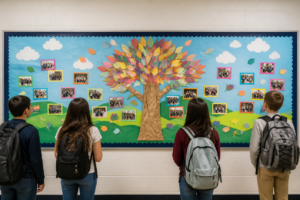

What makes a truly great classroom bulletin board stand out from every other display you have tried? Whether you are planning a fresh start for the new term or looking to revamp your walls for a holiday, the right classroom bulletin board adds character to your space. You can use these boards to excite students about new concepts, showcase student work, or celebrate seasonal milestones. A thoughtful, easy classroom bulletin board helps foster a growth mindset while serving as a useful visual resource. Let’s look at how you can make your next classroom bulletin board project a success.
Quick Questions and Answers
Question: What is a classroom bulletin board used for? Answer: A classroom bulletin board is used to display student work, teaching materials, reminders, and visual supports for learning. Sources also describe it as a way to build classroom community, reinforce goals, and make information easier to understand through visuals. It effectively organizes classroom communication and keeps students informed about upcoming events or learning targets throughout the year.
Question: How do you make a bulletin board idea for class? Answer: Start by choosing the board’s purpose, such as a theme, a learning target, or a student celebration display. Then arrange the background, border, title, and main elements before stapling anything down so the layout looks balanced and clear. This approach ensures your materials are placed logically before you commit to staples or adhesive.
Question: What materials do you need for a bulletin board? Answer: Common materials include background paper, border trim, letter cutouts, staples or tape, scissors, and printed decorations or student work. Interactive boards may also use markers, stickers, pockets, flip cards, or movable pieces depending on the activity. These versatile supplies help you transition from a simple display to an engaging board game of sorts for your learners.
What You Need: Tools and Materials
| Item | Purpose | Notes |
|---|---|---|
| Background paper | Covers the board surface | Use butcher paper or fabric for texture |
| Border trim | Frames the display area | Consider scalloped or straight edges |
| Letter cutouts | Creates the main title | Use high-contrast colors for readability |
| Staples or pins | Secures elements to the wall | Use adhesive putty if walls are delicate |
| Interactive cards | Adds engagement | Use index cards or envelopes for pockets |
| Recycled items | Adds unique decorations | Use cardboard or fabric scraps to save money |
Step 1: Choosing a Thematic Focus
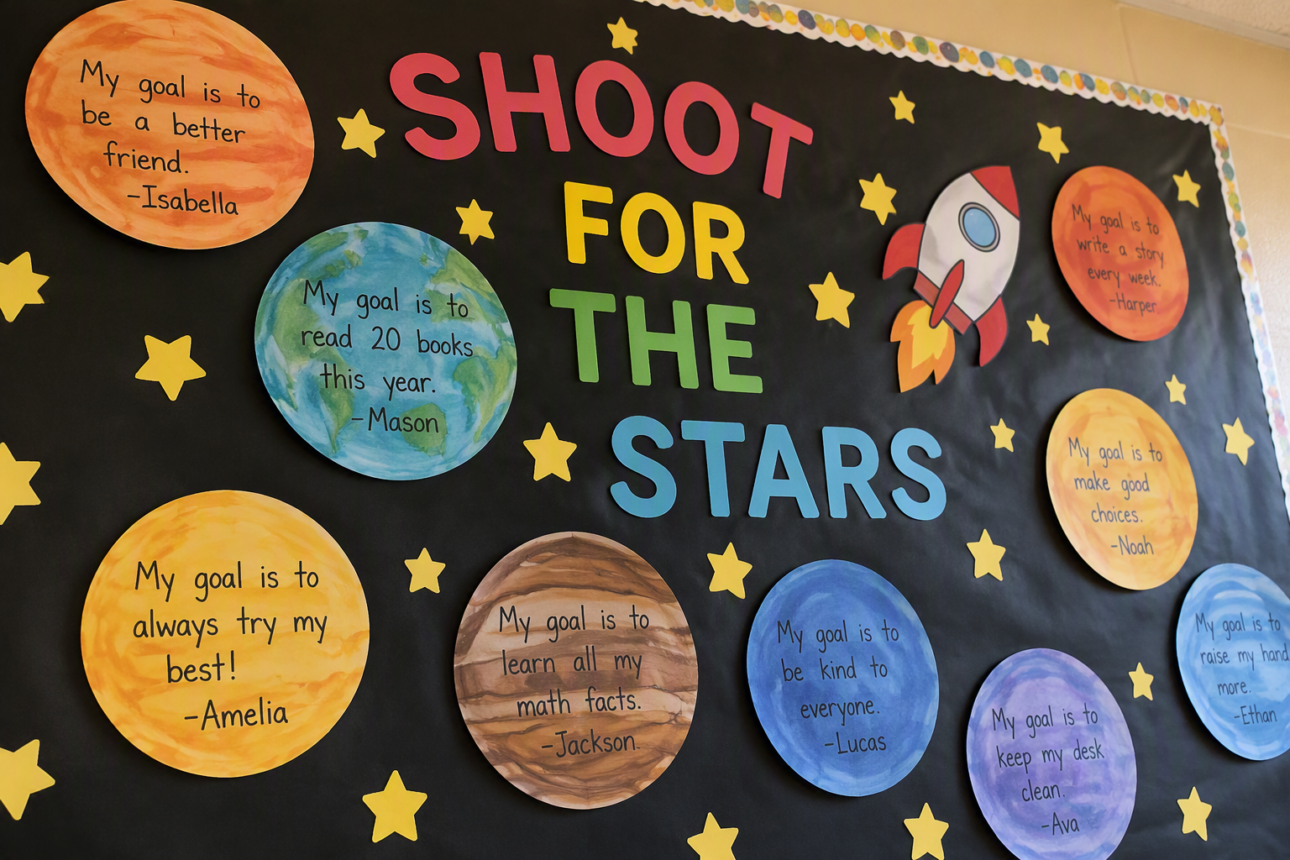
Select a theme that serves your primary learning objective. For example, a “Shoot for the Stars” goal board works well for academic motivation, while an “All About Me” display builds community. Prodigy Game notes that colorful boards help students get excited about new concepts.
Align your design with your specific grade level. Use crayon-themed displays for younger preschool learners to keep things playful. For middle schoolers, consider using advice from alumni to bridge the gap between grades. High schoolers often respond better to themes focused on college or career pathways. Keep your focus narrow to ensure the message hits home.
Step 2: Designing for Visibility and Clarity
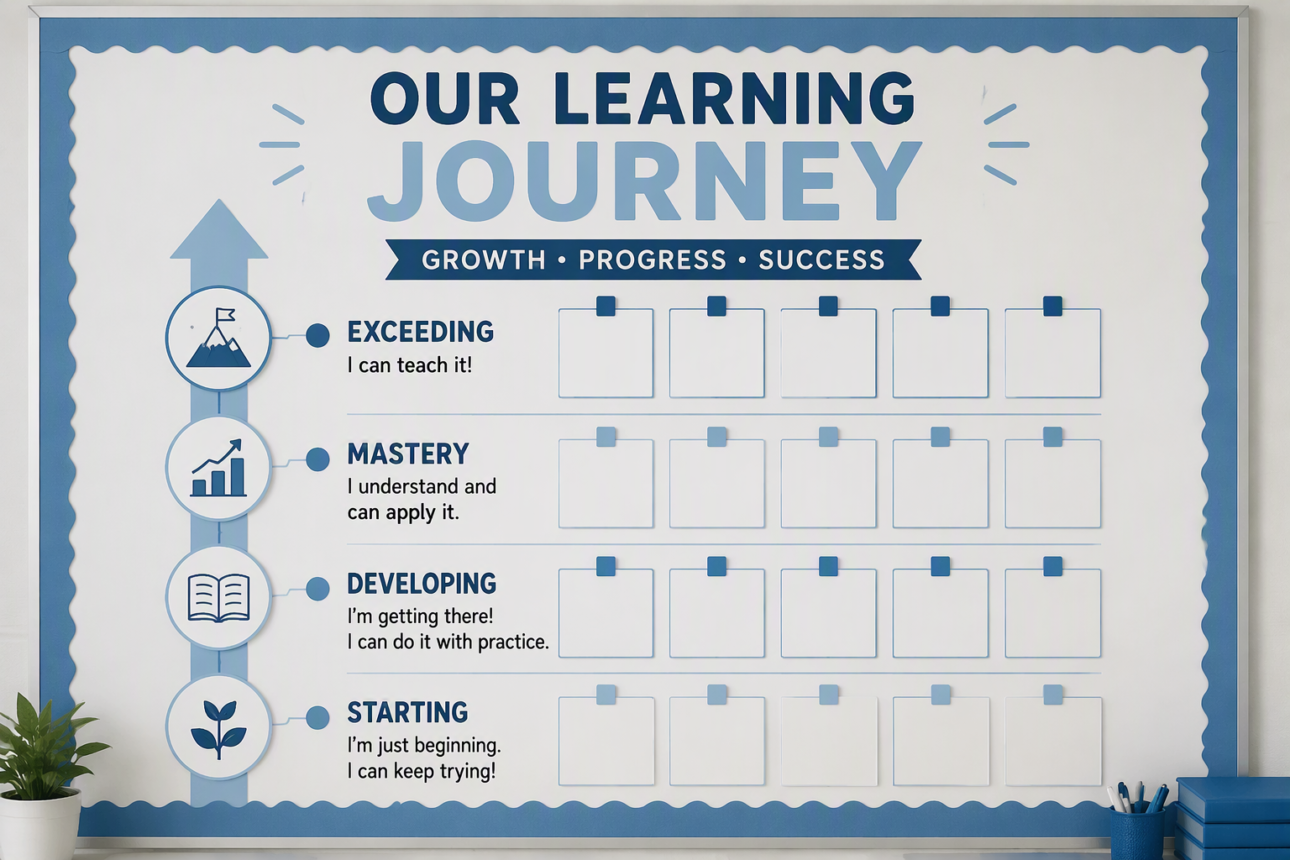
Keep the board readable from across the room. Use large, high-contrast fonts for headers so students can grasp the concept in under 5 seconds. If you find your text is too small, your audience will likely skip reading it entirely.
Balance is everything. Use white space to prevent the display from becoming visually cluttered. If the board is meant to track progress, use vertical space to create a clear pathway. A “mountain climber” or “roadmap” design works well here. It gives students a sense of movement as they complete milestones like reading books or finishing math practice.
Step 3: Incorporating Interactive Elements
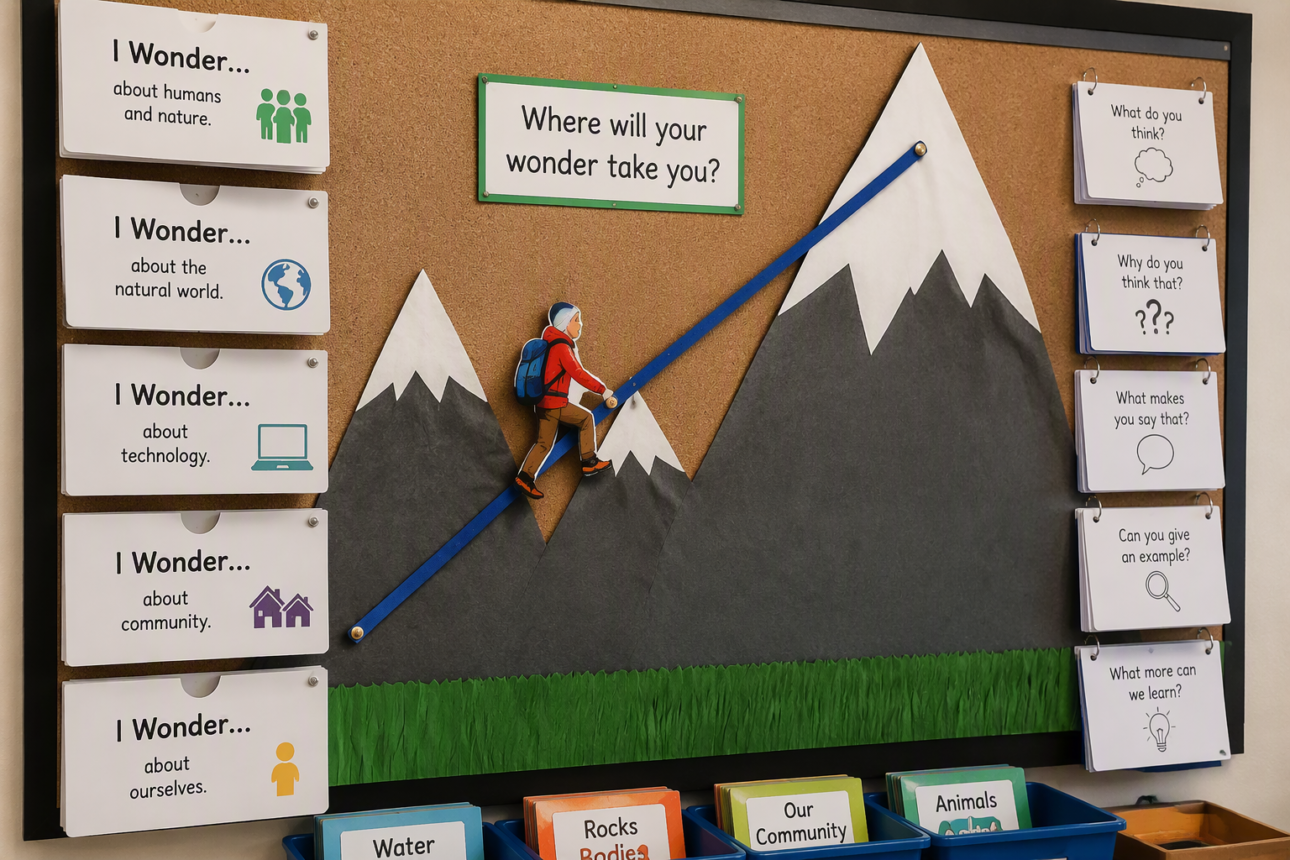
Bulletin boards work best when they invite participation. Add “I Wonder…” pockets where students can drop anonymous questions or reflections. This keeps the board active. You can also create a moving progress tracker. Attach a character to a ribbon and have students move it as they complete tasks.
Flip cards are another great way to encourage self-directed learning. Place a question on the front and the answer on the back. This makes the wall a source of curiosity. Bored Teachers highlights these interactive tools as excellent for academic materials and daily notices. Think of it as creating a cozy learning environment where students feel invited to touch and engage with the wall.
Step 4: Maintenance and Rotation
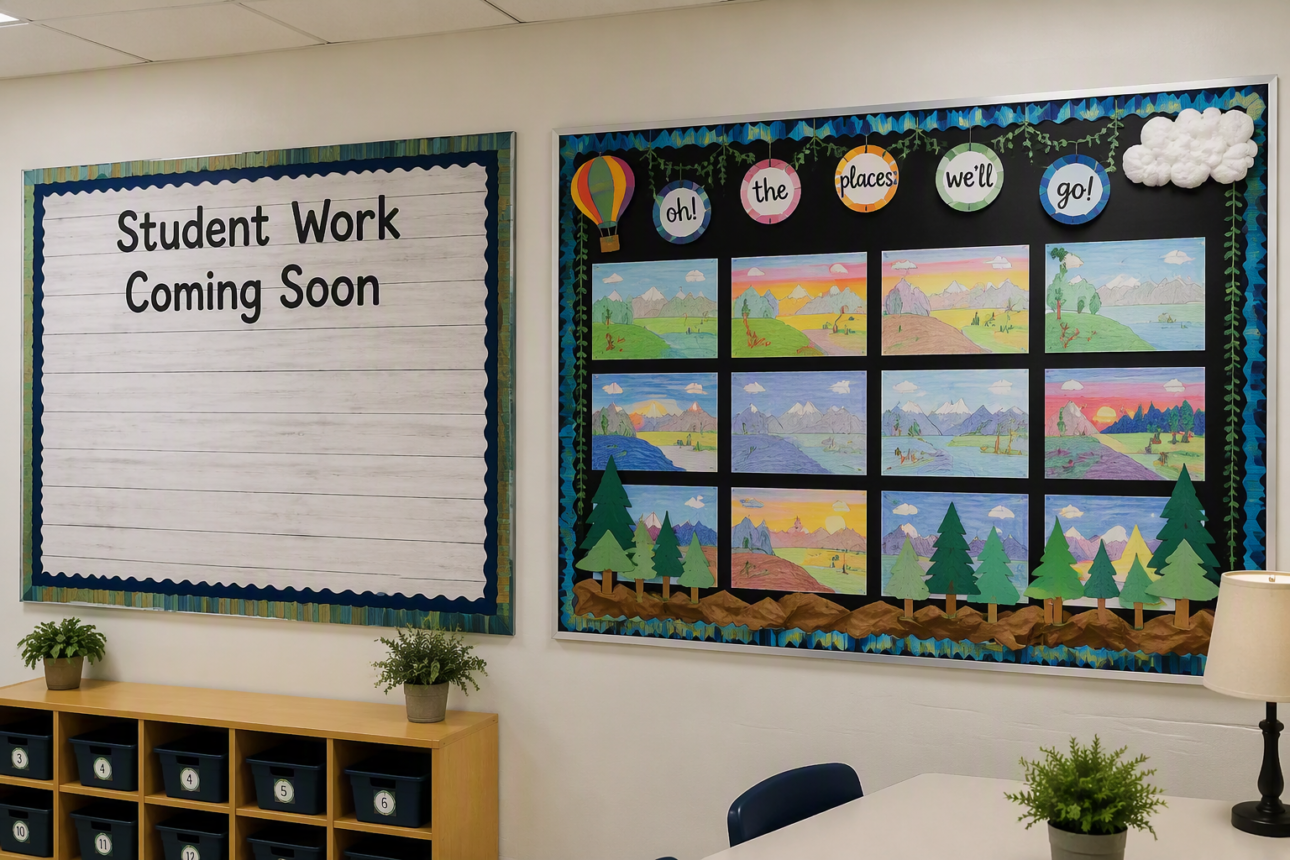
Update your display at least every 6 weeks. Lifestyle Dominates warns that familiarity breeds invisibility. If a board stays up for three months, students stop looking at it. A fresh update keeps the information relevant to your current lessons.
Keep an “evergreen” board if you are short on time. A classroom mission statement or a permanent space for “Student work coming soon” works all year. You only need to swap the actual work samples periodically. This balances high-effort seasonal boards with low-effort functional ones.
Common Mistakes to Avoid
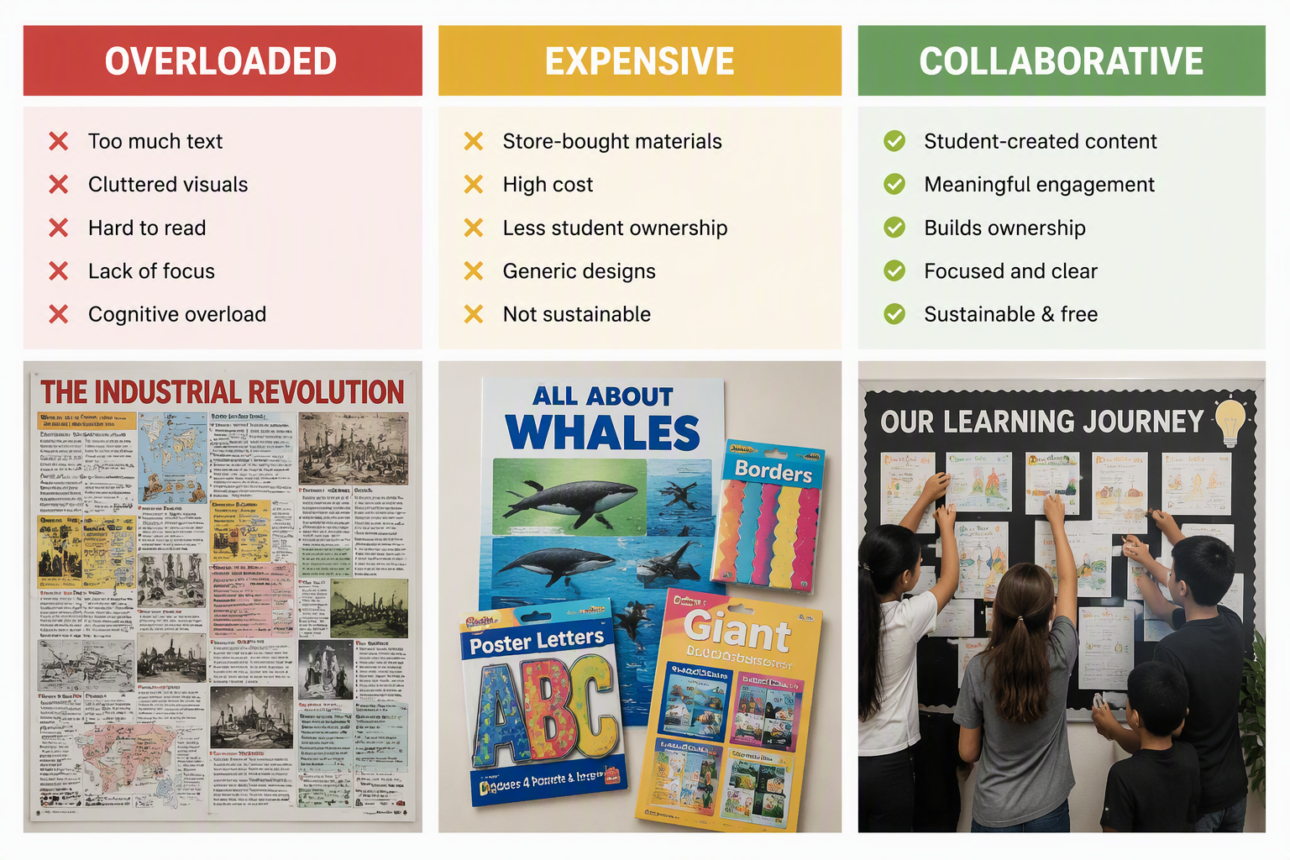
Overloading is the most frequent error. Too much text makes the board impossible to digest. If you have to stand three inches from the board to read it, it is likely too busy. Simplify your message to one core idea.
Avoid using expensive, single-use materials. You can easily repurpose cardboard or fabric scraps instead of buying new decor every time. These materials often look better anyway. Finally, do not exclude students from the process. Let them write their own goals or help mount their own work. It gives them ownership of the classroom space.
Troubleshooting
Does your board look messy? Try limiting your color palette to two or three main colors. This creates immediate visual harmony. If students seem to ignore the board, try adding a physical element they can move. A static board is a quiet board.
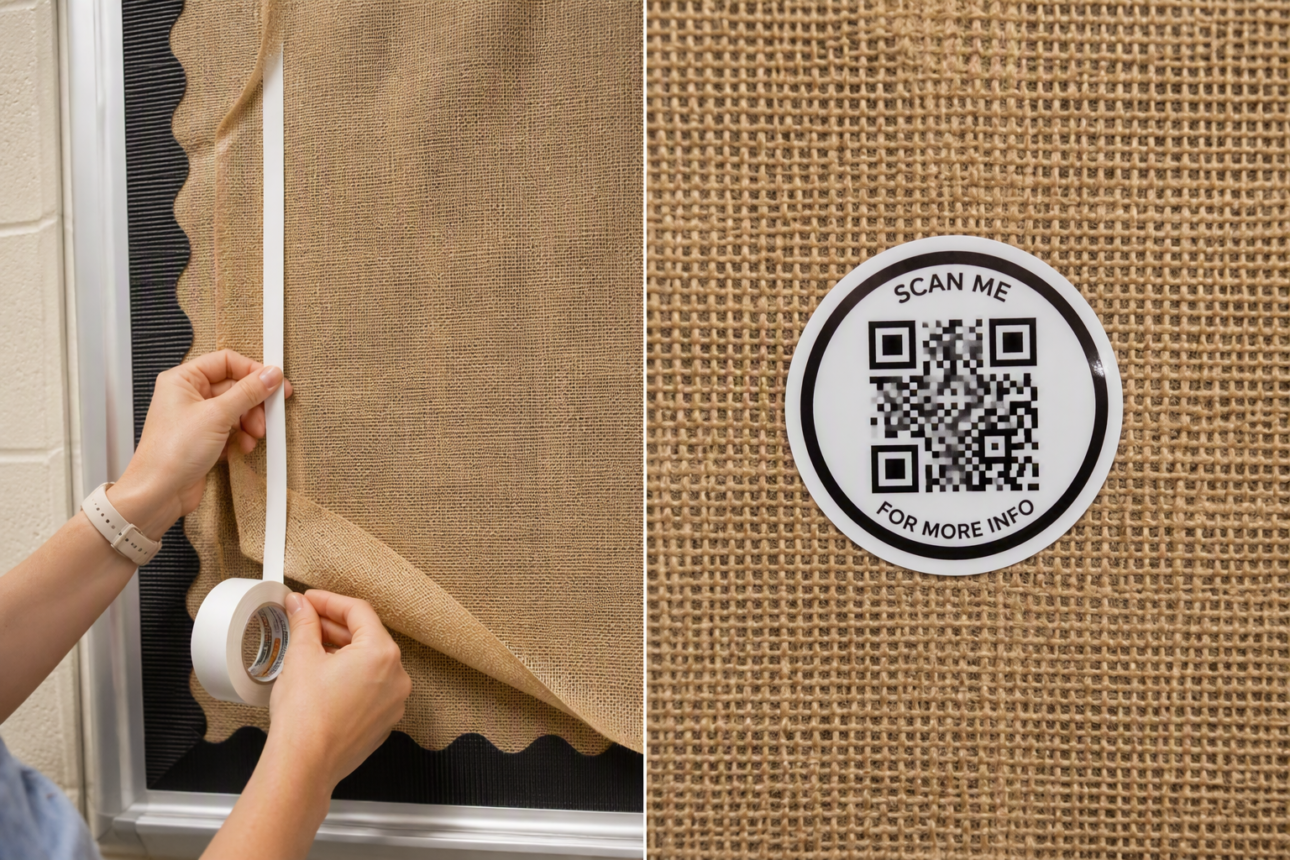
What if your materials fall off the wall? If you are working with older, textured surfaces, standard staples might not hold. Try using double-sided fabric tape. It sticks much better to fabric backings and helps prevent sagging over time. Sometimes a bit of hot glue on a fabric backing is the only way to ensure heavy items stay put.
FAQ
Q: How often should I change my board?
Aim for a refresh every 4 to 8 weeks. Many educators find that a 6-week rotation is the sweet spot. This prevents the display from becoming part of the background, ensuring students actually notice the updates.
Q: What if I don’t have a budget?
Use recycled cardboard, old newspapers, or student-created art to decorate. You can also use items you already have, like fabric scraps or ribbon, to create borders. Many of the most creative boards use materials found in a classroom supply closet.
Q: How do I keep boards relevant all year?
Use a base design like a class mission statement that stays up all year. Update the surrounding elements with new student reflections or photos throughout the terms. This keeps the board functional without requiring a total overhaul every month.
Q: Can bulletin boards be interactive in the classroom?
Yes. Several sources recommend interactive elements such as question prompts, pockets, flip cards, movable goals, and student shout-outs so learners can add responses or update the display themselves. Interactive boards are described as more engaging and more likely to hold student interest.
Q: Why use a goal-setting bulletin board?
Goal-setting boards are tools for motivation, growth mindset, and progress tracking. Students can post academic or personal goals, then move pieces or add updates as they complete milestones, which makes progress visible and celebratory.
Q: What are easy bulletin board ideas for beginners?
Simple options include “Student work coming soon,” an “All About Me” board, a classroom mission statement board, or a basic goal-tracking display. These ideas are popular because they require less prep and can be reused across the year.
Q: What mistakes should you avoid with bulletin boards?
A common mistake is overloading the board with too much text or too many visuals, which makes it hard to read from a distance. Another mistake is making it completely static, because several sources say bulletin boards work best when they are updated or interactive.
Q: How do you make a bulletin board visually clear?
Use a strong theme, a readable title, and high-contrast colors so the message can be understood quickly. One source specifically says clarity means the message should be readable from across the room in under five seconds.
Q: What is a good first bulletin board idea for new teachers?
A good first board is one with a clear purpose and low prep, such as a welcoming class theme, student work display, or goal-setting board. Sources suggest starting simple, then adding student participation and periodic updates once the basic layout is in place.
My Experience With How to Create an Engaging Classroom Bulletin Board
Creating a bulletin board used to feel like a high-stakes design project for me. I would spend hours cutting letters and agonizing over color schemes. One year, I tried to cover every inch of the board with information, and the students simply walked past it without a glance. That was the moment I realized that less is almost always more.
I now focus on one clear purpose. If I want students to track their reading, the board is just for reading. If it is for student work, the background stays neutral so the art shines. My best advice is to embrace the “white space.” It is not an empty hole; it is a rest stop for the eyes. I also found that involving students in the mounting process is a lifesaver. Handing them the stapler or letting them place their own work gives them a sense of pride that a perfectly neat, teacher-made board never achieves. It gets messy, sure, but it feels like their space, not a gallery. Do you have a favorite theme that has worked wonders in your own classroom?
Next Steps
Audit your classroom space to identify high-traffic walls that are perfect for interactive displays. Start a collection of recycled materials like cardboard or scrap paper to keep your supply costs low for the rest of the year. Plan your first board around an “All About Me” theme. This builds immediate community before you transition to more intensive academic-focused displays.
References
- Bored Teachers. (2026). 42 Awesome Interactive Bulletin Board Ideas for Your Classroom. https://www.boredteachers.com/post/interactive-bulletin-boards
- Classpoint. (2025). 48 Fun Back-to-School Bulletin Board Ideas For 2025!. https://www.classpoint.io/blog/bulletin-board-ideas
- Classpop. (2026). 49 Back to School Bulletin Board Ideas for Every Grade in 2026. https://www.classpop.com/magazine/back-to-school-bulletin-board-ideas
- Prodigy Game. (2026). 20+ Fun Classroom Bulletin Board Ideas for Teachers. https://www.prodigygame.com/main-en/blog/bulletin-board-ideas
- TeachStarter. (2026). 11 Simple Classroom Bulletin Board Ideas You Can Set Up in No Time. https://www.teachstarter.com/us/blog/10-simple-classroom-bulletin-board-ideas-you-can-set-up-in-no-time-us/
- TeacherQuestions. (2026). What are ideas for bulletin boards that you can leave up in your classroom all year?. https://www.teacherquestions.com/blog/bulletin-board-ideas-yearlong
- Zaided. (2026). 15 Inspiring Goal Setting Bulletin Boards For Classroom Success. https://zaided.com/goal-setting-bulletin-board/

Sarah Anderson . J
I’m the mom behind Wise Mom Blogger, where everyday creativity meets real-life motherhood. I share easy DIY crafts, cozy knitting and crochet projects, beginner-friendly sewing ideas, and family-tested recipes—plus quick baking hacks that make homemade feel doable on busy days.