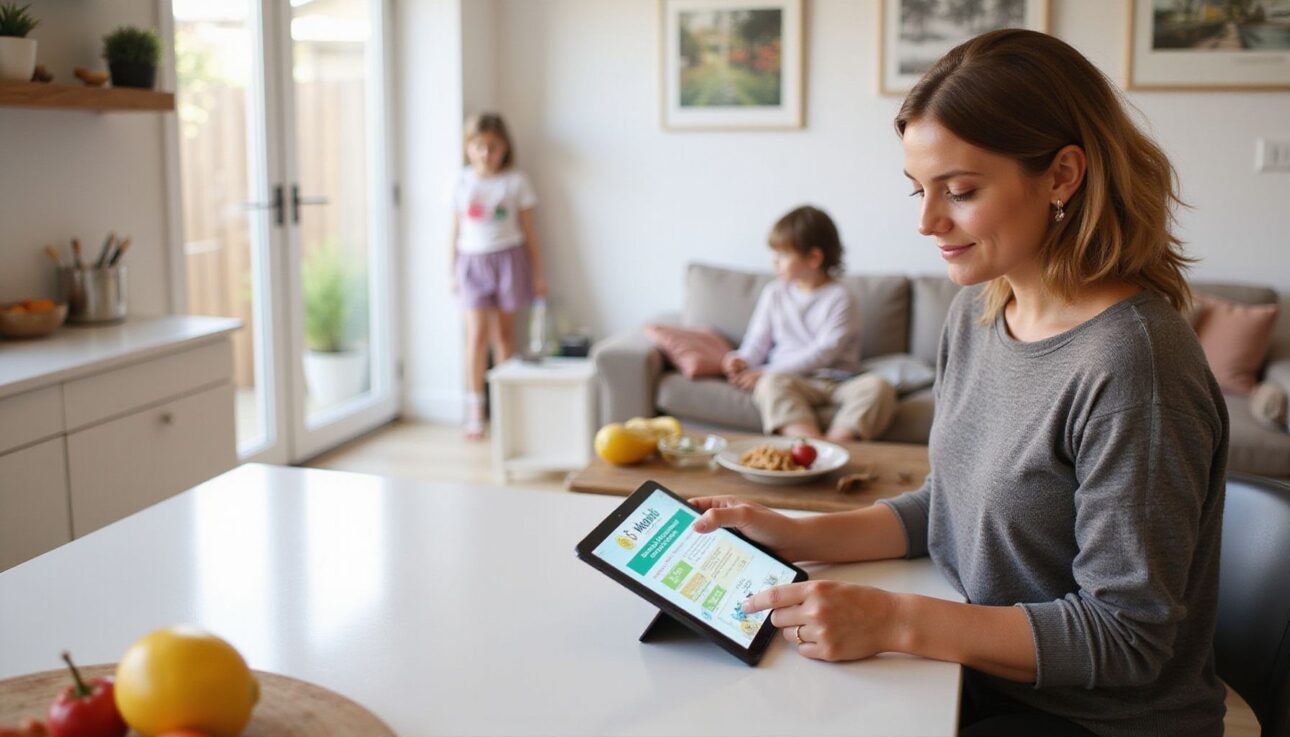
How do you actually measure healthy screen time for kids when every device pulls their attention in different directions? Parents juggling busy schedules often wonder whether strict digital limits or content quality matters more for long-term development. Balancing screen time for kids requires clear boundaries, consistent routines, and smart content swaps that fit naturally into daily life. Whether you are planning summer road trips or winter cabin weekends, setting thoughtful limits protects sleep, play, and family connection. I have looked at the latest pediatric guidance to give you practical tools you can use right now.
Quick Questions and Answers
Question: What is healthy screen time for kids?
Answer: Healthy screen time depends on age, content quality, and adult supervision rather than a single number. Pediatric groups advise zero media under eighteen months except video calls, shared viewing for toddlers, and consistent daily limits for older children. These guidelines prioritize protecting sleep, outdoor play, and uninterrupted family time.
Question: How much screen time should a 2-year-old have?
Answer: Most pediatric experts recommend roughly one hour daily of high-quality programming for a two-year-old, ideally watched alongside a parent. Some frameworks suggest keeping routine use under one hour for ages two to five. The focus lands on educational material, shared viewing, and avoiding passive solo entertainment.
Question: Why is too much screen time bad for children?
Answer: Excessive exposure connects to obesity, restless sleep, behavior issues, attention struggles, and delays in language or social skills. Health organizations stress that screens become harmful mainly when they replace physical movement, face-to-face conversation, and reading time. Poor quality or violent material adds another layer of developmental risk.
Key Takeaways
Watch what children watch, not just how long they watch it. Quality matters more than minutes on the clock.
Remove devices from sleeping areas and keep screens off during meals. Simple boundaries protect physical health and family conversation.
Track functional impacts like sleep quality, mood swings, and school focus. Adjust limits whenever device use starts crowding out essential daily routines.
Screen Time for Kids: What Every Parent Needs to Know
Parents face constant pressure to balance digital education with the need for physical play and face-to-face interaction. The digital environment has shifted dramatically over the past decade, and what worked a few years ago often falls short today. Major pediatric organizations emphasize that digital exposure affects developing brains differently than it affects adult minds. Research from the American Academy of Pediatrics highlights that content quality and supervision matter far more than raw hourly limits. The goal shifts from simple restriction to intentional management, where families actively shape how technology fits into daily life rather than letting devices run the household schedule. Just as understanding hidden learning barriers can teach parents about subtle behavioral shifts, tracking screen habits reveals hidden patterns in your child’s daily routine. Why Are 33 Students Failing Over AI Detection—And Could It Happen to You? explores how external monitoring tools shift responsibility away from family dynamics.
Defining Screen Time and Digital Media
Experts define screen time as any activity involving smartphones, tablets, televisions, computers, gaming consoles, or wearable technology. The term covers everything from passive cartoon watching to interactive educational apps. Digital media refers specifically to content transmitted over the internet or computer networks, which adds another layer to how children process information. The American Academy of Pediatrics added a formal exception during the pandemic for interactive video chatting, recognizing that live social interaction serves a different developmental purpose than one-way broadcasting. Medical sources classify screen time as a sedentary behavior characterized by exceptionally low physical energy expenditure. That classification explains why clinicians worry when digital hours displace active play, which remains essential for motor skill development and cardiovascular health.
The Health Risks of Excessive Exposure
High volumes of screen exposure connect to measurable physical and neurological shifts in developing children. The Mayo Clinic explicitly links excessive media consumption to childhood obesity, inadequate sleep schedules, behavior problems, attention struggles, and delays in language acquisition https://www.mayoclinic.org/healthy-lifestyle/childrens-health/in-depth/screen-time/art-20047952. Clinicians observe that fast-paced or violent programming overstimulates young brains while passive consumption reduces active problem-solving practice. Peer-reviewed studies published in the National Center for Biotechnology Information archive confirm that minimizing screen time protects early developmental milestones https://pmc.ncbi.nlm.nih.gov/articles/PMC5823000/. Sleep quality particularly suffers when content keeps the nervous system overly alert before bedtime. Health organizations consistently flag poor-quality programming as an independent risk factor that compounds duration-related issues.
Age-Based Recommendations and Guidelines
Pediatric guidance breaks down safe limits by developmental stage rather than applying a single rule across all childhood years. Medical experts advise absolute avoidance of all media under eighteen months, restricting use strictly to interactive video chatting. Toddlers between eighteen and twenty-four months should only access high-quality educational programming under direct caregiver supervision. Preschoolers ages two to five typically receive a maximum of one hour daily. The American Academy of Child and Adolescent Psychiatry suggests roughly one hour on weekdays and up to three hours on designated weekend days. School-aged children and teens fall under a broader two-hour threshold for non-educational use during homework-free periods.
Age Group
Recommended Daily Limit
Content Focus
Supervision Level
Under 18 months
Only video chatting
Social interaction
Direct and engaged
18 to 24 months
Minimal, high-quality only
Educational programming
Hands-on co-viewing
2 to 5 years
1 hour weekdays, 3 hours weekends
Educational and interactive
Shared viewing required
5 to 17 years
2 hours non-educational
Age-appropriate digital media
Consistent boundaries set
Strategies for Managing Digital Use at Home
Families succeed when they establish clear expectations rather than reacting to daily conflicts. A written family media use plan helps parents define acceptable content types and set explicit rules for when devices are permitted. Creating tech-free zones around family meals and bedrooms removes the constant visual temptation that triggers impulsive checking. Medical advisors recommend turning off background televisions entirely, since ambient noise constantly fragments attention even when the device sits unused. Building these routines parallels the disciplined approach found in studies on Brain Health and Fasting: Cognitive Effects, Risks, and What Science Shows, where consistent daily habits directly strengthen long-term developmental function. Consistent implementation yields four clear benefits:
Reduced afternoon irritability and fewer bedtime negotiations
Stronger face-to-face communication skills during meals
Better retention of educational material when adults explain concepts alongside the screen
Improved focus during homework and extracurricular activities
Recognizing When Screen Habits Become a Problem
Counting minutes stops working the moment digital consumption starts displacing essential biological and social needs. Pediatricians recommend a simple functional test: track whether media use interrupts sleep, worsens mood swings, lowers academic focus, or strains face-to-face relationships. UMass Memorial Health notes that tech interference with these core areas signals an immediate need to adjust household rules. Parents should shift attention from hourly quotas to content evaluation, prioritizing interactive educational programs while filtering out highly addictive scrolling formats. Behavioral markers like irritability during device removal, declining physical activity, or repeated attempts to hide usage usually appear before a child explicitly complains boredom. Adjusting limits during these warning signs prevents minor habits from solidifying into entrenched dependency patterns.
Frequently Asked Questions
Q: Can kids have screen time before bed?
Most pediatric guidance strongly discourages device use close to sleep because electronic light suppresses melatonin production and keeps the nervous system alert. Families often achieve better rest by establishing a firm screen-free window thirty to sixty minutes before bedtime. Keeping all devices physically out of the sleeping area prevents late-night reach-in habits and reinforces the house as a dedicated rest environment.
Q: Should toddlers watch educational shows?
Yes, provided parents actively supervise the viewing session and treat the screen as a shared tool rather than a babysitter. Caregivers should select programming with clear educational objectives, slow pacing, and positive social modeling. Joint viewing allows adults to pause episodes, ask questions, and connect on-screen themes to real-world experiences, which dramatically accelerates early language development and comprehension skills.
Q: What counts as screen time for children?
Digital screens encompass televisions, smartphones, tablets, computers, gaming consoles, and wearable tracking devices that display visual interfaces. The category includes both passive video watching and active interactive gaming. Most health authorities treat live video calling as a distinct exception, classifying it as social interaction rather than traditional media consumption because it requires immediate responsive engagement between human participants.
Q: Is screen time harmful for school-age children?
Harm emerges when device usage consistently crowds out physical movement, adequate rest, or essential academic work rather than following a rigid hourly clock. Older children benefit more from balanced routines that reserve specific hours for homework, outdoor activity, and unstructured socializing. Pediatric authorities recommend establishing consistent daily boundaries and designated offline periods instead of enforcing strict time limits that ignore content quality or individual family schedules.
Q: Does video chatting count the same as TV?
Major pediatric organizations categorize live video exchange as a social exception rather than standard media consumption. Infants and toddlers receive different allowances during these calls because the format demands real-time facial recognition, verbal exchange, and emotional reciprocity. This interactive exchange supports early attachment and communication development in ways that pre-recorded programming simply cannot replicate, making supervised family calls a uniquely beneficial digital interaction.
Q: When should parents worry about screen use?
Concerns arise when digital habits actively disrupt sleep cycles, trigger frequent mood swings, lower classroom performance, or strain family relationships. Watch for behavioral markers like intense irritability during device removal, declining physical activity, or repeated attempts to hide usage. When technology consistently replaces face-to-face conversation, outdoor play, or basic household routines, pediatric advisors recommend immediate boundary adjustments and professional guidance if patterns persist.
My Experience With Screen Time for Kids: A Complete Guide to Healthy Limits
Managing device limits at home never looks like the polished checklists I read initially. My living room quickly became a constant negotiation zone when I noticed my older daughter skipping weekend board games for endless short-form videos. I set a firm two-hour weekend cap and kept all tablets charging in the kitchen overnight. The first three days sparked legitimate complaint sessions, followed by an unexpected burst of backyard gardening tasks and impromptu baking. Pediatric experts consistently stress that co-viewing transforms passive consumption into active learning, so I started sitting beside my younger son during his educational programs instead of pretending to read a magazine. That small shift revealed how easily kids absorb complex vocabulary when adults pause to contextualize what they observe. Healthy digital habits depend less on rigid hour counting and more on deliberate content curation paired with consistent household routines. Building those routines takes patience, but the payoff shows up in better sleep and fewer evening meltdowns. Which household boundary have you found hardest to enforce during weekday evenings?
Conclusion
Setting boundaries around digital exposure requires consistent action rather than perfection. Parents who focus on content quality, shared viewing, and clear household routines protect sleep, physical activity, and face-to-face connection more effectively than tracking raw minutes. Children adapt quickly when expectations remain steady and alternative activities fill the freed-up time. The latest pediatric guidance emphasizes flexibility over rigid quotas, trusting families to adjust limits as developmental needs shift. You already have the tools to shape a balanced digital environment without banning technology completely.
References
American Academy of Pediatrics. (2026). Screen time and children: How to guide your child. Mayo Clinic. https://www.mayoclinic.org/healthy-lifestyle/childrens-health/in-depth/screen-time/art-20047952
American Academy of Child and Adolescent Psychiatry. (2026). Screen time and children. American Academy of Child & Adolescent Psychiatry. https://www.aacap.org/AACAP/Families_and_Youth/Facts_for_Families/FFF-Guide/Children-And-Watching-TV-054.aspx
Children’s Hospital Los Angeles. (2026). Screen time guidelines for kids, at every age. CHLA. https://www.chla.org/blog/advice-experts/screen-time-guidelines-kids-every-age-chla-experts-weigh
Kaiser Permanente. (n.d.). Kids’ screen time: How much is too much? OSF HealthCare. https://www.osfhealthcare.org/blog/kids-screen-time-how-much-is-too-much
MedlinePlus. (2026). Screen time and children. National Library of Medicine. https://medlineplus.gov/ency/patientinstructions/000355.htm
PMC. (2018, March 1). Screen time and young children: Promoting health and development in a digital world. NCBI. https://pmc.ncbi.nlm.nih.gov/articles/PMC5823000/
UMass Memorial Health. (n.d.). Setting screen time limits for children and teens. University of Massachusetts Memorial. https://www.ummhealth.org/health-library/setting-screen-time-limits-for-children-and-teens
Sarah Anderson . J
I’m the mom behind Wise Mom Blogger, where everyday creativity meets real-life motherhood. I share easy DIY crafts, cozy knitting and crochet projects, beginner-friendly sewing ideas, and family-tested recipes—plus quick baking hacks that make homemade feel doable on busy days.