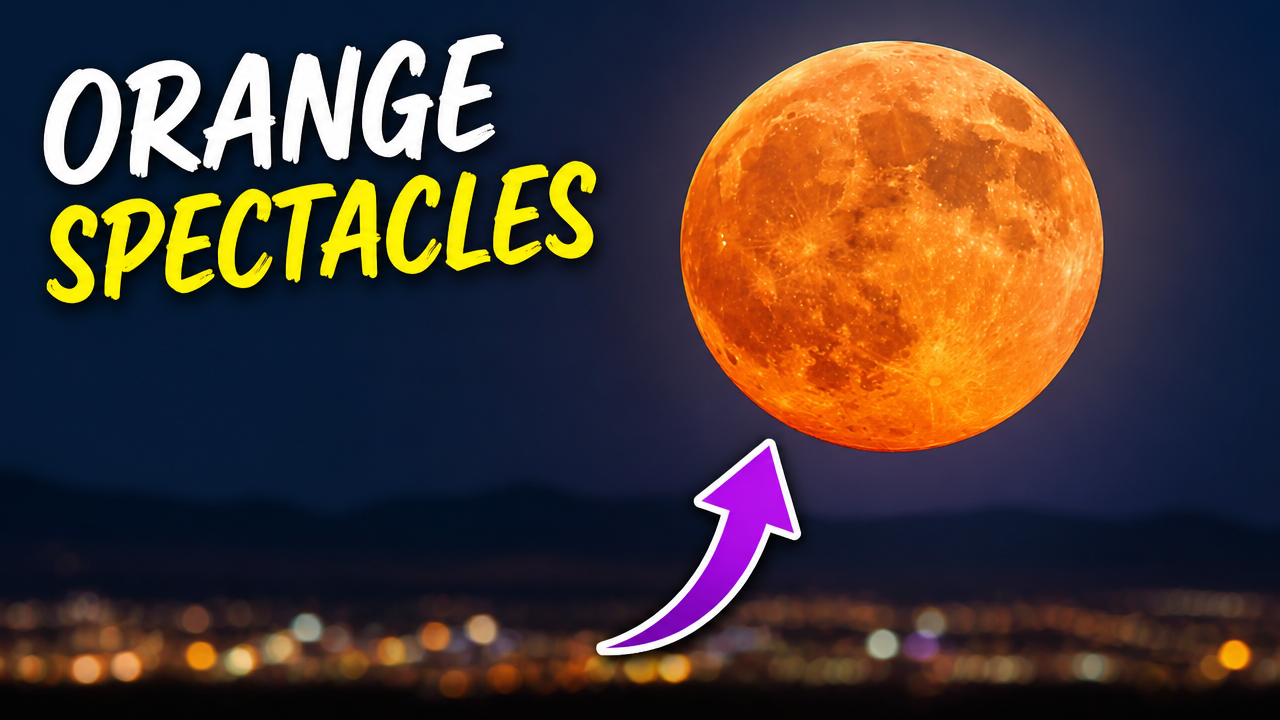
Have you ever spotted an orange moon glowing near the horizon and wondered how atmospheric scattering, celestial eclipses, or spiritual symbolism shape this lunar spectacle? That warm hue arrives when moonlight cuts through a thicker layer of air, bending blue wavelengths away while letting red and orange tones pass straight through. Whether you track the Harvest Moon each autumn or watch smoke from distant wildfires paint the night sky, an orange moon carries both physical facts and cultural weight. Let’s break down exactly how optics, weather, and tradition combine to create this glowing event.
Quick Questions and Answers
Question: Why does the Moon turn orange near the horizon?
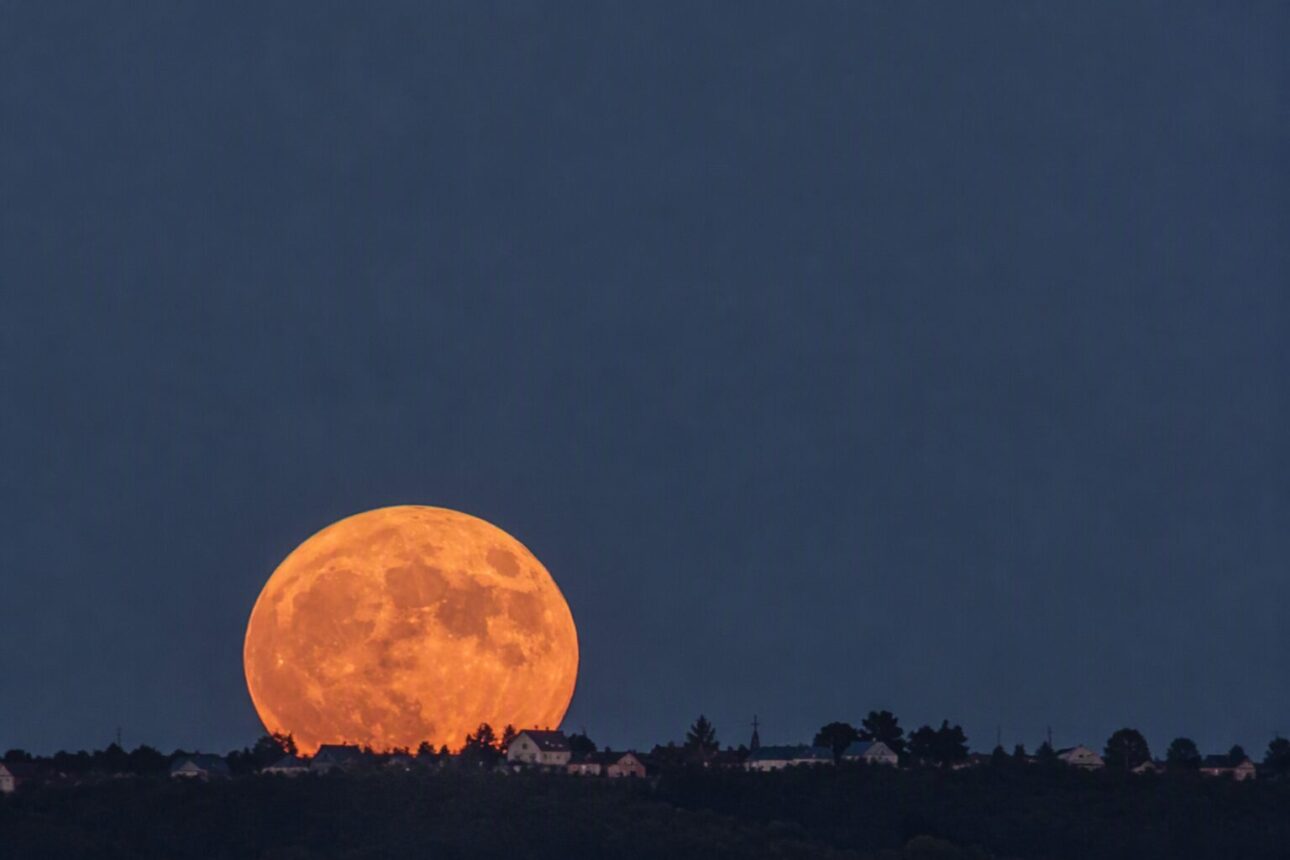
Answer: The Moon turns orange near the horizon because its light passes through more of Earth’s atmosphere before reaching your eyes. That longer path scatters away more blue and violet light, leaving warmer red and orange wavelengths more visible.
Question: Can wildfire smoke make the Moon look orange?
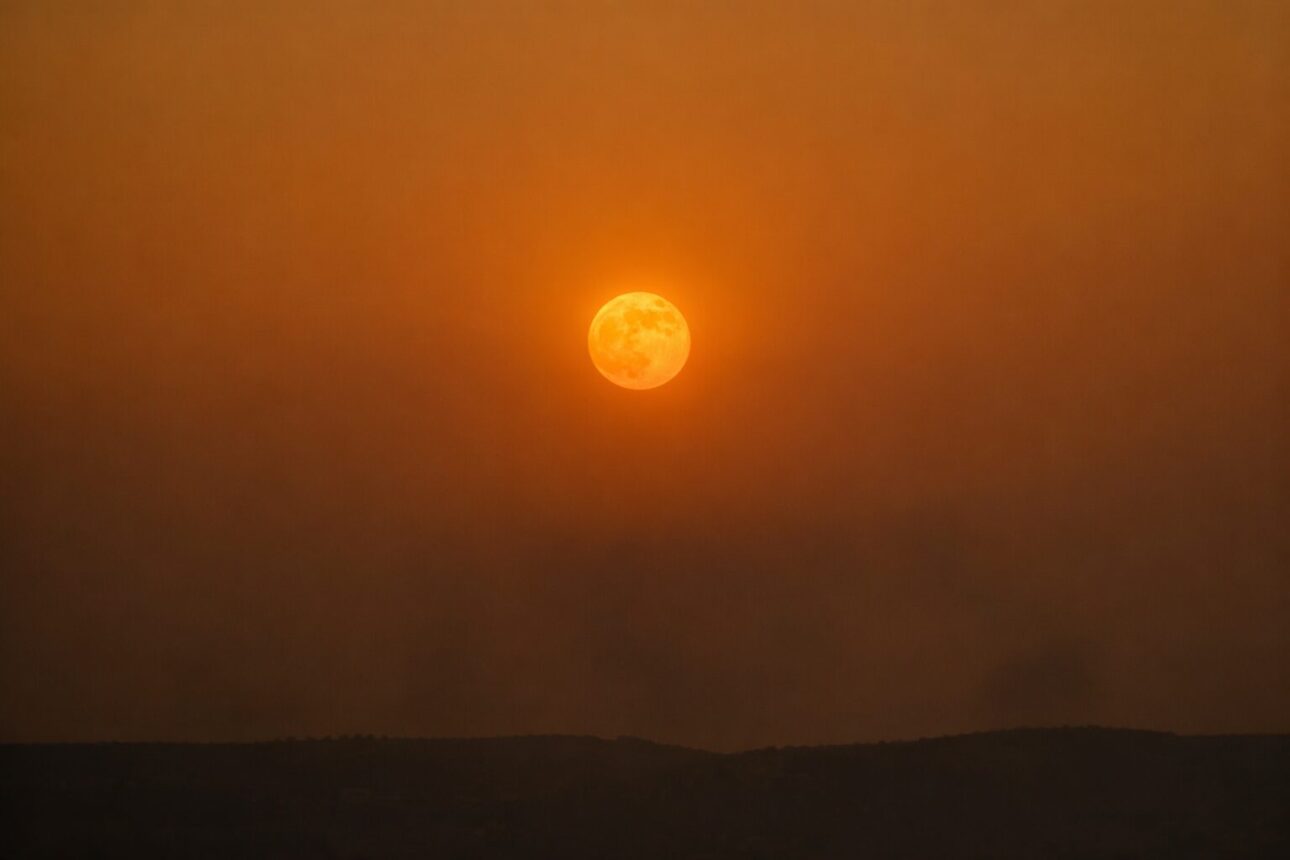
Answer: Yes. Smoke adds particles to the air that scatter and filter light, which can make the Moon look orange even outside of a normal moonrise or moonset effect.
Question: Is an orange Moon a bad sign?
Answer: In astronomy, no: it is a natural light-scattering effect. In spiritual and symbolic traditions, some people interpret it as a sign of change, abundance, or transformation, but that meaning is cultural rather than scientific.
Key Takeaways
Atmospheric scattering filters out blue light when the Moon sits low, leaving orange and red wavelengths visible.
Wildfire smoke, dust, and urban pollution can create the same orange tint regardless of the Moon’s height.
Total lunar eclipses produce a distinct red-orange glow through refraction, while the Harvest Moon ties the color to farming traditions.
Spiritual readings associate the orange hue with transformation and new beginnings, though these interpretations remain purely cultural.
Orange Moon Meaning: The Science of Atmospheric Scattering
The core reason an orange moon appears has nothing to do with the Moon itself changing color. It comes down to how Earth’s atmosphere handles light. When the Moon hangs low near the horizon during moonrise or moonset, its light travels through a much thicker slice of air than it does when overhead. Sky & Telescope notes that this extra atmospheric depth scatters shorter blue wavelengths while allowing longer red and orange wavelengths to pass through intact. Sky & Telescope explains how atmospheric refraction bends red light onto the lunar surface during eclipses, but the same scattering principle applies here. Spaceyv confirms that the thicker layer of the atmosphere scatters the shorter blue wavelengths of light, leaving the longer red and orange wavelengths to dominate the moon’s appearance. You can actually reproduce this effect yourself with a simple experiment. Point a bright flashlight through a glass of water mixed with a few drops of milk. The beam will shift toward orange as you add more scattered particles, exactly mimicking what the sky does to moonlight at twilight.
The Moon illusion often compounds this visual shift. When you see the orange moon near buildings or trees, your brain interprets the low position as a signal to judge size differently. That psychological trick makes the orb look massive and deeply saturated, which amplifies the orange hue even further. WION’s recent analysis of July’s Buck Moon highlights how the 18.6-year lunar cycle and this optical illusion combined to make observers think the Moon was unusually large and intensely colored. The color itself comes straight from physics, but our perception of it gets a noticeable boost from how we read the sky. Atmospheric scientists classify this effect under Rayleigh scattering, the same principle that paints sunsets in vivid reds and pinks. The mechanics remain identical regardless of whether the light source is the Sun or the reflected glow of the Moon.
Environmental Factors: How Smoke and Pollution Influence Color
Horizon positioning is not the only way you will see an orange moon in the night sky. Air quality plays a massive role in coloring the lunar surface when particulate matter hangs in the lower atmosphere. Wildfire smoke and heavy urban pollution act like natural filters, diffusing light and trapping shorter wavelengths. Study.com explains that when the Moon is orange it is because the atmosphere is filtering out the shorter wavelengths, and airborne debris only speeds up that process. Even a full moon sitting high in a clear sky will take on a dull yellow-orange cast if thick smoke drifts through the air. Researchers tracking environmental shifts often consult resources like Japan 7.1 Magnitude Earthquake: What You Need to Know when studying how sudden atmospheric changes affect regional visibility and light diffusion across landscapes.
I walked outside during peak fire season to see the moon glowing like a copper coin. The color spread far beyond the horizon, painting clouds and city skylines in the same muted tone. That same filtering happens with dust storms, volcanic ash, and even heavy smog in major metro areas. JobCannon describes an orange or amber moon as mostly a trick of the air, where moonlight reddens from dust, smoke, or the thick atmosphere near the horizon. The science stays consistent across all these sources. Particles block blue light, and the remaining spectrum pushes everything toward warm earth tones. If you want to track when this happens, follow local air quality indexes and weather patterns. When particulate counts rise, expect the moon to borrow that same amber palette. Historical records from volcanic eruptions, like Mount Pinatubo in 1991, show how massive ash clouds can tint lunar surfaces across entire continents for months.
Astronomical Events: Eclipses and Rare Lunar Cycles
Not every orange moon comes from horizon scattering or air pollution. A total lunar eclipse creates a completely different phenomenon that still ends with a reddish-orange glow. During a lunar eclipse, the Earth slides directly between the Sun and the Moon, casting its shadow across the lunar surface. Earth’s atmosphere acts like a giant lens, bending sunlight around the planet and projecting longer wavelengths onto the dark side of the Moon. Sky & Telescope states that the moon also appears to take on an orange or red colour during a total lunar eclipse because of this refraction. You can actually spot this during any scheduled total lunar eclipse, and the exact shade depends entirely on how clear or dusty Earth’s atmosphere is at that moment.
Rare orbital cycles also push full moons into positions that increase public interest in unusually orange appearances. The same 18.6-year nodal cycle that affected last year’s Buck Moon continues to shift lunar declination, sometimes keeping full moons closer to the horizon for longer stretches. That geometry gives the scattering effect more time to work. I always keep an eye on eclipse predictions and lunar position charts because those dates reliably predict when the sky will put on a color show. You do not need special equipment to watch either effect, but tracking the calendar helps you catch the peak moments instead of missing them to weather.
Phenomenon
Primary Cause
Best Viewing Window
Visual Characteristics
Horizon Scattering
Thick atmospheric layer at moonrise/moonset
Low on the horizon
Bright orange with visible craters
Wildfire Smoke Filter
Airborne particulates blocking blue light
Any time smoke is heavy
Muted amber, often hazy sky
Total Lunar Eclipse
Earth’s shadow refracting sunlight onto Moon
Scheduled full moon dates
Deep red-orange, darkened disk
Urban Pollution
Dust and smog diffusing light
Over metropolitan areas
Yellow-orange, reduced contrast
Cultural and Symbolic Significance
Science explains the color, but culture gives it purpose. The Harvest Moon stands as the most prominent example of how communities attach meaning to this lunar event. Farmers named this full moon after tracking the nights when it rises just minutes later than the previous one, leaving extra twilight for crop gathering. The orange glow historically helped workers stay productive well past sunset, weaving practical survival into seasonal myth. JobCannon points out that the Harvest Moon marks the full Moon nearest the autumn equinox, linking the celestial event directly to agricultural cycles and abundance. Indigenous traditions across North America and Europe similarly noted the extended lighting conditions, using the steady glow to finish planting or harvesting before winter sets in.
Spiritual traditions expand that idea even further. GiveMeHistory identifies the orange moon as a sign of change and completion, often weaving it into folklore about fertility and good fortune. People connect the warm light with creativity, emotional intensity, and spiritual transformation. Those readings do not change how light behaves in the atmosphere, but they do shape how observers engage with the night sky. Whether you treat the glow as a physical optical effect or a symbol of renewal, the event still draws attention and sparks conversation. Outdoor gatherings during lunar events mirror the careful safety planning seen in guides like Big Sur Hiker Deaths: A Complete Guide to Risks and Safety Warnings, reminding observers to dress warmly and check terrain before hiking to elevated viewing spots. Local festivals, photography clubs, and stargazer groups regularly use the orange moon as a focal point for community gatherings. The color bridges hard astronomy and human tradition without either side losing credibility.
Key Takeaways for Observational Timing
Timing matters just as much as science when you want to catch an orange moon at its most vivid. These events cluster around the first days of autumn or summer, when the Moon’s path crosses closer to the horizon and seasonal weather patterns often introduce extra moisture or dust. Distinguishing between a horizon-driven orange moon and an eclipse-driven red moon comes down to checking your calendar. Horizon moons appear anytime the Moon sits low, regardless of phase, while eclipses only happen during specific full moon windows when shadow alignment matches. I always keep a simple spreadsheet tracking lunar phase, altitude, and local air quality so I can predict visibility before the event starts.
Observing the orange moon works best when you step outside shortly after moonrise or just before moonset. The lower the orb sits, the thicker the atmospheric slice it must cross, and the stronger the color shift becomes. You can also use photography to document the effect, though your eyes will capture the raw intensity better than any sensor. Understanding the difference between scattering and refraction helps you set realistic expectations. An eclipse moon burns a deep rust color across the entire face, while a horizon moon stays bright orange with sharp craters visible through the haze. Both deliver a striking view, and both follow predictable patterns you can plan around. Weather conditions play a quiet but vital role. Clear skies with low cloud cover provide the cleanest view, while high-altitude cirrus clouds can fracture the light and mute the orange tone entirely.
My Experience With Orange Moon Meaning: A Complete Guide to Lunar Spectacles
I spent years treating lunar color changes as background noise until I actually stopped to watch one unfold. Standing on my porch in late October, the Harvest Moon hung so low it seemed to press against the tree line. The orange glow was unmistakable, not because the Moon changed, but because the air carried that heavy autumn moisture mixed with seasonal dust. I set up a tripod, forgot my remote shutter release, and ended up taking blurry shots while squinting at a phone screen. The physics of Rayleigh scattering made perfect sense on paper, but seeing that warm light cut through the twilight changed how I view night sky events. Amateur astronomy clubs often warn newcomers that color intensity varies wildly based on local humidity and particulate matter. That tip saved me hours of guessing during my first eclipse hunt. Have you ever caught an orange moon in person, or do you mostly see these events through photos online?
FAQ
Q: How is a Harvest Moon connected to orange color?
A: The Harvest Moon is the full Moon nearest the autumn equinox, and it is often seen low in the sky, which can make it appear orange. Historically, its bright light helped farmers work later into the night during harvest season.
Q: Does a lunar eclipse make the Moon orange?
A: Yes, a total lunar eclipse can make the Moon appear orange or red. Earth’s atmosphere bends and filters sunlight onto the eclipsed Moon, and the longer wavelengths are the ones most likely to reach it.
Q: What causes an orange Moon besides the horizon effect?
A: Dust, smoke, and pollution can also make the Moon look orange by filtering out shorter wavelengths of light. These causes are separate from the normal low-horizon effect, though they produce a similar visual result.
Q: Are orange Moons more common in autumn?
A: They can seem more common in autumn because the Harvest Moon often occurs near the autumn equinox and may be low in the sky. Sources also note that orange Moons are often noticed around the first days of fall or summer when geometry and atmosphere combine.
Q: What does an orange Moon symbolize spiritually?
A: Popular spiritual interpretations connect an orange Moon with creativity, vitality, transformation, rebirth, abundance, and change. These meanings are symbolic and vary by tradition rather than being measured scientific effects.
Q: When can the Moon look orange during a normal month?
A: The Moon can look orange any time it is low near moonrise or moonset, because the atmosphere scatters more blue light along that long path. It is especially noticeable when the Moon is full and bright enough to stand out against the horizon haze.
Q: Which type of orange Moon is most scientifically significant?
A: The most scientifically distinctive case is a total lunar eclipse, because the orange-red color comes from sunlight refracted through Earth’s atmosphere onto the Moon. That is different from the everyday orange tint caused by a low position near the horizon.
Conclusion.
An orange moon sits comfortably at the intersection of atmospheric physics and human tradition. The science remains straightforward: thicker air near the horizon filters blue light and leaves warm wavelengths visible. Environmental factors like smoke and pollution can replicate that exact effect regardless of seasonal calendars. Astronomical events such as total lunar eclipses introduce refraction, creating deeper red-orange tones that travel across the night sky. Cultural interpretations add another layer, connecting the glow to harvest cycles, new beginnings, and seasonal reflection. Understanding how light behaves in our atmosphere gives you solid ground when tracking these events. You can plan around the calendar, monitor local air quality, and simply step outside to watch the color shift happen in real time. The Moon does not change. The air around it does, and that difference is exactly why the spectacle keeps drawing attention.
References
Spaceyv. (2026, January 10). What Does the Orange Moon Mean? 7 Spiritual Crazy Insights You … Spaceyv. https://spaceyv.com/orange-moon/
Sky & Telescope. (2026). Does the Moon look orange tonight? No, you’re not seeing … Sky & Telescope. https://www.skyatnightmagazine.com/space-science/why-moon-sometimes-looks-orange
JobCannon. (2026). What does an orange moon spiritually mean? JobCannon. https://jobcannon.io/spiritual-meaning/orange-moon
wikiHow. (2026). Why is the Moon Orange? 2 Surprising Reasons. wikiHow. https://www.wikihow.com/Why-Is-the-Moon-Orange
AskNebula. (2026). Orange Moon Spiritual Meaning: A Rare Type of Nighttime … AskNebula. https://www.asknebula.com/blog/orange-moon-spiritual-meaning
Sarah Anderson . J
I’m the mom behind Wise Mom Blogger, where everyday creativity meets real-life motherhood. I share easy DIY crafts, cozy knitting and crochet projects, beginner-friendly sewing ideas, and family-tested recipes—plus quick baking hacks that make homemade feel doable on busy days.