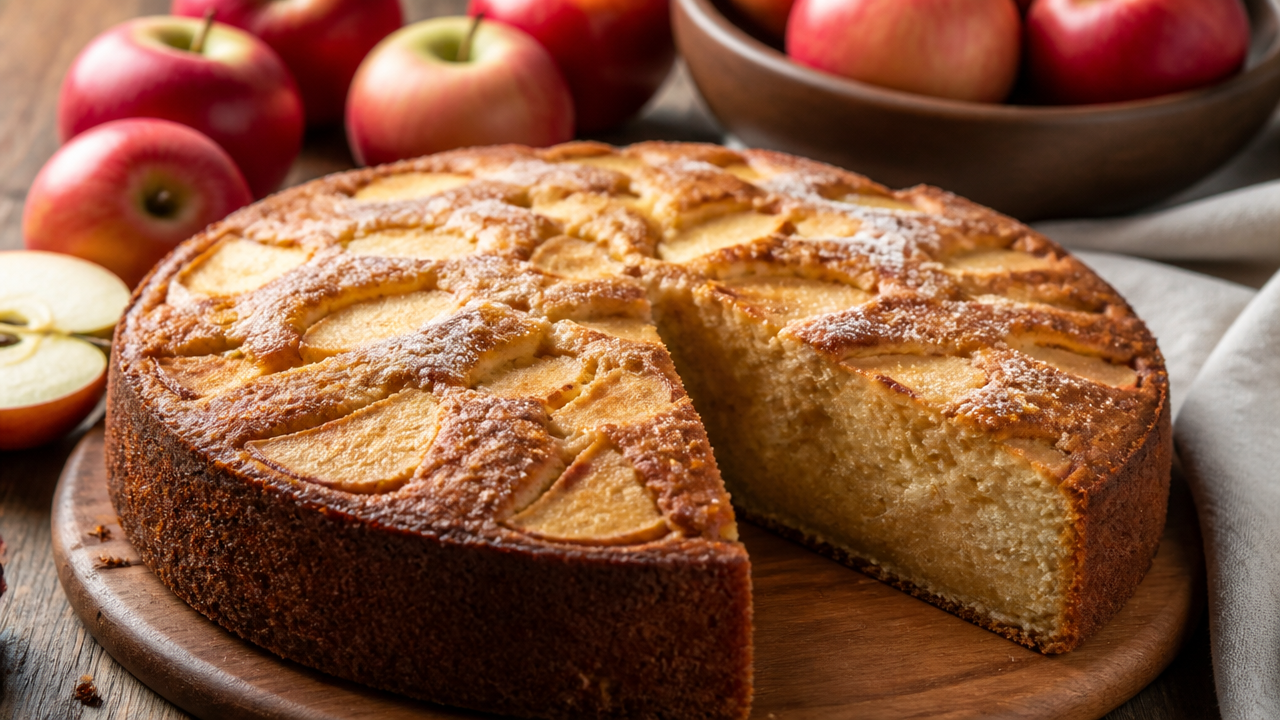
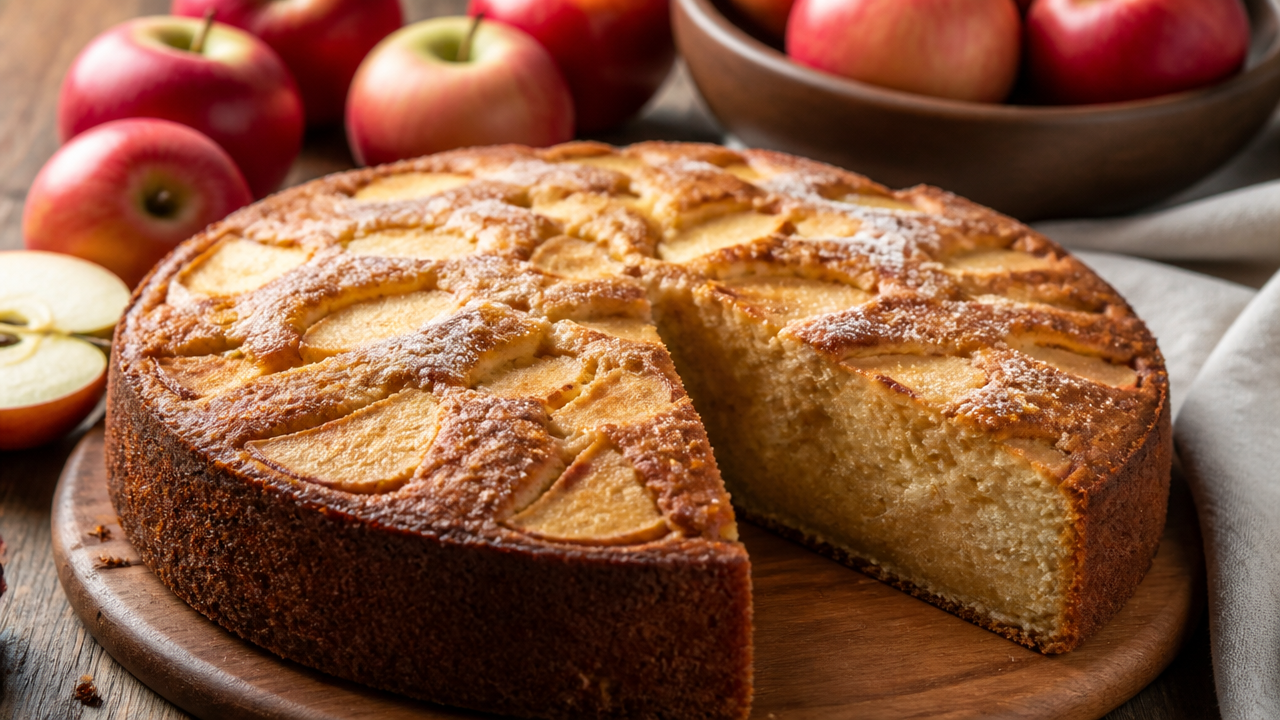
What separates a truly moist apple cake from one that turns dry and crumbly? The answer isn’t a single trick — it’s a handful of small choices: which apples you pick, how you mix the batter, and even the temperature of your oven. This guide walks you through every decision so you can bake a soft, apple-filled cake that feels just as good on day two as it does fresh from the pan. Whether you’re baking for a fall gathering or a weekend treat, this method delivers.
Quick Questions and Answers
Question: Why does my apple cake end up dry instead of moist? Answer: Your apple cake may be dry because you overmixed the batter, baked it too long, or used too little fat. Overmixing develops excess gluten, making the texture tough, while overbaking evaporates moisture. To fix this, mix only until ingredients are just combined and check for doneness with a toothpick a few minutes before the recommended time.
Question: Can I use vegetable oil instead of butter for a moist cake? Answer: Yes, vegetable oil creates a more moist and tender apple cake than butter because it stays liquid at room temperature. Oil coats flour proteins more effectively, preventing them from forming a tough structure. Many top recipes, like the one from Recipe Tin Eats, specifically recommend oil for an extra soft texture.
Question: Do I need to peel the apples before adding them to the cake? Answer: Peeling apples is recommended for a moist, uniform cake texture, as unpeeled skins can be tough and chewy. Most recipes, including those from Sally’s Baking Addiction and The Floured Table, instruct you to peel and dice the apples before folding them into the batter. If you prefer extra texture, you can leave them on, but peeling ensures a softer result.
Key Takeaways
- Use firm baking apples (Granny Smith, Honeycrisp, Cortland) to avoid watery pockets.
- Add cornstarch to the dry mix to keep apple chunks suspended and tender.
- Bake at 325–330°F (165°C) for even heat that preserves internal moisture.
- Oil-based batters produce a softer crumb than all-butter versions.
- A brown sugar glaze brushed on warm cake locks in humidity.
What You Need
| Item | Purpose | Notes |
|---|---|---|
| 3–4 medium firm apples | Provides moisture, flavor, and texture | Granny Smith, Honeycrisp, or Cortland; peel and dice into ½‑inch chunks |
| 2 cups all-purpose flour | Structure and crumb base | Spoon and level for accuracy |
| 1 teaspoon cornstarch | Keeps apples from sinking; tender crumb | Sift with flour |
| 1 cup granulated sugar | Sweetness and browning | Brown sugar also works (see FAQ) |
| 2 large eggs | Binder and moisture | Room temperature for easier mixing |
| ½ cup vegetable oil | Fat stays liquid, ensures tenderness | Canola or light olive oil both work |
| ¼ cup heavy cream (or milk) | Extra richness and moisture | Use whole milk if needed |
| 1 teaspoon baking powder + ½ teaspoon baking soda | Leavening | Fresh baking soda is key |
| 1 teaspoon cinnamon + ¼ teaspoon nutmeg | Spice | Adjust to taste |
| ½ teaspoon salt | Balances sweetness | Fine sea salt preferred |
| 9‑inch round or springform pan | Even baking | Grease and line bottom with parchment |
| Mixing bowls, whisk, spatula | Prep | Hand whisk is fine |
Step 1: Prep Your Apples
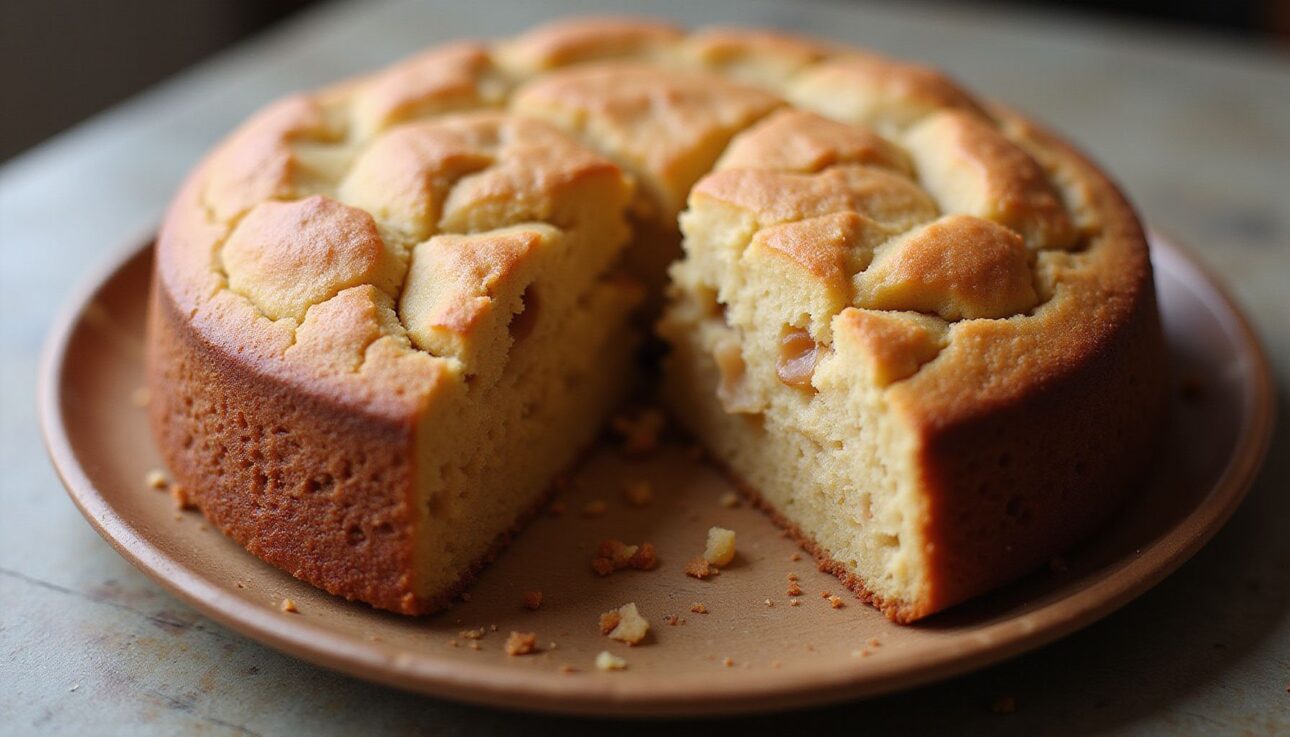
Peel, core, and cut the apples into ½‑inch cubes — not too small or they’ll mush, not too big or they’ll weigh down the batter. Toss the cubes with 1 tablespoon of the measured flour and a pinch of cinnamon. This coating helps the fruit stay suspended in the batter instead of sinking to the bottom. Set the apples aside.
Use firm apples. Soft varieties like Red Delicious turn watery during baking and make the cake soggy. Granny Smith gives a nice tart balance, while Honeycrisp adds sweetness without breaking down.
Step 2: Whisk the Dry Ingredients
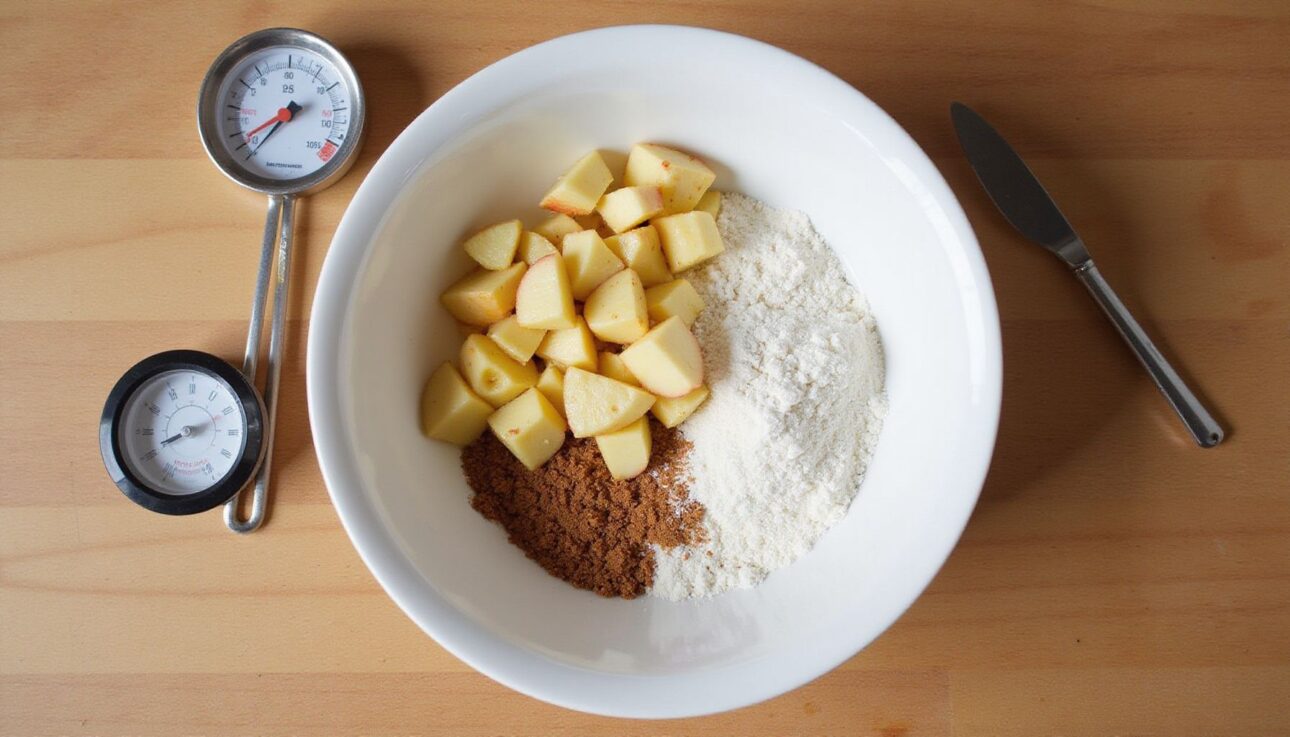
In a large bowl, whisk together the flour, cornstarch, baking powder, baking soda, salt, cinnamon, and nutmeg. Stir until everything looks uniform — 15 to 20 seconds is enough. The cornstarch acts as a tenderizer; Leite’s Culinaria uses a similar technique to achieve an ultra-soft crumb.
Don’t skip sifting if your flour is lumpy. A smooth dry mix prevents clumps of baking powder that can create bitter pockets.
Step 3: Mix the Wet Base
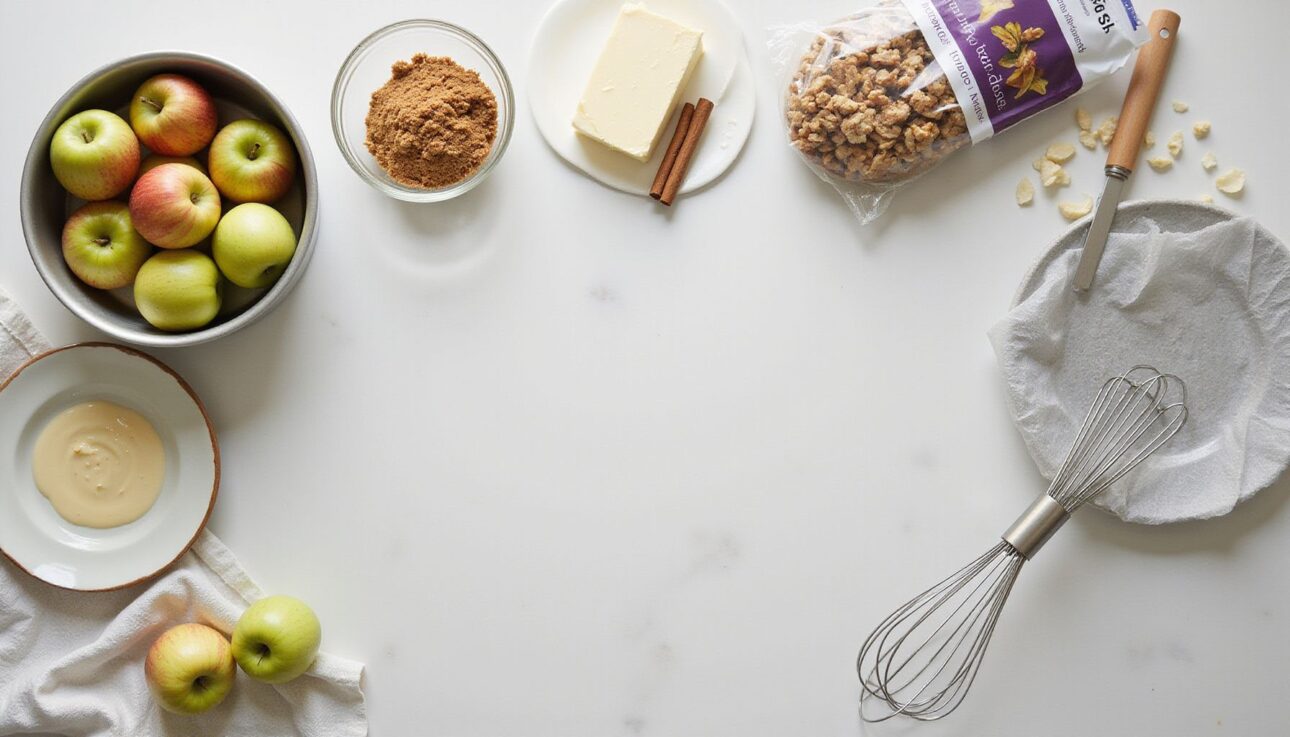
In a separate bowl, beat the eggs and sugar together until pale and slightly thickened — about 2 minutes with a hand mixer, or 3 minutes by hand. Add the oil and heavy cream (or milk) and whisk until combined. The oil is the key to moisture here. According to Sally’s Baking Addiction, oil-based cakes stay softer than butter-based ones because oil remains liquid at room temperature.
Make sure the eggs are at room temperature. Cold eggs can cause the oil to seize and create a dense batter.
Step 4: Fold Wet into Dry
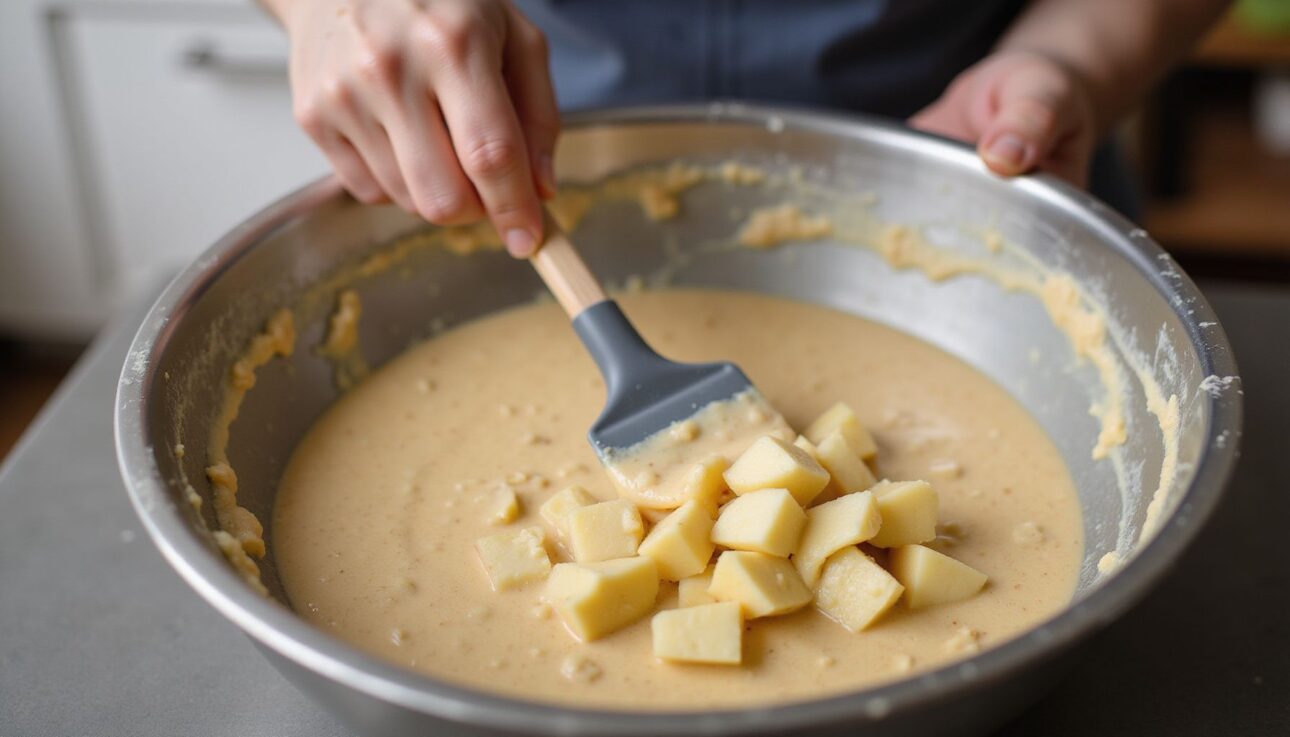
Pour the wet mixture into the dry ingredients. Stir with a spatula or wooden spoon just until no streaks of flour remain — about 10 strokes. Overmixing develops gluten and makes the cake tough. The batter will be thick, almost like a drop biscuit dough.
Now gently fold in the flour‑coated apple chunks. Use a folding motion: scrape bottom to top, turn the bowl, repeat. Distribute the apples evenly, but don’t stir aggressively. A few extra strokes here can deflate the air you just built.
Step 5: Bake at the Right Temperature
Preheat your oven to 325°F (163°C). Grease a 9‑inch round or springform pan and line the bottom with parchment. Pour the batter into the pan and spread it evenly. If you’re using a bundt pan, the baking time will increase by 10–15 minutes.
Bake for 55–65 minutes, or until a toothpick inserted in the center comes out clean or with a few moist crumbs. Start checking at 50 minutes. The cake should be golden brown and pulling away from the sides slightly. Baking too high (350°F+) can dry out the edges while the center remains underdone. The lower temperature gives the interior time to set evenly.
Let the cake cool in the pan on a wire rack for 15 minutes, then turn it out onto the rack to cool completely. This rest period allows the steam to redistribute, keeping the crumb tender.
Step 6: Add a Glaze for Extra Moisture
While the cake is still warm (but not hot), poke a few holes in the top with a skewer. Then brush on a simple brown sugar glaze. To make the glaze: whisk 4 tablespoons melted butter, ½ cup packed brown sugar, and 2 tablespoons heavy cream together until smooth. Pour over the warm cake. The glaze soaks in and also forms a thin, sweet crust.
If you prefer a lighter finish, dust the cooled cake with powdered sugar. For a real treat, serve slices with vanilla ice cream or lightly whipped cream. The cold contrast against the warm, spiced cake is hard to beat.
Recipe Card
Super Moist Apple Cake
A tender, spice-filled apple cake made with fresh apples and a buttery brown sugar glaze. This cake stays moist for days thanks to oil, cream, and a low baking temperature.
Prep: 20 minutesCook: 60 minutesTotal: 1 hour 20 minutesYield: 8–10 servingsCategory: DessertCuisine: American
Ingredients
- 3 medium Granny Smith apples (about 1½ lbs), peeled and diced (½ inch)
- 2 cups all-purpose flour (240g)
- 1 tsp cornstarch
- 1 tsp baking powder
- ½ tsp baking soda
- 1 tsp ground cinnamon
- ¼ tsp ground nutmeg
- ½ tsp salt
- 1 cup granulated sugar (200g)
- 2 large eggs, room temperature
- ½ cup vegetable oil (120ml)
- ¼ cup heavy cream or whole milk (60ml)
- 4 tbsp unsalted butter, melted
- ½ cup packed brown sugar (100g)
- 2 tbsp heavy cream (for glaze)
Instructions
- Preheat oven to 325°F (163°C). Grease a 9-inch round or springform pan and line bottom with parchment.
- Toss diced apples with 1 tbsp of the flour and a pinch of cinnamon. Set aside.
- In a large bowl, whisk flour, cornstarch, baking powder, baking soda, cinnamon, nutmeg, and salt.
- In a separate bowl, beat eggs and granulated sugar until pale and thick (about 2 minutes). Whisk in oil and ¼ cup heavy cream.
- Pour wet ingredients into dry. Stir until just combined — do not overmix.
- Fold in apples gently. Pour batter into prepared pan and spread evenly.
- Bake 55–65 minutes until a toothpick comes out clean. Cool in pan 15 minutes, then transfer to a rack.
- While cake is still warm, whisk melted butter, brown sugar, and remaining 2 tbsp cream until smooth. Poke holes in warm cake and pour glaze over top.
- Cool completely before slicing. Serve with ice cream if desired.
Nutrition Info (per serving)
| Calories | 385 |
| Protein | 5g |
| Carbs | 52g |
| Fat | 18g |
| Fiber | 2g |
| Sugar | 34g |
| Sodium | 290mg |
Notes
- Store at room temperature in an airtight container for up to 3 days.
- For a dairy-free version, substitute oil only and skip the glaze.
- Other firm apple options: Honeycrisp, Cortland, Braeburn.
Tips
Don’t skimp on the cream. The small amount of heavy cream adds fat and moisture that milk alone can’t match. If you’re out of cream, use whole milk and add an extra tablespoon of oil.
Toast your nuts if you use them. Walnuts or pecans add crunch and depth. Toast them in a dry pan for 3–4 minutes before folding into the batter.
Check your baking soda. Baking soda loses potency after about 6 months. If your cake doesn’t rise well, try a fresh box. You can test a pinch by dropping it into vinegar — it should fizz immediately.
To avoid a wet ring. If condensation forms on the glaze and runs off, the cake was too hot when you brushed it. Let it cool until just warm to the touch before glazing.
FAQ
Q: Are brown sugar or regular sugar better for moisture in apple cake?
A: Brown sugar is better for moisture because it contains molasses, which adds extra hydration and a richer flavor. Recipes like Sally’s Baking Addiction’s apple cake use both brown and granulated sugar to maximize softness. The molasses in brown sugar helps retain water during baking, keeping the cake tender longer than using only white sugar.
Q: How long should I bake an apple cake to keep it moist?
A: Bake apple cake at 350°F to 375°F for 50 to 70 minutes, checking early with a toothpick to avoid overbaking. The cake is done when the toothpick comes out clean or with just a few moist crumbs. Overbaking is the main cause of dryness, so monitor closely and remove it immediately when the test passes.
Q: Will adding applesauce make my apple cake more moist?
A: Yes, adding applesauce significantly increases moisture because it is pure fruit with high water content. Sally’s Baking Addiction includes applesauce in her wet ingredients to ensure a super soft cake. It also adds natural sweetness and flavor, reducing the need for extra sugar while keeping the texture tender.
Q: Does folding in diced apples help the cake stay juicy?
A: Yes, folding in diced apples makes the cake super juicy as the fruit releases moisture during baking. The YouTube recipe for Easy Moist Apple Cake highlights this as an important step for a juicy result. The apples steam inside the batter, creating pockets of moisture that keep the interior soft.
Q: Is a glaze necessary for keeping apple cake moist after baking?
A: A glaze is not strictly necessary but helps seal in moisture and adds a soft topping. Recipes from A Family Feast and Sally’s Baking Addiction include brown sugar glazes poured over warm cake. The Modern Nonna also pokes holes and pours a warm milk mixture over the cake, which absorbs to create a custard-like, moist interior.
Q: What temperature is best for baking a moist apple cake?
A: The best temperature is 350°F (180°C), which allows the cake to bake evenly without drying out too quickly. Some recipes use 375°F for a shorter time, but 350°F is most common for moisture retention. Avoid higher temperatures that can cause the outside to burn before the inside is fully set.
Q: Which type of apple works best for a moist apple cake recipe?
A: Sweet, juicy apples like Fuji, Gala, or Honeycrisp work best for a moist cake because they release more liquid when baked. Tart apples like Granny Smith are also popular for flavor balance but may be slightly less juicy. Most recipes suggest using a mix or about 1 to 1.5 kg of peeled, diced apples.
My Experience With Apple Cake Moist Recipe
I’ve baked this cake maybe a dozen times, and the first attempt taught me the hard way about apple choice. I used Red Delicious. The cake came out with a soggy bottom and bland flavor. The apples had basically dissolved into steam and left a gap. That was the day I started treating apple selection as seriously as ingredient ratios. Over time, I landed on a mix of half Granny Smith and half Honeycrisp — tartness plus sweetness with enough structure to hold up.
One trick I don’t see in many recipe blogs: after folding the apples, let the batter rest for five minutes. It firms up just enough to reduce sinking. Also, if you have a convection oven, drop the temperature by 25°F — the fan dries things out faster. I learned that after burning two cakes in a row.
Now I make this cake for every autumn potluck, and it’s gone within an hour. People always ask if there’s a secret. I just point to the oil, the cream, and the oven thermometer. What’s your go‑to apple for baking?
Conclusion
A moist apple cake doesn’t rely on luck. Pick firm apples, use oil and cream for fat, keep your oven at 325°F, and add a warm glaze. Each step protects against the dryness that ruins so many homemade cakes. Try this method once, and you’ll probably toss out your old recipe.
If you’re in the mood for other apple desserts, check out our 12 Healthy Apple Nachos Recipes the Whole Family Will Love for a fun, quick snack. For a different take on cake, our guide on How to Make a Moist Microwave Mug Cake in Under 5 Minutes is perfect for last‑minute cravings. And if you’re planning a celebration, don’t miss How to Create the Perfect Graduation Cake: Simple DIY Ideas.
References
- Leite’s Culinaria. (n.d.). Super Moist Apple Cake. https://leitesculinaria.com/3211/recipes-super-moist-apple-cake.html
- Sally’s Baking Addiction. (n.d.). Easy Apple Cake Recipe. https://sallysbakingaddiction.com/apple-cake
- Recipe Tin Eats. (n.d.). Easiest Ever MOIST Apple Cake. https://www.recipetineats.com/easy-apple-cake-recipe
- Allrecipes. (n.d.). Moist Apple Cake. https://www.allrecipes.com/recipe/8358/apple-cake-iv
- Taffey Bakery. (n.d.). Easy Apple Cake. https://taffeybakery.com/easy-apple-cake

Sarah Anderson . J
I’m the mom behind Wise Mom Blogger, where everyday creativity meets real-life motherhood. I share easy DIY crafts, cozy knitting and crochet projects, beginner-friendly sewing ideas, and family-tested recipes—plus quick baking hacks that make homemade feel doable on busy days.