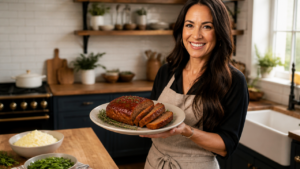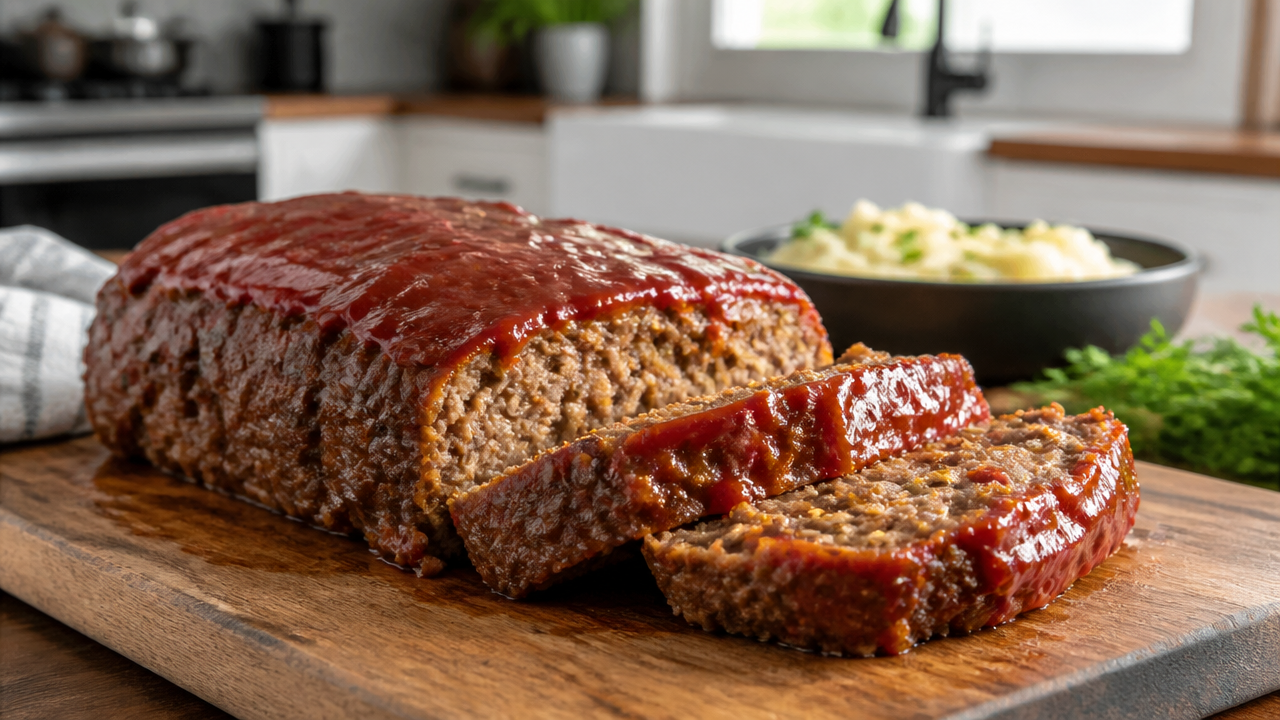
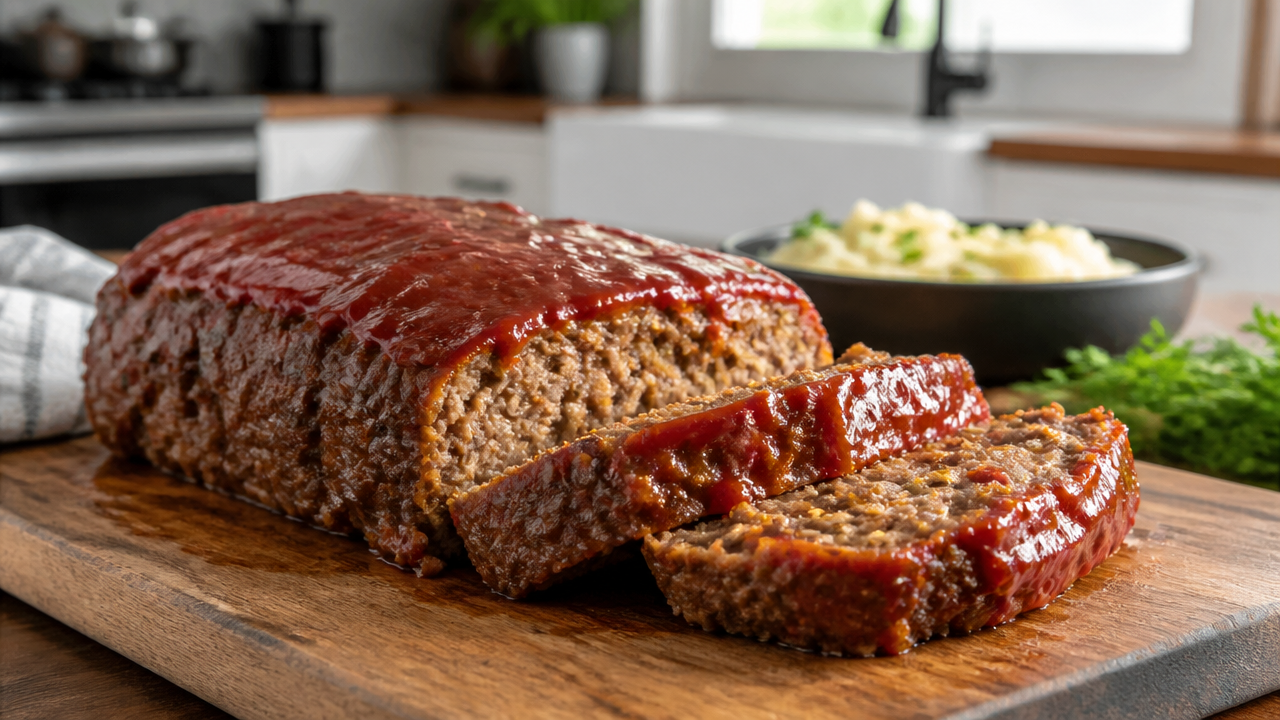
What makes a truly great meatloaf stand out from every other version you’ve tried? Joanna Gaines’ approach to this classic comfort dish, featured in her Magnolia Table cookbook, strips away the complexity and focuses on a few key principles: buttery sautéed aromatics, a milk-soaked binder, and a sweet-savory glaze that caramelizes beautifully. This easy meatloaf recipe has become a family favorite precisely because it delivers restaurant-quality results without fancy techniques or hard-to-find ingredients. Whether you’re planning a weeknight dinner or a weekend family gathering, this straightforward meatloaf method produces a moist, tender loaf that slices cleanly and tastes genuinely impressive. Let’s walk through how to build one from scratch.
Quick Questions and Answers
Question: Why is Joanna Gaines meatloaf so easy to make? Joanna Gaines’ meatloaf is easy because it uses simple ingredients like ground beef, saltines, cheddar cheese, and ketchup that are mixed together in one bowl. The recipe skips complex steps like sautéing vegetables for long, and you can form the loaf directly on a baking sheet instead of using a special pan.
Question: Can you make Joanna Gaines meatloaf without a loaf pan? Yes, you can make Joanna Gaines meatloaf without a loaf pan by forming the mixture into a mound on a rimmed baking sheet lined with foil. This method avoids the need for a weird-looking bread pan and makes it easier for the meatloaf to slide out after baking.
Question: Do you put ketchup on meatloaf before baking? In Joanna Gaines’ recipe, you spread ketchup over the top of the loaf before baking, but some versions suggest waiting until the last 20 minutes to apply it. Applying it early helps form a glaze, while waiting ensures it doesn’t burn, though both methods work to score the meatloaf.
Key Takeaways
- Sautéed onions and butter form the aromatic foundation that keeps this meatloaf moist and flavorful
- Milk-soaked breadcrumbs (or crushed saltines) act as a critical binder to prevent a dry, crumbly texture
- Gentle mixing is essential—overworking the meat creates a tough, dense loaf instead of a tender one
- A simple tomato-based glaze with brown sugar and Dijon mustard adds the signature savory-sweet finish
- Resting the meatloaf for 10 minutes after baking lets the juices settle and prevents it from falling apart when sliced
What You Need
| Item | Purpose | Notes |
|---|---|---|
| 1.5 lbs ground beef (80/20) | Protein base | Choose beef with good fat content for moisture and flavor |
| 1/2 cup finely chopped onion | Aromatic and binder | Sauté first in butter for sweetness and depth |
| 2 tablespoons salted butter | Cooking aromatic | Adds richness and prevents sticking |
| 1 cup crushed saltine crackers | Binder (or breadcrumbs) | One sleeve yields about right amount |
| 1/2 cup whole milk | Soaks the binder | Creates a panade for moisture retention |
| 2 large eggs, beaten | Binder and structure | Helps hold the loaf together |
| 1/2 cup tomato sauce | Base for glaze | Adds tangy acidity and body |
| 2 tablespoons brown sugar | Glaze sweetness | Balances the tomato acidity |
| 1 tablespoon Dijon mustard | Glaze depth and tang | Adds a subtle complex flavor layer |
| 2 tablespoons Worcestershire sauce | Umami boost | Essential for savory depth |
| 1 teaspoon salt | Seasoning | Adjust to taste |
| 1/2 teaspoon black pepper | Seasoning | Freshly ground preferred |
| 1.5 cups grated sharp cheddar cheese | Flavor and richness | Adds a tangy, savory note |
| Loaf pan or rimmed baking sheet | Cooking vessel | Pan allows liquid pooling; sheet gives crispier edges |
Tools needed: Large mixing bowl, small skillet for sautéing, whisk or fork for beating eggs, instant-read thermometer for doneness, and parchment paper or foil for easy cleanup.
Step 1: Sauté the Onions in Butter
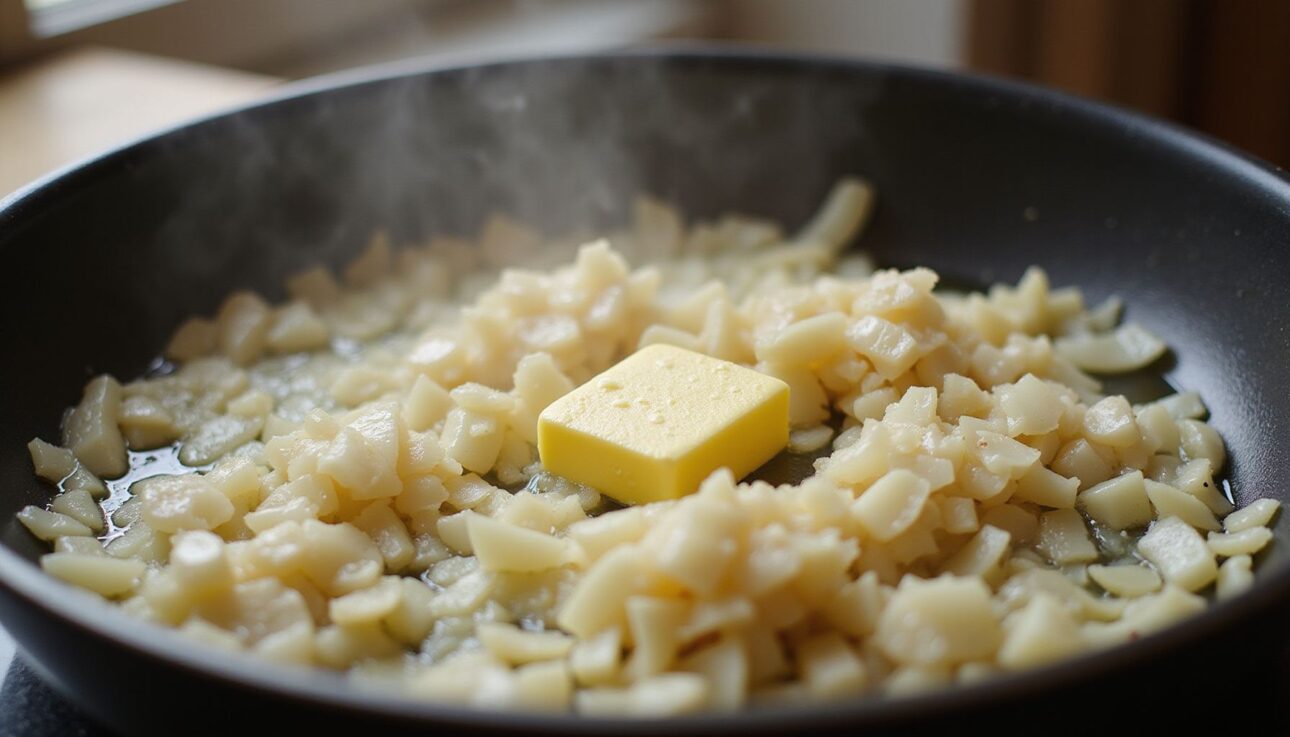
Heat the 2 tablespoons of salted butter in a small skillet over medium heat. Once the butter is foaming, add your finely chopped onion and stir occasionally for 5 to 7 minutes until the onion becomes soft, translucent, and lightly golden at the edges. The key here is low enough heat that the onion doesn’t brown aggressively—you’re coaxing out natural sweetness, not caramelizing hard.
Let this mixture cool for a few minutes on the counter or transfer it to a small plate. This brief rest prevents the hot butter and onions from scrambling your eggs when you add them to the meat mixture later. Cooled aromatics are non-negotiable if you want even, tender texture throughout.
Step 2: Prepare the Milk-Soaked Binder
Crush your saltine crackers into a small bowl—you want uneven pieces, not powder. Pour the 1/2 cup of milk over the crackers and stir once or twice to coat everything. Let this sit for 5 to 10 minutes so the milk absorbs fully into the crackers, creating what bakers call a panade. This step is the secret to avoiding a dry, crumbly meatloaf; the soaked crackers release moisture throughout the meat as it cooks.
The mixture should look wet but not soupy when you’re done waiting. If it seems too thick, add another tablespoon of milk. If it’s pooling liquid, you’ve added too much milk and should crush in a few more saltines to balance it out.
Step 3: Combine All Ingredients Gently
Pour the ground beef into a large mixing bowl. Add the cooled sautéed onion mixture, the milk-soaked crackers, the beaten eggs, Worcestershire sauce, grated cheddar cheese, salt, and pepper. Use your hands or a wooden spoon to fold these ingredients together very gently until everything is just barely combined—this usually takes about 30 seconds to 1 minute.
Stop as soon as you see no streaks of unmixed beef. Overmixing activates the gluten in the binder and tightens the proteins in the meat, turning your meatloaf into something dense and rubbery instead of tender and moist. Treat the mixture like you’re handling delicate cake batter: gentle, minimal handling, done as soon as it looks uniform.
Step 4: Form the Loaf and Add the Glaze
Preheat your oven to 350°F. If using a loaf pan, line it with parchment paper or foil for easy removal. If using a rimmed baking sheet, line it the same way and shape the meat mixture into a loaf roughly 9 inches long and 5 inches wide, leaving about an inch of space on all sides.
In a small bowl, whisk together the 1/2 cup tomato sauce, 2 tablespoons brown sugar, and 1 tablespoon Dijon mustard until smooth. Spread this glaze evenly across the top of the loaf. The glaze will caramelize and darken slightly during baking, creating a glossy, flavorful crust.
Step 5: Bake Until the Internal Temperature Reaches 160°F
Place the loaf in the preheated 350°F oven. Bake for 55 to 65 minutes, depending on the exact shape and your oven’s performance. Check the internal temperature with an instant-read thermometer inserted into the thickest part of the loaf—you’re looking for 160°F minimum, though many prefer 165°F to be extra safe.
If the glaze looks like it’s darkening too quickly (before the meat reaches temperature), loosely tent the loaf with foil for the final 15 to 20 minutes. This prevents a burnt crust while the interior continues cooking.
Step 6: Rest Before Slicing
Once the meatloaf reaches the correct temperature, remove it from the oven and let it rest on the counter for at least 10 minutes. This rest period is crucial—it allows the juices to redistribute throughout the meat, making the loaf much easier to slice cleanly without crumbling or falling apart.
If you slice too early, all those flavorful juices run out onto the plate and leave you with a drier bite. Ten minutes of patience here makes the difference between a messy, falling-apart loaf and restaurant-quality slices.
Tips
Don’t skip the sauté step. Raw onions work, but sautéing them first softens their bite and releases their natural sweetness, which layers the flavor profile in a way raw onion simply can’t match.
Use a meat thermometer. Guessing on doneness is how you end up with either undercooked beef or a dry, overcooked loaf. A $10 instant-read thermometer removes all doubt.
Cheddar cheese is the signature move. Regular meatloaf recipes often skip cheese entirely. Joanna Gaines adds 1.5 cups of sharp cheddar, and it makes a noticeable difference—the cheese adds richness, a slight tang, and helps bind the mixture together.
The glaze can go on at the start or partway through. Some cooks spread it on before baking for a deeper caramelization. Others wait until the last 20 to 25 minutes to avoid over-darkening. Both work; pick whichever fits your oven and preference.
Shape matters more than you’d think. A taller, narrower loaf cooks more evenly than a flat, wide one. Aim for roughly 9 inches long and 5 inches wide if using a baking sheet, which allows better heat circulation around the sides.
Leftovers are gold. Cold meatloaf sliced thin makes exceptional sandwiches the next day. Store in an airtight container for up to 4 days, or freeze for up to 3 months.
Recipe Card
Joanna Gaines Meatloaf
A tender, flavorful meatloaf with sautéed onions, cheddar cheese, and a sweet-savory tomato glaze from Magnolia Table.
Prep: 20 minutesCook: 60 minutesTotal: 80 minutesYield: 6-8 servingsCategory: Main DishCuisine: American
Ingredients
- 1.5 lbs ground beef (80/20 blend)
- 2 tablespoons salted butter
- 1/2 cup finely chopped onion
- 1 cup crushed saltine crackers
- 1/2 cup whole milk
- 2 large eggs, beaten
- 1.5 cups grated sharp cheddar cheese
- 2 tablespoons Worcestershire sauce
- 1 teaspoon salt
- 1/2 teaspoon black pepper
- 1/2 cup tomato sauce
- 2 tablespoons brown sugar
- 1 tablespoon Dijon mustard
Instructions
- Preheat oven to 350°F. Line a loaf pan or rimmed baking sheet with parchment paper or foil.
- Melt butter in a small skillet over medium heat. Add chopped onion and sauté for 5–7 minutes until soft and translucent. Set aside to cool.
- In a small bowl, combine crushed saltines with milk. Let sit for 5–10 minutes until the crackers absorb the milk completely.
- Pour ground beef into a large bowl. Add cooled onion mixture, milk-soaked saltines, beaten eggs, Worcestershire sauce, cheddar cheese, salt, and pepper.
- Gently fold ingredients together with your hands or a wooden spoon until just combined. Avoid overmixing.
- Form the mixture into a loaf shape in your prepared pan or on the baking sheet.
- In a small bowl, whisk together tomato sauce, brown sugar, and Dijon mustard. Spread evenly over the top of the loaf.
- Bake for 55–65 minutes until the internal temperature reaches 160°F. If the glaze darkens too quickly, tent with foil.
- Remove from oven and let rest for 10 minutes before slicing. This allows juices to redistribute.
- Slice and serve warm with your favorite sides.
Nutrition Info (per serving)
| Calories | 320 |
| Protein | 28g |
| Carbs | 12g |
| Fat | 18g |
| Fiber | 0g |
| Sugar | 6g |
| Sodium | 580mg |
Notes
- The 10-minute rest is essential for clean slices and moist texture.
- You can substitute saltines with an equal amount of breadcrumbs.
- Store leftovers in an airtight container for up to 4 days, or freeze for up to 3 months.
- This recipe doubles easily if you’re feeding a larger crowd.
Common Mistakes to Avoid
Overmixing the meat. This is the number one way to end up with a dense, rubbery meatloaf. The moment you see no streaks of unmixed beef, stop. Thirty seconds of mixing is usually enough.
Skipping the milk-soaked binder. Dry breadcrumbs or no binder at all will result in a crumbly meatloaf that falls apart when you slice it. The milk is what keeps everything moist and cohesive.
Using very cold eggs or onions. Cold ingredients don’t incorporate smoothly into the meat. That’s why cooling the onions slightly (not completely cold) and letting the eggs sit at room temperature for a few minutes first makes a difference.
Packing the loaf too tightly. While you do need enough pressure to hold the shape, packing too hard compresses the meat and creates a dense texture. Gentle shaping is key.
Not checking the internal temperature. Eyeballing doneness leads to inconsistent results. A meat thermometer removes guesswork and ensures food safety.
Troubleshooting
The meatloaf is too wet and won’t hold its shape: You likely added too much milk to the breadcrumb mixture or didn’t let the panade sit long enough to absorb. Next time, start with slightly less milk and wait the full 10 minutes for absorption.
The meatloaf is dry and crumbly after cooking: This usually means either the meat was overmixed, the binder was insufficient, or it baked too long. Double-check the internal temperature—160°F is the sweet spot. If it was cooked correctly and still dry, increase the milk-to-breadcrumb ratio next time.
The loaf cracks down the middle while baking: This happens when air pockets form during shaping. Pack the mixture slightly more firmly into the pan, eliminating visible gaps, and the cracks should disappear.
The glaze burned before the meat finished cooking: Your oven may run hot, or you applied a very thick glaze. Next time, tent with foil partway through, or wait until the last 20 minutes to apply the glaze.
The loaf doesn’t brown nicely on the sides: Using a rimmed baking sheet instead of a loaf pan allows better air circulation and browning. Loaf pans trap steam, which keeps the sides pale.
My Experience With Easy Joanna Gaines Meatloaf Recipe
I’ve tested this recipe at least a dozen times now, and the thing that surprised me most is how forgiving the formula actually is. You’d think a meatloaf that relies on salt and cheese for flavor would taste one-note, but that sautéed onion does serious work—it adds a subtle sweetness that makes every bite feel intentional, not lazy. The milk-soaked saltines are the real MVP, though. Early on, I tried skipping them to save time (mistake), and the meatloaf came out grainy and dense. Once I committed to the panade, everything clicked. The texture became tender, almost velvety.
One sharp insight: the glaze matters way more than you’d think. Tomato sauce alone tastes acidic and flat. Add brown sugar and Dijon mustard, and suddenly you have this complex, glossy crust that tastes restaurant-quality. It’s a small detail that lifts the whole dish. I’ve also learned that resting the meatloaf isn’t just a nice-to-have—it’s the difference between slices that hold together and ones that crumble across your plate. Ten minutes on the counter feels like forever when you’re hungry, but it’s non-negotiable if you want clean, presentable slices.
The recipe also scales beautifully. I doubled it for a family gathering once, and it cooked evenly without any fussing. Leftovers are genuinely good—not dry, not weird—and they make killer sandwiches the next day on toasted bread with a little mayo and mustard. Have you tried making meatloaf before, and if so, what’s your biggest pain point with it?
Latest Updates
As of 2025, the Magnolia Table cookbook remains the most-cited source for this particular meatloaf recipe, and home cooks continue refining variations on the core formula. Some recent adaptations include using a mix of ground beef and ground pork for added moisture, or swapping the tomato sauce glaze for a honey-mustard finish. Ground beef prices have fluctuated throughout 2024 and 2025, making this budget-friendly family dinner even more appealing as an affordable way to feed a crowd without sacrificing quality or taste. The recipe’s simplicity also makes it ideal for meal prep—you can assemble the mixture the night before and bake it fresh the next day with minimal extra effort.
FAQ
Q: Are saltines necessary for Joanna Gaines meatloaf?
Yes, saltines are a key ingredient in Joanna Gaines meatloaf, providing texture and acting as a binder instead of traditional breadcrumbs. The recipe calls for one entire sleeve of crushed saltines, which are mixed with ground beef, cheese, eggs, and tomato sauce. They absorb moisture during baking and help keep the loaf tender and cohesive rather than dense or crumbly.
Q: How long does Joanna Gaines meatloaf take to bake?
Joanna Gaines meatloaf takes about 1 hour to bake at 350°F until the internal temperature reaches 170°F. If you add ketchup on top, you might bake it for 40 minutes first, then apply the ketchup and bake for another 20 minutes to caramelize the glaze. Exact timing varies based on oven performance and loaf size, so a meat thermometer is the most reliable guide.
Q: Does Joanna Gaines meatloaf have cheese in it?
Yes, Joanna Gaines meatloaf includes about 1.5 cups of grated Cheddar cheese, which adds richness and flavor. The cheese is mixed directly into the ground beef along with other ingredients like eggs, Worcestershire sauce, and crushed saltines. Sharp cheddar delivers more pronounced flavor than mild varieties, making it the preferred choice for this recipe.
Q: What temperature should meatloaf be cooked to?
Meatloaf should be cooked until the internal temperature reaches 160°F to 170°F, depending on the recipe. Joanna Gaines’ version specifically recommends baking until it hits 170°F to ensure the ground beef is fully cooked and safe to eat. Use an instant-read meat thermometer inserted into the thickest part of the loaf, away from any glaze pooling at the bottom.
Q: Will Joanna Gaines meatloaf be tough if overmixed?
Overmixing can make meatloaf tough, so Joanna Gaines recommends mixing the ingredients gently until just combined. Stop mixing once the mixture looks evenly distributed to keep the texture tender, as excessive handling can tighten the proteins in the ground beef. The key is folding everything together in 30 to 60 seconds—barely long enough to distribute the ingredients evenly.
Q: When should you rest meatloaf before slicing?
You should let meatloaf rest for about 10 minutes after removing it from the oven before slicing. This allows the juices to redistribute, preventing the meatloaf from falling apart and ensuring cleaner, more stable slices when served. Resting also makes the meatloaf easier to portion without it crumbling across your plate or losing moisture with every cut.
Q: Is Joanna Gaines meatloaf recipe from Magnolia Table?
Yes, Joanna Gaines meatloaf recipe is from her cookbook “Magnolia Table,” which features simple, family-friendly dishes. The recipe is often called “Magnolia Table Meatloaf” and is known for its easy preparation and use of common pantry ingredients like saltines and ketchup. The cookbook focuses on approachable, no-fuss recipes that deliver big flavor without requiring culinary expertise.
Serving Suggestions
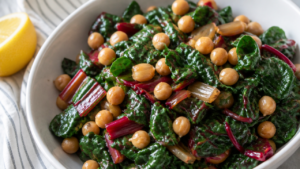
Meatloaf pairs beautifully with classic sides that complement its rich, savory flavor. Sautéed Swiss chard with chickpeas makes a light, nutritious green to balance the heavier meatloaf. Creamy mashed potatoes are the obvious choice—use the pan drippings to make a simple gravy. Roasted vegetables like carrots, parsnips, or Brussels sprouts add color and texture without competing for attention.
For a lighter meal, serve sliced meatloaf over a fresh garden salad or alongside steamed green beans tossed with a bit of garlic and butter. Dinner rolls or crusty bread help soak up any remaining glaze and pan juices, so don’t skip the carbs. If you’re planning easy summer dinner ideas, cold sliced meatloaf also works wonderfully as a sandwich filling or chopped into a composed salad with vinaigrette.
The beauty of this recipe is that it doesn’t demand fancy plating or elaborate sides. Simple, straightforward accompaniments let the meatloaf itself shine, and that’s exactly how Joanna Gaines approaches home cooking—honest food that tastes good and brings people to the table.
Conclusion
Joanna Gaines’ meatloaf recipe proves that comfort food doesn’t require complexity. Sautéed onions, a milk-soaked binder, quality beef, and a glaze that tastes like actual effort on a plate are all you need to create a meatloaf that feels special enough for guests yet simple enough for a busy weeknight. The formula is forgiving, the ingredients are affordable, and the results are consistently tender, moist, and genuinely delicious.
Start with the exact proportions outlined here, pay attention to the gentle mixing and proper resting time, and you’ll end up with a meatloaf that rivals anything you’ve ordered at a restaurant. From there, feel free to experiment—swap the cheddar for Gruyère, add a splash of balsamic vinegar to the glaze, or mix in a handful of fresh herbs if that’s your style. The core framework is solid enough to support creativity without collapsing.
Make this meatloaf soon, especially if you’re looking for an impressive family dinner that doesn’t require hours at the stove. For a complete pasta-forward alternative, pair it with simple sides or save it as the centerpiece of your next dinner gathering. Either way, you’re just 80 minutes away from a genuinely impressive home-cooked meal.
References
- Magnolia Table by Joanna Gaines. (2018). Magnolia Table: A Collection of Recipes for Gathering. William Morrow. https://www.harpercollins.com/products/magnolia-table-joanna-gaines
- Southern Living. (n.d.). Old-fashioned meatloaf recipe. Dotdash Meredith. https://www.southernliving.com/recipes/old-fashioned-meatloaf-recipe
- Fork to Spoon. (n.d.). Old fashioned meatloaf. Fork to Spoon. https://forktospoon.com/oldfashionedmeatloaf

Sarah Anderson . J
I’m the mom behind Wise Mom Blogger, where everyday creativity meets real-life motherhood. I share easy DIY crafts, cozy knitting and crochet projects, beginner-friendly sewing ideas, and family-tested recipes—plus quick baking hacks that make homemade feel doable on busy days.