
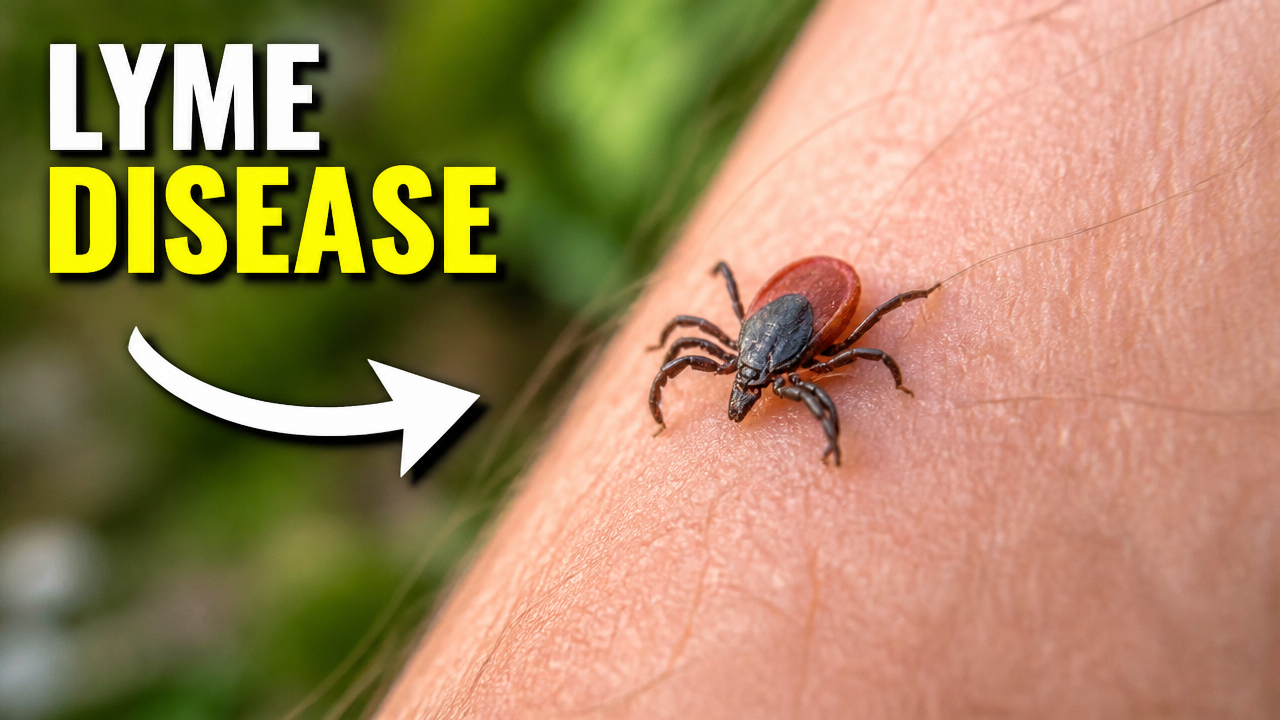
How does a silent pathogen in the woods become a widespread medical mystery? You might ask about Lyme disease, this tick-borne illness that affects countless people each year. Exploring Lyme disease history reveals deep roots in North American forests. Whether you prepare for a summer hike or a holiday retreat, knowing the background matters. I want you to understand Lyme disease risks better. This guide breaks down the timeline and science for clear understanding.
Quick Questions and Answers
Question: What is the origin of Lyme disease? Answer: Lyme disease is now understood as a bacterial infection caused by Borrelia burgdorferi and transmitted mainly by infected black-legged ticks. Modern medical recognition began in Lyme, Connecticut, in the mid-1970s, but several sources say the bacterium and tick-borne illness were present much earlier in North America. Yale genomic work suggests the bacterium itself is ancient on the continent, while clinical recognition came only in the 1970s.
Question: When was Lyme disease first discovered? Answer: The disease was first recognized as a distinct condition in 1975-1976 in Lyme, Connecticut, when doctors investigated unusual arthritis cases. Yale researchers linked the cluster to tick bites, and by 1981-1982 the bacterium Borrelia burgdorferi had been identified and named. Earlier cases likely existed, but they were not yet identified as Lyme disease.
Question: How did doctors discover the cause of Lyme disease? Answer: Doctors first noticed a cluster of arthritis cases in Lyme, Connecticut, and researchers such as Allen Steere and Stephen Malawista connected those cases to tick exposure. In 1981, Willy Burgdorfer found spirochetes in deer ticks, and follow-up testing showed that the bacteria were causing the illness. That discovery established Lyme disease as a tick-borne bacterial infection.
Key Takeaways
- The bacterium causing this illness existed in North America long before doctors identified the symptoms.
- Connecticut was the site of the first formal medical recognition in the mid-1970s.
- Modern cases are driven by environmental changes rather than the sudden appearance of a new virus.
Lyme Disease: Origins, Historical Recognition, and Modern Spread

Scientists and doctors spent decades investigating what caused the strange arthritis clusters in Connecticut. This section connects the early history with current facts. Most medical professionals agree that understanding this background helps in managing outbreaks effectively.
Researchers confirmed that the infection is not new. It circulates naturally in wildlife. People contracted the illness before modern medicine could classify it as a specific disease.
The Ancient Biological Timeline
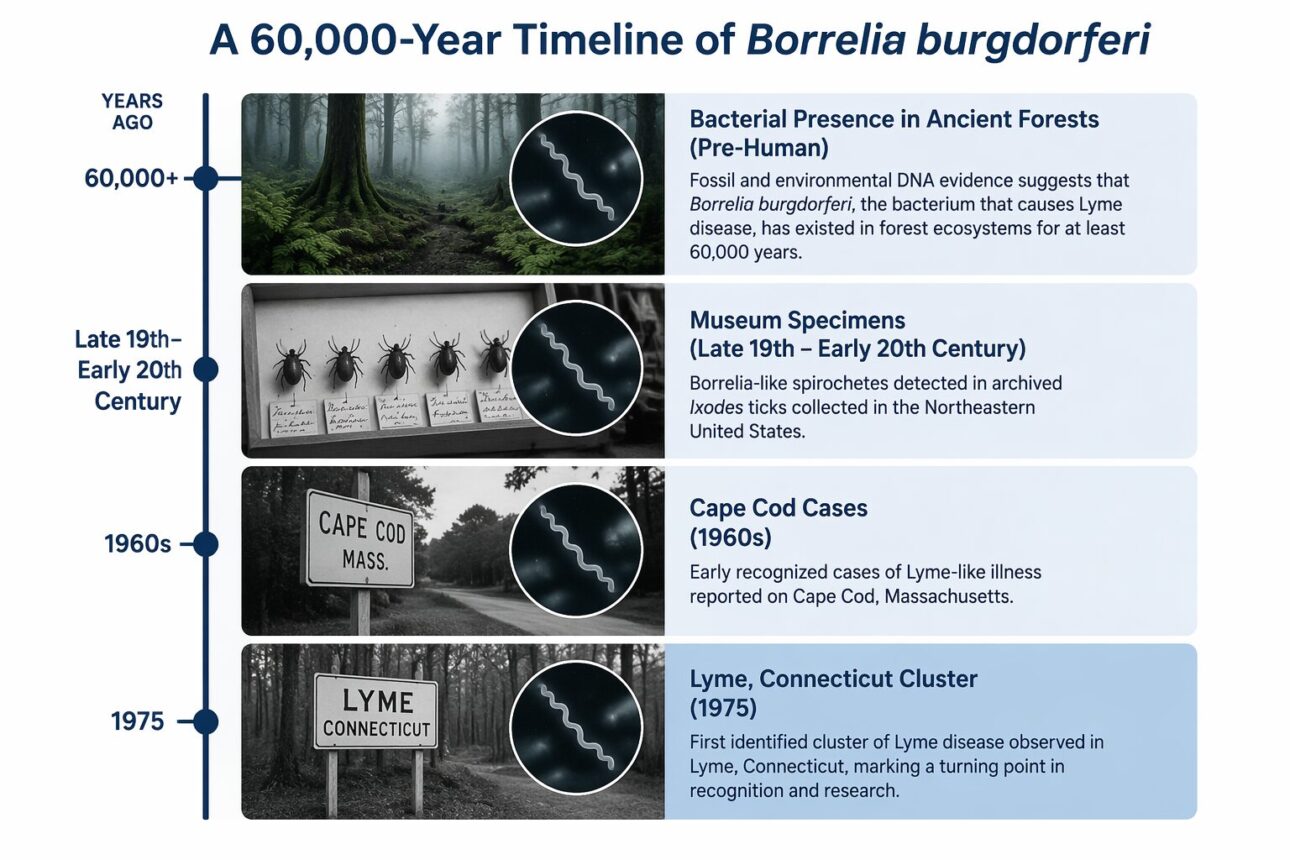
DNA evidence shows Borrelia burgdorferi circulated in North American forests for at least 60,000 years. This predates human arrival on the continent by tens of thousands of years. You might wonder how such old bacteria survived. Wildlife reservoirs kept the infection active within the ecosystem. Scientists extracted genetic material from museum-preserved ticks and mice. These specimens contained bacterial DNA from the late 19th and 20th centuries.
Historical records indicate humans were impacted by the infection before modern diagnosis. Evidence found in ancient mummified remains proves the pathogen existed before the 1970s. This timeline shifts the narrative from a sudden arrival to a long-standing ecological presence.
The 1975 Connecticut Turning Point
The modern era of Lyme research began in 1975. A cluster of children and adults in Lyme, Connecticut, presented with unusual arthritic symptoms. Doctors Allen Steere and Stephen Malawista initially investigated these cases as juvenile rheumatoid arthritis. They identified the connection to tick bites through detailed observation. By 1977, the medical community had officially documented the first 51 cases of what would eventually be known as Lyme arthritis.
Retrospective studies now identify earlier, unrecognized cases. These include those from Cape Cod in the 1960s. The work confirms the disease was present before the formal 1976 medical classification.
Identifying the Causative Agent: The 1981 Discovery
The diagnostic mystery was solved in 1981. Scientist Willy Burgdorfer discovered spirochetes living in the midguts of Ixodes scapularis. These are black-legged or deer ticks. This finding proved that tick bites acted as the direct vector for the bacterial infection. In 1982, the newly identified bacterium received the official name Borrelia burgdorferi. This step transformed the disease from a clinical syndrome into a definable, treatable bacterial illness.
Following this discovery, significant research surged. More than 6,000 scientific papers appeared shortly after. This volume of work spurred a massive, ongoing expansion in clinical and epidemiological understanding.
Ecological Drivers of the Modern Epidemic
Experts attribute the modern rise in cases to massive landscape changes. Forest fragmentation, suburban expansion, and the explosion of deer populations created ideal environments for ticks. As tick habitats moved, the disease expanded from its historical Northeast footprint into nearly every state in the U.S.
| Factor | Impact on Spread | Resulting Risk Level |
|---|---|---|
| Deer Population | Increases tick food supply | High |
| Forest Fragmentation | Places ticks near homes | Very High |
| Suburban Expansion | Increases human exposure | High |
| Winter Thaws | Extends tick active season | Moderate |
Many factors contribute here. Hiking or spending time outdoors carries risks similar to other environmental hazards. You can read more about outdoor safety risks in resources like Big Sur Hiker Deaths: A Complete Guide to Risks and Safety Warnings.
Today, the healthcare system manages an estimated 500,000 new cases annually. This marks it as the most common vector-borne disease in the United States.
Clinical Reality and Diagnostic Hurdles
The disease is defined as a multi-system bacterial infection. It is often characterized by the distinct erythema migrans skin rash appearing at the bite site. Early recognition and intervention remain the standard for preventing the progression to chronic symptoms. Distinguishing these symptoms from other inflammatory conditions was the primary hurdle for clinicians during the 1970s. Public health surveillance remains a focus today.
Key Takeaways
Medical history shows Lyme disease is not new, but rather recognized recently. Current rates reflect ecological shifts rather than biological evolution alone. Continued, rigorous research remains essential for public health.
FAQ
Q: Why did Lyme disease spread so widely?
The spread is linked to ecology, especially forest fragmentation, suburban development, and rising deer populations. Yale and Connecticut public-health sources say these land-use changes created more habitat for ticks and wildlife, increasing human exposure. The disease also expanded geographically as the ecology of the Northeast and other regions supported the tick-bacteria cycle.
Q: Is Lyme disease a recent disease or ancient one?
The bacterium appears ancient, but the medical disease was only recognized recently. Yale says Lyme disease bacteria have circulated in North America for at least 60,000 years, while the disease was first described in Lyme, Connecticut, in the 1970s. Other sources also cite older evidence from ancient remains and museum specimens, showing the organism long predates modern diagnosis.
Q: What tick transmits Lyme disease?
The main vector is the black-legged tick, also called the deer tick, scientifically known as Ixodes scapularis in eastern North America. Johns Hopkins and Connecticut public-health sources both identify this tick as the primary transmitter. The bacteria are passed to humans through the bite of an infected tick.
Q: Can Lyme disease spread from person to person?
The sources here describe Lyme disease as a tick-borne bacterial infection transmitted through infected deer tick bites, not as a disease spread directly between people. That means the usual route is not casual contact, coughing, or touching. Public-health guidance generally focuses on preventing tick bites rather than avoiding infected people.
Q: Where did Lyme disease first appear in the United States?
The best-known first recognized outbreak was in Lyme, Connecticut, in the mid-1970s. A major review also notes earlier American cases on Cape Cod in the 1960s, suggesting the disease was present before it was formally recognized. Evidence from museum specimens indicates the bacterium had already existed in the Northeast and Midwest long before those clinical reports.
Q: Why is Lyme disease called Lyme disease?
The disease is named after Lyme, Connecticut, where a cluster of unusual arthritis cases in children and adults led to its first recognition in the 1970s. Doctors and public-health officials used the town name to identify the syndrome before the bacterial cause was known. Once the cause was established, the name stayed in common medical use.
Q: What changed in 1981 and 1982 for Lyme disease?
In 1981, Willy Burgdorfer identified spirochetes in deer ticks and linked them to the disease. In 1982, the bacterium was named Borrelia burgdorferi in his honor, and the disease could be studied as a defined bacterial infection. Those two years mark the transition from a mysterious syndrome to a known pathogen.
My Experience With Lyme Disease Origins: What We Know About Its Discovery and Spread
I often find myself checking the woods for ticks before a family weekend. Knowing the history helps me feel less anxious. I remember reading about those initial arthritis cases in Connecticut. It is unsettling to realize how close we were to missing this entirely. I think about the deer population boom in my own backyard. That shift likely brings ticks closer than before.
Health vigilance is key here. Whether it is a tick bite or a food recall like Taylor Farms Cyclospora Recall: Is Your Lettuce Safe to Eat?, awareness saves lives. I always tell my family to check skin thoroughly after being outside. The science is clear, but the fear is real if you do not know the facts.
Have you ever checked your pets for ticks after a walk in the grass?
Conclusion
Lyme disease remains a significant public health concern. Its origins lie in ancient cycles, while its modern spread relies on human landscape changes. Recognition in 1975 marked the start of the fight against it. Since then, research has exploded. The pathogen is well defined now. Doctors have protocols for treatment. Public awareness continues to grow. The story of this infection is far from over.
References
- Bay Area Lyme Foundation. (n.d.). History of Lyme Disease. Bay Area Lyme. https://www.bayarealyme.org/about-lyme/history-lyme-disease/
- National Institutes of Health. (n.d.). Discovery of the disease agent causing Lyme disease. NIH. https://irp.nih.gov/accomplishments/discovery-of-the-disease-agent-causing-lyme-disease
- Johns Hopkins Medicine. (n.d.). Lyme Disease. Johns Hopkins Lyme Disease Research Center. https://www.hopkinslyme.org/lyme-disease/
- Yale University. (n.d.). Ancient History of Lyme Disease in North America Revealed with Bacterial Genomes. Yale School of Medicine. https://medicine.yale.edu/news-article/ancient-history-of-lyme-disease-in-north-america-revealed-with-bacterial-genomes/
- Connecticut Department of Public Health. (n.d.). A Brief History of Lyme Disease in Connecticut. CT.gov. https://portal.ct.gov/dph/epidemiology-and-emerging-infections/a-brief-history-of-lyme-disease-in-connecticut

Sarah Anderson . J
I’m the mom behind Wise Mom Blogger, where everyday creativity meets real-life motherhood. I share easy DIY crafts, cozy knitting and crochet projects, beginner-friendly sewing ideas, and family-tested recipes—plus quick baking hacks that make homemade feel doable on busy days.