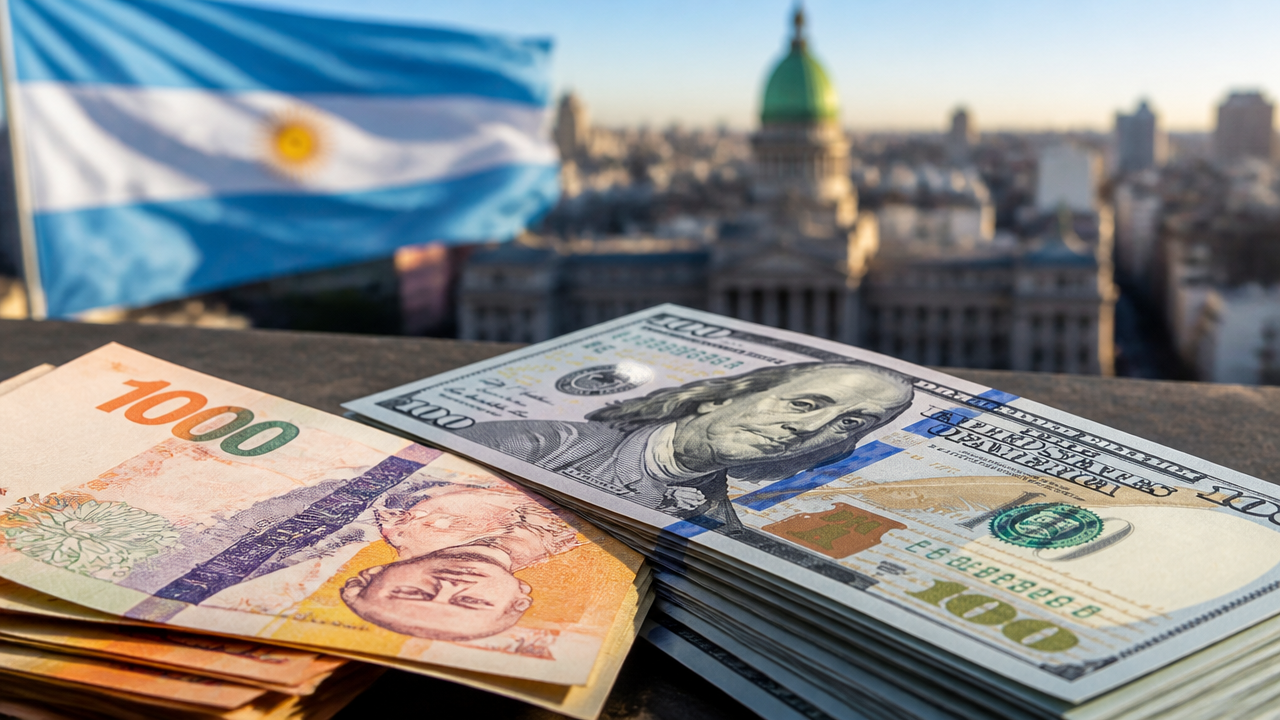
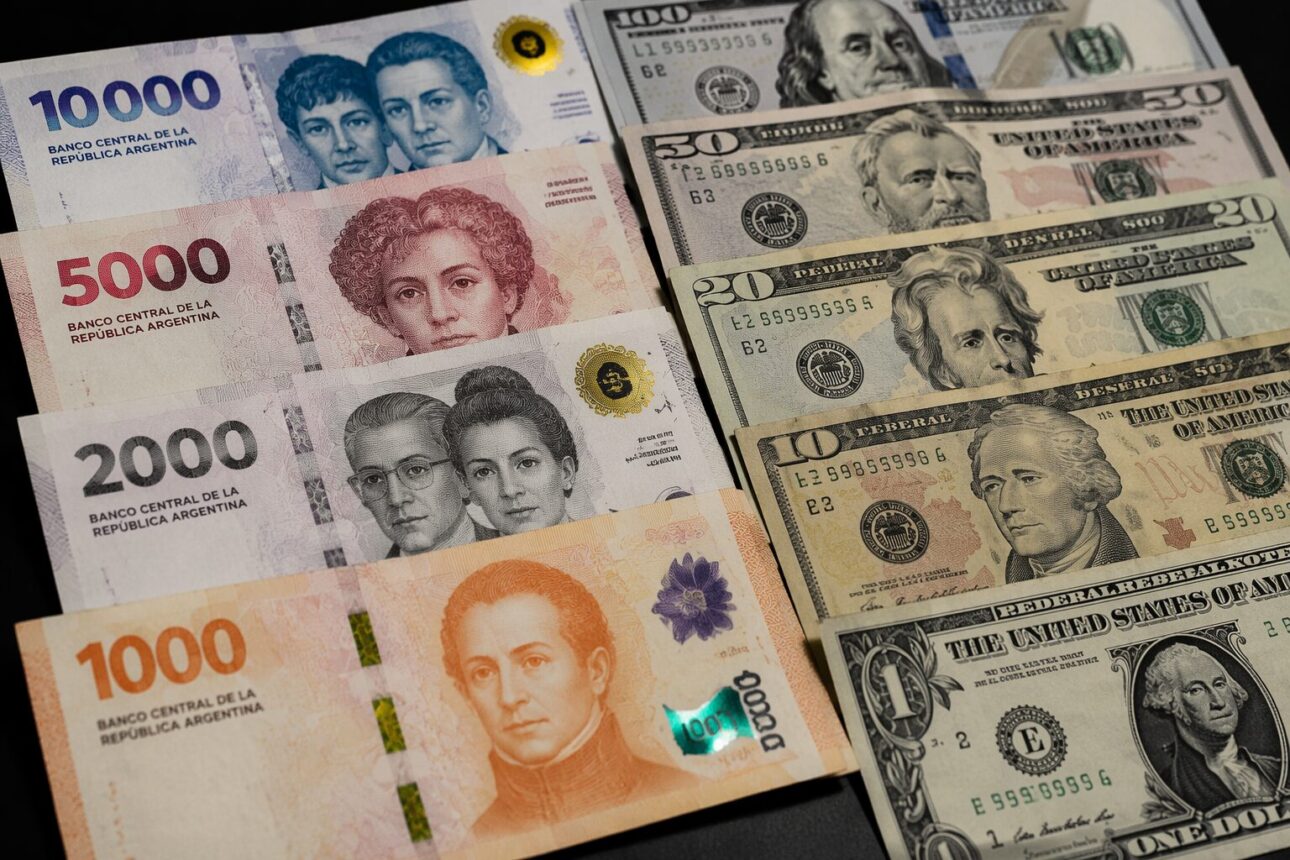
When you’re checking how many pesos equal a dollar or trying to understand why the exchange rate keeps shifting, the numbers can feel confusing fast. The Argentine peso trades at a fraction of a cent, and the rate depends on which platform you use, what day you’re checking, and which conversion method applies to your specific transaction. This guide walks through how peso-to-dollar conversion actually works, why rates vary across services, and what historical changes mean for today’s travelers, investors, and anyone moving money between Argentina and the US.
Quick Questions and Answers
Question: What is the Argentine peso to US dollar rate now?
Answer: The rate changes continuously, but live sources show roughly 1 ARS between 0.00067 and 0.00086 USD depending on the provider and timestamp. Those differences come from timing, rounding, and whether the page shows a mid-market estimate or a platform-specific quote.
Question: How do you convert Argentine pesos to US dollars?
Answer: Multiply the peso amount by the current ARS-to-USD rate. For example, UnitConverters shows 15 ARS equals 0.0107 USD when 1 ARS equals 0.0007150512 USD.
Question: Why is the Argentine peso so weak against the dollar?
Answer: The search results point to Argentina’s long history of devaluations, including the end of the 1:1 parity in 2002 and later official rate changes in 2023 and 2025. That history indicates persistent inflation pressure and exchange-rate management rather than a stable fixed parity.
Key Takeaways
The Argentine peso has been Argentina’s official currency since 1992, but its value against the US dollar has shifted dramatically over three decades.
Today, 1 ARS is worth only a tiny fraction of a US dollar—roughly 0.0007 to 0.0009 USD depending on the platform and moment you check.
Exchange rates vary across platforms because providers update at different times, apply different fees, and use different conversion methodologies.
The peso moved to a floating exchange rate system in April 2025, operating within a band of 1,000 to 1,400 pesos per dollar as part of an IMF-supported agreement.
Conversion calculations require scaling: 10,000 pesos is roughly 7 to 8 USD, and 100,000 pesos is around 70 to 80 USD.
The Evolution of the Argentine Peso Exchange Regime
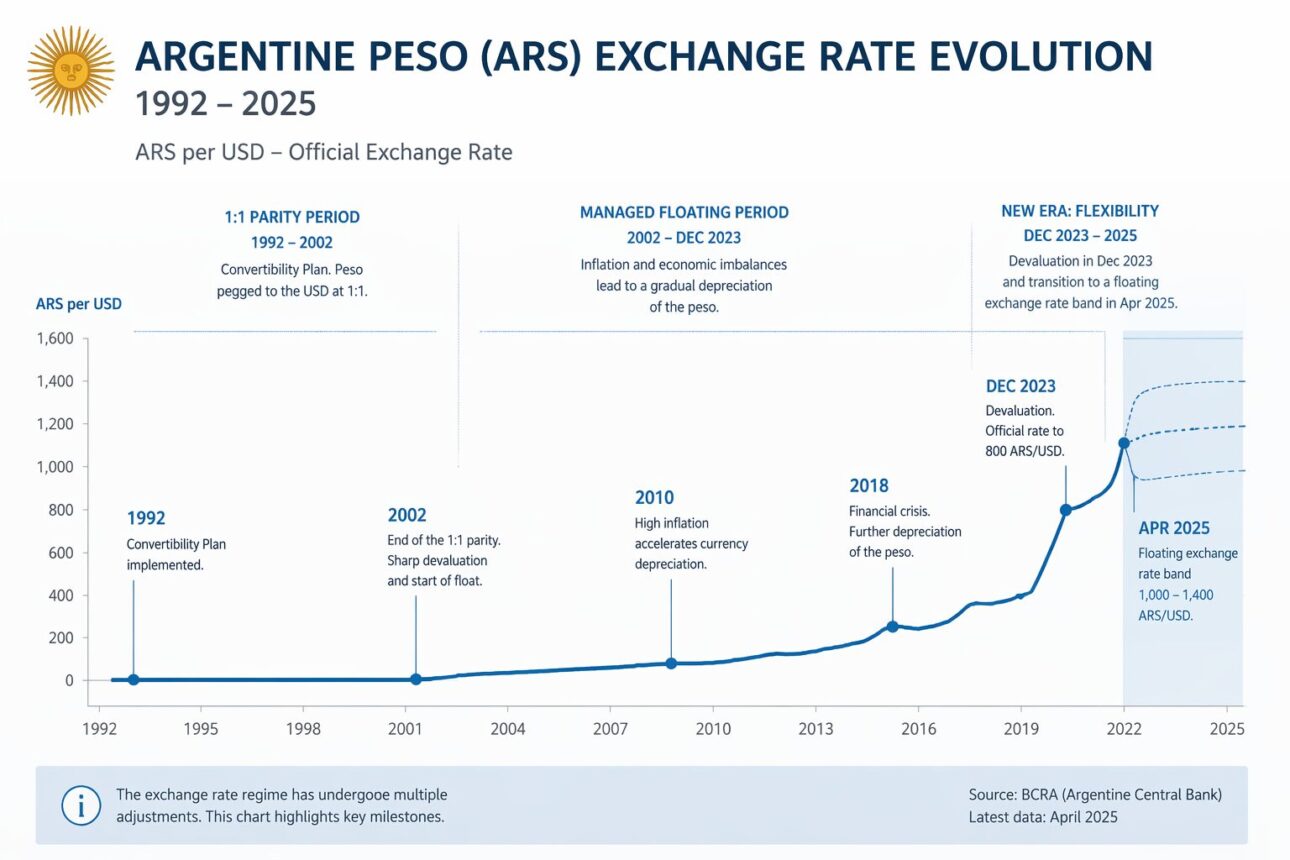
The Argentine peso has a complicated history when it comes to its relationship with the US dollar. The Argentine peso article on Wikipedia lays out the major milestones clearly: the currency was introduced in 1992 at a nominal 1:1 parity with the dollar, and that fixed rate held steady for a full decade. It was a period of relative stability, at least on paper, when a peso was worth exactly one dollar.
That stability collapsed in early 2002. Inflation, mounting debt, and economic pressures forced Argentina to abandon the peg. By the mid-2000s, the peso had weakened dramatically against the dollar. For the next two decades, the exchange rate floated and drifted, with the peso losing value steadily.
In August 2023, things shifted again. According to Wikipedia’s timeline, on 14 August 2023 the official rate was fixed at 350 pesos per dollar, while the unregulated market rate sat at 665 pesos per dollar. That spread between the official and market rates tells you something important: the government was trying to prop up the peso artificially, but the real market was pricing it far lower.
Four months later came a shock. On 12 December 2023, the government executed a 54% devaluation, jumping the official rate from 366.5 to 800 pesos per dollar. The policy also set a monthly devaluation target of 2%—meaning the government was planning for the peso to lose value at about 27% per year. That’s not a minor adjustment; it’s a structural shift in currency management.
By February 2025, inflation had cooled enough that the government lowered the monthly devaluation target to just 1%. Then in April 2025, the real turning point arrived: the peso was allowed to float freely within a band of 1,000 to 1,400 pesos per dollar under an International Monetary Fund-supported agreement. That band means the currency can move with supply and demand, but won’t be allowed to weaken beyond 1,400 or strengthen below 1,000.
This floating band system is a middle ground. It’s not a fixed peg like the original 1992 arrangement, but it’s not a totally free float either. The government still has guardrails.
How to Interpret Currency Conversion Data
One ARS is worth less than a tenth of a US cent. That small per-unit value trips up a lot of people, because it looks like the peso is essentially worthless. But context matters.
Wise’s ARS-to-USD converter displays a mid-market rate of 1 ARS = 0.0007310 USD. That’s the benchmark rate—the theoretical middle price before any fees or spreads. XE shows a similar snapshot of 1 ARS = 0.00066959 USD at a specific moment in time. Both are useful reference points, but neither is the price you’ll actually get if you convert money right now.
The key insight is scaling. When you convert 10,000 pesos, you’re not multiplying a large number by a tiny decimal. You’re multiplying ten thousand times 0.0007, which gives you about 7 USD. According to Revolut US, 10,000 ARS equals roughly 7.12 USD at its live rate. That’s a real conversion outcome that makes intuitive sense: ten thousand pesos isn’t a huge amount of money, and it converts to a modest sum in dollars.
UnitConverters provides a worked example worth studying: 15 Argentine pesos equals 0.0107257675 US dollars. If you do the math, that works out to a rate of about 0.000715 per peso. The specificity of that conversion (out to many decimal places) shows that currency math is precise, but the displayed rate on a converter app is often rounded for readability.
Bigger numbers make the picture clearer. One hundred thousand pesos, at a rate of 0.0007310 USD per peso, converts to roughly 73.10 USD. That’s real money that’s been converted—not a fortune, but not pocket change either. The peso’s weakness against the dollar means that large local amounts in Argentina convert to modest amounts in US currency.
Why Conversion Rates Vary Across Platforms
If you check the peso-to-dollar rate on five different websites right now, you’ll get five slightly different answers. That’s not a mistake; it’s normal. Western Union explicitly warns that “exchange rates shown are estimates, vary by a number of factors including payment and payout methods, and are subject to change.” That’s corporate honesty about how currency markets work.
Different platforms update their rates at different times. XE might refresh every minute, while another service refreshes every few minutes. That time lag alone can create small differences. More importantly, each platform has its own spread—the markup they add to their costs. They’re all running businesses, and they need to make money on conversions.
The actual amount you receive in a conversion depends heavily on the method. Sending money via bank transfer might have different terms than a credit card transfer or a cash exchange. Some platforms support direct ARS-to-USD transfers; others don’t. Revolut UK, for instance, showed it doesn’t yet support direct ARS-to-USD exchanges, though it provided live reference rates anyway.
Revolut’s situation illustrates a useful point: even platforms that don’t facilitate a conversion will publish the current rate so you can check the market. Seeing 1 ARS = 0.000865 USD on Revolut UK tells you what the market is saying, even if you can’t actually execute that trade on their service.
XE and Wise both emphasize that they display mid-market rates—the theoretical middle price without fees. But if you actually convert money through their platform, you might pay a fee or get a slightly worse rate depending on your account type and payment method. That’s the gap between the headline rate and your real transaction cost.
Think of it this way: the mid-market rate is the reference price, like the sticker price on a car. The actual rate you get is after negotiation and add-ons, like the final price out the door.
Macroeconomic Influences on the ARS/USD Relationship
Currency values don’t float randomly. They respond to real economic forces. Inflation is the biggest driver for the peso. When Argentina’s inflation rate is higher than the US inflation rate, the peso loses value relative to the dollar. That purchasing power gap has to show up somewhere, and it shows up in the exchange rate.
Argentina’s government has experimented with different policy tools to manage that pressure. The monthly devaluation target—first 2%, then lowered to 1%—is a way of saying “we’re going to let the peso weaken in a controlled way, rather than having it crash all at once.” It’s like adjusting the valve on a leaking pipe so the leak is slow and predictable, not a sudden burst.
The floating band system introduced in April 2025 is another tool. By setting a floor at 1,000 and a ceiling at 1,400 pesos per dollar, the government prevents sudden shocks in either direction. If the peso starts weakening too fast, the central bank can intervene. If it starts strengthening too much (which is unlikely), they can cool it down.
Trading Economics provides real-world data on this. As of July 7, 2026, the USD/ARS exchange rate was at 1,491.8600. That’s already above the floating band ceiling of 1,400, which suggests real-world market pressures are pushing the peso weaker faster than the band allows. The same source projects the rate at 1,467.93 by quarter-end and 1,406.74 in twelve months. Those projections are based on macroeconomic models and trader expectations.
This matters because it shows currency conversion isn’t static. The rate you see today might be notably different in six months if economic conditions shift, inflation picks up again, or policy changes. Anyone converting large amounts or planning currency transfers should pay attention to these trends.
Why Conversion Rates Vary Across Platforms
Let me circle back to platform variation because it’s genuinely important and worth understanding more deeply.
Western Union’s page on ARS-to-USD conversion makes it clear: the rate they display is an estimate. It can vary based on payment method (card, bank, cash) and payout method (bank deposit, cash pickup, wallet transfer). In practice, that means if you walk into a Western Union office and ask for the rate they’re advertising online, the rate you actually get might be slightly different—or sometimes notably different—depending on how you’re sending the money and how it’s being received.
XE’s snapshot approach is useful for understanding the concept. When XE showed 1 ARS = 0.00066959 USD at 14:37 UTC, that was a real price at a specific moment. But by the time you read that number, it’s already old. The actual live rate has moved slightly. That’s why currency converters always include a timestamp—it’s an admission that the rate is constantly changing.
Revolut’s approach offers a middle ground. Revolut US shows both the forward rate (1 USD = 1,379.32 ARS) and the reverse rate (10,000 ARS = 7.12 USD) side by side. That dual-direction display helps users cross-check the math and understand the relationship from both angles. Revolut also states directly that “the value of the Argentine Pesos is determined by a floating exchange rate,” which is technically accurate—though the government’s floating band constrains that float.
Wise’s mid-market rate of 0.0007310 USD per peso is a clean reference point. If you’re trying to figure out the “fair” price without fees and spreads, Wise’s rate is as good as any. But if you’re planning an actual transfer, you need to check what Wise’s current fee structure is, because that will eat into the amount you receive.
Platform
Example Rate (1 ARS to USD)
Rate Type
Notes
Wise
0.0007310 USD
Mid-market
Clean reference; actual conversion may differ due to fees
XE
0.00066959 USD
Live snapshot
Updates frequently; rate valid only at timestamp shown
Revolut UK
0.000865 USD
Live reference
Does not currently support direct ARS-to-USD; rate for reference only
Revolut US
0.000716 USD (approx, from 10,000 ARS = 7.12 USD)
Mid-market
Provides dual-direction quotes for verification
Western Union
Varies by method
Estimate
Rates differ by payment and payout method; fees apply
This table shows the range of rates across major platforms. The variation you see here isn’t an error; it’s real-world market behavior. Each platform sources liquidity slightly differently, updates at different intervals, and applies different business models.
Scaling and Real-World Conversion Examples
Understanding conversion means understanding scale. Let’s work through some concrete numbers.
If you have 1,000 Argentine pesos, at Wise’s mid-market rate of 0.0007310, that’s worth about 0.73 USD. That’s pocket change in the US, but 1,000 pesos might be a modest amount in Argentina—maybe a lunch and a coffee.
At 10,000 pesos, you’re looking at roughly 7-8 USD depending on the platform. Revolut US shows exactly 7.12 USD for 10,000 ARS. That’s more meaningful—a decent meal or a couple of drinks in the US, or a significant grocery run in Argentina.
At 100,000 pesos, you’re in the 70-80 USD range. At 1,000,000 pesos, you’re approaching $700-800 USD. Suddenly the peso’s apparent weakness doesn’t feel so dramatic. A million pesos is a lot of money in Argentina; it’s just that by dollar terms, it’s a modest amount because the peso trades at such a low per-unit value.
UnitConverters’ example of 15 ARS = 0.0107 USD is instructive. Fifteen pesos is almost nothing in Argentina—basically a small snack. And 0.0107 USD is a tenth of a cent. That’s the extreme end of the micro-conversion scale, showing how small amounts just don’t make sense to convert.
The psychological impact of these conversions is real. Travelers to Argentina often experience “sticker shock” in reverse: prices in pesos look huge (meals for 500 pesos, hotel rooms for 50,000 pesos), but when converted to dollars, they’re startlingly cheap. That gap between the nominal peso price and the dollar price is where a lot of travel value comes from.
Official Rates, Blue Dollar Rates, and Market Reality
Argentina has a complicated relationship with currency markets. For much of the period from 2023 through early 2025, there were at least two exchange rates: an official government rate and an unregulated market rate, sometimes called the “blue dollar” rate in Argentina.
On 14 August 2023, the official rate sat at 350 pesos per dollar while the unregulated market rate was 665 pesos per dollar. That nearly 2x spread tells you the government’s official rate was severely overvaluing the peso compared to what the real market thought it was worth. People who needed dollars urgently were willing to pay almost twice as much in pesos to get them outside the official channel.
This dynamic is important because it means there wasn’t one “true” exchange rate during that period—there were at least two, with a massive gap between them. Anyone converting money faced a choice: access the official rate at the bank (if you could) or pay a premium for the market rate. Most people outside the financial system had no choice but to deal with the unofficial rate.
The December 2023 devaluation was meant to bring those rates closer together. By jumping the official rate to 800 pesos per dollar, the government was trying to make the official rate more market-realistic, reducing incentive for people to seek out the black market.
The April 2025 floating band of 1,000 to 1,400 pesos per dollar represents another evolution. Now the rate can move within that band based on supply and demand. But the band itself is enforced: the central bank won’t allow the peso to weaken beyond 1,400 or strengthen beyond 1,000. That’s still a form of currency management, just more flexible than a fixed peg.
For people converting money today, the good news is that the floating band system is more transparent than the old two-tier system. There’s essentially one market rate, not an official rate and an underground rate. The bad news is that economic pressures are pushing the peso even weaker than the band allows, suggesting structural challenges remain.
The Math Behind Currency Conversion
Currency conversion is pure multiplication. If you have 50,000 pesos and the rate is 0.0007310 USD per peso, the math is:
50,000 × 0.0007310 = 36.55 USD
That’s the mid-market conversion. In the real world, if you’re converting through a bank or money transfer service, you might get 35 USD or 36 USD depending on fees and spreads. The platform might keep 0.50 to 2 USD as profit or fee, depending on the service and the method.
Working backwards is equally useful. If you want to know how many pesos equal 100 USD, you need the inverse rate. If 1 ARS = 0.0007310 USD, then 1 USD = 1,367.99 ARS (roughly). So 100 USD = 136,799 ARS.
Checking your math is easy once you understand this relationship. If an app tells you that 50,000 ARS = 36.55 USD, you can verify by dividing: 36.55 ÷ 50,000 = 0.000731, which matches the stated rate. If the numbers don’t line up, something’s wrong—either the rate has changed, or the app made an error.
This is why tools like UnitConverters that show both the forward conversion (ARS to USD) and the reverse conversion (USD to ARS) are useful. You can cross-check that the math is internally consistent.
My Experience With Argentine Peso to US Dollar Conversion Explained
I’ve spent more time than I’d like to admit refreshing currency converters, watching the peso weaken in real time, and trying to explain to friends why their vacation budget just got 20% smaller. The frustrating part isn’t the math—it’s how fast things can change. One week the rate is stable, and then a policy announcement hits, or inflation numbers come in worse than expected, and suddenly your conversion is worth measurably less.
What genuinely surprised me researching this was how much the official vs. market rate gap had been. That 665 vs. 350 spread in August 2023 is insane—it means the government was essentially saying “we think the peso is worth this” while everyone else was saying “no, it’s worth half that.” That kind of disconnect is a red flag for any economy.
The floating band system makes more sense to me now. It’s not perfect, but it’s honest. Instead of pretending the peso has a fixed value and getting disappointed, the government’s basically saying “it’ll float around here, but we’re drawing a line at 1,400.” That gives traders and travelers alike a clearer picture of where things stand.
The real takeaway I’d push people on: don’t assume the exchange rate is constant. Check it the day you actually convert, not three weeks before. That time gap can cost you real money if the peso has weakened further. And if you’re moving a large amount, call the provider beforehand and ask what fee structure applies. The difference between platforms can be significant for big transfers.
Have you noticed the exchange rate shifting on conversions you’ve checked, or have you been surprised by how weak the peso actually is when you do the math?
FAQ
Q: Can I get the exact same ARS to USD rate everywhere?
No. Western Union says exchange rates are estimates and vary by payment and payout methods, and Revolut says rates are dynamic. XE and Wise also show slightly different live values, which is normal because providers update at different times and may apply different pricing models.
Q: Does Argentina use the dollar instead of the peso?
No. Western Union identifies the Argentine Peso as the official currency of Argentina, and Revolut US says ARS is the official currency with the symbol $. The search results show that USD is used as a comparison currency, but not as the country’s official legal tender.
Q: What are the official and blue dollar rates in Argentina?
The sources mention that Argentina has had an official rate and an unregulated or unofficial rate, especially in the 2023 period. The results here do not provide a current blue-dollar quote, so the safest reading is that the spread between official and market rates has historically been a major feature of the ARS/USD market.
Q: How much is 10,000 Argentine pesos in dollars?
The answer depends on the live rate. Revolut US shows 10,000 ARS at 7.12 USD, while Revolut UK shows 10,000 ARS at 8.57 USD and XE’s live rate implies a different figure again. This illustrates why users should check the rate at the moment they plan to convert.
Q: When did Argentina change its peso exchange rate recently?
According to the timeline on Wikipedia, the official exchange rate was changed on 12 December 2023 from 366.5 to 800 pesos per dollar, and the monthly devaluation target was later lowered to 1% in February 2025. Wikipedia also says that from 14 April 2025 the peso was allowed to float within a band of 1,000 to 1,400 pesos per dollar.
Q: Which exchange-rate quote is best for ARS to USD?
For a neutral benchmark, the mid-market rate is usually the cleanest reference point, and Wise and XE both present their quotes in that style. For actual transfers or cash exchange, the final amount may be lower because providers can add spreads, fees, or method-specific adjustments.
Q: Who decides the Argentine peso to dollar conversion rate?
The rate is shaped by both market forces and policy. Revolut says the peso value is determined by a floating exchange rate, while Wikipedia’s timeline shows that Argentina has also used official rate changes, crawling pegs, and IMF-related bands.
Conclusion
The Argentine peso to US dollar conversion isn’t a single number—it’s a dynamic relationship shaped by history, policy, and market forces. The peso has moved from a fixed 1:1 parity in 1992 to a fraction of a cent today, with major devaluations in 2002, 2023, and 2025 marking major turning points. Understanding that history helps explain why the current floating band system exists and why the rate you see today might be different tomorrow.
For practical purposes, the key insights are simple: check the mid-market rate as a reference point, understand that different platforms may show slightly different rates due to timing and spreads, and remember that actual conversion outcomes depend on your payment method, the provider, and current fees. If you’re converting a significant amount or planning regular transfers between Argentina and the US, spending a few minutes comparing rates across Wise’s ARS to USD converter and other major platforms can save you real money. Currency markets reward attention to detail and a willingness to shop around. The peso’s weakness creates opportunity for travelers and investors who understand how it works.
References
Wise. (2026). Argentine pesos to US dollars Exchange Rate. https://wise.com/gb/currency-converter/ars-to-usd-rate
XE. (2026). 1 ARS to USD – Convert Argentine Pesos to US Dollars. https://www.xe.com/en-us/currencyconverter/convert/?Amount=1&From=ARS&To=USD
Western Union. (2026). ARS to USD | Convert Argentine Peso to US Dollar. https://www.westernunion.com/ar/en/currency-converter/ars-to-usd-rate.html
UnitConverters. (2026). Convert ARS to USD. https://www.unitconverters.net/currency/ars-to-usd.htm
Revolut. (2026). Convert ARS to USD | Argentine Pesos to US Dollars Exchange Rates Today | Revolut United Kingdom. https://www.revolut.com/currency-converter/convert-ars-to-usd-exchange-rate/
Revolut. (2026). Argentine Pesos (ARS) Exchange Rates | Revolut United States. https://www.revolut.com/en-US/currency-converter/ars-argentine-peso/
I’m the mom behind Wise Mom Blogger, where everyday creativity meets real-life motherhood. I share easy DIY crafts, cozy knitting and crochet projects, beginner-friendly sewing ideas, and family-tested recipes—plus quick baking hacks that make homemade feel doable on busy days.