
What makes the nine-banded armadillo a surprising carrier of pathogens, and what do you need to know to stay safe around these armored animals? Whether you are planning a summer landscaping project or simply curious about local wildlife, understanding the direct health impact of these mammals is key. While many people associate these creatures with various illnesses, the primary medical concern is leprosy. Managing your environment safely involves avoiding direct contact or handling, as these wild animals can carry leprosy bacteria in regions like the Southern United States. Getting clear facts about these health risks helps you make informed decisions when encountering wildlife in your own backyard.
Quick Questions and Answers
Question: What disease do armadillos mainly carry? Answer: The main disease associated with armadillos is leprosy, also called Hansen’s disease. Multiple authoritative sources identify Mycobacterium leprae as the key pathogen and the nine-banded armadillo as the best-known animal reservoir. Some sources also mention rare risks such as rabies, salmonella, or parasites, but leprosy is the core public-health concern.
Question: Can armadillos give humans leprosy? Answer: Yes, armadillos can transmit leprosy to humans, especially through direct contact or handling, and in some cases through eating the animal. The CDC and other sources note that this zoonotic link has been documented in the southern United States and in parts of Latin America. The overall risk is still considered low because leprosy is rare and transmission usually requires close exposure.
Question: Which armadillo species carries leprosy? Answer: The species most strongly linked to leprosy is the nine-banded armadillo (Dasypus novemcinctus). The CDC says it is the only known nonhuman reservoir of Mycobacterium leprae. Other armadillo species are not identified in these sources as established reservoirs in the same way.
Key Takeaways
- Nine-banded armadillos are the only known wild animal reservoir for the leprosy bacterium, Mycobacterium leprae*.
- Research suggests 15–20% of certain populations carry the bacteria, which can cause skin lesions and nerve damage in humans.
- The primary routes of infection involve direct contact with bodily fluids or consuming undercooked meat.
- While an association exists, the annual frequency of human cases remains very low, numbering only a few dozen annually in the U.S.
- Basic safety—specifically keeping distance and washing hands—effectively mitigates most risks associated with wild animal encounters.
Armadillo Health Risks: What You Need to Know
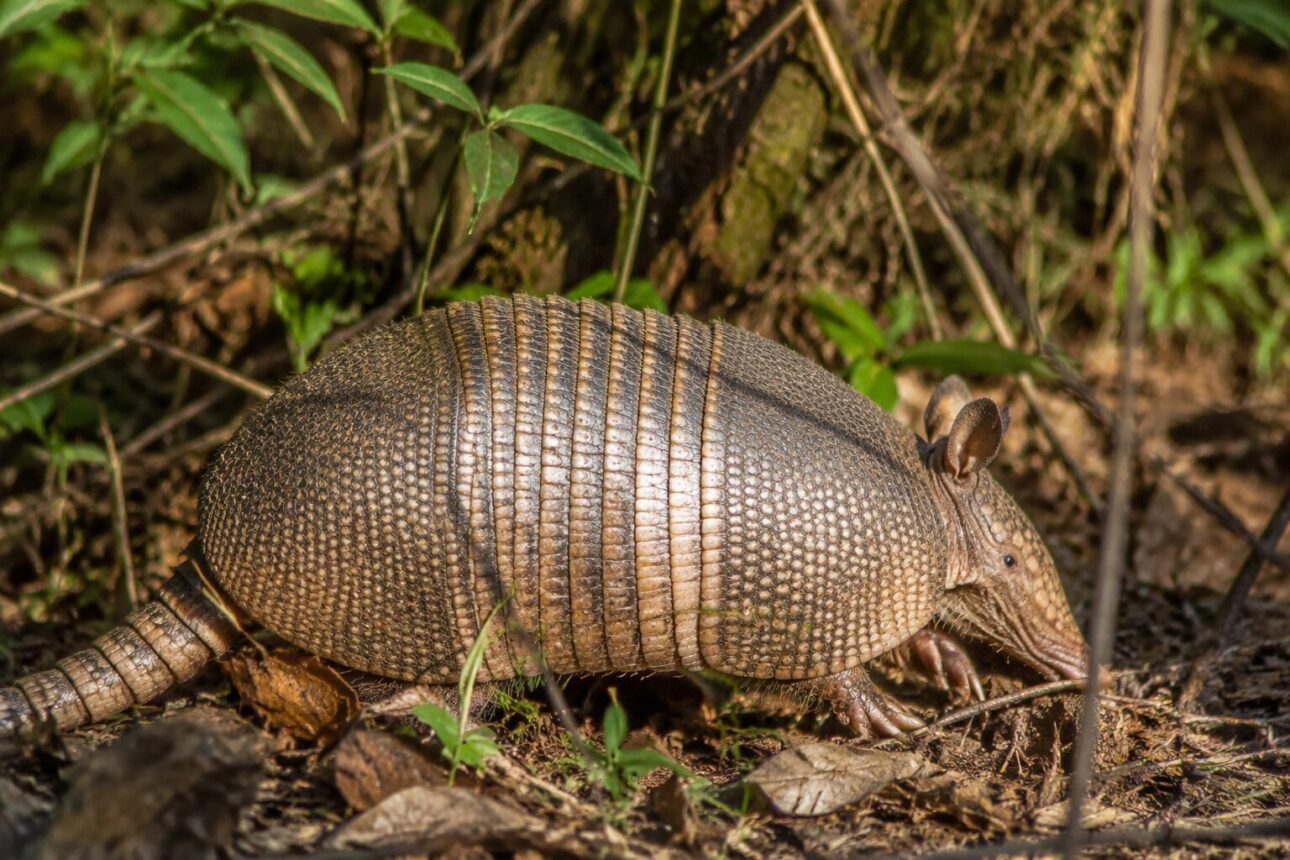
The nine-banded armadillo occupies a unique place in medical research as the only known nonhuman reservoir of Mycobacterium leprae in the world. This persistent bacterium is the primary cause of leprosy, a chronic condition known as Hansen’s disease. Left untreated, this illness can manifest as skin lesions, muscle weakness, and debilitating nerve damage. Many people worry that simply spotting an armadillo near their garden or fence line creates an immediate health hazard. However, the overall risk of human infection remains statistically very low. Most health agencies record only a few dozen cases of leprosy across the United States annually. Understanding these risks is similar to knowing about other food-borne hazards, like the Taylor Farms Cyclospora Recall: Is Your Lettuce Safe to Eat?, where awareness prevents unnecessary panic.
Understanding the Leprosy Connection
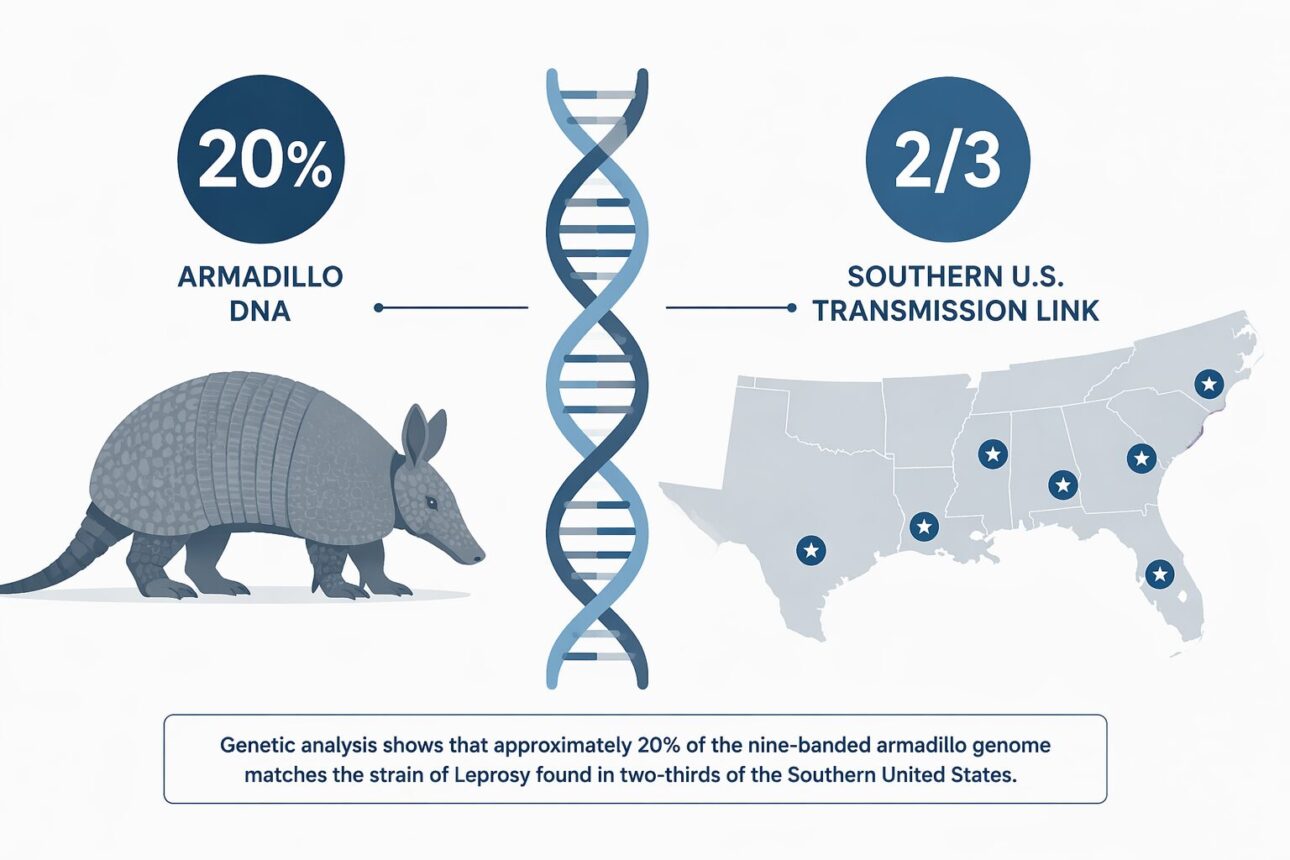
Molecular evidence has solidified the link between armadillos and human infections. A groundbreaking genetic study published in The New England Journal of Medicine confirmed that human patients and local armadillo populations often share the exact same unique strain of the bacterium. This finding shifted the conversation from speculation to scientific fact. Research indicates that between 15% and 20% of armadillo populations in the Southern United States carry the bacteria. In several localized areas, this prevalence rate actually exceeds the 20% threshold. These data points from organizations like the University of Florida provide a clearer picture of why certain regions see higher levels of vigilance. In the Southern U.S., nearly two-thirds of all autochthonous leprosy cases have been genetically linked to armadillo-borne strains.
How Transmission Actually Occurs
Myths often suggest that walking past an armadillo or seeing one in your driveway puts you at risk, but that is not the case. Skin-to-skin exposure from casual proximity is not considered a primary transmission route. Most identified infections are associated with direct physical contact with bodily fluids during hunting, skinning, or handling the animal. Consumption of undercooked armadillo meat also stands as a well-documented risk factor. Researchers at Colorado State University emphasize that the risk associated with thoroughly cooked meat is “almost zero.” Despite this, safety experts still advise against handling these animals entirely. Emerging research is now investigating indirect transmission risks, particularly whether bacteria persist in soil due to constant burrowing and defecation. Much like understanding the Big Sur Hiker Deaths: A Complete Guide to Risks and Safety Warnings, knowing how to modify your behavior based on environmental data is the best way to maintain peace of mind.
Other Potential Health Hazards
Leprosy is the most widely discussed concern, but it is not the only pathogen found in wild armadillo populations. Like many other wild mammals, these creatures can carry a variety of germs. Reported health risks occasionally include exposure to parasitic worms, salmonella, and, in extremely rare cases, rabies. Because their body temperature is uniquely low, rabies viruses struggle to survive, making infections of that specific type particularly uncommon. Regardless of the disease, handling wild animals without medical-grade safety equipment is always a bad idea.
| Potential Risk | Nature of Concern | Primary Transmission Method |
|---|---|---|
| Leprosy | Bacterial (Hansen’s Disease) | Direct fluid contact or handling meat |
| Salmonella | Bacterial (Gastrointestinal) | Fecal-oral route or surface contact |
| Parasitic Worms | Helminthic/Parasitic | Ingestion or accidental skin contact |
| Rabies | Viral (Extremely rare) | Bites or saliva contact |
Geographic Prevalence and Key Takeaways
High instances of transmission occur primarily where human interaction with wildlife is frequent. Regions in Brazil, Mexico, Colombia, and the Southern United States report most of these interactions. While public health officials do not want people to panic, they do recommend common-sense precautions. Avoiding direct contact with wild animals serves as the most effective preventative measure. If you work in the yard and worry about soil exposure, wearing sturdy gloves and washing your hands thoroughly are practical steps. Health experts focus on early detection, encouraging anyone who has had direct contact with an armadillo to watch for skin lesions or persistent numbness. These symptoms, if they arise, should be reviewed by a medical professional immediately.
FAQ
Q: How do people get infected from armadillos?
People are most likely to be infected through direct contact with an armadillo or its body fluids, and some studies also discuss eating contaminated or undercooked meat. Research notes a possible soil route if armadillos contaminate soil while burrowing or defecating. Well-cooked meat is described as posing almost zero risk in studies, provided you avoid the handling process itself.
Q: Is it safe to touch an armadillo?
Public-health sources explicitly advise against close contact. While the risk is not high in every encounter, leprosy transmission requires more than casual proximity, and direct handling increases the likelihood of exposure. It is safest not to touch wild armadillos or their fluids, and to wash your hands thoroughly if accidental exposure occurs while gardening or doing yard work.
Q: Do armadillos carry rabies too?
They can, but the risk appears very rare. One public-health source says rabies cases in armadillos are exceptionally uncommon because their low body temperature makes it difficult for the virus to thrive. Even so, any bite or unusual contact with a wild animal should be treated cautiously, and you should seek medical attention if you suffer a bite or scratch.
Q: Can you get sick from armadillo meat?
Yes, if the meat is handled in an unsafe manner or eaten undercooked, there is a potential risk of infection. Colorado State University specifically says the risk from eating well-cooked meat is almost zero, which suggests that cooking is the major safety factor. The bigger concern is actually raw handling or cross-contamination during the preparation of the animal.
Q: How common is leprosy in armadillos?
Prevalence varies significantly by location. The CDC says disease prevalence may exceed 20% in some locales, while universities cite estimates of 15–20% in particular areas. These are localized figures, not a universal rate for every single armadillo in the country, but they are high enough to warrant caution when you are in known habitats.
Q: Why are armadillos associated with leprosy?
Armadillos are tied to leprosy because they are naturally susceptible to the bacteria and serve as a wildlife reservoir. Genetic studies successfully linked human cases and specific armadillo strains, which helped confirm the connection. Their biology, specifically the low body temperature of the nine-banded armadillo, is thought to make them an especially favorable host for the bacterium.
Q: Should I worry if I see an armadillo in Florida?
Seeing an armadillo is not, by itself, a reason to panic. The risk comes from close contact, direct handling, or exposure to contaminated tissue, fluids, or potentially feces in the soil. Florida sources note that armadillos are common in the state and that some areas have a measurable share carrying the bacteria, so avoidance is the practical response.
My Experience With What Disease Do Armadillos Carry? A Complete Guide to Health Risks
Living in the South, I have had my fair share of encounters with these little armored tanks. They look like prehistoric leftovers shuffling through the grass, mostly minding their own business. Early on, I used to think the fear of them was mostly folklore, a campfire story to keep kids from catching them. Then, I read the actual genetic research linking their internal bacteria to human cases, and I changed my tune.
It is easy to get cavalier when you have lived near wildlife for years, but the expert insight here is that you cannot always see the risk. The bacteria don’t just jump through the air; they require an invitation—usually through rough handling. I remember once watching a neighbor try to move one by hand, and I barely stifled a yelp. You truly don’t need a lesson in biology to know that touching a wild creature with unknown pathogens is a recipe for a bad week. I stick to my policy of admiration from afar, preferably from the back porch.
Have you ever had a close encounter with one of these critters that made you change how you look at them?
References
- CDC Emerging Infectious Diseases. (2015, December). Zoonotic Leprosy in the Southeastern United States. Centers for Disease Control and Prevention. https://wwwnc.cdc.gov/eid/article/21/12/15-0501_article
- Colorado State University. (n.d.). New evidence that wild armadillos spread leprosy to humans. Colorado State University. https://cvmbs.source.colostate.edu/new-evidence-that-wild-armadillos-spread-leprosy-to-humans/
- Critter Control. (n.d.). Do Armadillos Carry Diseases?. Critter Control. https://www.crittercontrol.com/wildlife/armadillos/do-armadillos-carry-diseases/
- Missouri Poison Center. (n.d.). Armadillo: The Little Armored One. Missouri Poison Center. https://missouripoisoncenter.org/armadillo-the-little-armored-one/
- Science. (2011, April 27). Yes, You Can Get Leprosy From an Armadillo. Science. https://www.science.org/content/article/yes-you-can-get-leprosy-armadillo
- Smithsonian Magazine. (2015, April 28). How Armadillos Can Spread Leprosy. Smithsonian Magazine. https://www.smithsonianmag.com/smart-news/how-armadillos-can-spread-leprosy-180954440/
- University of Florida. (2023, October 16). Leprosy in Florida: Medical experts monitoring unusual, new cases of Hansen’s disease. University of Florida. https://epi.ufl.edu/2023/10/16/leprosy-in-florida-medical-experts-monitoring-unusual-new-cases-of-hansens-disease/
- Vissa, V., et al. (2019, September 17). Armadillos and leprosy: from infection to biological model. PubMed Central. https://pmc.ncbi.nlm.nih.gov/articles/PMC6746198/

Sarah Anderson . J
I’m the mom behind Wise Mom Blogger, where everyday creativity meets real-life motherhood. I share easy DIY crafts, cozy knitting and crochet projects, beginner-friendly sewing ideas, and family-tested recipes—plus quick baking hacks that make homemade feel doable on busy days.