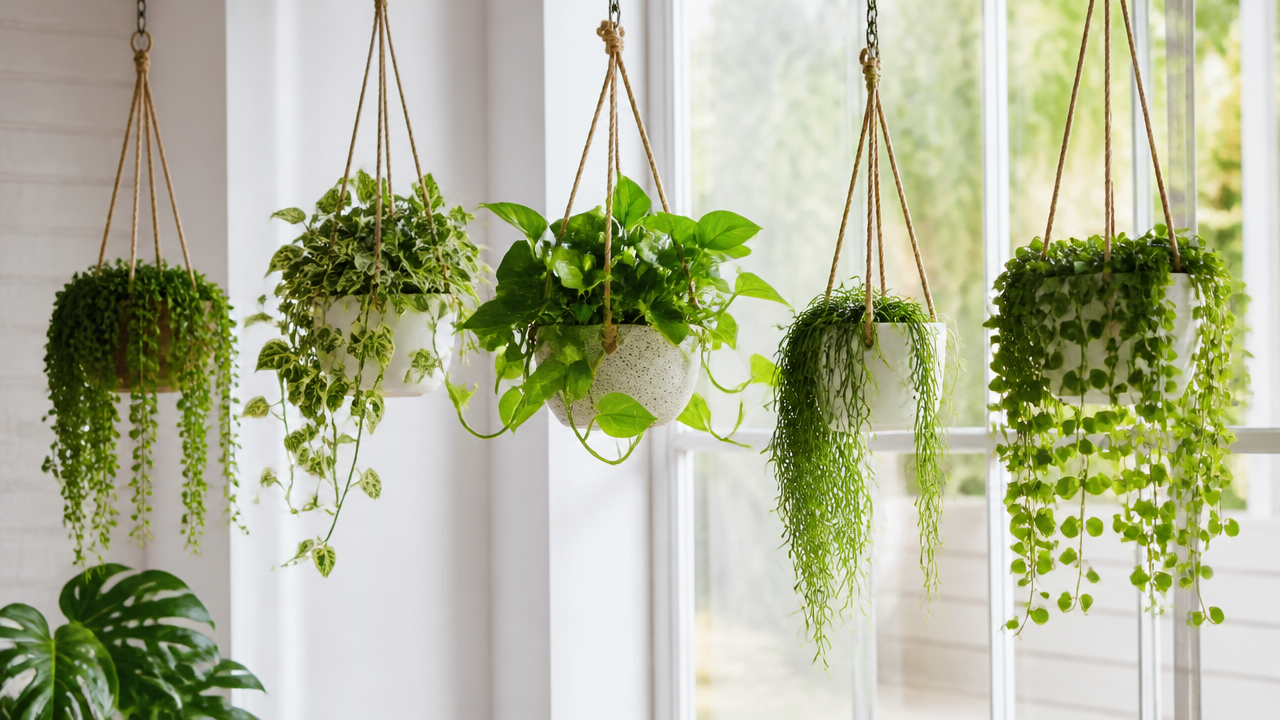
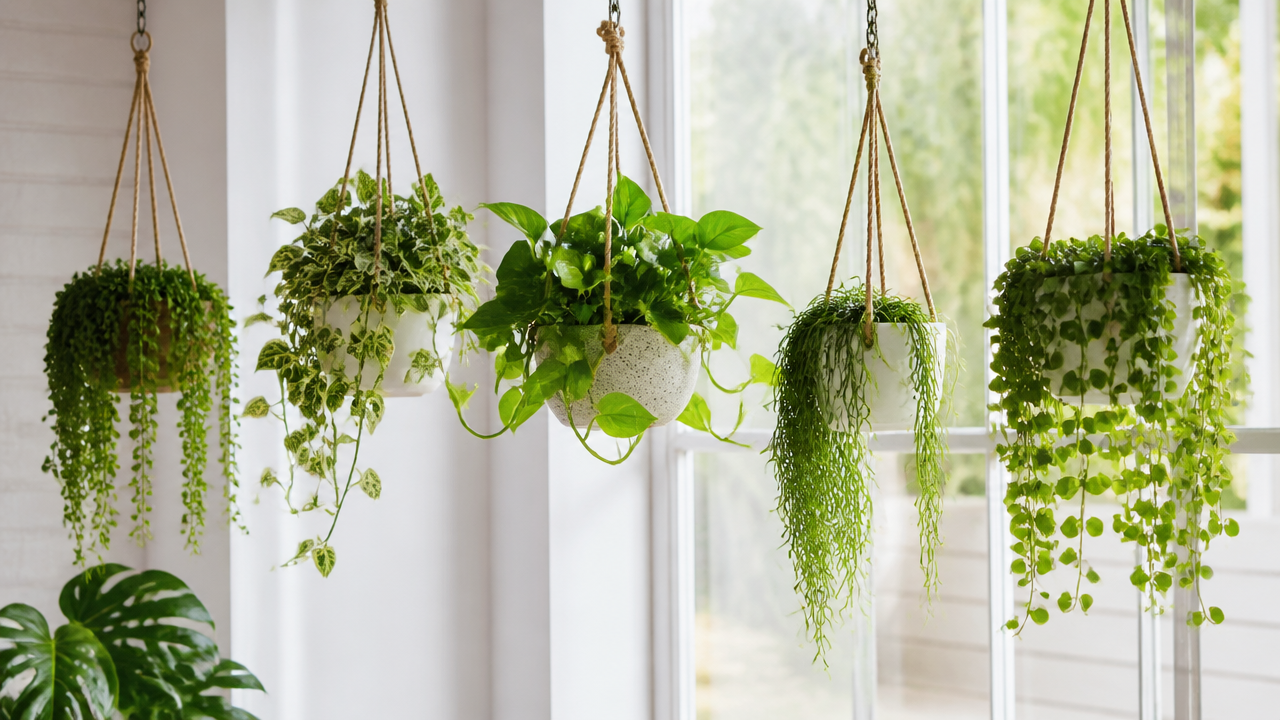
What makes a brilliant indoor hanging plants idea bring more life and dimension to a cramped apartment than a simple floor vase could? Suspended greenery adds incredible depth to any room while reclaiming precious floor space. Whether you are preparing for a cozy winter reading nook or refreshing a sunny summer balcony, the right trailing vines transform dead zones. Explore twelve reliable options ranging from forgiving devil’s ivy to exotic pitcher plants that thrive when mounted high. These selections cover every skill level and lighting condition, ensuring your tiny sanctuary stays lush year-round. Begin looking upward today, because suspending foliage above shelves, near windows, or in glass displays unlocks endless styling potential.
Quick Questions and Answers
Question: What are the best indoor hanging plants for beginners? Answer: The best beginner-friendly indoor hanging plants are typically resilient trailing species like devil’s ivy, string of nickels, and air plants. These low-maintenance vines excel because they tolerate standard indoor lighting and do not require daily attention. Busy owners gravitate toward these specific cultivars since they recover quickly from missed waterings while keeping their vibrant foliage intact throughout the season.
Question: Which indoor hanging plants grow well in low light? Answer: Shade-tolerant trailing plants thrive much better in dim corners than sun-loving succulents do. Poet’s vines and trailing philodendrons maintain their lush color and steady growth habits even when placed away from bright windows. When selecting specimens for darker rooms, focus on varieties that adapt to indirect light so your hanging display remains dense and healthy without demanding intense artificial illumination.
Question: Can indoor hanging plants survive in bathrooms? Answer: Many hanging plants actually flourish in bathrooms thanks to the consistent moisture and warmth showers provide. Trailing ferns and various epiphytes love this humid environment, making the shower curtain rod or a ceiling hook a natural home for them. If your bathroom lacks a window entirely, you still have excellent options; simply select highly tolerant ground-cover vines or install a small grow light to keep things thriving.
| Plant Variety | Ideal Light | Water Frequency | Pet Safety | Best Growing Skill |
|---|---|---|---|---|
| Devil’s Ivy | Low to Bright Indirect | Weekly | Toxic to pets | Beginner |
| String of Nickels | Bright Filtered | When soil is dry | Non-toxic | Moderate |
| Air Plants | Bright Indirect | Weekly soaking | Non-toxic | Beginner |
| Nepenthes | Bright Direct | Keep moist | Non-toxic | Advanced |
| Staghorn Fern | Bright Indirect | Twice weekly | Non-toxic | Moderate |
1. Devil’s Ivy
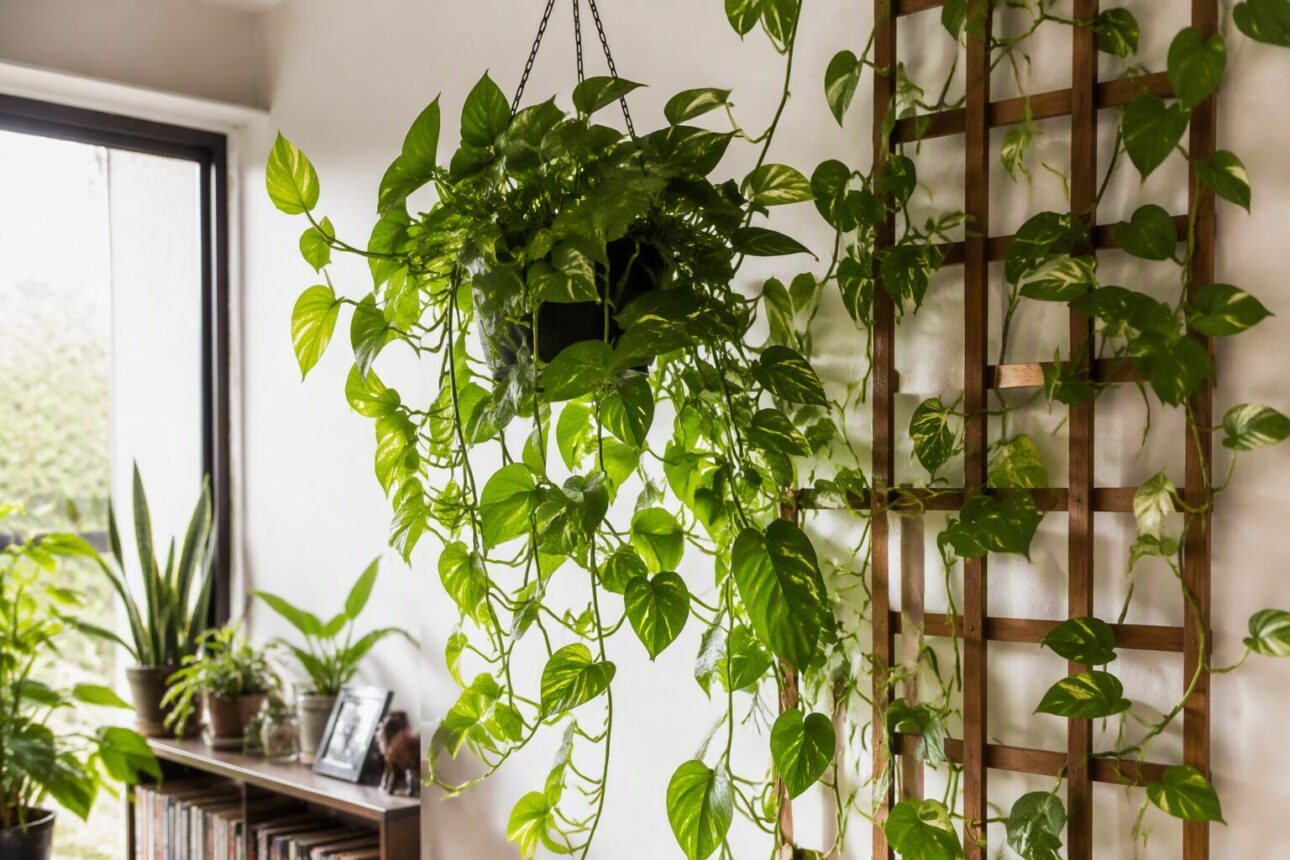
Scindapsus pictus stands as the ultimate chameleon of the indoor hanging scene. This remarkably adaptable vine works equally well cascading over a bookshelf edge or climbing up a nearby trellis. Beginners almost always start here because it recovers quickly from drought stress and thrives in standard room temperatures. Place it near a window where it receives bright but unfiltered sunlight, and watch the trailing stems multiply within weeks.
Devil’s ivy offers incredible volume with minimal effort, making it perfect for empty corners. Just remember that pet owners need to exercise caution, as standard botanical databases flag devil’s ivy as toxic if ingested by cats or dogs. A guide from Michigan State University Extension advises checking toxicity labels carefully before purchasing trailing vines for homes with curious animals.
- Works beautifully in woven baskets or simple macramé hangers
- Pruning promotes thicker foliage and faster spreading coverage
- Roots readily in water for easy sharing with friends
2. Air Plants
Removing soil from the equation opens up a whole new design language for small spaces. Air plants lack traditional root systems entirely, allowing you to suspend them in wire cages, weave them into macramé, or glue them directly to pieces of driftwood. Because they absorb moisture through their leaf scales, you only need to give them a quick soak once a week. They perform exceptionally well in glass terrariums filled with colorful pebbles, turning dead weight on your countertop into a floating green sculpture.
ProFlowers highlights air plants as a low-maintenance hanging option precisely because they do not require soil to survive. Displaying them with trinkets or metallic fixtures elevates their modern appeal.
- Require abundant airflow to prevent mold buildup
- Respond well to monthly diluted fertilizer sprays
- Look striking when grouped in odd numbers on shelves
3. String of Nickels
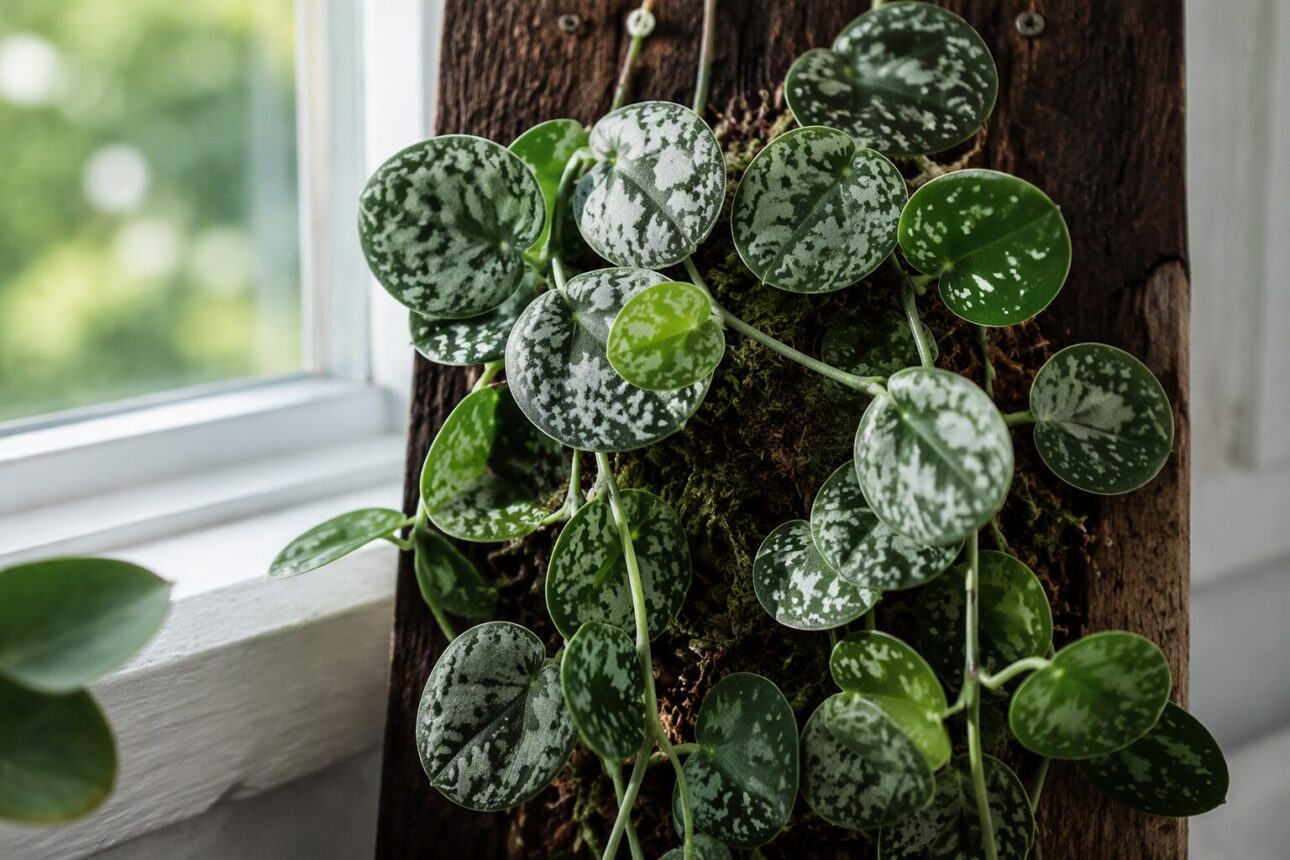
Those perfectly round, coin-shaped leaves make this trailing epiphyte instantly recognizable. Silver variegation catches the light, giving even a quiet corner a polished finish. ProFlowers highlights this plant as an excellent option for mounting on wood planks or stones when you want a minimalist aesthetic. Bright filtered light keeps the colors sharp, while letting the soil dry completely between waterings prevents root rot—a common killer of miniature succulents.
Strategic Mounting Options for String of Nickels
Try attaching the roots directly to cork bark using clear fishing line. This setup mimics their natural habitat and allows for dramatic downward trails. Hanging them securely ensures the delicate, stacked leaves remain undisturbed as they reach downward.
4. Nepenthes (Pitcher Plant)
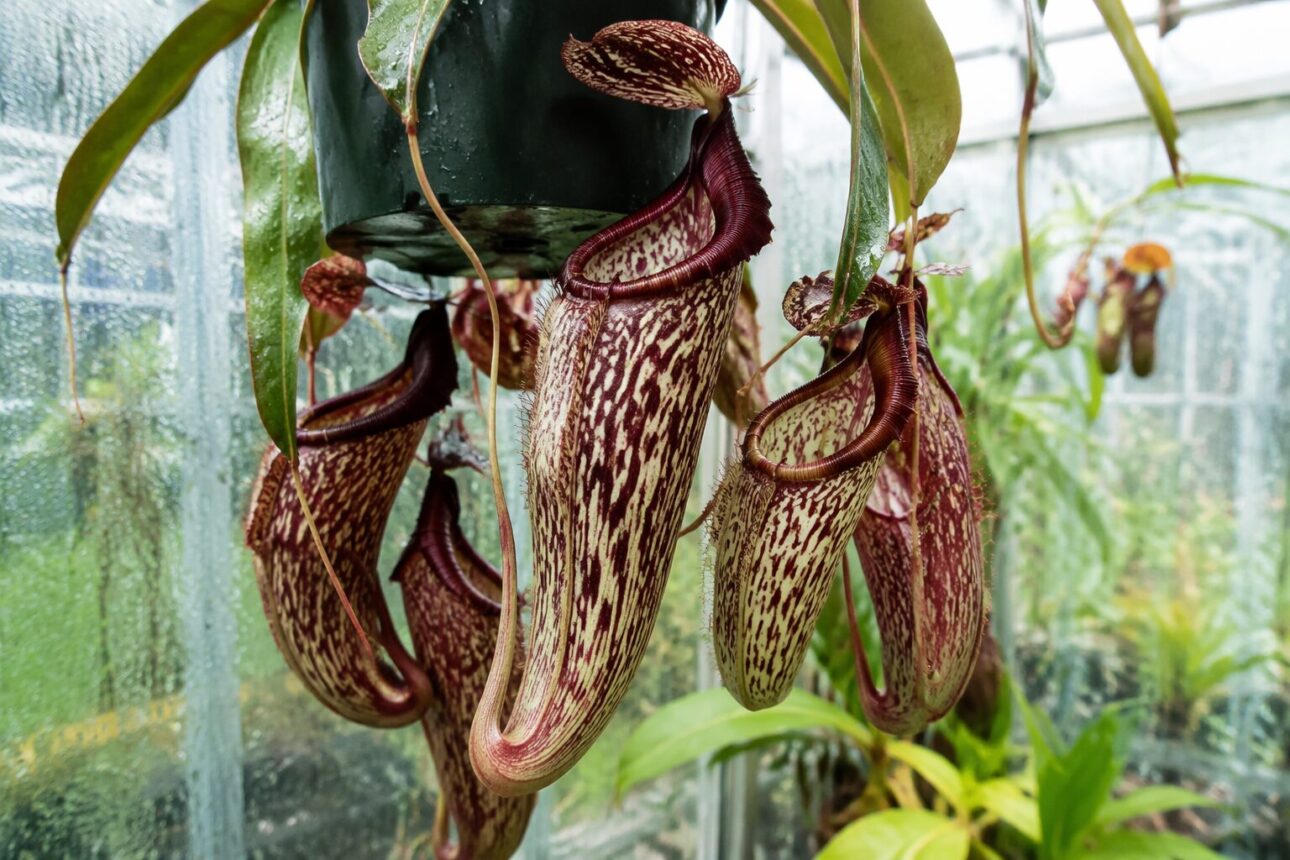
Standard trailing vines pale in comparison to the architectural weirdness of Nepenthes. Known widely as the pitcher plant, this exotic specimen features bulbous, fluid-filled traps designed to catch falling insects. A report from Plants & Flowers Foundation Holland notes that its unusual shape serves as a perpetual conversation starter for guests visiting your home. Maintaining a Nepenthes indoors requires patience and consistent humidity, making it an ambitious project for experienced growers.
- Demands distilled water to avoid mineral damage
- Needs extremely high ambient humidity to develop pitchers
- Produces visually arresting blooms that complement the foliage
5. Staghorn Fern
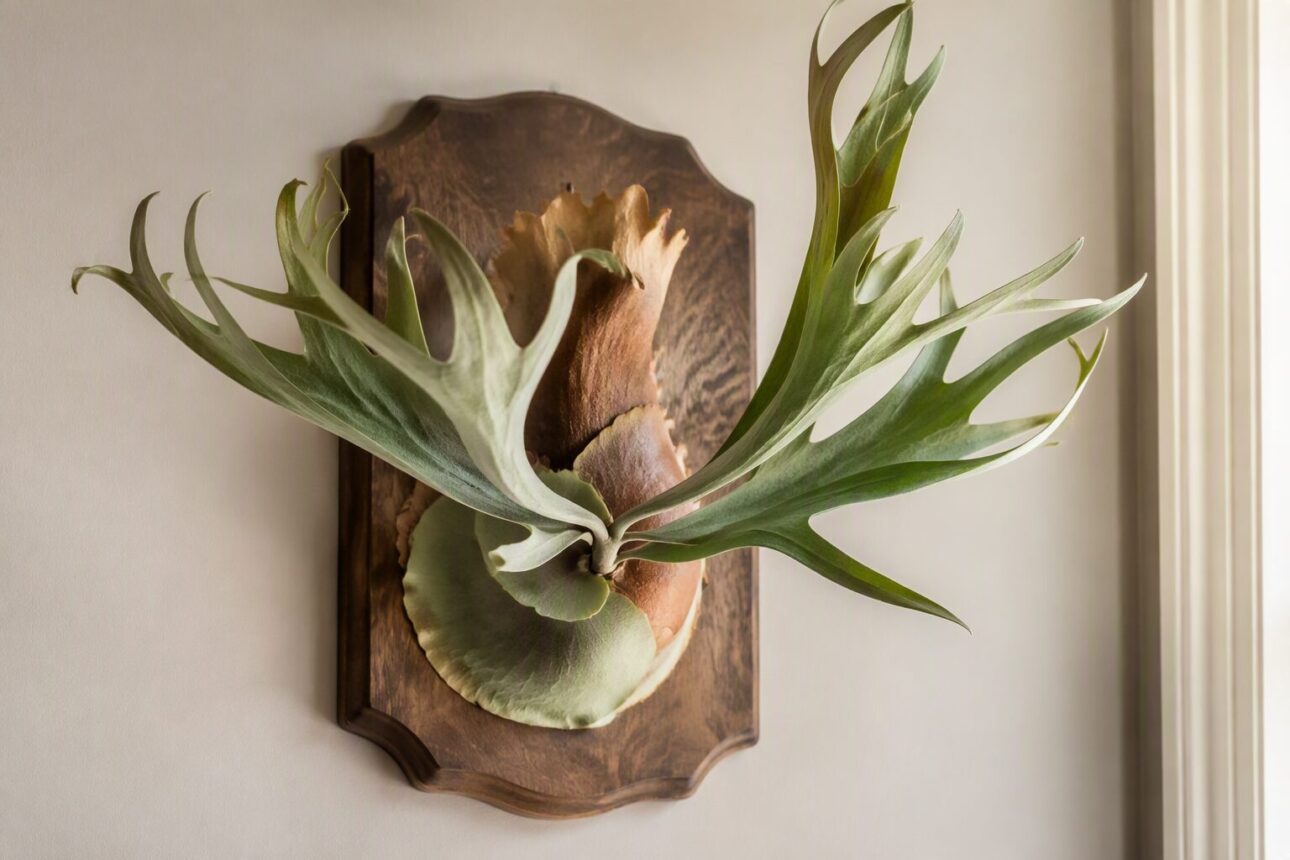
Forget everything you know about typical houseplants when introducing a staghorn fern. Mounted directly to plywood or driftwood, these plants form stunning, deer-antler shaped fronds that demand vertical attention. They thrive on high humidity and bright indirect light, performing brilliantly as the focal point of a gallery wall. Grouping these structural pieces with softer trailing vines creates a layered effect that stops visitors in their tracks. According to Planet Desert, pairing plants with varied textures significantly elevates the overall mood of a room.
- Requires morning misting to simulate tropical rainfall
- Fronds grow indefinitely without needing trimming
- Looks exceptional when paired with dark, rustic wood mounts
6. Spider Plant
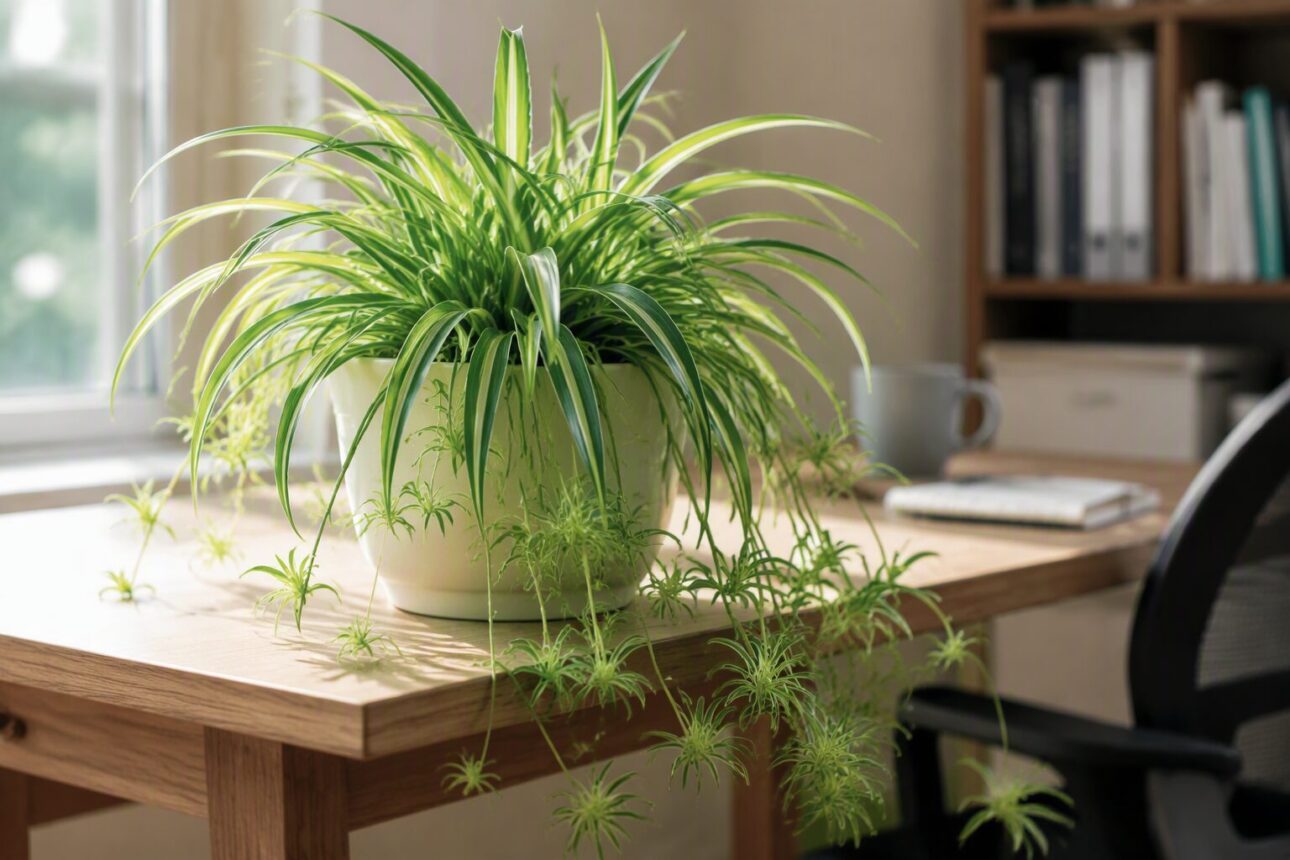
Nothing beats the reliability of a spider plant in a suspended basket. Long arching stems sprout dozens of baby plantlets that dangle endlessly, filling a void with organic movement. These tough performers adapt gracefully to diverse light conditions, though brighter spots encourage stronger variegation in the striped leaves. Beyond their aesthetic charm, spider plants actively pull volatile organic compounds from the air, quietly upgrading your indoor environment every single day.
A roundup by House Beautiful emphasizes spider plants for their ability to reclaim unused vertical areas in tiny living spaces.
- Thrives when allowed plenty of room to swing
- Baby plantlets detach easily for fresh propagation
- Remains highly attractive even with minor underwatering
7. English Ivy
English ivy carries a timeless elegance that suits both modern lofts and historic brownstones. Allowed to spill over the sides of a woven basket, its deeply lobed leaves form a continuous curtain of green. Keeping the foliage lush requires consistent moisture and cooler room temperatures, so avoid placing it directly above radiators or heating vents. Pairing it with bold-leafed tropicals adds necessary contrast to prevent the display from feeling monotonous.
- Benefits from regular leaf wiping to remove dust
- Prefers slightly cooler nighttime temperatures
- Excellent for covering ugly wiring or bare walls behind furniture
8. Burro’s Tail
Succulent enthusiasts immediately recognize the heavy, teardrop-shaped leaves stacked along Burro’s tail stems. Because these thick leaves store ample water, you only need to water sparingly—perfect for travelers who leave for weekends without worry. Hang this plant in a spot receiving maximum direct sunlight, allowing the heavy pendulous stems to cascade freely. Protect the fragile leaves from bumps, as damaged segments never heal and ruin the smooth texture of the trail. House Beautiful frequently recommends this variety specifically for squeezing greenery into rooms that have run out of surface area.
- Requires excellent drainage to prevent fatal root issues
- Grows slowly and requires minimal repotting
- Provides striking architectural contrast against plain backgrounds
9. Heartleaf Philodendron
When a fast-growing trailing vine is what you need, heartleaf philodendron delivers instant results. Iconic heart-shaped foliage covers itself densely along whatever support structure it encounters. Thriving comfortably in low to medium indoor light, this vigorous climber tolerates accidental neglect far better than most sensitive species. Once a stem reaches your preferred length, snip off a node and drop it in a glass of water to generate free clones for future shelves.
- Adapts to both hanging baskets and creeping wall supports
- Shows visible growth spurts during spring and summer
- Leaves grow larger when trained onto moss poles
10. Golden Pothos
Similar to devil’s ivy but boasting golden yellow markings on its leaves, golden pothos remains a top contender for bright corners. Its vigorous growth rate quickly hides unsightly walls or outdated fixtures. Place it on a high shelf to let those trailing stems take center stage, providing a softening effect against harsh architectural lines. While incredibly easy to propagate in water, regular pruning encourages a bushier appearance rather than long, spindly gaps.
- Displays spectacular gold variegation near eastern windows
- Tolerates occasional underwatering better than many vines
- Rapid growth covers large spaces within a single season
11. String of Hearts
Intricate details define this gentle beauty, featuring delicate heart-shaped leaves with vivid purple undersides. Unlike aggressive spreaders, string of hearts grows slowly and steadily, demanding less frequent pruning. It appreciates lower light levels compared to its succulent cousins, making it a fantastic candidate for north-facing windows or deeper interior corners. Train the stems to twine around a small twig trellis, or let them tumble gently from a hanging basket.
- Develops tuberous roots that act as natural water reservoirs
- Blooms produces tiny, star-shaped flowers in favorable conditions
- Adds romantic, whimsical energy to bedroom displays
12. Boston Fern
Soft, feathery fronds from a boston fern instantly evoke images of lush forests. These classic hanging plants absolutely require ambient moisture, flourishing perfectly in steamy bathrooms or enclosed kitchens. Regular misting and keeping the surrounding air humid guarantees the fronds retain their rich green hue instead of browning at the tips. Suspend a large fern near a window, and enjoy how the drooping leaves fill three-dimensional space without taking up any floor real estate. Plants and Flowers Foundation Holland notes that humidity-loving species thrive uniquely in these sheltered environments.
- Needs consistent moisture without becoming waterlogged
- Loses outer fronds naturally as new growth emerges
- Instantly adds organic volume and softness to a room
Common Mistakes
Overwatering remains the fastest way to kill suspended greenery. Wet soil trapped in a plastic liner suffocates roots rapidly. Give pots a thorough soak, then allow excess water to drain completely before hanging them back up. A study from the University of California Agriculture and Natural Resources indicates that poor drainage causes the vast majority of early houseplant failures.
Ignoring the direction of the sun leads to rapid leggy growth. Plants stretch desperately toward weak light, leaving sparse patches of bare stems. Rotate your hanging containers occasionally to ensure equal exposure on all sides.
Selecting hardware rated too low poses a serious safety risk. A ceramic pot soaked with water doubles its original weight. Always double-check the load capacity of ceiling hooks or tension rods before adding wet soil and mature foliage.
- Always verify pot drainage holes before inserting liners
- Check ceiling anchors regularly for loosening screws
- Match soil types strictly to plant needs
FAQ
Q: How do you hang plants indoors without damaging walls?
Tension rods fit securely between doorframes and wall trim, requiring absolutely zero drilling. If you prefer ceiling mounts, utilize specialized eye screws anchored into ceiling joists for maximum stability. Alternatively, invest in sturdy freestanding plant stands or attach railing planters directly to balcony railings. Choosing the correct hardware depends entirely on the weight of the wet pot, so always verify the load rating of your mounting tools beforehand.
Q: Why are hanging plants popular in small apartments?
They utilize vertical space efficiently, completely freeing up valuable floor and shelf space in compact rooms. Apartment dwellers appreciate greenery that adds texture and life without sacrificing precious surface area for dining or sleeping. Dorm students and remote workers benefit similarly, transforming narrow corners into productive or relaxing sanctuaries. Maximizing unused height allows homeowners to achieve a lush aesthetic regardless of square footage limitations.
Q: Are air plants good indoor hanging plants?
Yes, air plants excel in hanging displays because they eliminate messy soil entirely. They thrive when suspended in wire holders or displayed inside intricate glass terrariums. Their unconventional growth shapes make them strong decorative options that defy traditional gardening constraints. However, bright indirect light and excellent air circulation remain essential for keeping these epiphytes healthy and preventing rot within their central cups.
Q: What indoor hanging plants are safest for pets?
Pet-safe choices depend entirely on the exact botanical species selected. The safest approach involves verifying non-toxic status before bringing any new greenery into a home with animals. Expert plant guides consistently warn that several popular trailing vines contain calcium oxalate crystals harmful to curious cats and dogs. Prioritize certified non-toxic varieties like spider plants, Boston ferns, and orchids to ensure complete household safety.
Q: How often should hanging plants be watered indoors?
Watering frequency relies heavily on the specific species, container size, ambient light, and humidity levels. Most trailing houseplants prefer drying out completely between sessions rather than sitting in damp soil. ProFlowers specifically notes that string of nickels requires watering only after the surrounding soil feels bone dry. Checking the top inch of soil manually remains the most accurate method for determining hydration needs.
Q: Which hanging plants are best for bright windows?
Bright window locations perfectly suit plants desiring strong indirect light, such as air plants, string of nickels, and various trailing succulents. The optimal choice matches the specific light requirements of the species to the exposure available in your room. Bright filtered light proves consistently beneficial for many delicate hanging epiphytes that struggle to survive in darker interior corners. Observing leaf color helps confirm whether your current placement meets those brightness expectations.
Q: Should I choose vines, succulents, or ferns for hanging baskets?
Select fast-growing vines when you desire immediate, dramatic trailing effects. Choose structured succulents if you prefer architectural visuals and can guarantee significantly brighter light. Opt for soft ferns when seeking lush texture and a classical botanical feel. Garden experts recommend blending different growth forms together to achieve maximum visual balance and dynamic movement within a single cluster.
My Experience With 12 Creative Indoor Hanging Plant Ideas for Tiny Spaces
Managing a jungle indoors taught me to appreciate the quirky demands of every trailing vine. I started by suspending a devil’s ivy on a metal tension rod, only to realize I had completely underestimated the brutal weight of a wet ceramic pot. Dropping it on my toe changed my entire approach to hardware installation overnight. Organizing my vertical garden eventually took as much spatial planning as executing a set of 11 Creative Backyard Renovation Ideas for Busy Homeowners, except with higher stakes for my bones. I learned quickly that neglecting proper drainage transforms beautiful arrangements into dripping disasters on hardwood floors. Balancing sunlight exposure became another major hurdle; placing light-hungry succulents directly beside shade-tolerant ferns created a chaotic mess of dead leaves and stretched stems. Now, I treat indoor plant maintenance exactly like pursuing a Finding an AI-Proof Career: it demands constant adaptation and paying extreme attention to shifting environmental cues. Have you ever accidentally drowned a favorite trailing vine while trying to water it safely from a wobbly step ladder?
Conclusion.
Creating a vertical indoor garden represents a rewarding strategy for reclaiming limited space while drastically improving your home’s aesthetic appeal. Combining varied leaf textures, respecting individual light requirements, and selecting appropriate hanging hardware ensures every trailing vine flourishes. Turning an overlooked corner into a thriving natural focal point requires patience, but the visual payoff justifies the initial effort. Experiment freely with different mounting styles and discover which hanging varieties thrive most effectively in your personal environment.
References
- Garden Design. (n.d.). 10 best indoor hanging plants. Garden Design. https://www.gardendesign.com/houseplants/indoor-hanging-plants.html
- House Beautiful. (n.d.). 20 hanging plants for when you’ve run out of room everywhere else. House Beautiful. https://www.housebeautiful.com/lifestyle/gardening/g36480049/indoor-hanging-plants/
- Plants & Flowers Foundation Holland. (n.d.). 13 best indoor hanging plants. Plants & Flowers Foundation Holland. https://www.plantsandflowersfoundationholland.org/en/13-best-indoor-hanging-plants/
- ProFlowers. (n.d.). 16 indoor hanging plants to decorate your home. ProFlowers. https://www.proflowers.com/blog/indoor-hanging-plants
- University of California Agriculture and Natural Resources. (n.d.). Houseplant pests and diseases. University of California Agriculture and Natural Resources. https://ipm.ucanr.edu/PMG/GARDEN/plants/houseplants/index.html

Sarah Anderson . J
I’m the mom behind Wise Mom Blogger, where everyday creativity meets real-life motherhood. I share easy DIY crafts, cozy knitting and crochet projects, beginner-friendly sewing ideas, and family-tested recipes—plus quick baking hacks that make homemade feel doable on busy days.