When you’re managing Crohn’s disease, every food choice feels loaded with risk. You wonder if that creamy avocado toast will trigger a flare, or if it’s actually the nutritious boost your body needs. Avocado tolerance varies wildly among Crohn’s patients, so the answer isn’t a simple yes or no—it depends on your individual symptoms, whether you’re in remission, and how your gut responds to high-fat foods. This guide breaks down what experts say about avocado for Crohn’s disease, when it might help or hurt, and how to introduce it safely into your meals. By the end, you’ll know exactly how to test avocado tolerance and whether it fits your specific dietary needs.
Quick Questions and Answers
Question: Can people with Crohn’s disease eat avocado safely?
Yes, many Crohn’s patients can eat avocado, and several reputable patient-education sources explicitly include it as a healthy fat option. Tolerance is individual, though, so symptoms such as gas, bloating, diarrhea, or discomfort should guide portion size and timing.
Question: Why might avocado bother Crohn’s symptoms?
Avocado can bother some people because it is a high-fat food and the Crohn’s & Colitis Foundation notes that some fruits, including avocado, contain polyols that may produce increased gas. If someone has active symptoms or a narrowed bowel, even otherwise healthy foods may be harder to tolerate.
Question: Is avocado good during a Crohn’s flare?
It can be, but only if the person tolerates it. Crohn’s and Colitis Canada warns that high-fibre foods can trigger obstructive symptoms during flares, especially when the bowel is narrowed, so portion size and symptom response matter more than a blanket rule.
Crohn’s Disease and Avocado: Nutritional Benefits and Considerations
Avocados are nutrient-dense powerhouses that pack significant caloric density into a small serving. For people with Crohn’s disease struggling to maintain weight or meet their daily nutritional needs, this matters enormously. The Crohn’s & Colitis Foundation recommends adding ¼ to ½ an avocado to meals as a practical way to boost energy and healthy fat intake without overwhelming the digestive system.
Dr. Stephanie Gold, a gastroenterologist and IBD specialist quoted by the Crohn’s & Colitis Foundation, calls avocados “especially great for anyone looking to gain weight” because they’re nutrient-dense and packed with wholesome fat. This recommendation isn’t casual—weight loss and malnutrition are real complications of Crohn’s disease, and avocado’s combination of calories, healthy fats, and micronutrients addresses this problem directly.
The key is starting small. Introducing ¼ of an avocado rather than a whole one lets you monitor how your body responds before increasing the amount. This graduated approach helps you identify whether avocado is one of your personal trigger foods or whether it actually helps you meet your nutritional goals.
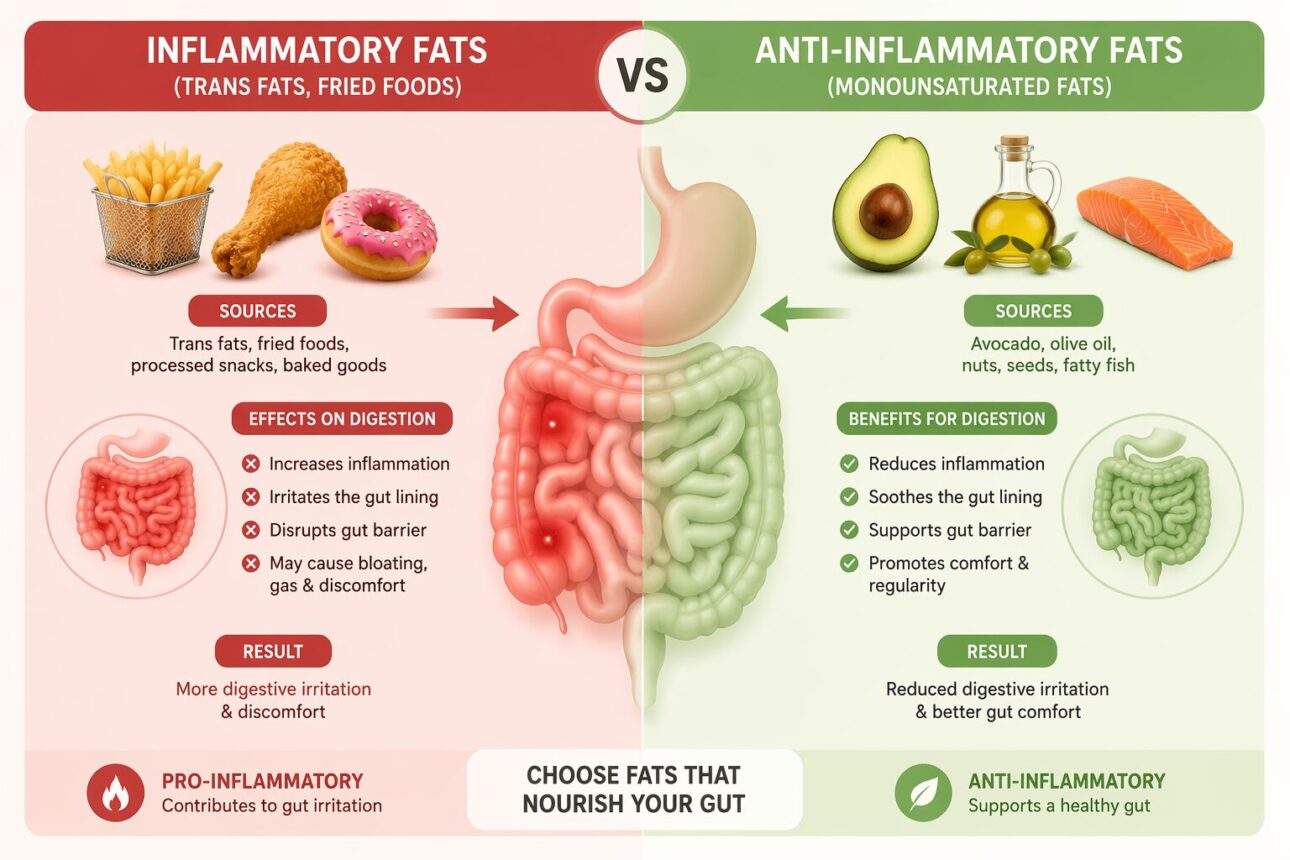
According to Crohn’s and Colitis Canada, avocados fall into the category of monounsaturated fats alongside cold-water fish, eggs, and canola oil. These fats are preferred over trans fats and saturated animal fats, which can trigger inflammation and worsen digestive symptoms. The distinction matters because not all fats affect Crohn’s patients equally—the type of fat you eat influences how well your gut tolerates it.
When appetite plummets during a flare or active disease phase, avocado becomes strategically useful. A quarter of an avocado delivers roughly 60 calories and 5 grams of fat without requiring your digestive system to process a large volume of food. For someone already dealing with pain, urgency, or diarrhea, this efficiency can be the difference between meeting nutritional needs and falling further into malnutrition.
The broader pattern health organizations recommend involves replacing inflammatory fats with anti-inflammatory alternatives. Swapping fried foods and processed meats for avocado-based meals shifts the dietary profile toward compounds that support—rather than trigger—intestinal inflammation.
Potential Risks: Gas, Bloating, and Individual Tolerance
Here’s where avocado gets complicated. While avocados are nutritionally valuable, the Crohn’s & Colitis Foundation notes that avocado contains polyols, a type of carbohydrate that ferments in the colon and produces gas in sensitive individuals. This isn’t an allergy or toxicity issue—it’s a fermentation problem that occurs in people whose gut bacteria react strongly to polyol-containing foods.
Gas and bloating can spiral into more serious symptoms for someone with active Crohn’s disease. Trapped gas causes abdominal pain, distension, and sometimes urgency or diarrhea. If your bowel is already inflamed or narrowed, added gas pressure makes things worse.
Testing tolerance matters more than the food itself. The Crohn’s & Colitis Foundation advises testing one fruit at a time to distinguish between foods that are genuinely problematic and foods your body handles fine. Introduce ¼ of an avocado in isolation—not alongside several other new foods—and track your symptoms for 48 hours. Do you develop gas or bloating? Does your stool pattern shift? Did you experience any cramping?
Individual variability is dramatic. One person thrives on daily avocado while their neighbor with the same Crohn’s diagnosis can’t tolerate it at all. This isn’t weakness or the food being “bad”—it’s the reality of IBD, where gut permeability, bacterial composition, and inflammation patterns differ significantly between patients.
Fiber Intake and Structural Considerations
A persistent myth says Crohn’s patients must strictly limit fiber. That’s not accurate—but the caveat is important: fiber tolerance depends heavily on whether you have a stricture (a narrowing of the bowel from scar tissue or inflammation).
Where problems arise is during acute flares. Crohn’s and Colitis Canada warns that high-fiber foods can trigger obstructive symptoms during flares, especially when the bowel is already narrowed by active inflammation. If you’re in the middle of a flare with significant swelling, even moderate fiber can cause cramping, bloating, or partial obstruction.
The UMass Chan Medical School IBD-AID (Inflammatory Bowel Disease Anti-Inflammatory Diet) program illustrates a practical framework. Avocados appear on the allowable foods list, but they’re phased in based on disease activity. During phases where inflammation is higher, avocados may be limited; during maintenance phases with low inflammation, they’re included freely. This approach acknowledges that the same food can be safe or risky depending on disease state.
Structural complications like strictures require individualized conversations with your IBD team. If you have a known stricture, higher-fiber foods—including avocado—warrant discussion with your gastroenterologist or dietitian before adding them to regular meals.
Taking Control: Best Practices for Integrating Avocado
Starting small is non-negotiable. The Crohn’s & Colitis Foundation’s concrete recommendation is ¼ to ½ an avocado per meal. This isn’t arbitrary—it’s a portion size that delivers nutritional benefits while staying under the threshold that commonly triggers symptoms.
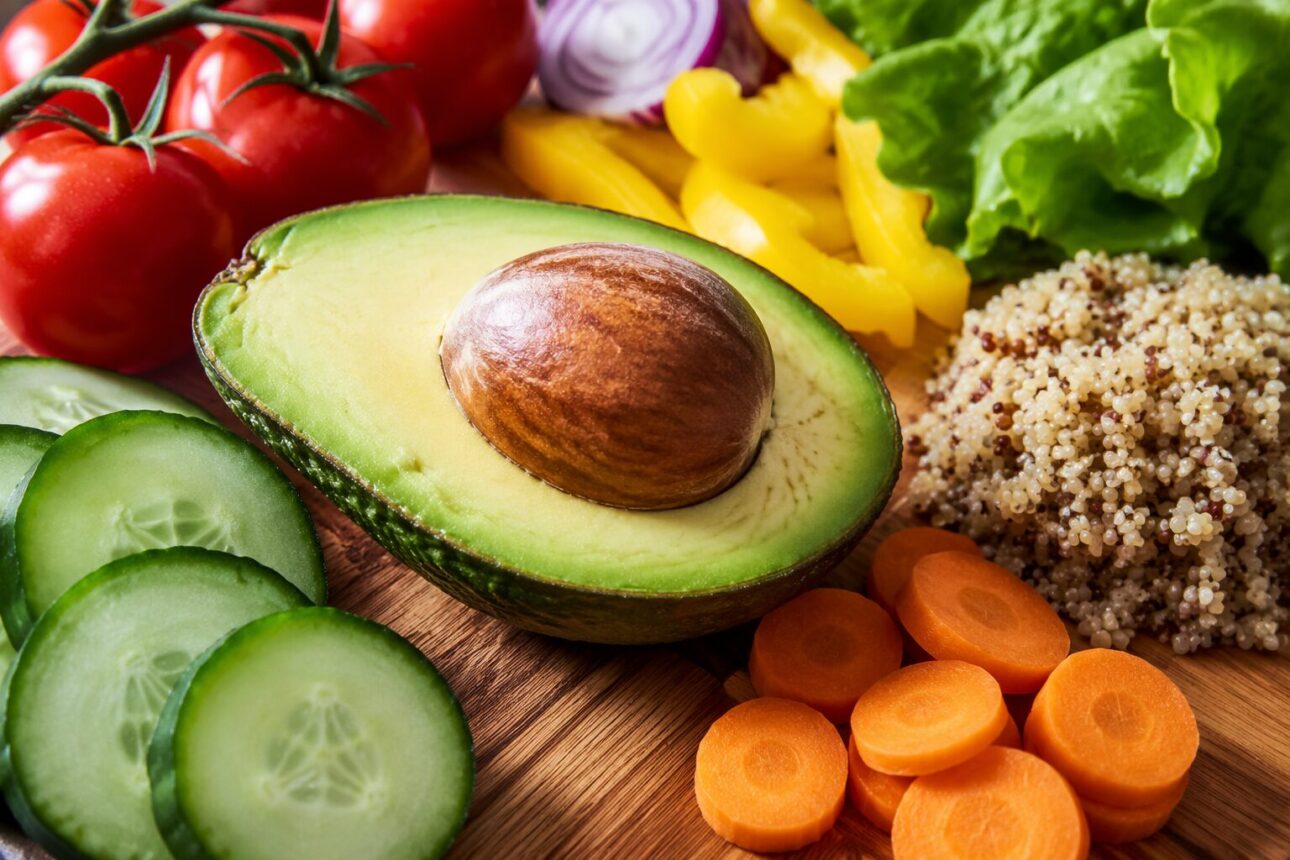
Pair avocado with foods that are easy on your digestive system. Combining it with scrambled eggs, yogurt, soft rice, or well-cooked vegetables creates meals that balance nutrition with digestibility. Avoid pairing it with heavy spices, high-fat proteins, or large fiber loads that might overwhelm a sensitive gut.
A food and symptom journal is your best diagnostic tool. Write down what you ate, how much, and when. Then record your symptoms—energy level, bowel habits, pain, bloating, gas—for the next 48 hours. After tracking 5 to 10 instances of eating avocado, patterns emerge. You’ll see whether avocado reliably causes problems, has no effect, or actually improves how you feel.
Timing matters too. Some people tolerate avocado better at certain times of day. Try it with breakfast or lunch when you’re less likely to be in pain, rather than late evening when fatigue and symptoms peak. This simple shift sometimes makes the difference between tolerance and a rough night.
Medical consultation isn’t optional for major diet changes, especially if you’re currently on medications, managing a flare, or dealing with complications like strictures. Your gastroenterologist or IBD dietitian knows your disease history and can flag risks you might miss on your own. This is particularly important if you’re severely malnourished or have a history of bowel obstruction.
Comparison of Healthy Fat Options for Crohn’s Patients
Fat Source
Caloric Density
Inflammatory Profile
Digestibility
Best Use Case
Avocado
High (60 cal/¼ fruit)
Anti-inflammatory (monounsaturated)
Varies by individual; polyol content can cause gas
Drizzling on foods; salad dressings; low-residue meals
Smooth Nut Butter
High (95 cal/tbsp)
Anti-inflammatory (mostly monounsaturated)
Can be hard to digest if nut solids remain; smooth varieties better tolerated
Quick calories; protein boost; flare-phase additions
Eggs
Moderate (155 cal/large egg)
Neutral to anti-inflammatory
Easily digested; gentle on bowel
Protein + fat combination; all disease phases
Fish (cold-water)
Moderate (180 cal/3oz salmon)
Anti-inflammatory (omega-3 rich)
Well-tolerated; less triggering than red meat
Primary protein source; omega-3 benefits; all phases
FAQ
Q: How much avocado should Crohn’s patients start with?
A practical starting point from the Crohn’s & Colitis Foundation is ¼ to ½ an avocado added to meals. Starting small makes it easier to see whether the person develops gas, bloating, or loose stools before increasing the amount. This graduated approach lets your digestive system adjust without overwhelming it.
Q: Does avocado count as a low-FODMAP food?
Avocado is often tolerated in small amounts, but it is not automatically low-FODMAP in all portions because it contains polyols. The Crohn’s & Colitis Foundation specifically warns that avocado can increase gas for some patients, so portion size remains crucial. A quarter avocado typically causes fewer problems than a whole one.
Q: Should Crohn’s patients avoid high-fiber avocado?
Most guidance does not say avocado must be avoided just because it has fiber. Crohn’s & Colitis UK says fiber usually does not need to be limited unless there is a stricture, while Canada’s guidance says high-fiber foods may be a problem during a flare if the bowel is narrowed. The key is timing and individual response.
Q: Is avocado helpful for weight gain in Crohn’s disease?
Yes, avocado can help with weight gain because it is calorie-dense and contains healthy fat. Dr. Stephanie Gold, quoted by the Crohn’s & Colitis Foundation, says avocados are especially great for anyone looking to gain weight, noting they’re bursting with nutrients and wholesome fat. This makes them particularly useful when malnutrition is a concern.
Q: What foods pair well with avocado for Crohn’s?
Patient guidance commonly pairs avocado with other gentle, nutrient-dense foods such as bananas, yogurt, soft crackers, smoothies, eggs, fish, and cooked vegetables. The idea is to combine healthy fat with foods that are easier to digest and less likely to trigger symptoms. Avoid pairing it with spicy, high-fat, or heavily processed foods.
Q: Are avocados better than butter for Crohn’s patients?
They are often preferred because health organizations highlight avocado as a source of healthy monounsaturated fat, whereas patient resources advise limiting high-fat, fried, and processed foods that contain saturated fat and trans fats. Individual tolerance still matters more than the label alone, though. Track your own response to both and choose based on your symptoms.
Q: When should Crohn’s patients stop eating avocado?
A patient should consider reducing or stopping avocado if it repeatedly causes gas, bloating, diarrhea, or pain. The Crohn’s & Colitis Foundation advises testing tolerance one food at a time, and broader Crohn’s guidance stresses that symptom response should drive dietary choices. If avocado consistently worsens your symptoms, it’s not the right food for you right now.
My Experience With Should Crohn’s Patients Eat Avocado? A Complete Dietary Guide
I’ve watched countless Crohn’s patients struggle with avocado—some swear by it, others can’t go near it. The frustration I see most often is the expectation that there should be a universal rule. “Is avocado safe or not?” they ask, wanting a simple answer. But Crohn’s doesn’t work that way. Your gut isn’t someone else’s gut, and what triggers your friend’s flare might be your most reliable source of calories.
What changed my perspective was looking at how major IBD organizations actually frame this. They don’t say “eat avocado” or “avoid avocado.” They say “start with a quarter, track what happens, and let your symptoms tell you the answer.” That’s not wishy-washy advice—that’s the only honest guidance when disease presentation is this varied.
The polyol angle is real. Not every Crohn’s patient is sensitive to polyols, but enough are that it’s worth testing carefully rather than assuming it’ll be fine. I’ve seen people develop stubborn gas and bloating from avocado that resolved completely once they stopped, while others added it back and felt their energy improve noticeably.
My sharpest takeaway: avocado isn’t a superfood for Crohn’s patients, and it’s not poison either. It’s a tool that works for some, not for others—and the only way to know is to experiment methodically with your own body. Keep a journal for two weeks, eat a small amount once or twice, and let your symptoms be the expert.
What’s your experience been with avocado? Does it sit well with your Crohn’s, or does it leave you bloated and frustrated?
Conclusion
Avocado can be part of a Crohn’s-friendly diet, but whether it should be part of yours depends entirely on your individual tolerance, disease activity, and overall nutritional needs. The evidence is clear: major IBD organizations including the Crohn’s & Colitis Foundation, Crohn’s & Colitis UK, and Crohn’s and Colitis Canada list avocado as a nutrient-dense, healthy fat option worth considering. Starting with ¼ to ½ an avocado and tracking your symptoms over 48 hours will tell you whether it’s a nutritional asset or a trigger food in your case.
Remember that Crohn’s disease rewrites the rules for each person. What works during remission might not work during a flare. A food that caused problems six months ago might be fine now. Staying flexible, keeping good records, and working closely with your gastroenterologist or IBD dietitian keeps you in control of your dietary choices rather than letting fear or misinformation make decisions for you.
Your goal is nourishment and stability, not perfection. If avocado helps you meet your caloric needs and doesn’t trigger symptoms, it’s a win. If it doesn’t work for you, there are other healthy fat options to explore that provide similar nutritional support. Trust your symptoms, ask your care team when you’re unsure, and remember that managing Crohn’s is a process of learning your individual body—not following a universal list.
References
Crohn’s & Colitis Foundation. (n.d.). What should I eat with Crohn’s or colitis? IBD diet guide. Crohn’s & Colitis Foundation. https://www.crohnscolitisfoundation.org/patientsandcaregivers/diet-and-nutrition/what-should-i-eat
Crohn’s & Colitis UK. (n.d.). Food and Crohn’s or colitis. Crohn’s & Colitis UK. https://www.crohnsandcolitis.org.uk/info-support/information-about-crohns-and-colitis/all-information-about-crohns-and-colitis/living-with-crohns-or-colitis/food
Crohn’s and Colitis Canada. (n.d.). Eating and drinking with IBD – IBD journey – diet and nutrition in IBD. Crohn’s and Colitis Canada. https://crohnscolitis.ca/About-Crohn-s-Colitis/IBD-Journey/Diet-and-Nutrition-in-IBD/Eating-and-Drinking-with-IBD
Crohn’s & Colitis Foundation. (n.d.). Tips for enjoying fruits and veggies while living with IBD. Crohn’s & Colitis Foundation. https://www.crohnscolitisfoundation.org/blog/tips-enjoying-fruits-and-veggies-while-living-with-ibd
UMass Chan Medical School. (2019, August 1). IBD-AID allowable foods list, by phase. UMass Chan Medical School. https://www.umassmed.edu/globalassets/nutrition/ibdaid-food-list/foods-list-updated-aug-1.2019.pdf
Healthline. (n.d.). Crohn’s disease diet: Foods to eat, avoid, and more. Healthline. https://www.healthline.com/health/crohns-disease/nutrition-guide
WebMD. (n.d.). What should I eat or skip if I have Crohn’s? WebMD. https://www.webmd.com/digestive-disorders/ss/slideshow-crohns-food-swaps
Sarah Anderson . J
I’m the mom behind Wise Mom Blogger, where everyday creativity meets real-life motherhood. I share easy DIY crafts, cozy knitting and crochet projects, beginner-friendly sewing ideas, and family-tested recipes—plus quick baking hacks that make homemade feel doable on busy days.