When you own a Rolex, you’re holding decades of mechanical engineering. But that precision doesn’t maintain itself—and understanding how to care for your watch, when to service it, and where to get work done can mean the difference between a watch that runs flawlessly for generations and one that slowly loses its integrity. This guide walks you through routine maintenance, professional repair options, costs, and everything a Rolex owner needs to know.
Quick Questions and Answers
Question: How often should a Rolex be serviced?
Rolex recommends returning a watch for professional servicing approximately every 10 years, depending on the model and real-life use. Some independent specialists suggest shorter intervals for daily-worn or vintage watches, but Rolex’s own guidance is the baseline most owners should follow.
Question: What does Rolex service actually include?
Rolex servicing begins with an inspection and estimate, then the movement is removed, dismantled, cleaned, and rebuilt. Parts that no longer meet Rolex requirements are replaced, and the watch is reassembled and returned with a two-year service guarantee covering parts and labor.
Question: Can I polish a Rolex at home?
Professional polishing of the case and bracelet should only be done by an Official Rolex Service Center. Routine home care is limited to gentle cleaning with a microfiber cloth or soapy water and a soft brush, with the crown properly screwed down first.
Key Takeaways
Rolex recommends servicing every 10 years for modern watches, though daily wearers may need service every 5–7 years
A complete overhaul includes disassembly, ultrasonic cleaning, parts replacement, and a two-year international guarantee
Standard service costs range from $800–$1,200; complex models like the Daytona can exceed $2,000
Official Rolex Service Centers guarantee genuine parts and consistent quality; vintage models may be routed to the Restoration Atelier in Geneva
Your new Rolex comes with a 5-year international guarantee; parts and labor are assured for at least 35 years after a model is discontinued
Routine Care and Everyday Handling
The foundation of Rolex ownership is understanding what you can control day to day. A watch worn daily does not require manual winding—the motion of your wrist powers the Perpetual rotor automatically. This means most owners never need to think about winding at all.
But if your Rolex stops running, you’ll need to wind it before setting the time. Rolex recommends a minimum of 25 crown turns to provide adequate partial winding. After winding, always screw the crown back down tightly to maintain waterproofness. Oyster Perpetual models are waterproof to at least 100 metres, and that protection depends entirely on the crown being properly sealed.
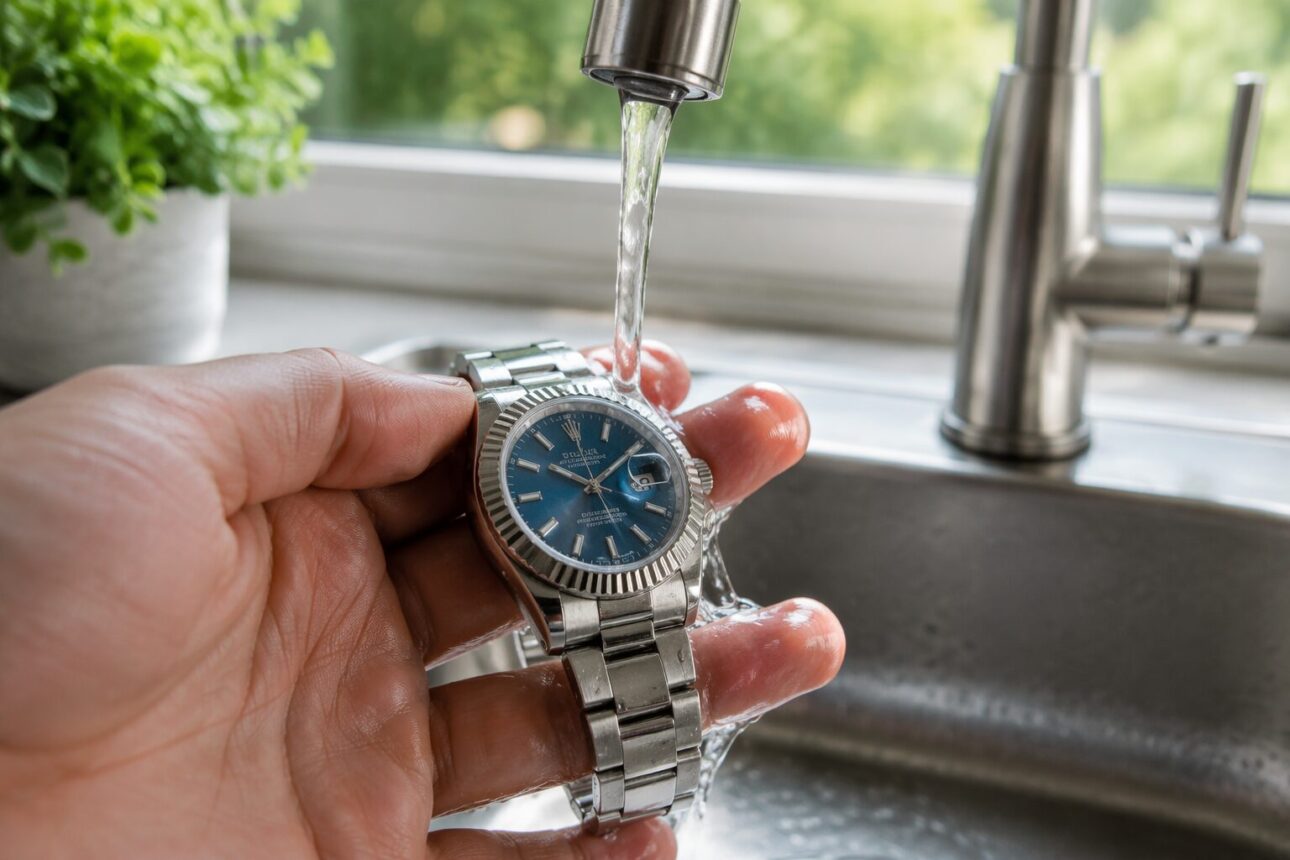
Cleaning is straightforward. Rinse the watch with fresh water after exposure to salt or sand—this simple step helps preserve the case and bracelet. For everyday cleaning, a soft microfiber cloth or gentle soapy water with a soft brush works fine. Always confirm the crown is screwed down before rinsing or soaking.
The power reserve on most modern Rolex movements lasts two days or more depending on the model, with some capable of retaining power for up to 70 hours when taken off and set aside. This means you have some flexibility if you rotate watches regularly, though accuracy may drift if a watch sits unwound for extended periods.
The Professional Overhaul: What It Actually Includes
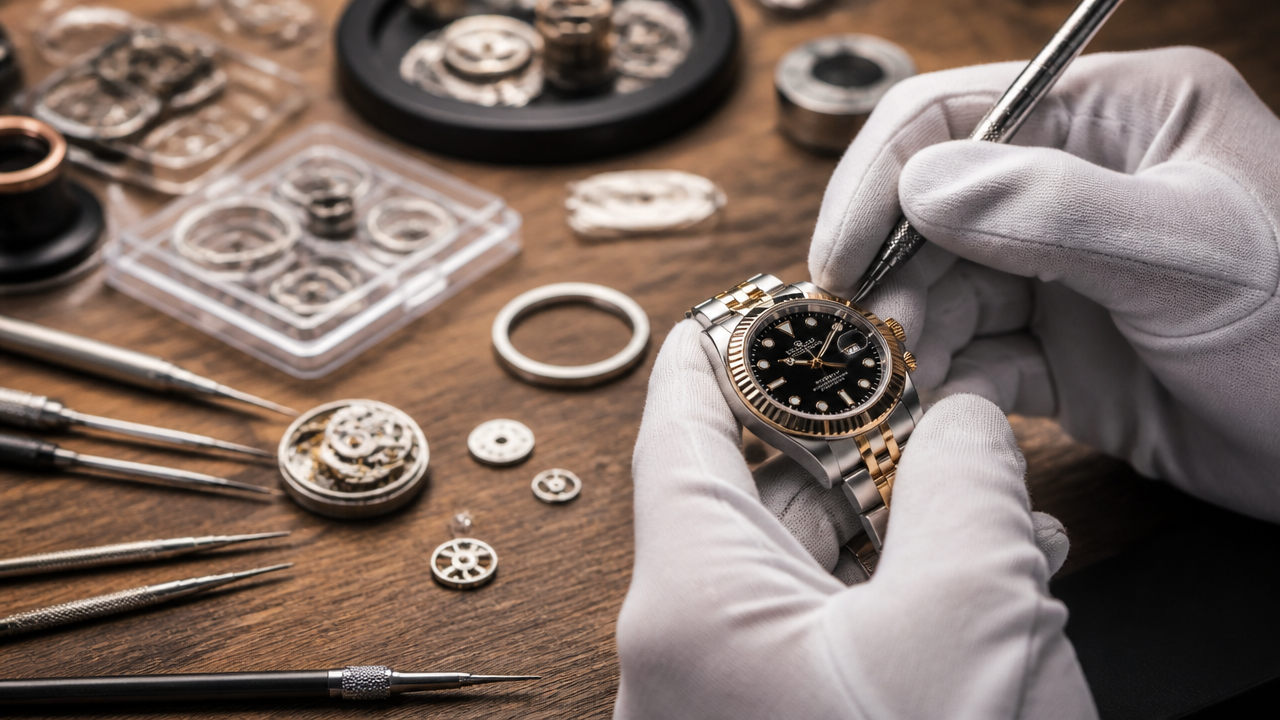
Professional service is a different beast entirely. Every watch enters through an Official Rolex Jeweler or affiliate, where a trained watchmaker first examines it and prepares a written estimate before any work begins. This estimate step is crucial—you know exactly what’s happening and what it will cost before the work starts.
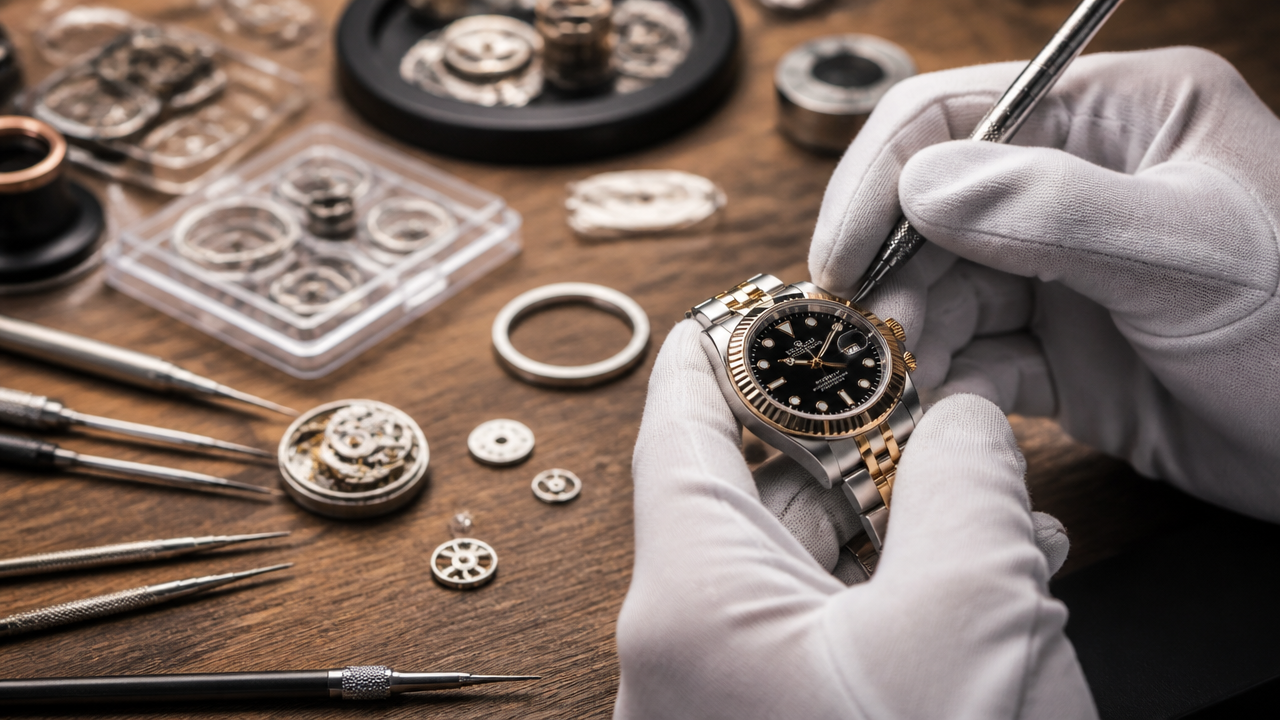
According to Rolex’s servicing procedure, the actual overhaul is a comprehensive 9-step process. The movement is removed, then completely dismantled. Every component gets cleaned in an ultrasonic bath to remove decades of accumulated lubricant, dust, and debris. Parts that no longer meet original Rolex specifications are systematically replaced—this is not optional, and it’s one reason official service costs what it does. Rolex doesn’t compromise on tolerances.
After reassembly, the watch undergoes rigorous timing calibration and post-service performance testing. The entire movement is essentially rebuilt to factory standards. Your watch is then returned in a protective pouch with an international two-year service guarantee covering both replacement parts and labor.
This two-year guarantee is significant. It means Rolex stands behind the work done. If something fails within that window, you’re covered.
Service Timing and Cost Considerations
Timing depends on how you use the watch. Rolex officially recommends a full service approximately every 10 years for modern watches. But that’s a general guideline. A Submariner worn daily while diving or a GMT-Master II used by a frequent traveler may need attention every 5 to 7 years because the movement is under constant stress.
Vintage and older models often require more frequent servicing. Watch enthusiasts and restoration specialists often suggest that vintage Rolexes benefit from servicing every 3 to 5 years, since older lubricants degrade faster and components may be more worn.
Cost is predictable but varies by model complexity. Bob’s Watches reports that standard Rolex service costs typically range from $800 to $1,200, with more complex models like the Daytona potentially exceeding $2,000 depending on parts needed. Some sources cite factory overhaul pricing around $600 to $700, but that’s on the lower end and may reflect older data or specific scenarios.
Daily wearers should budget for service costs as part of ownership. Spread across 10 years, even a $1,200 service works out to $120 per year—reasonable insurance for a mechanical instrument.
Official Service vs. Independent Repair
This is where many Rolex owners face a real decision. You can send your watch to an Official Rolex Service Center, an authorized Rolex jeweler, or an independent watchmaker. Each path has trade-offs.
Official centers employ watchmakers specifically trained by Rolex. These technicians follow standardized procedures, use genuine Rolex parts, and ensure consistency worldwide. Rolex’s World Service network includes workshops staffed by specialists dedicated solely to maintaining Rolex standards.
An independent watchmaker might charge less and turn the watch around faster. But Rolex’s own materials emphasize that official servicing provides the two-year international guarantee, genuine factory-standard components, and assurance that the work meets exact specifications.
Professional polishing of the case and bracelet should only be done by an Official Rolex Service Center. Independent shops may polish too aggressively, remove metal incorrectly, or alter the watch’s geometry. The finish on a Rolex case is precise, and once it’s damaged, it’s nearly impossible to restore perfectly.
Service Option
Parts Used
Warranty
Turnaround
Cost
Official Rolex Center
Genuine Rolex parts
2-year international guarantee
4–6 weeks
$800–$2,000+
Authorized Jeweler
Genuine Rolex parts
2-year international guarantee
4–6 weeks
$800–$1,500
Independent Watchmaker
May mix genuine and aftermarket
Limited or none
2–4 weeks
$400–$800
Service Option
Parts Used
Warranty
Turnaround
Cost
Official Rolex Center
Genuine Rolex parts
2-year international guarantee
4–6 weeks
$800–$2,000+
Authorized Jeweler
Genuine Rolex parts
2-year international guarantee
4–6 weeks
$800–$1,500
Independent Watchmaker
May mix genuine and aftermarket
Limited or none
2–4 weeks
$400–$800
Vintage models present a special case. Rolex says historic watches requiring specialized care are handled by the Restoration Atelier in Geneva. If you own a rare or historically significant Rolex, this specialized pathway ensures authentic handling and access to rare parts.
Long-Term Value and Warranty Protections
Every new Rolex comes with an international guarantee for five years from the date of purchase. This covers defects in materials and workmanship under normal use. It’s a solid baseline protection.
What many owners don’t realize is that Rolex guarantees the availability of original parts and labor for at least 35 years after a specific model has been withdrawn from the official catalog. This means a Rolex you buy today will have factory support indefinitely. You’re not buying a disposable item—you’re buying into a brand commitment to long-term serviceability.
This guarantee structure is why professional service through official channels matters. You’re locking in your access to genuine parts and factory expertise for decades.
When to Seek Professional Service vs. Handle It Yourself
You can handle some things. Changing a battery in a quartz Rolex is within reach if you have the right tools, though Rolex recommends professional replacement to ensure the case remains waterproof. Bracelet adjustments can sometimes be done at home if you’re careful, but a professional ensures proper tension and alignment.
What you cannot do at home: full movement service, timing calibration, case polishing, crown replacement, or any work involving the internal movement. Attempting these risks permanent damage. The precision required is outside the scope of home tools and expertise.
If the watch continues to stop or runs inaccurately after manual winding, professional servicing is appropriate. Internal wear, dried lubricants, or misalignment cannot be corrected at home.
Common Misconceptions About Rolex Maintenance
A watch that keeps accurate time does not automatically need no service. Internal lubricants degrade over time regardless of performance. A movement may tick along perfectly for years while the lubrication inside slowly turns into varnish. By the time you notice problems, irreversible wear may have already occurred.
Another myth: only Rolex official centers can service Rolex watches. Legally, independent watchmakers can work on Rolexes. But Rolex’s own emphasis on brand-trained technicians and genuine parts is worth taking seriously, especially for valuable or collectible models. The two-year guarantee you get from official service is worth something.
And no, you don’t need to service your watch every year just because you wear it daily. Rolex’s 10-year guidance exists for a reason. Over-servicing is unnecessary and costly.
FAQ
Q: How long does Rolex repair usually take?
Rolex specifies that a complete overhaul takes a minimum of four to six weeks, depending on the watch’s condition. More limited on-site services at some Rolex points of sale, like bracelet adjustments or case refinishing, may be completed the same day, but full movement servicing requires longer.
Q: Is an independent Rolex repair shop safe?
Independent watchmakers can offer lower prices and faster turnaround, but Rolex’s materials emphasize official servicing through brand-trained staff and genuine parts. The safest choice for warranty-sensitive, collectible, or heavily damaged watches is typically an Official Rolex Service Center or authorized point of sale.
Q: How much does Rolex maintenance cost?
Public estimates vary, but Bob’s Watches reports standard Rolex service costs of about $800 to $1,200, with complex models sometimes exceeding $2,000. Another repair source cites factory overhaul pricing around $600 to $700, showing that costs depend heavily on model, condition, and service scope.
Q: What happens if my Rolex stops running?
A stopped watch should be manually wound before setting the time, using about 25 turns for adequate partial winding, and the crown should then be screwed back down. If the watch continues to stop or runs inaccurately, professional servicing is appropriate.
Q: Do Rolex watches need daily winding?
No. Rolex states there is no need to wind a watch if it is worn daily because the Perpetual rotor automatically supplies energy as you move. If the watch is not worn for more than a couple of days and has stopped, manual winding is recommended before use.
Q: Which Rolex repairs can be done on site?
Many points of sale have watchmakers trained by Rolex who can perform some same-day services on site. Examples include bracelet-length adjustments and case refinishing, while full movement overhaul remains a longer workshop procedure.
Q: Why are vintage Rolex watches different to service?
Vintage Rolexes often need more specialized care because older movements may require different lubricants, more frequent attention, and rare parts that can be damaged or are unavailable. Rolex handles exceptional historic watches through its Restoration Atelier in Geneva, indicating a separate pathway for unusual or collectible pieces.
My Experience With Rolex Watch Maintenance and Repair Options Explained
I learned the hard way that skipping service is a false economy. I owned a vintage Submariner for years without sending it in for work—it kept time, so I figured it was fine. Then the crown started feeling gritty, and when I finally sent it to an official center, the watchmaker told me the movement’s lubricants had turned to varnish inside. The repair cost more than it would have if I’d serviced it on schedule.
The real insight here is that Rolex service is preventative maintenance, not reactive repair. You’re paying to stop wear before it accelerates. Once internal components are damaged, you’re looking at replacing them entirely—and that’s expensive.
Official service feels expensive until you factor in the two-year guarantee and the certainty that genuine parts are being used. I’ve seen independent repair shops mix aftermarket components into Rolexes, and while the watch may run, you’ve compromised authenticity and resale value. The $800–$1,200 official service cost is insurance against that.
The 4–6 week turnaround is real, though. If you wear your watch daily and can’t go without it, plan ahead. Some collectors stagger multiple watches so one is always in service without breaking the rotation.
Have you ever sent a Rolex in for service? What surprised you most about the experience?
Conclusion
Rolex maintenance is a partnership between you and the brand. Your responsibility is basic care—keeping the crown screwed down, rinsing after salt exposure, and not ignoring obvious problems. Rolex’s responsibility is periodic professional service to keep the movement functioning at spec.
Follow the 10-year service guideline for modern watches, or every 5–7 years if you wear your Rolex hard. Budget for $800–$1,200 per service and plan for 4–6 weeks of turnaround. Use official service centers for peace of mind and warranty protection, especially if your watch is valuable or vintage.
A well-maintained Rolex isn’t just accurate—it’s an investment that holds its value and can last generations. The maintenance is worth the cost and the wait.
References
Rolex. (n.d.). Servicing your Rolex – Our servicing procedure. https://www.rolex.com/en-us/watch-care-and-service/the-rolex-servicing-procedure
Rolex. (n.d.). Caring for your Rolex – Frequently Asked Questions. https://www.rolex.com/en-us/watch-care-and-service/faq
Rolex. (n.d.). Watch care and service – Caring for your rolex. https://www.rolex.com/watch-care-and-service/caring-for-your-rolex
Rolex. (n.d.). Rolex world service | About Rolex. https://newsroom.rolex.com/about-rolex/rolex-world-service
Bob’s Watches. (2025). Rolex Service Cost: The Official 2025 Price List. https://www.bobswatches.com/rolex-blog/editorial/how-much-to-service-a-rolex.html
YouTube. (n.d.). How to Service Your Rolex. https://www.youtube.com/watch?v=5cT89e2Gw2I
Sarah Anderson . J
I’m the mom behind Wise Mom Blogger, where everyday creativity meets real-life motherhood. I share easy DIY crafts, cozy knitting and crochet projects, beginner-friendly sewing ideas, and family-tested recipes—plus quick baking hacks that make homemade feel doable on busy days.