Quick answer: The easiest natural fabric softener DIY is white vinegar with a few drops of essential oil. Mix 4 cups of white vinegar with 10 to 15 drops of essential oil in a glass bottle, then add 1/4 to 1/2 cup to your washer’s fabric softener dispenser each load. It softens clothes, cuts static, and rinses out clean without leaving any vinegar smell behind.
Store-bought fabric softener works by coating your clothes in a thin layer of wax and silicone. That layer feels soft at first, but it builds up over time, and it’s part of why towels lose their absorbency after a few years. A natural fabric softener DIY skips that coating entirely. Instead of covering your clothes in something new, vinegar strips away the soap residue and hard water minerals that make fabric feel stiff in the first place. Once that buildup is gone, the fabric goes back to feeling like itself again, soft, without any added film.
There’s also a cost difference worth mentioning. A gallon of white vinegar runs a few dollars at most grocery stores, and it stretches across many loads of laundry. A bottle of essential oil lasts through dozens of batches since each recipe only calls for a few drops. Compare that to a jug of commercial softener, which needs replacing every few weeks in a busy household, and the savings add up fast over a year of laundry. For anyone dealing with sensitive skin or fragrance allergies, a homemade version also means full control over what actually touches your clothes and, by extension, your skin.
| Factor | What to know |
| Main ingredient | White distilled vinegar |
| Cost per batch | Under $2 |
| Safe for elastic/activewear | Avoid, breaks down elastic over time |
| Leaves a vinegar smell | No, rinses out clean |
| Shelf life | Several months, varies by recipe |
Rough softening power by recipe type, based on how much buildup and static each removes.
Why Does Vinegar Work As A Fabric Softener?
Vinegar works because it’s acidic, and that acid dissolves the soap film and mineral deposits sitting in the fibers of your clothes. Detergent doesn’t rinse out completely on its own, especially in hard water, and what’s left behind is what makes towels and sheets feel scratchy over time. The acid in vinegar breaks that residue down so it rinses away in the wash instead of drying stiff into the fabric. Vinegar also helps soften hard water itself, so your regular detergent works better on the same load.
Hard water is a bigger factor than most people realize. Water carrying a lot of calcium and magnesium leaves those minerals behind in fabric every time you wash, and over months that mineral layer is what makes towels feel rough even right out of the dryer. Vinegar reacts with those minerals and helps carry them out in the rinse cycle instead of letting them settle into the weave. That’s also why vinegar softener tends to make the biggest difference for people on well water or in areas known for hard tap water, since there’s more mineral buildup for it to work against in the first place.
Materials
- 4 cups white distilled vinegar
- 10 to 15 drops essential oil (lavender, lemon, or eucalyptus work well)
- 1 clean glass bottle or jar with a tight lid, roughly 32 oz or larger
- A label or piece of masking tape and a marker
- A funnel (optional, makes pouring easier)
Step 1: Measure The Vinegar
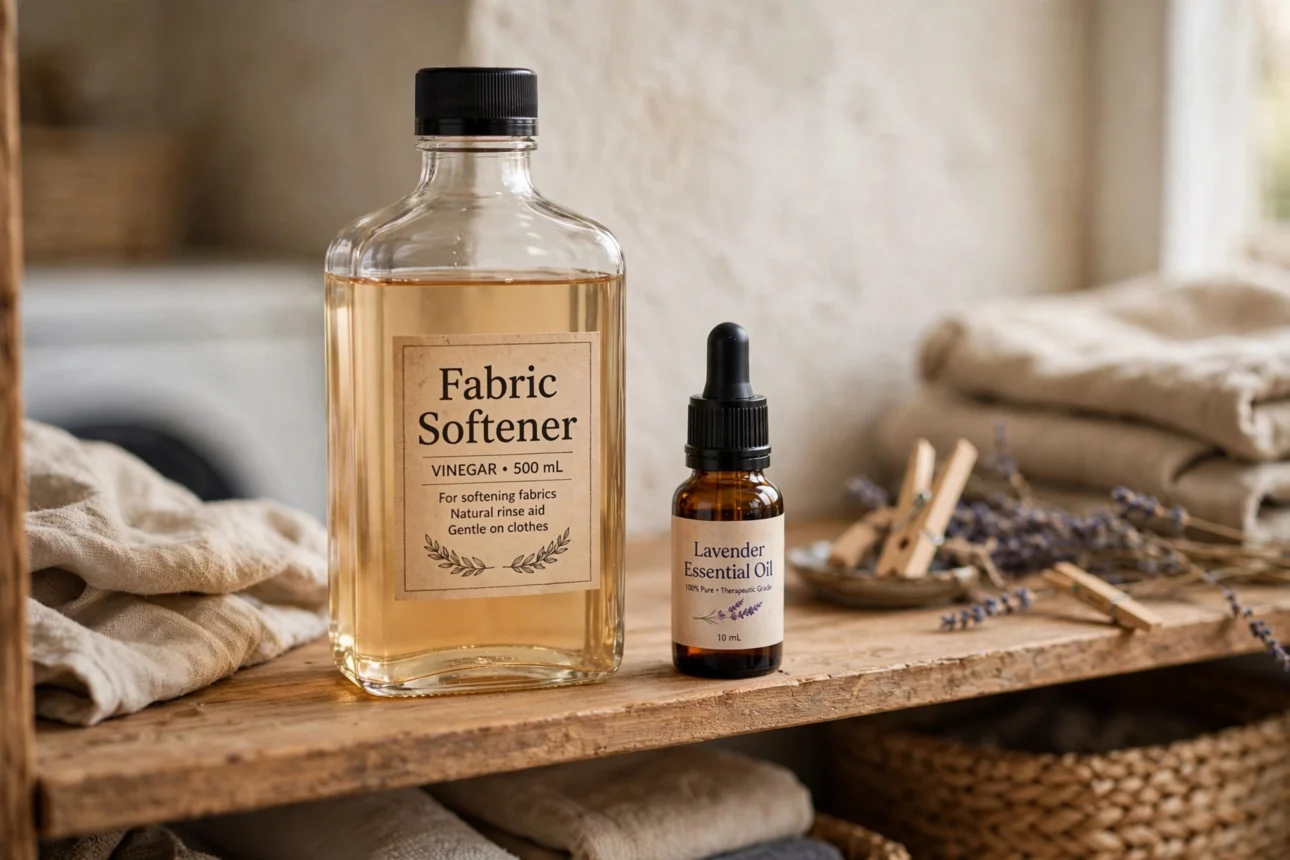
Measure 4 cups of white distilled vinegar and pour it into your clean glass bottle or jar. Distilled white vinegar is the right choice here, not apple cider vinegar, since apple cider vinegar carries natural plant tannins that can leave a dingy tint on light-colored fabric. A funnel helps keep the pour steady if your bottle has a narrow neck. This step is also a good moment to check that your container is fully dry inside, since any leftover water changes the concentration of the final mix slightly.
Step 2: Add The Essential Oil
Add 10 to 15 drops of your chosen essential oil directly into the vinegar. Lavender, lemon, and eucalyptus are the most common choices, but any scent you like will work the same way. The oil is only there for fragrance, so this step is fully optional if you’d rather keep the softener unscented for sensitive skin or allergies. If you do add oil, count the drops rather than eyeballing it, since too much can leave an oily film on darker fabrics over repeated washes.
Step 3: Mix It Together
Screw the lid on tightly and shake the bottle for a few seconds. This spreads the essential oil evenly through the vinegar instead of leaving it floating on top. Give it another quick shake right before each use too, since oil and vinegar can separate slightly if the bottle sits for a while. A cloudy, well-mixed liquid is what you’re aiming for, not a clear layer of vinegar with oil droplets sitting on top.
Step 4: Label The Bottle
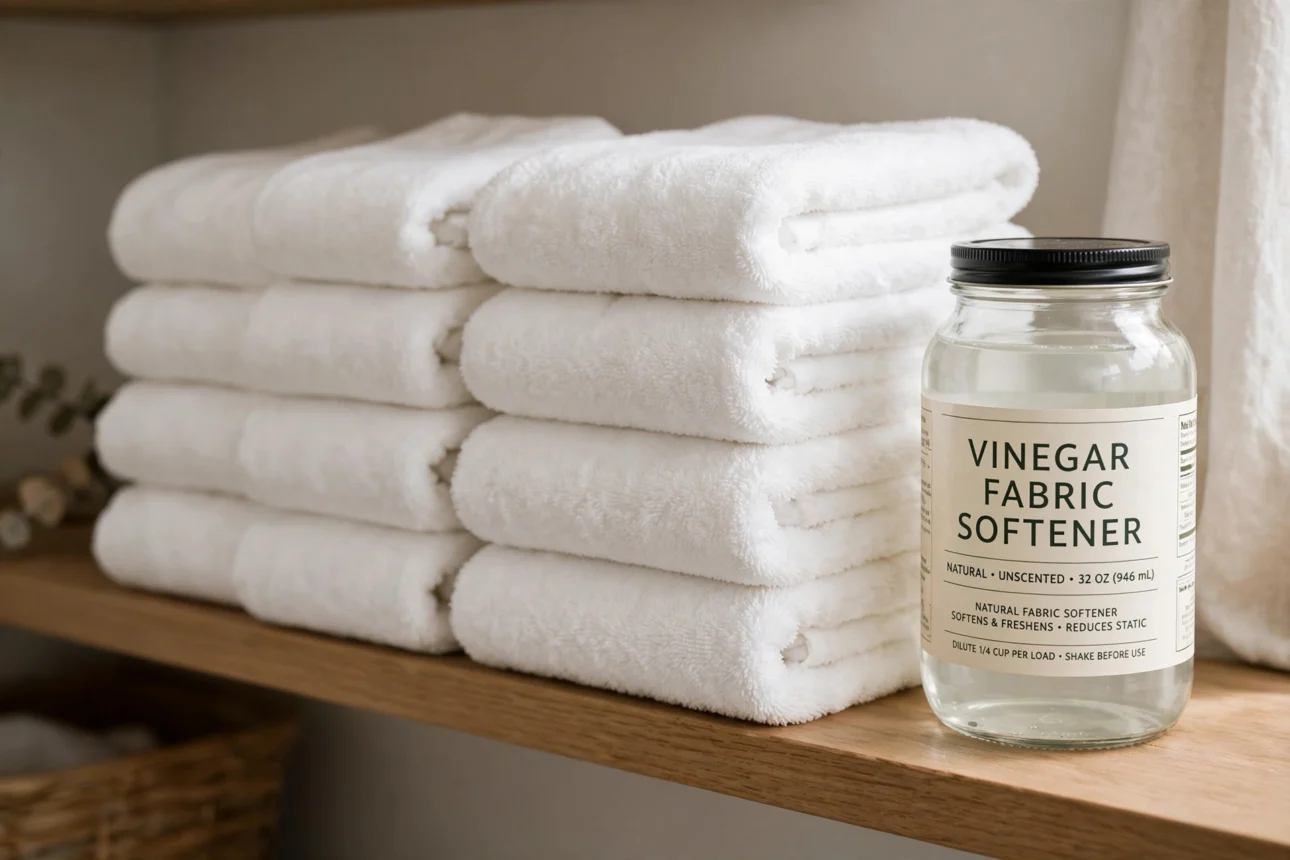
Write “Fabric Softener” on your label or masking tape and stick it to the bottle before you store it. This one step matters more than it sounds like it should, since a bottle of scented vinegar sitting near cleaning supplies or cooking vinegar is an easy thing to grab by mistake, especially for anyone else in the house. Include the date you made the batch too, so you have a quick way to track how long it’s been sitting on the shelf.
Step 5: Use It In The Wash
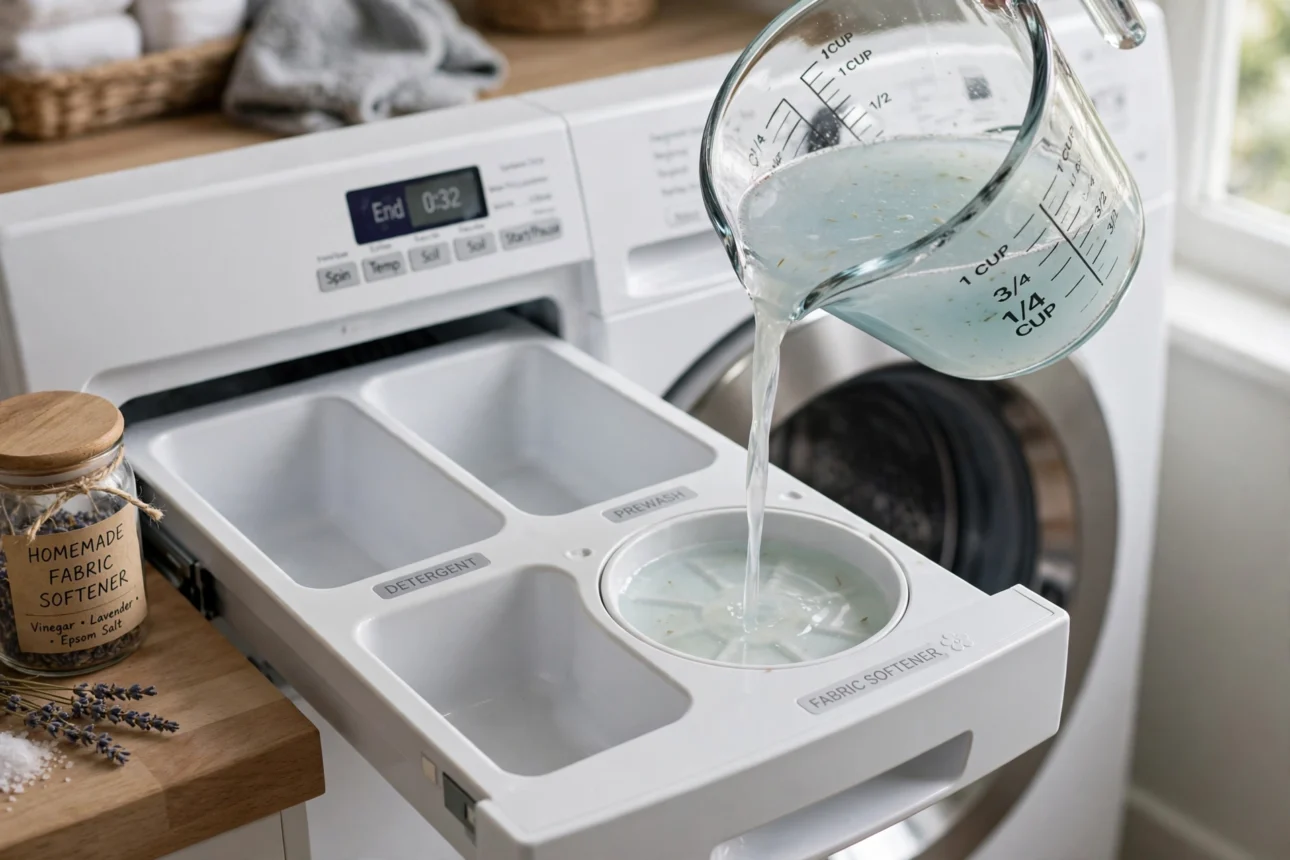
Add 1/4 to 1/2 cup of your finished softener to your washer’s fabric softener dispenser at the start of each load. If your machine doesn’t have a dispenser, pour the same amount into a Downy ball and toss it in with the wash. Adjust the amount up toward 1/2 cup for larger loads or harder water, and down toward 1/4 cup for small, everyday loads. Front-load and top-load washers both work fine with this method, since the softener releases during the rinse cycle either way.
Conclusion
That’s the whole process, five steps and about two minutes of hands-on time for a bottle of softener that lasts for months. The finished vinegar rinses out completely in the wash, so there’s no lingering smell, just softer fabric and less static once everything comes out of the dryer. Keep the bottle by the washer so it’s easy to grab, and give it a shake before each use to keep the scent evenly mixed through the vinegar. If you find the basic version isn’t quite enough for certain loads, the variations below cover a few common laundry problems this simple recipe doesn’t fully solve on its own.
Other Natural Fabric Softener Recipes To Try
Once you’re comfortable with the basic version, a few variations are worth trying depending on what your laundry needs most.
Vinegar and baking soda, for extra deodorizing. Pour 6 cups of white vinegar into a large bowl, since this reacts and needs room to fizz. Slowly sprinkle in 1 cup of baking soda a little at a time, stirring as you go, and let the fizzing settle before stirring in 10 to 15 drops of essential oil. Pour the finished mix into a labeled gallon container with a funnel. This version is worth the extra step for musty towels or gym clothes that need more than a basic rinse can offer. Work slowly through the baking soda step, since dumping it in all at once causes the mixture to fizz over the edge of the bowl.
Vinegar and glycerin, for very dry or scratchy fabric. Combine 2 cups of white vinegar with 1 cup of water, then add 2 tablespoons of vegetable glycerin and 15 to 20 drops of essential oil. Shake well and shake again before each use, since glycerin can settle over time. Glycerin is hygroscopic, meaning it draws moisture out of the air, the same property that makes it common in lotion, and it works the same way on fabric.
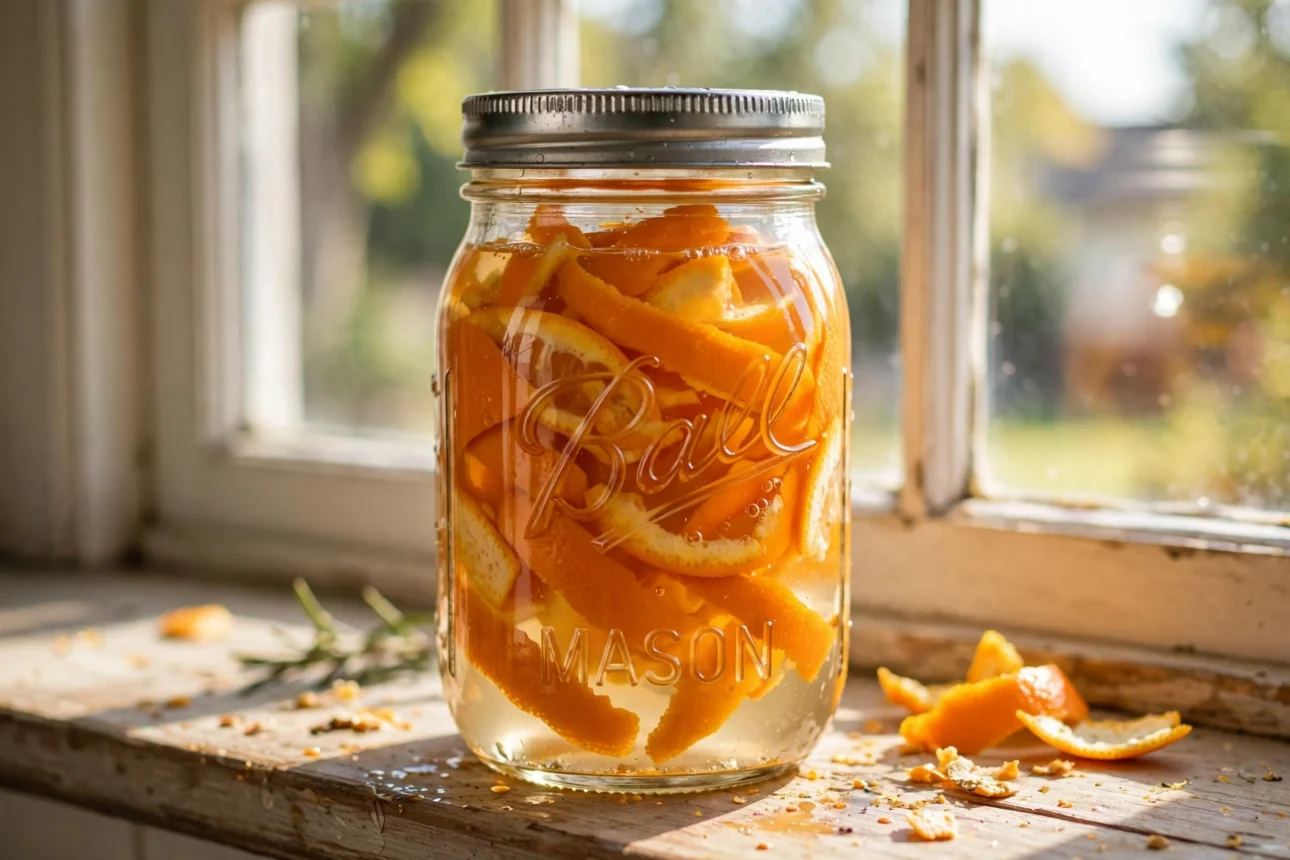
Infused vinegar, for scent without essential oils. Fill a large glass jar about a third full with citrus peels, fresh herbs, or dried flowers, then pour warm white vinegar over them until the jar is nearly full. Seal it and let it sit in a cool, dark spot for 1 to 2 weeks. Strain out the peels before using it just like plain vinegar softener. Orange, lemon, and grapefruit peels all work well, and you can freeze peels until you have enough saved up for a full jar.
Wool dryer balls or Epsom salt, for a liquid-free option. Toss 3 to 6 wool dryer balls into the dryer with a wet load, adding a few drops of essential oil directly to a ball for light scent. They soften by separating fabric as it tumbles rather than treating it chemically, and they tend to shorten drying time slightly as a side benefit. Epsom salt works as an alternative too: add a tablespoon straight to the wash, or blend a jar at one drop of essential oil per 20 grams of salt for a reusable version.
What Fabrics Should You Avoid Using Vinegar Softener On?
Avoid using vinegar softener on clothing with a lot of elastic, like leggings, swimwear, and sports bras. The acid in vinegar breaks down elastic fibers over time, so regular use on activewear can shorten how long it holds its stretch. Everyday cottons, towels, sheets, and most other laundry are fine, and vinegar is even safe on colors since it doesn’t fade or bleed dye the way some commercial softeners can.
Wool and silk are two more fabrics worth handling carefully. Both are naturally protein-based fibers that react differently to acid than cotton or synthetic blends do, so a diluted, gentler version with less vinegar and more water is a safer bet for delicates. When in doubt, check the care label first. A garment marked dry-clean-only or hand-wash-only isn’t a good candidate for any homemade laundry addition, vinegar included, since those labels usually mean the fabric needs more controlled handling than a home wash cycle provides.
FAQ
Will my clothes smell like vinegar after washing?
No, the vinegar smell rinses out completely during the wash and dry cycle. Any lingering scent comes from the essential oil you added, not the vinegar itself, and even unscented batches dry with no trace of vinegar odor once the load finishes.
Can you mix vinegar fabric softener with bleach?
No, never combine vinegar with chlorine bleach. The mix creates toxic chlorine gas, so always run a separate load or rinse the dispenser out between uses, and never pour the two into the same compartment even at different points in the cycle.
Does apple cider vinegar work the same as white vinegar?
No, stick with plain white distilled vinegar. Apple cider vinegar contains natural plant tannins that can leave a dingy tint on light-colored fabric.
How long does homemade fabric softener last?
A basic vinegar and essential oil softener stays good for several months stored at room temperature in a sealed container. Recipes with conditioner or glycerin separate more easily, so give the bottle a shake before each use.
References
- DIY Natural, “DIY Fabric Softener: A Simple and Natural Fabric Softener Recipe” (2018)
- Live Simply, “Simple Homemade Fabric Softener (4 Ways)” (2023)
- The Make Your Own Zone, “Homemade Liquid Fabric Softener Recipes” (2026)
- Real Simple, “4 Easy Ways to Make Fabric Softener” (2025)
- Oh, The Things We’ll Make!, “Natural Fabric Softeners: What Actually Works (and What Doesn’t)” (2026

Sarah Anderson . J
I’m the mom behind Wise Mom Blogger, where everyday creativity meets real-life motherhood. I share easy DIY crafts, cozy knitting and crochet projects, beginner-friendly sewing ideas, and family-tested recipes—plus quick baking hacks that make homemade feel doable on busy days.