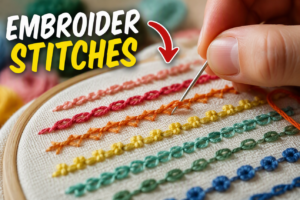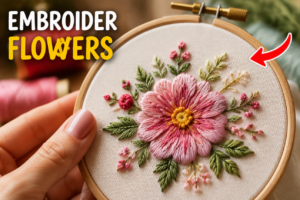

Embroidery has evolved into a popular form of intentional, mindful creative expression. Whether you are looking to master the basics or expand your repertoire with advanced textures, choosing the right stitch can significantly elevate your handmade projects.
Quick Questions and Answers
Question: What are the best embroidery stitches for beginners? Answer: The most common beginner set includes stitches such as backstitch, running stitch, straight stitch, stem stitch, chain stitch, satin stitch, split stitch, French knot, blanket stitch, and feather stitch.[4] These appear in beginner-oriented stitch lists because they cover basic outlines, fills, edges, and decorative accents, which makes them enough to start many small projects.[4]
Question: How many embroidery stitches should a beginner learn first? Answer: A practical starting point is about 10 to 15 stitches, because one beginner reference highlights 15 essential hand embroidery stitches.[4] That amount is enough to learn core functions like outlining, filling, edging, and adding texture without becoming overwhelming.[4]
Question: Which embroidery stitch is best for outlining? Answer: Backstitch, running stitch, and stem stitch are commonly used for outlines because they create clear line work.[4][5][7] A stitch library is useful here because it lets you compare line thickness, smoothness, and curve control before choosing one for lettering or motifs.[2][5]
Key Takeaways
- A curated starter set of 15 essential stitches can teach beginners the core functions of embroidery.
- Stitch samplers and alphabetized stitch libraries are effective learning tools for comparing techniques.
- Embroidery is increasingly framed as an intentional, personalized craft rather than just a technical skill.
- Key stitches include backstitch, French knot, running stitch, woven wheel, satin stitch, and bullion knot.
1. Essential Backstitch for Outlining
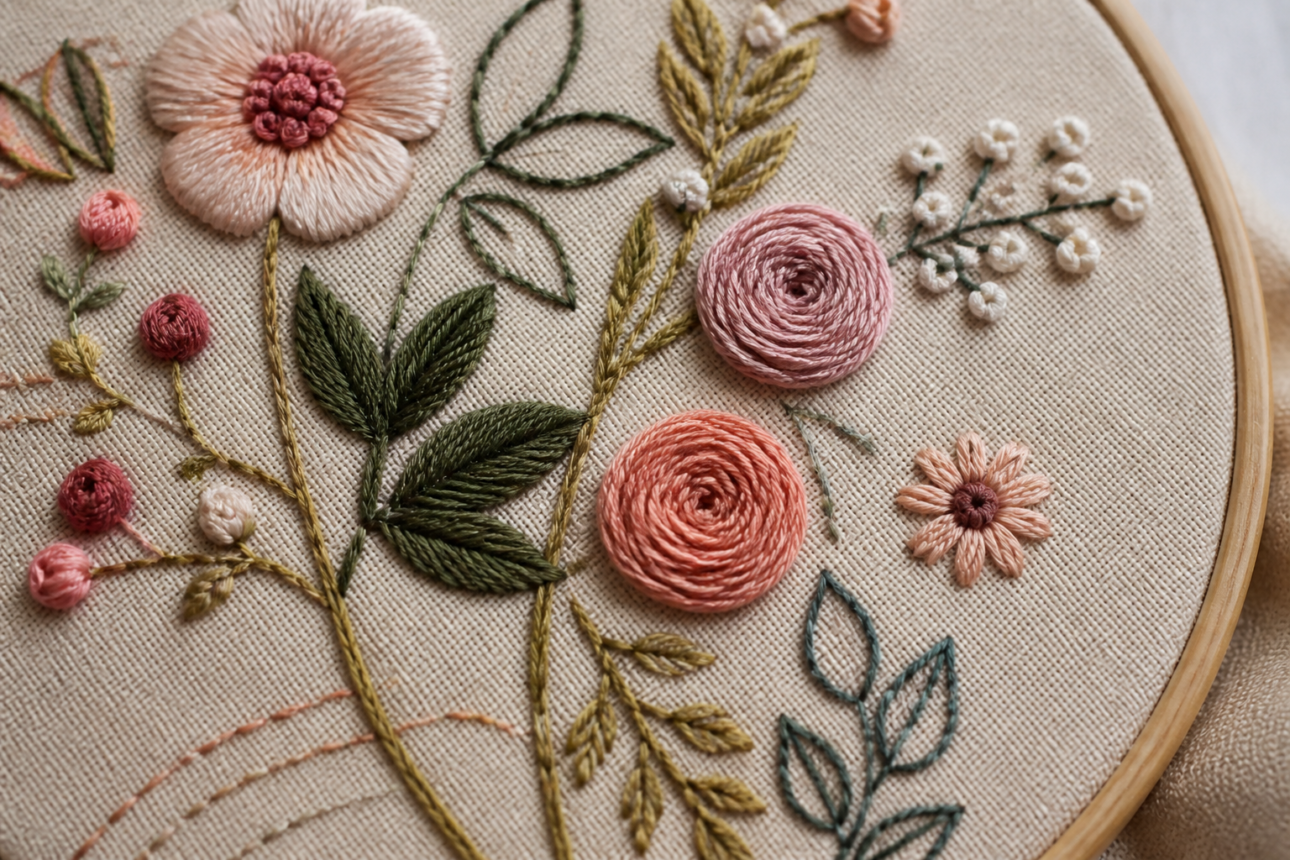
The backstitch is the foundational choice for creating smooth, unbroken lines in embroidery designs. It is highly recommended for lettering and detailed patterns due to its durability and clean finish. Experts identify this as one of the top 15 stitches every beginner should master for professional-looking outlines.[4]
2. Decorative French Knot Clusters
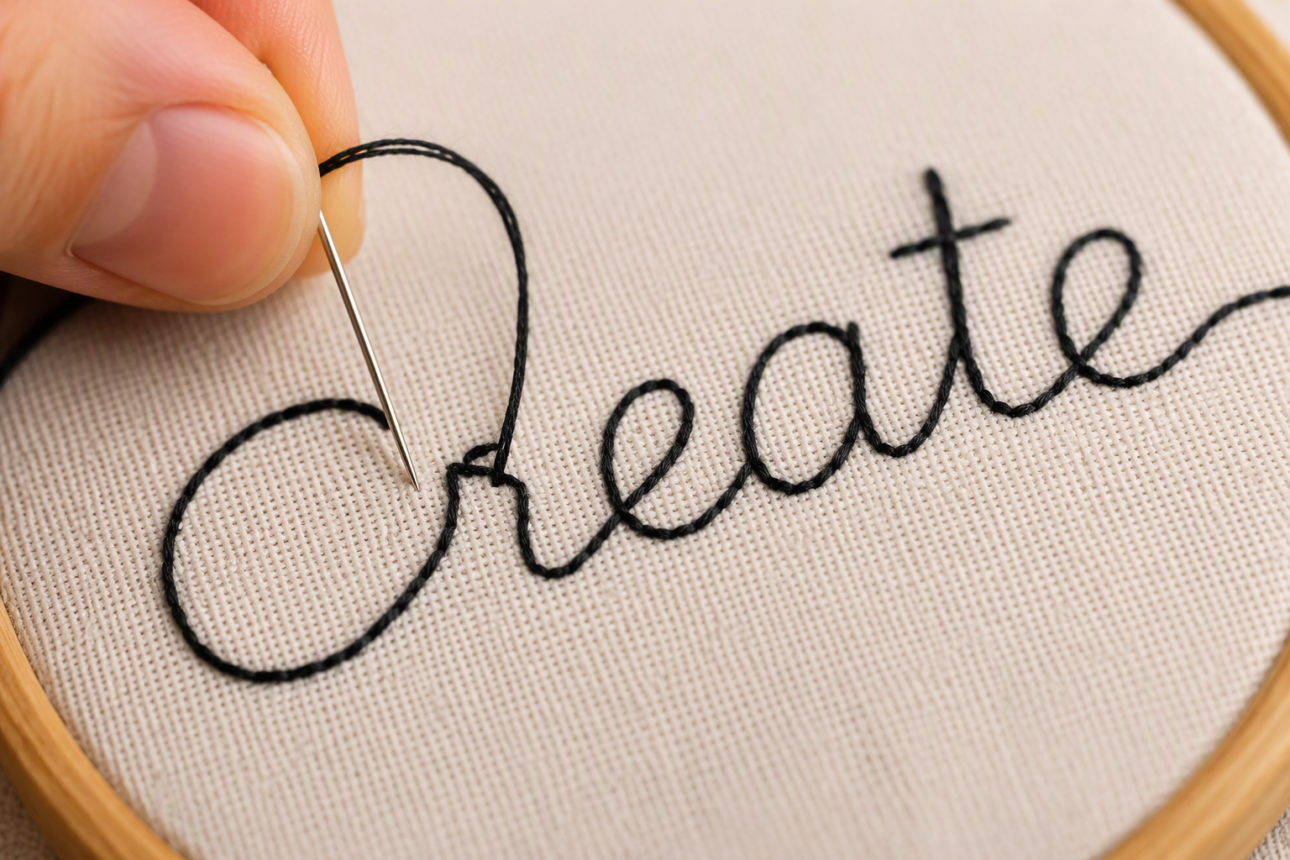
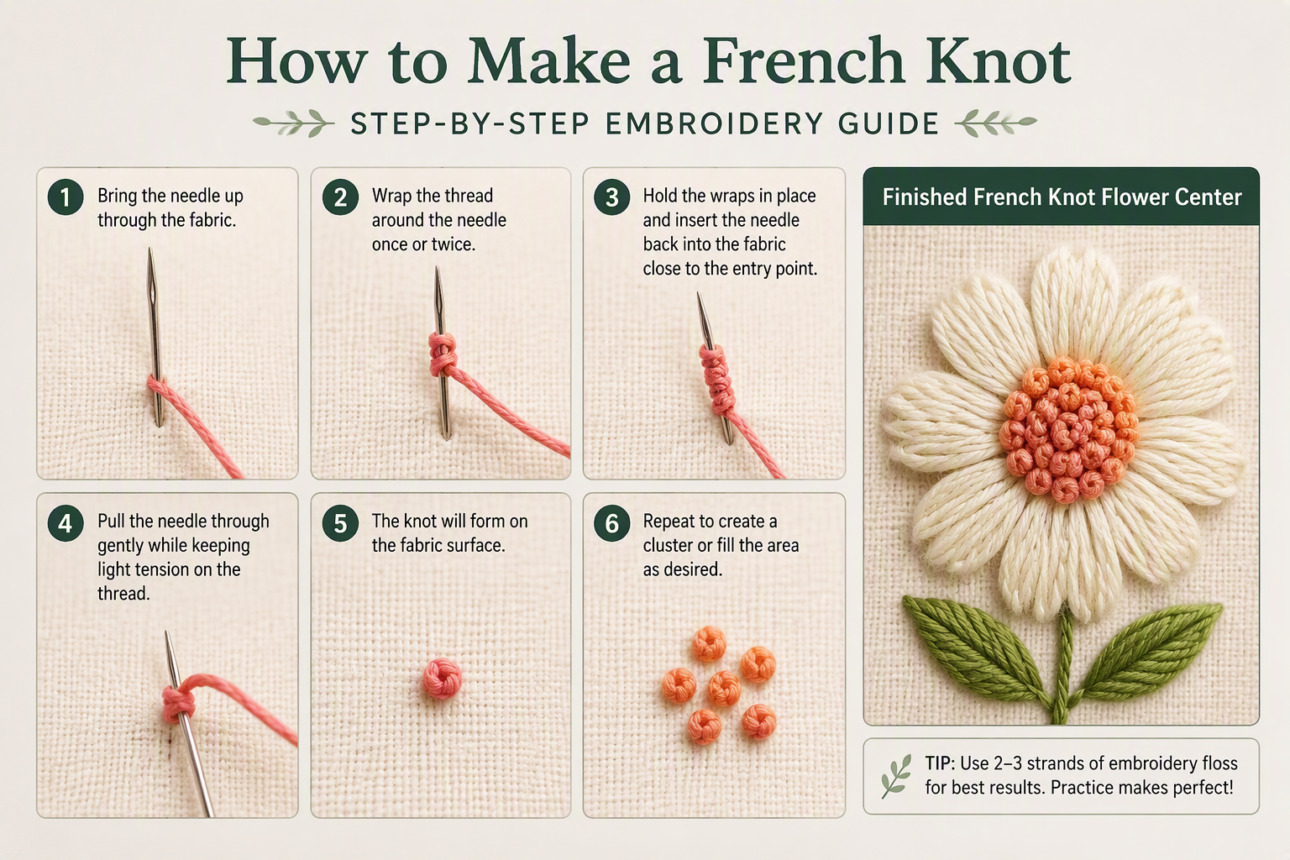
French knots provide a distinct raised texture, making them ideal for creating flower centers or intricate floral filler. They can be grouped together in clusters to add a 3D aesthetic to otherwise flat designs. This stitch is classified as a decorative accent essential for adding professional depth to botanical projects.[4]
3. Versatile Running Stitch Patterns
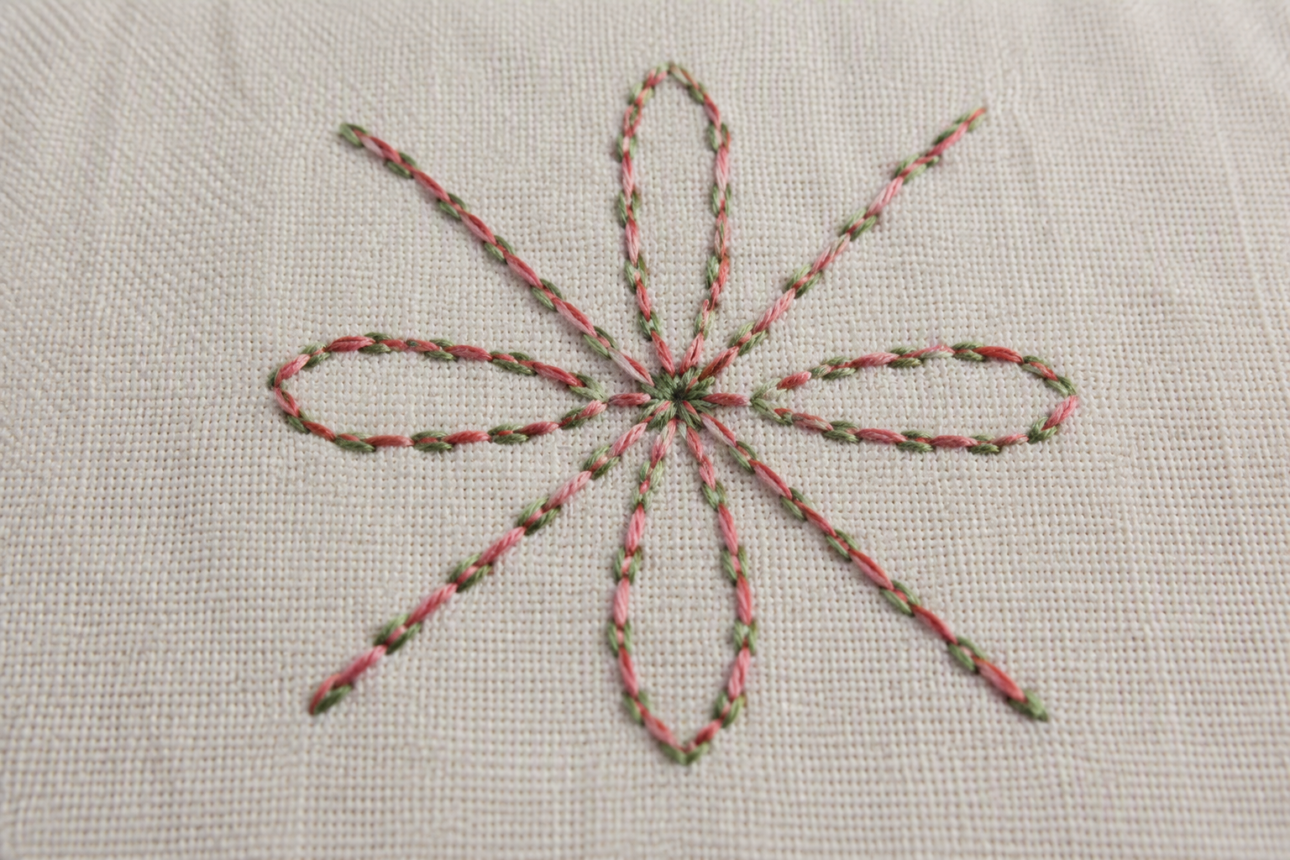
The running stitch is the simplest form of needlework, perfect for dashed lines and basting tasks. It serves as a base for ‘whipped’ variations, where a secondary thread is woven through the stitches for a decorative effect. It is widely considered the first point of entry for those learning to map out complex patterns.[4]
4. Textural Woven Wheel Stitches
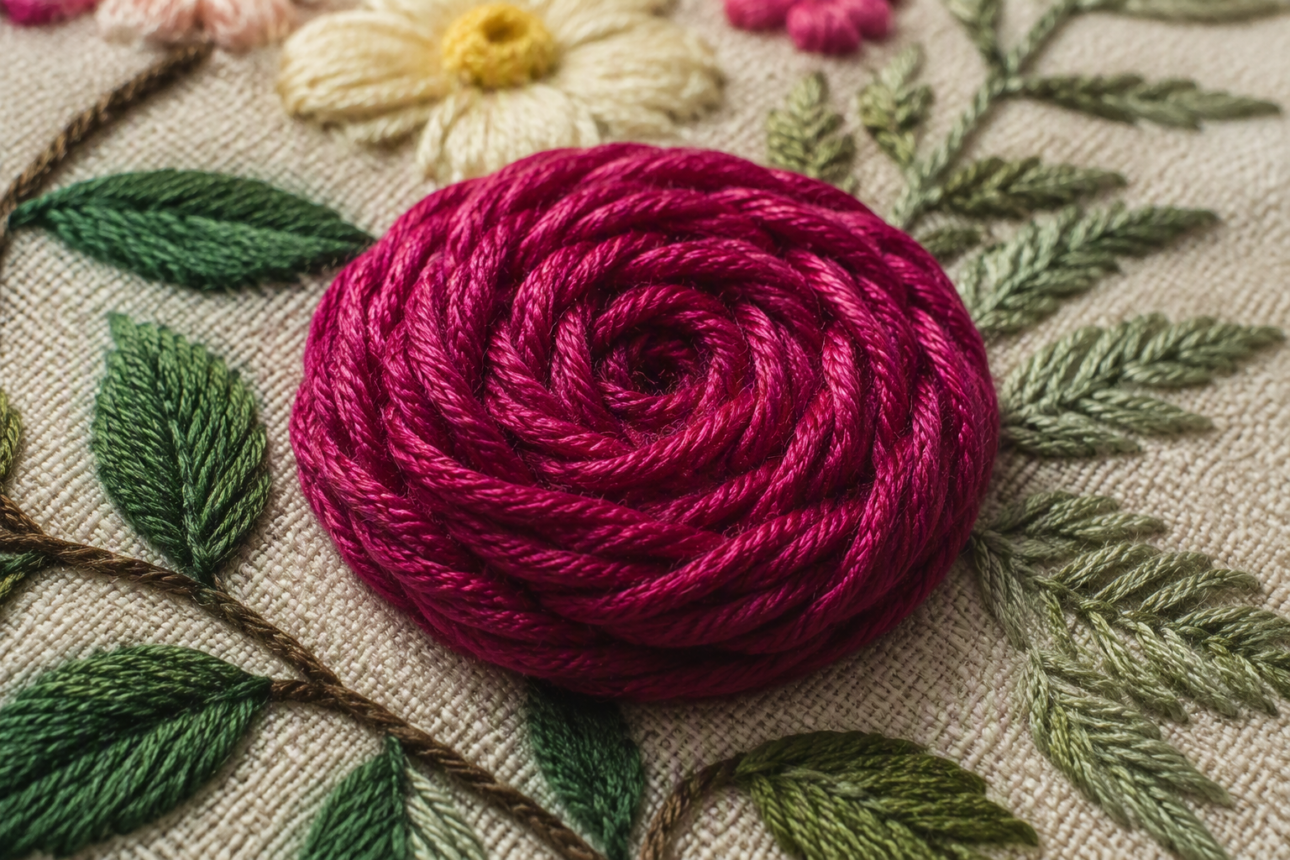
This stitch creates a circular, rose-like shape, perfect for high-impact floral motifs. Because it is a woven technique, it provides significant height and texture that standard surface stitches cannot match. It is best utilized as a standalone centerpiece in creative 2026-style personalized embroidery.[4]
5. Precise Satin Stitch Filling
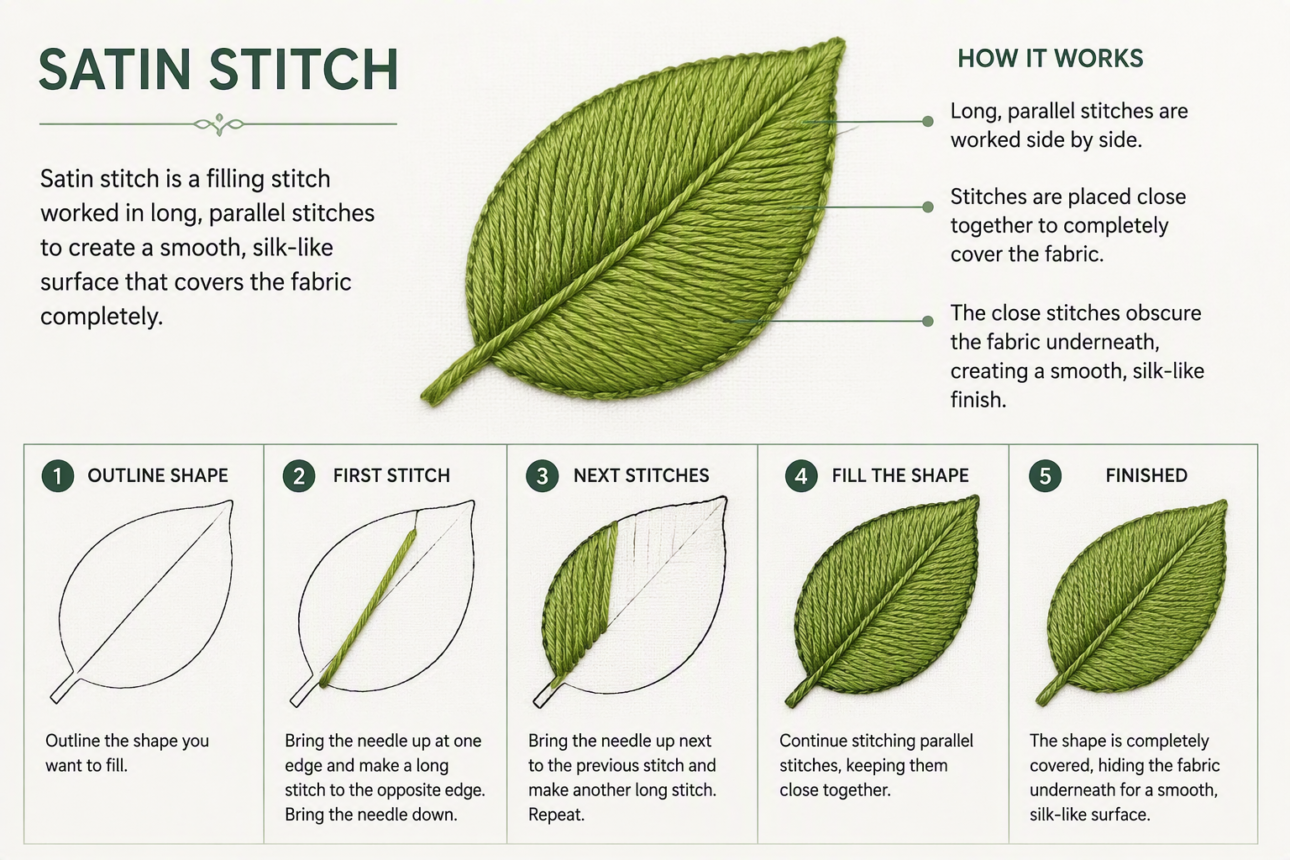
Satin stitch is the primary method for covering areas completely with a smooth, silk-like appearance. It requires close, parallel stitches to ensure the fabric underneath is fully obscured. Best used for small petals, leaves, or shapes where a solid block of color is desired.[4]
6. Structural Stem Stitch Lines
Unlike backstitch, the stem stitch creates a slightly twisted, rope-like appearance that adds movement to a line. It is the standard choice for stems, vines, and curved text elements in hand-stitched art. The technique provides a sturdy, elegant edge that holds its shape well even with thicker embroidery floss.[4]
7. Dimensional Bullion Knots
Bullion knots are sophisticated, coiled stitches that create long, caterpillar-like shapes. They are used for advanced embroidery projects to mimic organic forms like rosebuds or curled tendrils. While more challenging, they serve as a ‘level-up’ stitch for those moving beyond basic sampler work.[4]
8. Open Chain Stitch Edging
The chain stitch forms a series of linked loops that create a bold, visible line along an edge. It is particularly effective for thick borders or when you need a stitch that is highly visible from a distance. Beginners often use this to practice consistent tension across long, repeating segments.[4]
9. Split Stitch Texture
This stitch splits the previous stitch by bringing the needle up through the center of the thread. It creates a subtle, braided texture that is softer and more organic than a straight line stitch. It is a favorite among artists seeking a ‘hand-drawn’ feel in their embroidered illustrations.[4]
10. Practical Blanket Stitch Borders
Originally designed for finishing the edges of fabric, the blanket stitch is a key functional technique. It can be worked in decorative patterns or used to applique shapes onto a base fabric. It is essential for projects that require a secure, aesthetic frame around a central design.[4]
11. Feather Stitch Fillers
The feather stitch mimics organic foliage and growth patterns, making it perfect for borders or stylized plant stems. It is a versatile stitch that can be widened or tightened to fit the negative space of a composition. Designers often use it to connect different elements within a free-form embroidery piece.[4]
12. Detailed Tenango-Style Filling
This advanced technique involves dense, short stitches used to create the vibrant, folk-art style common in traditional embroidery. It is excellent for filling large patterns where you want to emphasize bold colors and high-density work. Learning this style is a common goal for those who move from simple 15-stitch samplers to complex 100-stitch master projects.[6]
Common Mistakes
One common mistake for beginners is trying to learn too many stitches at once, leading to an “overwhelming encyclopedia” effect. It’s better to start with a curated 15-stitch set and become fluent in the core techniques before expanding. Another trap is relying too heavily on video tutorials at the expense of hands-on practice with a physical sampler. The physical act of stitching helps build muscle memory that online demos cannot fully replicate.
FAQ
Q: Which embroidery stitches are good for filling areas?
Answer: Satin stitch, long-and-short style fills, and dense decorative stitches are commonly used to cover larger shapes.[4][5][7] Sampler resources are helpful because they show how different fill stitches change the look of a petal, leaf, or background shape.[3][6]
Q: What is a good embroidery stitch for flowers?
Answer: French knots, detached chain stitches, woven wheel stitches, and bullion knots are commonly used for floral details.[4] These stitches work well because they create raised centers, petals, or textured accents that make flowers look more dimensional.[4]
Q: Are stitch samplers useful for learning embroidery?
Answer: Yes. The sources show sampler-based learning with 41 stitches in one video and 100 stitches in another, which demonstrates that samplers are a standard way to compare many stitch ideas in one project.[3][6] A sampler helps learners practice consistency while seeing how each stitch behaves on fabric.[3][6]
Q: What is the difference between embroidery stitch and embroidery idea?
Answer: A stitch is the technique used to make a line, texture, or fill, while an embroidery idea is the project or design concept that uses those stitches.[1][4] For example, a heart, monogram, floral hoop, or sampler can all be embroidery ideas built from many different stitches.[1][3][4]
Q: Which embroidery stitches make the most texture?
Answer: Raised stitches such as French knots, bullion knots, woven wheel stitches, and some chain variations add strong texture.[4][7] They are often chosen when the goal is to make an embroidery piece feel dimensional rather than flat.[4][7]
Q: Can I learn embroidery from stitch libraries online?
Answer: Yes. Stitch libraries and dictionaries are specifically designed to help learners identify stitches and compare techniques.[2][5][7] They are especially useful when you already have a project in mind and need to choose the stitch that best matches the visual effect you want.[2][5]
Q: What embroidery stitch ideas are trending in 2026?
Answer: The 2026 sources emphasize creative, intentional, and personalized embroidery rather than a single dominant stitch.[1][2] That means current interest is centered on project ideas, custom motifs, and sampler-based exploration rather than only one technique.[1][2][3]
My Experience With 12 Creative Embroidery Stitch Ideas for Beginners
As someone who has been embroidering for years, I have to say that the key stitches highlighted in this article are exactly the core set I recommend to anyone starting out. Things like backstitch, running stitch, and French knots are the building blocks that let you create a huge range of embroidered designs. I still remember how intimidating it felt the first time I picked up a needle, but breaking it down into a curated 15-stitch sampler made the process so much more approachable.
Where I really struggled in the beginning, though, was tension control. Getting those stitches to look neat and even on the fabric took a lot of practice, and I definitely made some embarrassingly uneven messes before I got the hang of it. But that’s all part of the journey, and the satisfaction of gradually improving your technique is one of the best parts of embroidery. I also loved how stitching became a soothing way to unwind and destress after a long day.
One pro tip I’d share based on my experience is to really lean into stitch libraries and video tutorials, but don’t let them replace the hands-on work. Seeing the mechanics of a new stitch is super helpful, but you need that tactile feedback to develop your own sense of rhythm. And the act of physically stitching a sampler piece is what will truly cement those muscle memories.
What about you — have you explored any fun and creative embroidery stitches lately? I’d love to hear about your own embroidery journey!
References
- 22 ideas creativas de bordado para 2026. (2026). Spocket. https://www.spocket.co/es/blogs/ideas-creativas-para-bordados
- Bordar y tejer en 2026: crear con intención en una nueva era creativa. (2026). Diseños para Bordar. https://disenosparabordar.com/bordar-y-tejer-en-2026-crear-con-intencion-en-una-nueva-era-creativa/
- 🤩41 PUNTADAS DE BORDADO A MANO PARA TU MUESTRARIO FACIL Y RAPIDO | EMBROIDERY STITCHES. (2026). YouTube. https://www.youtube.com/watch?v=-1hHwjRNCYM
- 15 puntos que todo bordador debe conocer | Bordado 2026. (2026). Needlework Fair. https://needleworkfair.com/8228711-15-stitches-every-embroiderer-should-know
- Biblioteca de puntadas A-Z – Todas las puntadas de bordado a mano en un … (n.d.). Practical Embroidery. https://practicalembroidery.es/biblioteca-de-puntos-a-z/
- 100 PUNTADAS DIFERENTES PARA BORDADOS A MANO EN TU MUESTRARIO | HAND EMBROIDERY EASY SAMPLER. (2026). YouTube. https://www.youtube.com/watch?v=lsJzhoJ48Ao
- Embroidery stitches dictionary – NeedlenThread. (2010). NeedlenThread. https://www.needlenthread.com/2010/07/embroidery-stitches-dictionary.html

Sarah Anderson . J
I’m the mom behind Wise Mom Blogger, where everyday creativity meets real-life motherhood. I share easy DIY crafts, cozy knitting and crochet projects, beginner-friendly sewing ideas, and family-tested recipes—plus quick baking hacks that make homemade feel doable on busy days.