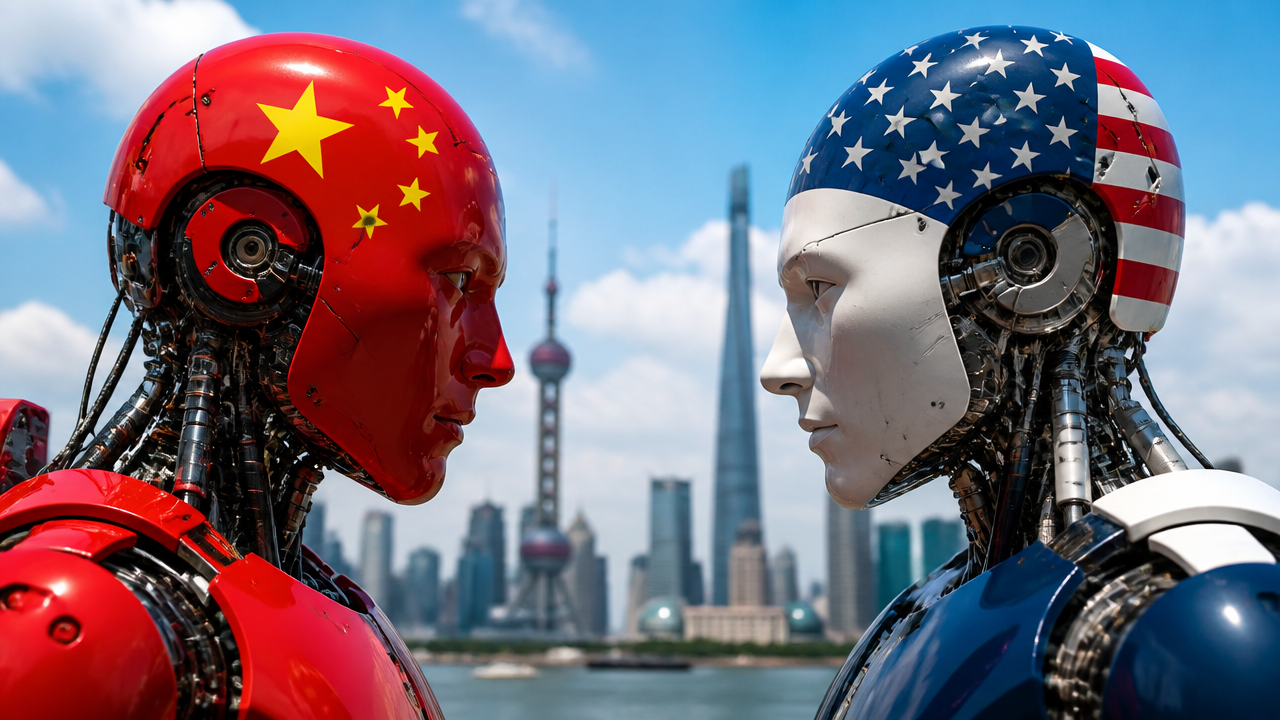
Do you wonder why the US China AI competition drives headlines globally? This tech war centers on artificial intelligence dominance. You track chip supply, robotics, and model accuracy daily. Summer and winter, the race intensifies. Whether planning a tech strategy or studying the global market, the stakes remain high. Global supply chains shift. Economic policies change. I see how this impacts your data, your security, and your economic future. Let’s look at the facts behind the headlines and see what drives this digital frontier. The details matter now more than ever.
Quick Questions and Answers
Question: Why is the US China AI competition considered a race?
Answer: The US-China AI competition is viewed as a race because artificial intelligence is central to technological supremacy and great power competition between the two nations. Both countries are vying to win this technology contest, which some call the “AI race,” as AI could revolutionize work and global communication. The rivalry extends beyond military and economic advantages to include conflict norms, state power, and catastrophic risks. Experts describe it as a multi-dimensional contest across compute, models, adoption, and integration.
Question: Can China overtake the US in AI development soon?
Answer: While the US currently leads overall due to its strong private sector and advanced technology, China’s rapid progress means it could catch up in coming years. China’s top AI models still lag behind American frontier models by several months on key benchmarks like math and reasoning. However, US lawmakers recently expressed concern that America’s lead over China has narrowed to mere months. The competition involves multiple races across different parts of the AI ecosystem, not just a single sprint.
Question: Do the US and China have different AI strategies?
Answer: Yes, the US is recognized as leading in advanced AI development focusing on “brains” like chips and large models, while China excels in industrial AI integration and “bodies” like humanoid robots. China pursues a full-stack approach to turbocharge its economy and society, integrating AI into manufacturing, healthcare, and government services. The US focuses more on achieving AGI and frontier model performance, whereas China prioritizes model efficiency and real-world adoption. These distinct approaches reflect different perceptions of AI’s role in each nation.
Key Takeaways
The competition spans multiple dimensions: compute, models, adoption, and integration.
The US leads in advanced chips and large language models, and vastly outspends China on private AI investment.
China excels in robotics and industrial AI automation, and is closing the model-capability gap faster than expected.
Both superpowers view AI as a central pillar of future power.
Export controls and trade tariffs act as key policy tools, though they’ve also pushed China toward faster domestic chipmaking.
Historical Evolution of Tech Rivalry
The path to today’s tech tension began decades ago. The United States initially viewed China’s integration into global supply chains as a manufacturing advantage rather than an innovation threat from the 1980s to the mid-2010s. This period saw China transform from a low-cost producer into a rising economic power. The US allowed access to the internet and general technology, helping China’s growth.
Relations changed dramatically in the mid-2010s. Washington and Beijing descended into what President Joe Biden has called “extreme” strategic competition. This shift spanned diplomatic, economic, military, and governance arenas. Leaders from both countries asserted that emerging technologies would define the future 21st century. The US now sees China as the primary long-term competitor.
The perception flipped completely. China stopped looking like a trade partner and started looking like a rival. This realization prompted stricter export controls and technology restrictions on semiconductor access. Washington’s sweeping October 2022 export controls arrived just before ChatGPT’s public launch, and restrictions have tightened almost every year since. The US tightened rules to prevent military-civil fusion from accelerating Beijing’s capabilities. Tensions rose as Beijing pushed harder for self-sufficiency in critical technologies.
That pressure produced a visible acceleration rather than a slowdown. Chinese President Xi Jinping used his 2025 year-end address to call it a year of AI and chip “breakthroughs,” pointing to a wave of domestic large-model releases and homegrown chip progress. The year had opened with DeepSeek’s R1 model rattling assumptions about how far US export controls could actually constrain Chinese AI development, and closed with China running neck-and-neck with the US on several benchmarks. The rivalry is no longer a story of one side simply restricting the other — it’s now a race where restriction and rapid domestic substitution feed off each other.
Core Pillars of the AI Race
Compute and hardware define the first pillar of this struggle. Both nations fight over semiconductor access and supply chain dominance. Without advanced chips, training cutting-edge models becomes impossible. Washington uses tariffs and market restrictions to limit China’s access to high-performance computing hardware. This strategy aims to slow Beijing’s pace in training Large Language Models. Even so, Chinese domestic chips made up nearly 41 percent of China’s own AI chip market in 2025, with Huawei supplying roughly half of that share, up from a market once dominated almost entirely by Nvidia. Huawei’s newest Ascend chips are expected to scale to around 750,000 units this year, while rival Cambricon aims to ship roughly 500,000 domestically-made accelerators. Analysts still estimate US-aligned manufacturing capacity for advanced AI chips outweighs China’s by more than 30 times on a quality-adjusted basis, since Huawei’s chip yields remain well below Nvidia’s and China’s leading foundry, SMIC, still trails Taiwan’s TSMC by two to three process generations.
Software and models form the second pillar. The race to develop advanced AI “brains” continues. Chatbots and LLMs require massive data and processing power. The US maintains an edge here due to private sector innovation, and that edge is backed by enormous capital: US private AI investment reached roughly $286 billion in 2025 versus about $12 billion in China, a gap of more than 20 times. Tech giants in Silicon Valley drive much of this development. They create architectures that power global digital services. Yet the capability gap between the top US and Chinese models has been shrinking fast — independent benchmark tracking that once showed a double-digit percentage-point lead for US models now shows leading Chinese models trailing by just a few points, and Chinese labs have leaned hard into open-source releases, with models like Alibaba’s Qwen amassing hundreds of millions of downloads.
Integration and deployment make up the third pillar. Adoptions of AI into national economies vary greatly. China integrates AI into military-civil fusion sectors heavily. Private firms work closely with the state. The US adopts AI across commercial and defense sectors too. Both sides want rapid real-world utility for their systems. Success requires moving from research to actual deployment effectively, and this is where China’s compute-constrained but state-backed strategy shows up most: rather than chasing the single largest frontier model, Chinese firms have prioritized efficient, widely distributed open models that get embedded quickly into factories, government platforms, and partner countries’ infrastructure.
Feature
United States Approach
China Approach
Primary Focus
Advanced LLMs and Chips
Robotics and Industrial Automation
Funding Source
Private Sector Dominant (~$286B in 2025)
State-Guided Military-Civil Fusion (~$12B in 2025)
The US has traditionally led on so-called AI brains. This world includes chatbots, microchips, and large language models. Silicon Valley firms design the chips and software used globally. Nvidia hardware powers many of these systems. Researchers there prioritize raw model performance and generative capabilities. They chase benchmarks and new architectural innovations constantly. As of early 2026, independent blind-test leaderboards still put a US model at the top spot, but the margin over the closest Chinese model has narrowed to just a few percentage points — a gap that was far wider only a couple of years earlier.
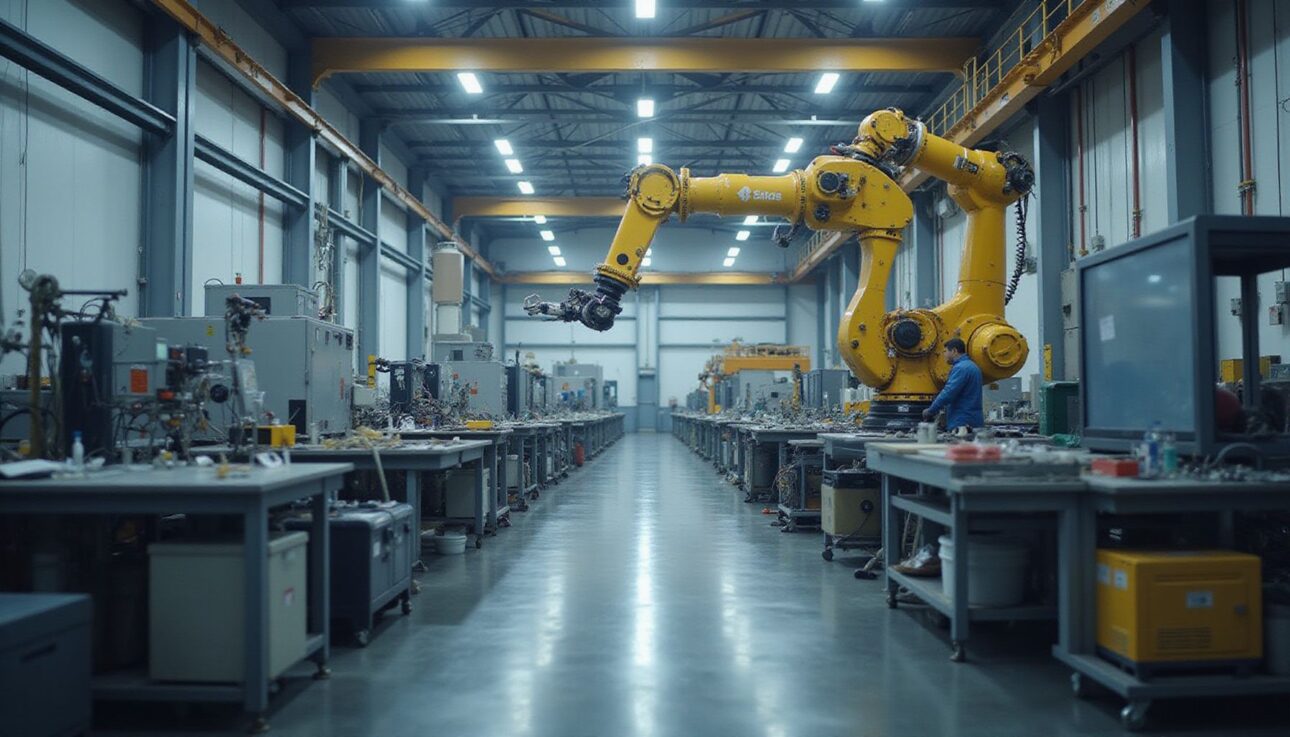
China has been superior on AI “bodies.” Robots, and in particular “humanoid” robots that look eerily like people, show Chinese strength. Companies there leverage massive manufacturing scale to build hardware. They integrate automation into factories quickly. This focus on physical AI assets complements the software push. It gives Beijing an edge in applied implementation. China also holds a commanding lead in sheer AI patent volume, accounting for well over 70 percent of global AI patent filings, though raw patent counts don’t always translate into deployed real-world capability.
China aims to lead the world in AI innovation by 2030. They leverage their extensive system of military-civil fusion to achieve this. State goals direct private investment. The government supports firms building specific AI technologies. This centralized model allows rapid mobilization of resources. It contrasts with the decentralized, market-driven US approach. Each path offers different advantages in speed and scope. Analysts increasingly describe this as a “two loops” dynamic: the US concentrates its far larger capital pool into compute-intensive frontier models, betting that hardware superiority eventually yields transformative capability, while China, constrained on compute but backed by the state, pursues efficient open models and fast, economy-wide deployment instead.
Recent Flashpoints and Policy Responses
Washington’s use of tariffs and trade restrictions marks a shift. Limits on China’s access to advanced semiconductors have tightened. The US government believes this slows Beijing’s AI progress. Export controls target specific high-end chips. These rules force companies to navigate complex regulatory frameworks. Supply chains face uncertainty as a result.
The emergence of DeepSeek marks the latest flashpoint. DeepSeek’s emergence marks the latest flashpoint in US-China AI rivalry. This model’s capabilities reignited debates over US chip export controls. Some officials argue restrictions are failing to contain progress. The emergence of competitive Chinese models proves domestic talent persists. Washington considers updating rules to close these gaps. Congressional pressure has since intensified: a House committee held a dedicated hearing in April 2026 on China’s efforts to acquire US AI technology, underscoring that lawmakers see the competitive gap as narrowing rather than widening.
Risks exist with a narrow focus on metrics. Success in the struggle for AI advantage requires far more than technical capability. Narrowly focusing on technical superiority risks compromising strategic capability. Diplomatic leadership remains a key missing component. The world watches how both sides manage these systems. Safety and governance become critical areas of contention.
My Experience With China vs. US AI Competition: Understanding the Tech Race
Watching this race unfold feels like observing a high-stakes poker game. I have followed the headlines closely as the chips stack up. One thing stands out: the definitions keep shifting. Just when I think the US holds the lead, I see new data on robotics. It is not a static situation you can track easily.
I once analyzed a report that suggested China had surpassed the US in patent filings. The numbers were surprising. But patents do not always equal real-world capability. It reminded me of a debate topic you might study. The context changes everything [Link to Debate Topic]. You have to look past the surface numbers.
In my view, the “brain vs. body” analogy holds up. Washington builds the thinking engine. Beijing builds the arm that moves it. Both need each other eventually, maybe. I wonder if they will ever fully decouple. That depends on how these policies play out next year. Have you noticed how fast the landscape shifts?
Latest Updates or ## 2026 Trends
The landscape continues to evolve as we approach the mid-2020s. Recent events signal a shift from strategic containment to bloc formation. The race is no longer just about innovation speed now. It centers on who governs, sets rules, and entices others to follow. This could result in higher costs and fragmented standards globally.
Some analysts suggest a hardened bipolar contest may emerge. This moves away from a cooperative multipolar landscape. The competition extends into global digital ecosystem architecture. China embeds models across Belt and Road countries from ports to power grids. This creates fragmentation in standards and governance.
2026 Trends
Looking toward 2026, expect the divide between AI software and hardware to harden. The US will likely lead in foundational models. China will dominate applied robotics. This split will define global tech partnerships. Future success depends on translating AI breakthroughs into secure, practical deployment.
The role of third-party nations will grow. Countries will need to choose alliances or risk being left behind. Tech standards will become geopolitical tools. Neutrality may become a luxury fewer can afford. The world is moving toward distinct digital spheres.
FAQ
Q: Are US chips still better than China’s AI chips?
Answer: The United States remains ahead in the AI hardware stack, with Nvidia’s chips accounting for roughly half the world’s installed AI chip stock and two-thirds of computing capacity. China’s Huawei is the most credible challenger, but its chips remain technologically inferior to US offerings. Despite this gap, demand for Huawei’s chips within China is strong due to US export controls creating a captive market. The rivalry is increasingly about controlling the hardware stack beyond just chips alone.
Q: Is China winning the AI race against the US?
Answer: Experts largely concur that the US currently holds an advantage in AI “brains” including bots, chips, and large language models. However, China is winning in AI “bodies,” particularly in creating humanoid robots that closely resemble humans. China is also outpacing the US in AI applications, accounting for over 70 percent of global AI patent filings. The competition may not have a singular winner, as both nations are competing across multiple dimensions.
Q: How does the US China AI race affect the economy?
Answer: The core of great power competition in AI lies in how it affects each country’s ability to sustain economic growth by improving productivity across the entire economy. China views AI as a transformative technology to turbocharge its broader economy, integrating it into manufacturing, education, and drug discovery. The US leverages AI to sustain productivity growth and capitalizes on its leadership in advanced development. Both nations face anxiety over how this technology will impact their populations’ lives.
Q: Will the AI competition create two separate tech blocs?
Answer: Recent events signal a shift from strategic containment to bloc formation, creating a hardened bipolar contest rather than a cooperative multipolar landscape. The race is no longer just about innovation speed but about who governs, sets rules, and entices others to follow. This could result in higher costs, fragmented standards, and diminishing space for neutrality in AI governance globally. The competition extends into global digital ecosystem architecture and standards adoption.
Q: What challenges does China face in the AI race?
Answer: China’s top AI models continue to lag behind American frontier models by several months or more in performance benchmarks. Chinese chips from Huawei remain technologically inferior compared to US offerings like Nvidia’s. The US maintains a clear leadership position in capitalizing on AI for sustained productivity growth. Despite strong domestic demand, China faces restrictions from US export controls on advanced chips.
Q: When did the US China AI race become more dangerous?
Answer: Three events in May 2025 confirmed the rivalry entered a new and more dangerous phase, including a Senate hearing on “Winning the AI Race.” The US also enacted a sweeping ban on Huawei’s Ascend AI chips extended globally during this period. Additionally, President Trump signed expansive AI chip deals with regional allies, signaling a shift toward bloc formation. These milestones indicate the race now centers on standards and ecosystem architecture rather than just models.
Q: What domains are affected by US China AI competition?
Answer: The competition extends beyond military and economic advantages to four world-altering domains: conflict norms, state power, emerging bioethics, and catastrophic risks. Both countries are vying for supremacy in technology, particularly in the realm of artificial intelligence. The rivalry affects global digital ecosystem architecture, with China embedding models across Belt and Road countries from ports to power grids. This creates fragmentation in standards and governance that impacts the entire world.
I’m the mom behind Wise Mom Blogger, where everyday creativity meets real-life motherhood. I share easy DIY crafts, cozy knitting and crochet projects, beginner-friendly sewing ideas, and family-tested recipes—plus quick baking hacks that make homemade feel doable on busy days.