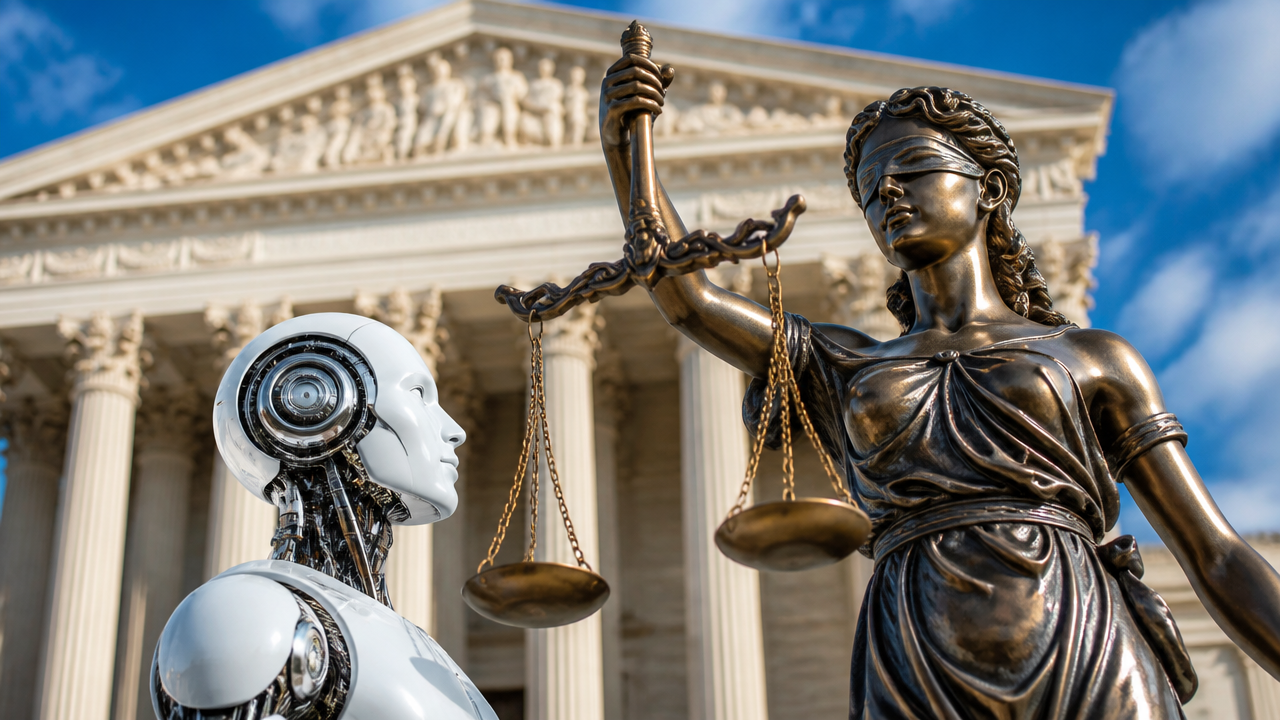
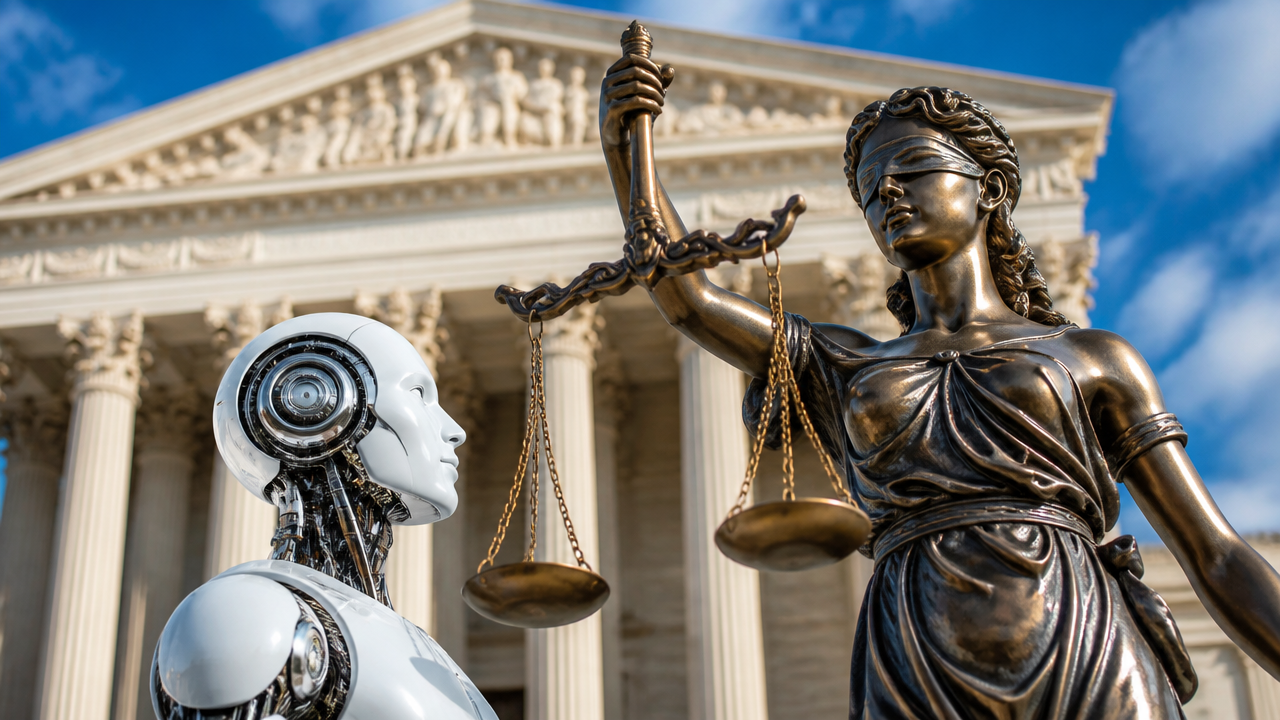
How are federal courts balancing the efficiency gains of artificial intelligence with the need to protect judicial independence and due process? This question sits at the heart of a growing debate within the American legal system. Artificial intelligence in the federal judiciary raises urgent questions about accuracy, bias, and accountability. Courts are adopting AI tools to streamline legal research and manage massive discovery documents, yet judges remain deeply divided about the technology’s role in chambers. The tension between innovation and caution defines how the federal judiciary is moving forward with AI in 2026.
Quick Questions and Answers
Question: why are federal judges using artificial intelligence tools?
Over 60% of federal judges report using at least one AI tool, primarily for legal research and document analysis. Judges use these tools to review, search, and analyze filings, as well as for authority verification during litigation management. This adoption helps increase operational efficiency in legal writing and administration while remaining bounded from final decision-making.
Question: can federal judges delegate decision-making to artificial intelligence?
No, federal judiciary guidance explicitly warns against delegating core judicial functions like decision-making or case adjudication to AI. Judges remain fully accountable for all work performed with AI assistance and must independently verify outputs. The consensus is that AI may enhance certain labor dimensions but is categorically unsuitable for final rulings.
Question: do federal courts require disclosure of artificial intelligence use?
Disclosure requirements vary by court, as some districts have issued local standing orders mandating attorneys disclose AI use and certify personal review for accuracy. While interim guidance suggests considering disclosure, it leaves room for discretion, and individual courts are encouraged to define tasks for which locally approved AI tools may be used.
Artificial Intelligence in the Federal Judiciary: Definitions and Core Concepts
Artificial intelligence in the legal context refers to systems capable of processing and analyzing vast amounts of legal data to support judicial work. The Federal Judicial Center (FJC), the research and education arm of the U.S. federal courts, serves as the primary source of technical guidance. The FJC provides judges with frameworks for understanding AI’s capabilities and limitations while identifying potential legal and ethical issues tied to implementation.
The technology isn’t monolithic. Judges encounter everything from AI-powered legal research platforms to document automation tools and natural language processing systems. Some tools scan court filings for inconsistencies. Others assist with legal research by cross-referencing case law and statutes. What unites these applications is their role as supplements to judicial work, not replacements for it.
The Federal Judicial Center distinguishes between different categories of AI use. Administrative AI handles scheduling, docketing, and routine case management. Research AI assists attorneys and judges in finding relevant precedent and analyzing legal documents. The critical boundary sits between supporting tools and decisional systems—and federal judges are explicit that AI must stay on the support side of that line.
Potential Benefits and Strategic Goals for the Court System
The federal judiciary isn’t adopting AI out of abstract curiosity. Real pressures drive the shift. The explosion of electronic discovery in litigation has overwhelmed traditional review processes. A single large case can generate millions of documents, making manual review impossible within reasonable timelines and budgets.
Cost efficiency matters too. Court budgets don’t grow with caseloads. AI-enabled systems allow courts to handle more cases with existing resources. Access to justice suffers when the system moves slowly or becomes prohibitively expensive for ordinary litigants. Federal planners view AI as a way to democratize access by reducing barriers of time and expense.
A secondary benefit is consistency. Human reviewers tire and miss details. An algorithm applies the same criteria to every document. That consistency, if properly designed and monitored, can reduce errors that lead to appeal and reversal.
Current Trends and Usage in Judicial Chambers
A 2024 random-sample survey by the New York City Bar Association examined AI adoption among 502 federal judges. The results painted a picture of cautious, selective adoption. Over 60% of judges reported using at least one AI tool. But the frequency was surprisingly low—fewer than one-quarter of judges used AI on a daily or weekly basis.
The preference was clear: judges favored legal-specific tools over general-purpose generative AI. They trusted systems built for law over ChatGPT or similar language models. This conservative choice reflects awareness of the risks. Generic AI systems generate false citations, confuse unrelated cases, and occasionally invent legal authorities altogether. Legal-specific tools, while not perfect, carry less risk of these “hallucinations.”
Concern ran high alongside adoption. A near-even split appeared between judges optimistic about AI’s potential and those worried about bias, accuracy, and judicial independence. Some judges expressed concern that relying on AI outputs could erode their role as careful readers of law. Others feared the technology would embed racial or class bias into their decisions if they weren’t vigilant.
The divide wasn’t ideological in the traditional sense. Concerns crossed party lines. What mattered was professional skepticism about any technology that could compromise judicial reasoning or public confidence in the courts.
Recent Legislative Updates: The Research and Oversight of AI in Courts Act of 2026
The bills focus on a specific risk: speech-to-text and automatic speech recognition technology. Courtroom transcripts form the official record. If an AI system misrenders testimony—changing a witness’s words or misattributing statements—the consequences ripple through appeals, retrials, and potential reversals. The proposed legislation would establish a task force to study the legal and ethical implications of these transcription tools.
The bills haven’t advanced past committee referral, but they signal growing legislative concern. They also suggest that informal guidance from the Federal Judicial Center and the American Bar Association may not be sufficient. Congress is asking whether the judiciary needs statutory safeguards and mandatory oversight mechanisms.
Notably, the bills don’t propose banning AI in courts. They call for study and oversight. This reflects the broader federal stance: AI in the judiciary is neither inevitable nor forbidden—it’s conditional. The condition is rigorous evaluation and demonstrated safety.
Broader Legal and Security Applications of AI
Understanding AI in federal courts requires context about AI’s use in law enforcement and national security. The technology is already deeply embedded in these domains, creating precedent and raising questions about how courts should respond.
Over 75 countries deploy facial recognition for domestic security and law enforcement. AI systems scan passport databases, driver’s license photos, and surveillance footage to identify individuals. The technology links suspects to crime scenes by analyzing travel patterns and proximity data. Predictive algorithms flag individuals for investigation based on associations and behavioral patterns.
Federal and state databases—including driver’s license registries—have been searched by AI algorithms hundreds of thousands of times without public notice or robust judicial oversight. These systems operate largely outside the courtroom but directly influence what prosecutors bring to trial.
This reality shapes how federal judges view AI in their own work. They see the technology’s power to serve justice and its capacity for systemic error and bias. They know that once AI systems are deployed, they’re difficult to scrutinize and impossible to recall. Courts have limited authority to regulate private AI development, but they retain power as gatekeepers—deciding what evidence is admissible, what certifications are required from attorneys, and what disclosures must be made.
Risks and Challenges in Judicial AI Implementation
The benefits of AI in courts are real. So are the risks. Judges and legal scholars have identified several critical concerns.
AI hallucinations present an immediate danger. Large language models sometimes generate plausible-sounding but entirely false citations. A judge relying on an AI research tool might cite a case that doesn’t exist. If the error isn’t caught, it could become precedent that other courts follow. The solution is independent verification—but that defeats some of the efficiency gain AI promises.
Bias in training data propagates through AI systems. If an AI model is trained on court records reflecting decades of racial bias in policing and sentencing, the model will learn and replicate those patterns. An AI tool that assists with bail recommendations or sentencing could make different recommendations based on race or class even if race or class aren’t explicit inputs.
Privacy and confidentiality breaches are possible if AI systems process sensitive information—sealed documents, witness names in sensitive cases, confidential settlement terms. Attorneys uploading documents to cloud-based AI tools may inadvertently publicize information meant to stay sealed.
Prompt dependency is a subtler risk. What an AI system outputs depends heavily on how a user frames the question. Two judges asking the same AI slightly different questions might receive different legal analysis. This variability creates inconsistency and unpredictability.
Accountability is elusive. When an AI system produces an error that harms a party, who bears responsibility? The judge who used it? The vendor who sold it? The software engineer who coded it? Current law provides little guidance, and courts are reluctant to adopt tools without clarity on liability.
The Role of the Federal Judicial Center and Ongoing Guidance
The Federal Judicial Center has published technical guides addressing questions about AI in judicial processes. These resources provide background on how AI works, what types of AI exist, and what legal issues courts should consider.
The FJC’s approach emphasizes transparency and caution. Rather than blessing specific tools, the Center provides judges with knowledge to evaluate tools independently. Judges should understand an AI system’s training data, its limitations, what it can and cannot reliably do. They should know whether outputs are subject to audit and whether vendor claims are backed by evidence.
The FJC also stresses the importance of policies. Each court should define which tasks AI may assist with and which tasks are off-limits. Some courts have issued standing orders requiring attorneys to disclose AI use and certify that they’ve personally reviewed all AI-generated content for accuracy. Other courts are still developing policies.
This decentralized approach reflects the federal judiciary’s structure. There is no single chief judge ruling all federal courts. Instead, 13 circuits and numerous district courts develop their own practices. This creates variation, which some judges find frustrating but others defend as appropriate experimentation.
AI Transparency and Disclosure in the Courts
Transparency has become a recurring demand. If an attorney uses AI to draft a brief, should they disclose that fact? Should judges know if opposing counsel relied on AI for legal research?
Some courts now require disclosure. The theory is straightforward: if AI-generated content carries risks of error or bias, judges and parties deserve to know that they’re relying on it. Disclosure also creates accountability—an attorney who certifies that they’ve reviewed AI-generated work can’t later claim surprise if errors surface.
But disclosure rules create practical complications. Distinguishing between “AI-assisted” writing and “human-written” writing is difficult. A brief drafted by a human using AI research tools, edited by hand, and reviewed for accuracy might still trigger disclosure requirements in some courts. That level of specificity could paralyze attorneys uncertain about what counts as “AI use.”
The interim approach taken by many courts is to encourage voluntary disclosure while courts develop more specific guidance. Attorneys are urged to disclose if AI played a substantial role. As disclosure norms become clearer and disclosure tools improve, courts may institute formal rules. For now, transparency remains aspirational rather than mandatory in most jurisdictions.
AI Application
Primary Use
Primary Risk
Judicial Approval
Legal research tools
Searching case law and statutes
Hallucinated citations
Broadly accepted
Document review
Scanning discovery for relevance
False positives or negatives
Broadly accepted with caution
Speech-to-text
Transcribing courtroom proceedings
Misrendering testimony
Under legislative review
Bail/sentencing recommendations
Predicting recidivism or flight risk
Embedded bias in training data
Controversial; not widely adopted
Case outcome prediction
Forecasting trial results
Unreliability; misguided reliance
Rarely endorsed
Writing assistance
Drafting motions or opinions
Loss of human judgment; consistency issues
Selective adoption
FAQ
Q: Are there official artificial intelligence rules for federal judges?
The federal judiciary has distributed interim AI guidance allowing experimentation with guardrails while permanent guidance is developed. This temporary policy applies to judges, staff, and personnel, addressing procurement, security, and confidentiality. In the absence of uniform national guidelines, the regulatory landscape remains fragmented with policy divergence across courts.
Q: How often do federal judges use artificial intelligence daily?
Although more than 60% of judges use AI tools, only 22.4% report using them on a weekly or daily basis. Most judicial engagement remains occasional, concentrated in preliminary litigation stages like legal research and document review rather than routine daily workflows.
Q: What risks does artificial intelligence pose to federal courts?
Key risks include AI hallucinations producing fabricated legal citations, prompt dependency, harmful bias, and privacy or confidentiality breaches in training data. These issues threaten the accuracy of filings and the integrity of the judicial process, necessitating independent verification of all AI-generated outputs by judges.
Q: Will artificial intelligence replace federal judges in the future?
Current judicial consensus indicates AI is integral to practice but categorically unsuitable for final decision-making, meaning it will not replace judges. Judges serve as evidentiary gatekeepers and guardians of the law, roles requiring human judgment that AI cannot fulfill. The technology augments efficiency but does not supplant judicial authority.
Q: Does artificial intelligence affect due process in federal trials?
Yes, decisional AI involving algorithmic tools that inform judicial decisions faces significant constitutional scrutiny under due process doctrine. Federal courts regulate what attorneys submit as evidence and how filings are certified rather than regulating private AI development, ensuring procedural safeguards are maintained.
Q: Which federal judges opposed artificial intelligence use in chambers?
Judicial outlook on AI is nearly evenly split between those optimistic about its potential and those concerned about its risks. Senate Judiciary Committee Chairman Chuck Grassley called for formal regulation after exposing judges whose staff used AI to draft inaccurate court orders that the judges subsequently approved.
Q: What roles do federal judges play regarding artificial intelligence?
Federal judges serve four key roles: evidentiary gatekeepers applying Federal Rules of Evidence, guardians of the law and Bill of Rights values, potential AI consumers deciding on reliance for bail or probation, and accountability holders verifying AI outputs. They must understand AI’s applications, implications for fact-finding, and associated risks.
My Experience With Artificial Intelligence in the Federal Judiciary: Risks and Rules
I’ve watched federal judges grapple with this technology up close, and the disconnect between the hype and the reality is striking. Most judges I’ve spoken with are genuinely cautious—not because they’re technologically timid, but because they understand something Silicon Valley often misses: a mistake in a courtroom isn’t a bug to patch. It’s a person’s freedom, livelihood, or reputation on the line.
What surprised me most was how many judges use AI quietly, almost sheepishly. One district judge told me she runs legal citations through an AI research tool, then manually checks every single result. Another confessed he doesn’t touch generative AI at all—only the specialized legal software his court approved. The consensus among serious judges is brutally pragmatic: AI is useful for grunt work, but it doesn’t think like a lawyer and it doesn’t understand justice.
The real insight here is that the federal judiciary’s caution isn’t obstruction—it’s wisdom. Courts move slowly because the stakes are real. That’s not a flaw in the system; it’s the system working as designed.
Do you think federal courts should move faster on AI adoption to reduce costs and delays, or should they maintain their current cautious pace?
Latest Updates
The legislative momentum around judicial AI intensified in 2026. The introduction of the Research and Oversight of AI in Courts Act signals congressional recognition that interim guidance may not be enough. Lawmakers want formal study of AI-integrated transcription tools—a practical focus reflecting real courtroom needs rather than abstract AI anxiety.
District courts are also refining disclosure practices. Some have issued standing orders requiring attorneys to disclose AI use and certify personal review. This trend suggests a movement toward mandatory transparency, though national uniformity remains distant.
The Federal Judicial Center continues releasing resources for judges. These materials emphasize that AI adoption should be intentional, auditable, and reversible. If a court adopts an AI tool and finds it problematic, the court should be able to discontinue it without disrupting case management or creating backlogs.
New York City Bar Association. (2024). Artificial Intelligence in Federal Courts: A Random-Sample Survey of Judges. NYC Bar Association. https://www.nycbar.org/reports/artificial-intelligence-in-federal-courts-a-random-sample-survey-of-judges/
FedScoop. (2024). U.S. Court System Eyeing AI Use Cases for Access to Justice, Cost Savings. FedScoop. https://fedscoop.com/u-s-court-system-eyeing-ai-use-cases-for-access-to-justice-and-cost-savings/
Sarah Anderson . J
I’m the mom behind Wise Mom Blogger, where everyday creativity meets real-life motherhood. I share easy DIY crafts, cozy knitting and crochet projects, beginner-friendly sewing ideas, and family-tested recipes—plus quick baking hacks that make homemade feel doable on busy days.