What makes a truly iconic science fiction performance stand out across decades? Sam Neill’s portrayal of Dr. Alan Grant in Jurassic Park delivered some of cinema’s most memorable character beats—moments where awe, terror, and scientific curiosity collided on screen. From his first glimpse of the Brachiosaurus to his gravitas in later sequels, Neill’s acting became the emotional anchor for the entire franchise. Whether you’re revisiting the 1993 original or discovering Jurassic Park anew, these moments showcase why fans consistently rank Alan Grant as the franchise’s most beloved character. Let’s explore the scenes that made Sam Neill’s Jurassic Park legacy unforgettable.
Quick Questions and Answers
Question: Why is Sam Neill famous in Jurassic Park? Sam Neill is famous for playing Dr. Alan Grant, a paleontologist in Jurassic Park. His awe and warnings about dinosaurs became iconic moments fans remember. He reprised the role in later films like Jurassic World: Dominion.
Question: Can Sam Neill see dinosaurs on set? No, Sam Neill didn’t see real dinosaurs during filming. He reacted to a tennis ball on a stick waved by Steven Spielberg. This helped him create authentic awed expressions for the CGI scenes.
Question: Do Sam Neill and Jurassic Park fans still love him? Yes, fans still celebrate Sam Neill’s performance as Dr. Alan Grant. His reactions and scientific warnings are seen as essential to the movie’s charm and success.
Selection Criteria
Before diving into the list, it helps to understand what makes these moments stand out. Impact on narrative progression matters—scenes that shift how Grant’s character evolves or how we understand the dinosaurs’ behavior. Memorability of physical acting, expressions, and dialogue delivery separates genuinely iconic moments from throwaway scenes. And survival scenarios involving apex dinosaurs like the T-Rex, Spinosaurus, and Velociraptors create tension that no other element can replicate.
The best Sam Neill moments combine at least two of these factors. A scene with stunning CGI but weak acting doesn’t land. A perfectly acted moment in a forgettable sequence gets lost over time. But when Neill’s performance, the narrative weight, and the dinosaur threat align—that’s when magic happens.
1. The Lesson in Terror: The Raptor Claw Reveal at the Badlands
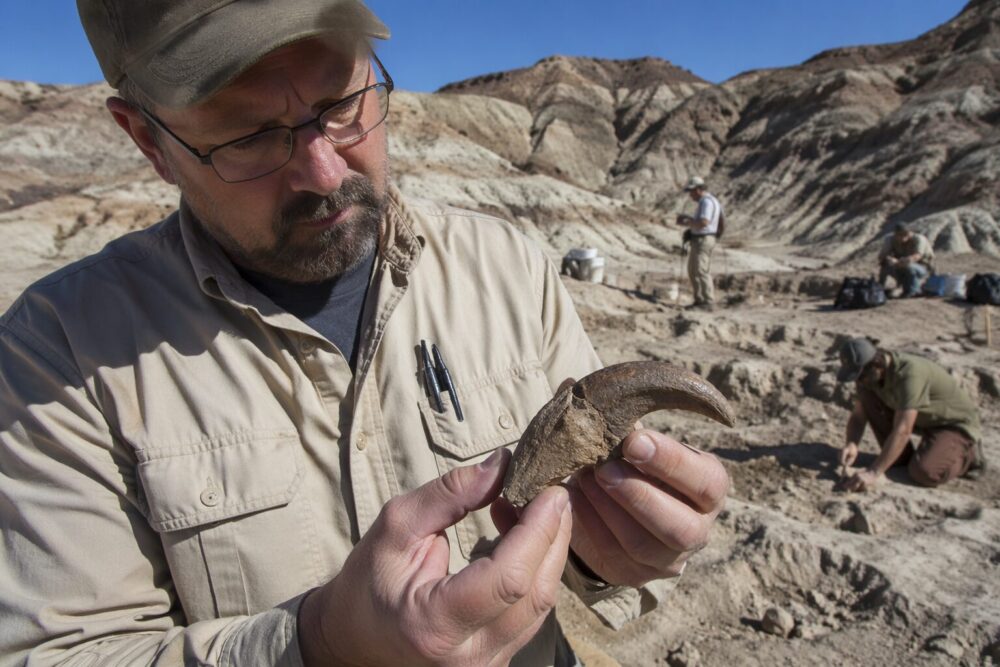
The film opens not at Jurassic Park, but at a paleontological dig site in Montana. Sam Neill’s Alan Grant is already in his element, lecturing a group of students about prehistoric life. Then he pulls out a fossilized Velociraptor claw and uses it to terrify a young boy in the crowd, explaining how these creatures were efficient killing machines.
This scene does crucial work. It establishes Grant as both an expert and a storyteller—someone who understands dinosaurs on an intellectual level but can also communicate visceral fear. When he runs the claw across the boy’s arm and describes the way raptors hunted, Neill delivers the line with theatrical menace. It’s the moment that sets up everything to come. Grant thinks he knows dinosaurs. He’s about to learn they’re far worse than his lectures suggested.
2. The First Sight: The Brachiosaurus Reaction That Changed Blockbuster Cinema
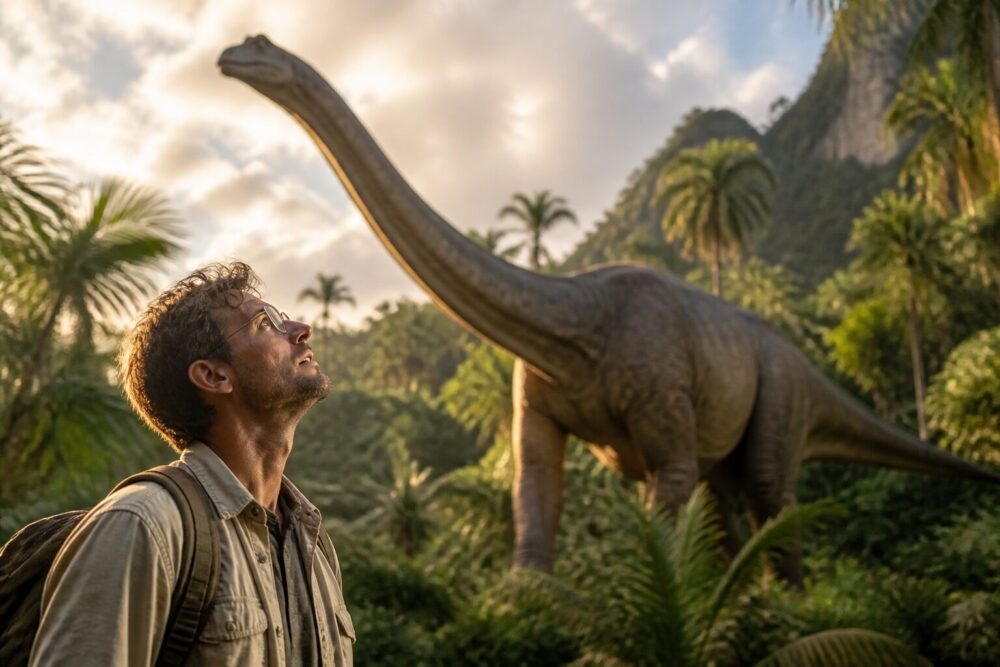
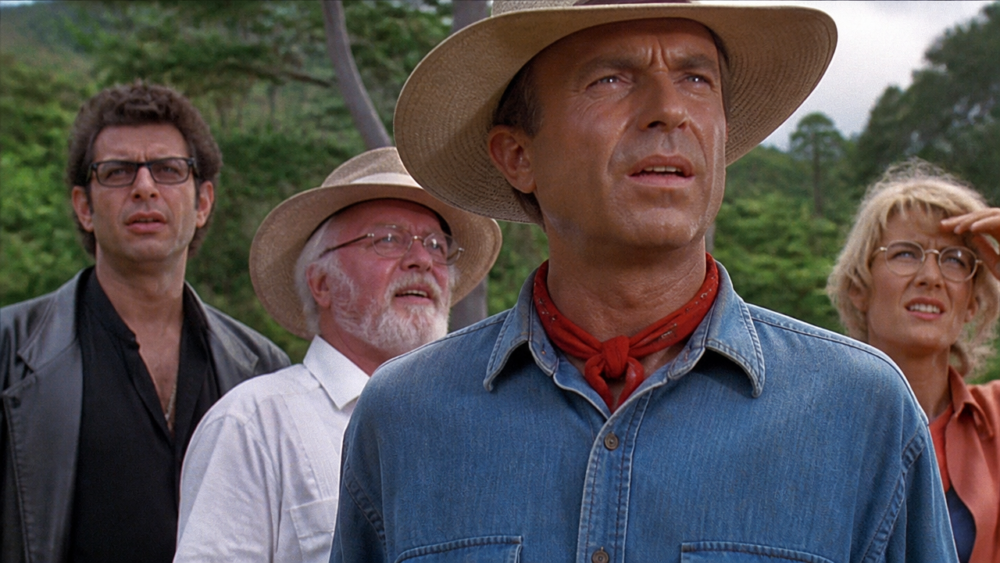
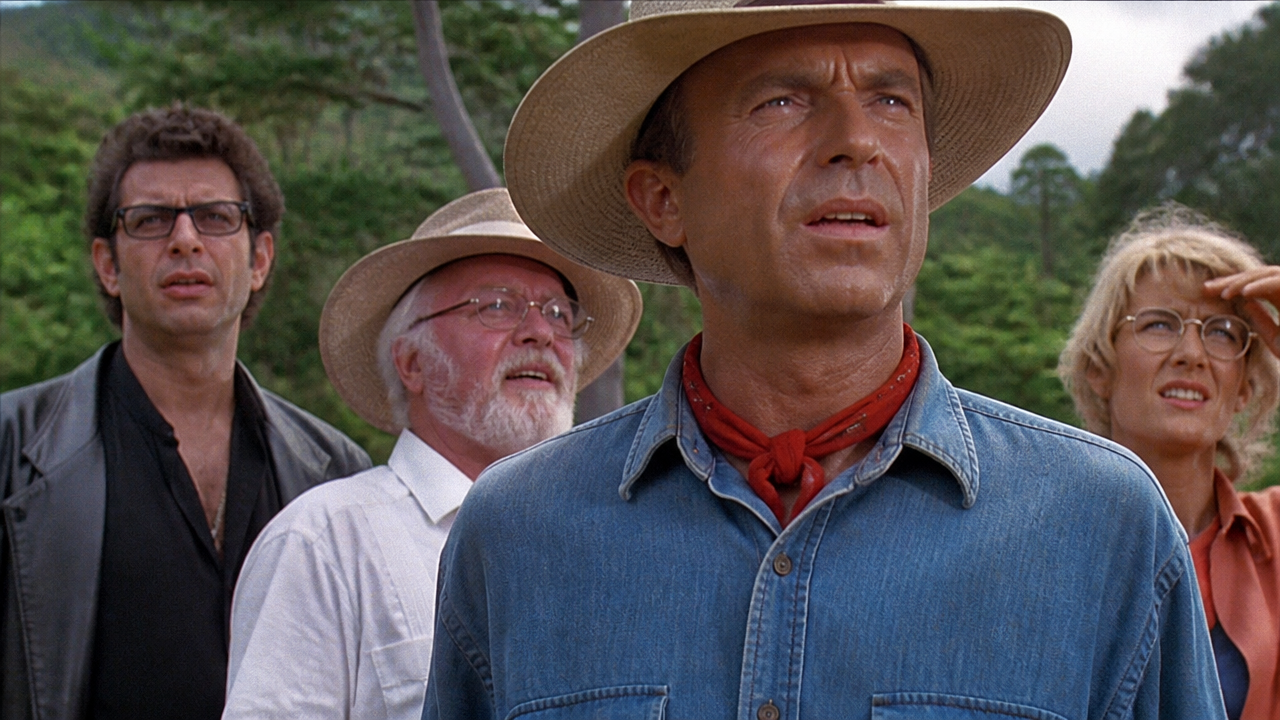
The moment Alan Grant first sees a living Brachiosaurus is arguably the most important scene in the entire franchise. Spielberg holds on Neill’s face as the massive herbivore rises up on its hind legs and strips leaves from the canopy. Neill’s expression shifts from confusion to dawning realization to pure, child-like wonder.
What makes this moment iconic is Neill’s restraint. He doesn’t scream or overact. His eyes widen. His mouth opens slightly. He breathes. The performance feels so genuine that it becomes the emotional center of the entire sequence. You’re not just watching a CGI dinosaur on screen—you’re watching a scientist’s worldview shatter in real time. This scene is often cited as the moment that redefined what blockbuster filmmaking could achieve, blending practical effects, cutting-edge CGI, and an actor’s subtle performance into something transcendent.
3. The Classroom Revelation: Understanding Velociraptor Pack Intelligence
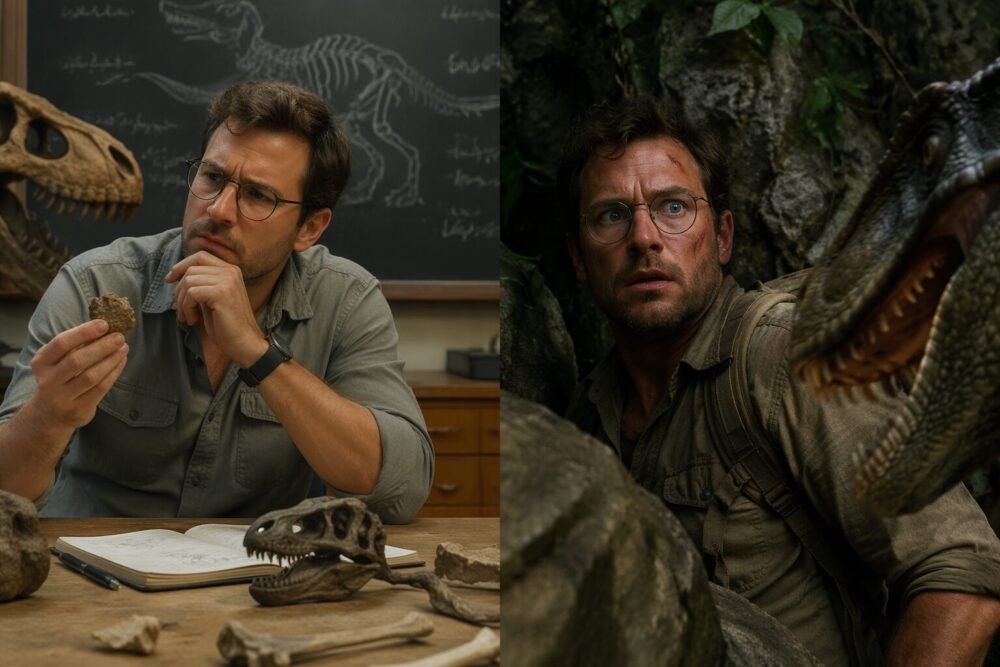
Back in the control room, Grant explains to the assembled group that Velociraptors possess a level of intelligence far beyond what anyone anticipated. He details their pack-based communication strategies, their ability to coordinate attacks, and their capacity for something resembling strategic thinking. Neill delivers this exposition with genuine alarm building in his voice.
This scene matters because it’s Grant warning everyone about a threat that won’t fully materialize until much later. His scientific analysis becomes a grim prophecy. The other characters dismiss his concerns—they think the fences and security systems are sufficient. But Neill’s tone makes it clear that he understands the real danger. By the time the raptors actually hunt the group, this earlier conversation has already made the threat feel personal and inevitable.
4. The Kitchen Hide-and-Seek: Survival Through Intellect and Patience
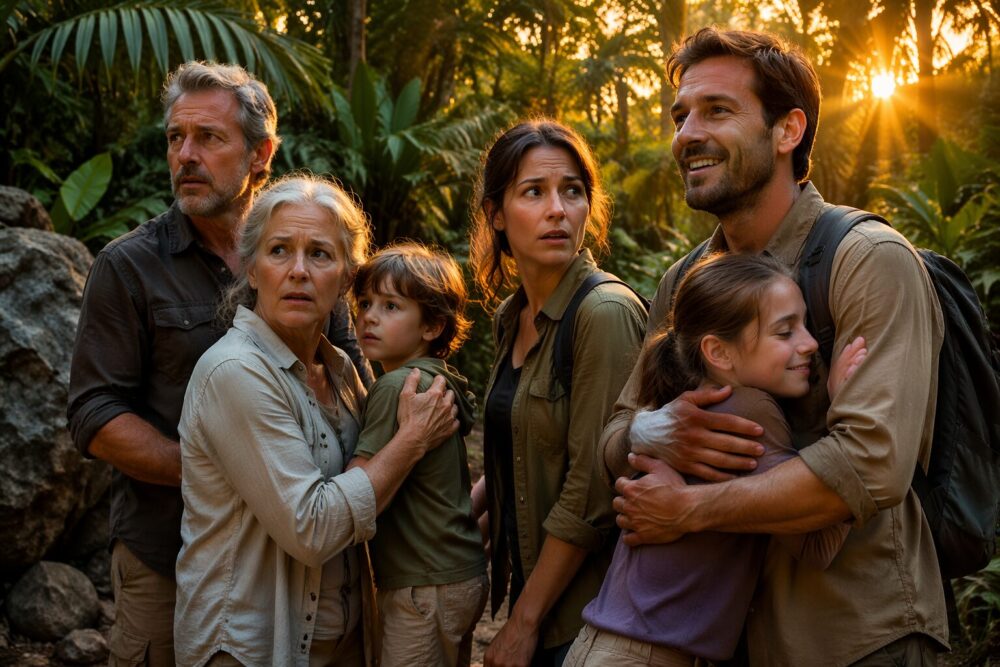
One of the most suspenseful sequences in the original 1993 film takes place in the park’s kitchen. The two children are hiding from Velociraptors, and Grant must reach them without being detected. The scene relies almost entirely on tension and Neill’s facial expressions as he communicates silently with the kids.
Neill plays this moment with meticulous focus. Every movement is controlled. Every glance is weighted with urgency. He doesn’t have much dialogue here—the scene is mostly visual storytelling. But that’s exactly why it works. Neill’s body language, his careful steps, his eyes darting between the children and the spaces where raptors might appear, convey an intensity that words would only undermine. It’s a masterclass in physical acting under pressure.
5. The Spinosaurus Encounter: Seasoned Survivalism in Jurassic Park III
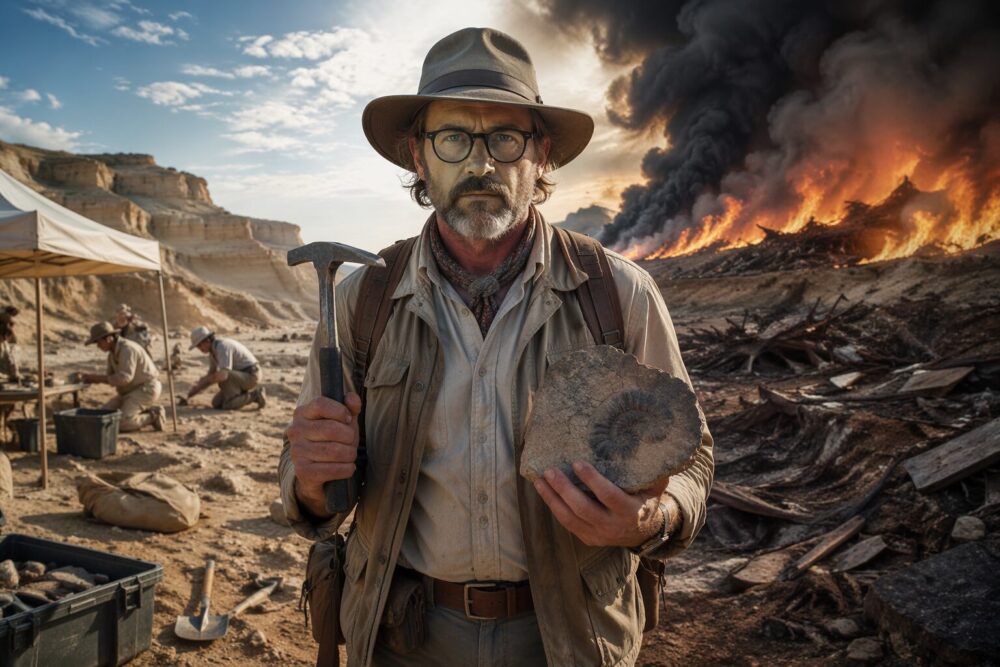
By Jurassic Park III, Grant has become hardened by his experience. When he’s suddenly facing a Spinosaurus—a dinosaur even larger and more dangerous than the T-Rex he survived—Neill plays the scene with a different kind of fear. This isn’t the wonder of the Brachiosaurus reveal. This is the terror of someone who knows exactly what he’s dealing with and knows it wants him dead.
The sequence works because Neill brings credibility to Grant’s survivalist skills. He understands the dinosaur’s behavior, anticipates its moves, and communicates strategies to the others. Yet he’s also visibly terrified. That combination—expertise mixed with justified fear—makes the scene feel authentic. Neill doesn’t play Grant as invincible. He plays him as someone using intelligence and experience to stay alive when every instinct is screaming to run.
6. Protecting the Siblings: The Evolution From Skeptic to Protector
Throughout the original film, Grant is forced to care for Tim and Lex, the park owner’s grandchildren. This arc culminates in several scenes where Grant shields them from danger, often at personal risk. Neill’s performance during these moments reveals how profoundly the disaster has changed his character.
Early in the film, Grant is reluctant to babysit—he’s a paleontologist, not a childcare provider. But by the climax, he’s genuinely protective, positioning his body between the children and threats, speaking to them with patience and reassurance even as danger closes in. Neill plays this transformation subtly, never making it melodramatic. It feels earned because we’ve watched it develop across the film’s runtime. The skeptical scientist has become something closer to a father figure.
7. The Helicopter Journey: Silent Acting as Isla Nublar Approaches
Grant’s first view of Isla Nublar from the helicopter is mostly silent. Neill sits in the aircraft, looking out at the island below, processing what he’s about to experience. Spielberg lets the camera linger on his face as various emotions flicker across it—anticipation, caution, scientific curiosity, a hint of dread.
This scene demonstrates Neill’s ability to convey complex internal states without dialogue. You can read his thoughts on his face: excitement about seeing prehistoric creatures, anxiety about the park’s safety protocols, uncertainty about what’s to come. It’s the kind of acting that modern filmmaking often glosses over in favor of exposition-heavy dialogue. But Neill trusts the camera and his own face to do the work.
8. The Fossil Discovery: Enthusiasm Meets Catastrophic Reality
Early in the film, Grant is genuinely thrilled to examine the park’s dinosaur fossils and skeletons. Neill plays these scenes with authentic scientific passion—gesturing animatedly, explaining details with real enthusiasm, treating the preserved specimens like precious artifacts. He’s in his element, surrounded by the evidence of life forms he’s only read about in textbooks.
What makes these moments iconic in retrospect is the irony. Grant’s initial enthusiasm for the park is completely genuine. He isn’t cynical or overly cautious at first. Neill portrays him as someone whose dream is coming true. Then, of course, the dream becomes a nightmare. Rewatching these early scenes after knowing what happens creates a poignant contrast that deepens the film’s impact. Neill’s genuine joy early on makes the horror that follows feel more tragic.
| Moment | Film | Emotional Core | Why It Matters |
|---|---|---|---|
| Raptor Claw Reveal | Jurassic Park (1993) | Scientific confidence mixed with theatrical fear | Establishes Grant’s expertise and foreshadows the threat |
| Brachiosaurus Reaction | Jurassic Park (1993) | Pure wonder and awe | Defines the film’s emotional center and Neill’s subtle acting |
| Raptor Intelligence Lecture | Jurassic Park (1993) | Urgent warning masked as exposition | Grant’s knowledge becomes a grim prophecy |
| Kitchen Sequence | Jurassic Park (1993) | Silent tension and protective instinct | Showcases Neill’s physical acting under extreme pressure |
| Spinosaurus Fight | Jurassic Park III (2001) | Seasoned fear and tactical thinking | Demonstrates how experience has changed Grant’s approach |
| Sibling Protection | Jurassic Park (1993) | Reluctant protector becoming genuine father figure | Character arc completion through subtle performance |
| Helicopter Approach | Jurassic Park (1993) | Internal conflict conveyed silently | Neill’s restraint and facial nuance shine without dialogue |
| Fossil Enthusiasm | Jurassic Park (1993) | Authentic scientific passion | Creates poignant irony when discovered passion becomes survival |
9. The Welcome to Jurassic Park Moment: Awe and Terror in One Expression
There’s a scene where the group first experiences the park in its intended glory—no chaos, no dinosaurs on the loose, just the promise of a functioning attraction. Grant’s reaction as he takes in the sight combines genuine wonder with an undertone of unease. Neill plays it brilliantly: this is what he dreamed of, yet something about it feels wrong.
His face shows simultaneous reactions—the childlike amazement of a paleontologist seeing living dinosaurs, and the professional concern of a scientist aware that human hubris often precedes catastrophe. The scene lasts only moments, but Neill’s layered expression carries the entire thematic weight. It’s the moment before everything falls apart, and he seems to sense it.
10. The Boat Chase Sequence: Navigating Terror in Jurassic Park III
In the third film, Grant finds himself on a boat navigating a river while dinosaurs pursue from the banks. Neill plays this scene with a combination of quick tactical thinking and barely suppressed panic. He’s giving orders, making split-second decisions, reacting to threats that materialize suddenly from the jungle.
What’s effective here is that Neill doesn’t make Grant superhuman. He’s afraid. He’s making educated guesses based on limited information. He’s doing his best under impossible circumstances. The scene works because Neill conveys both competence and vulnerability simultaneously. Grant has learned from his previous encounters, but he’s not invincible. The dinosaurs are still more powerful, more dangerous, and more unpredictable than his knowledge can account for.
11. Raptor Psychology: The Moment Grant Predicts Their Next Move
During a crucial sequence, Grant realizes something terrifying about the Velociraptors: they’re not just dangerous, they’re smart enough to plan, to communicate, and to hunt with purpose. Neill delivers his observations with mounting horror, understanding that these creatures operate on a level of intelligence that puts everyone in mortal danger.
The brilliance of this moment is Neill’s delivery. He’s not just describing facts—he’s connecting dots in real time, and each connection makes him more afraid. His voice carries the weight of scientific understanding combined with the dawning realization that intelligence + predatory instinct = a threat that can’t be contained or reasoned with. It’s exposition, but Neill makes it feel like a horror movie’s crucial turning point.
12. Character Legacy: Why Fans Vote Alan Grant as the Franchise’s Best Character
Despite the franchise’s massive dinosaurs and explosive action sequences, fan polls consistently rank Alan Grant—Sam Neill’s character—as the most beloved character in the entire series. Viewers voted him over the T-Rex, over other human characters, over every major dinosaur threat. This speaks to the depth Neill brought to the role.
Grant isn’t a superhero. He’s a scientist forced into survival situations where his expertise is valuable but not sufficient. Neill played him as human—vulnerable, afraid, learning in real time, growing across the films. He made Grant relatable despite the extraordinary circumstances. That’s the mark of genuinely iconic acting. The character endures not because of spectacle, but because Neill made you invest in his journey, his fear, and his eventual acceptance of a world far stranger and more dangerous than his textbooks predicted.
Neill’s performance across the Jurassic Park franchise proves that compelling character acting can anchor even the most spectacle-driven blockbuster. These 12 moments showcase why.
Common Mistakes
One mistake viewers make is assuming Grant’s fear diminishes his authority. In fact, Neill’s willingness to show Grant’s genuine terror makes him more credible as a scientist. Real experts in dangerous situations don’t pretend to be fearless—they manage their fear while applying their knowledge. Neill understood this nuance.
Another mistake is overlooking the quieter scenes. The helicopter approach, the fossil enthusiasm, the small glances between Grant and the children—these moments don’t have dinosaurs or explosions, but they’re where Neill’s most compelling acting happens. They’re easy to forget on a first viewing, but they’re crucial to why the character endures.
Some viewers also underestimate how much Neill’s performance improved across the films. Jurassic Park III, often dismissed as weaker than the original, actually showcases a more seasoned, harder version of Grant. Neill brings different energy to the role, reflecting how trauma and experience have changed the character. It’s subtle but significant.
FAQ
Q: Are there more Sam Neill moments in Jurassic sequels?
Sam Neill returned as Dr. Alan Grant in Jurassic Park III and Jurassic World: Dominion. These films added new iconic moments featuring his character’s wisdom and courage. In Dominion, Grant’s appearance marked a significant return to the franchise after more than a decade, reconnecting with the legacy he’d established in the original trilogy.
Q: How did Sam Neill react to the Brachiosaurus?
In the ‘Welcome to Jurassic Park’ scene, Sam Neill and Laura Dern look up in awe at a Brachiosaurus. His genuine wonder became one of the movie’s most memorable moments. The scene relied partly on Neill’s reaction to a tennis ball on a stick, which he had to imagine as a massive dinosaur—a testament to his commitment to authentic acting.
Q: Will Sam Neill appear in future Jurassic films?
Sam Neill passed away on July 13, 2026, so he won’t appear in future Jurassic films. His last appearance was in Jurassic World: Dominion in 2022. The character of Alan Grant remains a cornerstone of the franchise’s legacy, and Neill’s performance across the films will continue to define how audiences remember the character.
Q: When did Sam Neill first play Dr. Alan Grant?
Sam Neill first played Dr. Alan Grant in Jurassic Park, released in 1993. The role made him internationally famous and defined his career in blockbuster films. His portrayal became the emotional touchstone for the entire franchise.
Q: What is Sam Neill’s most famous Jurassic line?
Sam Neill’s most famous lines include ‘This is not a game’ and warnings about dinosaur intelligence. His calm scientific voice helped ground the film’s thrilling action. The raptor-claw reveal and his explanations of dinosaur behavior carry the weight of authentic expertise delivered with genuine fear.
Q: Which Jurassic scene shows Sam Neill’s best performance?
The Brachiosaurus encounter scene showcases Sam Neill’s best performance, with his wide-eyed wonder and emotional reaction. It’s often cited as the moment that defines his character. The scene relies on Neill’s ability to convey complex emotion through subtle facial expressions rather than grand gestures.
Q: Who acted with Sam Neill in Jurassic Park?
Sam Neill acted with Laura Dern as Dr. Ellie Sattler, Richard Attenborough as John Hammond, and Jeff Goldblum as Dr. Ian Malcolm. These co-stars helped bring the jungle adventure to life. The chemistry between Neill and Dern created one of the film’s most believable relationships amid the chaos.
My Experience With 12 Iconic Sam Neill Moments in Jurassic Park You Won’t Forget
Rewatching these scenes for this piece reminded me why the original Jurassic Park still holds up decades later. Most of that durability comes down to Neill’s anchoring presence. When I first saw the film in theaters, I was hypnotized by the dinosaurs. Rewatching it now, I’m mesmerized by his face.
What struck me most is how much Neill trusts silence. The helicopter scene, the moments before chaos erupts, the quick glances at the children—he communicates volumes without saying much. That restraint is rarer than it should be in modern blockbuster acting. Grant becomes someone you genuinely care about protecting, which is remarkable when you consider his job is essentially to survive dinosaurs that weigh fifty tons.
The Brachiosaurus reveal still hits harder than it has any right to. I’ve seen it probably twenty times, and it still works because Neill’s reaction is credible. He’s not performing amazement for the camera—he’s genuinely experiencing it, and you believe him.
One insight that stood out: Grant’s best moments come when he’s forced to admit how little he actually knows. The dinosaurs violate every assumption he had about their behavior. Neill plays those realizations beautifully—the slight pause, the recalibration happening behind his eyes, the professional veneer cracking just enough to show real fear.
Which of these moments resonates most with you? Are you more drawn to Grant’s wonder early on, or his survival instincts later in the franchise?
Latest Updates
Jurassic World: Dominion, released in 2022, marked Sam Neill’s final appearance in the franchise, bringing his character’s journey full circle three decades after the original film. The film brought together Neill with Laura Dern and Jeff Goldblum, allowing longtime fans to experience the original trio reunited on screen. This reunion carried emotional weight precisely because of the foundation Neill had built across the previous films.
The broader Jurassic franchise continues to evolve, with Jurassic World Rebirth arriving in 2025 featuring an entirely new cast. Yet the impact of Neill’s iconic performances remains the benchmark against which newer films are measured. His portrayal of Alan Grant established the standard for how a human character can anchor a dinosaur-driven narrative—through expertise, vulnerability, and genuine emotional investment rather than spectacle alone.
References
- The Film Magazine. 10 Best Dr Alan Grant Jurassic Park Moments. https://www.thefilmagazine.com/10-best-alan-grant-jurassic-park-moments
- Fatherly. Ranking the ‘Jurassic Park’ Movies Only By Velociraptor Scenes. https://www.fatherly.com/play/ranking-jurassic-park-movies-velociraptors
- Rotten Tomatoes. (2025, January). 7 Jurassic Park & World Movies Ranked (Jurassic World Rebirth). https://editorial.rottentomatoes.com/guide/jurassic-park-world-movies
- Kyle Leaman. (2022, May). Best Action Scenes of All-Time: Jurassic Park Edition. http://www.kyleleaman.com/2022/05/best-action-scenes-of-all-time-jurassic.html
- Medium. All Jurassic Park Movies, Ranked in Order of Greatness. https://medium.com/@kyletleighton/all-jurassic-park-movies-ranked-in-order-of-greatness-f6a0b1960d77

Sarah Anderson . J
I’m the mom behind Wise Mom Blogger, where everyday creativity meets real-life motherhood. I share easy DIY crafts, cozy knitting and crochet projects, beginner-friendly sewing ideas, and family-tested recipes—plus quick baking hacks that make homemade feel doable on busy days.