Quick answer: A coin laundry is a business where washing machines and dryers run when you pay per use, usually with coins, cards, or an app. You bring your own clothes, load a machine, pay, and do the wash and dry yourself. Most people call these places laundromats.
If you have ever walked past a storefront full of washers and dryers with people folding clothes at a long table, you have seen a coin laundry. These shops are common in cities, near apartment buildings, and in college towns where not everyone owns a washer at home. This guide covers what a coin laundry actually is, how it works, what it costs, and how it is different from a full-service laundry business.
Feature
What to expect
Self-service
Standard
Payment method
Varies by location
Wash cost per load
$2 to $6
Dry cost per cycle
$1.50 to $2.50
Staff on site
Sometimes attended
Large or jumbo machines
Standard
Wash and fold service
Extra charge
Wash at home $1.00-$2.50
Coin laundry $3.50-$6.00
Average cost per load, home washer versus coin laundry (wash and dry combined)
What is a coin laundry, exactly?
A coin laundry is a store that rents out washing machines and dryers by the load. You bring your own laundry, load a machine, pay for the cycle, and run the whole thing yourself from start to finish. The industry group CLA, The Laundry Association, describes it as commercial-grade, self-service laundry equipment placed into a retail space.
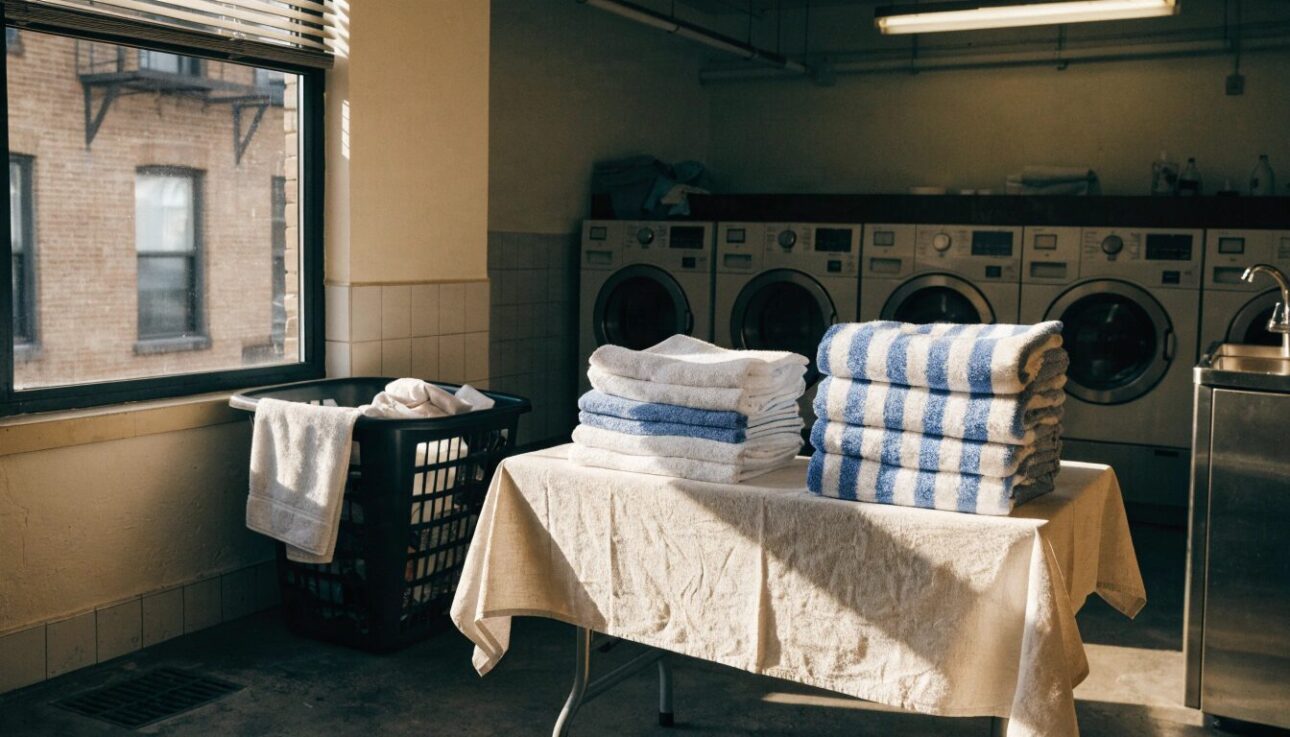
Most coin laundries have rows of washers in different sizes, a bank of dryers, folding tables, and often a vending machine for detergent or snacks. Some have an attendant who can make change or fix a stuck machine. Many run without staff at all, especially later at night.
Knowing this matters because it tells you what kind of trip you are signing up for. A coin laundry is not a drop-off service. You show up, do the work, and leave with clean clothes an hour or two later.
The first laundromat opened on April 18, 1934 in Fort Worth, Texas. Coin-operated machines have been around ever since, and even though payment methods keep changing from coins to cards to apps, the basic idea has not moved much in almost a century.
Why do people call it a laundromat instead?
Laundromat and coin laundry mean the same thing in the United States. Coin laundry is the older, more literal name, since the machines used to take actual coins. Laundromat became the common everyday word over time, and it is now the name most people use in conversation.
The name changes by country too. In the United Kingdom and Ireland, people say launderette or laundrette. In parts of Texas and the south central United States, older speakers sometimes still say washateria. All of these words point to the same kind of business: a room full of pay-per-use washers and dryers.
So if a friend says they are “heading to the laundromat” and another says “the coin laundry,” they are talking about the same trip. This is useful to know if you are searching online, since both terms pull up the same type of business on a map search.
How does a coin laundry actually work?
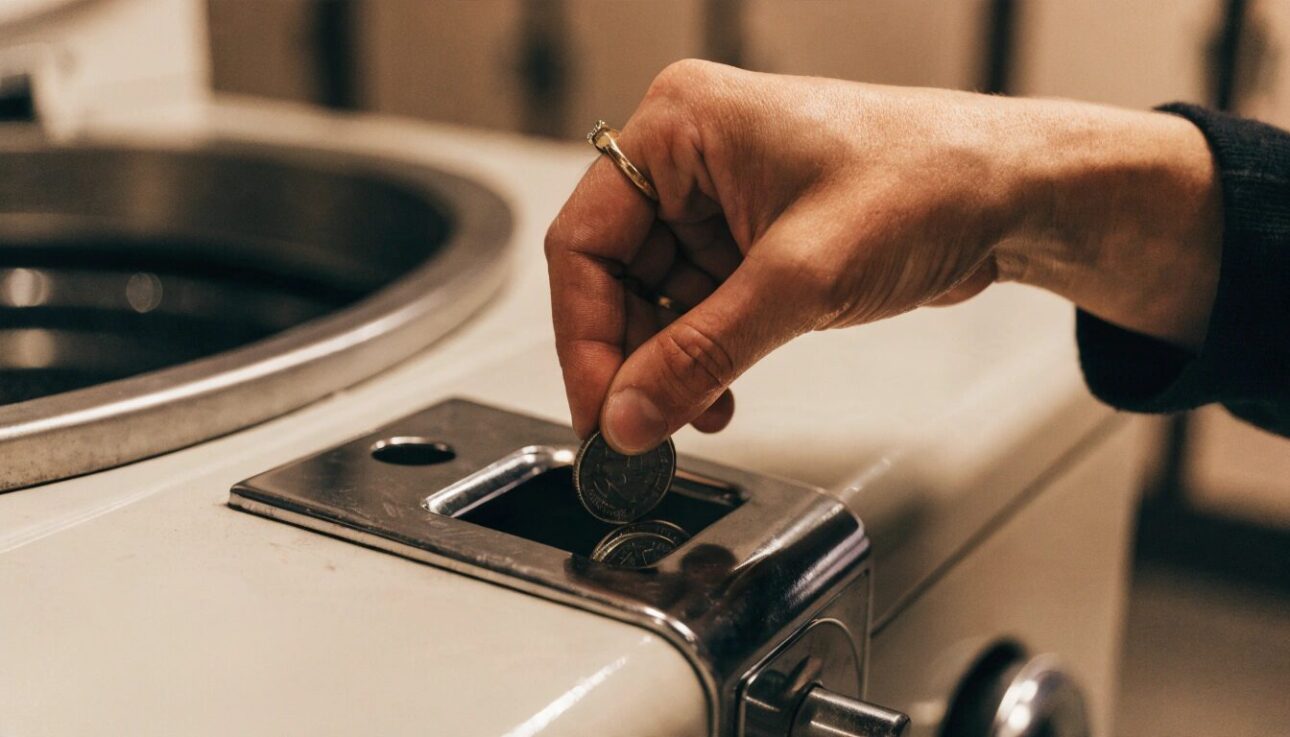
A coin laundry works by charging you per machine cycle instead of charging you to own the machine. You load your clothes into a washer, choose a cycle, and pay with coins, a laundry card, or an app, depending on the store. Once payment goes through, the machine locks and runs the cycle on its own.
Dryers work on a timer instead of a flat fee. You add money for a set number of minutes, often in 6 to 10 minute chunks, and the machine shuts off when the time runs out. If your clothes are still damp, you add more coins or credit and let it run again.
This pay-as-you-go setup is what makes a coin laundry useful for people who do not want to own a washer and dryer. You only pay for the loads you actually run, and the store takes care of repairs, water, and the machines themselves.
How do you do laundry at a coin laundry step by step?
You do laundry at a coin laundry by sorting your clothes, picking the right size machine, paying, and moving your load from washer to dryer when the cycle ends. Here is the full process from walking in to walking out.
Sort your clothes at home or on the folding table into lights, darks, and anything that needs a delicate cycle.
Pick a washer that fits your load size. A machine that is too small will not clean clothes well, and a machine that is too big wastes money.
Add your detergent, then load the clothes so the machine is not packed too tight.
Pay for the cycle using coins, a laundry card, or the store’s app, then start the machine.
Wait for the wash cycle to finish, usually 25 to 40 minutes depending on the machine and cycle type.
Move your wet clothes to a dryer right away so they do not sit and start to smell.
Add coins or credit for drying time, then check the load partway through and add more time if needed.
Fold your clothes at the table while they are still warm, since this cuts down on wrinkles.
Knowing these steps ahead of time means you spend less time standing around confused and more time actually getting your laundry done.
How much does a coin laundry cost?
A coin laundry usually costs $2 to $6 to wash one load and another $1.50 to $2.50 to dry it, so a full wash and dry lands somewhere between $3.50 and $8 total. The exact price depends on your city, the machine size, and how busy the store is.
Larger machines cost more per cycle but can hold more clothes, so running one big load is often cheaper than running two small ones. An $8 triple-load washer, for example, can replace three separate $3 loads that would have added up to $9.
Location changes the price a lot too. Coin laundries in big cities with high rent tend to charge more per load than ones in smaller towns. Prices can also shift by country, with wash cycles in South Korea and Japan running close to $3.50 to $7, while some South Asian countries charge closer to $1 per cycle.
This means it pays off to plan your trip. Bringing a full bag of laundry and using one large machine usually saves money compared to making several small trips throughout the week.
How is a coin laundry different from a full-service laundry or dry cleaner?
A coin laundry is different because you do the washing and drying yourself, while a full-service laundry or dry cleaner does the work for you. At a coin laundry, you load the machines, watch the cycle, and fold your own clothes. At a wash and fold service, you drop off a bag and staff wash, dry, and fold it, usually charged by the pound.
Dry cleaning is a separate process entirely. It uses chemical solvents instead of water and is meant for fabrics that cannot go through a regular wash cycle, like suits or delicate dresses. Some shops combine a coin laundry with a dry-cleaning counter, so you can drop off one item while you wash a load yourself, but the dry cleaning itself is not something you do at the machine.
This matters when you are choosing where to go. If you want the cheapest option and do not mind the hands-on work, a coin laundry is the better fit. If your time is limited or the clothing needs special care, a full-service or dry-cleaning drop-off makes more sense.
Price is usually the biggest difference too. Self-service washing and drying almost always costs less per pound than a wash and fold drop-off, since you are only paying for machine time and not for someone else’s labor. A drop-off service saves you the trip to fold and sort, but you pay for that convenience.
Who actually uses coin laundries?
Coin laundries are mainly used by people who do not have a washer and dryer at home. According to the Wikipedia entry on self-service laundry, most households in the United States do own laundry machines, so coin laundries fill the gap for renters, apartment dwellers, and anyone without hookups in their unit.
College students are another common group, since dorms and shared housing rarely include private machines. Travelers and people between homes also use them for a quick load without needing to own anything.
Some people with washers at home still use a coin laundry for oversized items like comforters, sleeping bags, or rugs, since the jumbo machines handle bulk loads that a home washer cannot fit.
Small business owners use them too, in a different way. Restaurants, salons, and gyms sometimes wash towels and linens at a nearby coin laundry with large-capacity machines instead of buying their own commercial equipment. It keeps their upfront costs down while still getting linens cleaned on a regular schedule.
Is a coin laundry a good business to own?
A coin laundry can be a solid small business because it runs with low staffing needs and no inventory to manage. According to CLA, The Laundry Association, there are roughly 29,500 coin laundries in the United States, together bringing in close to $5 billion a year in gross revenue.
Store values range widely, from around $50,000 for a small shop to more than $1 million for a large, well-located one, with yearly cash flow anywhere from $15,000 to $300,000. Stores are usually leased for 10 to 25 years and take up 1,000 to 5,000 square feet.
This kind of business appeals to owners who want steady income without managing employees closely, since many stores run unattended for parts of the day. It is not a get-rich-quick setup though. Equipment is expensive to install and repair, and profit depends heavily on location and foot traffic.
New stores are priced based on what it actually costs to build them out and buy the machines, while existing stores get valued mostly on how much money they already bring in. That difference matters to anyone shopping for a laundromat to buy, since a newer build with fresh equipment can look pricier upfront but need far less repair spending down the road.
The industry also splits into two parts that are easy to mix up. Coin-op laundries are the standalone storefronts open to the public. The other part, sometimes called the route laundry business, places coin-operated machines inside apartment buildings for residents only. Both run on the same pay-per-use idea, just in different settings.
Frequently Asked Questions
Do coin laundries still take actual coins?
Many still take quarters, but a growing number use laundry cards or phone apps instead. It is smart to check the store’s payment setup before you go, especially if you plan to pay with cash.
How long does a full wash and dry cycle take?
Plan for about an hour to an hour and a half total. Washing usually takes 25 to 40 minutes, and drying takes another 30 to 45 minutes depending on the load size.
Do I need to bring my own detergent?
Bringing your own is usually cheaper, but most coin laundries sell single-use packets of detergent, fabric softener, and dryer sheets from a vending machine if you forget.
Is a coin laundry the same as a laundromat?
Yes. Coin laundry and laundromat describe the same type of self-service business in the United States. The word used just depends on the region and the speaker’s habit.
Can I drop off my laundry instead of doing it myself?
Many coin laundries also offer wash and fold drop-off for an added fee, usually priced per pound. This is a separate service from the self-service machines, not part of the standard coin laundry setup.
References
Wikipedia, “Self-service laundry” (2026)
CLA, The Laundry Association, “Industry Overview” (2026)
Setomatic Systems, “Vended Coin Laundry” (2026)
Laundromaps Blog, “How Much Does a Laundromat Cost? Complete Pricing Guide for 2026” (2026)
Blue Leaf Laundry, “How Much Cash to Bring to the Laundromat: A Quick Guide” (2025)
Sarah Anderson . J
I’m the mom behind Wise Mom Blogger, where everyday creativity meets real-life motherhood. I share easy DIY crafts, cozy knitting and crochet projects, beginner-friendly sewing ideas, and family-tested recipes—plus quick baking hacks that make homemade feel doable on busy days.