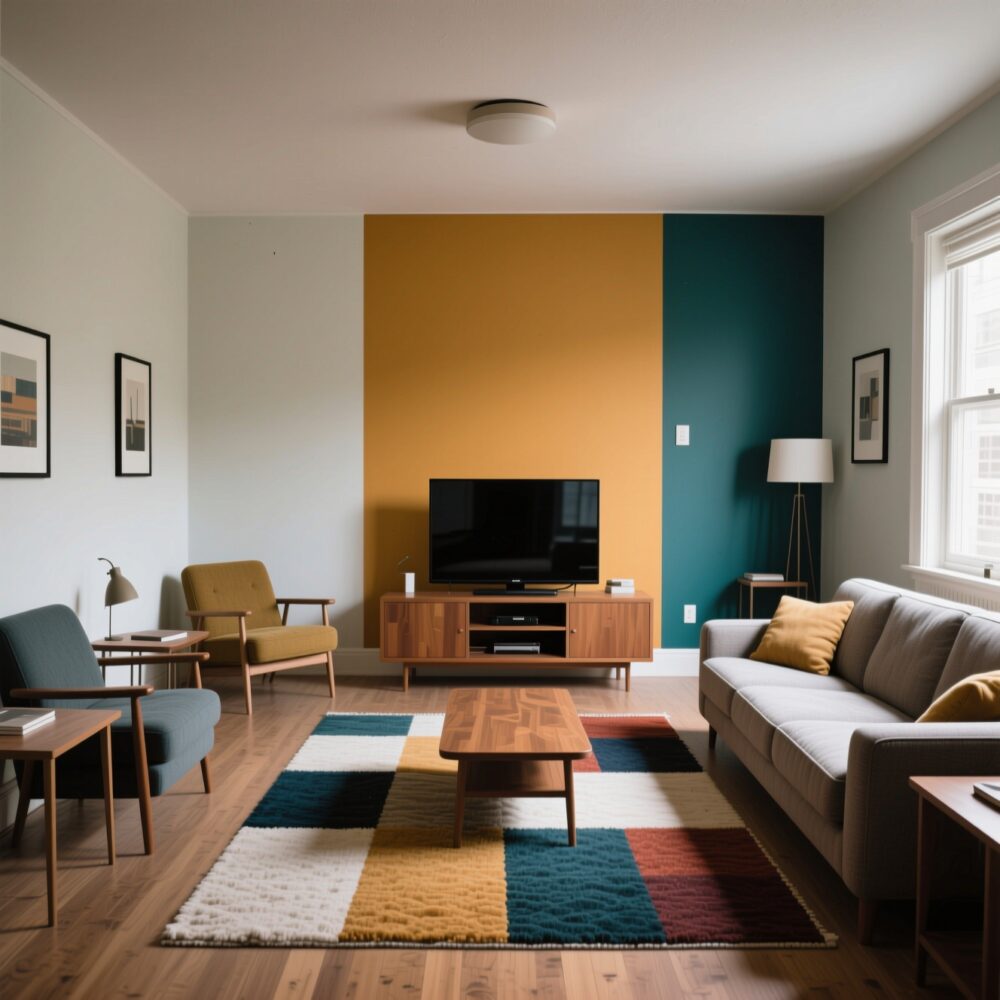
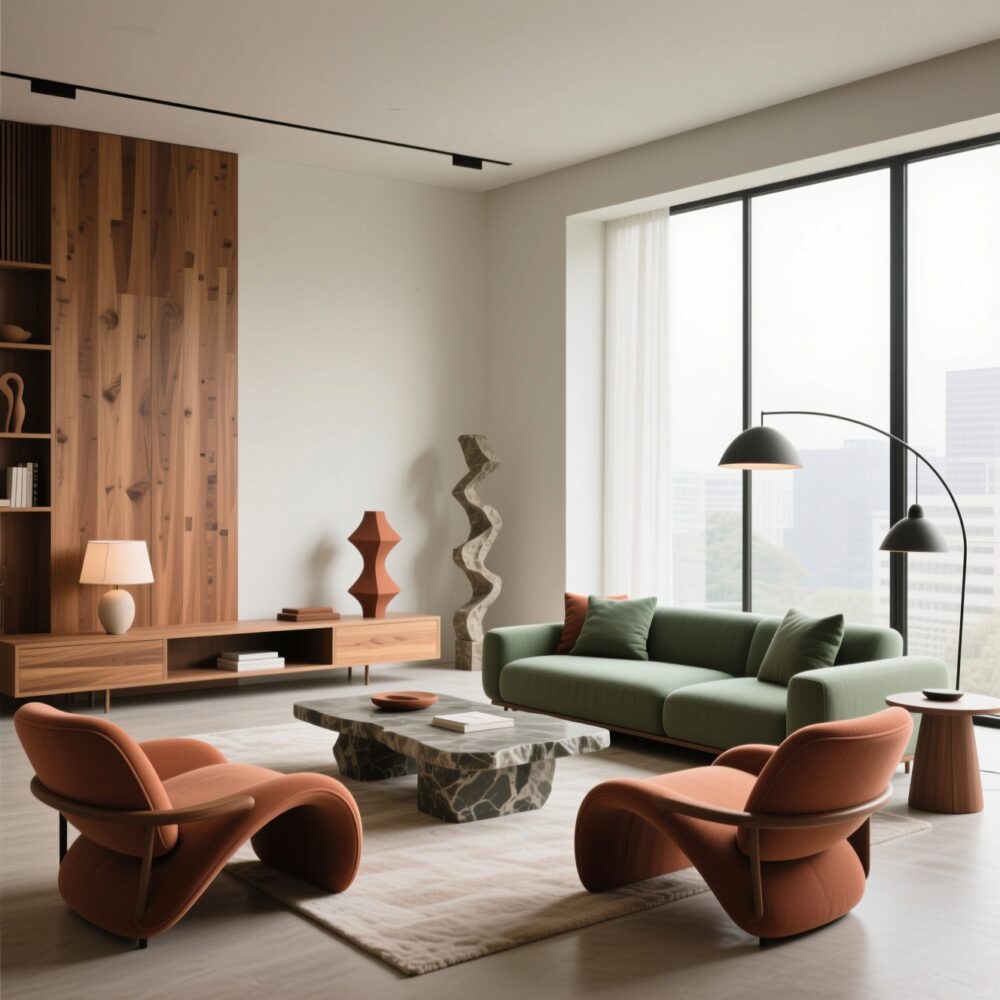
Struggling to make a long, tunnel-like space feel balanced and inviting? Great living room ideas for rectangular rooms can transform an awkward layout into a cozy, functional home. Whether you are planning a fresh refresh ahead of the holidays or doing a simple room makeover for everyday living, the right rectangular living room layout makes all the difference. These ideas work for narrow rooms, wide rectangles, and open-plan spaces alike. Let this guide be your easy, beginner-friendly starting point.
Quick Answer
The best living room ideas for rectangular rooms focus on three things: anchoring the space with a clear focal point, dividing the room into intentional zones, and choosing furniture that fits the proportions. Floating a sofa away from the wall, mixing seating types, and using pairs of accessories all help long rooms feel balanced and purposeful.
Key Takeaways
Every rectangular living room needs a strong focal point to anchor the layout
Zoning turns one long room into two or more useful spaces
Mixing sofas and armchairs beats one large sectional for flow and flexibility
Pairs of smaller accessories keep proportions balanced in long rooms
A seasonal furniture shuffle maximizes how your room works year-round
Rugs, lighting, and color are powerful non-furniture zoning tools
Blocking off unused open areas prevents the space from feeling chaotic
Floating furniture away from walls is almost always the smarter move
1. Start With a Strong Focal Point
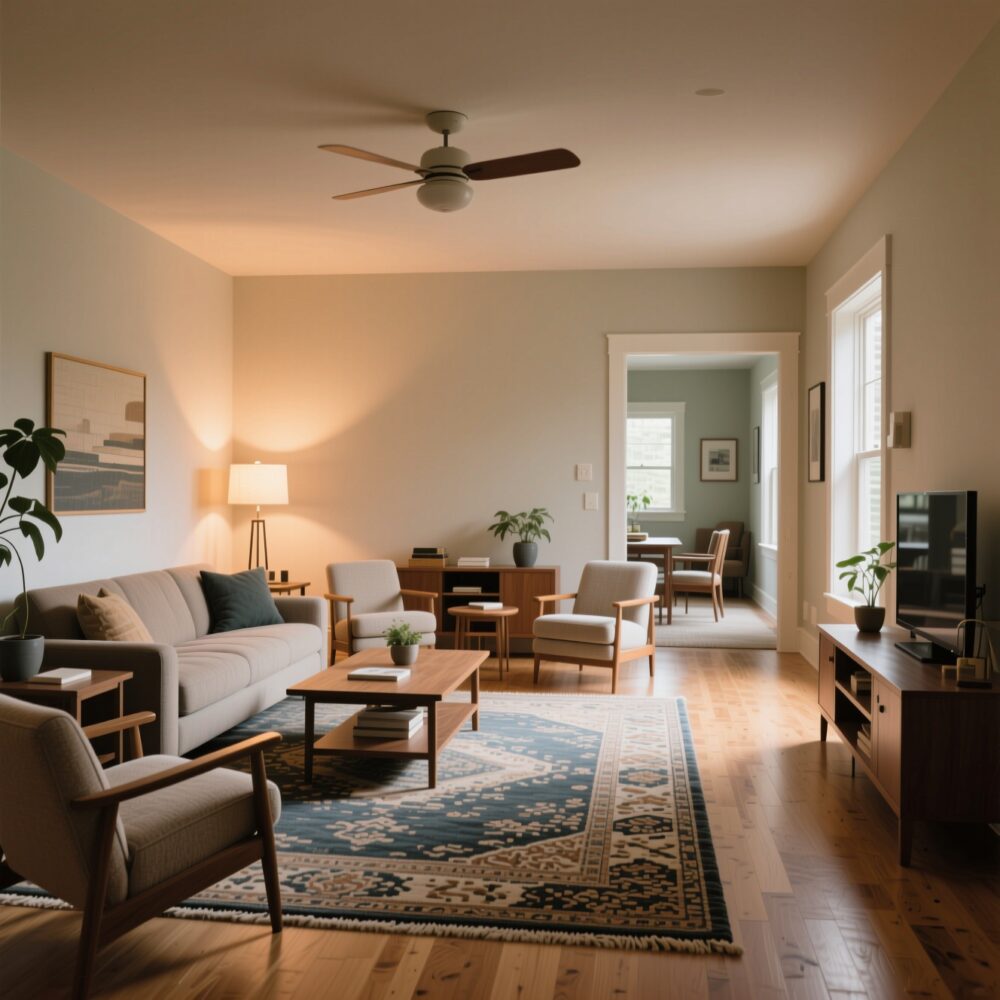
Every great rectangular living room layout begins with an anchor. Without one, the eye wanders restlessly from one end of the room to the other, and the space feels undefined.
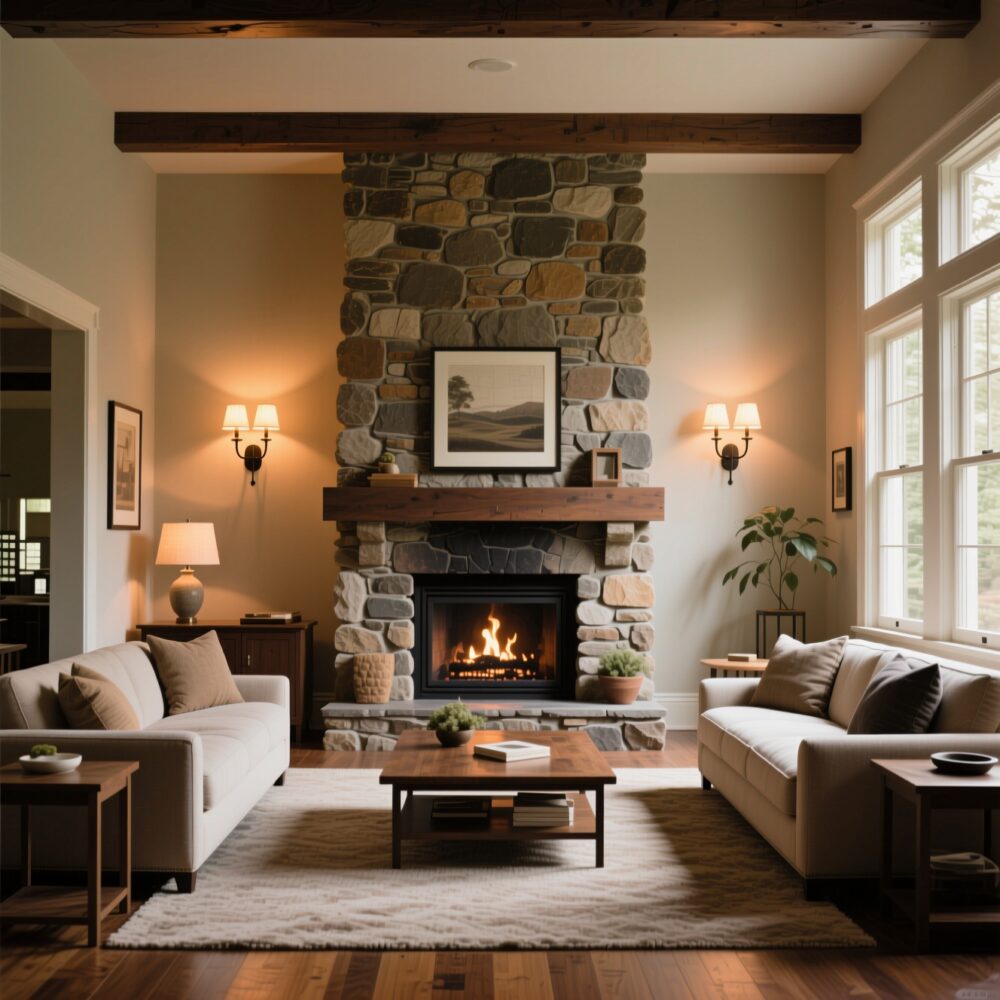
As The Living House explains, some rooms already have an obvious focal point — a picture window, a fireplace, or a bold feature wall. Lucky you, if that is your situation. Simply orient your primary seating toward it, and half the design work is already done.
When no natural focal point exists, create one. Options include:
A gallery wall centered on the longest or shortest wall
A large TV mounted above a media console with styled shelving on either side
A bold piece of statement artwork framed by symmetrical furniture
A freestanding fireplace or decorative mantel with layered décor
Short Wall vs. Long Wall Focal Points
The orientation of your focal point matters enormously. In a narrow rectangle, placing the TV or fireplace on the short end wall draws the eye lengthwise, which can accentuate the tunnel effect. Placing it on the long wall instead pulls attention across the room’s width, making the space feel broader and more balanced.
2. Use Zoning to Divide the Space
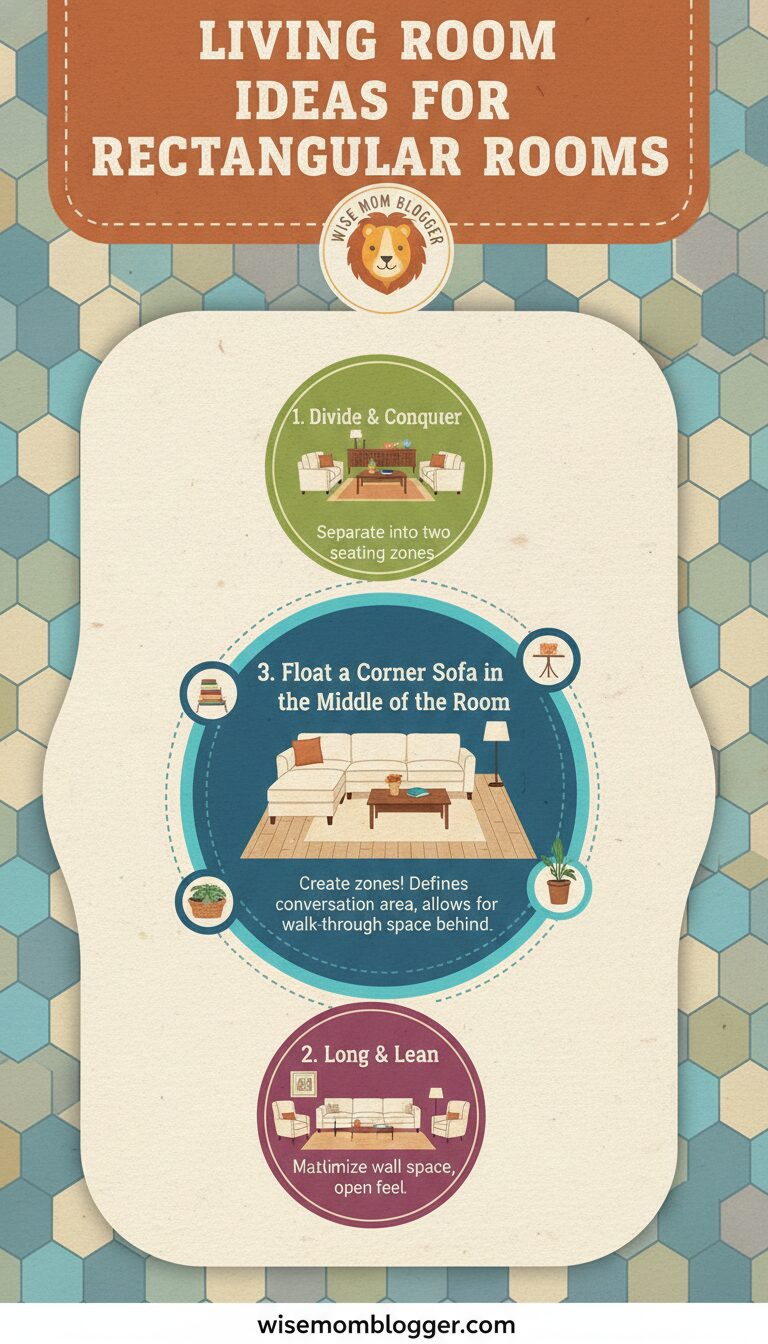
Zoning is the single most transformative strategy for rectangular living rooms. Rather than treating the room as one undivided area, you break it into two or more distinct functional pockets.
According to The Brain and the Brawn, zoning in a long rectangular living room allows one space to serve multiple purposes — lounging, reading, or even a casual home office corner — by grouping furniture intentionally. The result feels curated rather than crammed.
Practical ways to define zones include:
Rugs: Anchor each zone with its own rug to visually separate the areas
Lighting: Use a pendant or floor lamp to mark the boundary of a reading nook
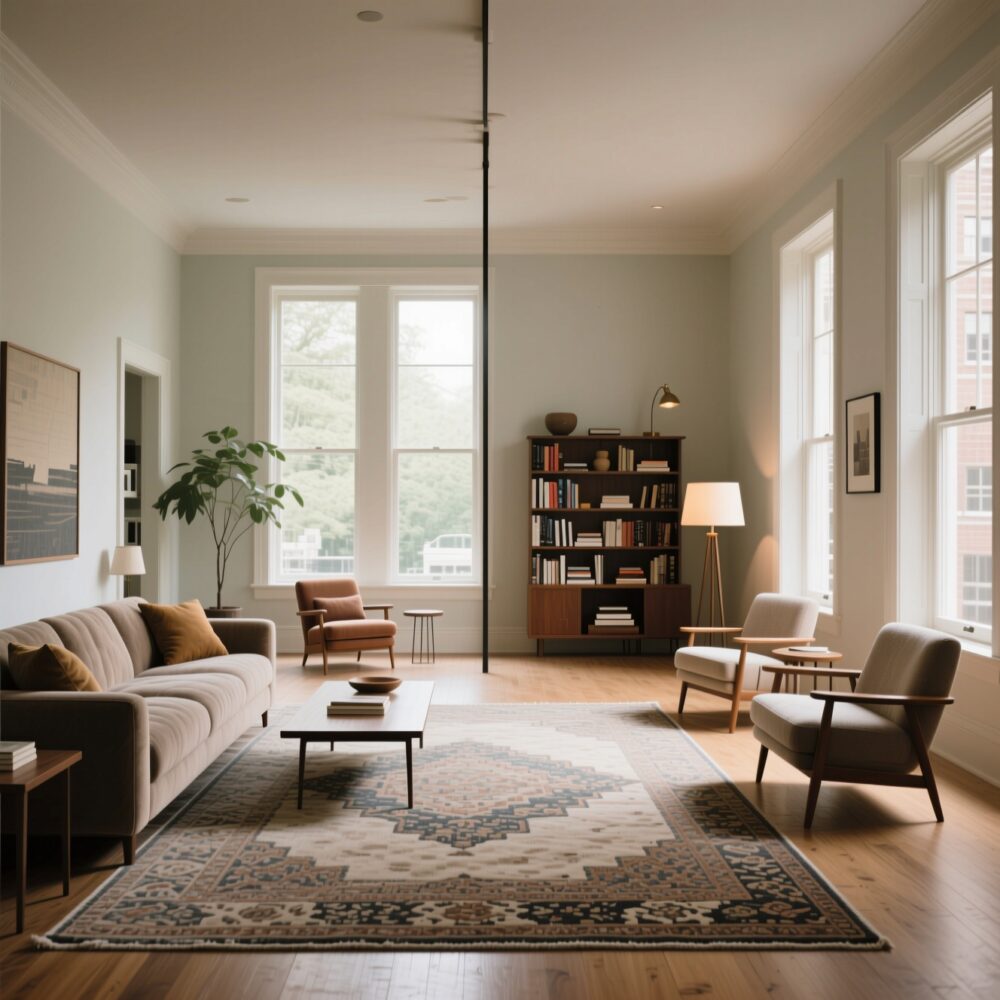
Room dividers: Bookshelves, open shelving units, or tall plants work beautifully
Furniture backs: Positioning a sofa with its back to one zone and facing another creates a soft boundary
The goal is for each zone to feel intentional, not like an overflow area where extra furniture was dumped.
3. Float a Corner Sofa in the Middle of the Room
This idea surprises most people, but it is one of the most effective living room ideas for rectangular rooms. Rather than pushing all furniture against the walls and leaving a hollow center, try floating a corner sofa away from the walls to create a defined central zone.
The Living House recommends using a corner sofa strategically placed in the middle of the room to anchor the main living area, with smaller activity zones occupying either end. This approach works especially well in long rooms where you need to break up the length visually.
Benefits of this layout include:
Creates a defined, cozy conversation area in the heart of the room
Leaves wall-hugging space at each end for secondary functions
Prevents the “bowling alley” effect that plagues narrow rectangles
Encourages natural traffic flow around the sofa rather than through it
4. Mix Sofas and Armchairs Instead of One Big Sectional
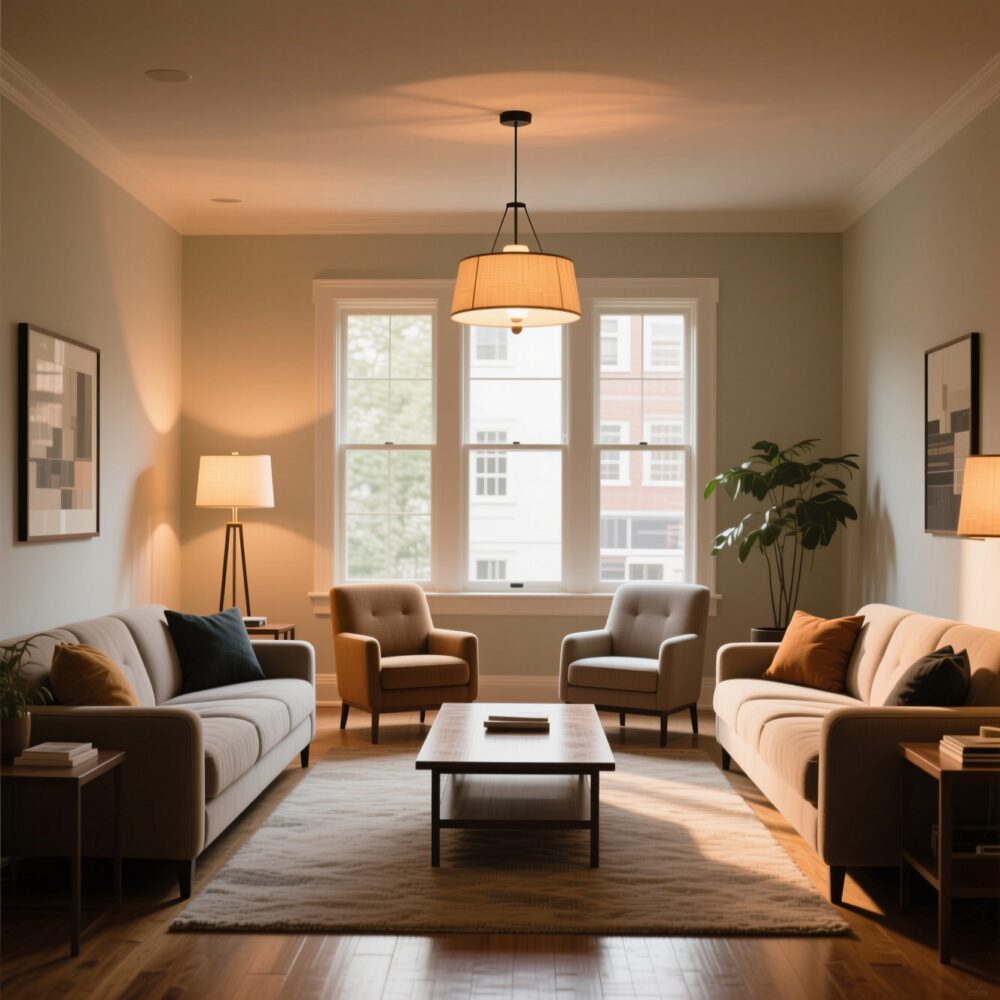
A single large sectional can overwhelm a rectangular room, block walkways, and make the layout feel rigid. Mixing a standard sofa with a pair of armchairs is a smarter, more flexible approach.
As The Brain and the Brawn advises, using a mix of sofas and armchairs in a long living room creates more opportunities for walkways and side table placement, improving both function and flow. Armchairs can be repositioned easily, pulled closer for intimate conversation, or shifted aside when you need more floor space for a party or family gathering.
A mixed seating layout also creates a more inviting conversational arrangement — chairs naturally face the sofa rather than sitting in a row like a cinema, which makes the room feel welcoming rather than passive.
5. Control and Define Traffic Flow
In a rectangular room, traffic flow is everything. Without a clear plan, people will walk straight through the middle of your seating area, which feels awkward and disrupts the room’s sense of purpose.
The Brain and the Brawn highlights a smart technique: deliberately blocking off open areas of the room that are not intended as traffic zones. If a particular corner or wall gap is not meant to be a doorway or entry point, use a piece of furniture, a plant, or a side table to close it off visually. This signals to anyone entering the room where the walkway actually is.
Key traffic flow principles for rectangular rooms:
Keep a clear path along the length of the room, typically 90 cm or more
Avoid placing furniture so that guests must squeeze between pieces
Use the sofa’s position to guide people around, not through, the seating zone
Place accent furniture like side tables and lamps at zone edges, not in walkways
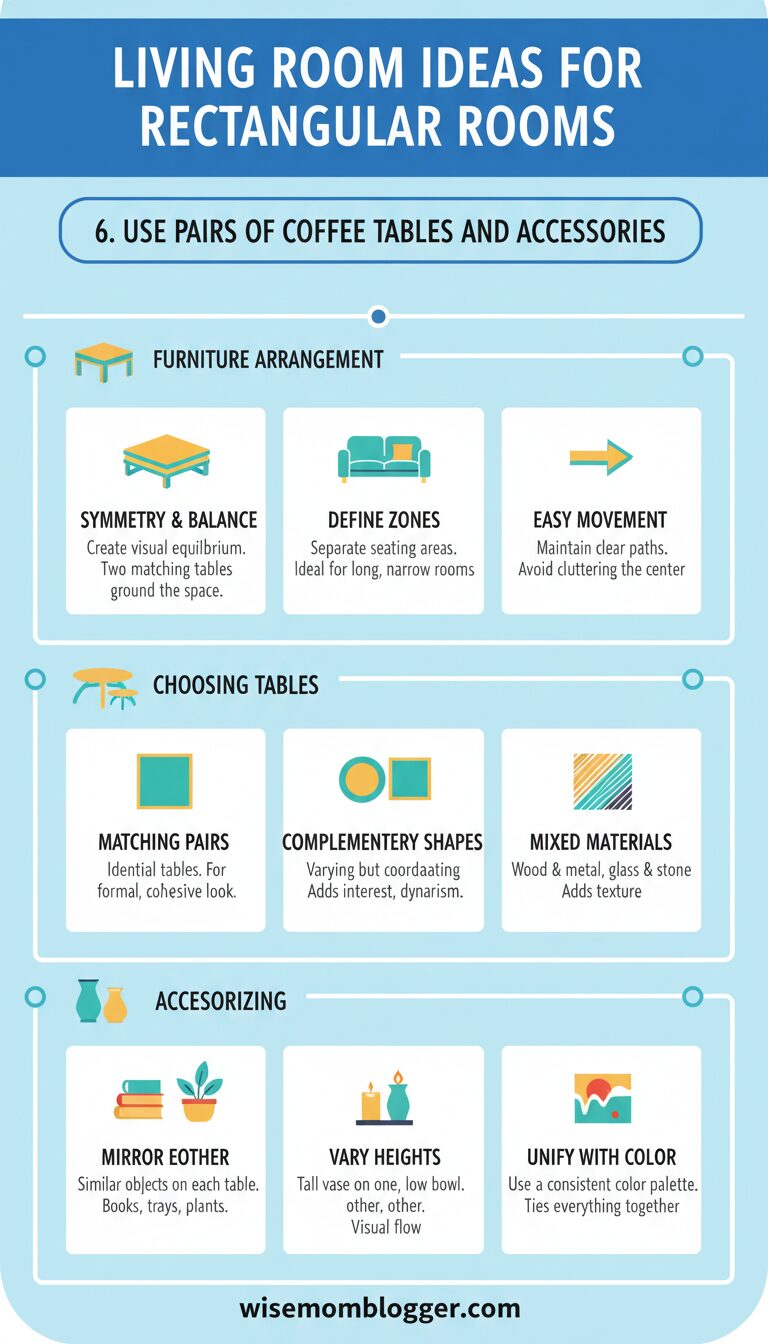
6. Use Pairs of Coffee Tables and Accessories
Symmetry is a rectangular room’s best friend. Because the shape itself has a naturally balanced geometry, pairing furniture and accessories amplifies that inherent harmony.
Lauren Gilberthorpe Interiors recommends using two smaller coffee tables or footstools rather than one oversized centerpiece. In a long room, a single massive coffee table can feel heavy and awkward, while two matching or complementary pieces stay in proportion and offer more flexibility for rearranging during entertaining.
This pairing principle extends beyond coffee tables:
Item
Paired Version
Benefit
Coffee table
Two round ottomans
Easier to move, more flexible
Floor lamp
Two matching lamps
Visual balance across the room
Armchair
Two identical chairs
Creates symmetry around sofa
Side table
One each side of sofa
Anchors the seating zone
Artwork
Two framed prints
Fills wall without overpowering
7. Try a Seasonal Furniture Shuffle
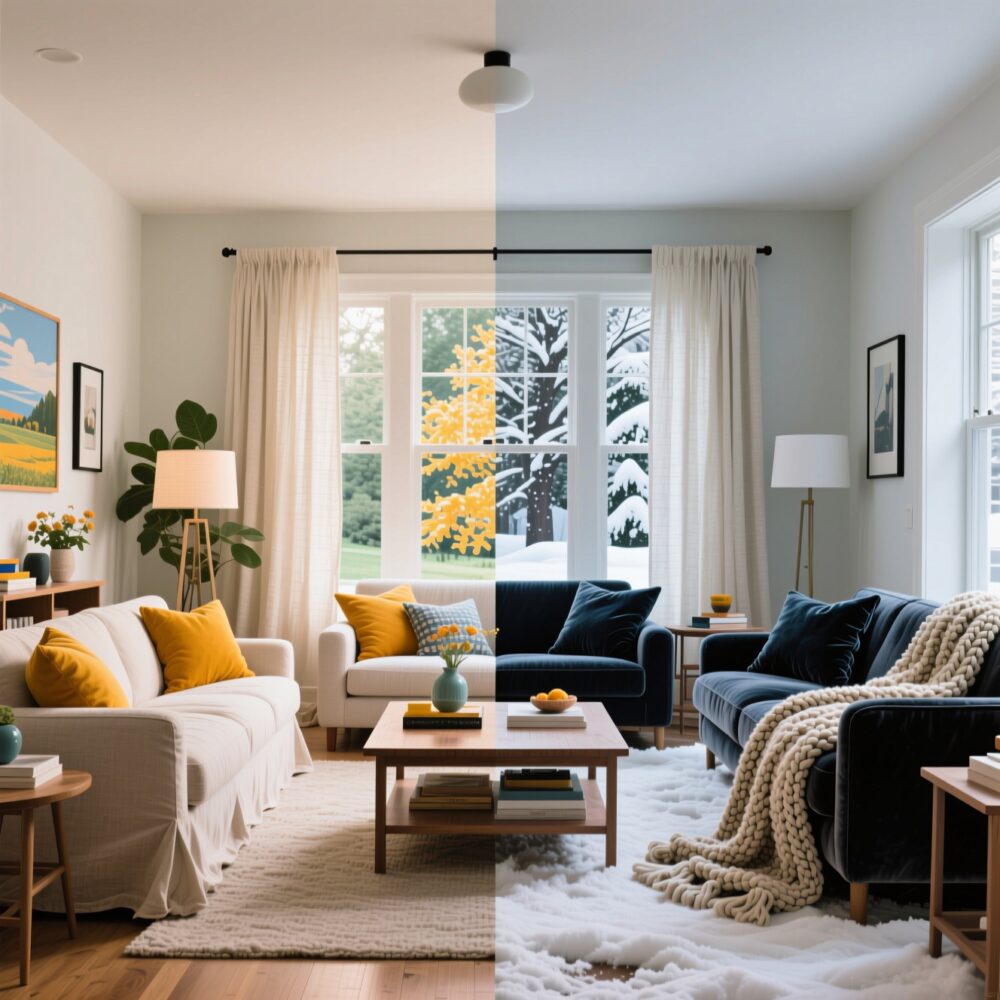
One of the cleverest living room ideas for rectangular rooms comes from interior designer Lauren Gilberthorpe Interiors: maintaining two distinct furniture arrangements for the same room — one for winter and one for summer.
In winter, orient the seating toward the fireplace to maximize warmth and create an intimate, cozy atmosphere perfect for holiday evenings. When summer arrives, reposition the furniture to open up pathways to the garden or outdoor space, making the transition between indoor and outdoor living feel natural and easy.
This strategy works best when you choose lightweight, modular furniture that can be shifted without a full overhaul. Look for:
Sofas with legs rather than heavy bases, making them easier to move
Lightweight armchairs that can be repositioned in minutes
Rugs that define zones but are not fixed in place
Nesting or stackable side tables that adapt to any configuration
8. Use Color, Rugs, and Lighting to Style the Space
Beyond furniture, several decorating tools can dramatically change how a rectangular room feels.
Color
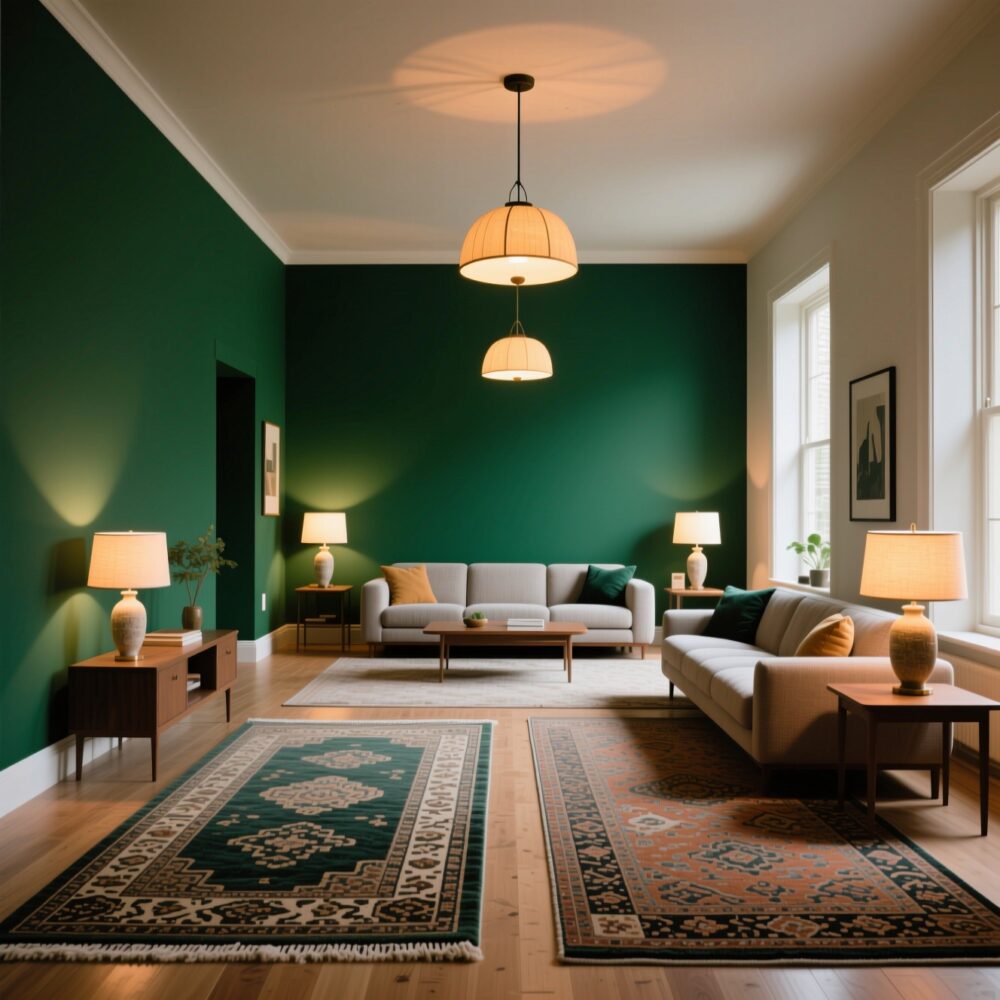
Paint a short end wall in a deeper, warmer shade than the rest of the room. This visually pulls the wall forward, making the room appear shorter and more proportionate. Light, cool tones on the long side walls create the illusion of width.
Rugs
A rug that is too small is one of the most common styling mistakes in rectangular rooms. Each zone should have its own appropriately sized rug with at least the front legs of every sofa and chair resting on it. This grounds the furniture grouping and makes each zone feel complete.
Lighting
Break up the length of the room with layered lighting. Overhead pendants or a chandelier anchor the center zone, while floor lamps mark reading nooks or secondary areas. Warm bulbs in the 2700K to 3000K range create a cozy residential feel that works beautifully for autumn and winter evenings.
Common Mistakes to Avoid in Rectangular Living Rooms
Even well-intentioned layouts can go wrong. Watch out for these frequent errors:
Pushing all furniture against the walls: This leaves a dead, uncomfortable center and makes the room feel like a waiting room
Choosing one oversized sectional: It dominates the space and blocks natural walkways
Competing focal points: Having the TV on one wall and the fireplace on another, both pulling equal attention, creates visual confusion
Using a rug that is too small: A small rug makes a seating group look unanchored and cheap
Skipping traffic flow planning: Placing furniture before mapping out how people will move through the room almost always leads to awkward results
Over-filling zones: More furniture does not equal better zoning — it just creates cramped pockets that feel stressful
2026 Trends
Rectangular living rooms are seeing several exciting layout and styling shifts heading into 2026:
Curved furniture in angular rooms: Rounded sofas and arched shelving soften the hard lines of a rectangular layout and add visual interest
Double-purpose zoning: One zone serving as both a home office and a reading nook during different times of day, supported by modular storage
Warm, earthy palettes: Terracotta, warm clay, and deep olive are popular for accent walls, especially on short end walls in long rectangular rooms
Micro-zones: Rather than two broad zones, designers are creating three or even four smaller, highly intentional micro-spaces within a single rectangular room
Statement lighting as zone markers: Oversized pendants and sculptural floor lamps are replacing physical dividers as the preferred zoning tool
FAQ
What is the best furniture layout for a long rectangular living room?
Float a corner sofa or standard sofa away from the walls to create a central zone, then use armchairs and secondary rugs to define a second activity area at one end of the room. Keep a clear pathway along the length of the room.
Should a sofa face the long wall or the short wall in a rectangular room?
It depends on where your focal point sits. If the TV or fireplace is on the short end wall, face the sofa toward it. If the focal point is on the long wall, position seating across from it to widen the room’s perceived proportions.
How do I make a narrow rectangular living room feel wider?
Use light, cool paint colors on the long side walls, place the TV on the short end wall, and use horizontal artwork. Avoid heavy curtains and dark rugs near the walls.
Is a sectional sofa good for a rectangular living room?
A large sectional can work if the room is wide enough, but it often limits flexibility and blocks walkways. Mixing a standard sofa with two armchairs is usually the more adaptable and proportionate choice.
How many zones should a rectangular living room have?
Most rectangular rooms work best with two clearly defined zones. Larger rooms can support three, especially if a home office corner or reading nook is needed alongside the main lounging area.
What size rug works best in a long rectangular room?
Each seating zone should have its own rug sized so that at least the front legs of all the furniture in that zone rest on it. In a long room, two medium rugs typically look better than one very long runner-style rug.
Conclusion
Rectangular living rooms carry huge potential — once you stop fighting the shape and start working with it. The core principles are straightforward: find or create a focal point, divide the space into intentional zones, choose furniture that fits the proportions, and use color, lighting, and accessories to tie it all together. As The Living House notes, even a corner sofa placed thoughtfully in the center of a room can completely transform how the space feels and functions. Lauren Gilberthorpe Interiors reminds us that flexibility is just as important as style, whether that means seasonal furniture shuffles or choosing pairs of smaller pieces over one oversized statement item. Start with one change — even just floating your sofa away from the wall — and watch how the entire room comes to life.
References
The Living House. (n.d.). Top tips on how to design your rectangular living room. The Living House. https://www.thelivinghouse.co.uk/blog-interior-design-tips/how-to-design-your-rectangular-living-room
The Brain and the Brawn. (n.d.). Awkward, narrow or long living room layout ideas: 15 clever designs (with TV, fireplace or without). https://thebrainandthebrawn.com/long-living-room-layout-ideas-narrow/?srsltid=AfmBOooMtF6jE6BuK9pG4t2oCkd7grFaOTyJETWDH9RO8el8oXq7snmn
Lauren Gilberthorpe Interiors. (n.d.). How to plan a rectangular sitting room (with example floor plans). https://laurengilberthorpeinteriors.com/layouts-rectangular-sitting-rooms/
Sarah Anderson . J
I’m the mom behind Wise Mom Blogger, where everyday creativity meets real-life motherhood. I share easy DIY crafts, cozy knitting and crochet projects, beginner-friendly sewing ideas, and family-tested recipes—plus quick baking hacks that make homemade feel doable on busy days.