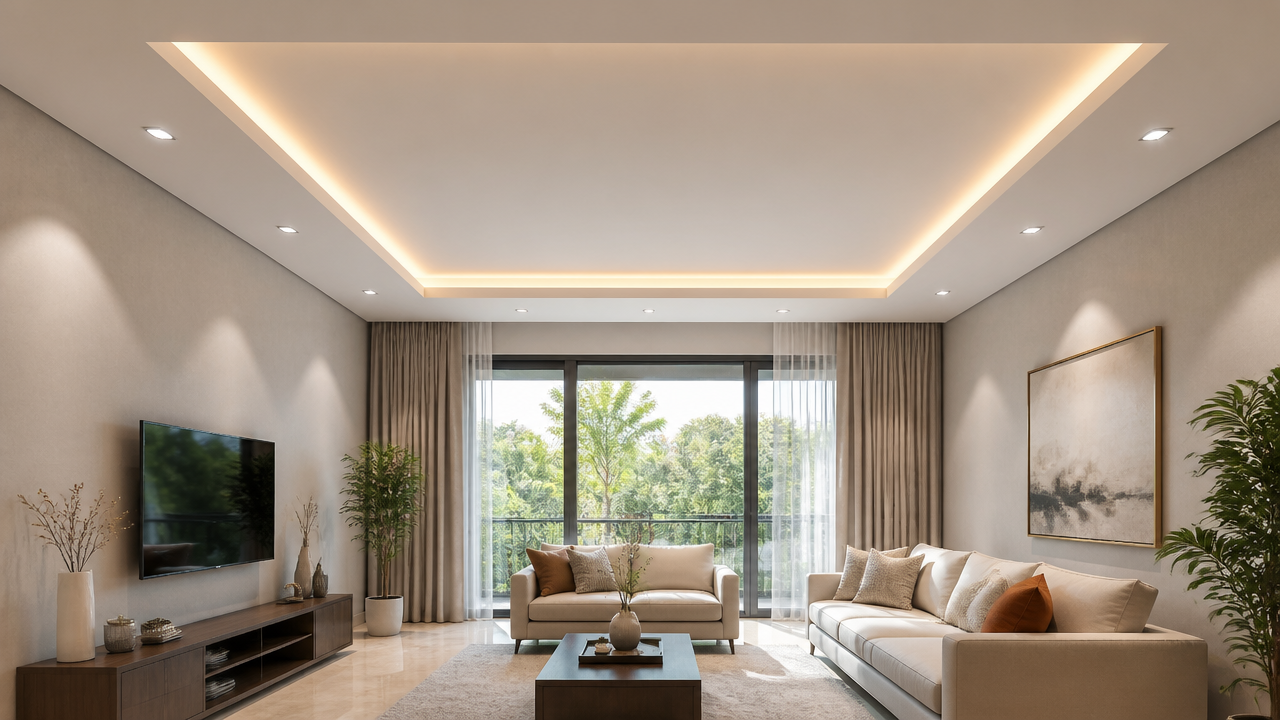
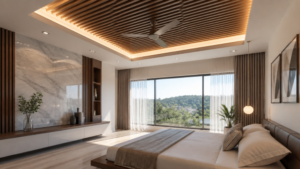
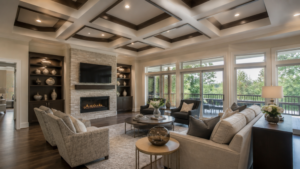
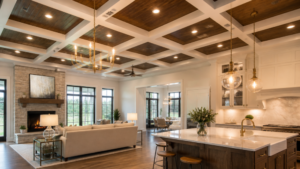
What makes ceiling design simple living rooms feel open instead of boxed in, especially when you want a minimalist living room ceiling that still looks finished? Simple ceiling design ideas for small living rooms often come down to light, clean edges, and smart lighting planning. You can spot it in modern simple ceiling design choices, from light-toned finishes to recessed or perimeter LED setups. Whether you’re refreshing a weekend gathering space or prepping for a holiday guest room vibe, the ceiling sets the tone long before anyone looks at the sofa. Let’s break down what to aim for and what to avoid.
Quick Questions and Answers
Question: Why is a simple ceiling design best for small living rooms?
Answer: Simple ceiling designs maximize the feeling of openness and light in small spaces. They prevent the room from feeling crowded or low, which is crucial for compact Indian homes. Using light colors and minimal layers helps reflect natural and artificial light, making the area feel airy and comfortable[1].
Question: Can I make a low living room ceiling appear higher easily?
Answer: Yes, you can use light colors, minimal layers, and indirect lighting to create an illusion of height. A smooth, matte white finish paired with layered lighting is a great go-to starting point. Adding a shallow cove along walls with LED tape can also make the ceiling feel lifted subtly[1][3].
Question: Do recessed lights work well in small living rooms with low ceilings?
Answer: Recessed lights work well in small living rooms if used in moderation and placed at the perimeter. Supplementing them with sconces or a slim center fixture prevents the ceiling from looking busy or pockmarked. This approach keeps the ceiling clean and visually raises the space[3].
Key Takeaways
Simple overhead design helps small and low living rooms feel taller by protecting headroom visually.
Light-colored, matte finishes reduce glare and hide minor joint imperfections better than high gloss.
Lighting (cove, recessed perimeter, and slim center fixtures) usually does more for “ceiling height” than decoration does.
Clean lines and light geometric accents add interest without turning the ceiling into the main event.
Ceiling Design Simple Living Rooms: Definition and Core Purpose
Simple ceiling design for living rooms means you keep the ceiling surface visually calm. In practice, that usually looks like fewer drops, fewer decorative moldings, and no heavy coffers that create lots of shadow breaks. I’m talking about overhead plans that avoid complex drop-ceiling grids, chunky detailing, and high-contrast patterns that make the ceiling feel closer to your head.
The functional goal is straightforward: create a sense of openness, light, and visual order. According to simpolo, a simple ceiling approach in small-house interiors prioritizes light reflection and minimal layering so the room doesn’t feel crowded[1]. When the ceiling plane stays visually “quiet,” the rest of your living room furniture and wall decor can play their role without fighting overhead for attention.
Small or low-ceiling homes often need this strategy more than bigger spaces. A complex ceiling pulls the eye upward in a busy way, then those shadows make the room feel lower. Research and design guidance from Armstrong’s living room ceiling ideas similarly point out that lower ceilings benefit from simpler designs that don’t eat up extra head space, and lighter-toned choices can visually enlarge the room[3]. In other words, a simple ceiling isn’t bland. It’s deliberate.
Core Concepts: Balance, Light, and Lines
Balance starts with geometry. Clean, geometric lines provide architectural interest without cluttering the ceiling plane. If you want a “designed” look, think edges and transitions—like crisp wall-to-ceiling junctions—rather than ornate crowns. Berger Paints also frames simple ceiling ideas as a way to add depth and dimension when you choose patterns thoughtfully, which matters when your goal is to keep the ceiling from feeling flat[2].
Light is the second half of the equation. Simple living room ceilings look better when lighting is planned into the design, not bolted on after. Perimeter recessed “can” lights, slim center fixtures, or modern track systems can keep the ceiling visually clean while still giving you usable illumination. Kanopi by Armstrong’s guidance on lower ceilings leans heavily on lighter-toned ceilings and simpler profiles to avoid feeling boxed in[3]. That same logic applies to lighting: fewer, calmer light sources tend to look more intentional in compact rooms.
Finish choice affects how light behaves on the ceiling. A matte white or soft light neutral finish helps reduce glare and hides minor joint imperfections. If you choose high gloss on a low ceiling, reflections can make uneven surfaces more obvious, which is exactly what you’re trying to avoid. Archways and Ceilings describes many modern simple ceiling looks as clean lines and modern light fixtures—paired with a calm ceiling plane so the room looks coherent[4].
Here’s how the design logic typically plays out in real rooms.
Ceiling approach
What you see overhead
Best for
Common downside
Flat, smooth ceiling
One continuous ceiling plane
Most small living rooms
Can feel plain without good lighting
Perimeter cove drop
A shallow inset at edges with soft glow
Low ceilings that need “lift”
Done too deep, it can reduce headroom
Light geometric accent lines
Simple lines or single-layer border
Modern living rooms that want structure
Too much pattern can look busy
Recessed lights at perimeter
Dots of light around the edges
Rooms that need even wash lighting
Overuse can make the ceiling look cluttered
Dropped beams or coffers (limited)
Strong shadow grid
Taller rooms or high ceilings
Can make compact rooms feel lower
Popular Categories for Minimalist Ceilings
Contemporary flat ceilings are the most common “simple” starting point. The ceiling stays smooth and mostly unbroken, often using gypsum board or plaster board so you can get a clean surface without a lot of visual interruptions. If your living room already has strong personality in furniture or wall art, a flat ceiling keeps everything else from becoming visually noisy.
Modern geometric accents work when you use them as a restraint tool. A single-layer dropped edge, a thin perimeter border, or a shallow cove can create a soft frame around the room. The goal is subtle architectural direction. Berger Paints suggests that even a simple pattern can help a room feel more dynamic and balanced when it’s thoughtful, which is why minimal geometry often reads as “intentional” instead of “unfinished”[2].
The “clean lines” approach is another category: sharp 90-degree transitions and restrained detailing at the ceiling perimeter. Instead of heavy crown moldings, you keep the wall-to-ceiling junction crisp, sometimes using a thin L-box border. Archways and Ceilings points toward clean, simple lines and modern light fixtures as a recurring theme in living room ceiling design[4]. I like this approach when I want the ceiling to support a modern chandelier or an understated fan without turning the overhead plane into a decorative headline.
Design Strategies for Small or Low-Height Rooms
Thin-profile solutions matter first. In many small living rooms, every extra inch is psychological. Even when a drop is structurally thin, it still changes how the ceiling plane reads in photos and in daily movement. That’s why I tend to treat ceiling drops like wardrobe layers: add only what you need, and keep the silhouette clean.
Avoiding dark colors, heavy textures, or complex geometric patterns is the next practical rule. Dark ceilings absorb light, which makes the room feel smaller. Bold patterns create shadow depth, which visually lowers the ceiling. Kanopi by Armstrong specifically points toward simpler designs for lower ceilings and lighter tones to visually enlarge the space[3]. If your ceiling is low, your design job is “make it disappear,” not “make it dramatic.”
Hidden perimeter lighting is one of the best tricks that still feels simple. A shallow cove with LED tape creates a wash of light near the walls, which makes the center ceiling area feel higher by contrast. The Quick Questions section above also echoes this approach: a shallow cove along walls with LED tape can make the ceiling feel lifted subtly[1][3]. This isn’t magic; it’s how your eyes interpret light gradients and boundaries.
Ceiling fans deserve a separate mention because they often clash with minimal designs. An outdated, chunky ceiling fan can visually compete with the clean ceiling lines. Many modern living rooms solve this with flush-mount fans that blend into the ceiling color or with fan placement strategies that keep the ceiling’s lighting layout legible. That’s a design detail more than a strict rule, but it’s one I keep seeing in modern simple ceiling planning.
If you’re also working on the rest of the room, ceiling choices connect to layout decisions. For instance, zoning patterns that keep the eye moving across the room can make the ceiling read more open too. If you’re working with a small plan, you might like how these living room layouts handle openness: cozy living room ideas for small spaces.
Latest Trends and Updates for 2026
Simple doesn’t mean basic in 2026. The trend is toward “luxury-minimalism,” where the ceiling stays quiet but materials and lighting finish look more refined. In real living rooms, this often means smoother micro-finish looks, better controlled cove brightness, and more careful edge lines so the ceiling border doesn’t look like an afterthought.
Smart-lighting integration is another shift. When lighting lives inside simple recessed channels or well-hidden coves, you get dimming flexibility without changing the ceiling’s visual structure. That matters because low ceilings can swing between “too bright” and “too flat” depending on time of day. Smart dimming helps keep the room mood consistent, especially during evenings when warm layers look best.
Fan styling is also trending cleaner. Instead of heavy ornate fans, many homeowners prefer flush-mount, high-performance units that sit closer to the ceiling plane. The design effect is simple: less visual interruption means your ceiling stays part of the background, not a competing focal point.
I also notice a broader move away from purely minimal because “simple” now includes subtle luxury-lite textures in some homes. The key is still restraint—one accent zone, not whole-ceiling complexity. That lines up with the general ceiling idea direction in Archways and Ceilings, where clean lines, geometric shapes, and modern light fixtures show up repeatedly in living room ceiling inspiration[4].
In Practice
Let’s talk real-room decision-making, because “simple” is easy to misunderstand. The biggest mistake I see in simple living room ceiling design choices is over-correcting for decoration. People remove crown molding, then compensate by adding too many lighting points or too many edges. The ceiling ends up busy even if it’s technically minimalist.
Here’s how I make the concept practical. First, I decide whether the room is fighting for height or just needs a fresh look. Low-ceiling rooms usually need invisibility: one plane, light tone, and lighting that hugs the perimeter. That’s consistent with guidance from Kanopi by Armstrong, which recommends simpler designs for lower ceilings and lighter-toned finishes to visually enlarge the room[3]. Rooms with decent height can tolerate one accent detail, like a perimeter cove or a narrow geometric border, without shrinking the ceiling.
Second, I treat lighting as part of the ceiling design. If you start with a ceiling plan and only later choose fixtures, you often get a mismatch: a chandelier that looks too low, recessed lights clustered in the center, or coves that don’t match the scale of the room. Berger Paints leans on the idea that thoughtful ceiling ideas add depth and dimension and work best when they’re planned to support the whole room[2]. That matches what I’ve seen when homeowners try to “fix” ceilings after installation.
Third, I pick finishes based on how forgiving the ceiling surface is. For common flat ceilings, matte or flat-matte finishes reduce glare and hide minor imperfections better than high gloss. The FAQ answers also support this: a scrubbable matte or flat-matte finish is best for low ceilings because it minimizes glare and hides imperfections[3]. If you’re dealing with a slightly uneven plaster or tape line, matte is your friend.
If your living room is long or rectangular, ceiling simplicity still needs a layout strategy. A long room often benefits from clear visual rhythm—like centered lighting or coordinated perimeter cues—so the ceiling feels intentional rather than stretched. You can connect this idea to layout inspiration here: living room ideas for rectangular rooms.
And yes, you can still make the room feel “special.” A single well-chosen focal point, like a modern slim center fixture or a chandelier sized for the drop height, keeps the ceiling from feeling like it disappeared. Armstrong’s living room ceiling ideas also push the notion that lower ceilings do better with simpler profiles that don’t take head space[3]. Keep the fixture proportional, and it won’t bully the ceiling lines.
Benefits
The biggest benefit is spatial comfort. Simple ceilings help your living room feel more open because they reduce visual boundaries and reduce shadow-heavy complexity. According to simpolo, minimal designs in small interiors help prevent a crowded or low feeling, especially when light colors and minimal layers reflect light effectively[1]. That’s exactly what you want when the room is compact.
A second benefit is easier maintenance and fewer “oops” problems. Complex ceilings mean more seams, more decorative surfaces, and more places for dust buildup. Even if you didn’t pick a super ornate ceiling, a simple plane usually takes touch-ups better. From a visual standpoint, fewer layers also reduce the chance of awkward lighting shadows that make joints look messy.
A third benefit is design flexibility. You can change sofa fabric, repaint walls, swap curtains, or update the rug without rethinking the ceiling. With minimalist ceilings, your walls and furniture stay the main characters. That’s why Houzz categorizes many modern and contemporary inspirations under styles people can easily reuse across rooms, including “modern” and “contemporary” directional browsing[6]. When the ceiling reads neutral, your design palette stays flexible.
There’s also a subtle benefit that matters for everyday life: you stop fighting the ceiling. When the ceiling looks clean and consistent, it stops stealing attention when you’re relaxing, reading, or hosting.
Common Misconceptions
Misconception one: simple ceilings are automatically boring. I don’t buy that. Clean lines and deliberate lighting create their own kind of interest. Archways and Ceilings notes that living room ceiling ideas can include clean, simple lines, geometric shapes, and modern light fixtures, which means simple can still look designed[4]. The design trick is controlling where contrast happens.
Misconception two: “If it’s minimal, it will always make the room taller.” Not always. A shallow cove can lift the look, but too-deep drops can still reduce perceived height. The Quick Questions answers suggest that illusion of height comes from light colors, minimal layers, indirect lighting, and shallow coves rather than heavy construction[1][3]. So the ceiling needs to stay light visually, not just simple in name.
Misconception three: recessed lights always help low ceilings. Recessed lights work well when used in moderation and placed at the perimeter. That’s the key detail from the Quick Questions section: too many recessed spots can make the ceiling look busy or pockmarked[3]. If you plan recessed lighting, treat it like seasoning. You still want the room to taste clean.
Misconception four: false ceilings are always the “wrong” move for small rooms. The FAQ answer contradicts that trend-based assumption by saying false ceilings can be a choice, but they must be simple enough not to lower the room too much. A flat ceiling with an L-box border or a single cove drop works best for height retention[1][4]. So the ceiling type doesn’t decide the outcome. The complexity level does.
FAQ
Q: Are false ceilings a good choice for small living rooms?
False ceilings are trending because they are easy to install and effortlessly chic, but they must be simple to avoid lowering the room too much. For small rooms, a flat ceiling with an L-box border or a single cove drop works best to retain height[1][4].
Q: How should I choose lighting for a simple living room ceiling?
Plan your lighting first, as cove lights, downlights, and chandelials look better when the ceiling supports them seamlessly. Use warm cove and task lighting layered together instead of harsh white light, which can make the space feel flat. Keep fans and chandeliers well clear of coves to ensure even light[4].
Q: What is the best paint finish for a low ceiling?
A scrubbable matte or flat-matte finish is best for low ceilings because it minimizes glare and hides minor imperfections. High gloss should be avoided on low ceilings since it can highlight waves and joints, making the ceiling look uneven[3].
Q: Is painting the ceiling and walls the same color a good idea?
Painting the ceiling, crown, and the top 6–12 inches of the wall the same soft white blends edges and reduces visible lines. This technique makes the eye read fewer boundaries, helping the room feel larger and more cohesive[3].
Q: What is a budget-friendly ceiling update for renters?
For renters, a budget-friendly update involves painting plus plug-in sconces and a slim surface-mount fixture. Adding a lightweight, removable cove or LED channel provides indirect light without needing major construction or permanent changes[3].
Q: What materials are ideal for ceiling designs in humid climates?
While specific materials for humid climates are ideal, simple designs with light colors and minimal layers are generally recommended to prevent the room from feeling crowded. In India, simple false ceilings, minimalist POP designs, and light-colored gypsum ceilings work best for small homes[1].
Q: How can I keep my simple living room ceiling design airy?
To keep the design airy, choose lighter paint shades, recessed LED lighting, and fan-on-slab setups. Avoid heavy textures or multiple ceiling layers, and stick to slim perimeters or single-layer designs to maintain the feeling of height and openness[4].
My Experience With ceiling design simple living rooms
I’ve lived with both “cute but complicated” ceilings and the calmer ones, and the difference shows up fast when you’re walking through your own living room at night. The busy ceiling felt like it had a personality I didn’t ask for. When we switched to a simpler plane with cleaner edges and warmer layered lighting, the room suddenly looked taller in photos and felt calmer in real life. I also learned that matte paint is basically insurance against tiny imperfections; high gloss made every tape line look like it was auditioning for attention.
The sharpest insight for me is this: lighting shape drives ceiling perception more than ceiling depth does. A perimeter glow or a shallow cove gives your eyes a soft reference point, so the center doesn’t “drop.” If you’re planning recessed lights, spacing matters too—more fixtures can turn a clean ceiling into a dotted grid that steals focus. And yes, I once placed a fixture too close to a lighting cove and the shadows were… dramatic. What ceiling style are you living with right now?
Conclusion
Simple ceiling design for living rooms is really about controlling boundaries: you want fewer lines, softer light, and a ceiling plane that supports the room instead of competing with it. Start with a calm geometry (flat or minimal borders), choose light-toned matte finishes for forgiving reflections, then build visual lift using indirect perimeter lighting and shallow coves. When your ceiling is quiet, your layout, furniture, and wall color can read as the main design layer.
The best “simple” plans also respect the room’s height. For low ceilings, keep layers minimal and lighting measured, because even recessed lights can become clutter if they’re overused. If you’re aiming for a clean, modern living room look, pay special attention to how the light touches the walls and how the ceiling edges blend into the crown area. When you get those two parts right, the entire space feels more open—without turning the ceiling into a renovation project.
I’m the mom behind Wise Mom Blogger, where everyday creativity meets real-life motherhood. I share easy DIY crafts, cozy knitting and crochet projects, beginner-friendly sewing ideas, and family-tested recipes—plus quick baking hacks that make homemade feel doable on busy days.