When there’s no room for a full reach-in closet, an open setup can actually work better than one with doors. Without walls and swinging doors eating into the footprint, you gain back real floor space, and you can see everything you own at a glance instead of digging through a dark box. The trick is making it look planned instead of just exposed. These open closet ideas for small spaces will help you turn a bare wall, corner, or awkward nook into storage that looks as good as it works.
Quick answer: The easiest open closet ideas for small spaces are a slim freestanding rack, wall-mounted rods and shelves in an unused niche, a pegboard system, and light curtains for flexible concealment. Keep hangers uniform, group items by color or category, and use baskets to contain small loose items so the open storage still looks tidy.
| Element | Typical Placement | Notes |
| Single rod | 66 in | Standard grab-and-go height |
| Double rod, top | 80 in | Shirts and jackets |
| Double rod, bottom | 40 in | Pants and folded items |
| Floating shelf above rod | 2+ in clearance | Leave room for hangers to move |
| Curtain concealment | Optional | Use light fabric, not heavy drapery |
Open Closet Rod & Shelf Heights (inches from floor)
Bottom Rod
40″
Single Rod
66″
Top Rod
80″
Top Shelf
84″
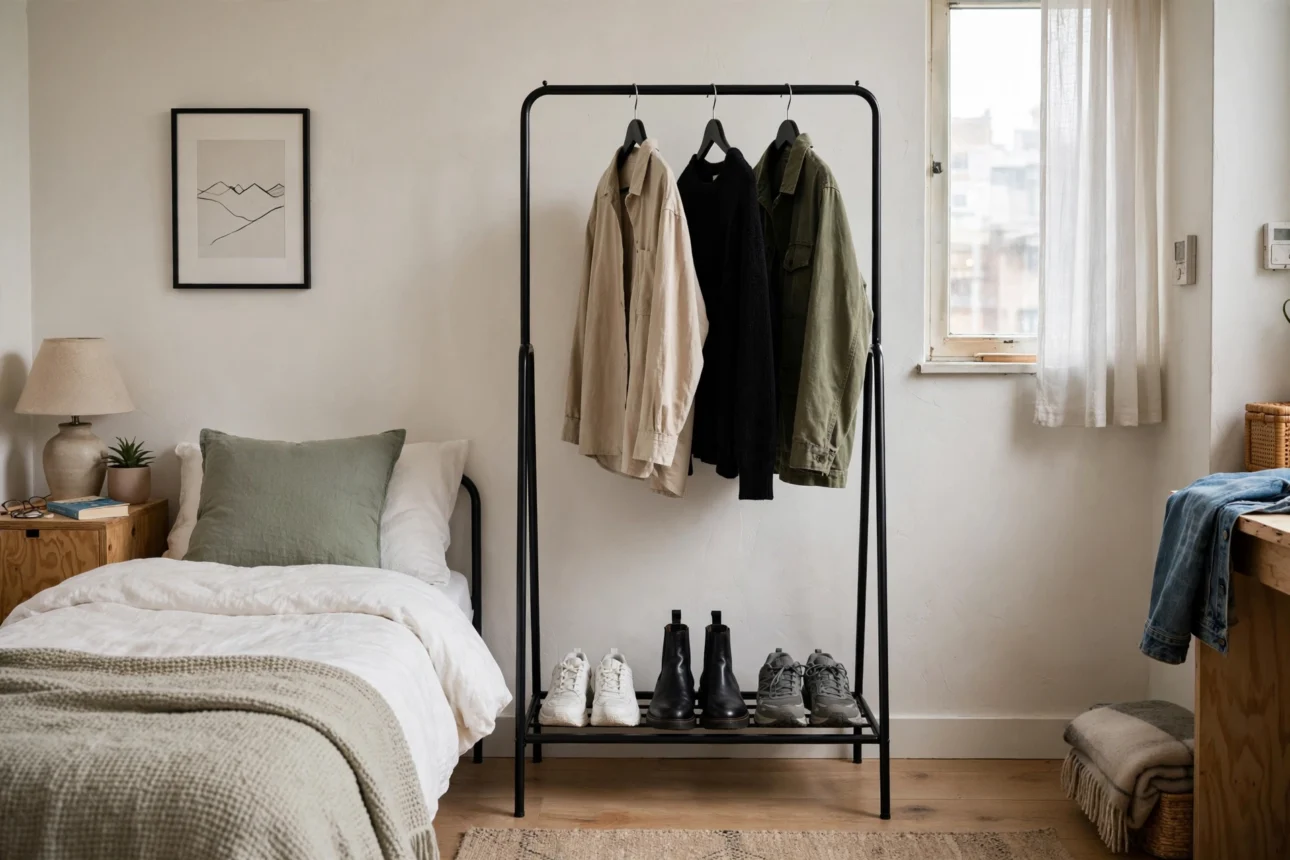
1. A Slim Freestanding Clothing Rack
A basic rod on a slim metal or wood frame takes up far less floor space than a wardrobe cabinet. Pick a rack with a narrow footprint and, if you can, one with a lower bar or shelf built in for shoes, so you’re stacking storage vertically instead of spreading it across the room. This is also the easiest option to try first if you’re not sure open storage will work for you, since it costs little and can be moved or resold if your plans change. Casters on the base of the rack are worth the small upcharge too, since they let you roll the whole thing out of the way on cleaning day or when you’re rearranging furniture, something a wall-mounted system can’t do.
2. Build Storage Into a Wall Niche
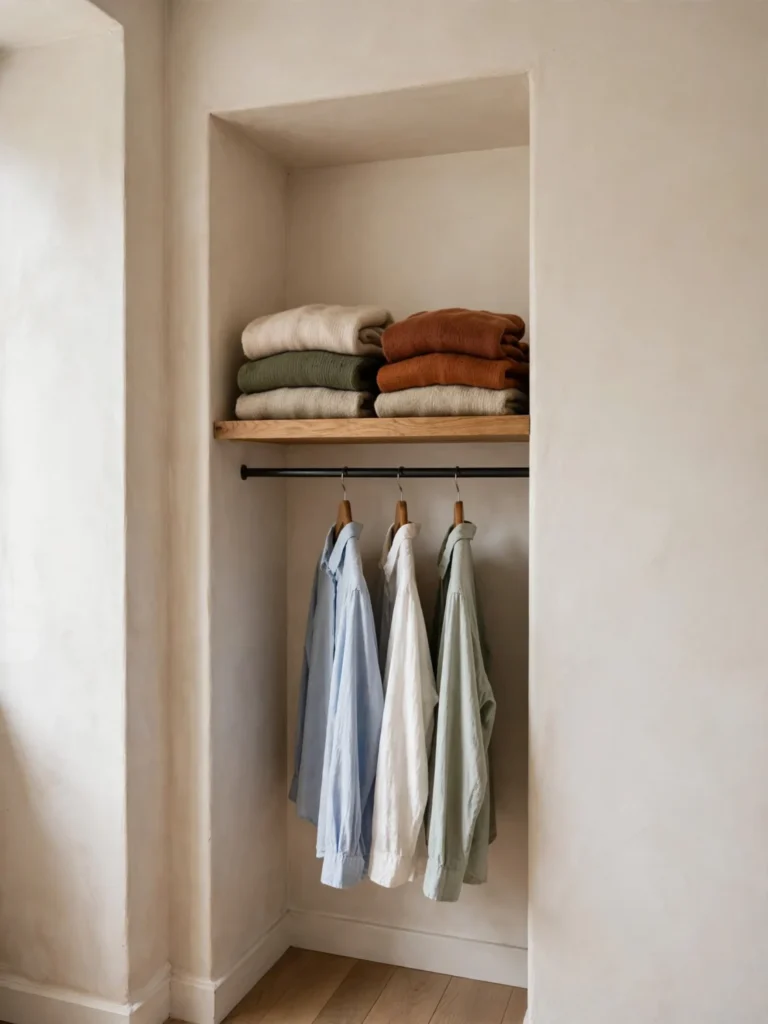
Most small bedrooms have an odd alcove, corner, or unused wall segment that never gets used for much. Fitting a rod and a couple of shelves directly into that space turns dead square footage into real storage without adding any bulk to the room. Because the niche already has walls on two or three sides, you also don’t need a full frame or cabinet, just brackets, a rod, and shelving cut to fit.
3. Go Vertical With Floating Wall Shelves
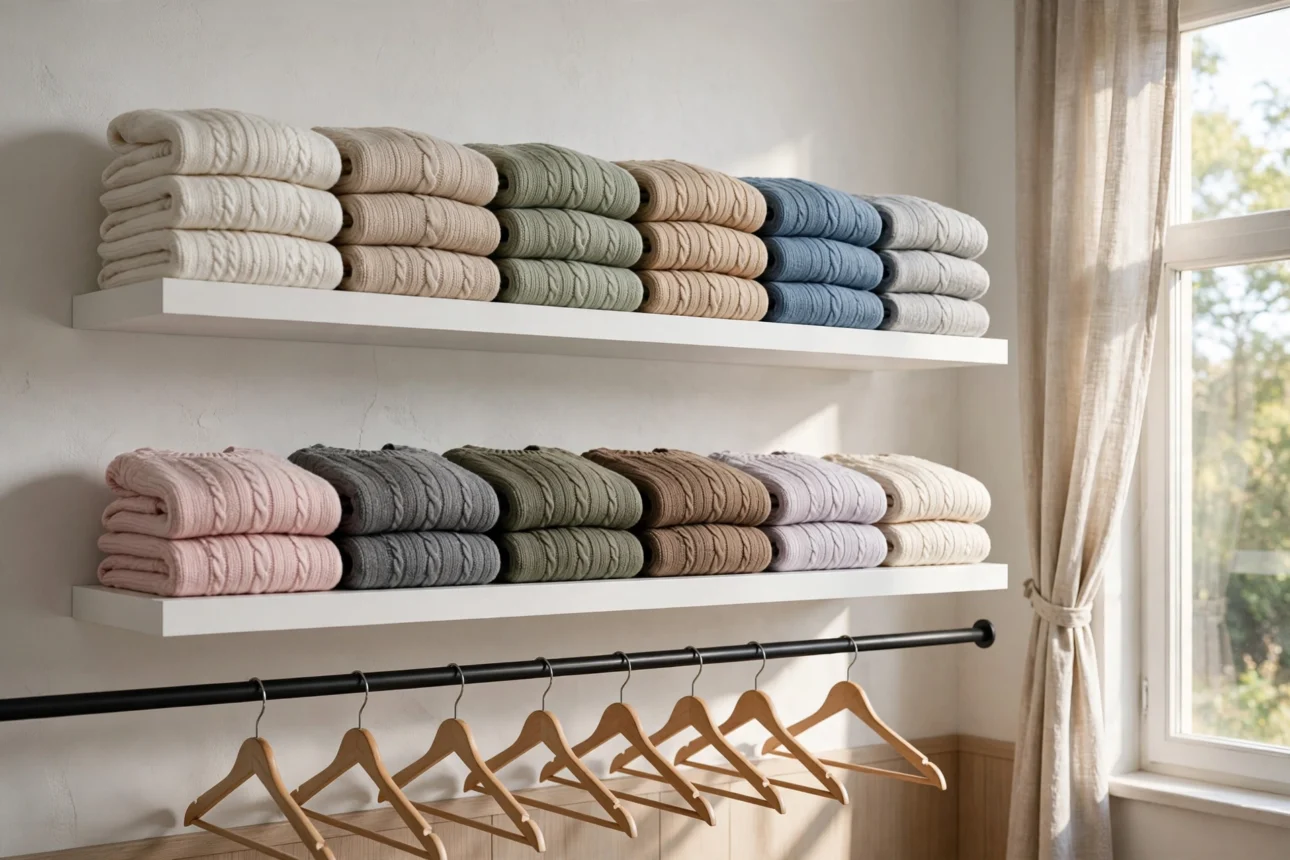
When floor space is tight, climb the wall instead. A row of floating shelves above a clothing rod adds storage for folded items, bags, and bins without narrowing the walking path around your bed or dresser. Leave at least 2 inches of clearance between the rod and the shelf above it so hangers can still move freely, and keep the shelving open-backed and light in color so the wall doesn’t start to feel heavy.
4. Add a Pegboard or Slat Wall System
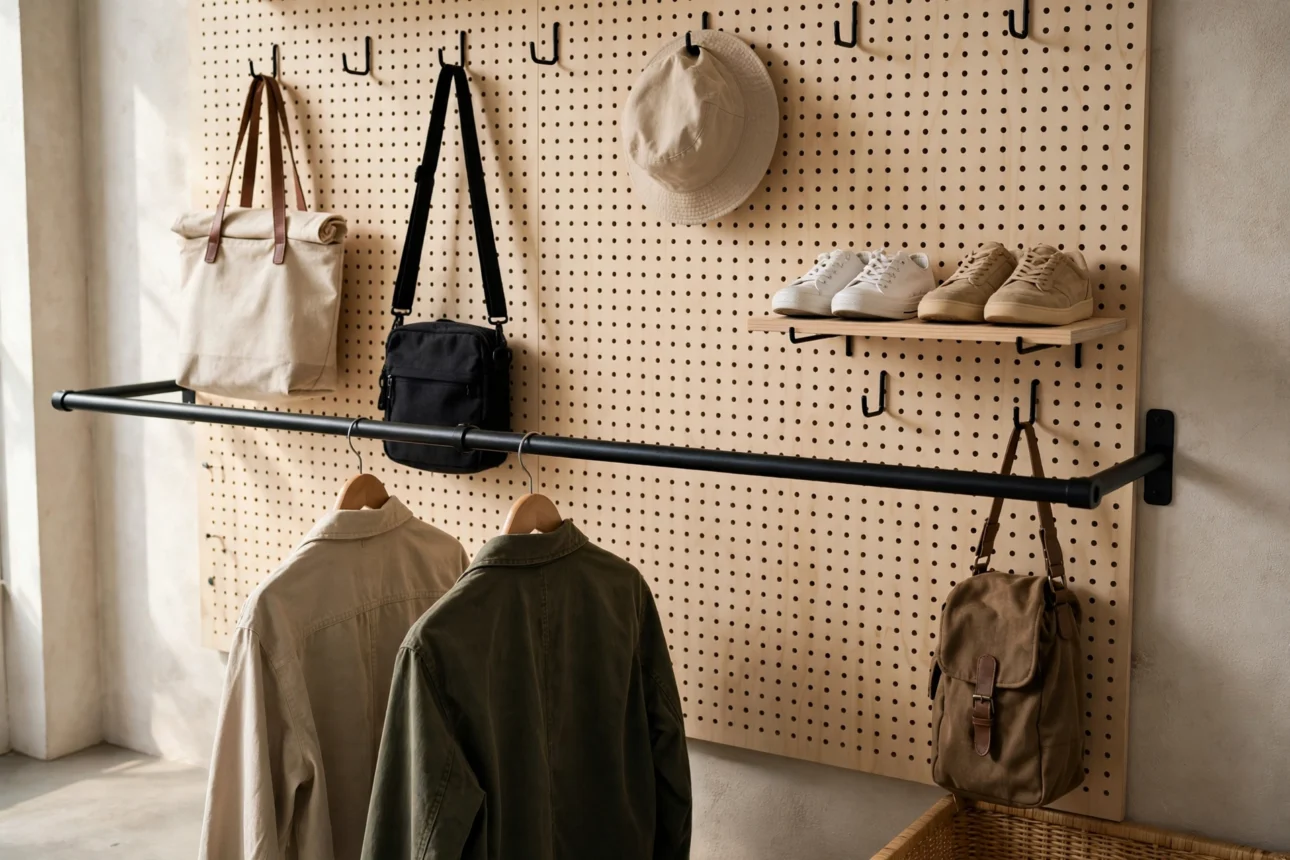
A pegboard or slat wall mounted behind a clothing rod gives you a fully customizable system: hooks for bags and hats, small shelves for shoes, pegs for jewelry. You can rearrange the layout any time your needs change, without drilling new holes. It’s also one of the most budget-friendly ways to add real organization to an open setup, since a single sheet of pegboard and a handful of hooks costs a fraction of a built-in system. Paint the board to match your wall color if you want it to blend in, or pick a contrasting color if you’d rather it read as an intentional design feature instead of a plain utility board.
5. Use the Closet as a Room Divider
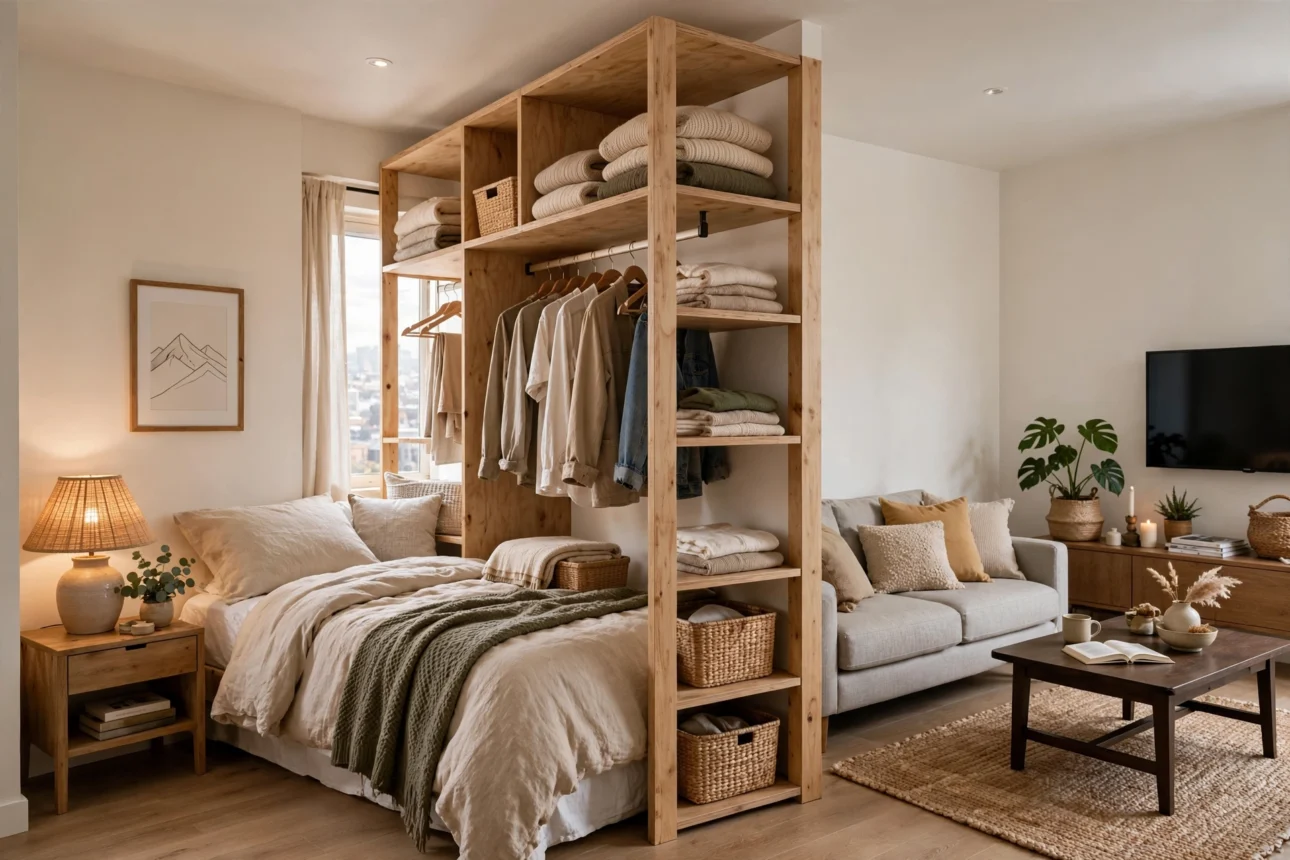
In a studio or one-room layout, an open closet can double as a soft room divider. A rod-and-shelf unit placed perpendicular to the wall creates a visual break between a sleeping area and a living area, while staying airy because there are no solid doors or panels blocking light or airflow. This works especially well in a studio apartment, where every piece of furniture needs to earn its place by doing more than one job. Position the shelving so the finished back, rather than a mess of hanging clothes, faces the living side of the room, and keep the divider a few inches shorter than the ceiling so light can still travel across the whole space.
6. Keep the Palette Light and Consistent
With open storage, your clothes are part of the room’s look at all times, so the palette matters more than it would behind a door. Uniform hangers, whether wood or matching plastic, a limited color range in your storage bins, and a wall color that ties into the rest of the room all help the space read as intentional instead of cluttered. This is one of the cheapest changes on this list, and it makes the biggest visual difference for the least effort.
7. Add a Light Curtain for Flexible Concealment
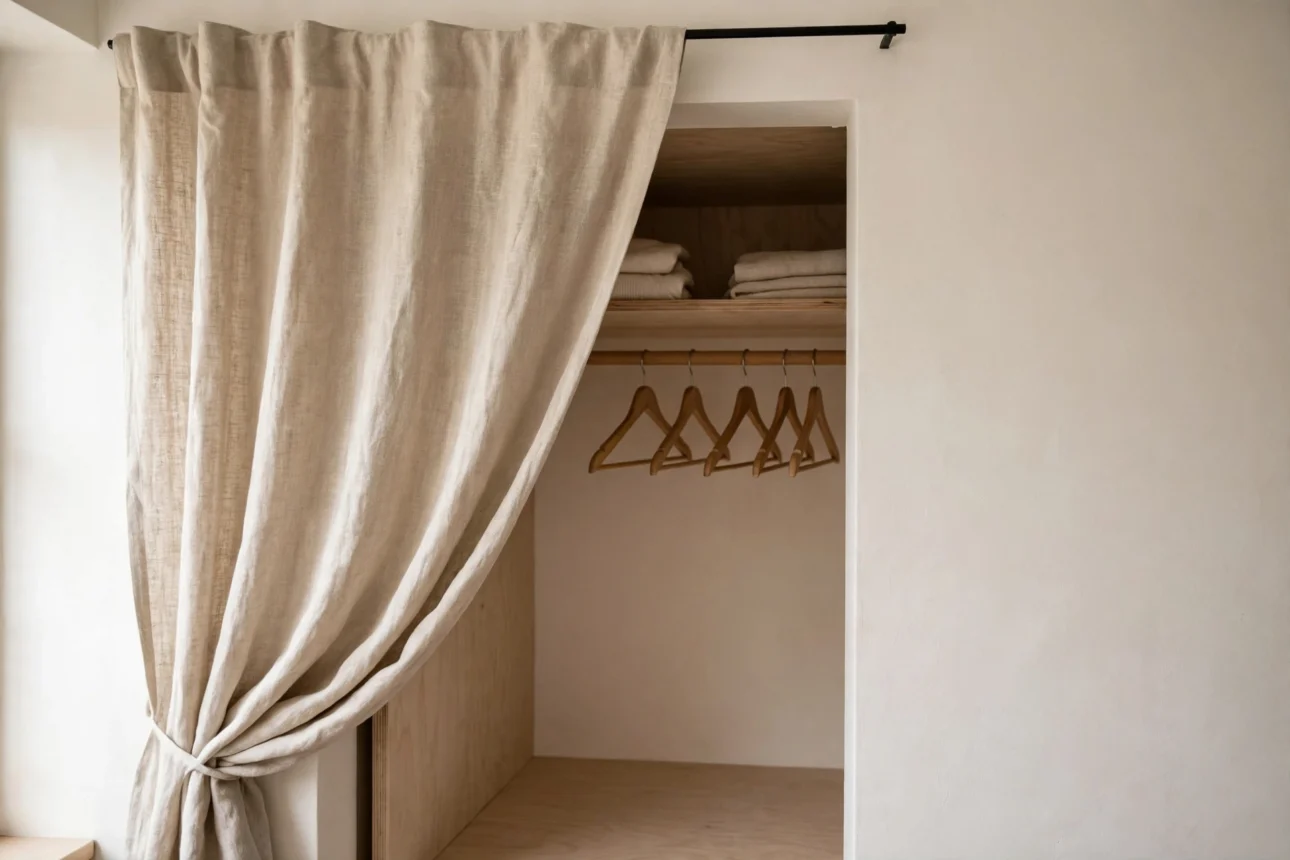
If you like the space-saving side of open storage but don’t always want your clothes on full display, a simple curtain on a tension rod or track lets you close it off in seconds. Light or white fabric works best since it brightens the room and keeps the space feeling larger, unlike heavy drapery, which can make a small closet area feel boxed in. This is a popular compromise in rentals, since it needs no drilling or permanent changes. A tension rod mounted just inside the top of the opening keeps the curtain track hidden, and a simple pinch-pleat or grommet-top style will glide open and closed more smoothly than a plain rod pocket, which tends to bunch up over time.
8. Contain Small Items in Baskets and Bins
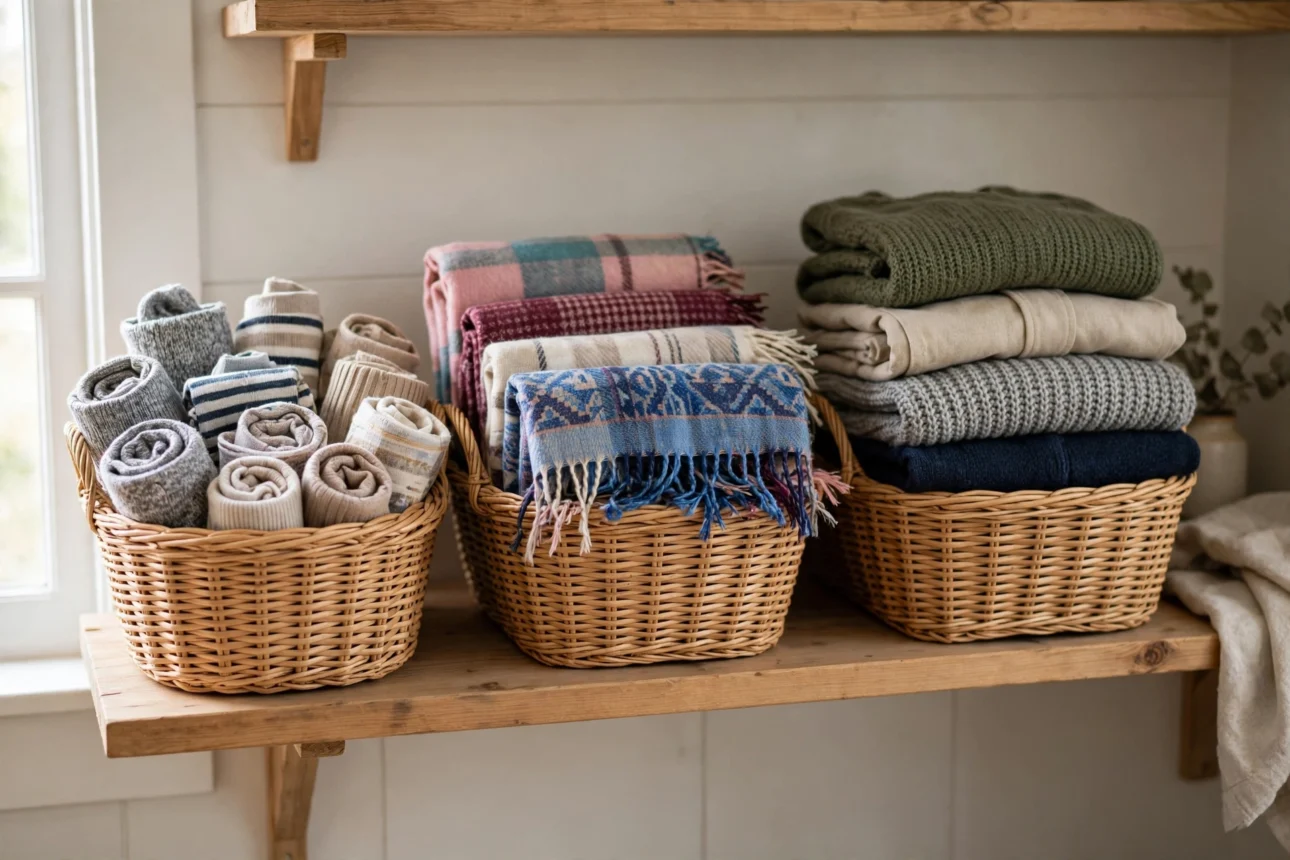
Open shelving invites visual chaos fast if small items are left loose. Woven baskets or fabric bins group socks, accessories, and off-season pieces into clean, contained shapes, so the overall look stays tidy even without doors to hide anything behind. Label each bin if you’re sharing the space with someone else, or if you tend to forget what’s inside once it’s out of sight on a top shelf. Choose bins with handles for anything stored above eye level, since reaching up for a lidless basket is how most spills and mismatched socks happen in the first place.
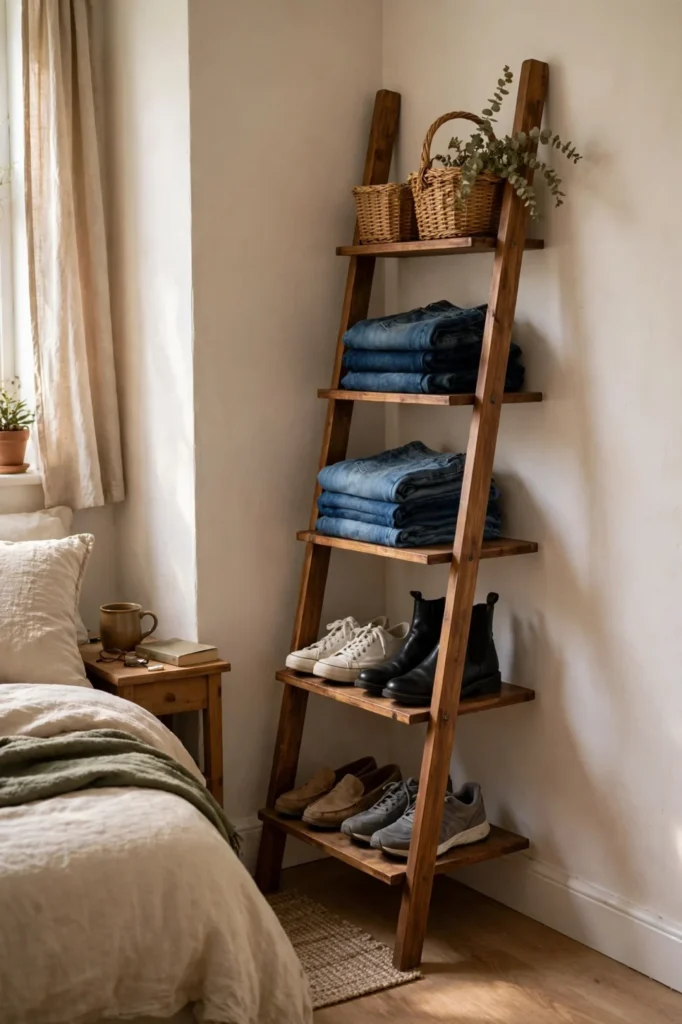
9. Try a Ladder Shelf for No-Drill Storage
For rentals where drilling into walls isn’t an option, a leaning ladder-style shelving unit gives you tiered storage with zero installation. It’s especially useful tucked into a corner beside a bed or window, where a boxier cabinet wouldn’t fit anyway. Because it leans rather than mounts, you can also move it to a new spot or take it with you when you move, which makes it a good pick if you’re renting short term.
10. Add Battery-Powered Under-Shelf Lighting
Small closet spaces, open or not, tend to run dim, especially tucked into a corner or alcove away from the room’s main light source. A battery-powered LED strip mounted under a shelf or along the rod makes it much easier to actually see and choose clothes, and it adds a soft ambient glow to the room in the evening. Because it runs on batteries, there’s no wiring involved, so it works in a rental just as well as it does in a house you own.
11. Switch to Slim, Matching Hangers
Bulky or mismatched hangers waste rod space fast, and in a small open closet, every inch of rod length counts. Switching to slim velvet or wood hangers in one consistent style can free up several extra inches, often enough room for a handful of additional garments without buying any new furniture. It’s a small swap, but combined with a double rod setup, it can be the difference between a rod that looks crammed and one that looks like it was planned from the start.
12. Mount a Shelf and Rod Above a Dresser
If you already own a dresser, mount a single shelf and rod on the wall directly above it instead of buying a separate closet system. Baskets on top of the shelf handle small loose items, the drawers below hold folded clothes, and the rod in between gives you hanging space without adding a single extra piece of furniture to the room. This layout works well in a small bedroom where floor space is already tight, since the dresser you’re keeping anyway is doing double duty as the base of the whole system.
13. Use an Industrial Pipe Rack for a Double Rod
A double-hanging rack built from black pipe fittings holds a full wardrobe right out in the open and adds a bit of industrial style at the same time. Because pipe racks are sturdy and simple to assemble, they work well as a DIY project even if you’ve never built furniture before. Add a wall hook or a small side rack nearby for bags, hats, or scarves, so those items don’t end up piled on the floor beneath the rack instead of stored properly.
FAQ
Is an open closet a good idea in a small bedroom?
Yes, often better than a boxed-in one. Without doors and door swing space to account for, you free up floor room, and an open layout makes it easier to see and use what you already own.
How do I keep an open closet from looking messy?
Use matching hangers, a limited color palette, and baskets for small loose items. Consistency does most of the work, since an open closet is part of the room’s visual field at all times.
Can I add an open closet without drilling into the wall?
Yes. A freestanding rack, a leaning ladder shelf, or a tension-rod curtain setup all work without any permanent installation, which makes them good options for rentals.
What height should I hang the rod in a small open closet?
A single rod works well around 66 inches from the floor. If you have the vertical room, a double-hang setup at 80 inches and 40 inches roughly doubles your hanging space.
Do open closets make a small room feel bigger or smaller?
Usually bigger, as long as the storage stays tidy. Removing a bulky door and cabinet frame opens up sightlines, though a cluttered open rack can have the opposite effect, so keeping items organized matters more here than in a closed closet.
References
- HGTV, “No Closet? No Problem! Try These 12 Alternative Clothes Storage Ideas” (2021)
- Decoist, “20 Small Apartment Closet Ideas that Save Space with Innovative Design” (2020)
- Addicted to Organization, “20 Functional Open Closet Ideas for Small Spaces” (2025)
- Smart Space Living, “Apartment Closet Without Doors Solutions” (2026)
- Bob Vila, “The Perfect Closet Rod Height for Hanging Clothes” (2024)
- Angi, “Closet Shelving Height Standards and Guidelines” (2025)
Image Suggestions
- A slim black metal clothing rack with a lower shoe shelf, placed against a light wall in a small studio bedroom.
- A wall niche fitted with one wood shelf and a rod, holding folded sweaters and hanging shirts, in a narrow bedroom corner.
- Floating white shelves mounted above a hanging rod, with folded knitwear stacked in even rows, natural daylight from a side window.
- A pegboard wall behind a clothing rod, fitted with hooks holding bags, a hat, and a small shelf for shoes.
- An open closet unit placed perpendicular to a wall, dividing a studio apartment’s sleeping area from the living area.
- A light linen curtain on a tension rod, partially open, revealing a small open closet with matching wood hangers.
- Three woven baskets on an open shelf, one holding socks, one holding scarves, one holding folded off-season clothing.
- A leaning ladder shelf unit in the corner of a small bedroom, holding folded jeans, shoes, and a small basket.
- A wood dresser with a floating shelf and hanging rod mounted on the wall above it, baskets on the shelf and folded clothes visible in an open drawer.
- A black pipe double-hanging rack fully loaded with clothes, with a small wall hook beside it holding a canvas tote bag.

Sarah Anderson . J
I’m the mom behind Wise Mom Blogger, where everyday creativity meets real-life motherhood. I share easy DIY crafts, cozy knitting and crochet projects, beginner-friendly sewing ideas, and family-tested recipes—plus quick baking hacks that make homemade feel doable on busy days.