Quick answer: The best pixie haircuts for thin hair use short, textured layers, a longer top, and a bit of fringe to fake density at the roots. A choppy pixie, a tapered pixie with fringe, or a soft bixie will all give fine strands more shape and lift than a smooth, one-length cut ever could.
Thin hair falls flat by lunchtime. It slides off a round brush, drops out of a curl, and shows scalp the second you part it wrong. A pixie cut fixes most of that in one visit, and it does it faster and more reliably than any volumizing product on the market. Short layers weigh less, so your roots can actually stand up instead of getting pulled down by their own length. Texturizing and a bit of fringe fill in the gaps that make fine hair look sparse. Below are 14 pixie styles built specifically for thin hair, plus what to ask your stylist for and how to keep the shape looking fresh between cuts. Every style here can be adjusted for straight, wavy, or curly texture, so read through the notes under each one before you book your appointment.
Why Does Thin Hair Look Flat In The First Place?
Thin hair usually means fewer strands per square inch of scalp, not necessarily thin individual strands. Fewer strands means less bulk to hold a shape, so long layers droop under their own weight within hours of styling. A round brush blowout looks great at 9am and flat by noon because there simply is not enough hair mass to keep the curl pattern in place. Length is the biggest culprit here. The longer the hair, the more leverage gravity has on every strand.
A pixie removes most of that leverage. Short layers sit closer to the scalp, so roots can hold lift without fighting the weight of six or eight inches of hair pulling them down. Texture also plays a role. Blunt, one-length ends reflect light evenly, which reads as thin and flat. Choppy or piece-y ends catch light at different angles, which is what actually creates the appearance of density. That is why almost every cut on this list leans on texture and layering rather than length to solve the volume problem.
| Factor | What To Expect |
| Best hair type | Fine or thin, straight to wavy |
| Maintenance | Varies by style |
| Trim schedule | Every 4 to 6 weeks |
| Styling time | Under 10 minutes |
| Color-friendly | Standard |
1. The Choppy Pixie With Fringe
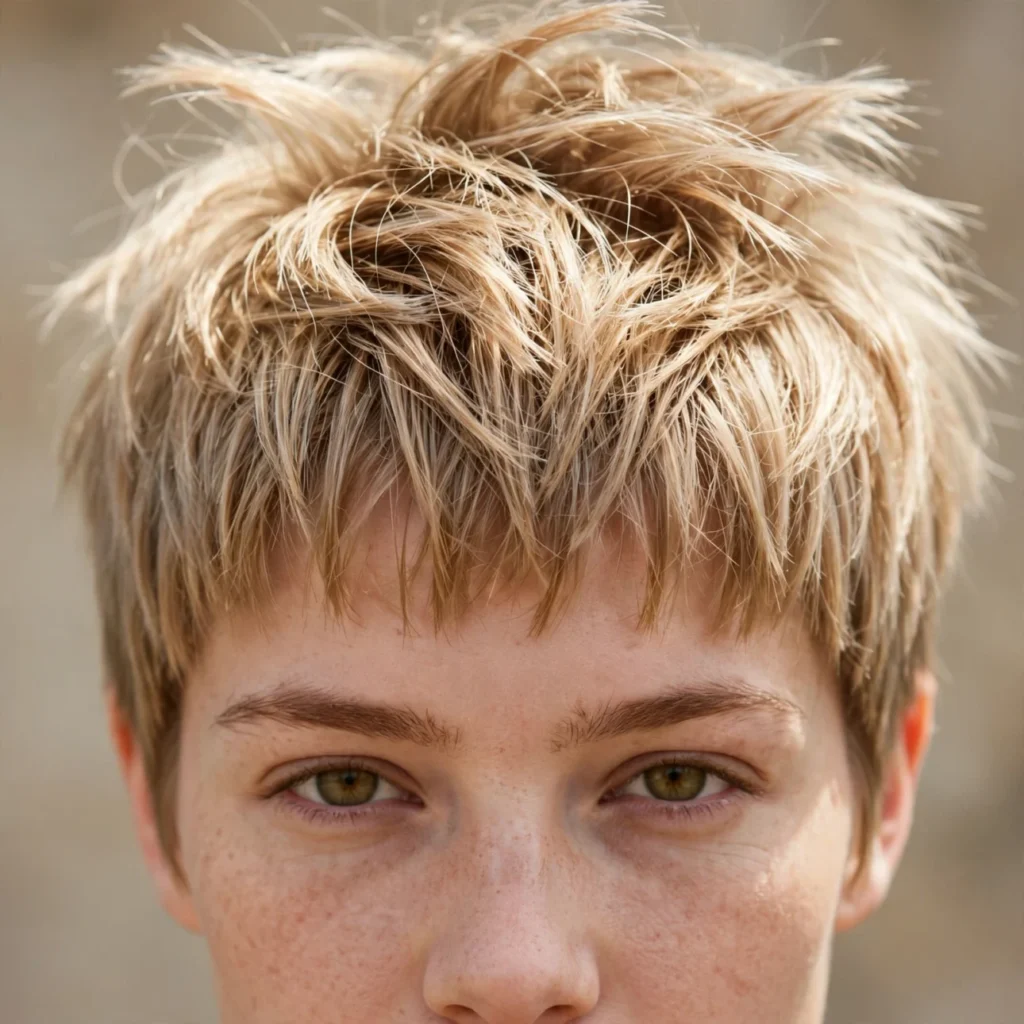
A choppy pixie with fringe adds the most instant volume of any style on this list. The uneven, jagged ends catch light differently than a blunt cut, which tricks the eye into seeing more strands than are actually there. Ask for point cutting through the crown and a piece-y fringe that lands just above the brow. Rub in a dime of texture paste at the roots after drying to keep the choppy pieces separated instead of clumping together.
2. The Tapered Pixie
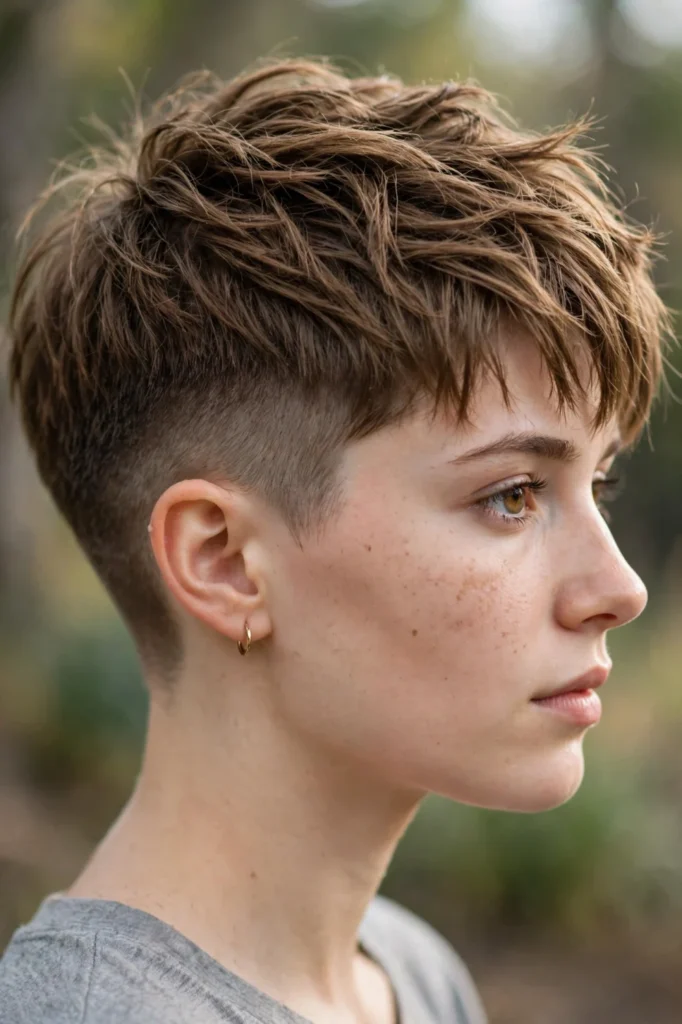
A tapered pixie keeps the sides and back close to the head while leaving more length on top. That gradient shape gives fine hair a built-in gradient of volume, since the eye reads the longer top as fuller against the closely cut sides. It works on straight and wavy thin hair alike and grows out cleanly, so you can stretch appointments closer to six weeks without the shape falling apart.
3. The Bixie
The bixie sits between a bob and a pixie, usually grazing the jaw or chin. For thin hair, this extra length at the perimeter actually helps, because it gives the stylist room to layer without cutting the hair so short that it looks thin at the roots. Style it with a diffuser on low heat to let the natural texture show instead of blow-drying it flat.
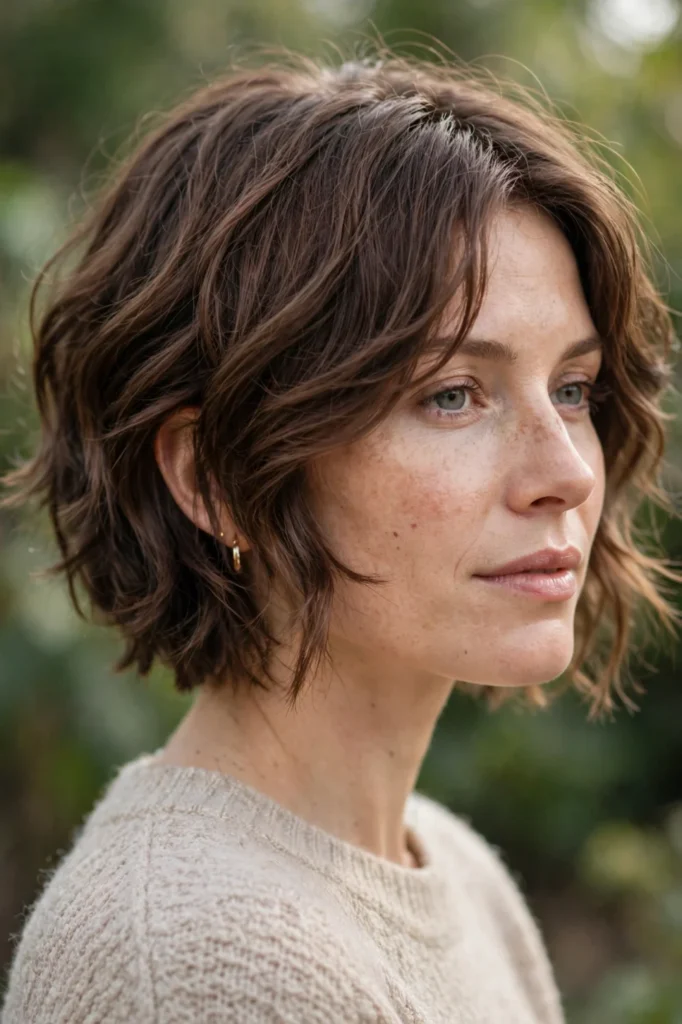
4. Textured Pixie With Long Side-Swept Bangs
Long, side-swept bangs pull attention across the face instead of straight down through flat strands. Paired with soft layering through the crown, this cut gives fine hair movement without needing a curling iron every morning. It suits an oval face particularly well. Finish with a light mousse worked through damp hair, then let it air dry for natural texture, or blow dry with a round brush for more lift.
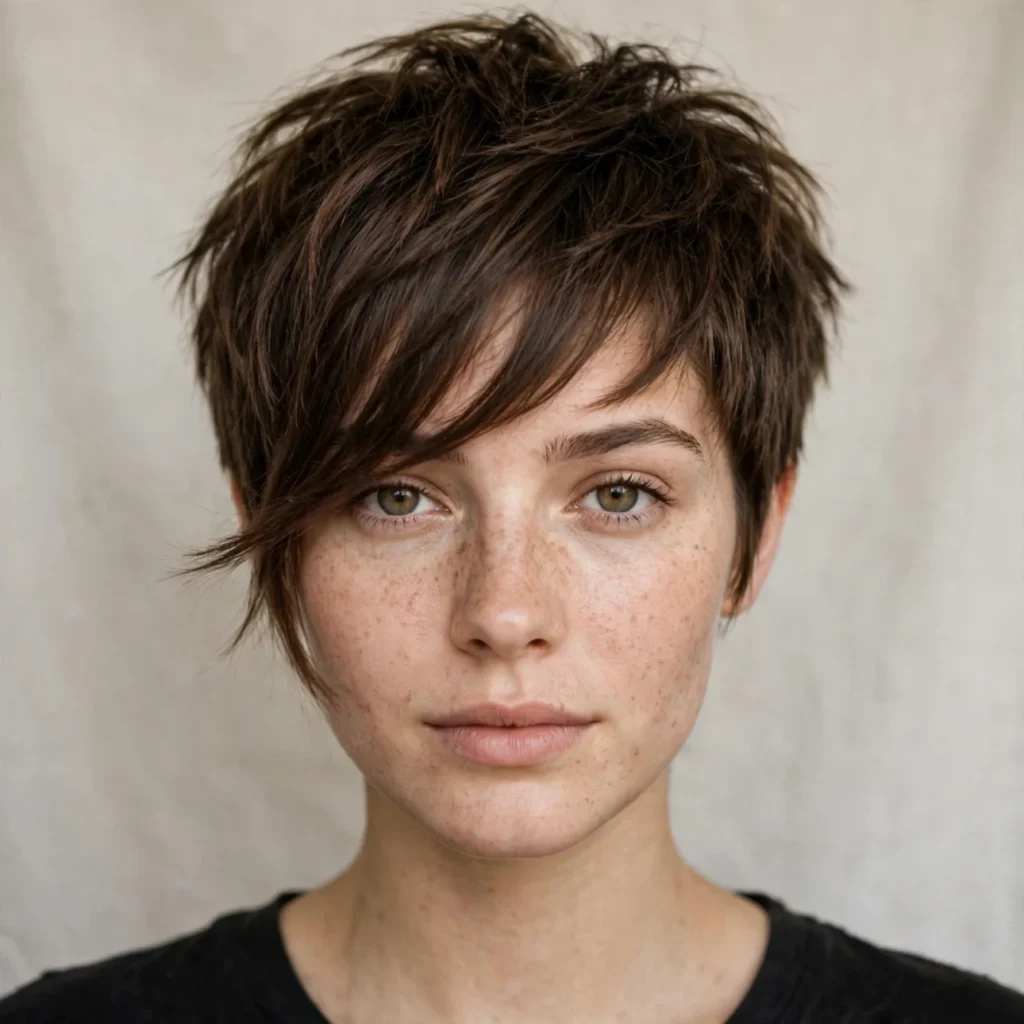
5. The Shaggy Pixie
Short layers cut at different lengths give a shaggy pixie its body. It reads as effortless, but the layering is deliberate. Fine strands get lift at the crown while the ends stay soft and wispy rather than blunt. This style is one of the easiest to maintain day to day since a bit of dry shampoo at the roots does most of the styling work.
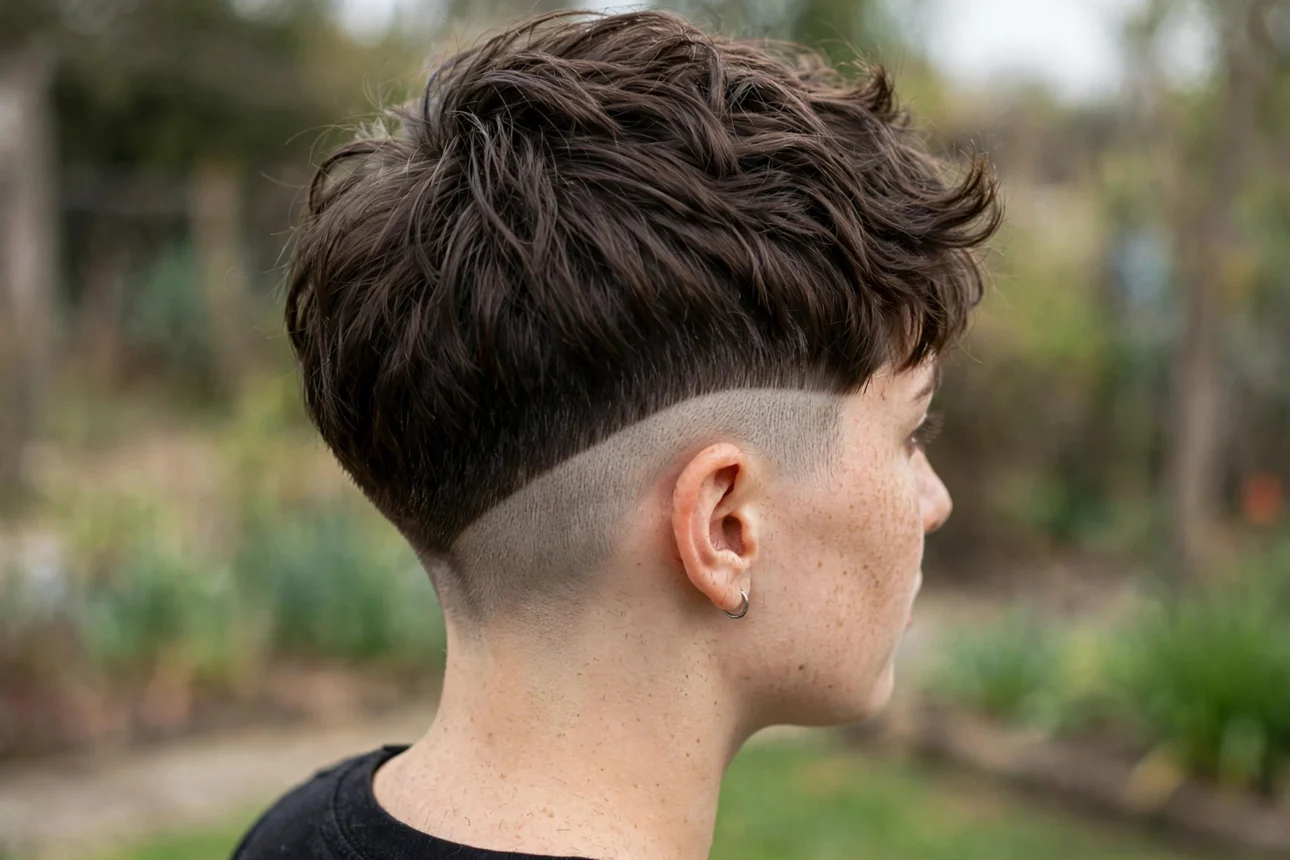
6. Undercut Pixie
An undercut pixie shaves or clippers the back and sides close, leaving longer, textured hair on top to style however you like. Because so little hair sits underneath, there is nothing pulling the top section down. That makes it one of the most reliable ways to get height on genuinely fine hair. Ask for the undercut to be blended, not blunt, so it grows out without an obvious hard line.
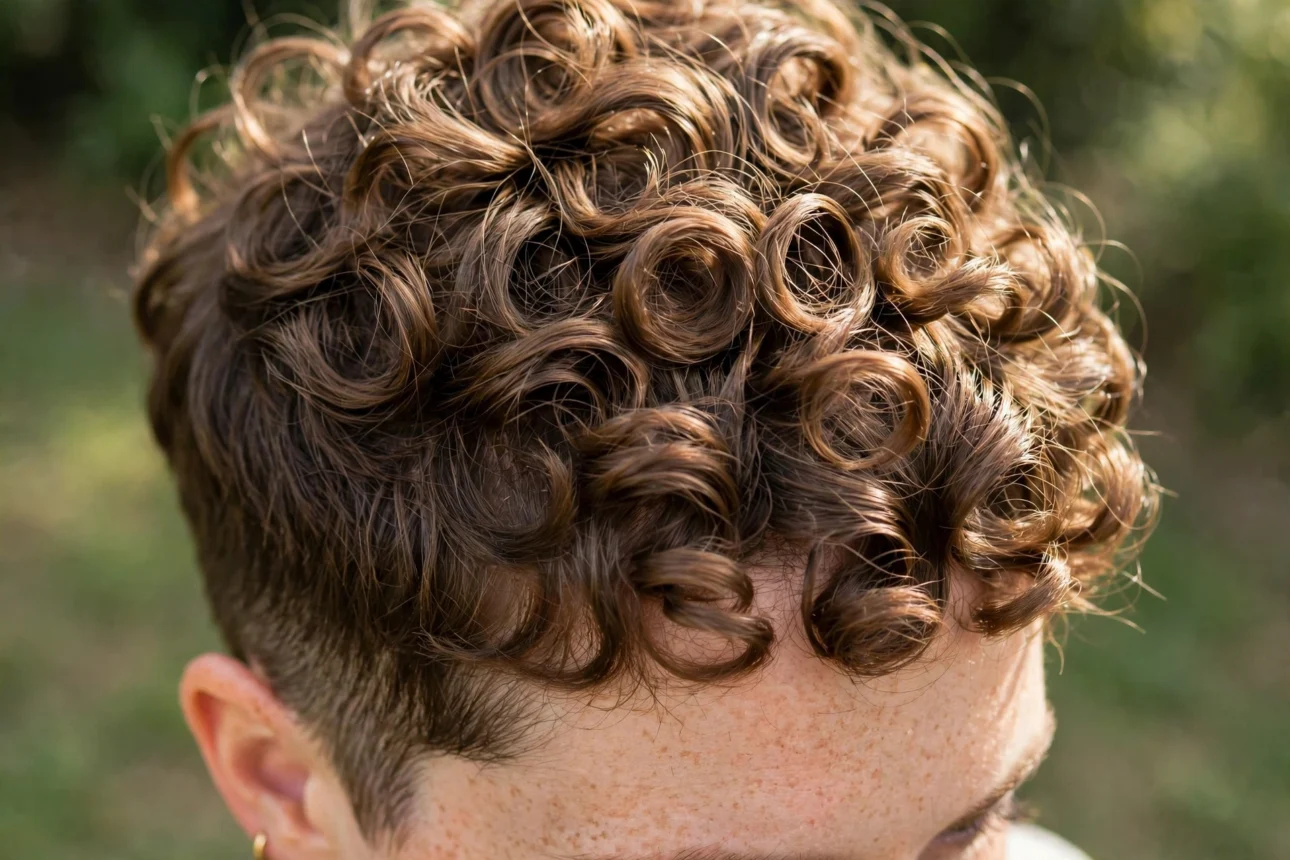
7. Pixie With Cropped Bangs
If your hair is high density but individually fine, cropped bangs sitting right at the brow can look surprisingly full. The short length keeps each strand upright instead of letting weight drag the fringe flat. Sleek, side-swept pieces around the crop soften the look if a full straight-across fringe feels too severe for your face shape.
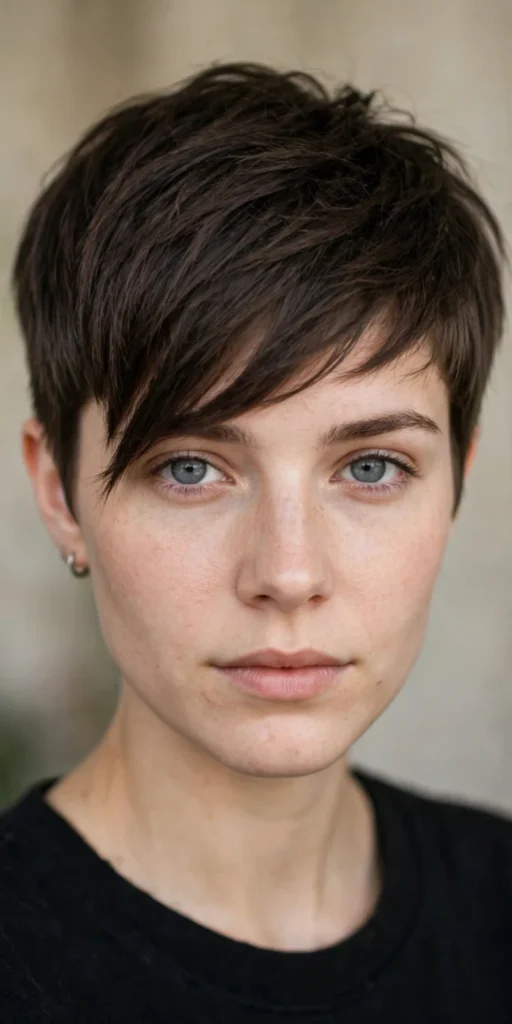
8. The Gamine Pixie
The gamine cut keeps sideburns and side-swept bangs a touch longer while the rest stays short and structured. It has a sophisticated, tailored look rather than a soft, girly one. Structure matters most here. Short, defined shapes hold their form far better on thin hair than loose, flowing lengths do, so this cut tends to stay sharp for weeks after your appointment.
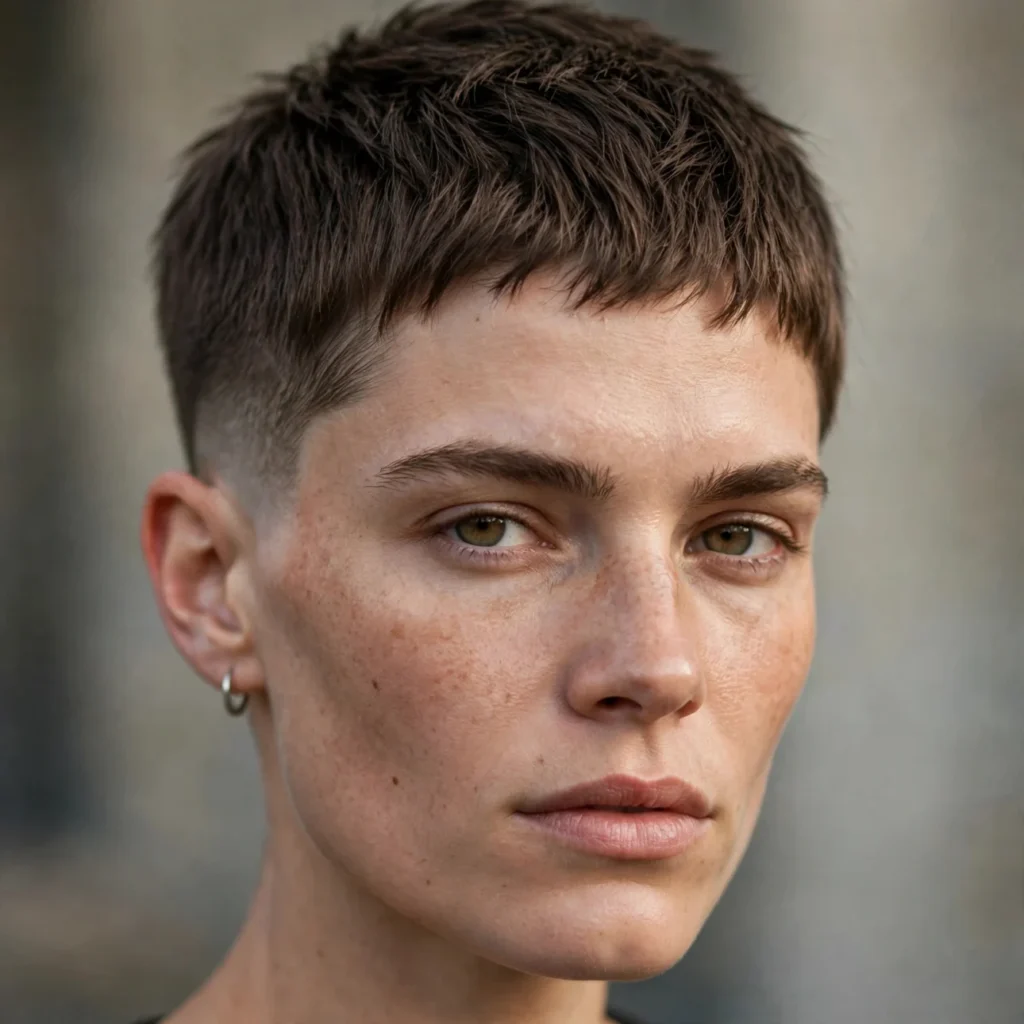
9. Feathered Pixie
Feathered layers around the crown add delicate, wing-like movement instead of one heavy mass. It works especially well with a slightly cooler or ashier tone, since the lighter shade bounces more light off each layer. Keep the feathering concentrated at the crown and temples rather than throughout, or the ends can start to look thin instead of soft.
10. Curly Pixie
Curls already add volume on their own, so a curly pixie is one of the few cuts that gives thin hair fullness without any extra styling. Keep the top a little longer than the sides so the curls have room to spring instead of getting cut off mid-shape. Ask your stylist to avoid heavy thinning shears here, since removing too much bulk can make ringlets look sparse instead of bouncy.
11. Asymmetrical Pixie
One side cut shorter than the other gives an asymmetrical pixie a modern edge while adding visual interest that a symmetrical cut cannot. The longer side can be swept across the forehead for extra fringe coverage on days your part looks a bit bare. This style pairs well with an undercut on the shorter side for anyone who wants a bolder finish.
12. Pixie Bob With Wispy Ends
A pixie bob lands right around the ears or jaw, which is a touch longer than a classic pixie. Keeping the ends wispy rather than blunt stops thin hair from looking sparse at the perimeter. It is a good middle ground if you want the volume benefits of short hair without going as dramatically short as a true pixie.
13. Piece-y Pixie With Highlights
Strategic highlights or a soft shadow root add dimension that plain, single-tone color cannot. Placing lighter pieces on the top layers, where the eye lands first, creates depth that reads as extra thickness. Keep the highlights fine and scattered rather than in thick chunks, since chunky pieces can end up doing the opposite and flattening the look.
14. Micro Pixie With Sculpted Sides
The shortest cut on this list, a micro pixie crops hair close all over with just a bit of extra length and shape left at the crown. Nothing is heavy enough to weigh the roots down, so this style holds its lift longer between washes than any other option here. It suits square face shapes especially well, since the short length softens a strong jawline.
How Do You Choose The Right Pixie For Your Face And Hair?
Match the cut to your face shape first, then your texture. Round faces usually look best with height at the crown and some length at the chin line, like the pixie bob or asymmetrical pixie. Square faces soften nicely with a micro pixie or gamine cut. Heart-shaped faces do well with side-swept fringe that balances a narrower chin against a wider forehead. Oval faces can wear almost anything on this list, including the shortest options.
For texture, straight fine hair benefits most from choppy, piece-y layers that create movement on their own, while wavy or curly thin hair often looks fuller with less thinning and a bit more length left in the top. If your hair is straight and prone to static, ask for a slightly blunter perimeter with texturizing kept to the interior only. That keeps the ends from looking wispy while still adding lift underneath. Lifestyle matters too. If you wash your hair daily, a lower-maintenance option like the tapered pixie or shaggy pixie will hold its shape between styling sessions better than a cut that depends on precise blow-drying every time.
- Book a consultation and bring 2 to 3 reference photos of styles from this list, taken from more than one angle so your stylist can see the shape clearly.
- Tell your stylist your hair is fine or thin, not just “short,” so they avoid over-thinning with shears.
- Ask for point cutting or a razor for texture instead of heavy thinning, which can strip out density.
- Request layers concentrated at the crown for lift, with the perimeter left slightly heavier for shape.
- Get a written note of your cut length so future trims stay consistent.
Visual Volume Rating By Style (Out Of 5)
Choppy Pixie
Undercut
Curly Pixie
Micro Pixie
Pixie Bob
| Style | Best For | Maintenance |
| Choppy Pixie With Fringe | Straight fine hair | Low |
| Tapered Pixie | All face shapes | Low |
| Bixie | Wavy thin hair | Medium |
| Textured Pixie With Bangs | Oval faces | Medium |
| Shaggy Pixie | Low-effort routines | Low |
| Undercut Pixie | Maximum height | High |
| Pixie With Cropped Bangs | High-density fine hair | Medium |
| Gamine Pixie | Structured, tailored look | Medium |
| Feathered Pixie | Cool or ash tones | Medium |
| Curly Pixie | Naturally curly thin hair | Low |
| Asymmetrical Pixie | Bold, modern looks | High |
| Pixie Bob With Wispy Ends | Longer transitional cut | Low |
| Piece-y Pixie With Highlights | Added dimension | High |
| Micro Pixie With Sculpted Sides | Square face shapes | Medium |
FAQ
Does a pixie cut make thin hair look thicker?
Yes, a well-cut pixie is one of the fastest ways to make thin hair look fuller. Shorter lengths carry less weight, so roots lift instead of getting pulled flat by gravity.
How short should I go if my hair is very fine?
A tapered or micro pixie works best for very fine hair since less length means less weight dragging the strands down. Ask your stylist to leave slightly more length at the crown for styling versatility.
Will a pixie cut damage fine hair?
A pixie itself does not damage hair, but heavy thinning shears used incorrectly can strip out density. Ask for point cutting or razor texturizing instead of aggressive thinning.
How often do pixie cuts need a trim?
Most pixie styles need a trim every 4 to 6 weeks to keep their shape. Undercut and asymmetrical versions may need touch-ups closer to the 4 week mark.
What products help thin pixie hair hold volume?
A lightweight mousse or root-lifting spray applied to damp hair works best. Heavy creams or oils weigh fine hair down and undo the volume the cut is designed to create.
References
- Parade, “7 Haircuts for 2026 That Make Thin Hair Look Fuller, According to Celebrity Stylists” (2026)
- Latest-Hairstyles.com, “52 Best Pixie Cuts for Fine Hair to Look Fuller” (2026)
- TheRightHairstyles.com, “70 Pixie Haircuts for Women Seeking Stylish Looks in 2026” (2026)
- Latest-Hairstyles.com, “58 Most Volumizing Pixie Cuts for Thin Hair” (2026)
- TheHairStyleEdit.com, “62 Gorgeous Pixie Haircuts For 2026” (2026)
- Elle (AOL), “Thinking About Going Short? These 6 Celeb-Approved Pixie Cuts Are Perfect for Spring” (2026)

Sarah Anderson . J
I’m the mom behind Wise Mom Blogger, where everyday creativity meets real-life motherhood. I share easy DIY crafts, cozy knitting and crochet projects, beginner-friendly sewing ideas, and family-tested recipes—plus quick baking hacks that make homemade feel doable on busy days.