Title options considered: “13 Best Personal Creative Diary Ideas” (direct/factual), “13 Personal Creative Diary Ideas You’ll Love” (curiosity), “13 Personal Creative Diary Ideas For Beginners” (benefit-focused). We picked the first one because it leads with the exact keyword phrase and states the number clearly.
Quick answer: The best personal creative diary ideas mix writing formats like gratitude logs, letters to your future self, and dream journals with visual formats like mood trackers, doodle pages, and photo collages, so no two entries feel exactly the same.
Staring at a blank diary page can be harder than it sounds. Some days you have plenty to say, and other days nothing comes to mind at all. Having a small list of go-to formats takes the pressure off, since you can just pick one and start writing. Below are thirteen personal creative diary ideas that mix reflection, art, and memory-keeping so your diary stays interesting to fill and just as fun to read back later.
| Feature | What to Expect |
|---|---|
| Writing time | Standard (5-20 minutes) |
| Skill needed | Standard, no experience required |
| Supplies | Varies by idea |
| Best for beginners | Standard for most formats |
| Requires drawing skill | Caution for a few formats |
| # | Idea | Format Type | Approx. Time |
|---|---|---|---|
| 1 | Gratitude Log | Writing | 5 min |
| 2 | Letter to Your Future Self | Writing | 15 min |
| 3 | Dream Journal Entries | Writing | 5-10 min |
| 4 | Mood Tracker Page | Visual | 2 min/day |
| 5 | Daily To-Do List Format | Writing | 5 min |
| 6 | Poetry and Song Lyrics | Writing | 10-20 min |
| 7 | Doodle and Sketch Pages | Visual | 10-15 min |
| 8 | Travel Memory Log | Writing + Visual | 15-20 min |
| 9 | Book and Media Log | Writing | 5-10 min |
| 10 | Weekly Goal Setting Spread | Writing + Visual | 15 min |
| 11 | Photo and Ticket Collage | Visual | 15-20 min |
| 12 | Self-Reflection Prompts | Writing | 10-15 min |
| 13 | Morning Pages | Writing | 15-20 min |
Time to complete an entry (minutes) – lower is quicker
1. Gratitude Log
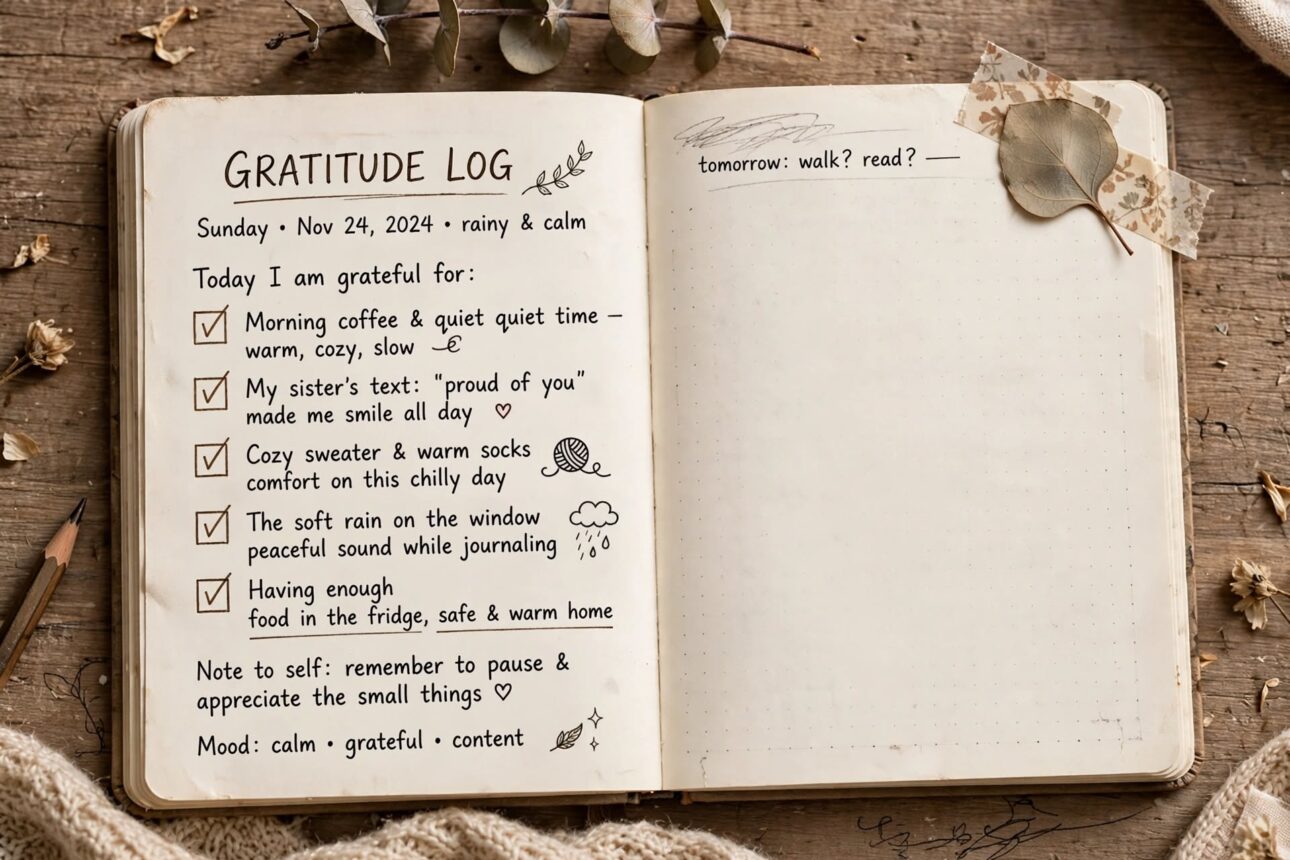
A gratitude log is one of the easiest diary formats to start with, since it needs only three to five sentences. Each entry, list a few small or big things you’re thankful for that day, from a good cup of coffee to a kind message from a friend.
This format builds a steady writing habit fast because there’s no pressure to write something profound. Over weeks, flipping back through your gratitude log becomes a nice reminder of all the small good moments you might otherwise forget.
Quick tip: Try to name at least one thing that’s different from the day before, so entries don’t start repeating the same three items.
2. Letter to Your Future Self
Writing a letter to your future self turns your diary into a time capsule. Write about your current thoughts, hopes, and what’s going on in your life right now, then seal or fold the page to open later.

Some people set a date to reopen the letter, like a birthday or New Year, while others just stumble on it naturally while flipping through old pages. Either way, it creates a genuinely emotional moment when you finally read it again.
Quick tip: Add a small doodle or sticker to the sealed page so it stands out visually when you’re flipping through the diary later.
3. Dream Journal Entries
Keep your diary by your bed and jot down your dreams right after waking up, before the details fade. Even a few scattered sentences about the setting, people, or feelings in the dream are enough to start.
Over time, you might notice recurring themes or symbols that say something about what’s on your mind. This format works especially well for anyone curious about their subconscious or who simply enjoys strange, vivid dreams.
Quick tip: Keep a pen right on your nightstand, since even a short delay after waking up can make dream details disappear fast.
4. Mood Tracker Page
A mood tracker page is a small grid, often shaped like a calendar month, where you fill in one box a day with a color that matches your mood. It’s one of the fastest diary formats since it needs no writing at all.

At the end of the month, you get a colorful visual snapshot of how you generally felt, which can highlight patterns tied to certain weeks, weather, or events. This works well alongside written entries as a quick daily add-on.
Quick tip: Keep your color key simple, four or five colors max, so filling it in stays quick and consistent.
5. Daily To-Do List Format
Turning your diary into a daily to-do list keeps it practical alongside the reflective entries. List out tasks for the day, then check them off as you go, giving your diary a sense of purpose beyond just journaling feelings.
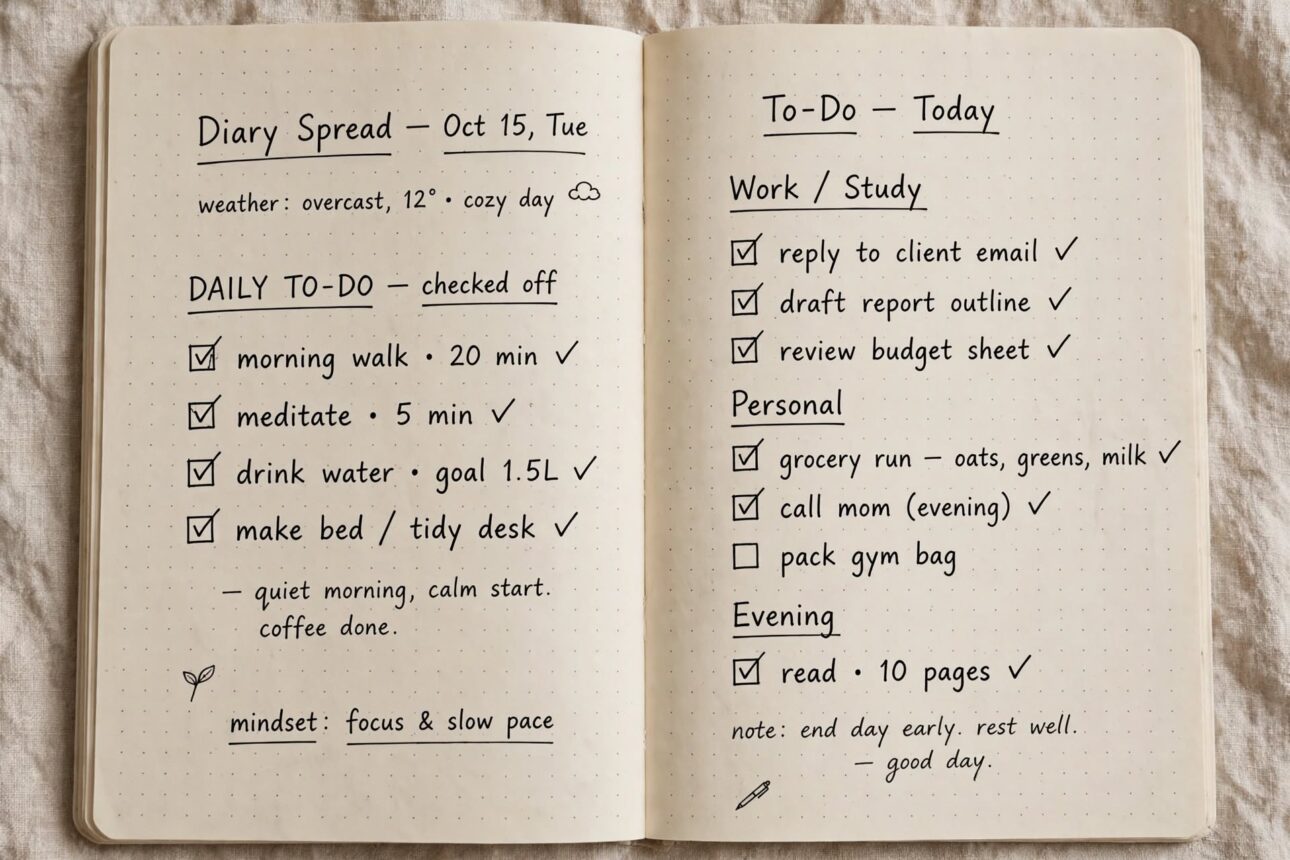
This format works especially well for students and anyone juggling a busy schedule, since it doubles as both a planner and a diary. Looking back at old to-do lists can also jog your memory about what a certain week was actually like.
Quick tip: Leave a small space beside each task to jot a quick note about how it went, turning a plain checklist into more of a story.
6. Poetry and Song Lyrics
If straight prose entries feel too formal, try writing a short poem or a few original song lyric lines instead. This format lets you express a feeling or a memory without needing full sentences or a clear beginning and end.
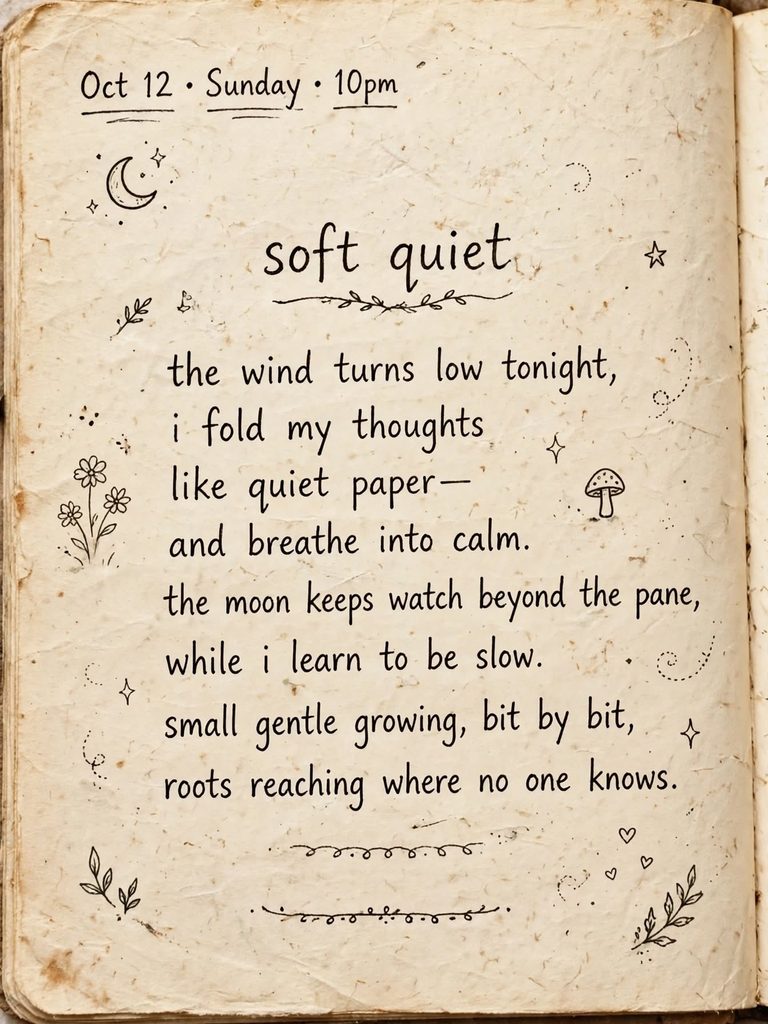
You don’t need any formal poetry training. Even a few loosely rhyming lines or a stream of descriptive phrases can capture a moment better than a regular paragraph. This is also a fun way to look back and see how your writing style shifts over time.
Quick tip: Start with a single strong image or feeling, then build a few lines around it instead of trying to write a full structured poem right away.
7. Doodle and Sketch Pages
Not every diary page needs words. A doodle or sketch page lets you capture a memory or feeling visually instead, whether that’s a quick sketch of your view, an object from your day, or just an abstract pattern.
You don’t need advanced art skills for this to work. Simple shapes, small icons, or even scribbled patterns still add personality and break up the visual rhythm of an all-text diary.
Quick tip: Keep a small set of fine-tip pens dedicated just to sketch pages, so you’re never tempted to skip this format because your good pens are missing.
8. Travel Memory Log
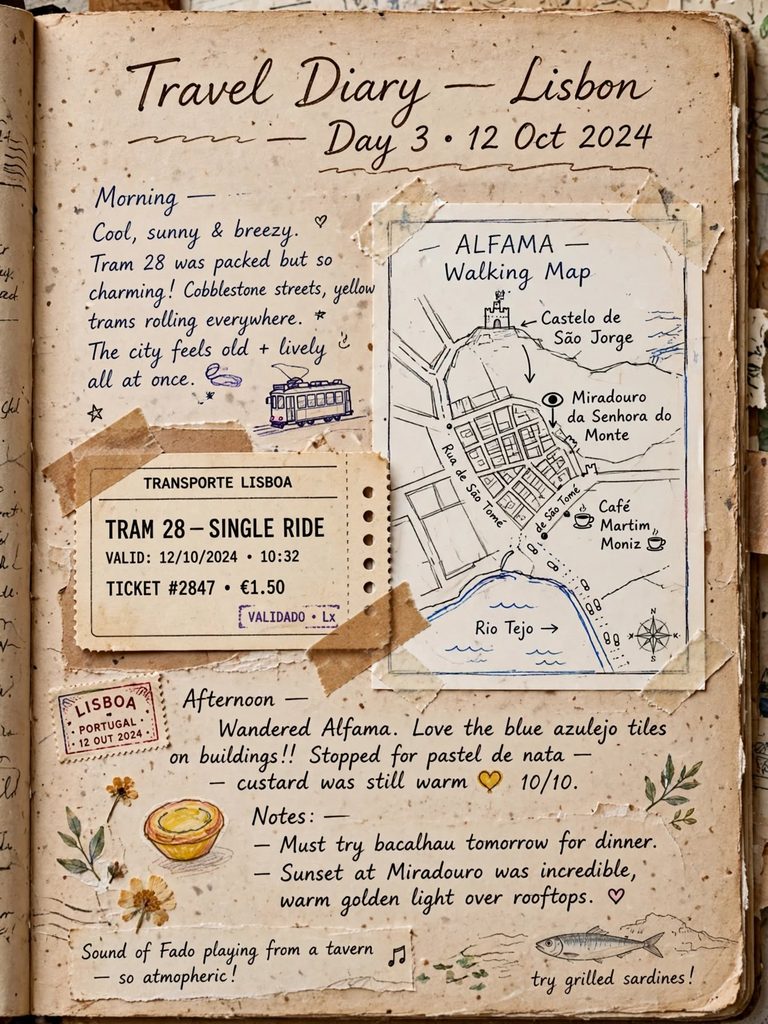
A travel memory log is a dedicated diary format for trips, whether that’s a weekend getaway or a longer vacation. Write about the places you visited, what you ate, and small unexpected moments that made the trip memorable.
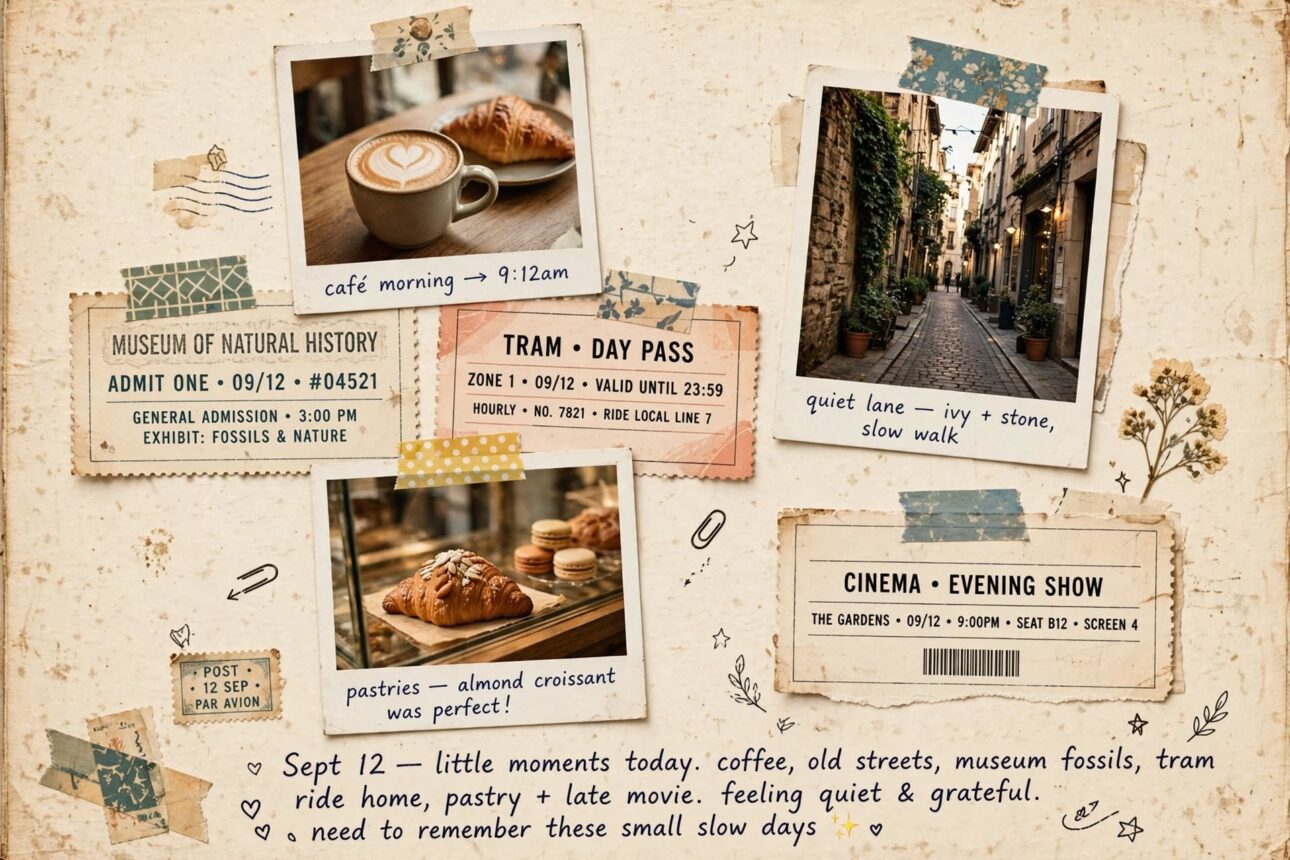
Pair the writing with a small map sketch, a ticket stub, or a pressed leaf from somewhere you visited. This turns a simple written log into something closer to a personal souvenir you’ll want to revisit for years.
Quick tip: Write travel entries the same day if possible, since small sensory details fade fast once you’re back to your normal routine.
9. Book and Media Log
A book and media log tracks what you’ve read, watched, or listened to, along with a short written reaction. This is a great low-pressure entry format for days when nothing much happened but you still want to write something.
Write a few sentences on what stood out, what you liked or didn’t, and how it made you feel. Over time, this builds a personal record of your taste that’s fun to look back on and compare to your current interests.
Quick tip: Add a simple star rating next to each entry so you can quickly scan your log for favorites later.
10. Weekly Goal Setting Spread
Use a two-page spread at the start of each week to lay out your goals, both small daily ones and bigger weekly ones. This format works well for anyone who wants their diary to double as a light planning tool.
Break goals into simple categories, like work, personal, and health, and leave space to check them off as the week goes on. At the end of the week, jot a short note about how many goals you hit and why some didn’t happen.
Quick tip: Keep your weekly goal list to five items or fewer, since a shorter list is far more likely to actually get finished.
11. Photo and Ticket Collage
A photo and ticket collage page fills a spread with small printed photos, ticket stubs, receipts, or other flat keepsakes from a specific event or period. Arrange them together with a short written caption underneath.
This format works well after a big event, like a concert, birthday, or trip, when you have a handful of small physical items you’d otherwise lose track of. It turns your diary into part scrapbook, part written record.
Quick tip: Use a glue stick instead of liquid glue for photos and paper items, since it won’t wrinkle the page as it dries.
12. Self-Reflection Prompts
When you don’t know what to write about, a self-reflection prompt gives you a starting question to answer instead of a blank page. Try prompts like “What advice would I give my younger self?” or “What am I avoiding right now?”
These prompts push you a little deeper than a typical daily recap and often surface thoughts you didn’t realize you were carrying around. Keep a running list of prompts on the inside back cover so you always have options ready.
Quick tip: Set a timer for five minutes and write without stopping, since overthinking a prompt often leads to a shorter, less honest answer.
13. Morning Pages
Morning pages are a stream-of-consciousness writing format popularized by Julia Cameron’s “The Artist’s Way,” where you write three pages of whatever comes to mind first thing in the morning, without editing or stopping to think too hard.
The goal isn’t to write something polished, it’s to clear out mental clutter before starting your day. Many people find this format surprisingly effective for reducing anxiety and sparking unexpected ideas they wouldn’t reach through a normal diary entry.
Quick tip: Don’t reread your morning pages right after writing them. The point is getting thoughts out, not analyzing them immediately.
FAQ
What’s the best diary idea for beginners?
A gratitude log or a mood tracker are both great starting points since neither requires prior journaling experience or much time each day.
How often should I switch diary formats?
There’s no set rule. Some people switch daily, while others stick to one or two favorite formats for weeks at a time. Switch whenever a format starts feeling stale.
Can I combine multiple diary ideas on one page?
Yes, many people mix a written entry with a small doodle or a mood color box on the same page. Combining formats often makes pages feel more complete.
Do I need special supplies for creative diary ideas?
No. A pen and your diary are enough for most formats. Extras like colored pens or a glue stick only help with the more visual ideas.
Conclusion
A personal diary stays interesting when it isn’t stuck in one format forever. Mixing quick entries like gratitude logs and mood trackers with deeper ones like morning pages and self-reflection prompts keeps your writing habit fresh instead of repetitive. You don’t need to try every idea on this list right away. Pick one or two that sound appealing, give them a try this week, and keep the rest in your back pocket for days when you need a change. The more formats you experiment with, the easier it becomes to find what actually works for you.
References
- Bbag, “Personal Diary Ideas”
- Bbag, “Ideas for Writing a Diary”
- Artbloomlab, “Personal Diary Ideas: 19 Creative Pages to Try”
- American Diary Project, “13 Different Ways to Write in a Diary or Journal”
- Crafting a Green World, “Diary Ideas”

Sarah Anderson . J
I’m the mom behind Wise Mom Blogger, where everyday creativity meets real-life motherhood. I share easy DIY crafts, cozy knitting and crochet projects, beginner-friendly sewing ideas, and family-tested recipes—plus quick baking hacks that make homemade feel doable on busy days.