What makes a truly great homemade burger stand out from every other copycat version you’ve tried? The answer isn’t complicated—it’s precision. A McDonald’s-style burger works because every element serves a purpose: the thin patty cooks fast and stays tender, the rehydrated onions deliver that signature soft bite, and the seasoning blend hits exactly right. Whether you’re planning a summer cookout or a quick weeknight dinner, nailing this recipe means understanding the why behind each step. Once you do, you’ll never need to order one again.
Quick Questions and Answers
Question: What ingredients are in a McDonald’s burger recipe?
Answer: The copycat recipes call for thin ground beef patties, small buns, ketchup, mustard, dill pickles, and onion. Most versions use rehydrated dried onion flakes for that classic texture. American cheese works for cheeseburgers. A seasoning blend typically includes salt, black pepper, and sometimes Accent (MSG) for deeper savory notes.
Question: How do you make McDonald’s hamburger patties thin?
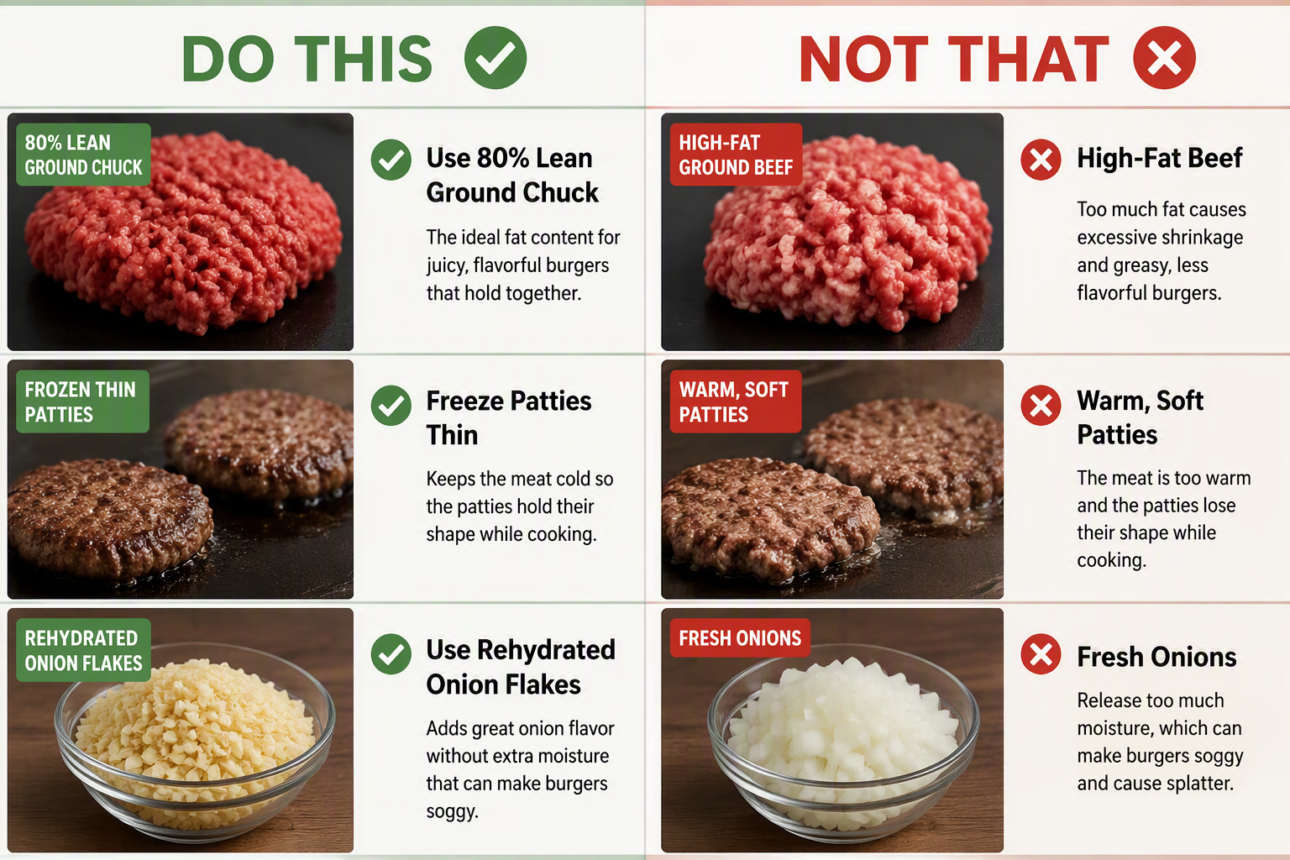
Answer: Divide your beef into small portions and flatten them into thin patties—about 1/4 inch thick. Many copycat recipes recommend freezing the patties for 1 hour after forming them. This freezing step keeps them flat and makes them easier to handle. Thin patties cook quickly, which is exactly what you want for that fast-food style.
Question: Why do copycat recipes use dried onions instead of fresh onion?
Answer: Dried minced onion recreates the soft, concentrated flavor tied to classic McDonald’s burgers. Some recipes rehydrate the dried onion with boiling water before assembling the burger. This step gives the onion a milder, more tender texture and prevents the burger from becoming watery.
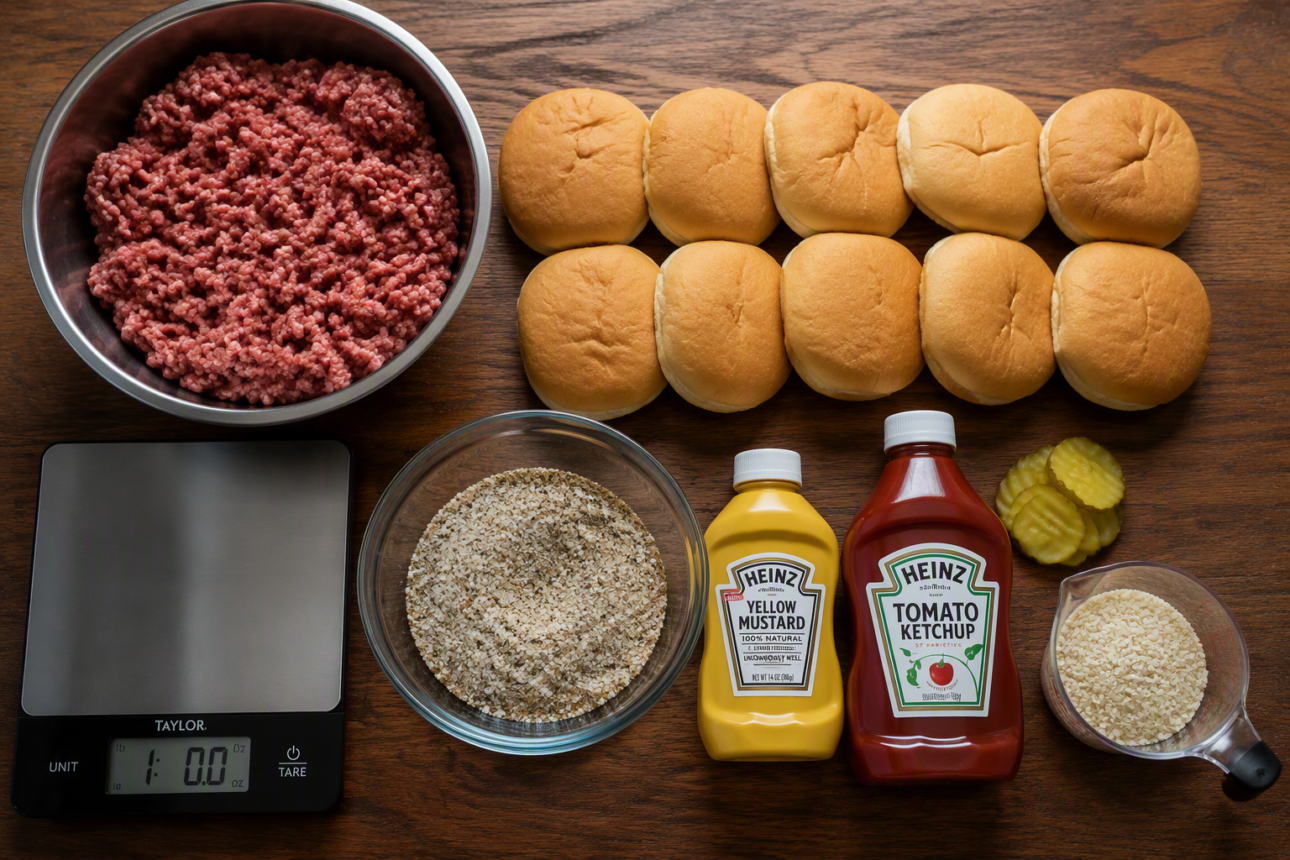
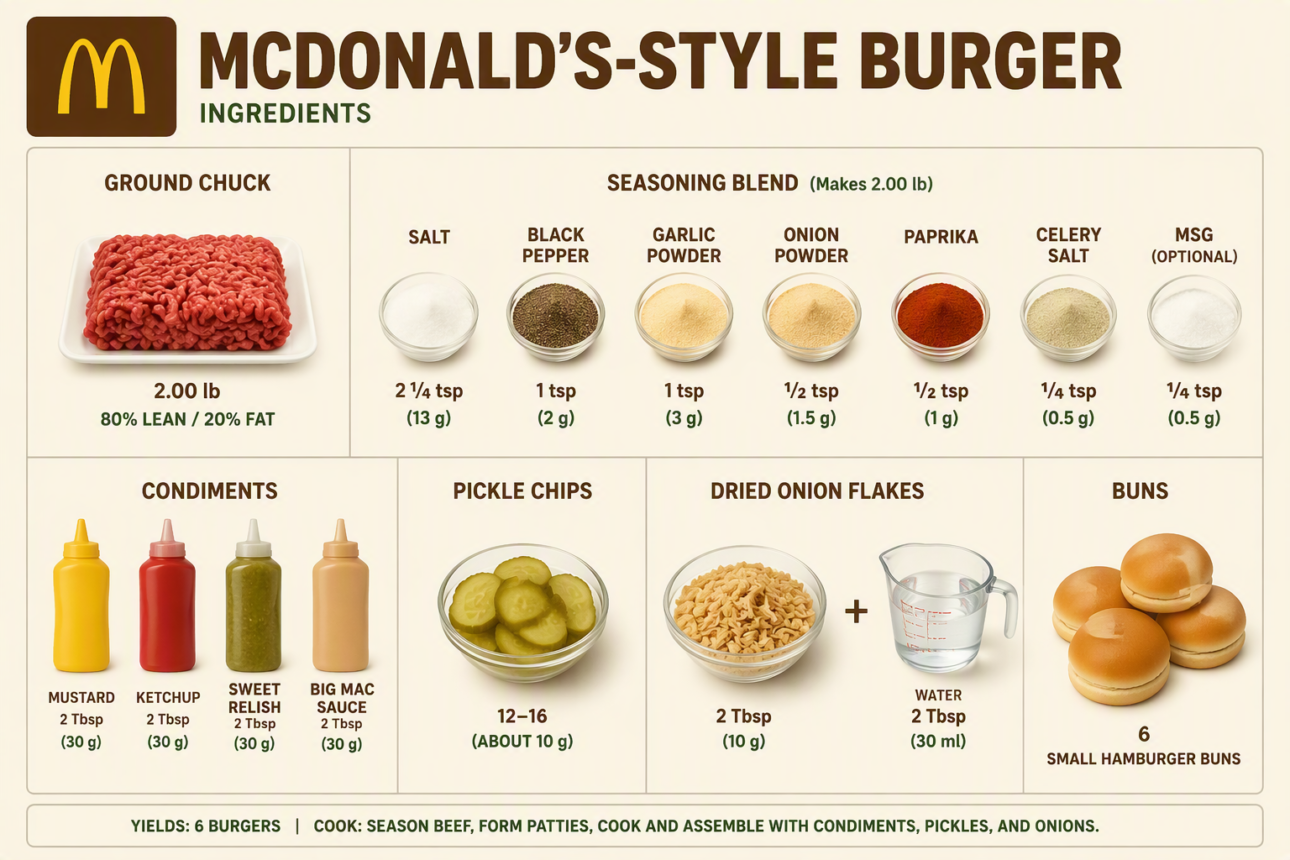
What You Need
Item
Purpose
Notes
Ground chuck (80% lean)
Main patty base
Use exactly 1 pound for 10 burgers; the lean-to-fat ratio keeps patties from shrinking and falling apart
Small hamburger buns
Burger vessel
Plain or sesame—keep them soft and avoid heavily crusted varieties
Kosher salt (4 tablespoons)
Primary seasoning
Ensures even distribution; iodized salt can taste metallic
Accent seasoning (2 tablespoons)
Umami depth
MSG-based; optional but delivers the signature savory punch
Black pepper (1 teaspoon)
Spice note
Freshly cracked works better than pre-ground
Onion powder (1/4 teaspoon)
Seasoning complement
Adds subtle depth to the blend
Dried minced onion (10 teaspoons)
Topping texture
Rehydrate with boiling water before assembly
Dill pickle chips (10 slices)
Acidic brightness
Adds crunch and tang; one slice per burger
Yellow mustard
Condiment
Standard ballpark variety works fine
Ketchup
Condiment
Thin, consistent application prevents sogginess
Boiling water (4 tablespoons)
Onion rehydration
Softens dried onion to the right consistency
Wax paper
Patty handling
Prevents sticking before the freeze step
Key Takeaways
The foundation of this recipe rests on three non-negotiable principles. First, the meat-to-seasoning ratio matters enormously—get this wrong and your burger tastes flat or overseasoned. Second, thin patties demand a cold start (frozen for 1 hour) or they’ll shrivel and lose their shape. Third, timing is tight. Your patties cook in 3–4 minutes per side, so assembly must happen fast or everything gets cold.
Step 1: Mix Your Seasoning Blend
Grab a small bowl and combine 4 tablespoons kosher salt, 2 tablespoons Accent seasoning, 1 teaspoon black pepper, and 1/4 teaspoon onion powder. Stir them together thoroughly until the salt and MSG distribute evenly. This step prevents hot spots of flavor when you mix it into the meat later.
Why mix it separately first? Because if you dump these into the raw beef without pre-blending, some bites will taste like pure salt while others taste underseasoned. A uniform blend ensures every burger tastes consistent.
Step 2: Portion and Shape the Patties
Pour your 1 pound of 80% lean ground chuck onto a clean work surface. Use your hands to divide it into 10 equal balls—each one should weigh about 1.6 ounces. Resist the urge to knead or squeeze the meat while you work. Overworking ground beef releases proteins that make the final burger tough and dense, almost rubbery.
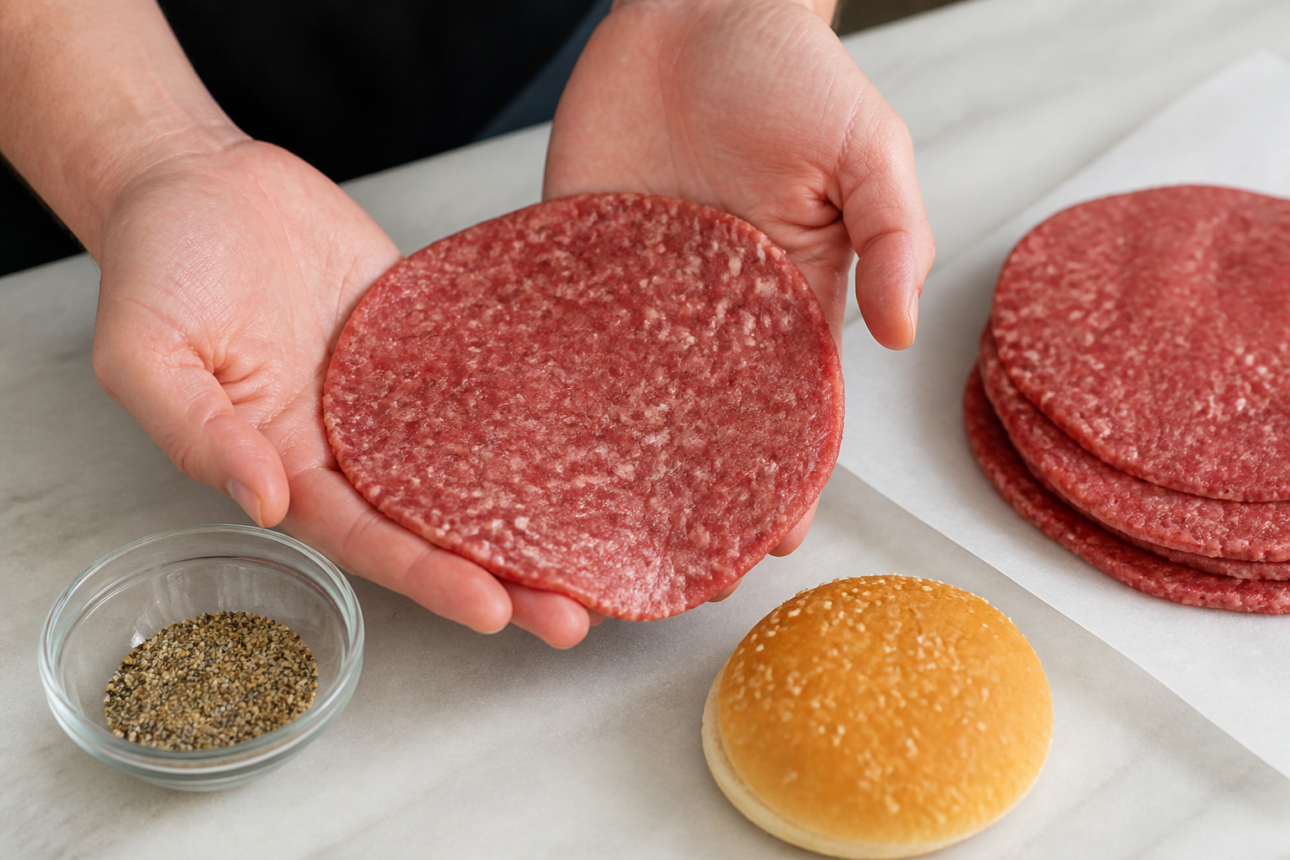
Flatten each ball into a thin disc, roughly the diameter of your buns and about 1/4 inch thick. These thin patties are the signature move. They cook fast, stay juicy, and give you that fast-food texture that thick restaurant burgers can’t match.
Step 3: Season the Patties
Sprinkle your seasoning blend evenly over both sides of each patty. Press gently with your fingertips to help the seasonings adhere. Don’t overdo this—you want the flavors to stick, not work their way into the meat and make it dense.
A light hand here pays off. The seasoning sits on the surface and creates a flavorful crust when the patty hits the hot skillet. If you push too hard, you’re compacting the meat, which defeats the whole tender-burger goal.
Step 4: Freeze the Patties for 1 Hour
Place each seasoned patty on a sheet of wax paper and stack them gently. Slide the whole stack into your freezer for exactly 1 hour. This step is critical and worth the wait.
Why freeze? Thin patties are fragile when warm. Freezing firms them up just enough so they hold their shape when they hit the skillet. A cold patty won’t shrink, curl, or fall apart mid-flip. Skip this step and you’ll end up with a burger that’s half its original size by the time it’s cooked.
Step 5: Rehydrate the Dried Onions
Measure 10 teaspoons of dried minced onion flakes into a small bowl. Pour 4 tablespoons of boiling water over them and let them sit for 2–3 minutes. The water softens the onions and brings them back to life.
This is where the McDonald’s magic happens. Fresh onion is too watery and sharp. These rehydrated flakes taste mild, almost sweet, and add that nostalgic fast-food crunch. Once they’re soft and plump, they’re ready for assembly.
Step 6: Cook the Patties
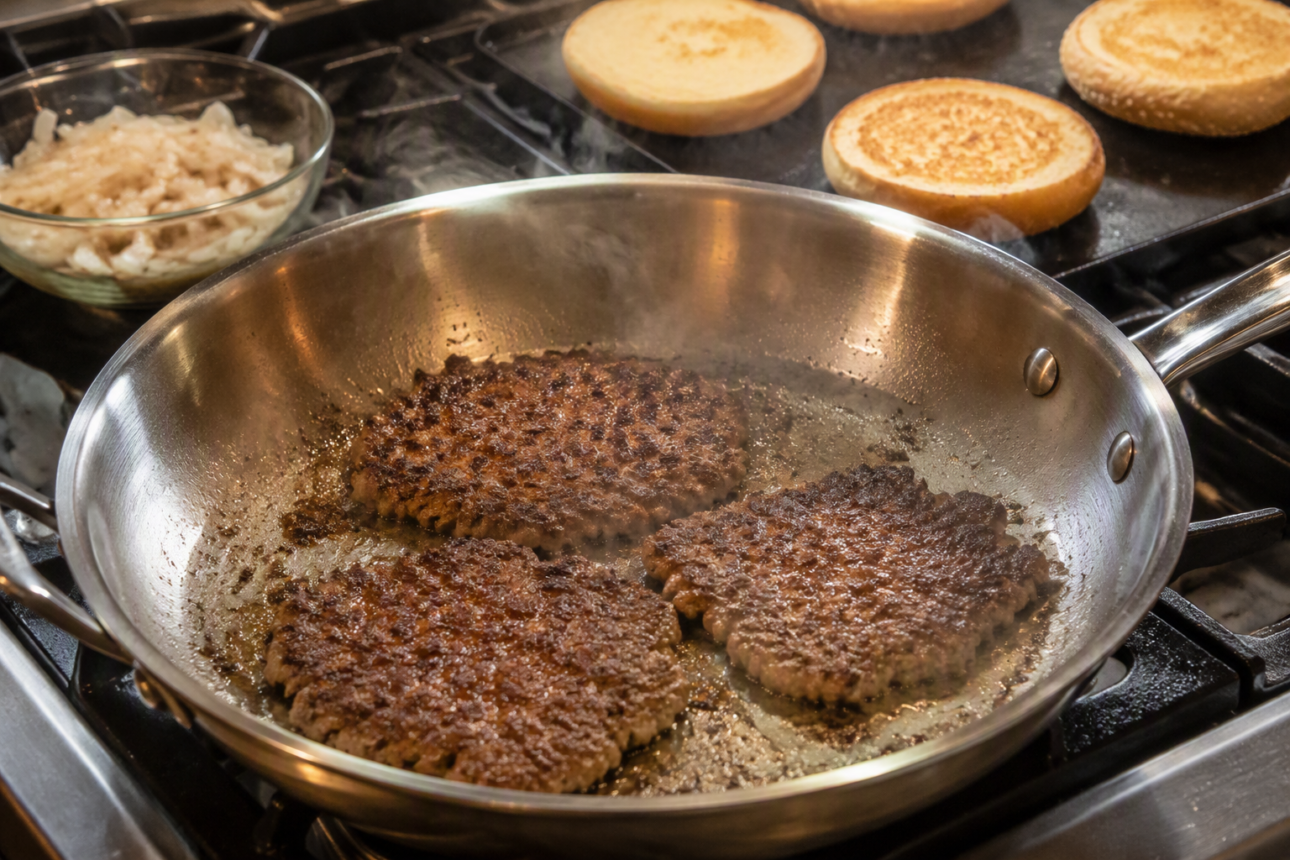
Heat a large skillet to medium-high heat—you want it hot enough to sear the patties but not so hot that the outside burns before the inside cooks. Once the skillet is ready, lay your frozen patties flat on the surface.
Cook for 3–4 minutes per side without moving them around. Resist the urge to press down on the patties with a spatula (this squeezes out all the juices). Flip once and cook the other side for another 3–4 minutes. You’re aiming for a light brown crust on both sides.
Step 7: Toast the Buns
While your patties cook, grab your buns and lightly toast the inside faces (the soft sides that will touch the patties). Use a clean skillet, griddle, or toaster to add a gentle golden color. This step takes 30–60 seconds per bun.
Why toast? A soft bun soaks up ketchup, mustard, and pickle brine and turns into mush. Toasting adds structure without making the bun feel crispy or hard. It’s the difference between a professional burger and a sloppy one.
Step 8: Assemble Your Burger
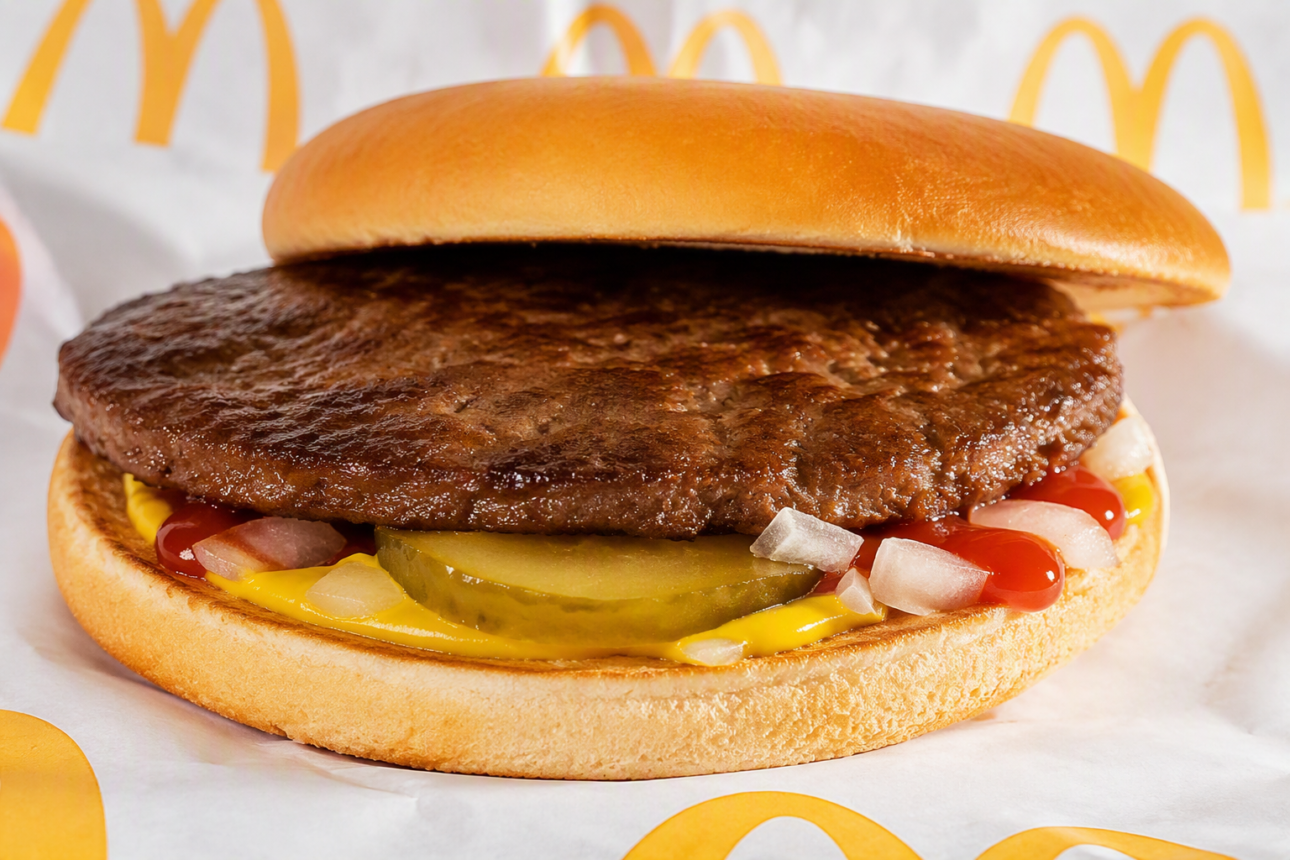
Work fast now—your patties are hot and the clock is ticking. Place your bottom bun on a plate or wrapper. Apply a thin, even squirt of yellow mustard on the bun, then a thin squirt of ketchup. Both condiments should be about the size of a quarter when applied.
Scatter your rehydrated onions on top of the condiments, then add one dill pickle chip. Place the hot cooked patty directly on top. Crown it with the top bun and serve immediately.
For a cheeseburger, add a single slice of American cheese to the hot patty right after it comes off the skillet—the residual heat will melt it perfectly. Cheddar or Swiss work too, but American cheese melts the fastest and stays creamy, which matches the original better.
Recipe Card
Foolproof Homemade McDonald’s Burger
A step-by-step copycat recipe for McDonald’s classic hamburger. Thin, perfectly seasoned patties topped with rehydrated onions, pickles, ketchup, and mustard on a soft bun. This version captures the fast-food simplicity and flavor at home.
Prep: 15 minutesCook: 10 minutesTotal: 85 minutes (includes 1-hour freeze)Yield: 10 burgersCategory: Main CourseCuisine: American
Ingredients
1 pound ground chuck (80% lean)
10 small hamburger buns
4 tablespoons kosher salt
2 tablespoons Accent seasoning (MSG)
1 teaspoon black pepper
1/4 teaspoon onion powder
10 teaspoons dried minced onion flakes
4 tablespoons boiling water
10 dill pickle chips
Yellow mustard (about 2 tablespoons total)
Ketchup (about 2 tablespoons total)
10 slices American cheese (optional, for cheeseburgers)
Wax paper for handling
Instructions
Mix 4 tablespoons kosher salt, 2 tablespoons Accent, 1 teaspoon black pepper, and 1/4 teaspoon onion powder in a small bowl until evenly distributed.
Divide 1 pound ground chuck into 10 equal portions and gently flatten each into a thin patty about 1/4 inch thick.
Sprinkle the seasoning blend evenly over both sides of each patty, pressing gently to adhere.
Place patties on wax paper and freeze for 1 hour to firm them up.
While patties freeze, rehydrate 10 teaspoons dried minced onion in 4 tablespoons boiling water for 2–3 minutes.
Heat a skillet to medium-high heat and cook frozen patties 3–4 minutes per side without pressing down.
Toast the inside of each bun lightly in the same skillet, about 30–60 seconds per bun.
Assemble each burger: bottom bun, thin mustard, thin ketchup, rehydrated onions, one pickle chip, hot patty, top bun.
For cheeseburgers, add one slice of American cheese to the hot patty immediately after cooking and allow the residual heat to melt it.
Nutrition Info (per serving)
Calories
280
Protein
16g
Carbs
28g
Fat
12g
Fiber
1g
Sugar
3g
Sodium
820mg
Notes
Do not overwork the ground beef when forming patties—this makes the burger tough and dense.
The 1-hour freeze is critical; it prevents thin patties from shrinking and falling apart during cooking.
Use exactly 80% lean ground chuck for the best texture; higher fat content causes excessive shrinking.
Dried onion flakes are essential; fresh onion makes the burger watery and changes the signature texture.
Cook patties without moving them to develop a proper crust and keep the inside juicy.
Yellow mustard and ketchup should be applied sparingly to avoid a soggy bun—thinner is better than thicker.
Tips
Batch cooking saves time and keeps things organized. If you’re making burgers for a group, cook all 10 patties at once on a large griddle or two skillets. They finish at roughly the same time, so you can assemble them in rapid succession while everything is still hot.
Temperature matters more than you think. A skillet that’s too cool won’t sear the patty and you’ll end up with a steamed burger. Too hot and the outside burns before the inside cooks through. Medium-high is the sweet spot—aim for a gentle sizzle when the patty hits the pan, not an aggressive roar.
Seasoning distribution is easier if you mix the blend first and store it in a jar. Make a big batch and keep it on hand. When you need to cook burgers, you’ve already solved the hardest part.
The toast on the bun is non-negotiable. Skip it and condiments will soak through, turning your burger into a sloppy mess. Even 30 seconds of toasting makes a huge difference in structural integrity.
Don’t skip the freeze step just because you’re in a hurry. That 1 hour is the difference between a burger that holds together and one that falls apart mid-bite. If you’re genuinely pressed for time, chill the patties in the freezer for at least 30 minutes—it’s not ideal, but it helps.
Use a light touch when forming patties. The moment you start kneading or squeezing the meat, you’re developing gluten strands and cross-linking proteins. That sounds scientific and fine, but it means a dense, tough burger. Shape the patties, season them, and move on.
If your buns are thick or crusty, slice them in half before toasting. This gives you more surface area and helps the toast penetrate. Thin, soft buns are ideal—they toast faster and don’t overpower the burger.
FAQ
Q: Can you make a McDonald’s burger at home without MSG?
Yes. Several copycat recipes skip Accent seasoning entirely and rely only on salt, black pepper, ketchup, mustard, pickles, and onion. The burger still tastes recognizable and good, though the flavor profile shifts away from that specific savory depth. If you’re avoiding MSG for any reason, just leave it out and add an extra 1/2 teaspoon salt to compensate.
Q: How long should you cook a McDonald’s-style burger patty?
Cook the patties for 3–4 minutes per side over medium-high heat. Because the patties are thin, they cook much faster than a thick restaurant burger. The key is avoiding overcooking, which dries out the meat or makes it tough. A thin patty is done when it’s lightly browned on both sides—don’t cook until it’s gray all the way through.
Q: What is the secret to the McDonald’s burger taste?
The taste comes from the combination of a thin beef patty, precise seasoning (especially the salt-to-MSG ratio), mustard and ketchup balance, dill pickles for acidity, and the rehydrated onion texture. Community reports also mention a very fine meat grind and measured condiments. The overall flavor is more about balance and texture working together than any single secret ingredient.
Q: Do McDonald’s burgers use American cheese?
The plain hamburger doesn’t require cheese, but the cheeseburger version does. Most copycat recipes add a slice of American cheese for the cheeseburger variation. That matches the fast-food standard where the cheese is mild, creamy, and melts easily. You can swap in Cheddar or Swiss, but American cheese is closest to the original.
Q: What bun works best for a McDonald’s copycat burger?
Small hamburger buns are standard. Some copycat recipes specify sesame seed buns for a cheeseburger-style version, though plain works fine too. The bun should be soft and lightly toasted rather than heavily crusted. A soft bun helps the copycat burger feel closer to the fast-food original without adding too much chew or crunch.
Q: Should you toast the bun for a McDonald’s burger recipe?
Yes. Lightly toasting the bun adds structure so it doesn’t get soggy from ketchup, mustard, and pickle brine. Toasting also improves texture without making the burger feel like a grilled sandwich. Aim for a gentle golden color on the inside surfaces—30 to 60 seconds in a skillet or toaster is usually enough.
Q: What are the most common mistakes when copying McDonald’s burgers?
The biggest mistakes are making the patty too thick, overworking the meat, and adding too many toppings. Overworking the meat makes the burger tough. A common issue is skipping the freeze step, which causes the thin patties to lose their shape while cooking. Another pitfall is using fresh onion instead of rehydrated dried onion—it changes the signature texture and makes the burger watery.
My Experience With Foolproof Homemade McDonald’s Burger That Never Fails
I’ve made this recipe probably 30 times now, and the learning curve was steeper than I expected. My first attempt, I skipped the freezing step (I was impatient) and my patties shrunk to half their size. The second time, I overworked the meat while forming patties and ended up with something that tasted like a hockey puck. The third time, I used fresh onion because I didn’t have dried—big mistake. That’s when I realized each step isn’t just a suggestion; it’s there for a reason.
The real breakthrough came when I stopped overthinking and committed to the exact ratios. The salt-to-Accent balance is what separates “pretty good copycat” from “wait, did you actually cook this at home?” The frozen patties are non-negotiable—I learned that the hard way. And rehydrating the dried onion instead of using fresh is the detail nobody talks about but everybody should know.
What surprised me most was how simple it actually is once you accept the constraints. No rare beef, no thick juicy patties, no fancy toppings—just thin, seasoned meat on a soft bun with four things on top. It’s boring on paper but weirdly satisfying in practice. The burger tastes exactly like I remember, which sounds stupid but matters.
The speed factor is real too. From frozen to plated in 10 minutes. That’s faster than driving to McDonald’s, and you control every ingredient.
Have you tried making copycat burgers before, and if so, what tripped you up?
Conclusion
Making a McDonald’s-style burger at home comes down to respecting the fundamentals. The thin patty, the precise seasoning, the rehydrated onions, the toasted bun—none of these are accidents. Each one solves a specific problem and contributes to the final taste and texture.
Start with the exact ratios from this recipe. Don’t improvise on the 80% lean beef, the 1-hour freeze, or the dried-then-rehydrated onion. Once you’ve made it once and seen how it works, you can adjust to taste. But the first time, follow the steps exactly. That’s how you’ll understand why each one matters and why this burger works.
Your burger will taste like the original because you’re building it the same way—not guessing at shortcuts or assuming fresh ingredients are always better. Sometimes the copycat really is better than the original.
References
Food.com. (n.d.). Copycat Mc Donald’s Hamburgers/Cheeseburgers Recipe. Food.com. https://www.food.com/recipe/copycat-mc-donalds-hamburgers-cheeseburgers-116181
Reddit. (2024). What’s the secret to create a Cheeseburger that tastes just like McDonald’s? r/TopSecretRecipes. https://www.reddit.com/r/TopSecretRecipes/comments/1e1e0w4/whats_the_secret_to_create_a_cheeseburger_that/
I’m the mom behind Wise Mom Blogger, where everyday creativity meets real-life motherhood. I share easy DIY crafts, cozy knitting and crochet projects, beginner-friendly sewing ideas, and family-tested recipes—plus quick baking hacks that make homemade feel doable on busy days.