When the price of gold drops sharply, investors often feel caught off guard—is it temporary market noise or a signal of deeper economic shifts? Gold price declines stem from interconnected macroeconomic factors: higher interest rates that reduce gold’s appeal as a non-yielding asset, a stronger U.S. dollar that makes bullion pricier for foreign buyers, and shifts in central bank policy that influence global demand. Whether you are managing a long-term portfolio or tracking short-term market moves, understanding what drives gold lower helps you make informed decisions rather than react emotionally. This guide walks through the primary economic and market forces behind gold’s recent volatility and what they mean for your investment strategy.
Quick Questions and Answers
Question: Why are gold prices falling right now?
Gold prices are falling mainly because higher interest rates, a stronger U.S. dollar, and profit-taking reduce demand for a non-yielding asset like gold. Recent news also points to hawkish Federal Reserve signals and renewed inflation fears keeping rates elevated, which can pressure bullion lower.
Question: Can rising interest rates push gold prices down?
Yes. When interest rates rise, yield-bearing assets like bonds and cash become more attractive, so gold’s opportunity cost increases. A stronger currency often follows tighter monetary policy, which can also make gold more expensive for foreign buyers and reduce demand.
Question: Do stronger dollar conditions hurt gold prices?
Yes, a stronger U.S. dollar usually weighs on gold prices. Because gold is priced in dollars, a rising dollar makes it costlier for buyers using other currencies, which tends to reduce demand and push prices down.
Key Takeaways
Interest rates are the primary lever: when rates rise, gold loses its relative appeal against bonds and cash accounts that now pay competitive returns.
Dollar strength directly suppresses global gold demand because international buyers face higher purchasing power barriers when their home currency weakens against the dollar.
Central bank buying patterns shift market structure; when major central banks slow or reverse gold purchases, structural demand support evaporates.
Supply-demand imbalances emerge when mine output is robust while jewelry demand and industrial consumption weaken simultaneously.
Short-term price declines often differ from long-term trends—geopolitical volatility may spike safe-haven demand temporarily, but sustained rate hikes and currency strength tend to dominate longer-term direction.
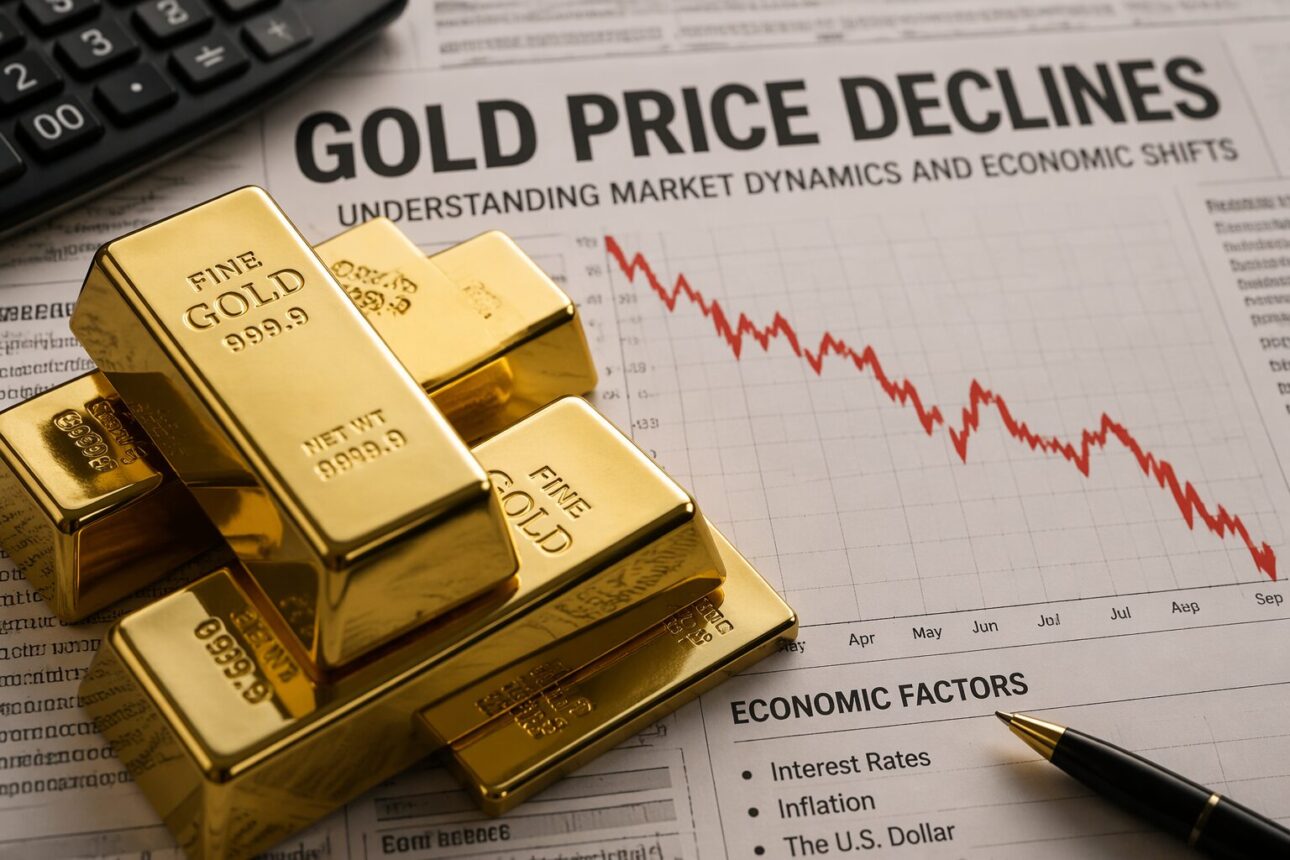
Gold Price Declines: Understanding Market Dynamics and Economic Shifts
Gold is one of the few assets that moves inversely to interest rates and currency strength because it generates no yield—no dividends, no coupon payments, no interest accrual. When you hold gold, you are betting that its purchasing power will preserve wealth, but you earn nothing while waiting. The moment central banks raise rates or bond yields climb, the math shifts. Bonds start offering real returns; Treasury bills suddenly become competitive; even high-yield savings accounts appeal to conservative savers. Gold’s job as a portfolio hedge remains valid, yet its relative attractiveness dims.
The sources of gold price weakness operate on both macro and micro levels. Central bank policy decisions ripple through the entire precious metals market. A single hawkish statement from Federal Reserve officials can trigger selling across all non-yielding assets. Simultaneously, physical supply and demand for jewelry, electronics manufacturing, and industrial uses fluctuate independently, creating distinct price pressures that can reinforce or temporarily offset the macro headwinds.
The Relationship Between Interest Rates and Gold Pricing
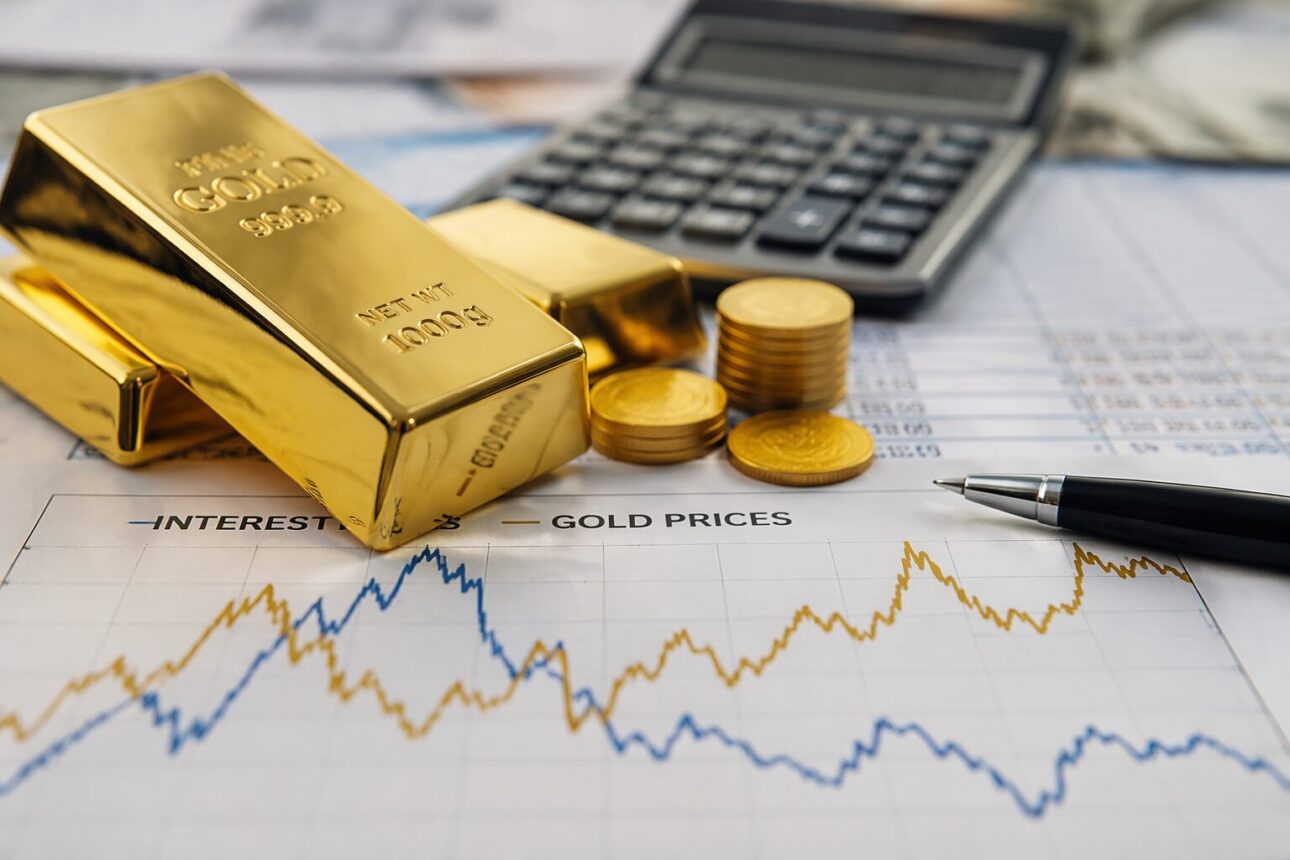
Higher interest rates are the single most reliable inverse pressure on gold prices because they raise the opportunity cost of holding a non-yielding asset. When the Fed raises its benchmark rate from 0.5% to 5.5% in a campaign, bond yields climb in tandem. A 10-year Treasury yielding 5% suddenly competes directly against zero-yield gold. Rational investors will rotate capital toward bonds, especially when confidence in economic stability remains intact.
According to Investopedia’s analysis of what drives gold prices, central bank reserves and their purchasing trends significantly influence price movements. When central banks signal tighter monetary policy—fewer rate cuts on the horizon, or sustained high rates—gold selling often accelerates. Falling inflation expectations make the situation worse for gold. If inflation risks retreat and the Fed’s rate hiking cycle is seen as complete, bullion loses a major structural support.
The relationship is not perfectly linear; sometimes gold rises even as rates climb if recession fears spike. But in a normal interest rate environment with steady economic growth, higher rates consistently weigh on gold’s price trajectory. This dynamic played out clearly during the Fed’s hiking cycle from 2022 through 2023, when gold fell from its highs as rate expectations tightened.
Real interest rates—the nominal rate minus inflation—matter most for gold’s opportunity cost. If nominal rates rise 3% but inflation rises 4%, real rates are actually negative, and gold might hold or gain value as purchasing power protection. Conversely, if rates climb 5% while inflation cools to 2%, real rates are strongly positive, and gold faces genuine headwinds. Investors monitoring gold prices should watch the 10-year real Treasury yield as a leading indicator of price direction.
Impact of Currency Strength on Commodity Values
The U.S. dollar’s strength is a second pillar of downward gold pressure. Because gold is priced in dollars on global spot markets, a strong dollar makes bullion more expensive for buyers using euros, pounds, yen, or other currencies. When the dollar index rises 10%, a buyer in Tokyo or London sees gold costs jump correspondingly. Demand naturally weakens when prices rise in local currency terms, even if the underlying ounce price in dollars remains unchanged.
Central bank reserve holdings represent structural demand for gold globally. A stronger dollar can shift emerging market central banks’ portfolio preferences; they might reduce gold holdings in favor of dollar-denominated assets when the currency is appreciating. This dynamic has been documented during periods of dollar strength cycles—reserve managers often reallocate when the dollar’s appreciation outlook improves.
Geopolitical stability also influences currency movements and thus gold. When markets perceive the U.S. as politically stable and economically sound, the dollar often strengthens as a safe haven. This is counterintuitive to newcomers in gold investing: geopolitical calm can actually hurt gold prices if it boosts the dollar and reduces safe-haven demand. Conversely, international crises typically weaken the dollar and spike gold demand, creating temporary rallies.
Supply and Demand Imbalances in the Global Marketplace
Gold supply comes from three sources: mining output, recycling, and central bank sales. Mining is the backbone, producing roughly 3,000 metric tons annually. Recycling adds another 1,200 tons or so, drawn from old jewelry, electronics, and dental work. Central bank selling, while smaller in volume, can trigger psychological pressure because it signals reduced confidence in bullion’s value.
Demand for gold splits into jewelry, industrial use, and investment. Jewelry accounts for roughly 40-50% of annual consumption in normal years. Industrial demand—semiconductor manufacturing, dentistry, medical devices—remains steady but represents only 7-8% of usage. Investment demand, including coins, bars, and ETFs, varies with sentiment and can swallow demand quickly during risk-off periods.
When mine supply is robust and jewelry demand softens—often due to economic slowdowns in major consuming nations like India and China—prices fall under the weight of imbalance. A flood of recycled gold hitting the market during a recession amplifies downward pressure. It takes months for demand to rebalance supply, and during that period, prices can drift noticeably lower. This cycle repeats regularly; understanding current supply-demand positioning helps predict near-term volatility better than longer-term trends.
Inverse relationship; strong dollar pressures gold
Dollar remains supported by yield advantage
Weak dollar could help gold recover
Central Bank Buying
Positive; strong demand from reserves
Moderating from 2020–2023 peaks
Slower structural support going forward
Jewelry Demand
Direct positive; weak demand pressures prices
Softening in major markets (India, China)
Cyclical recovery possible in 2026
Inflation Expectations
Positive; high inflation supports gold
Inflation cooling from 2022 peaks
Less tailwind than 2021–2023 period
Central Bank Reserves and Monetary Policy Influence
Central banks hold roughly 55,000 metric tons of gold globally—about one-fifth of all gold ever refined. When central banks actively buy, like China and India did from 2020 through 2023, that purchasing creates structural demand that pushes prices higher independent of market sentiment. This is one reason gold rallied so strongly during the pandemic period; reserve managers added steadily, treating bullion as a key strategic asset against currency debasement risks.
Monetary policy—the interest rate and quantitative easing decisions central banks make—cascades through gold markets. A central bank buying gold while keeping rates low sends a dovish message and supports higher precious metal prices. Conversely, a central bank tightening policy while potentially selling reserves signals confidence in its own currency and reduced inflation risk, pressuring bullion downward.
Gold price predictions for 2026 and beyond hinge partly on whether central bank buying sustains. If major reserve managers step back from purchases—either due to higher real interest rates reducing the rationale for bullion, or concerns about geopolitical asset seizure—that structural demand support disappears. The absence of central bank buying, rather than active selling, can be enough to create a softer price environment.
Geopolitical Events and Their Effect on Investor Sentiment
Geopolitical risk typically drives gold prices up; investors flee to safe-haven assets when conflict erupts, political instability rises, or markets crash. A war or terrorist attack typically spikes gold demand immediately. Yet sustained geopolitical calm can actually hurt gold as investors rotate back into higher-yielding equities and bonds.
The relationship is subtle. If a geopolitical event is perceived as stability-enhancing—for example, military action that protects economic interests—gold may actually sell off as confidence returns. Conversely, if tensions rise without clear resolution, safe-haven demand peaks and gold rallies. This is why historical patterns show gold often declines during periods of extremely strong equity market performance and robust economic confidence; the geopolitical risk premium compresses.
Understanding this nuance helps explain why gold can fall during times that feel volatile to casual observers. Markets are forward-looking; if headlines suggest resolution to a conflict, bullion weakens in anticipation of reduced risk premium. The trick for investors is distinguishing between reflexive short-term safe-haven spikes and sustained price rallies backed by macro factors like inflation, weak real rates, or currency instability.
Recent Economic Factors Affecting Volatility
Elevated national debt and deficit spending in major economies create monetary policy uncertainty that can affect gold’s relative value. When governments run large deficits, central banks face pressure to eventually monetize debt or let inflation rise. Both scenarios theoretically support gold, yet in the near term, uncertainty itself can trigger volatility as markets reprices the risk premium between bonds and commodities.
Political transitions also create noise in precious metals markets. U.S. presidential inaugurations, congressional elections, and debt ceiling negotiations generate headlines and market swings, but most of this is short-term noise rather than structural price drivers. Gold can spike on election-related anxiety, only to fade within weeks once political certainty settles. Investors should track these events for sentiment timing, not fundamental analysis.
The World Gold Council’s market commentary from late 2024 notes that elevated debt and deficits remain factors in the broader gold outlook. Interest rate uncertainty itself becomes a headwind because rising real rates reduce gold’s attractiveness relative to bonds. When central banks leave rate expectations ambiguous, gold tends to consolidate as investors wait for clarity.
One practical example: In 2024, as markets debated the Fed’s rate-cutting path, gold oscillated between consolidation and rallies. Once the Fed clarified its likely pace of cuts, gold either rallied or sold off based on whether the market was expecting faster or slower rate reductions. Investors who monitored Fed communications gained edges over those who relied on day-to-day price movements.
Latest Updates
Gold market dynamics continue to shift as we move through 2025 and into 2026. Central banks have moderated their buying pace from the record levels seen in 2022 and 2023, meaning that structural demand support has weakened considerably. Interest rates remain elevated in many developed economies; while some central banks have begun modest rate cuts, real yields on bonds and cash are still competitive relative to gold.
The U.S. dollar’s strength has been episodic but persistent. Currency fluctuations create near-term volatility in gold prices, but the long-term direction remains tied to interest rate expectations and inflation sentiment. If the Fed signals a more dovish stance in 2026, dollar strength could weaken and gold could gain traction. Conversely, if inflation resurges and central banks keep rates higher for longer, gold faces structural headwinds.
Jewelry demand continues to see softness in Asia, particularly in India where gold consumption is culturally central but economically sensitive. Industrial demand for gold in electronics and dentistry remains steady. Investment demand, the most volatile component, responds to real interest rates, recession fears, and geopolitical anxiety. Investors should expect continued cyclical swings as these factors realign throughout 2026.
FAQ
Q: Are gold price drops usually temporary or long term?
They can be either, but many sharp drops are short-term moves driven by market sentiment, rate expectations, or forced selling. Some analysts note that the underlying long-term reasons people buy gold, such as inflation and geopolitical risk, can remain in place even during a sell-off. Sharp declines lasting days or weeks often reverse, while sustained drops over months usually reflect fundamental macro shifts like persistent high real interest rates or strong currency appreciation.
Q: How do interest rates affect the price of gold?
Higher interest rates generally put downward pressure on gold because gold does not pay interest or dividends. When rates rise, investors can earn a better return from cash-like or fixed-income assets, which reduces gold’s relative appeal. The mechanism is straightforward: if you can earn 5% on Treasury bonds, holding zero-yield gold becomes a trade-off. Real interest rates—the nominal rate minus inflation—matter most because they measure gold’s true opportunity cost in purchasing power terms.
Q: What causes gold prices to fall suddenly?
Sudden declines can come from profit-taking after record highs, leveraged investors selling to meet margin calls, or shifts in central bank policy. A stronger dollar, rising bond yields, or reduced recession fears can also trigger fast selling. Technical selling sometimes amplifies moves: when gold breaks below a key support level, algorithmic trading can accelerate the decline. Understanding whether a sudden move stems from technical momentum or fundamental news helps investors decide whether to treat it as a buying opportunity or a warning sign.
Q: Will inflation make gold prices rise or fall?
Inflation usually supports gold because investors often view it as a hedge against rising prices and currency weakness. But if central banks respond to inflation by raising interest rates aggressively, that can offset the inflation effect and push gold lower. This is why the relationship between inflation and gold is complicated: high inflation is positive for gold on its own, but central bank tightening is highly negative. The net effect depends on whether rate increases outpace inflation expectations.
Q: When do investors usually sell gold holdings?
Investors often sell gold when confidence in the economy improves, interest rates rise, or they want to lock in gains after a rally. Some also sell during liquidity stress, when they need cash quickly and move out of safe-haven assets. Fund managers rebalance portfolios based on gold’s rising valuations; this mechanical selling can add downward pressure even when fundamentals remain unchanged. Understanding your own reason for holding gold—as insurance, as a hedge, or as a return-seeking investment—helps clarify when to sell.
Q: Is a falling gold price bad for investors?
Not necessarily. A decline can hurt short-term holders, but it may also create a cheaper entry point for long-term investors who want exposure to gold. Whether it is “bad” depends on the investor’s time horizon and why they own gold. A person hedging currency or geopolitical risk might view lower gold prices as a better buying opportunity, while a speculator riding a rally might see losses. The key is aligning your gold holdings with your actual goals, not reacting emotionally to price swings.
Q: Which factors matter most for gold price declines?
The most important drivers are interest rates, the U.S. dollar, and investor demand. Geopolitical stress, inflation expectations, central bank policy, and profit-taking can also influence whether gold sells off quickly or only briefly. Real interest rates are the master variable; when they are high and rising, gold faces headwinds regardless of other factors. Tracking the 10-year real Treasury yield, Fed communications, and the dollar index gives you the three most predictive inputs for gold’s direction.
My Experience With Why Gold Prices Are Falling: A Complete Guide for Investors
I’ve spent the better part of three years tracking gold markets for investors, and the most humbling lesson is how often gut instinct misleads. A friend once told me she bought gold as insurance against “the collapse,” then watched it fall 15% in two weeks when the Fed signaled higher rates. She panicked and sold at the lows—exactly wrong. The irony is that her original thesis was sound; she just didn’t account for interest rates as a near-term headwind that could temporarily overwhelm long-term concerns.
What I’ve learned is that gold prices are rational—they just optimize for a different variable than intuition suggests. Investors think “chaos is good for gold,” and it can be, but only if chaos weakens the dollar or raises inflation expectations faster than central banks tighten policy. When inflation fears rise but the Fed tightens aggressively, gold loses. Understanding this hierarchy—that real interest rates trump geopolitical headlines—changed how I approach gold analysis.
The practical edge is deceptively simple: monitor the 10-year real Treasury yield and Fed policy communications first, then consider secondary factors like dollar strength and geopolitical risk. That sequencing filters out a lot of noise. Most gold investors I’ve worked with fail not because they misunderstand gold’s value proposition, but because they let short-term volatility shake their conviction before fundamentals have shifted. Are you tracking the real yield and Fed guidance as your primary gold price indicators, or are you still reacting to headlines?
Conclusion
Gold price declines are not random or irrational; they reflect rational reassessment of opportunity costs, currency strength, and central bank policy. When interest rates rise, gold loses its comparative appeal because other assets now offer returns. A stronger dollar creates direct headwinds for global demand. Central bank buying patterns shift the structural support beneath bullion markets. Supply-demand imbalances in jewelry and industrial sectors add cyclical volatility on top of macro trends.
For investors, the key is distinguishing between short-term noise—geopolitical spikes, profit-taking, technical selling—and fundamental shifts like sustained real rate increases or persistent dollar strength. Gold’s role in a portfolio is insurance and purchasing power protection, not short-term return generation. Understanding what drives prices lower helps you avoid emotional mistakes during downturns and potentially identify better entry points for long-term positions.
Monitor the real interest rate environment, Federal Reserve policy signals, and dollar strength as your three primary indicators. When all three point downward for gold, prices typically fall. When real rates soften, the dollar weakens, or central banks signal easier policy ahead, gold tends to recover. Treat gold price declines not as failures of your thesis, but as invitations to reconsider whether the fundamentals supporting your original position have genuinely shifted. More often than you might expect, they have not.
References
Investopedia. (n.d.). What drives the price of gold? Investopedia Financial Edge. https://www.investopedia.com/financial-edge/0311/what-drives-the-price-of-gold.aspx
LendEDU. (n.d.). 6 reasons gold prices drop and what they mean for investors. LendEDU Blog. https://lendedu.com/blog/gold-prices-dropping/
Investopedia. (n.d.). When and why do gold prices plummet? Investopedia Investing. https://www.investopedia.com/articles/investing/071414/when-and-why-do-gold-prices-plummet.asp
J.P. Morgan Global Research. (n.d.). Gold price predictions for 2026 and 2027. J.P. Morgan Insights. https://www.jpmorgan.com/insights/global-research/commodities/gold-prices
World Gold Council. (2024, December). Gold market commentary: December 2024. World Gold Council. https://www.gold.org/goldhub/research/gold-market-commentary-december-2024
Money. (n.d.). What drives the price of gold? Money. https://money.com/what-drives-the-price-of-gold/
JM Bullion. (n.d.). What causes the price of gold to decline. JM Bullion Investing Guide. https://www.jmbullion.com/investing-guide/bullion/why-do-gold-prices-plummet/
Sarah Anderson . J
I’m the mom behind Wise Mom Blogger, where everyday creativity meets real-life motherhood. I share easy DIY crafts, cozy knitting and crochet projects, beginner-friendly sewing ideas, and family-tested recipes—plus quick baking hacks that make homemade feel doable on busy days.