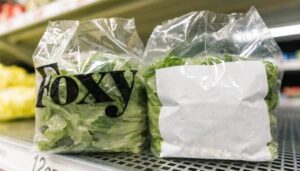
Quick answer: Yes, there is a real risk right now. Taylor Farms de Mexico recalled shredded iceberg lettuce grown in central Mexico after it was linked to a large cyclospora outbreak that has sickened thousands of people in 2026. If you have iceberg lettuce from that recall, or you ate at a Taco Bell in Indiana, Kentucky, Michigan, Ohio, or West Virginia recently and feel sick, do not eat the lettuce and talk to a doctor.
Grocery store lettuce is not supposed to make headlines. But in the summer of 2026, that is exactly what happened. A tiny parasite called Cyclospora has been linked to shredded iceberg lettuce from Taylor Farms de Mexico, and the numbers keep climbing. Thousands of people across dozens of states have gotten sick, hundreds have ended up in the hospital, and a produce recall has grown from a handful of states to dozens. Along the way, there was even a confusing moment where the FDA said a lettuce sample tested positive, then said it was a mistake, then said the outbreak was still linked to Taylor Farms anyway. If that sounds like a lot to untangle, this guide breaks it all down in plain language.
Key Fact
Status
Product involved
Recalled shredded iceberg lettuce, central Mexico
Company named
Varies Taylor Farms de Mexico (not all Taylor Farms products)
Restaurant tie-in
Caution Taco Bell in 5 states
Other Taylor Farms items (salad kits, etc.)
Not recalled
Person-to-person spread
Does not happen
State/Area
Reported Situation
Michigan
High Over 6,500 reported infections, largest of any state
Ohio
High Over 2,000 reported infections, mostly northwest Ohio
Indiana
Confirmed cluster Part of the 5 state Taco Bell tied cluster
Kentucky
Confirmed cluster Part of the 5 state Taco Bell tied cluster
West Virginia
Confirmed cluster Part of the 5 state Taco Bell tied cluster
Remaining 29 states
Scattered cases Part of the broader 34 state national count
Confirmed cyclosporiasis cases: this year vs. last year (as of mid July)
2026 1,645
2025 249
Confirmed domestically acquired cases reported to CDC. Thousands more 2026 cases were still awaiting lab confirmation at the same point in time.
What is Cyclospora and how does it make people sick?
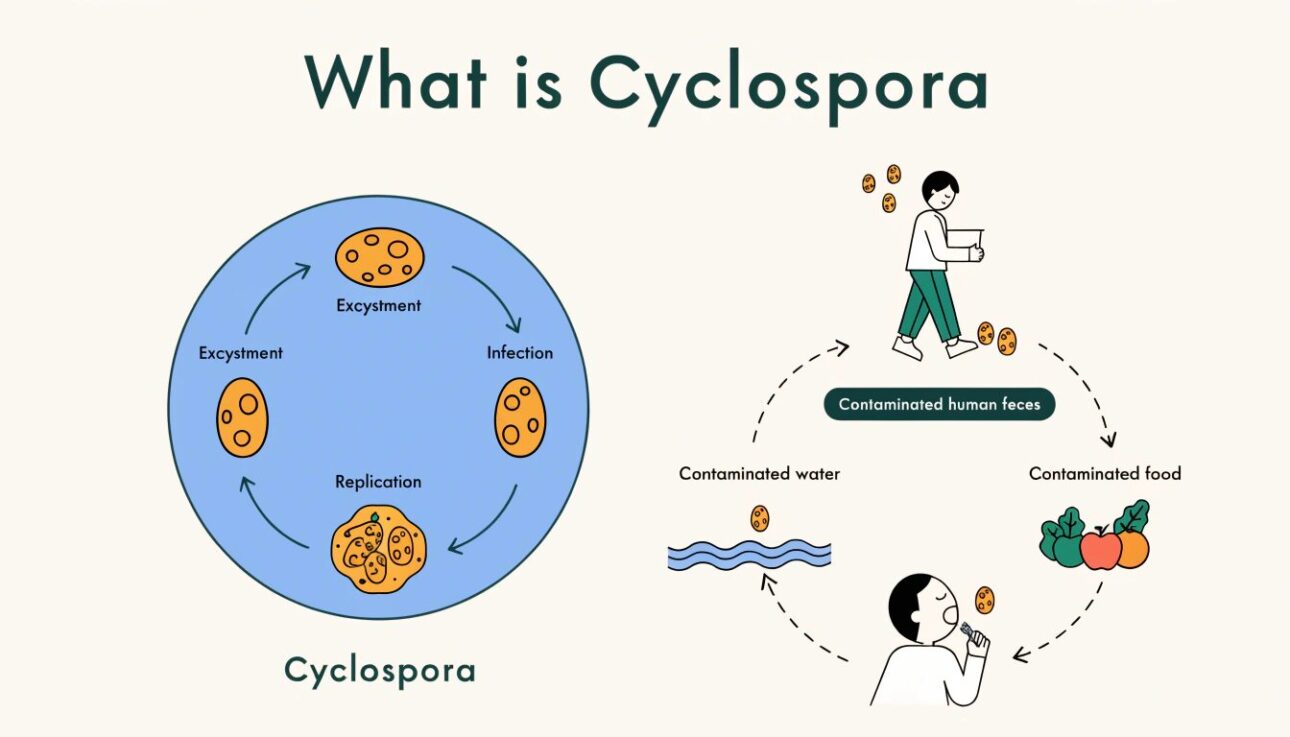
Cyclospora is a tiny, one-celled parasite that causes an illness called cyclosporiasis, and it spreads mainly through food or water that has been contaminated with human waste. People usually catch it by eating raw fruits or vegetables, like lettuce or herbs, that were grown or rinsed in contaminated water at some point before they reached the store. It does not spread from person to person the way a cold or flu does, so you cannot catch it just by being near someone who is sick.
The illness is not usually dangerous, but it can be miserable. Symptoms include watery, sometimes explosive diarrhea, stomach cramps, nausea, loss of appetite, and tiredness, and they can last for days or even weeks if untreated. Symptoms typically start about a week after exposure, though the range can be anywhere from 2 to 14 days, which is one reason it takes health officials a while to trace an outbreak back to its source.
In practice, this means if you ate suspect lettuce two weeks ago and felt fine, you are probably in the clear, but symptoms can still show up later than you would expect with many other foodborne illnesses. According to the CDC’s cyclosporiasis surveillance page, the parasite is diagnosed through stool tests, and doctors sometimes need more than one sample because the parasite is not always shed at a steady rate.
How did Taylor Farms get linked to this outbreak?
Investigators traced the outbreak back to shredded iceberg lettuce supplied by Taylor Farms de Mexico after noticing that many sick people had eaten at Taco Bell locations before falling ill. The FDA’s traceback work pointed to a single supplier in central Mexico that fed lettuce into Taco Bell restaurants in Indiana, Kentucky, Michigan, Ohio, and West Virginia, and health officials told the public to avoid that lettuce while the investigation continued.
This matters because it shows how modern food safety detective work happens. It is not usually a single dramatic lab result that cracks a case. Instead, it is a pattern, built from interviews with sick patients about what they ate and where, that keeps pointing to the same supplier over and over. As infectious disease specialist William Schaffner put it, eating at Taco Bell and eating Taylor Farms lettuce lined up again and again in sick patients, and that statistical pattern is what convinced FDA and CDC that lettuce was the cause, even before every lab test confirmed it.
For shoppers, the practical takeaway is to pay attention to recall notices rather than waiting for a single definitive test. If your grocery store or restaurant has pulled iceberg lettuce during this outbreak, that is a strong signal to avoid it, even if you have not personally heard about a lab-confirmed positive sample. Per CDC’s outbreak investigation page, the agency directly recommended people not eat shredded iceberg lettuce from Taylor Farms de Mexico served at the named Taco Bell locations.
What was the recall, and what does it actually cover?
On July 17, 2026, Taylor Farms voluntarily recalled all iceberg lettuce grown in central Mexico, and the company later said it would stop sourcing iceberg lettuce from that region for the rest of the growing season. The recall was expanded over the following days, eventually covering shredded iceberg lettuce distributed to around 27 states.
The recall did not cover every Taylor Farms product. The company stated clearly that its branded salad kits and other items were not part of the recall, and that the issue was limited to iceberg lettuce grown and processed in central Mexico. That distinction matters because it means not every bag of salad with a Taylor Farms label is a risk, but any shredded iceberg lettuce tied to that specific central Mexico supply chain should be treated as unsafe until officials say otherwise.
For the average household, this means checking where your lettuce came from matters more than checking the brand alone. If you bought loose iceberg lettuce or ate it at a restaurant recently and are not sure of its origin, throwing it out or asking the restaurant directly is the safer move. As Taylor Fresh Foods said in its own newsroom statement, the recall was completed with affected product removed from the marketplace, and no Taylor Farms branded products were involved.
What was the false positive test drama about?
The false positive was a separate lettuce sample that briefly tested positive for cyclospora, then turned out to be a lab mistake, and it did not undo the case against Taylor Farms. The sample in question came from a routine import inspection shipment, not from lettuce already tied to the outbreak or the recall, so its retraction did not change the underlying evidence.
This happened because testing for Cyclospora is genuinely tricky. Infectious disease physician Céline Gounder noted that while it is rare for the FDA to publicly walk back a result, false positives of this kind are an ordinary hazard of lab work, and cyclospora testing is more complicated than testing for many other pathogens. The FDA itself said on social media that the false positive did not change the basis for its ongoing investigation or the strong epidemiological evidence supporting the recall.
The practical lesson here is not to assume a single retracted test means the whole outbreak story falls apart. Investigators rely on many types of evidence together, including patient interviews, shared restaurant visits, and lab work, and one bad sample among many does not cancel out the rest. According to FDA’s public statement, Taylor Farms remained the focus of the investigation even after the correction was made.
How big is this outbreak compared to a normal year?
This outbreak is much bigger than a typical year, with confirmed domestic cases running more than six times higher than the same period in 2025. The CDC reported 1,645 laboratory-confirmed domestically acquired cases across 34 states as of mid July 2026, compared with only 249 cases reported nationally by the same date the year before.
Beyond the confirmed count, thousands more cases were still being reviewed to see if they qualified as domestically acquired, and some state health departments reported numbers far higher than the national confirmed total, since state counts can include probable cases that have not yet made it into CDC’s official tally. Michigan alone reported thousands of infections, becoming the hardest hit state in the outbreak, with Ohio not far behind.
What this means for readers is that the headline “1,645 cases” understates the real scope of the outbreak. Food safety expert Jennifer McEntire told CBS News that nothing about this outbreak is typical, both because of its size and the number of people who have gotten sick. If you live in one of the hardest hit states, it is worth being extra cautious about lettuce sourcing for the rest of the summer.
Who is most at risk of getting seriously sick?
Most people recover fully, but roughly 9 percent of confirmed patients in this outbreak needed hospitalization, and no deaths have been reported so far. Among the confirmed cases with available details, patients ranged in age from 2 to 95 years old, with a median age of 44, and slightly more than half were female.
The reason hospitalization happens at all usually comes down to dehydration from prolonged diarrhea, since cyclosporiasis can cause symptoms that last for days or weeks without treatment. People who are immunocompromised may face a longer, harder illness, since their bodies have a tougher time clearing the parasite even with medication.
For most healthy adults, the practical step is simply to stay hydrated and see a doctor if diarrhea lasts more than a few days or comes with signs of dehydration, like dizziness or very dark urine. Anyone in a higher risk group, including older adults, young children, and people with weakened immune systems, should reach out to a doctor sooner rather than waiting it out.
How is cyclosporiasis treated?
Cyclosporiasis is usually treated with a course of antibiotics, most commonly a combination called trimethoprim sulfamethoxazole, alongside supportive care to manage symptoms. Doctors use this medication because it is effective against the Cyclospora parasite in most patients, though people with sulfa allergies need a different regimen chosen with the help of an infectious disease specialist.
Supportive care matters just as much as the medication itself, since the main danger from this illness is dehydration and electrolyte imbalance from ongoing diarrhea. That means drinking plenty of fluids, resting, and watching for warning signs like severe cramping or an inability to keep fluids down.
In practice, most patients recover completely with the right antibiotic and enough rest and fluids, though it may take diagnosis by stool test first, sometimes more than one sample, since the parasite is not always detectable on the first try. Anyone with watery diarrhea lasting more than a few days, especially after eating lettuce or salad, should mention cyclosporiasis to their doctor so the right test gets ordered.
What should you do with lettuce in your fridge right now?
If you have any iceberg lettuce and cannot confirm it was not grown in central Mexico or sourced from Taylor Farms de Mexico, the safest move is to throw it away rather than eat it. This applies especially to loose or shredded iceberg lettuce bought without clear packaging, since that is the exact product category tied to the recall.
You do not need to throw out every leafy green in your kitchen. The recall and outbreak are specifically tied to shredded iceberg lettuce from a defined supply chain, not romaine, spinach, spring mix, or other Taylor Farms products like salad kits, which the company has stated are not involved. Being precise about what is actually affected helps avoid unnecessary food waste while still staying safe.
The best practical step is to check any recall notices from your grocery store, look at packaging for growing origin when possible, and ask restaurants directly if you are unsure whether their lettuce came from an affected supplier. Per FDA’s recall alert, consumers were told to avoid the specific recalled product rather than all iceberg lettuce nationwide, so a little checking goes a long way.
FAQ
Is it safe to eat at Taco Bell right now?
Yes, Taco Bell has already removed the recalled lettuce from its restaurants nationwide. The chain pulled all Taylor Farms lettuce from its U.S. locations, which was the specific product tied to the outbreak’s Taco Bell cluster.
Are all Taylor Farms products recalled?
No, only shredded iceberg lettuce grown in central Mexico is part of the recall. Taylor Farms has said clearly that its branded salad kits and other products are not involved.
Did the FDA prove Taylor Farms caused the outbreak with a lab test?
Not with a single definitive test, but with a strong pattern of evidence instead. The FDA relied mainly on epidemiological data, meaning sick patients repeatedly reported eating the same lettuce at the same restaurants, and one lab sample that briefly tested positive was later found to be a false positive from an unrelated shipment.
Can cyclospora spread from person to person?
No, this illness does not spread directly between people. It spreads through eating or drinking food or water that has been contaminated with the parasite, not through casual contact with someone who is sick.
How long do cyclospora symptoms last?
Symptoms can last for days to weeks if untreated. Antibiotics usually shorten the illness considerably, which is why seeing a doctor for persistent watery diarrhea is worth doing rather than waiting it out.
References
CBS News: Taylor Farms pulls iceberg lettuce linked to cyclosporiasis outbreak, www.cbsnews.com/news/taylor-farms-pulls-iceberg-lettuce/
NBC News: FDA says it’s still investigating Taylor Farms in cyclosporiasis outbreak, www.nbcnews.com/health/health-news/fda-still-investigating-taylor-farms-cyclosporiasis-outbreak-rcna588385
Newsweek: Cyclospora outbreak takes new twist as Taylor Farms reveals FDA apology, www.newsweek.com/taylor-farms-says-fda-has-apologized-over-false-positive-cyclospora-test-12216498
CBS News: What to know about Taylor Farms, the produce giant tied to the cyclospora outbreak, www.cbsnews.com/news/taylor-farms-cyclospora-outbreak/
Taylor Farms: Taylor Fresh Foods Statement Regarding Cyclospora Outbreak, www.taylorfarms.com/newsroom/taylor-fresh-foods-statement-regarding-cyclospora-outbreak/
CDC: Surveillance of Cyclosporiasis, www.cdc.gov/cyclosporiasis/php/surveillance/index.html
CDC: Investigation Update, Cyclospora Outbreak, July 2026, www.cdc.gov/cyclosporiasis/outbreaks/07-26/investigation.html
CDC HAN: Domestically Acquired Cyclosporiasis Cases in Multiple U.S. States, 2026, www.cdc.gov/han/php/notices/han00531.html
Infection Control Today: Cyclosporiasis Outbreak 2026, 1,645 Confirmed Cases in 34 States, www.infectioncontroltoday.com/view/cyclosporiasis-outbreak-2026-1-645-confirmed-cases-34-states-with-growing-cluster-michigan-ohio-west-virginia-kentucky
Food Safety Magazine: CDC Reports Up to 7,000 Cyclosporiasis Cases Across U.S., www.food-safety.com/articles/11627-cdc-reports-up-to-7-000-cyclosporiasis-cases-across-us-identifies-large-midwestern-outbreak-cluster
ABC News: Taylor Farms recalls lettuce in 27 states amid cyclosporiasis outbreak, abcnews.com/GMA/News/taylor-farms-amid-cyclosporiasis-outbreak/story?id=134846473
Sarah Anderson . J
I’m the mom behind Wise Mom Blogger, where everyday creativity meets real-life motherhood. I share easy DIY crafts, cozy knitting and crochet projects, beginner-friendly sewing ideas, and family-tested recipes—plus quick baking hacks that make homemade feel doable on busy days.