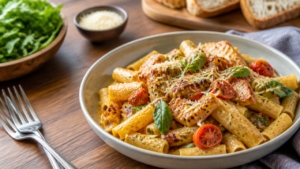
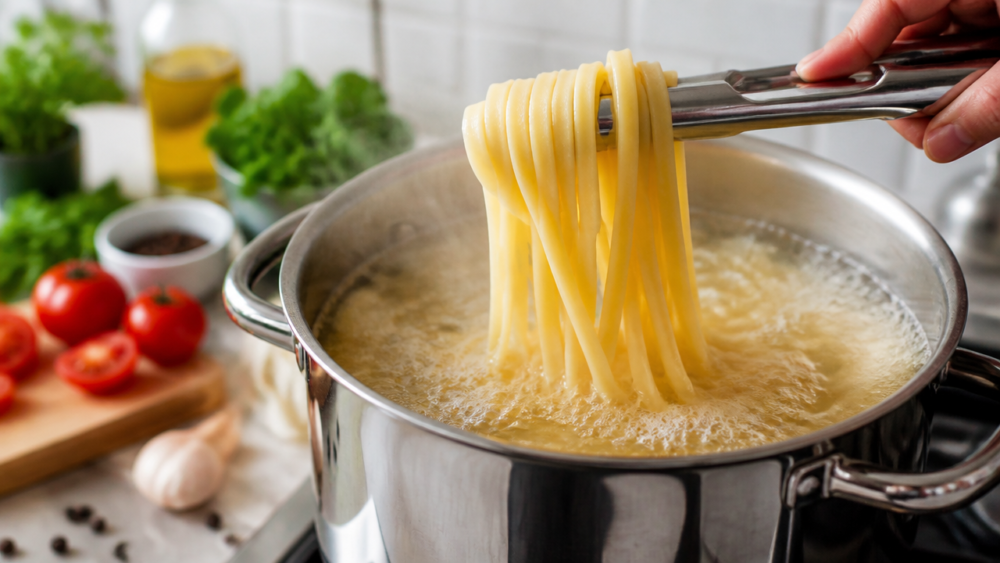
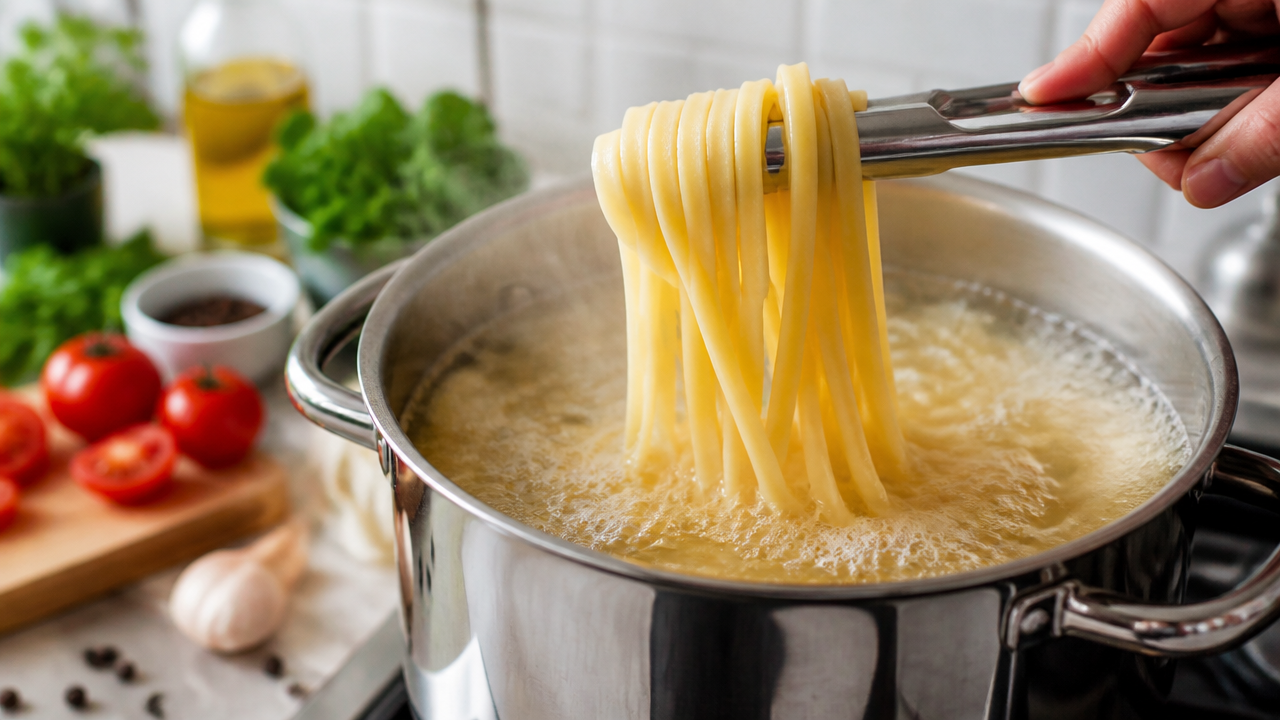
What makes a truly great pasta dish stand out from every other pasta meal you’ve cooked? It’s not fancy ingredients or complicated techniques—it’s getting the fundamentals right. Perfect pasta starts with the water, salt, and timing. Whether you’re making a quick weeknight dinner or preparing pasta for a special occasion, mastering how to cook pasta properly transforms everything that comes after. Pasta cooking is the foundation for a thousand different meals, and the good news is that once you understand the basic rules, you’ll never serve overcooked or bland pasta again. Let’s walk through exactly how to get it right.
Quick Questions and Answers
Question: Why should you salt pasta water before cooking? Salting pasta water is the most important step because it seasons the pasta from the inside out, making it taste like the ocean rather than plain boiled dough. Use about 1 to 1.5 tablespoons of coarse salt per quart of water to ensure the flavor penetrates the noodles effectively.
Question: How much water do you need to cook pasta perfectly? You need plenty of boiling water to prevent sticking, with a standard rule of 4 quarts per pound of pasta or 2.5 quarts per 400g. This high water volume ensures the pasta moves freely and cooks evenly without becoming gummy or clumped together.
Question: Do you need to add oil to pasta water? No, you should never add oil to pasta water because it coats the noodles and prevents the sauce from sticking later. Instead, stir the pasta frequently during cooking to keep it from sticking, which is the proper method for preventing clumps.
Key Takeaways
- Use at least 2.5 quarts of water per 400 grams of pasta for proper texture and even cooking.
- Add salt only after the water reaches a rolling boil to ensure it dissolves evenly.
- Skip the oil entirely—stirring prevents sticking far better than any coating.
- Save pasta water before draining; the starch is essential for binding sauce to noodles.
- Test for al dente one minute before the package instructions suggest, then drain immediately.
What You Need
| Item | Purpose | Notes |
|---|---|---|
| Large stockpot (6–8 quart) | Holds enough water for proper pasta circulation | Smaller pots cause temperature drops and uneven cooking |
| Cold water | Base for boiling; needs volume | At least 2.5 quarts per 400g of pasta |
| Kosher or sea salt | Seasons the pasta during cooking | Use 1–1.5 tablespoons per quart; never skip this step |
| Pasta fork or wooden spoon | Stirs pasta to prevent clumping | Metal tongs also work well for grabbing and testing |
| Colander | Drains cooked pasta | A fine-mesh strainer works, though a standard colander is easier |
| Measuring cup or small mug | Reserves starchy cooking water | Essential for finishing the sauce later |
Step 1: Fill Your Pot with Enough Water
Start with a large pot—at least 6 to 8 quarts if you have one. This matters more than most people think. A small pot causes the water temperature to drop too much when you add pasta, and that slows down cooking and creates a starchy, sticky result.
Fill the pot with cold water until it reaches about three-quarters full. For every 400 grams of dried pasta, you need approximately 2.5 quarts (2.5 liters) of water. Don’t skimp on this ratio; according to Barilla, the volume of water is critical for allowing pasta to move freely and cook evenly without clumping.
The water needs to circulate around the pasta as it cooks. Crowding the pot with too little water creates a starchy soup instead of properly cooked noodles. Trust the ratio, even if it looks like a lot of water going into the pot.
Step 2: Bring the Water to a Rolling Boil
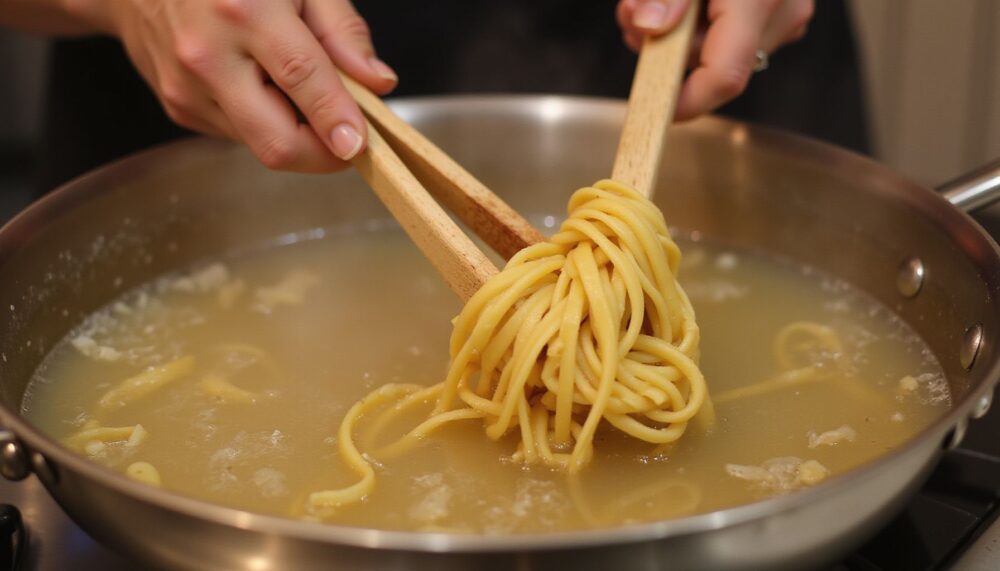
Place the pot on high heat and wait for the water to reach a full, rolling boil—not a gentle simmer, but a vigorous, aggressive boil where bubbles break the surface constantly. This usually takes 8–15 minutes depending on your stove and the amount of water.
This step is non-negotiable. A proper boil ensures the pasta enters hot water, cooks evenly from the start, and maintains the right texture throughout. According to Feel Good Foodie’s cooking guide, bringing water to a full boil before adding salt helps the salt dissolve evenly and distribute throughout the water.
Don’t add salt yet. This is one of the most common mistakes—people salt the water before it boils, and the salt just sits at the bottom without dissolving properly. Wait for the boil first.
Step 3: Season the Boiling Water with Salt
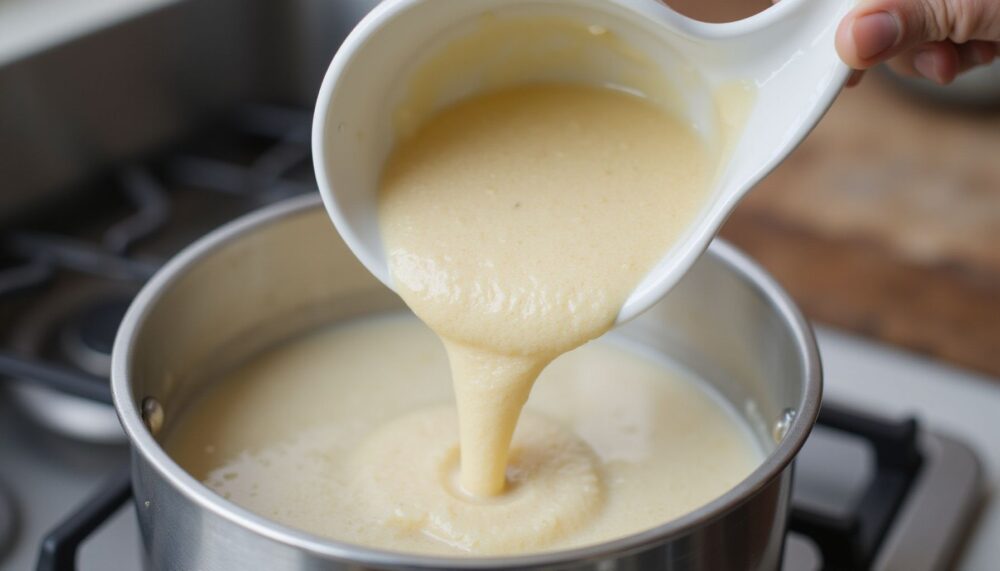
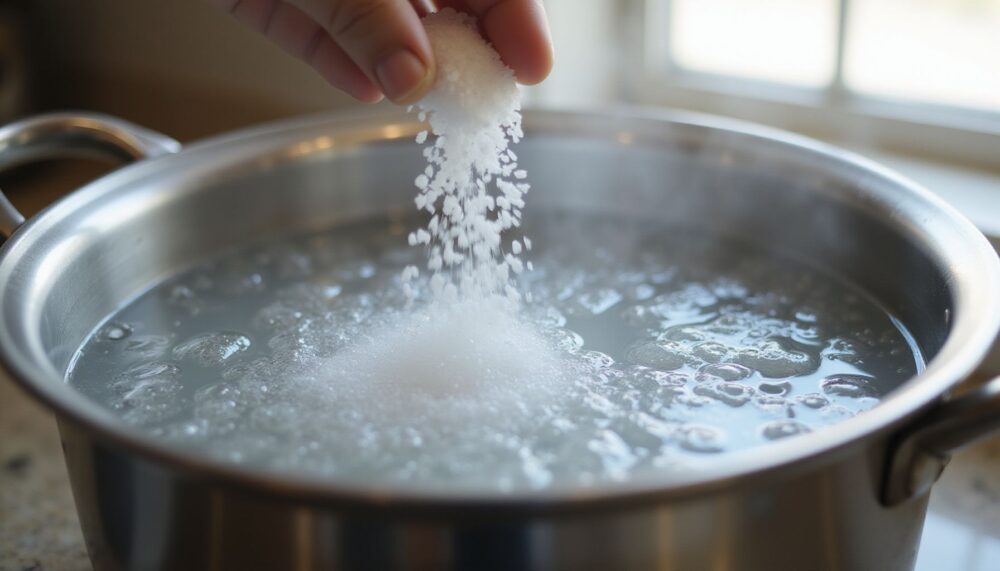
Once the water is at a full, rolling boil, add your salt. For 400 grams of pasta in 2.5 quarts of water, use about 1.5 tablespoons of kosher or sea salt. This might seem like a lot, but it’s the right amount.
Add the salt all at once and stir for a few seconds until it dissolves. The water should taste distinctly salty—like seawater or a good broth. This is the moment your pasta gets its primary seasoning. Unlike adding salt after cooking, salting the boiling water allows the pasta to absorb the flavor as it cooks, making every strand taste seasoned from the inside out rather than just on the surface.
Never, ever add oil to the water. This is a myth that refuses to die. Oil coats the pasta and creates a barrier that prevents sauce from sticking properly to the noodles. The All-Clad cooking guide confirms this: skip the oil, stir the pasta, and you’ll get much better results.
Step 4: Add the Pasta and Stir Immediately
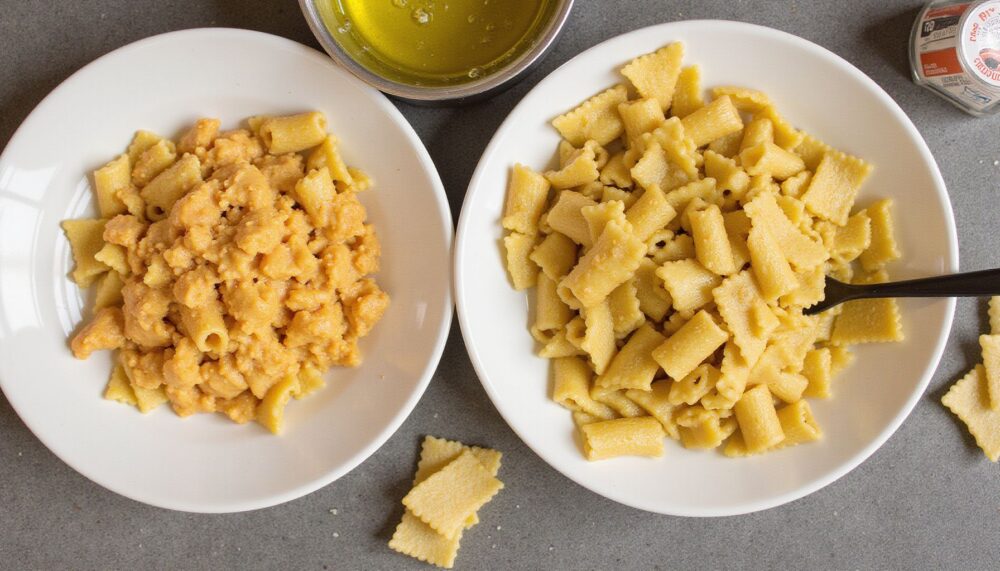
Add your pasta to the boiling salted water and stir right away. For long shapes like spaghetti or fettuccine, I use a pasta fork or wooden spoon to separate the strands within the first 30 seconds, then break the pasta into the water as it softens. For short shapes like penne or rigatoni, just stir well to make sure nothing is resting on the bottom.
Keep stirring for the first 1–2 minutes after adding the pasta. This prevents the strands or shapes from sticking together and creating clumped, gluey sections. After that initial minute or two, you can stir less frequently, but don’t abandon the pot entirely. Stir every minute or so to ensure even cooking.
The starch released by the pasta will cloud the water, and that’s exactly what you want. That starchy water is liquid gold—you’ll need it later.
Step 5: Start Your Timer and Begin Testing
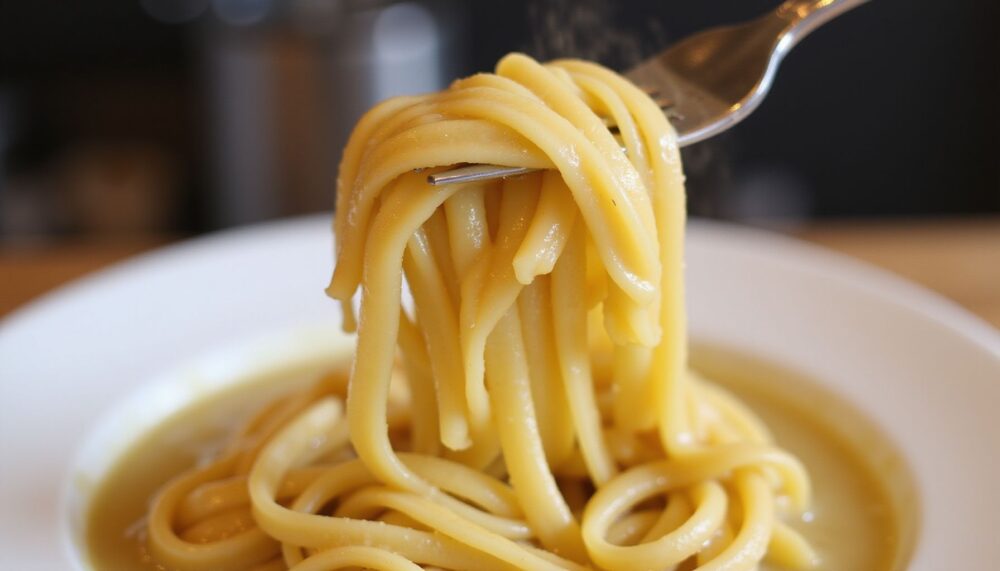
Check the package instructions for suggested cooking time, then set a timer for 1 minute less than that recommendation. For example, if the package says 9 minutes, set your timer for 8 minutes.
Why one minute less? Because dried pasta continues to cook slightly even after draining, and finishing the pasta in the sauce (which you’ll do next) adds another minute or so of cooking. Starting to test at the lower time lets you catch al dente perfectly.
When your timer goes off, pull out a single noodle with tongs and let it cool for a few seconds (don’t burn your mouth). Bite it in half. The perfect al dente pasta should have a slight resistance when you bite it—not soft or mushy, but still with a tiny bit of firmness in the very center. If it’s still too firm, cook for another 30 seconds and test again.
Different pasta shapes cook at different rates. Thin strands like angel hair cook fast (often 4–6 minutes), while thick tubes like rigatoni take longer (12–15 minutes). Always rely on the package time as your starting point, then trust your taste test.
Step 6: Reserve the Starchy Cooking Water
Before you drain the pasta, grab a measuring cup or small mug and scoop out about 1/2 to 1 cup of the cloudy pasta cooking water. Set it aside in a bowl or mug—you’ll add this to your sauce in just a moment.
This starch-rich water is essential for tying everything together. When you add it to the sauce, it emulsifies—it helps bind the sauce and pasta together, making the sauce coat the noodles evenly instead of pooling at the bottom of the bowl. It also helps loosen a sauce that’s gotten too thick.
This is the step that separates home cooks from people who’ve actually learned to cook pasta. Professional kitchens always save pasta water. Once you use it, you’ll never go back to finishing pasta without it.
Step 7: Drain and Finish with Sauce
Pour the pasta into a colander and let it drain for just a few seconds. You want it hot and slightly wet—not dry and steaming. Transfer the drained pasta directly into a large skillet or saucepan where your sauce is simmering.
Toss the pasta with the sauce over medium heat for 1–2 minutes, stirring constantly. Add a splash of the reserved pasta water—start with a few tablespoons—and keep tossing. The pasta will soak up the sauce and the starch will help create a silky coating on each strand.
This is the finishing step that matters most. A professional pasta dish comes together in the pan, not on the plate. The heat and motion and starchy water combine to make the sauce and pasta one unified thing instead of noodles with sauce on top.
Tips for Restaurant-Quality Results
Timing is everything when finishing pasta. Your sauce should be ready and simmering just as the pasta finishes draining. Cold or thick sauce won’t coat the hot pasta properly, and waiting for sauce to reheat while pasta sits around leads to texture problems. Start the sauce a few minutes before you add the pasta to the water.
Taste as you go, especially at the end. If the sauce tastes bland, it probably needs salt—add a pinch and taste again. If it’s too thick or too thin after combining with the pasta, use more or less of your reserved pasta water to adjust. There’s no set amount; cook to the consistency you prefer.
Different sauce styles pair better with different shapes, and the pasta water helps everything work together. Thick, hearty sauces pair well with tubular or ridged shapes that trap sauce inside and on the surface. Thin, delicate sauces go better with thin, smooth pasta that they coat easily. But once you nail the basic cooking technique, you can experiment with easy summer dinner ideas or meatless meal ideas and see how different pasta shapes work with different dishes.
Common Mistakes to Avoid
Using a pot that’s too small is the #1 mistake. The water temperature drops too much when pasta enters, and the starch builds up too quickly, making the pasta sticky instead of tender. Invest in a large pot if you cook pasta regularly—it’s the best single upgrade you can make.
Rinsing hot pasta with cold water is another common error. I know it feels right—like you’re stopping the cooking process—but you’re actually washing away the starch that helps sauce stick to the noodles. Never rinse finished pasta (unless you’re making pasta salad and you actually want it cold and separate, which is a different use case).
Overcooking is easy to do and ruins the dish. Soft, mushy pasta can’t be salvaged once it’s cooked. That’s why testing early and draining at the right moment matters so much. If it’s undercooked, you can always put it back in the water for 30 more seconds. If it’s overcooked, you’re done.
Troubleshooting Pasta Problems
If your pasta is clumping together, you didn’t stir enough in the first 60 seconds, or your pot was too small to begin with. Next time, stir more aggressively right at the start, and use more water. If you catch it mid-cook, try breaking up the clumps gently with a spoon, though this rarely fully fixes the problem.
If the sauce feels watery or thin after you combine it with the pasta, you either didn’t save enough starchy cooking water or you added too much of it. Start with a few tablespoons next time and add more only if needed. The water should thicken the sauce gradually, not dilute it.
If the pasta tastes bland, you under-salted the boiling water. Use more salt next time—remember, 1–1.5 tablespoons per quart of water is the target. It’s hard to oversalt pasta water because the pasta only absorbs what it needs.
If some strands are overcooked while others are still firm, you probably didn’t stir frequently enough during cooking or your pot was too crowded. Stir every minute, and make sure the water has room for pasta to move around freely.
Recipe Card
Perfect Pasta Every Time
A foolproof method for cooking tender, properly seasoned pasta that finishes beautifully with sauce.
Prep: 5 minutesCook: 10 minutesTotal: 15 minutesYield: 2-4 servingsCategory: Main CourseCuisine: Italian
Ingredients
- 400g dried pasta (any shape)
- 2.5 quarts water
- 1.5 tablespoons kosher or sea salt
- 1/2 to 1 cup reserved pasta water
- Your prepared sauce (ready to simmer)
Instructions
- Fill a large 6-8 quart pot with cold water until three-quarters full. Bring to a vigorous rolling boil over high heat (8–15 minutes).
- Once boiling, add all the salt at once and stir until dissolved. The water should taste like seawater.
- Add the pasta to the boiling salted water and stir constantly for the first 1–2 minutes to prevent sticking and clumping.
- Continue stirring occasionally throughout cooking. Set a timer for 1 minute less than the package instructions recommend.
- When the timer sounds, remove a single noodle with tongs, cool it briefly, and bite it. It should have a slight firmness in the center (al dente). If too firm, cook 30 more seconds and retest.
- Before draining, use a measuring cup to reserve 1/2 to 1 cup of the cloudy pasta cooking water. Set it aside.
- Drain the pasta in a colander for a few seconds, then transfer directly into a skillet with simmering sauce.
- Toss the pasta and sauce together over medium heat for 1–2 minutes. Add reserved pasta water a few tablespoons at a time until the sauce reaches your desired consistency and coats every strand.
- Taste and adjust salt if needed. Serve immediately.
Notes
- Never rinse cooked pasta unless making a cold pasta salad.
- Always start your sauce a few minutes before the pasta finishes cooking so they’re ready at the same time.
- The starchy pasta water is essential—it emulsifies the sauce and helps it cling to the noodles.
My Experience With How to Cook Perfect Pasta: The Ultimate Simple Guide
I learned to cook pasta the hard way—through a decade of overcooked spaghetti and sauces that wouldn’t stick. The turning point came when I stopped treating pasta cooking like something that happened in the background while I did other things. Once I started paying actual attention to the water temperature, the salt timing, and especially saving that starchy water, everything changed.
The salt timing thing is worth emphasizing because I used to salt the water before it boiled, and I’d watch the salt crystallize at the bottom of the pot like it was doing nothing. The moment I switched to waiting for the boil first, the whole thing made sense. Now I can tell by taste if the water is seasoned right, and the pasta comes out of the pot actually tasting like food instead of just tasting like “pasta.”
The biggest insight I’ve picked up: finishing pasta in the sauce for those final 1–2 minutes while stirring in starchy water is what separates “I made pasta” from “I made a good pasta dish.” It’s such a small step, but it’s the difference between sauce pooling at the bottom of the bowl and every strand being coated. Have you noticed that difference between pasta you’ve made at home and pasta from a restaurant? What one thing would make the biggest difference in your own cooking?
FAQ
Q: Can you rinse pasta after draining it?
You should not rinse hot, just-drained pasta because the starchy surface water helps the sauce coat the noodles more evenly. Rinsing removes this essential starch layer, resulting in a dish where the sauce slides off rather than adhering to the pasta.
Q: How long should you cook dried pasta for al dente?
Cook dried pasta for 1 minute less than the package instructions to achieve the perfect al dente texture. This undercooking allows the pasta to finish cooking directly in the sauce, ensuring it absorbs flavor and remains tender but not mushy.
Q: What is the best way to finish pasta with sauce?
Finish the pasta by transferring it directly from the boiling water into the simmering sauce pan, then toss together for 1–2 minutes. Add a reserved cup of starchy pasta water to the sauce to help it emulsify and evenly coat every strand of pasta.
Q: When should you add salt to the boiling water?
Add salt to the water only after it has reached a rolling boil, not before, to ensure it dissolves quickly and seasons the water effectively. This timing prevents the salt from settling at the bottom and guarantees immediate, even distribution before the pasta enters.
Q: Why should you reserve pasta water before draining?
Reserve about one cup of the starchy pasta water before draining because it acts as a natural binder to loosen thick sauces and help them cling to the noodles. This starchy water helps marry the pasta and sauce together for a smoother, more cohesive dish.
Q: Does fresh pasta cook faster than dried pasta?
Yes, fresh pasta cooks much faster than dried pasta, often requiring only 2 to 3 minutes to reach al dente. Check fresh pappardelle after 2 minutes, while fresh ravioli may take 5 to 6 minutes, so always taste test frequently.
Q: Should your sauce be ready before the pasta is done?
Yes, you should always ensure your sauce is ready and simmering before the pasta finishes cooking to avoid waiting and losing heat. The rule of thumb is that the sauce waits for the pasta, not the other way around, to ensure immediate serving.
Latest Updates
Pasta cooking fundamentals haven’t changed, but modern kitchen tools have made the process easier. If you own an Instant Pot or pressure cooker, you can cook pasta in as little as half the time using the pasta setting—though this method requires different water ratios (usually 1 to 1 pasta to water) and won’t produce quite the same al dente texture as the traditional boiling method. For best results, stick with the stovetop method for everyday pasta, but pressure cookers are handy for quick weeknight meals when you’re short on time.
References
- All-Clad. (n.d.). How to cook pasta perfectly, step by step. All-Clad. https://www.all-clad.com/blog/post/Pasta-Cooking-Basics-for-Better-Everyday-Meals
- Barilla. (n.d.). How to perfectly cook pasta al dente. Barilla. https://www.barilla.com/en-us/help-with/pasta-kitchen-tips/how-to-cook-pasta
- Feel Good Foodie. (n.d.). How to cook pasta perfectly: Easy instructions. Feel Good Foodie. https://feelgoodfoodie.net/recipe/how-to-cook-pasta
- Familystyle Food. (n.d.). Masterclass: How to cook pasta like a pro. Familystyle Food. https://familystylefood.com/how-to-cook-pasta
- The Burnt Butter Table. (n.d.). The ultimate guide to cooking pasta perfectly. The Burnt Butter Table. https://www.theburntbuttertable.com/the-ultimate-guide-for-how-to-cook-pasta-perfectly
- BBC Good Food. (n.d.). How to cook pasta. BBC Good Food. https://www.bbcgoodfood.com/howto/guide/how-cook-pasta

Sarah Anderson . J
I’m the mom behind Wise Mom Blogger, where everyday creativity meets real-life motherhood. I share easy DIY crafts, cozy knitting and crochet projects, beginner-friendly sewing ideas, and family-tested recipes—plus quick baking hacks that make homemade feel doable on busy days.