
Want to build strength and burn fat without stepping into a gym? Home workouts deliver real results when you know which routines actually work. Whether you’re chasing weight loss, building muscle, or simply reclaiming time by ditching the commute, the right routine makes the difference. This guide covers 12 proven home workout programs and bodyweight methods that produce measurable gains fast, from high-intensity circuits to structured apps with built-in accountability. Let’s find the approach that sticks with you.
Quick Questions and Answers
Question: Why do home workouts lead to quick results for beginners? Home workouts often yield quick results because they reduce barriers like travel time and gym costs, making consistency easier to maintain. Beginners also master basic functional movements like squats, push-ups, and planks faster without equipment complications, building intensity quickly through bodyweight exercises that improve strength and cardiovascular health simultaneously.
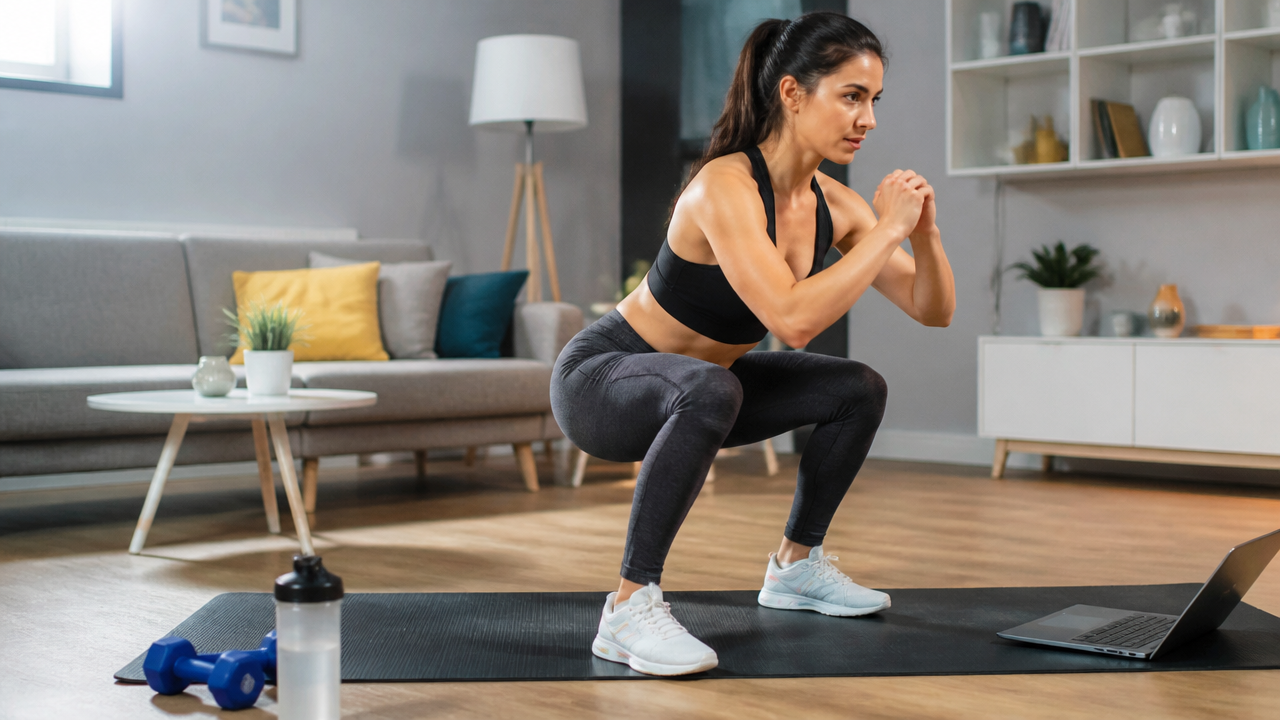
Question: Can you get quick results with just 20 minutes of home exercise? Yes, a 20-minute high-intensity home routine including jump squats, push-ups, mountain climbers, and planks repeated for 3–4 circuits can produce fast results. This approach maximizes calorie burn and muscle engagement in short timeframes, ideal for building strength and improving cardio without equipment.
Question: Do home workout routines work better than gym workouts for fat loss? Home workouts can be equally effective for fat loss if they include high-intensity cardio and functional movements like burpees and jump squats. The key is consistency and intensity rather than location; avoiding gym travel time often helps people stick to routines more consistently, leading to better long-term fat loss results.
Selection Criteria for Effective Home Workouts
Finding the right home workout means matching the program to your constraints, goals, and personality. Not every routine works for every person, so understanding what separates the winners from the noise matters.
Scalability tops the list. The best programs offer modifications for total beginners while still challenging advanced trainees. You should never feel bored or crushed—progression is built in, not an afterthought. A program that forces you to scale up every few weeks keeps momentum alive.
Format diversity is crucial too. Some people thrive on high-intensity interval training, burning through 300 calories in 20 minutes. Others prefer steady-state strength work with dumbbells or resistance bands. The smartest programs mix modalities so you’re not doing the same thing five days a week.
Equipment accessibility determines what’s realistic for your space. Can you jump? Do you have resistance bands? Is budget tight? Category-based programs—whether “no equipment” bodyweight or resistance-focused—let you pick what fits your life, not fight against it.
Accountability features separate programs that work from programs you abandon in week three. Live classes, progress tracking, community features, and structured progression all nudge you toward consistency. For many people, the social layer is the real game-changer.
1. Peloton: Best for High-Energy, Instructor-Led Hybrid Training

Peloton builds its reputation on energy. Live and on-demand cycling, running, strength, and yoga classes keep workouts from feeling like a solo grind. The instructor-led format removes guesswork—you just follow along and push when they say push.
The platform shines for anyone who thrives on community. Leaderboards, performance metrics, and group energy create accountability. Classes range from 10 to 60 minutes, fitting different schedules and energy levels. The strength and yoga add-ons mean you’re not just cycling; you’re building a rounded program.
Real talk: Peloton subscriptions cost money, and while equipment is optional (you can take classes without their bike), the community vibe is strongest if you’re in the ecosystem. For results, consistency beats perfection, and Peloton’s social layer tends to drive that.
2. Nike Training Club: Best for Free, Accessible, Diverse Bodyweight Routines

Nike Training Club proves you don’t need equipment or a paid subscription for effective workouts. The app offers hundreds of bodyweight routines organized by duration, goal, and intensity—15-minute core sessions, 30-minute full-body circuits, and everything in between.
The strength of this program lies in accessibility. Zero cost. No equipment. Clear instruction from professional trainers. Routines use compound movements like squats, lunges, push-ups, and planks to maximize results in short windows. For beginners or anyone testing the waters, this removes friction entirely.
The trade-off: no live community or instructor motivation. You’re training alone, which works beautifully for self-directed people but can feel isolating if you need external push. The app’s personalization has improved, but it doesn’t match paid platforms like Peloton for real-time feedback.
3. Nerd Fitness Bodyweight Program: Best for Beginners Preferring Custom, No-Equipment Paths

Nerd Fitness meets people where they are. The program emphasizes progression through foundational movements—starting with assisted variations, then advancing to harder progressions. A beginner might start with wall push-ups or knee push-ups, then graduate to standard and diamond push-ups over weeks.
The structure prevents the common trap of doing random bodyweight moves with no direction. Instead, it builds strength systematically through intelligently sequenced workouts. The coaching philosophy is supportive and judgment-free, which matters when you’re starting from zero fitness.
The community aspect runs strong here too. The Nerd Fitness forums and coaching options create accountability. For anyone intimidated by traditional fitness culture, this approach feels welcoming. The downside is the learning curve—there’s more reading and decision-making upfront than just opening an app and pressing play.
4. P90X: Best for Individuals Seeking Extreme Endurance and Strength Results

P90X isn’t for casual fitness. The program demands 90 minutes per session and runs for 90 days with structured progression. Each workout combines cardio, strength training, and flexibility work into one marathon session. Participants follow along with DVDs or streaming video, matching the instructor’s intensity.
Results from P90X are typically visible. The long duration, high frequency, and structured progression produce noticeable body composition changes within 8–12 weeks for committed participants. The program explicitly targets people willing to trade time for dramatic results.
The catch: 90 minutes is a commitment. You need mental toughness, a clear schedule, and genuine motivation because boredom or fatigue can derail you. It’s not a program for people testing the waters. It’s for someone saying, “I’m all in for 90 days.” That commitment, matched with the structured intensity, is exactly why it works.
5. Sweat: Best for Structured, Goal-Oriented Programs Focused on Functional Fitness

Sweat (formerly Kayla Itsines’ BBG) delivers structured programming with transparent progression. The app guides you through 12-week training blocks where every workout has a purpose. Each session runs 30 minutes and uses dumbbells or bodyweight to build strength and conditioning together.
The program attracts people who want data-driven progression. You’re not guessing whether you’re getting stronger—the app tracks reps, weights, and completion. The structured 12-week cycles mean you’re always working toward something, not spinning in endless randomness.
Sweat requires a subscription and, ideally, access to dumbbells or a resistance band. But for someone willing to invest in equipment and wants guided progression without the live-class energy, it’s a solid middle ground between DIY and full community.
6. Obé Fitness: Best for Aesthetic-Conscious Users Seeking Shorter, Fun, High-Energy Classes
Obé Fitness positions itself as “boutique studio energy at home.” Classes run 10–45 minutes across dance cardio, strength, yoga, and pilates. The aesthetic—professional production, energetic instructors, music-driven vibes—makes workouts feel more like a fun event than a chore.
The variety keeps things interesting. You could do a 15-minute dance cardio session, then switch to a strength class the next day, then try pilates. This rotation prevents burnout and hits different energy systems. The production quality is higher than many competitors, which matters if you’re motivated by professional polish.
Obé requires a subscription, but the price point is friendlier than Peloton. If you’re motivated by aesthetics and community energy but prefer shorter sessions, this delivers on both fronts.
7. Crossrope: Best for Specific, Targeted Results Using Weighted Jump Ropes for Cardio-Strength Integration
Crossrope specializes in jump rope training with intelligent progressions. The company offers weighted jump ropes (replacing the cable to add resistance) and an app with workouts that integrate rope work with bodyweight or dumbbell exercises.
The appeal is simple: jump rope is one of the highest-calorie-burn activities available, and adding weight amplifies strength benefits. A 20-minute Crossrope session burns significant calories while building shoulder, core, and leg strength simultaneously. Results come fast for people consistent with the program.
The limitation is obvious: you need floor space and sound tolerance for jumping. Apartment living or noise sensitivity makes this impractical for some. But for anyone with space and committed to one training tool that delivers results, Crossrope is exceptionally efficient.
8. Muscle & Strength Database: Best for Custom Filtering Based on Specific Body-Building Goals
Muscle & Strength operates as a free workout database with over 1,000 routines you can filter by goal (muscle gain, fat loss, strength), experience level, duration, and equipment availability. You build your own program by selecting routines that align with your specific objective.
The beauty of this approach is customization without prescription. Want to focus on lower-body hypertrophy for 6 weeks, then switch to upper-body strength? You choose. Want to combine bodyweight and dumbbells? The database accommodates that too. For independent-minded trainees who know what they want, this removes limitations.
The trade-off is no automated progression or social accountability. You’re responsible for tracking progress, advancing weights, and staying consistent. If you thrive on autonomy and self-direction, this works beautifully. If you need structure handed to you, it requires discipline.
9. Strava: Best for Users Who Track Metrics and Activity-Based Social Performance
Strava is primarily a running and cycling app, but it’s evolved to include strength workouts and general fitness tracking. The platform lets you log activities, track progress over time, and share achievements with followers. The social layer encourages participation through community kudos and group challenges.
For people motivated by data and social accountability, Strava creates positive friction. You see your improvement over weeks, compare efforts with friends, and celebrate milestones publicly. The gamification aspect drives consistency for competitive or socially motivated trainees.
Strava works best as a tracking and motivation layer on top of another program, not as a standalone workout provider. You still need to know what to do; Strava tells you how you did and encourages you to do it again.
10. Home Workout – No Equipment (App): Best for Simple, Routine-Based Daily Habits Without Complex Scheduling
This app category (multiple exist, like “Home Workout” or “Daily Workouts”) offers simple, routine-based training. Open the app, start the day’s workout, follow along. Exercises use only bodyweight. Sessions run 5–20 minutes. No decisions, no complexity.
The strength here is friction removal. If you’re paralyzed by too many options or hate decision-making, simple routine apps work. You just show up and do the thing. Many people find this repetition actually helps—less mental load means more consistency.
These apps shine for habit-building. If your goal is 66 days of consecutive activity to form a routine, simple, predictable workouts support that. The limitation is progression; after mastering the routine, advancement requires external thinking or switching apps.
11. Online Personal Training Apps: Best for One-on-One Virtual Guidance and Custom Programming
Platforms like Future, Trainerize, and other personal training apps connect you with a real coach who programs workouts specifically for you. You log your sessions, the coach adjusts based on your progress, and you receive feedback and form cues.
The advantage is personalization and accountability. A good coach catches form issues, adjusts intensity based on your life that week, and calls you out when you’re slacking. For people who need external expertise and motivation, this delivers.
The downside is cost—personal training subscriptions run $100–300 per month. But for someone committed to results and willing to invest in expertise, the ROI is real. A coach prevents wasted effort and injury, which matters if you’re new to training or dealing with past injuries.
12. Hybrid DIY Plans: Best for Maximizing Short-Term Results Through Strategic Routine Curation
The final option isn’t a single program—it’s building your own. Take a no-equipment strength routine from Nerd Fitness 3 days per week, add 2 days of HIIT from Nike Training Club, and include 1 yoga session from YouTube or Obé. Curating routines from different sources lets you hit every energy system and goal.
This approach requires some fitness knowledge but gives you complete control over progression, variety, and volume. You’re not locked into one platform’s philosophy; instead, you mix modalities strategically.
DIY works beautifully for people with enough experience to self-program or who enjoy the process of designing training. Beginners often benefit from the structure that single programs provide. But for intermediate trainees chasing specific results, hybrid plans deliver.
Comparison Table: Home Workout Programs At a Glance
| Program | Best For | Duration | Cost | Equipment Needed |
|---|---|---|---|---|
| Peloton | Community-driven, high-energy cardio | 10–60 min | $15–20/month | Bike (optional) |
| Nike Training Club | Beginners, free access | 15–30 min | Free | None |
| Nerd Fitness | Bodyweight progression, beginner-friendly | 30–45 min | Free (coaching paid) | None |
| P90X | Extreme commitment, visible results | 90 min | $15/month | DVDs or streaming |
| Sweat | Goal-oriented, 12-week blocks | 30 min | $12–15/month | Dumbbells (optional) |
| Obé Fitness | Variety, aesthetic production | 10–45 min | $10–20/month | None |
| Crossrope | Jump rope, cardio-strength fusion | 15–30 min | Rope ($30–50) + $10/month | Weighted rope |
| Muscle & Strength | Custom filtering, hypertrophy focus | Variable | Free | Variable |
| Strava | Metrics tracking, social accountability | Variable | Free (premium $60/year) | None |
| Home Workout App | Simplicity, daily habit-building | 5–20 min | Free or $5–10/month | None |
| Online Personal Training | Custom coaching, form feedback | 30–60 min | $100–300/month | Variable |
| Hybrid DIY Plans | Complete control, mixed modalities | Variable | Variable | Variable |
Common Mistakes to Avoid When Starting Home Workouts
Jumping into a 90-minute program when you’ve never worked out is a recipe for burnout. Start with 20–30 minute sessions and build from there. Your body adapts faster than your mind does; mental fatigue kills streaks more often than physical fatigue.
Skipping warm-ups to save time backfires. Five minutes of movement prep prevents injury and improves performance during the actual session. A pulled hamstring stops your progress cold; five minutes of prep doesn’t.
Ignoring progression is another killer. If you do the same workout at the same intensity every session, plateaus arrive fast. Progressive overload—adding reps, increasing tempo, reducing rest, or advancing variations—is what drives results. Without it, you spin your wheels.
Many people also underestimate nutrition’s role. Home workouts are great, but you can’t out-train a poor diet. You don’t need to be perfect, but eating in a slight caloric deficit (if fat loss is the goal) or consuming adequate protein (if muscle gain matters) is non-negotiable.
Finally, perfectionism kills consistency. Missing one session doesn’t require a restart. Missing one week doesn’t require abandoning the program. The best program is the one you actually do, not the perfect one gathering dust.
Which Home Workout Option Is Best For You?
For time-poor professionals, look at 20-minute HIIT-focused apps like Nike Training Club or Obé Fitness. You get results without the 90-minute commitment. Stack two or three 20-minute sessions per week and call it done.
For those lacking motivation, choose subscription models like Peloton or Obé Fitness for the social atmosphere and live-class energy. Paying money and joining a community creates accountability that willpower alone can’t match.
For budget-conscious trainees, use free resources like the Muscle & Strength database or Nike Training Club. Bodyweight progression is entirely real—you don’t need equipment to build strength and conditioning.
For fitness extremists ready to go all-in, P90X or a structured app like Sweat with dumbbells delivers measurable transformation within 90 days. Commitment pays off.
For people who hate decisions, simple routine apps or Nerd Fitness take the guesswork out. Show up, follow the workout, go about your day.
Choosing Advice: How to Start and Stay Consistent
Assess your environment first. Do you have space for jumping? Can you move furniture? Do noise restrictions exist? These constraints determine which programs are realistic. A jump rope routine doesn’t work in a quiet apartment; a strength program using dumbbells does.
Start with habit stacking. Perform your workout at the same time every day—immediately after waking or before showering. Anchor the new habit to an existing one. Consistency beats perfection, and repetition at the same time hardwires the behavior into your brain.
Audit your gear situation. Resistance bands cost $15 and dramatically expand exercise options. Dumbbells run $50–100 for a basic set. Jump ropes are cheap. Small investments unlock progression without huge commitment.
Pick one program and commit for 4 weeks before switching. Your brain needs time to adapt; jumping programs every few days means you never build real momentum. Four weeks is long enough to see results and decide if it’s working for your personality and life.
FAQ
Q: Are bodyweight exercises enough to build muscle at home?
Bodyweight exercises like push-ups, squats, lunges, and planks are sufficient to build functional muscle, especially for beginners. By increasing reps, adding variations like jump squats or Bulgarian split squats, and performing multiple rounds, you can create enough intensity to stimulate muscle growth without weights.
Q: How many times a week should I do home workouts for quick results?
For quick results, aim for 3–5 home workout sessions per week, mixing full-body, lower-body, and core-focused days with one active recovery day. A sample weekly structure includes full-body HIIT on day one, lower body focus on day two, core and upper body on day three, mobility on day four, and a circuit challenge on day five.
Q: Will 12-minute home workouts give me real fitness improvements?
Yes, 12-minute home workouts can deliver real fitness improvements if they are high-intensity and include compound movements like squats, lunges, and planks. Short, focused sessions improve cardiovascular health and muscle strength when performed consistently, especially for those new to exercise or with limited time.
Q: When is the best time to do home workouts for maximum energy?
The best time depends on your personal energy patterns, but morning workouts often boost consistency by preventing daily distractions. However, many people find late afternoon or early evening ideal as muscles are warmer and energy levels peak, allowing for higher intensity and better performance during home routines.
Q: What are the best no-equipment home exercises for fast strength gains?
The best no-equipment exercises for fast strength gains include push-ups, squats, lunges, planks, glute bridges, and burpees. These functional movements engage multiple muscle groups, build intensity through reps and variations, and effectively strengthen legs, core, chest, and arms without gear.
Q: Which home routine is best for beginners wanting quick weight loss?
Beginners should start with a simple 25-minute HIIT routine featuring jump squats, push-ups, mountain climbers, and planks repeated for 3–4 circuits. This full-body approach burns calories efficiently, builds muscle, and improves cardiovascular health, making it ideal for fast weight loss without equipment.
Q: Who should avoid high-intensity home workouts like jump squats?
People with joint issues, recent injuries, or limited mobility should avoid high-intensity exercises like jump squats, burpees, or mountain climbers. These movements place stress on knees, hips, and lower back; beginners or those with health concerns should start with low-impact alternatives like glute bridges, stationary lunges, and planks.
My Experience With 12 Best Home Workout Routines for Quick Results
I started researching home workouts because I was skeptical. I’d tried gym memberships that I abandoned, downloaded apps I never opened, and convinced myself I wasn’t a “workout person.” But testing 12 different approaches taught me something: it’s not about being a workout person. It’s about finding the approach that matches how your brain actually works.
What surprised me most was how fast bodyweight routines deliver results. I expected needing expensive equipment, but a consistent 25-minute HIIT session using jump squats, mountain climbers, and planks produces visible changes in 3–4 weeks. The barrier to entry is genuinely low—just floor space and follow-along video.
The consistency trick, though? Environment design beats motivation. I programmed my workout at 6:15 AM, right after coffee. Same time, same routine. The automaticity that built within 2 weeks was wild. My brain didn’t debate it anymore; it just happened.
The real gap I noticed separates people who progress: tracking. Whether it’s adding one more rep, reducing rest time, or advancing a movement variation, forward movement kills plateaus. Stagnant workouts feel boring within weeks. Progression keeps them novel.
If you’re testing home fitness for the first time, what’s your main barrier—time, equipment, motivation, or something else? Finding your specific constraint unlocks which program actually works for your life.
References
- Nerd Fitness. (n.d.). The 10 Best At-Home Workout Routines: The Ultimate Guide for Training Without a Gym. Nerd Fitness. https://www.nerdfitness.com/blog/the-7-best-at-home-workout-routines-the-ultimate-guide-for-training-without-a-gym
- Flooringinc. (2025, January 13). The 10 Best Home Workout Programs. Flooringinc. https://www.flooringinc.com/blog/best-home-workout-programs
- Tucker, A., & Sgobba, C. (n.d.). 13 of the Best At-Home Workout & Fitness Programs. SELF. https://www.self.com/story/popular-at-home-workout-programs
- US News & World Report. (2023, March 23). The Best Fitness Apps and Home Workout Programs. US News & World Report. https://health.usnews.com/wellness/fitness/articles/best-fitness-apps-and-home-workouts
- Garage Gym Reviews. (n.d.). The 11 Best Online Workout Programs Of 2026: The Best Training Programs To Get Stronger At Home. Garage Gym Reviews. https://www.garagegymreviews.com/best-online-workout-programs
- Muscle & Strength. (n.d.). Workout Routines Database: 1000+ Free Workout Plans. Muscle & Strength. https://www.muscleandstrength.com/workout-routines

Sarah Anderson . J
I’m the mom behind Wise Mom Blogger, where everyday creativity meets real-life motherhood. I share easy DIY crafts, cozy knitting and crochet projects, beginner-friendly sewing ideas, and family-tested recipes—plus quick baking hacks that make homemade feel doable on busy days.