


What makes an uncontested divorce without an attorney a viable path for some couples while remaining a risky transition for others? Whether you are planning a summer house closing or navigating a major life change, the right approach makes all the difference. An uncontested divorce functions as a streamlined legal resolution where both parties remain in agreement, keeping the separation process from escalating into a costly courtroom battle. Understanding the legal framework behind an uncontested divorce ensures you know where you stand. A clear grasp of the requirements for an uncontested divorce allows you to determine if you can manage the paperwork yourself. Managing an uncontested divorce requires attention to detail, adherence to local rules, and a commitment to keeping the agreement stable. Let’s look at what matters most when you decide to handle this process on your own.
Quick Questions and Answers
Question: What is an uncontested divorce without an attorney? Answer: An uncontested divorce is one where the spouses agree on the divorce and on the major terms, so the court does not need to resolve disputes through a trial. In many states, you can file and complete such a case without hiring a lawyer, especially if the paperwork is straightforward and both parties cooperate.
Question: Can you get an uncontested divorce without a lawyer? Answer: Yes. Multiple legal-information sources say spouses may represent themselves in uncontested cases, and courts generally do not require a lawyer just because the divorce is uncontested. The main caveat is that the spouses still must meet state filing rules, residency requirements, and any required waiting periods.
Question: Why is uncontested divorce cheaper than contested divorce? Answer: It is usually cheaper because the spouses avoid trial, extensive discovery, and prolonged lawyer negotiations. Sources also note that the main cost may be the court filing fee, with total costs sometimes ranging from about $80 to $3,000 depending on whether a lawyer is hired.
Uncontested Divorce: Definition and Core Concepts
An uncontested divorce is a divorce proceeding where the court formally grants the requested divorce without the need to go through significant portions of the adversarial litigation process, according to the Legal Information Institute. In short, an uncontested divorce is when the parties are not fighting each other about the divorce itself or the terms of their separation.
The classification of “uncontested” encompasses two distinct scenarios. One involves a direct agreement between parties who have drafted their own terms. The second involves a default judgment where a defendant fails to respond to a summons. Both paths avoid the courtroom intensity typically associated with contested litigation.
Essential Requirements for Filing without an Attorney
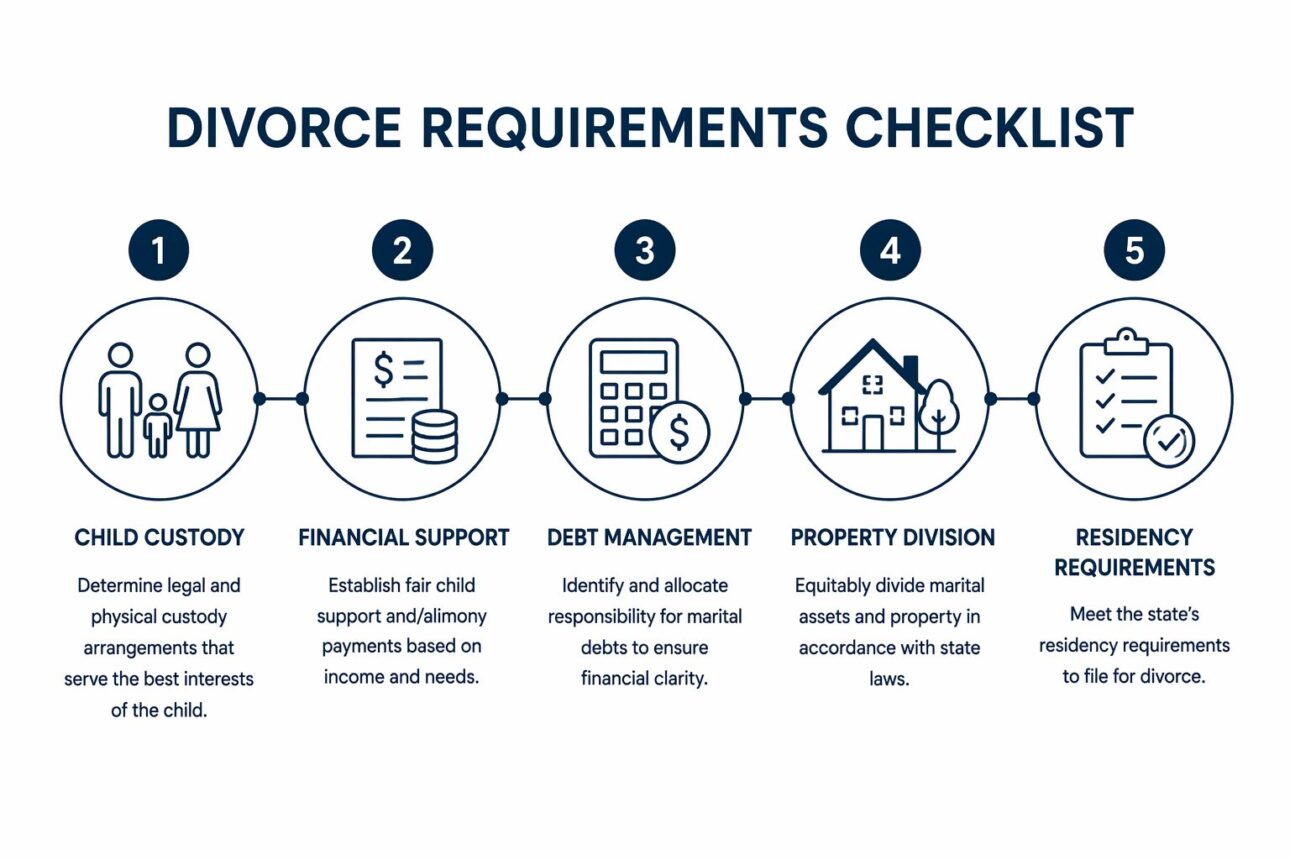
Successful filing requires resolving five primary domains: child custody, child support, spousal support, debt distribution, and the division of marital property. As MetLife explains, settling these issues outside of court is the hallmark of an uncontested matter. If you cannot reach an agreement on one of these points, the case usually shifts to the contested track.
Beyond agreement, litigants must fulfill state-mandated residency requirements and submit a comprehensive marital settlement agreement to the court. While many uncontested cases do not require a courtroom trial, some jurisdictions mandate specific waiting periods—typically one to three months—between filing and final entry of the decree. Even if you are disciplined about your work-life balance or managing Amazon Work From Home Jobs: A Complete Guide to Remote Positions and Pay, filing legal forms requires a different level of administrative focus.
Economic and Temporal Benefits
Filing without an attorney is a primary cost-saving strategy. Total costs for pro se filings can stay near the base court filing fee of $80 to $400, whereas hiring counsel often escalates costs toward $3,000. For couples with clear finances, this route preserves significant household capital.
Procedural velocity is a major benefit. Uncontested matters frequently reach finality in weeks compared to the multi-month, sometimes year-long, timelines common in contested litigation. The cooperative nature of the process allows the separating couple to retain control over life decisions rather than forfeiting that authority to a judge. When you avoid a trial, you gain certainty over your timeline and your future.
Significant Risks and Drawbacks of Self-Representation
It is possible to file an uncontested divorce without an attorney, but that does not mean it is a good idea in every situation. Best Lawyers warns that relying on generic templates can lead to missing state-specific rules. Legal forms do not always account for the nuance of complex assets or long-term financial liabilities.
A primary danger of proceeding alone is the risk of drafting incomplete settlement terms or failing to protect long-term individual rights. The power imbalance is a clinical concern. If one spouse has retained legal counsel and the other has not, the self-represented party may unknowingly agree to unfavorable or legally unenforceable terms. Balancing the playing field is difficult if you lack the legal training to spot biased language in an agreement.
| Feature | Uncontested Divorce | Contested Divorce | Default Divorce |
|---|---|---|---|
| Legal Fees | Low | High | Minimal |
| Timeline | Weeks | Months to Years | Variable |
| Court Appearances | Optional/Few | Mandatory | Rare |
| Control Over Terms | Total | Minimal | Low (Plaintiff-driven) |
Trends in State-Sponsored Self-Help Resources
Recognizing the prevalence of pro se filing, state judiciaries are increasingly centralizing their own self-help guides to minimize procedural errors. California Courts now provides detailed materials specifically designed to assist residents in navigating the filing process without external representation. These guides focus on the technical requirements for forms, ensuring that common mistakes are captured before submission.
Resources like the Texas State Law Library now explicitly define both agreed and default paths as valid uncontested methods to assist residents in navigating the legal system. By codifying these pathways, states are acknowledging that the barrier to entry for simple divorces should be manageable. If you find your current career boring, looking into Easiest Remote Jobs to Get: Skills, Pay, and Realistic Entry Requirements can be a way to build financial independence, but for a divorce, building a solid legal foundation is the only task that matters.
Takeaways for Prospective Filers
Uncontested divorce requires a baseline level of mutual cooperation. If any major financial or parenting disputes remain, the case is likely to be reclassified as contested by the court. Cooperation is not just an attitude; it is a legal requirement of the process itself.
Even when cases are amicable, the administrative requirements—filing fees, residency documentation, and properly notarized settlement agreements—remain rigid legal thresholds that must be met to secure a final judgment. Individuals seeking this route should treat self-help resources not as simple instructions, but as critical regulatory frameworks that protect against future litigation. If you are not prepared to handle the bureaucracy, the potential for error outweighs the initial savings.
My Experience With Uncontested Divorce Without an Attorney? Here’s What You Should Know
I have seen exactly how many people stumble into the trap of thinking “uncontested” means “easy.” It really means “organized.” The first time I saw someone try to file without a clear agreement on pension division, the look of panic when the judge questioned the document was nearly palpable. It is not just about filling in blank lines; it is about understanding that once that ink dries, you are bound by those terms for years to come.
My advice? Treat the forms like a life construction project. If you leave a gap in the foundation, the house eventually leans. The most successful people I have spoken with are the ones who treated the research phase as a part-time job. They read the statutes, checked the county court clerk’s requirements twice, and did not assume that “amicable” meant “simple.” There is a certain grim efficiency to filing these documents yourself, provided you are the type of person who reads the fine print before signing anything. Have you already started looking at the specific forms required by your local county clerk’s office?
FAQ
Q: How long does an uncontested divorce usually take?
It is typically faster than a contested divorce because the parties already agree on the terms. LegalZoom explains it can be completed in weeks rather than months. Many states still require waiting periods of about one to three months after filing before a decree is final.
Q: What issues must be agreed on in an uncontested divorce?
The spouses generally must agree on child custody, child support, spousal support, division of debt, and division of marital property. Some sources also mention parenting time, parenting responsibilities, and even pets as part of the settlement agreement to ensure no topics remain for a judge to decide.
Q: Do both spouses have to go to court for uncontested divorce?
Not always. WomensLaw explains you may only need to file documents and may not need to appear in court. MetLife notes that some states still require a hearing where the spouses answer questions about the divorce terms to ensure both parties signed the agreement voluntarily.
Q: What is the difference between uncontested and default divorce?
Some legal sources use the term “uncontested” to include both agreed divorces and default divorces. A default divorce happens when the other spouse does not respond to the summons after being legally served. An agreed divorce happens when both spouses participate and resolve the issues in writing.
Q: What are the risks of filing divorce papers yourself?
The main risks are missing state-specific rules, omitting important settlement terms, or failing to protect your rights. Best Lawyers and WomensLaw caution that a lawyer can still be helpful, especially if the other spouse has retained legal representation, to avoid being pressured into an unfair arrangement.
Q: Where do uncontested divorce rules vary the most?
Rules vary by state and sometimes by county. This is especially true for residency requirements, specific filing forms, mandatory waiting periods, and whether a court appearance is required. LegalZoom and FindLaw emphasize that local requirements control the process, so you must verify your specific county rules.
Q: What documents are usually needed for an uncontested divorce?
In general, couples need a filed petition and a signed settlement or marital settlement agreement that covers all major issues. FindLaw says the court typically expects a final settlement agreement on all matters. California’s self-help materials provide specific forms for uncontested divorce, legal separation, or annulment filings.
Conclusion
References
- Cornell Law School. (2026). Uncontested divorce. Legal Information Institute. https://www.law.cornell.edu/wex/uncontested_divorce
- MetLife. (2026). What is an uncontested divorce?. MetLife. https://www.metlife.com/stories/legal/uncontested-divorce/
- Best Lawyers. (2026). What is an uncontested divorce? A cooperative end. Best Lawyers. https://www.bestlawyers.com/article/what-is-uncontested-divorce/6769
- WomensLaw.org. (n.d.). What is an uncontested divorce?. WomensLaw. https://www.womenslaw.org/laws/nd/divorce/who-can-get-divorce/what-uncontested-divorce
- LegalZoom. (2026). Uncontested divorce: What it is and how to get one. LegalZoom. https://www.legalzoom.com/articles/how-to-get-an-uncontested-divorce
- FindLaw. (2026). Uncontested divorce: Basics and process. FindLaw. https://www.findlaw.com/family/divorce/uncontested-divorce.html
- California Courts. (2024, August). A guide for handling uncontested divorce, legal separation, or annulment. California Courts. https://courts.ca.gov/sites/default/files/courts/default/2024-08/going_to_court_without_a_lawyer.pdf
- Texas State Law Library. (2026). Guides: Divorce: General information. Texas State Law Library. https://guides.sll.texas.gov/divorce

Sarah Anderson . J
I’m the mom behind Wise Mom Blogger, where everyday creativity meets real-life motherhood. I share easy DIY crafts, cozy knitting and crochet projects, beginner-friendly sewing ideas, and family-tested recipes—plus quick baking hacks that make homemade feel doable on busy days.