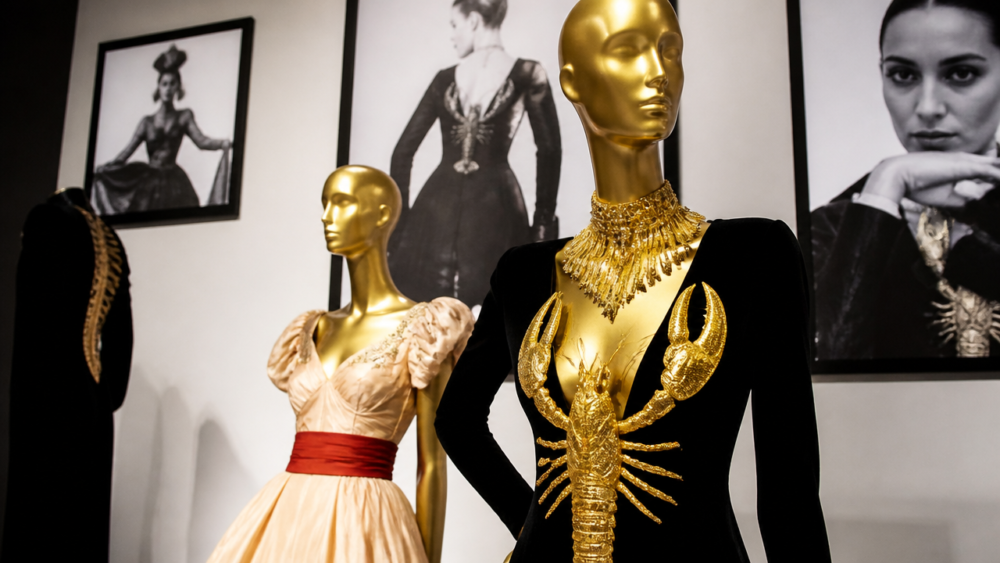
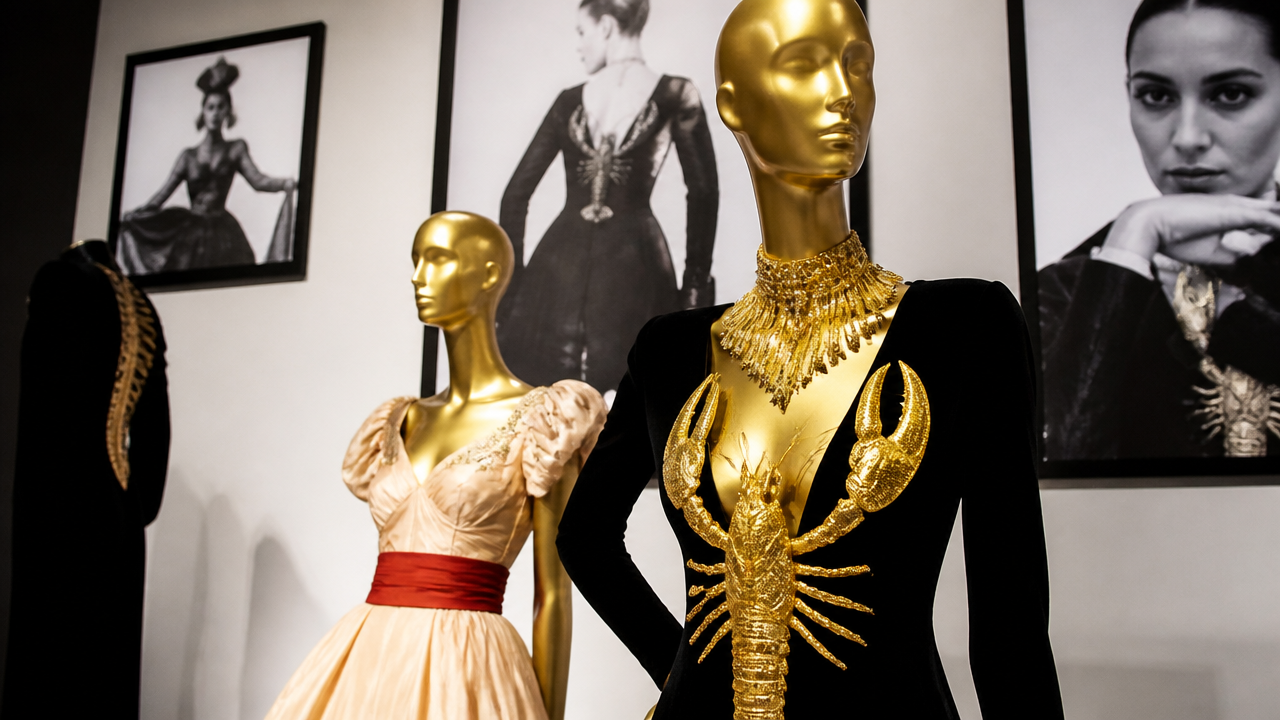
What makes a fashion designer legendary enough to rival Coco Chanel, yet bold enough to turn a dress into a surrealist manifesto? Elsa Schiaparelli’s answer was simple: treat clothing as a canvas for intellectual rebellion. Rising from Rome to Paris in the 1920s, Schiaparelli pioneered avant-garde design that merged fine art with wearable luxury, inventing staples like the wrap dress and culottes while building a brand that continues to captivate celebrities and museum curators alike. Whether you’re studying fashion history or simply curious why her name still dominates haute couture runways today, understanding Schiaparelli reveals how one visionary transformed an entire industry.
Quick Questions and Answers
Question: Why is Schiaparelli considered famous in fashion history? Schiaparelli is famous for blending surrealism and avant-garde art with haute couture, collaborating with legends like Salvador Dalí and Jean Cocteau. Her designs featured unconventional themes, bold colors like ‘shocking pink,’ and innovative textiles, challenging fashion norms alongside rivals like Coco Chanel. This fearless creativity established her as a pioneer who merged art with dressmaking.
Question: What made Elsa Schiaparelli different from other designers? Elsa Schiaparelli stood out by flouting conventions to create idiosyncratic, brazenly original styles that incorporated wit, humor, and dream-based imagery. Unlike contemporaries who set standard tastes, she experimented with bold prints, outsized zippers, and fabrics mimicking wood or glass. She also invented practical innovations like the first bathing suit with a built-in bra and the see-through raincoat.
Question: How did Schiaparelli become popular with celebrities today? The brand gained modern celebrity fame under creative director Daniel Roseberry, who launched animal-head dresses and sculptural silhouettes that resonate with A-listers. Stars like Dua Lipa and Ariana Grande wore Roseberry’s designs at major events such as the Golden Globes and Oscars. This resurgence generated $44.5 million in media impact value during Paris Couture Week, making it a top celebrity favorite.
What Is Schiaparelli and Why Does It Matter?
Schiaparelli is not simply a fashion house—it’s a philosophy wrapped in silk and audacity. Founded by Elsa Schiaparelli in 1927, the maison emerged as a direct counterpoint to the minimalist elegance championed by Coco Chanel. While Chanel stripped fashion down to essentials, Schiaparelli built it up, layering eccentricity, surrealism, and artistic collaboration into every seam.
The brand’s core mission was radical for its time: fashion as art, not mere garment. Elsa didn’t simply design clothes; she constructed wearable sculptures infused with intellectual wit and subversive humor. This approach attracted artists, intellectuals, and the boldest celebrities of the 1930s and 1940s, cementing her status as a visionary who understood that luxury could be both intellectually challenging and visually striking.
Today, Schiaparelli continues this legacy under creative director Daniel Roseberry, who has reimagined the house’s surrealist DNA for contemporary audiences. The brand thrives on that same boundary-pushing ethos—animal-head dresses, sculptural silhouettes, and pieces that provoke as much as they seduce. This is why Schiaparelli matters: it represents a sustained commitment to treating fashion as a medium for artistic expression rather than mere trend-chasing.
Core Concepts: Surrealism and Innovation
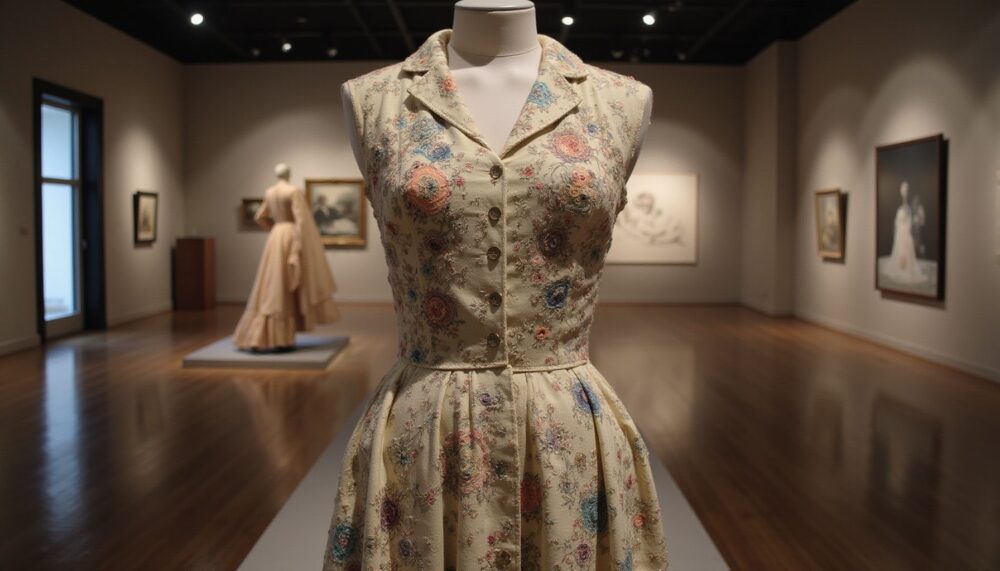
The turning point in Schiaparelli’s rise came through her collaboration with Salvador Dalí, the Spanish surrealist master. Beginning in the late 1930s, Elsa and Salvador created some of the most daring and innovative pieces in fashion history. Their partnership was intellectual and artistic—not just designer and muse, but two visionaries united by the conviction that clothing could be a statement against artistic convention.
The Lobster Dress, perhaps their most famous creation, exemplified this philosophy. A simple white gown adorned with a lobster print and embroidered detail, it seemed almost absurd on the surface. Yet this absurdity was the entire point. Surrealism thrived on juxtaposition and dream logic; Elsa understood that a lobster on an evening gown wasn’t kitsch—it was philosophy made fabric.
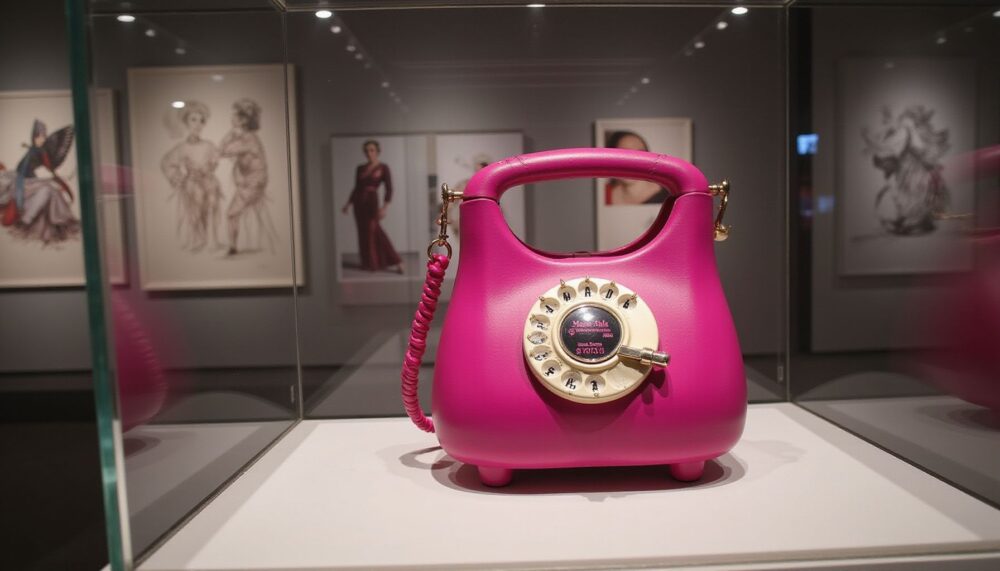
Beyond Dalí, Schiaparelli worked with Jean Cocteau, Man Ray, Giacometti, and Marcel Vertès. Each collaboration pushed the boundaries of what fashion could communicate. According to Britannica’s biography of Elsa Schiaparelli, she famously created witty accessories like a purse shaped as a telephone, embedding humor and surrealist logic into functional objects. This approach—treating accessories and garments as tiny artworks—set her apart from every other couturier of her generation.
The philosophical shift Elsa pioneered was profound: clothing moved from being primarily functional or decorative to being conceptual. A dress could carry meaning. A sleeve could reference fine art. A hem could provoke thought. This elevation of fashion to intellectual art form remained controversial in some circles, but it established Schiaparelli as the designer for people who didn’t just want to look beautiful—they wanted to make a statement.
Groundbreaking Inventions in Fashion
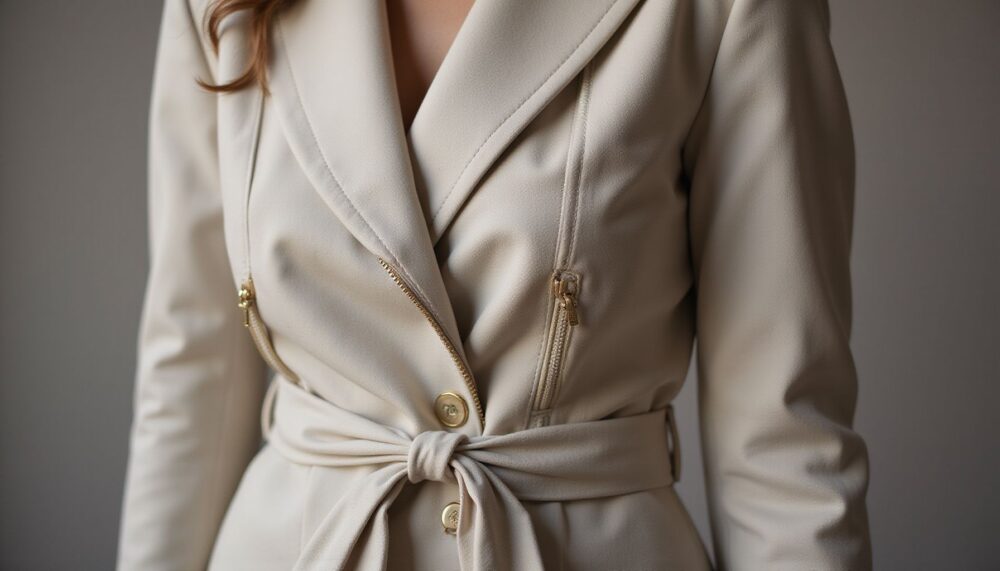
Beyond artistic collaboration, Schiaparelli was a prolific inventor of practical fashion staples that still define how we dress today. Many garments credited to modern designers actually originated in her ateliers during the 1920s and 1930s.
The wrap dress became synonymous with ease and elegance partly because Schiaparelli perfected its construction. Culottes—those practical yet elegant split skirts—emerged from her conviction that women’s fashion should prioritize movement without sacrificing sophistication. She pioneered the structured women’s suit with strong shoulders and clean lines, challenging the notion that women’s tailoring had to mimic men’s styles or remain overly delicate.
One of her most visible innovations was her use of the zipper as a design element. Before Schiaparelli, zippers were hidden—utilitarian notches to be concealed. She made them decorative, placing them prominently on garments as sculptural details. This shift in thinking—treating functional elements as aesthetic opportunities—influenced generations of designers to follow.
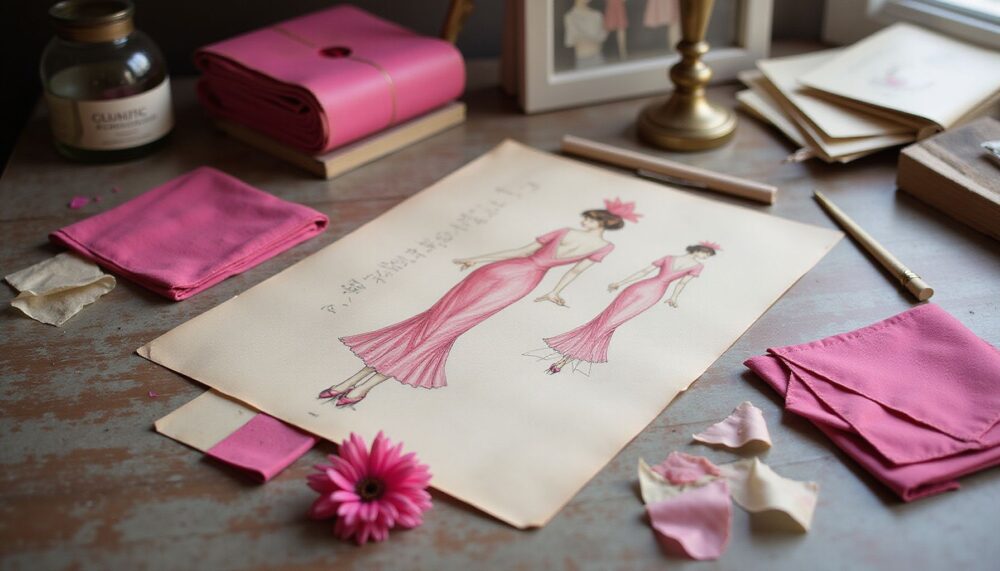
In 1947, Schiaparelli introduced “Shocking Pink,” a vibrant, almost aggressive shade of fuchsia that became her signature color. According to the house’s official history, this single color was revolutionary enough to dominate fashion conversations for years. It wasn’t a trend; it was a declaration. Wearing Shocking Pink meant you understood Schiaparelli’s vision: fashion as bold, unapologetic artistic expression.
| Innovation | Year | Impact | Still Relevant? |
|---|---|---|---|
| Wrap Dress | 1920s | Revolutionized women’s ease of wear and silhouette | Yes—iconic today |
| Decorative Zippers | 1930s | Transformed functional elements into design features | Yes—widely copied |
| Shocking Pink | 1947 | Created a signature brand identity through color | Yes—instantly recognizable |
| Built-in Bra Swimsuit | 1930s | Merged function with form in swimwear | Yes—standard industry practice |
| Structured Women’s Suit | 1920s–30s | Challenged gender norms in tailoring | Yes—high fashion staple |
Famous Collaborations and Creative Expression
Schiaparelli’s genius lay not just in her own vision but in her ability to attract the most brilliant creative minds of her era. She understood that art and fashion occupied overlapping territories, and she wasn’t hesitant to invite painters, sculptors, and writers into her design process.
Salvador Dalí wasn’t her only artistic partner, though he remains the most famous. Jean Cocteau, the French filmmaker and poet, created designs with her that blended theatrical sensibility with haute couture refinement. Man Ray, the photographer and visual artist, contributed surrealist concepts that translated into unexpected textile patterns and silhouettes. Alberto Giacometti, the sculptor, influenced her approach to three-dimensional form in garments.
Each collaboration produced pieces that were less “fashion” in the traditional sense and more “wearable art”—limited runs, singular concepts, pieces designed to provoke conversation and challenge assumptions about what clothing could be. These were not mass-market designs; they were intellectual statements created for a select audience of artists, collectors, and the most daring socialites.
Elsa herself chronicled much of this creative fervor in her autobiography, Shocking Life, published in 1954. The book offers raw insight into her design philosophy, her relationships with artistic collaborators, and her conviction that fashion was a legitimate form of fine art. Reading Shocking Life reveals a designer uncompromising in her vision, operating at the intersection of commerce and artistic integrity—a balance few designers have ever achieved.
The lavishness of her creations was intentional. Knee-length capes adorned with feathers, evening gowns covered in intricate embroidery, statement pieces that required hours of handwork—these weren’t extravagances but necessities. Schiaparelli believed that art demanded craftsmanship, and craftsmanship demanded time and expense. This philosophy created garments that were both functionally wearable and visually unforgettable.
The Rivalry With Coco Chanel and Fashion Supremacy
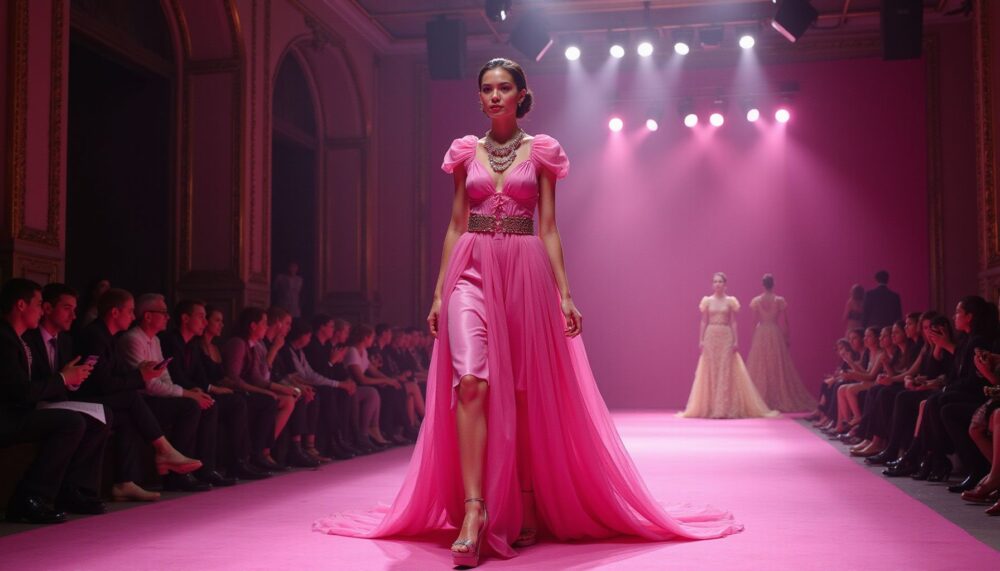
The 1920s and 1930s saw two design titans emerge in Paris: Coco Chanel and Elsa Schiaparelli. Their rivalry, though rarely stated as personal animosity, defined an era of fashion history and offered two completely opposing visions of what modern luxury could mean.
Coco Chanel championed simplicity, removing ornamentation and creating “the little black dress”—a uniform of understated elegance. She believed luxury meant restraint, quality fabrics, and timeless silhouettes stripped of unnecessary detail. Her philosophy was revolutionary for its time: women didn’t need excessive decoration; they needed freedom and proportion.
Schiaparelli rejected this logic entirely. She believed luxury meant audacity, color, artistic collaboration, and deliberate eccentricity. Where Chanel whispered, Schiaparelli shouted. Where Chanel removed, Schiaparelli added. These weren’t merely aesthetic differences—they represented fundamental disagreements about what fashion should communicate and whom it should serve.
By many accounts, Schiaparelli outsold Chanel during the late 1920s and throughout the 1930s. Her designs were more immediately distinctive, more conversation-starting, more obviously “new.” The fashion press covered Schiaparelli with breathless enthusiasm; her shows were events. This moment of dominance, however, didn’t last forever. After World War II and into the 1950s, Chanel’s philosophy proved more enduring, and her business eventually overshadowed Schiaparelli’s.
Yet the comparison endures, and it’s worth noting that both designers transformed fashion in their own ways. Chanel created the template for modern elegance; Schiaparelli proved that fashion could be intellectually rigorous and artistically radical. Neither approach was “right”—they simply represented two different answers to the same question: What is fashion for?
Modern Relevance: The Maison Today
Schiaparelli didn’t disappear after Elsa’s retirement and the house’s decline in the mid-20th century. Instead, it experienced a renaissance under creative director Daniel Roseberry, who took the helm in 2017 and has spent nearly a decade reinterpreting the house’s surrealist DNA for contemporary fashion.
Roseberry’s vision honors Elsa’s foundational philosophy while embracing 21st-century aesthetics. His collections feature sculptural silhouettes, unexpected materials, and a playful surrealism that feels both historically grounded and strikingly modern. Where Elsa collaborated with visual artists, Roseberry channels their spirit through his own design language—creating pieces that challenge perceptions and provoke intellectual engagement.
The evidence of Schiaparelli’s revival is visible on every major red carpet. At the 2024 Golden Globes and recent Oscar ceremonies, A-list celebrities appeared in Roseberry’s designs. Zendaya wore custom Schiaparelli haute couture to high-profile events. Bad Bunny chose the house for major appearances. Emma Corrin donned Schiaparelli at the brand’s Haute Couture Fall-Winter 2026-27 show. These aren’t isolated incidents; they reflect a genuine resurgence of interest in the house.
During Paris Couture Week, Schiaparelli generated approximately $44.5 million in media impact value—a staggering figure that speaks to both celebrity endorsement and press fascination. The brand has become a darling of fashion editors precisely because Roseberry understands what made Elsa legendary: the courage to be different, to be bold, to treat fashion as a serious artistic medium.
The house’s commitment to this vision is documented in its ongoing exhibitions and retrospectives. The Metropolitan Museum of Art has mounted major shows examining Schiaparelli’s historical work. The V&A Museum’s “Schiaparelli: Fashion Becomes Art” exhibition brought together the founder’s most significant pieces, reinforcing the notion that her work belongs in fine art institutions as much as fashion archives.
Schiaparelli’s Legacy in Fashion Education and Influence
Museums and fashion institutions have increasingly recognized Schiaparelli’s historical importance. Her work is studied in fashion schools not simply as historical curiosity but as case studies in artistic innovation and creative risk-taking. Students learn from Elsa’s willingness to collaborate across disciplines, her understanding that fashion could carry intellectual weight, and her commitment to craftsmanship over mass production.
The influence of Schiaparelli extends beyond direct design borrowing. Contemporary designers who push boundaries—those experimenting with surrealism, challenging silhouette conventions, or merging fine art with wearable design—are operating in a tradition that Schiaparelli established. She proved that a fashion house could thrive on artistic credibility as much as commercial success, that eccentricity could be a competitive advantage rather than a liability.
Fashion historians consistently rank Schiaparelli among the most important designers of the 20th century. Her innovations in both conceptual design and practical garment construction established patterns that continue to influence haute couture. The house’s current success under Roseberry suggests that her legacy isn’t merely historical—it’s actively generative, still producing new work that matters.
Why Schiaparelli Resonates With Today’s Celebrities
Modern celebrity attraction to Schiaparelli stems from the house’s core identity: artistic credibility combined with visual impact. In an era where celebrity fashion matters enormously, wearing Schiaparelli signals not just wealth or style, but intellectual engagement with fashion as art. It says something.
Roseberry’s designs are distinctly “Instagrammable” in the best sense—they’re visually arresting and immediately recognizable. Yet they also carry conceptual weight inherited from Elsa’s surrealist collaborations. A Schiaparelli piece at an awards show doesn’t just look beautiful; it announces that the wearer understands fashion as cultural expression.
This combination of accessibility and artistic ambition explains why contemporary celebrities embrace the brand. It offers the prestige of haute couture, the distinctiveness of avant-garde design, and the visual drama that translates powerfully across media. For celebrities navigating how to stand out in an oversaturated image culture, Schiaparelli provides a clear answer: wear something that challenges assumptions about what fashion can be.
FAQ
Q: Are Schiaparelli’s designs still relevant in modern fashion?
Yes, Schiaparelli remains relevant as Maison Schiaparelli cultivates its heritage to offer bold, timeless styles for 21st-century women. Contemporary designers continue to draw inspiration from her work, and the brand is celebrated as a pinnacle of avant-garde fashion in Paris. Creative director Daniel Roseberry ensures the founder’s subversive spirit continues to inspire current collections.
Q: Which famous artists did Schiaparelli collaborate with?
Schiaparelli famously collaborated with surrealist artists including Salvador Dalí, Jean Cocteau, Man Ray, Giacometti, and Marcel Vertès. These iconic partnerships became legendary, infusing her garments with provocative concepts and disquieting dream-based imagery. Her work distilled their artistic themes through her creative process to create unique, art-inspired designs.
Q: What is the most famous Schiaparelli design invention?
The brand’s initial breakthrough was the 1927 ‘trompe-l’œil’ sweater, a black knit featuring an integrated white bow that looked embroidered but was woven in. She also invented the first bathing suit with a built-in bra, the see-through raincoat, and the ladies’ evening jacket. Her signature silhouette included square shoulders, straight skirts, and stiff silks that defined her creative couture.
Q: Does Schiaparelli compete with Coco Chanel in history?
Yes, Elsa Schiaparelli is regarded as Coco Chanel’s greatest rival and a prominent European fashion figure between the World Wars. While Chanel set standards of taste, Schiaparelli overshadowed her with outlandish costumes and endlessly copied staples in the 1920s and 30s. Schiaparelli’s daring designs challenged traditional fashion notions, making her Chanel’s fiercest competitor.
Q: Why do people love Schiaparelli’s colorful clothes?
People love Schiaparelli’s clothes for her use of bright colors, especially her iconic ‘shocking pink,’ which became a hallmark of her collections. Her designs celebrated eccentric fashions and artistic themes like the human body and insects, blending bold visuals with unconventional materials. This vibrant, fearless approach to color and texture defines the house’s bold style and allure.
Q: What style is Schiaparelli known for today?
Today, Schiaparelli is known for sculptural silhouettes, animal-head dresses, and nods to American western wear under Daniel Roseberry. The brand specializes in haute couture and ready-to-wear that reflects the founder’s subversive, surrealist spirit combined with contemporary reinterpretation. It thrives on out-of-the-box creations rather than minimalist aesthetics.
Q: Is Schiaparelli considered an art house or fashion brand?
Schiaparelli is considered both, famously blurring boundaries where fashion becomes art through imaginative garments and art-inspired designs. The Metropolitan Museum of Art notes that Elsa was ‘as much an artist as a dress designer,’ commanding prominent artisans to create her work. This fusion of art and dressmaking ranks among her highest contributions to twentieth-century fashion.
My Experience With Why Schiaparelli Is So Famous
Studying Schiaparelli’s career taught me something crucial about creative excellence: audacity matters. Most fashion histories position her as a footnote to Chanel, yet the evidence suggests the opposite—at least for a significant period, Schiaparelli was the more innovative, more discussed, more daring designer. That matters.
What strikes me most is how deliberate her choices were. She didn’t stumble into surrealism or accidentally create “Shocking Pink.” Every major decision carried conceptual weight. The wrap dress wasn’t just practical; it was a statement about women’s bodies and movement. The lobster dress wasn’t kitsch; it was philosophy translated into silk. This intentionality is rare.
I also recognize that her legacy benefits from timing and cultural revisionism. She declined significantly after World War II, and her work faded from mainstream fashion for decades. Yet institutions and contemporary designers resurrected her, recognizing what earlier audiences might have dismissed as too eccentric. The lesson here is sharper than it appears: artistic credibility often requires external validation, and sometimes that validation arrives posthumously.
The real insight, though, is this: Schiaparelli proved that fashion could be intellectually serious without being elitist, artistically ambitious without being unwearable, and commercially successful without compromising vision. That balance remains extraordinarily difficult to achieve, which explains why her legacy endures while countless contemporaries faded into obscurity.
What draws you to Schiaparelli’s work—is it the historical artistry, the contemporary designs, or something about the brand’s commitment to pushing boundaries?
2026 Trends and Schiaparelli’s Position
As fashion moves deeper into 2026, Schiaparelli’s influence on contemporary trends continues to strengthen. The house’s emphasis on sculptural silhouettes and surrealist references resonates with a broader cultural moment in which fashion is increasingly treated as conceptual art. Designers across luxury and contemporary segments draw inspiration from the strategies Elsa pioneered—merging high art with wearable design, using color and texture as intellectual tools, and rejecting minimalism in favor of visual abundance.
The resurgence of eccentricity in luxury fashion, after years of domination by minimalism and quiet luxury, reflects a direct return to Schiaparelli’s foundational philosophy. Younger designers and consumers hungry for personality and distinctiveness find Schiaparelli’s approach liberating. It grants permission to be bold, to be different, to treat fashion as a vehicle for artistic expression rather than mere trend-following.
Roseberry’s recent collections continue to garner critical acclaim, proving that the house’s vision remains commercially viable and culturally relevant. The $44.5 million media impact value during Paris Couture Week speaks volumes about fashion press engagement and celebrity investment. This isn’t nostalgia; it’s genuine, contemporary relevance.
Conclusion
Schiaparelli’s fame rests on a simple but radical premise: fashion matters because it’s art. Elsa Schiaparelli refused to accept the boundaries between haute couture and fine art, between functional garment and conceptual statement, between commercial success and artistic integrity. She collaborated with the greatest surrealist artists of her time, invented practical staples that still define how we dress, and created a visual language—Shocking Pink, sculptural silhouettes, surrealist imagery—that remains instantly recognizable nearly a century later.
The house’s continued prominence under Daniel Roseberry proves that her legacy isn’t merely historical. Schiaparelli’s approach to fashion—playful, intellectually rigorous, visually audacious—resonates with contemporary celebrities and audiences precisely because it offers an alternative to both minimalist severity and thoughtless trend-chasing. In a fashion landscape increasingly fragmented by fast production and disposable design, Schiaparelli stands as a reminder that fashion can be bold, artistic, and commercially successful all at once.
Her influence extends through museums, fashion schools, contemporary designers, and the red carpets where A-list celebrities continue to choose her pieces. Schiaparelli achieved what few designers manage: she became both a historical force and an ongoing creative presence, proving that true artistic vision doesn’t fade—it deepens.
References
- Secrest, M. (2014). Elsa Schiaparelli: A biography. Amazon. https://www.amazon.com/Elsa-Schiaparelli-Biography-Meryle-Secrest/dp/030770159X
- understitch. (2024, June 22). The life and death of Elsa Schiaparelli [Video]. YouTube. https://www.youtube.com/watch?v=6c-hILJtLEY
- Schiaparelli, a piece of history. (2023, March 4). The Edge Magazine. https://www.the-edge-mag.com/2023/03/04/schiaparelli-a-piece-of-history
- Shocking life by Elsa Schiaparelli. (n.d.). An Historian About Town. https://anhistorianabouttown.com/shocking-life-by-elsa-schiaparelli
- Schiaparelli. (n.d.). History of the maison. Schiaparelli Official. https://schiaparelli.com/en/pages/l-histoire-de-la-maison
- Elsa Schiaparelli. (n.d.). Surrealist, haute couture & art deco. Britannica. https://www.britannica.com/biography/Elsa-Schiaparelli
- Bowles, H. (2014, October 26). Elsa Schiaparelli: A biography review – no ordinary fashion designer. The Guardian. https://www.theguardian.com/books/2014/oct/26/elsa-schiaparelli-biography-review-dali-chanel
- Everything you need to know about Elsa Schiaparelli. (n.d.). Vogue. https://www.vogue.com/article/everything-you-need-to-know-about-elsa-schiaparelli-ahead-of-the-shocking-exhibition-in-paris

Sarah Anderson . J
I’m the mom behind Wise Mom Blogger, where everyday creativity meets real-life motherhood. I share easy DIY crafts, cozy knitting and crochet projects, beginner-friendly sewing ideas, and family-tested recipes—plus quick baking hacks that make homemade feel doable on busy days.