Middle school mornings sit in a tricky spot. Kids this age want more independence, but they still need some structure to actually get out the door on time. This guide walks through building a routine that works, takes about a week to fully settle in, and needs almost no special tools besides a clock, a checklist, and a little patience. It’s an easy routine to set up once the pieces are in place, and it typically requires more consistency than money to keep running smoothly.
The goal isn’t a perfectly silent, robotic morning. It’s a routine flexible enough to handle a forgotten pencil case or a slow start, while still getting everyone out the door calm and on time most days of the week.
Quick answer: A smooth middle school morning routine starts the night before with clothes, backpack, and lunch ready to go, wakes the student early enough to avoid rushing, and follows the same simple order every day: wake up, hydrate, get dressed, eat, gather items, and leave with a few minutes to spare.
What You Need Before You Start
| Item | Purpose | Status |
|---|---|---|
| Alarm clock or app | Wakes student at a consistent time | Standard |
| Visual checklist or chart | Keeps steps on track without nagging | Standard |
| Backpack, outfit, lunch prepped night before | Cuts morning decisions in half | Varies |
| Buffer time (10-15 minutes) | Absorbs small delays without stress | Caution |
Step 1: Set a Consistent Wake-Up Time
Pick one wake-up time and stick to it every school day, including the day after a late night. Set the alarm 15 to 20 minutes earlier than the bare minimum needed, so there’s a small cushion built in from the start.
Have your student place the alarm across the room instead of next to the bed. This forces them to physically get up to turn it off, which helps break the habit of hitting snooze and drifting back to sleep.
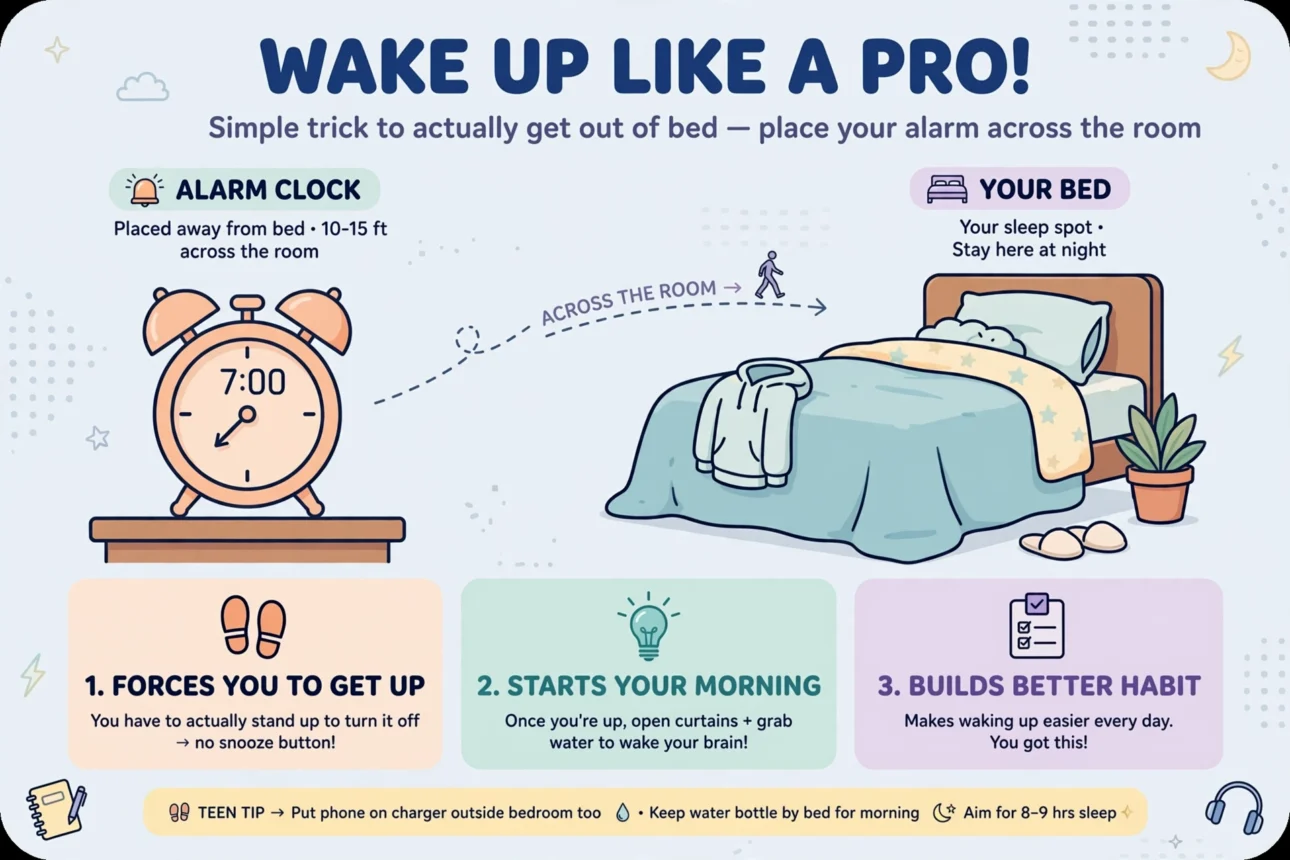
A consistent time matters because middle schoolers’ bodies adjust to a rhythm. Waking at the same time daily, even on weekends within an hour or so, makes each morning feel less jarring than a random wake-up would.
If your student is a naturally heavy sleeper, try a gradual approach instead of a sudden change. Move the wake-up time back by ten minutes every few days until you reach the target, rather than shifting it all at once.
Step 2: Let in Light and Hydrate First
As soon as your student is up, open the blinds or turn on a bright light. Natural or bright artificial light signals the brain that it’s time to be alert, which helps shake off morning grogginess faster than sitting in a dim room.
Next, have them drink a full glass of water before anything else. Keep a cup by the sink or nightstand so it’s an automatic first move, not something they have to remember on their own.

This step matters because a body that’s been asleep for eight or more hours is mildly dehydrated. A quick glass of water helps with energy and focus before the first class even starts, according to general wellness guidance from the CDC on healthy routines for children and teens.
Keeping screens off during this stretch also helps. Checking a phone right after waking tends to pull attention into notifications and messages instead of the tasks that actually need to happen before school.
Step 3: Get Dressed Using Clothes Picked the Night Before
Have your student put on the outfit that was chosen and laid out the previous evening. Skipping the “what should I wear” decision in the morning saves several minutes and avoids a common source of arguments.
Check the weather forecast the night before so the outfit already accounts for rain, cold, or heat. That way there’s no last-minute outfit change once your student sees the actual weather outside.
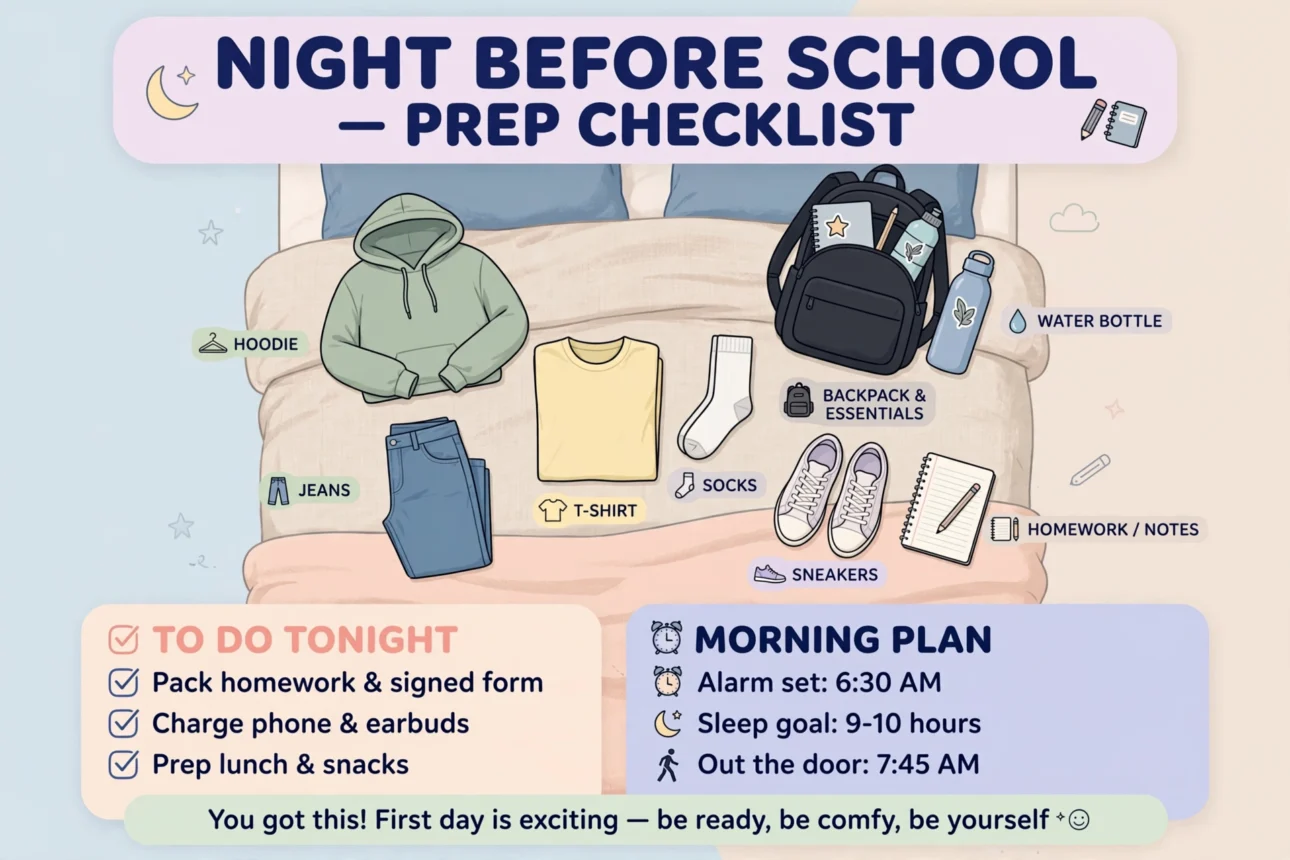
This step matters because clothing decisions are one of the biggest time drains in a rushed morning. Removing that decision point in advance keeps the whole routine moving at a steady pace.
For students who like more say in their style, try picking two or three outfits together on Sunday for the whole week. That way there’s still a choice each morning, just a smaller and faster one.
Step 4: Eat a Quick Breakfast With Protein
Serve something simple that includes protein, like eggs, yogurt, or a smoothie with nut butter. It doesn’t need to be elaborate. Even a granola bar with a glass of milk covers the basics if time is tight.
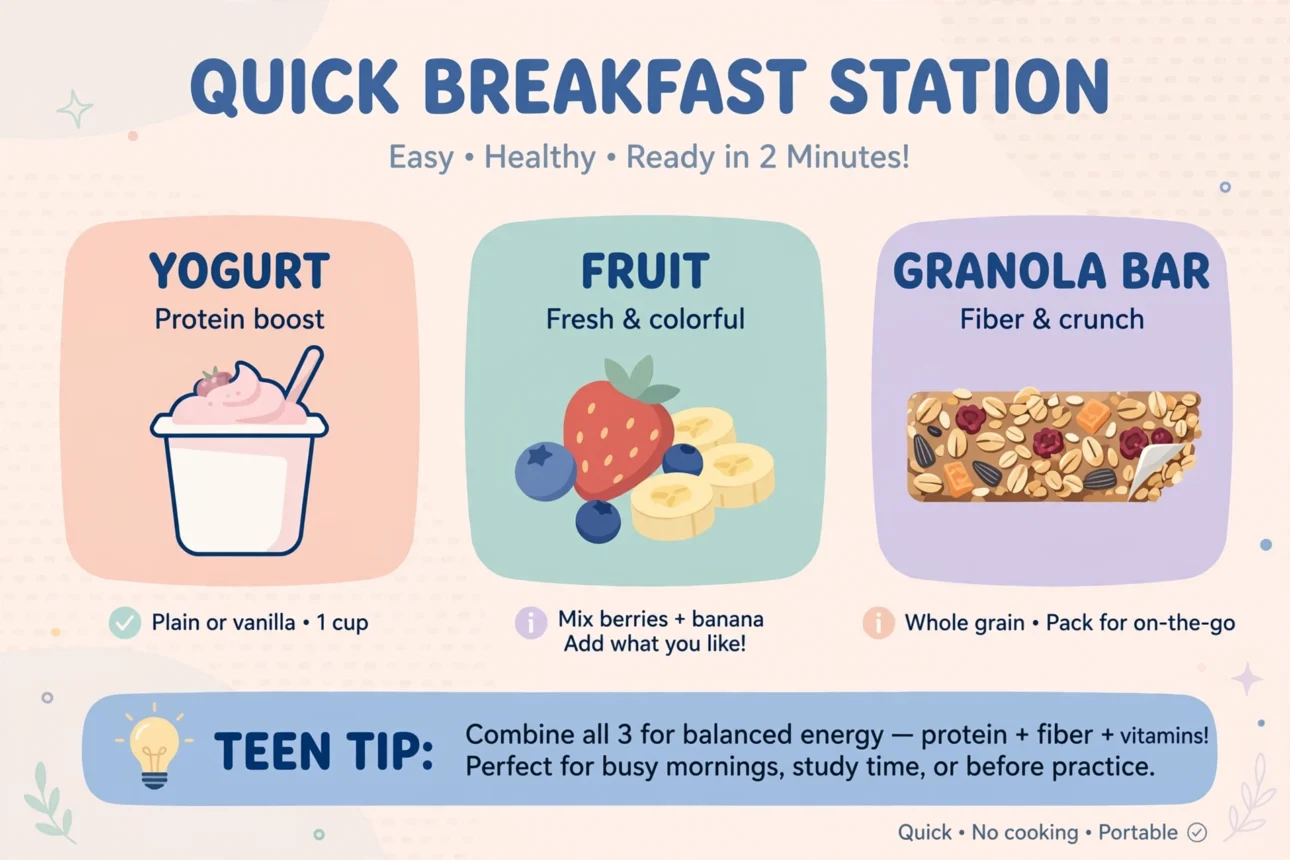
Set out breakfast options the night before so your student can grab and go without opening five cabinets to decide. A small breakfast station with two or three pre-approved choices works well for this age group.
This step matters because skipping breakfast tends to lead to a mid-morning energy crash. A protein-based option keeps blood sugar steadier through the first few class periods than sugary cereal alone would.
If mornings are especially tight, a portable option like a breakfast wrap or a bag of trail mix lets your student eat on the walk to the bus stop or in the car without slowing the routine down.
Step 5: Check the Schedule and Gather Essentials
Have your student glance over the day’s schedule, whether that’s a printed planner or a school app, to confirm which books, gym clothes, or project materials they need. This takes under a minute but prevents forgotten items.
Set up one consistent spot by the door, like a bin or hook, where the backpack, phone charger, keys, and any extra items always live. Gathering everything from one place instead of hunting around the house saves real time.
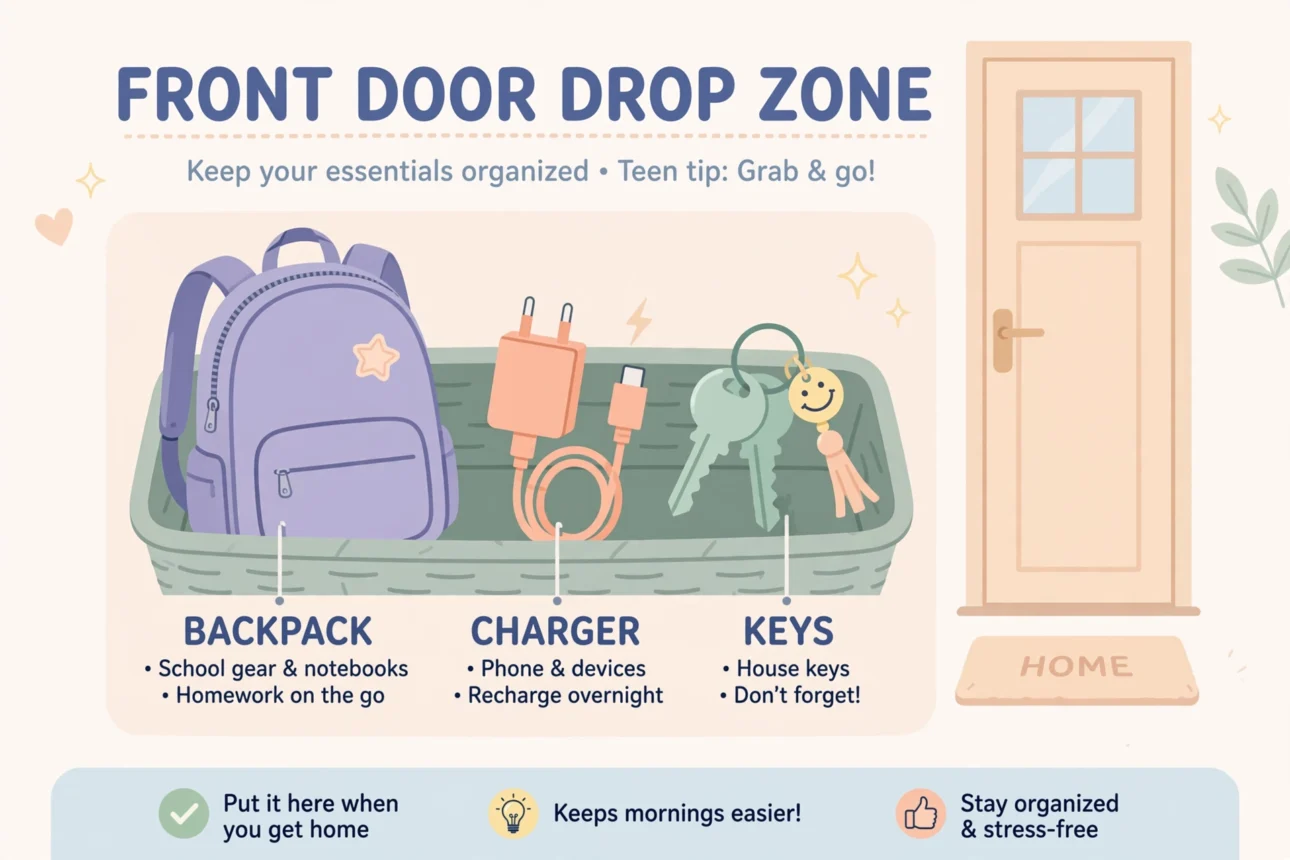
This step matters because a forgotten item discovered at school often means a stressful call home or a missed assignment. A single gathering spot removes most of that risk.
A simple printed checklist taped near the door works well for this age group. Seeing the list each morning builds the habit faster than relying on a parent’s verbal reminder every single day.
Step 6: Build in a Few Quiet Minutes
Once everything is packed and ready, leave a few minutes of downtime before heading out the door. This can be a quiet moment with no screens, a quick chat about the day ahead, or just sitting calmly.
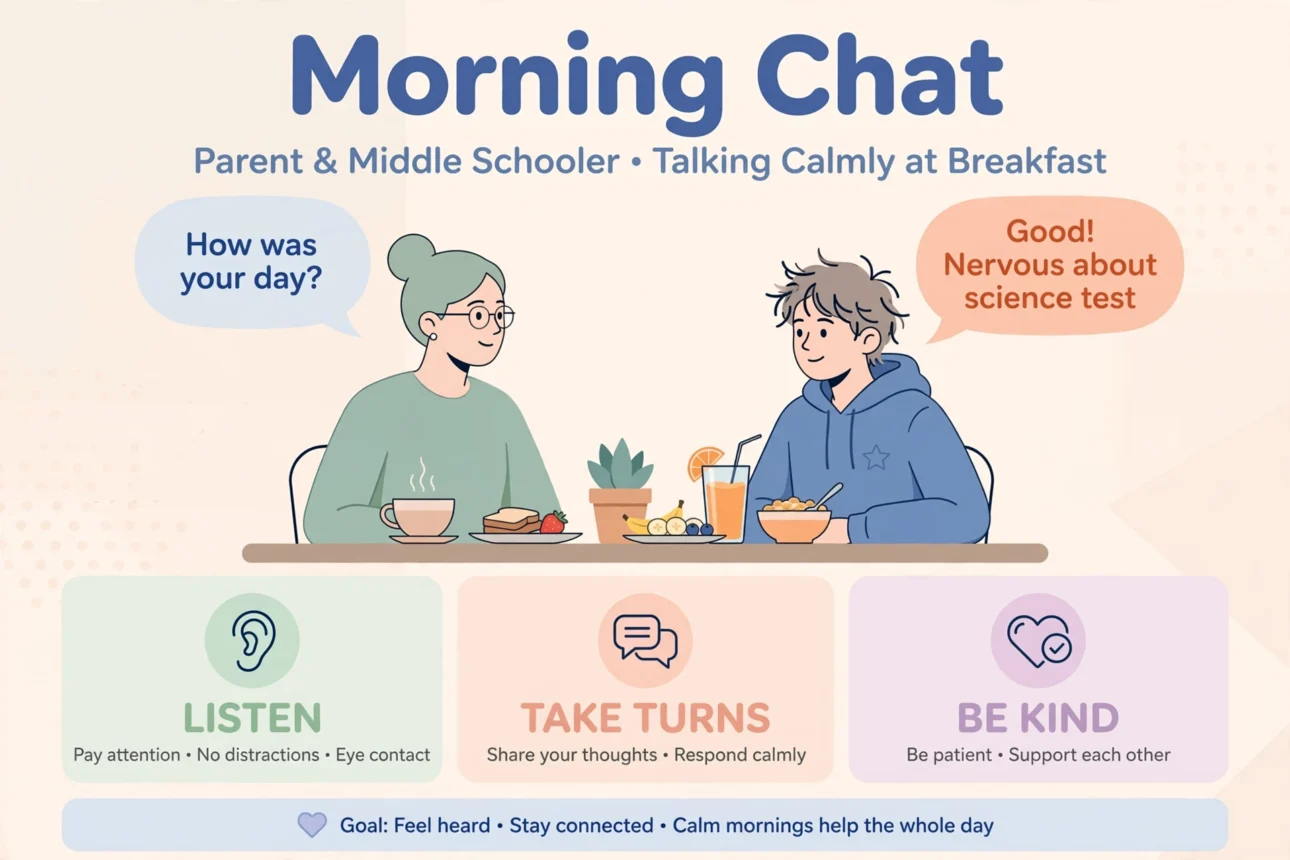
Ask one simple, positive question, like what they’re looking forward to that day. It’s a small habit, but it sets a calmer tone than rushing straight from breakfast to the car or bus stop.
This step matters because a rushed exit tends to carry stress into the school day. A short pause gives everyone a chance to reset before the morning transition actually happens.
Step 7: Leave With Time to Spare
Aim to walk out the door five to ten minutes before you technically need to. This buffer absorbs small hiccups, like a missing shoe or a last-minute bathroom stop, without turning into a mad dash.
If your student rides the bus, build in extra time for walking to the stop and a short wait. If you’re driving, factor in typical traffic patterns near the school so the buffer actually covers real delays.
This step matters most on days when something goes slightly wrong, since a routine with no buffer turns any small delay into a late arrival. Extra time is one of the simplest stress reducers available.
Common Mistakes to Avoid
One common mistake is changing too much at once. Trying to fix wake-up time, breakfast, and packing habits all in the same week usually overwhelms both the student and the parent. Pick one change, let it settle for a few days, then move to the next.
Another mistake is relying on constant reminders instead of a visual system. Repeating the same instructions every morning tends to create friction and tune-out. A checklist or chart lets the student check their own progress instead of waiting to be told what’s next.
A third mistake is skipping the night-before prep on busy evenings. It’s tempting to let it slide after a long day, but those are exactly the mornings when the routine falls apart fastest. Even five minutes of prep the night before makes a noticeable difference.
FAQ
What if my middle schooler resists the routine?
Let them help build it instead of just handing them a schedule. Middle schoolers respond better to structure when they’ve had some say in choosing the order of steps or the wake-up time.
How long does it take for a new morning routine to stick?
Most families see the routine become second nature within about a week or two of consistent repetition. Some adjustment is normal in the first few days as everyone gets used to the new timing.
Should middle schoolers handle mornings on their own?
Mostly yes, with light guidance. This age group is ready to manage tasks like packing a backpack or setting an alarm, though a gentle check-in on homework or forgotten items still helps.
What if we’re always running late no matter what?
Work backward from the time you need to leave and add extra buffer at each step until the math works. Chronic lateness usually means the wake-up time is set too close to the departure time, not that the routine itself is broken.
Is it okay to let my middle schooler use their phone in the morning?
It’s best kept for after the routine is done. Checking messages or social media first thing tends to slow everything down, so many families save phone time for the ride to school instead.
How much sleep does a middle schooler actually need?
Most sleep guidance for this age group points to roughly 9 to 12 hours a night. A late bedtime is often the real reason mornings feel hard, even when the morning routine itself is solid.
Conclusion
A middle school morning routine works best when it’s simple, predictable, and mostly set up the night before. Waking at a consistent time, hydrating early, dressing in pre-picked clothes, eating something with protein, and gathering items from one spot removes most of the friction that causes rushed, stressful mornings. Add a short buffer of quiet time and a few extra minutes before leaving, and most of the daily chaos disappears. Start small if the current mornings feel chaotic. Pick just one or two steps to change this week, like laying out clothes the night before or setting a consistent alarm time, then build the rest of the routine around those wins.
Give the new routine time to become automatic before judging whether it’s working. A few uneven mornings in the first week are normal, and consistency matters more than perfection when a middle schooler is learning to manage their own time.
References
- Centers for Disease Control and Prevention, “Tips to Support Healthy Routines for Children and Teens”
- Understood, “8 Ways to Make School Morning Routines Easier”
- CVS Health, “Morning Routine for School”
- Raising Children Network, “Morning Routine for School: Practical Tips”
- Findmykids, “Perfect Morning Routine for School: Tips and Checklist”
- Michigan State University Extension, “Taming the Morning Madness”

Sarah Anderson . J
I’m the mom behind Wise Mom Blogger, where everyday creativity meets real-life motherhood. I share easy DIY crafts, cozy knitting and crochet projects, beginner-friendly sewing ideas, and family-tested recipes—plus quick baking hacks that make homemade feel doable on busy days.