Title picked: “14 Best Wood Closet Organization Ideas” — it’s the direct, factual option, and it keeps the exact keyword phrase while telling the reader right away what they’re getting: a list, a number, and a clear promise.
A closet full of wire shelves and sagging plastic bins never feels finished. Wood changes that. It’s sturdy, it looks put together the moment you open the door, and it holds up to years of daily use in a way that flimsy materials just can’t. You don’t need a full remodel to get there either. Whether you’re working with a small reach-in or a big walk-in, these wood closet organization ideas will help you use every inch and make the space feel like a room you actually enjoy opening.
Quick answer: The best wood closet organization ideas mix double-hang rods, adjustable solid wood shelving, built-in drawers, open cubbies for shoes, and a few smart extras like a pull-out valet rod or cedar-lined panels. Start with rods and shelves, then add drawers and accessory storage as your budget allows.
| Feature | Standard Setup | Notes |
| Single rod height | 66 in | Center of rod, floor to rod |
| Double-hang top rod | 80 in | For shirts and jackets |
| Double-hang bottom rod | 40 in | For pants and skirts |
| Shelf spacing | 12-16 in | Varies by item stored |
| Cedar lining finish | Unfinished only | Sealing it kills the scent |
Recommended Wood Closet Rod & Shelf Heights (inches from floor)
Bottom Rod
40″
Single Rod
66″
Top Rod
80″
Top Shelf
84″
1. Double-Hang Wood Rods to Double Your Hanging Space
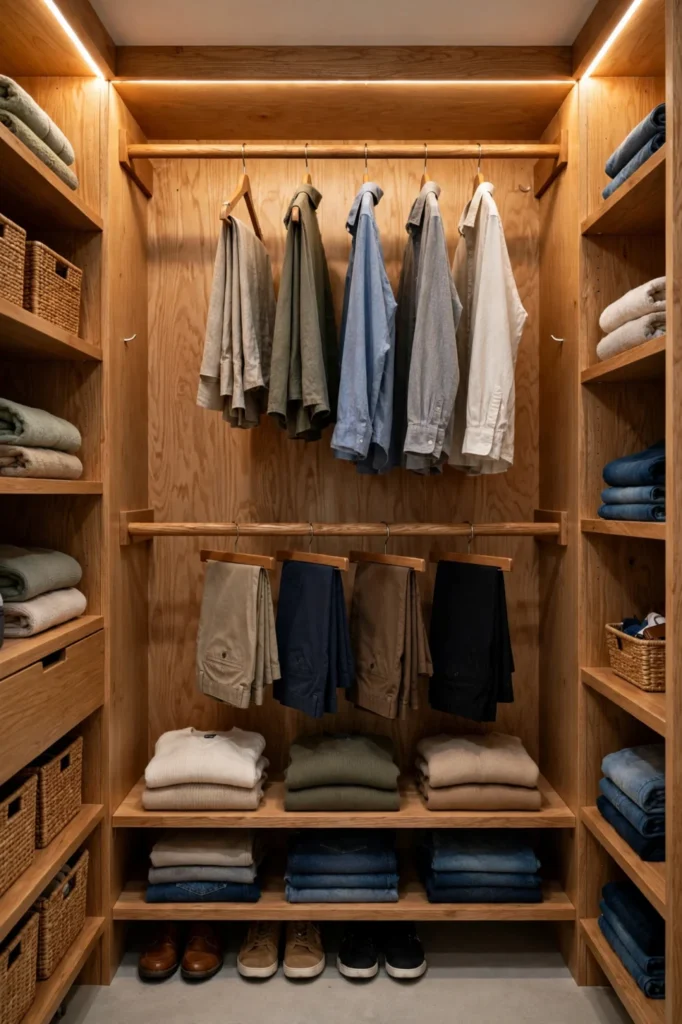
Two wood-trimmed rods, one above the other, roughly double how much you can hang in the same footprint. The standard setup puts the top rod around 80 inches from the floor and the bottom rod around 40 inches, according to measurement guides from Bob Vila and Angi. Shirts, blouses, and folded pants go on the lower bar. Shorter jackets and skirts go up top. This one change turns a half-empty closet wall into a fully used one, and it costs far less than adding a whole new cabinet. If your wardrobe leans toward long dresses or coats, keep one single-hang section at the standard 66-inch height instead of splitting it, so those longer pieces don’t drag or bunch up at the bottom. Measure your longest garment before you commit to a layout, since a few extra inches of clearance now saves you from redoing the rods later.
2. Adjustable Solid Wood Shelving for a Custom Fit
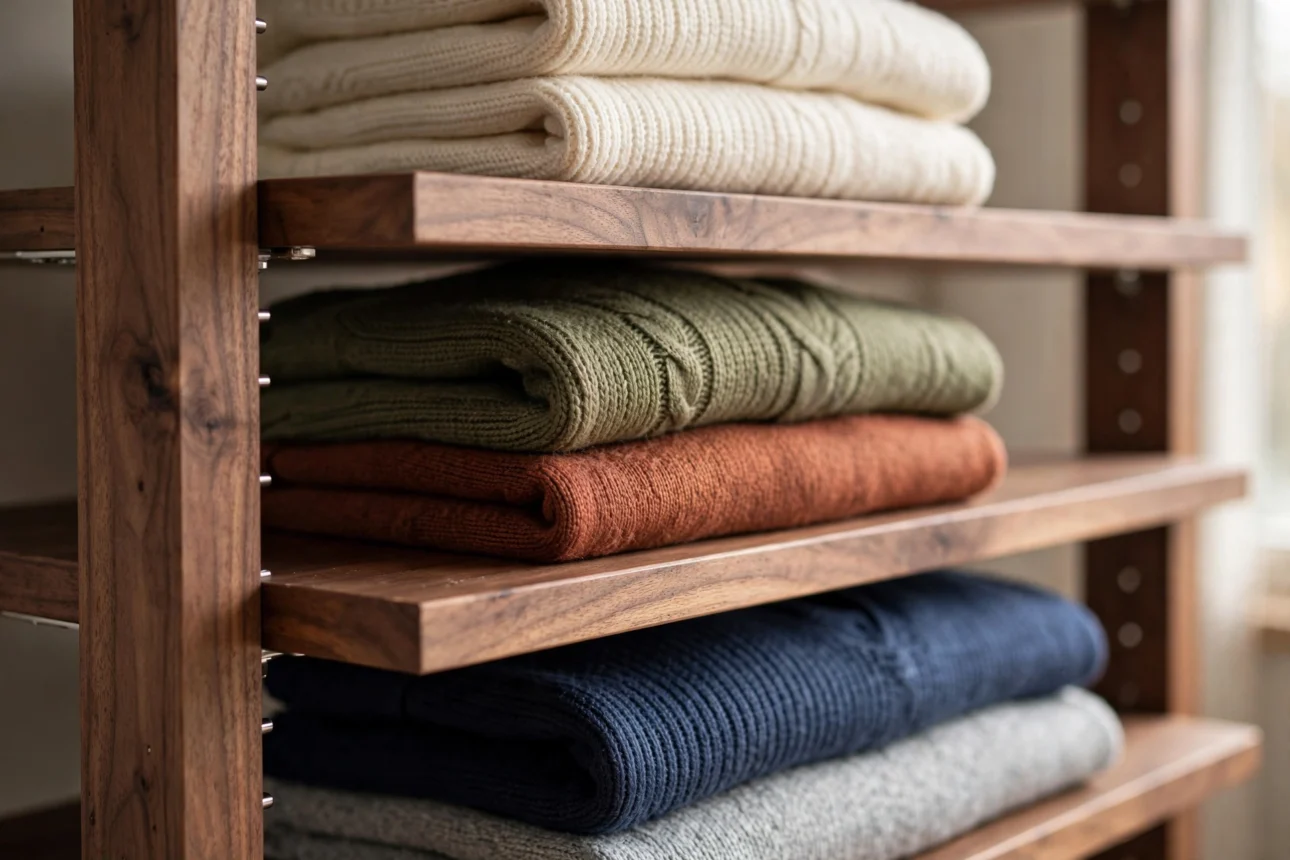
Adjustable wood shelves let you reshape the closet as your wardrobe changes, instead of being stuck with fixed slots. Space them close together for shoes and folded knits, or wider for bulky sweaters and bins. Closet design guides recommend spacing shelves about 12 to 16 inches apart so you get enough clearance for stacked items without wasting height. Solid wood or plywood with a real veneer holds its shape far better than particleboard over time, especially if your closet runs warm or humid. Light wood tones like oak, maple, or birch tend to make a small closet feel more open, since they reflect more light and don’t visually shrink the walls the way a dark stain can. If you’re working with a larger walk-in, a richer stain such as walnut or espresso can give the space a more boutique, high-end feel without any change to the layout itself.
3. Built-In Wood Drawer Units Instead of a Dresser
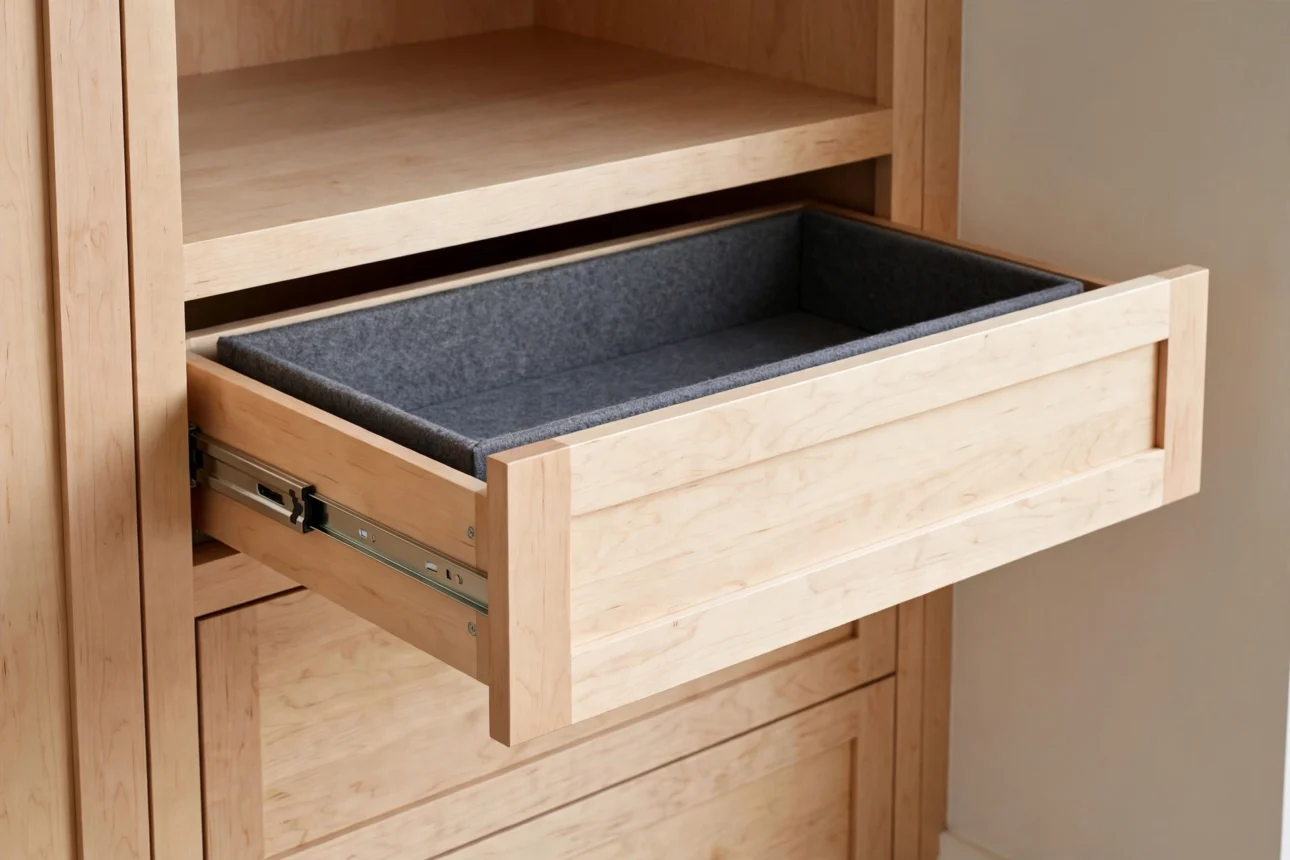
Built-in wood drawers move your folded clothes, socks, and accessories out of a separate bedroom dresser and into the closet where they belong. That frees up floor space in the bedroom itself. Look for soft-close drawer slides. They feel sturdier, they’re quieter, and they hold up better under daily opening and closing than basic slides. Many closet systems, like the ones sold by John Louis Home and similar brands, offer solid wood drawer fronts with felt-lined bottoms as an upgrade over laminate. Grouping drawers by category, one for socks, one for undergarments, one for folded workout gear, keeps mornings faster because you always know exactly which drawer to open instead of hunting through a mixed pile every time.
4. Open Wood Cubbies for Shoes You Can See
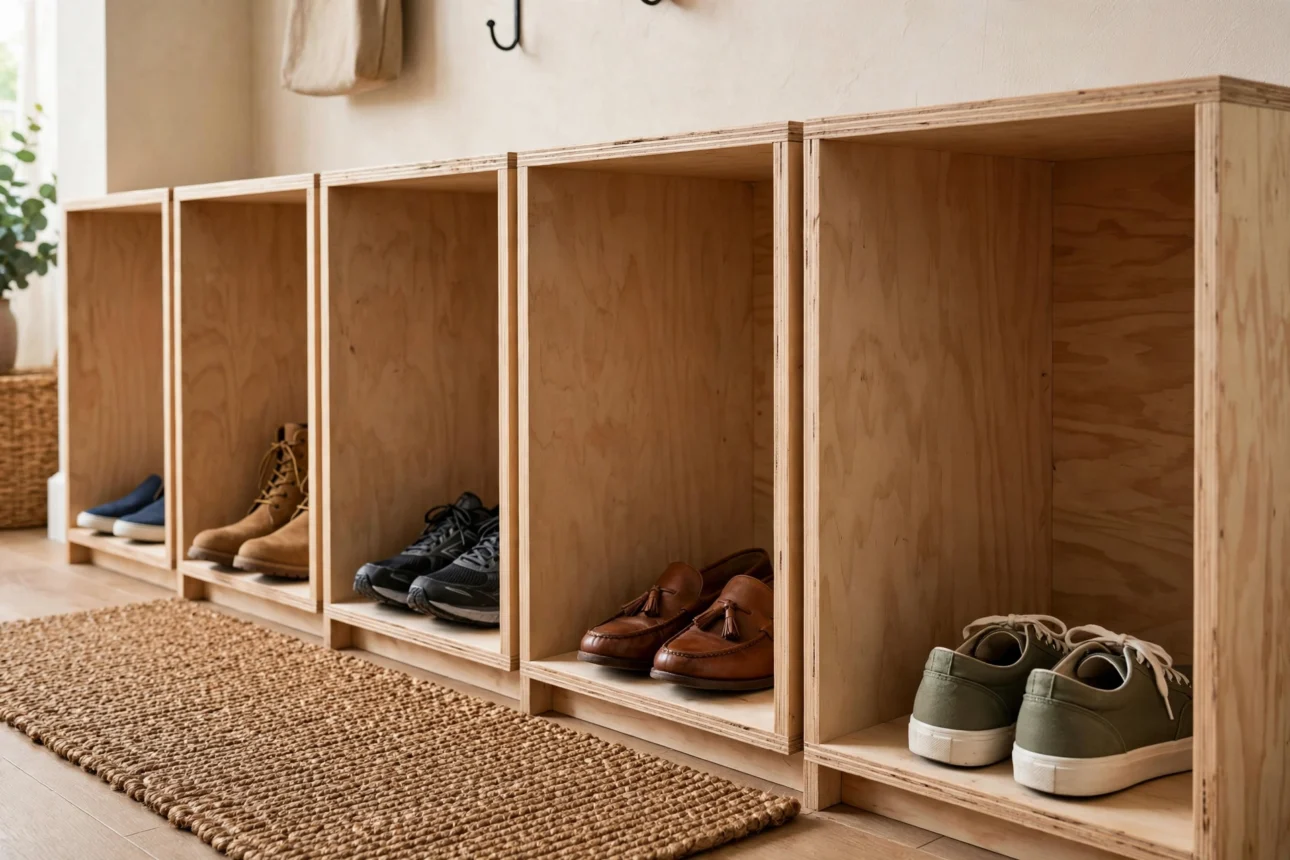
Cubbies sized for shoes keep every pair visible so you actually grab the right one instead of tossing shoes on the floor. Closet shelving guides suggest a shoe shelf around 12 to 18 inches high, with rows spaced 8 to 10 inches apart if you’re stacking several. Slightly bigger cubbies work well for folded sweaters or bags. Because the fronts stay open, you can scan the whole row at a glance instead of digging through a drawer.
5. A Pull-Out Wood Valet Rod for Tomorrow’s Outfit
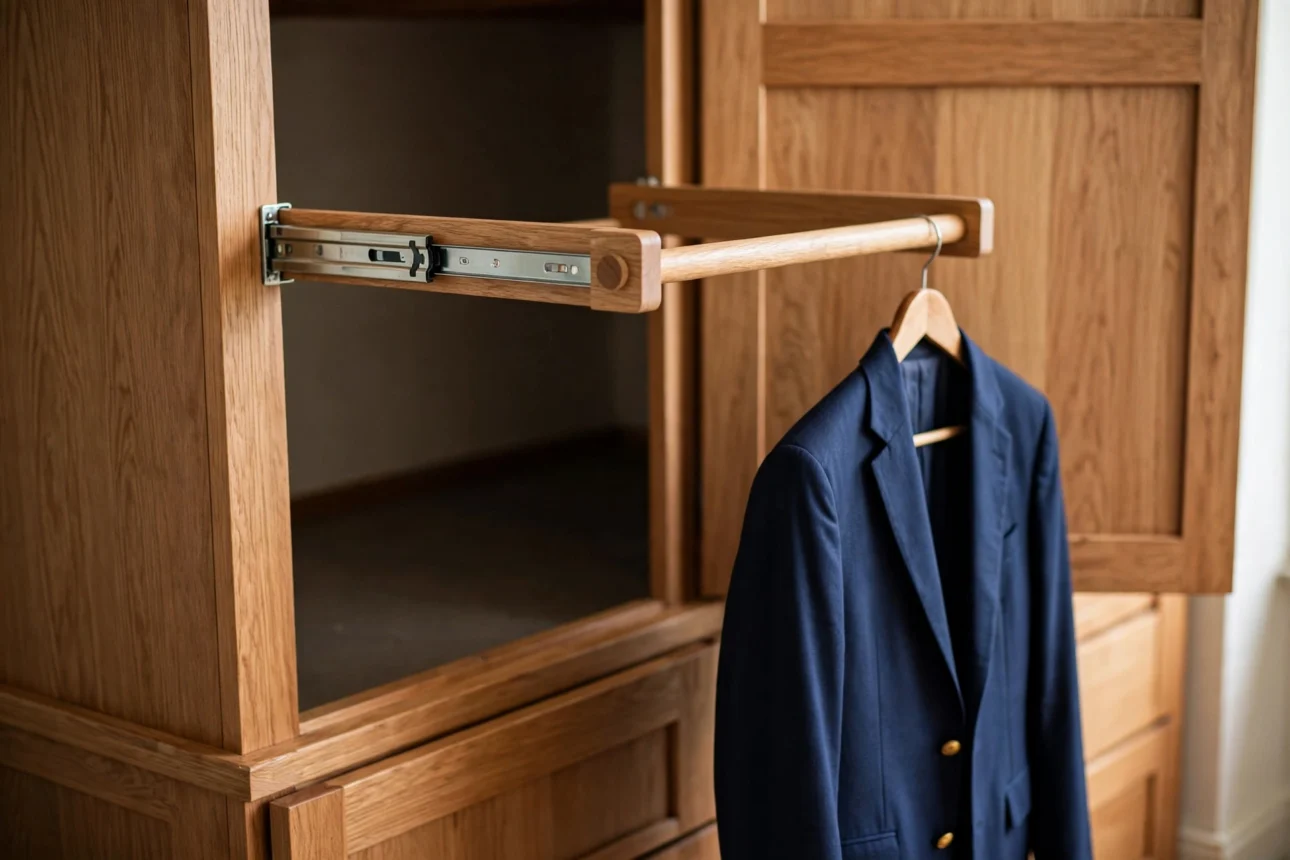
A small wood rod that slides out near the closet entrance gives you one clear spot for tomorrow’s outfit, a dry-clean return, or something you’re still deciding whether to keep. It sounds like a small add-on, but once you have one, you use it every day. Most valet rods tuck flush against the cabinetry when not in use, so they don’t eat into your hanging space the rest of the time.
6. Wood Belt and Tie Racks That Slide Out
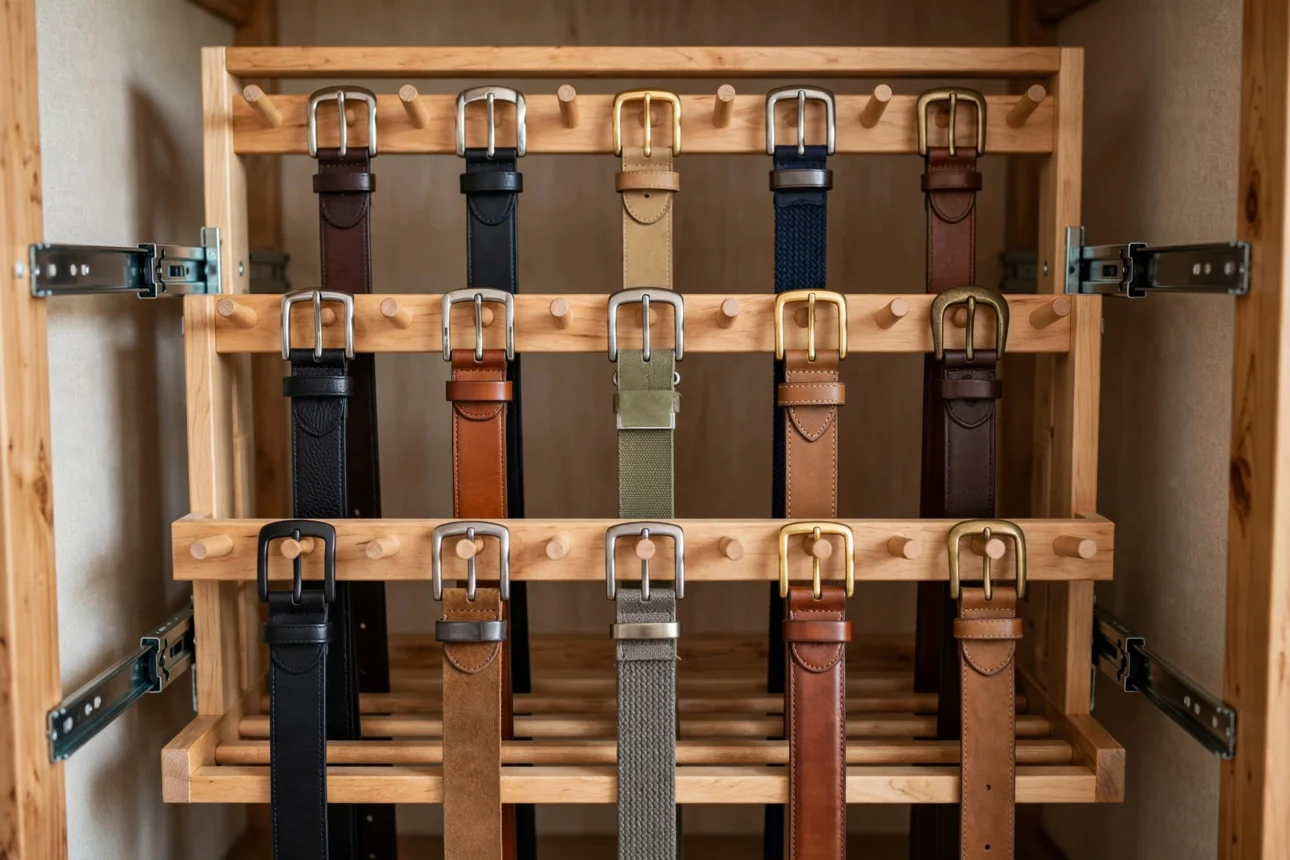
Pull-out wood racks with pegs or hooks keep ties, belts, and scarves untangled instead of balled up in a drawer. They usually run on a sliding track so they disappear back into the cabinet when you’re done. This is one of the cheapest upgrades on this list, but it solves a problem almost everyone has: accessories that end up in a messy pile because there was never a dedicated spot for them.
7. A Wood Island or Bench for a Bigger Closet
If your closet has the square footage, a low wood island with drawers underneath does double duty. It adds storage, and it gives you a place to sit while you put on shoes. A wood-topped bench works the same way on a smaller scale. Either one turns the room into something closer to a boutique dressing area instead of a plain storage closet, and it gives your eye a place to land when you walk in.
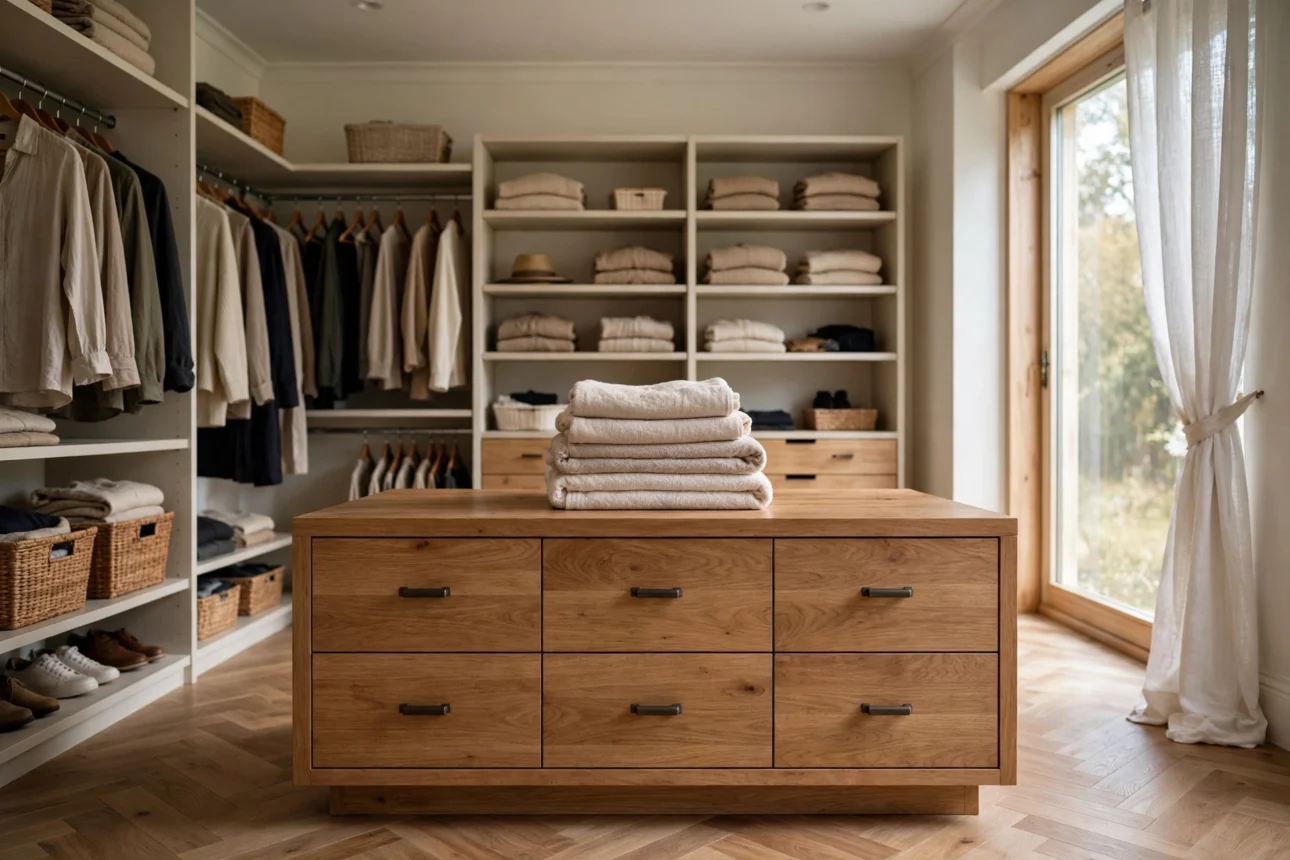
8. Mixing Two Wood Tones on Purpose
Not everything needs to match exactly. A light oak shelving system paired with a walnut bench, or natural wood paired with black or brass hardware, adds visual interest without looking mismatched. The key word is “on purpose.” Pick one wood tone as the main material and let a second tone show up only in one or two accent pieces, so the mix reads as designed rather than accidental.
9. Wood Trim on Existing Wire Shelves
If a full wood system isn’t in the budget yet, adding solid wood edging to your current wire or laminate shelves gets you most of the look for a fraction of the cost. It also strengthens the front edge, which is usually the first place laminate shelving chips or sags under weight. This is an easy weekend project and a good first step before you commit to a bigger closet overhaul.
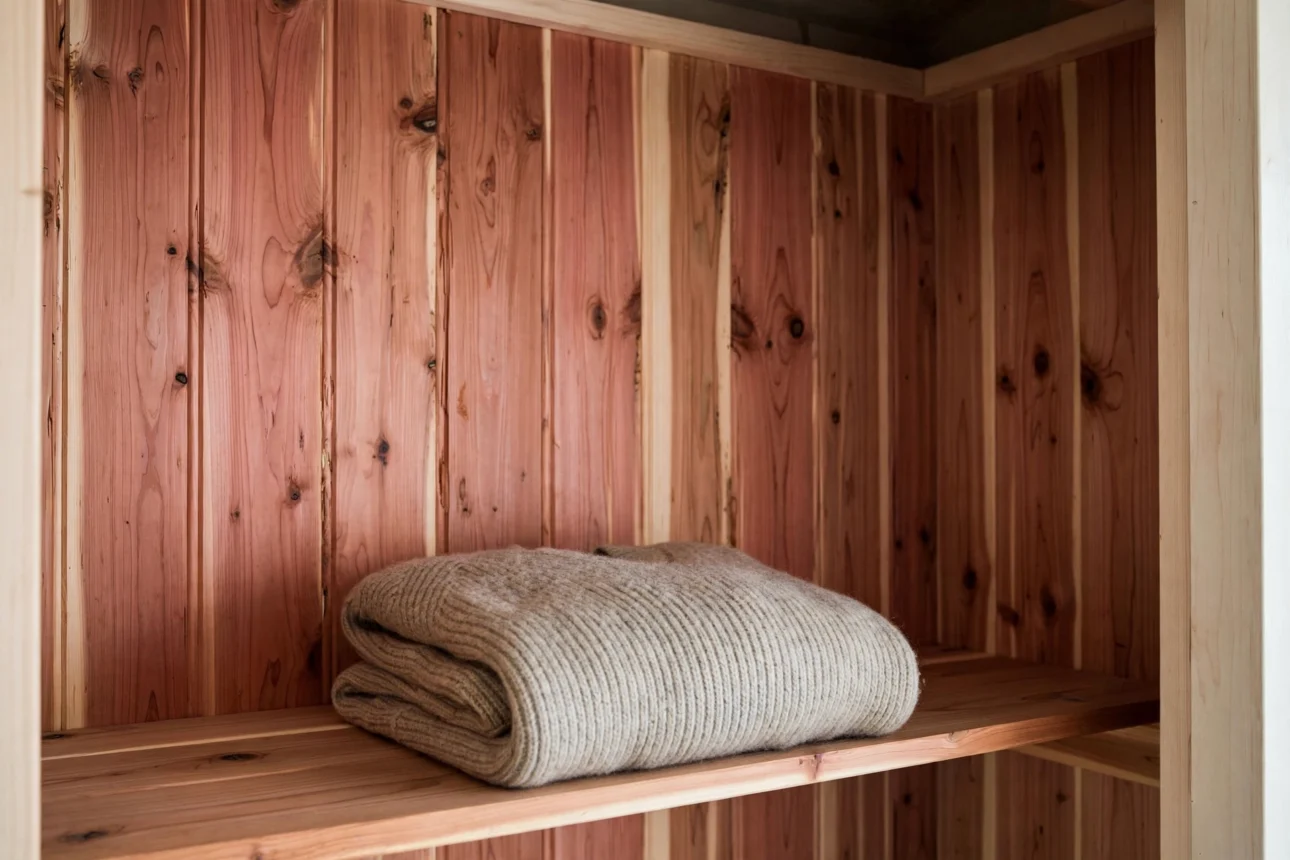
10. Aromatic Cedar Panels for Natural Moth Protection
Aromatic eastern red cedar releases natural oils, mainly a compound called cedrol, that repel adult clothes moths and can slow larvae, based on research summarized by wood suppliers and pest-control sources. A 2017 study found that even a 1% concentration of cedar oil killed larvae and stopped eggs from hatching. The catch: those oils fade as the surface oxidizes, usually over a few years, so the wood must stay unfinished or only lightly oiled. Sealing cedar with stain or polyurethane blocks the scent and stops it from working. A light sanding every so often restores the effect. Cedar also has a second job beyond pest control: it’s naturally hygroscopic, meaning it absorbs and releases small amounts of moisture, which helps moderate humidity swings inside the closet and lowers the odds of a musty smell developing on an exterior wall. Even a single cedar-lined drawer, rather than a full room, is enough to give wool sweaters and other natural fibers some added protection during off-season storage.
11. Wood Hamper Bins Built Into the Base
A pull-out wood-framed hamper at the bottom of the closet keeps dirty laundry contained and out of sight instead of piling up in a corner. Canvas or mesh liners make it easy to lift the whole bag out on laundry day. Building the hamper into the base of the closet, rather than using a separate freestanding one, saves floor space and keeps the whole system looking like one cohesive piece instead of a closet plus an extra bin shoved in the corner.
12. Under-Shelf Lighting to Show Off the Wood
Even a well-built wood closet looks flat under a single overhead bulb. A slim LED strip mounted under each shelf lights up the wood grain, makes it easier to tell colors apart, and adds a warm glow that plain overhead lighting can’t match. Battery-powered strips need no wiring at all, which makes this one of the fastest upgrades on the list. It’s a small detail, but it’s often the thing that makes a wood closet look finished instead of half-done.
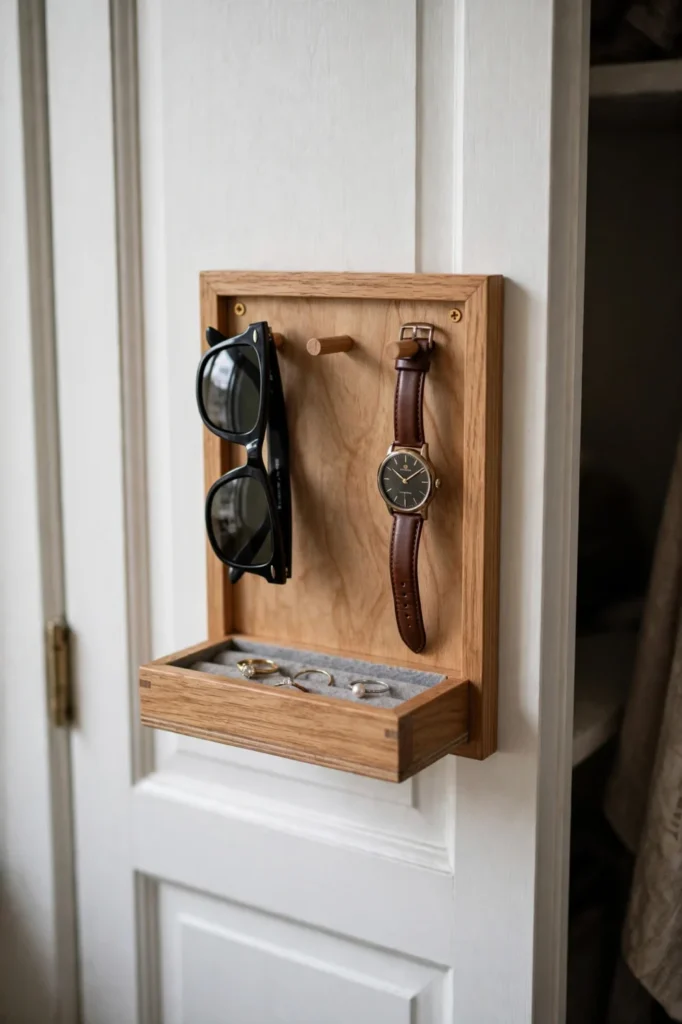
13. A Wood Accessory Wall for Jewelry and Sunglasses
A small wood panel with pegs, hooks, and a few shallow trays gives jewelry, sunglasses, and watches a home instead of a pile on top of the dresser. Mount it on the inside of a closet door or on any open wall segment that isn’t already doing other work. Because everything hangs in view, you can put together an outfit faster in the morning, and delicate pieces like necklaces stay untangled instead of getting knotted together in a drawer. This is an easy add-on to any of the systems above, and it uses wall space that would otherwise sit empty.
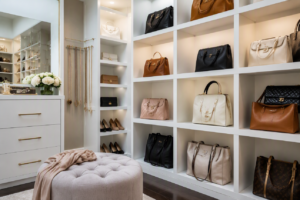
14. A Wood Bag and Purse Shelf With Dividers
A dedicated wood shelf with slim upright dividers keeps handbags and purses standing upright instead of slumped over each other, which helps structured bags hold their shape longer. Space the dividers a few inches apart based on your bag sizes, and put the ones you use most at eye level so you’re not stretching to reach a top shelf every day. If you switch bags with the seasons, keep off-season ones higher up and rotate them down as needed, the same way you’d rotate seasonal clothing.
FAQ
Is solid wood better than laminate for closet shelving?
Yes, for durability. Solid wood and quality plywood hold up better under weight and humidity than particleboard or basic laminate, which tend to sag or chip over time.
How high should a single closet rod be mounted?
Around 66 inches from the floor to the center of the rod. That height works for most shirts, pants, and dresses without dragging on the floor.
Does cedar lining really keep moths away?
Yes, but only while the wood’s natural oils are still active. Unfinished aromatic cedar repels moths for several years, then needs a light sanding to refresh the scent.
How much space should I leave between a rod and the shelf above it?
Leave at least 2 inches between the top of the rod and the bottom of the shelf. That gap gives hangers room to slide on and off without catching.
Can I add wood closet organization to a small reach-in closet?
Yes. Even a small reach-in benefits from a double-hang rod, one or two adjustable shelves, and a small drawer unit. You don’t need a full walk-in to get the durability and finished look of wood storage.
References
- Bob Vila, “The Perfect Closet Rod Height for Hanging Clothes” (2024)
- Hunker, “What Is The Proper Height For Closet Rods & Shelves?” (2023)
- Angi, “Closet Shelving Height Standards and Guidelines” (2025)
- Willamette Carpentry, “What Is the Standard Height for Closet Shelving? Ultimate Guide” (2025)
- Windsor Plywood, “Aromatic Cedar for Closets, Chests & More” (2026)
- Truitt & White, “Does Cedar Actually Keep Moths Out?” (2026)
- Wood-Blocks.com, “The Science Behind Cedar Wood: How It Repels Moths Naturally” (2025)

Sarah Anderson . J
I’m the mom behind Wise Mom Blogger, where everyday creativity meets real-life motherhood. I share easy DIY crafts, cozy knitting and crochet projects, beginner-friendly sewing ideas, and family-tested recipes—plus quick baking hacks that make homemade feel doable on busy days.