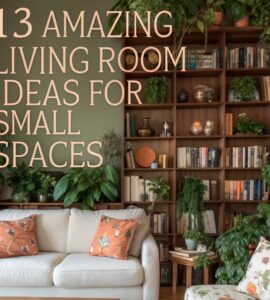
If your library room is small, you can still make it feel cozy, organized, and stylish. I like focusing on smart layouts, light, storage, and flexible seating—so you get a space that’s great for reading and actually works for everyday life. Below are 13 small home library room ideas (plus tips to avoid common mistakes) that you can copy or customize.
Key Takeaways
- Use vertical space with tall bookshelves and wall storage.
- Choose compact seating (like reading chairs, window seats, or built-in banquettes).
- Add lighting in layers (ambient, task, and accent).
- Plan storage so books, papers, and chargers have a home.
- Make the room feel bigger with light colors, mirrors, and clear sightlines.
- Use your style: cozy, modern, vintage, or minimalist—small rooms can still feel special.
Introduction
I love the idea of a home library room because it makes reading feel “real,” like it’s part of your daily routine. But if you have a small space—maybe a spare bedroom, a corner nook, or even a converted closet—you might worry that you can’t fit everything. The truth is, small rooms can actually be easier to design.
When you use the right layout and a few smart design tricks, your library can feel calm and inviting instead of crowded. In this listicle, I’ll share 13 small home library room ideas that work in apartments and small homes. I’ll also show you quick ways to personalize the look, so you can make it feel like your reading retreat.
1. Go Vertical With Tall Bookshelves

One of the easiest ways to make a small library room work is to think “up,” not “out.” Instead of spreading books across the floor, I use tall bookshelves that reach near the ceiling. This gives you more storage without eating up your walking space.
How to do it:
- Pick shelves in a similar tone to your wall color (so they blend in a bit).
- Use mixed shelf spacing: wider gaps for larger books, narrower gaps for paperbacks.
- Add a few “display” items on top (like a small plant or framed art) to make it feel less like storage.
Tip for you: If you’re renting or don’t want to drill a lot, consider bookcases with an anti-tip strap and sturdy wall anchors.
2. Build a Window Seat With Hidden Storage

If your small room has a window, a window seat is one of my favorite options. It gives you a comfy reading spot and storage in one move. A built-in bench (or a DIY version) can also help define the space, even if your room is narrow.
How to do it:
- Choose a cushion with a washable cover.
- Add lift-up storage underneath for books you don’t use every day.
- Use a small side table or floating shelf for a lamp and water.
Tip for you: Measure your window area carefully. Even a few inches matter for comfort and access.
3. Use a Ladder or Rolling Library Cart

In a small library, you need flexibility. I love using a ladder (for tall shelves) or a rolling library cart (for extra books and supplies). It’s practical, but it also looks stylish.
How to do it:
- For a ladder: choose one that fits the shelf height and your floor space.
- For a cart: pick one with multiple tiers so you can sort categories (favorites, new arrivals, reference books).
Tip for you: If you like organization, label your cart shelves. It makes your reading routine smoother.
4. Pick a Compact Reading Nook Setup

You don’t need a full living-room layout. In fact, I recommend keeping it simple: one comfy seat, one good lamp, and a small table.
How to do it:
- Choose a chair that fits your space (a slipper chair or small accent chair).
- Use a small round or square side table so you don’t block pathways.
- Add a rug to define the nook and make it feel cozy.
Tip for you: If your room is really tight, consider a floor cushion + small tray table instead of an armchair.
5. Add Floating Shelves for “Light” Book Display

When you want books without heavy furniture, floating shelves are a great choice. I use them to show off favorites, decorative reads, and a few design items (like a ceramic jar or art book).
How to do it:
- Keep shelves at eye level when possible.
- Use a mix of book sizes for visual interest.
- Leave some wall space so the room doesn’t feel packed.
Tip for you: Don’t put too many shelves too close together. A little negative space helps the room feel calmer.
6. Create a Built-In Wall Unit (Even a Simple One)

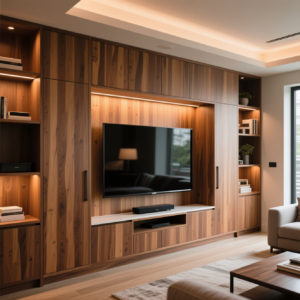
If you want your library room to look custom, built-ins are a dream. But you don’t always need a full remodel. Even a basic wall unit—shelves at the top and closed storage below—can make a small room feel organized and intentional.
How to do it:
- Put books in open shelves where you want easy browsing.
- Hide messy items in cabinets or drawers.
- Leave a small section for a desk or charging station if you work or study.
Tip for you: Closed storage is your best friend in small rooms. It makes everything look tidy even when you’re busy.
7. Use Multi-Functional Furniture (Because Space Is Limited)

In a small library, every piece of furniture should earn its place. I like multi-functional items because they help you keep the room uncluttered.
Ideas to consider:
- Ottoman with storage that also works as a footrest
- Bookshelf that doubles as a room divider
- Side table with shelves or drawers
- Compact desk that folds or tucks away
Tip for you: Make a quick list of what you actually use in your library (books, lamp, mug, maybe a laptop). Then match furniture to that list.
8. Try a Minimalist Color Palette for a Bigger Feel

Small rooms can feel bigger when you keep the visual background calm. I often recommend a simple color palette—like soft whites, warm neutrals, or light grays—then add color through books and a few decor pieces.
How to do it:
- Paint walls a light shade.
- Choose shelves in a wood tone you love (or matching colors).
- Use one accent color (like deep green, navy, or rust) in pillows, art, or a rug.
Tip for you: If you love colorful books, you can keep them as the “accent.” Your books can do the decorating for you.
9. Let Your Lighting Do the Work (Layer It)

Lighting is a huge part of how cozy a small library feels. I like to use multiple light sources rather than one overhead bulb. That way, your reading area is bright and your room stays warm.
How to do it:
- Add an ambient light (ceiling fixture or wall light).
- Add task lighting (a reading lamp or floor lamp).
- Add accent light (LED strip behind shelves or a small picture light).
Tip for you: Look for warm bulbs (around 2700K to 3000K) for a relaxing glow.
10. Add a Mirror to Boost Light and Space

If your room feels a bit cramped, a mirror can help. I often place mirrors across from a window or near a light source. It bounces light around and makes the room look larger.
How to do it:
- Choose a mirror with a thin frame so it doesn’t feel bulky.
- Place it so it reflects either a window or bookshelf light.
- Keep the style consistent with your decor (modern, vintage, farmhouse, etc.).
Tip for you: Don’t choose a super ornate mirror unless your room style can handle it. In small rooms, simpler often looks better.
11. Organize by “Reading Zones,” Not Just Book Type
When people think about library organization, they usually think “genre.” That’s fine—but I like organizing by zones based on how you live.
Example reading zones:
- Now reading: a small shelf near your chair
- Next up: books you plan to start soon
- Reference: cookbooks, dictionaries, and manuals
- Favorites: the ones you re-read often
How to do it:
- Keep the closest shelf stocked with books you want access to quickly.
- Put less-used books higher or in closed storage.
Tip for you: If you can’t find books easily, you won’t browse. The goal is a room that feels effortless.
12. Turn One Wall Into a “Statement” Bookshelf Wall
Even in a small room, one wall can be the “main event.” I like to build a statement wall by focusing all your shelving there. This makes the room feel intentional instead of random.
How to do it:
- Choose one wall for your tallest shelves.
- Add a small ladder, art, or a framed print above or beside it.
- Keep the rest of the room simpler to avoid visual clutter.
Tip for you: If you’re worried about the wall looking too busy, leave a few spaces between shelf sections or use book colors that balance each other.
13. Add Cozy Textures: Rug, Curtains, and Throw Pillows
I’ll be honest—sometimes the best “library room ideas” are not furniture at all. The room should feel comfortable when you step inside. Cozy textures make a small space feel warm and welcoming.
How to do it:
- Use a soft rug with a shape that fits your layout (round rugs work great in tight corners).
- Choose thicker curtains for sound control and privacy.
- Add a throw blanket and pillows on your chair or window seat.
Tip for you: Pick textures you actually like touching. If it feels scratchy, you won’t want to sit there.
Common Mistakes
Even with great ideas, small libraries can get messy fast. Here are the mistakes I see most often—and how you can avoid them.
- Overfilling the shelves right away
If everything is stuffed, the room feels cramped. Keep some open space, especially on top shelves and around your seating area.
- Ignoring walking paths
A room can be full of storage and still feel annoying if you can’t move easily. Measure your door swing and leave a clear route to your reading chair.
- Using only overhead lighting
Overhead light can feel harsh and make reading less relaxing. Add a lamp where you’ll actually read.
- Picking big furniture without checking scale
A large sectional or oversized desk may look nice online but can overwhelm your room in real life. In small spaces, scale is everything.
- Not having closed storage
Papers, chargers, extra blankets, and book bags add visual clutter quickly. Closed cabinets or drawers keep the room calm.
- Forgetting cable management
If you use a lamp with a plug, charge devices, or plan to read on a tablet, messy cords can ruin the clean look. Consider a small charging station with cable ties.
FAQ
How do I fit books into a very small library room?
I focus on vertical storage first: tall bookshelves, wall shelves, and storage inside seating (like a window bench). Then I keep a “nearby reading shelf” close to your chair so you don’t need to walk across the room to grab what you want.
What size chair works best for a small library room?
I recommend choosing a chair that doesn’t block the path behind it. Look for compact armchairs or slipper chairs. If space is super tight, a small reading chaise or even a floor cushion can work beautifully.
Should I organize books by color or by genre?
I usually suggest the method you’ll stick with. If you love visuals, color can look amazing. If you want easy browsing, genre or “reading zones” is better. My favorite compromise is: keep categories for functional use, and arrange within each category in a way that looks good.
What’s the best lighting setup for reading in a small space?
Use layered lighting: one ambient light, one task light by your chair, and optional accent lighting for shelves. If you only do one thing, make sure your task lamp is bright enough to read comfortably.
Can I make a library room feel bigger without renovating?
Yes. I use mirrors, light paint colors, and multi-functional furniture. Also, avoid large bulky furniture and keep the room visually simple. You can get a bigger feel just by choosing the right layout and light sources.
Conclusion
If you’ve been thinking, “My space is too small for a real library,” I want you to know you can absolutely make it work. A small home library room isn’t about having a lot of square footage—it’s about creating a cozy reading atmosphere with smart storage, good lighting, and furniture that fits your life.
Start with the biggest win for your space: go vertical, add a reading nook, and use lighting you’ll love. Then pick one or two style upgrades (like floating shelves, a mirror, or cozy textiles) to make it feel like a place you want to spend time.
Now it’s your turn—look at your room layout and choose your top 2 ideas from this list. If you want, tell me your room size and what you already have (window? closet? desk?), and I can help you pick the best combination.

Sarah Anderson . J
I’m the mom behind Wise Mom Blogger, where everyday creativity meets real-life motherhood. I share easy DIY crafts, cozy knitting and crochet projects, beginner-friendly sewing ideas, and family-tested recipes—plus quick baking hacks that make homemade feel doable on busy days.