Does your channel have what it takes to thrive under the new YouTube monetization standards? Whether you are mapping out your content calendar for the winter holidays or planning for a busy summer season, understanding these specific benchmarks helps you focus your creative energy where it actually counts. The rules for joining the YouTube Partner Program are shifting, and knowing how to qualify is the first step toward building a sustainable income. Let’s look at what these changes mean for your channel and how to track your progress effectively.
Quick Questions and Answers
Question: What are YouTube monetization requirements in 2027?
Answer: For new full-YPP applicants, YouTube says the requirement becomes 1,000 subscribers plus either 8,000 qualified public watch hours in the last 12 months or 20 million qualified public Shorts views in the last 90 days. The change begins on February 1, 2027. Existing monetized creators are not described as being forced through the same re-entry threshold, but Shorts revenue eligibility has its own ongoing view requirement.
Question: Why is YouTube changing monetization rules in 2027?
Answer: The official materials in the search results frame the change as a requirement update rather than a publicly explained policy rationale. What is clear is that YouTube is tightening the performance bar for new full-YPP applicants by doubling the watch-hour and Shorts-view thresholds, while keeping the 1,000-subscriber floor unchanged.
Question: Can you monetize YouTube with 500 subscribers?
Answer: Yes, but not for full ad and Premium revenue sharing. Google Help lists a lower tier for channel memberships and shopping features at 500 subscribers, 3 public uploads in the last 90 days, and either 3,000 public watch hours in 365 days or 3 million Shorts views in 90 days.
YouTube Monetization in 2027: Overview of the New Thresholds
YouTube is making a significant shift for new creators aiming for full Partner Program enrollment. Starting February 1, 2027, the barrier for entry in terms of performance metrics is doubling. According to vidIQ, this update targets those seeking ad and YouTube Premium revenue sharing.
You will need to hit either 8,000 qualified public watch hours within 12 months or 20 million qualified public Shorts views within 90 days. It is important to remember that the base requirement of 1,000 subscribers remains exactly the same as it is today. You still need that audience foundation. Achieving 8,000 hours represents a higher bar for long-form creators. Similarly, hitting 20 million Shorts views requires a consistent viral hit rate or a massive volume of content.
The Two-Tiered Monetization Structure
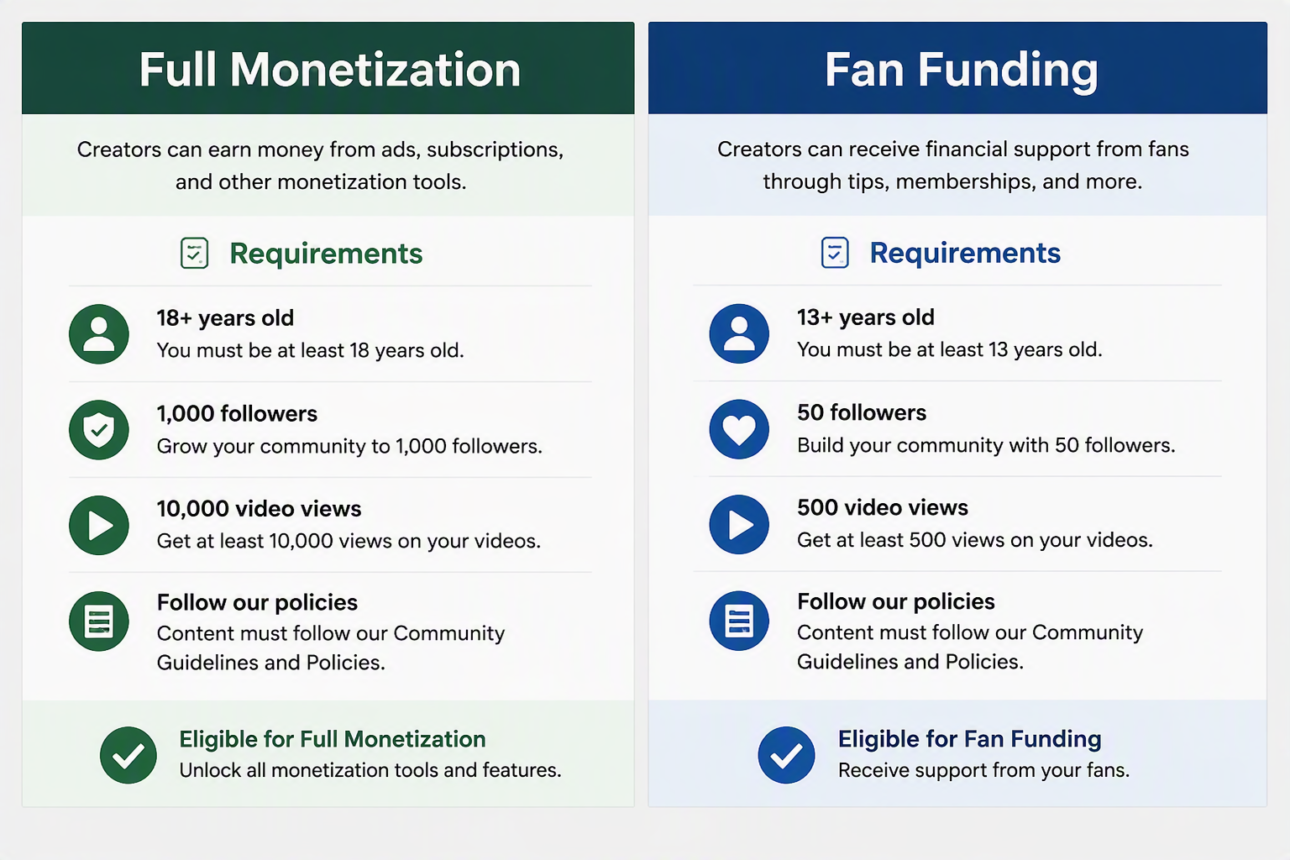
YouTube separates channels into two distinct paths for earning money. The first is “Full Monetization,” which covers ad revenue and Premium payouts. This is the goal for most creators. The second path is “Fan Funding and Shopping,” which allows you to offer memberships, sell products, or use Super Chats.
The second tier has much lower requirements. You only need 500 subscribers, 3 public uploads within 90 days, and either 3,000 watch hours or 3 million Shorts views. This structure is helpful for smaller creators. You can build a loyal fan base and earn through subscriptions or product sales before you ever qualify for full ad revenue. If you are trying to stay organized while juggling these goals, 11 Genius Little Things to Do for a More Productive Day might help you manage your time better.
Feature
Full Monetization (2027)
Lower Tier (Fan Funding)
Subscribers
1,000
500
Watch Hours
8,000 (12 months)
3,000 (12 months)
Shorts Views
20 Million (90 days)
3 Million (90 days)
Revenue Type
Ad / Premium Share
Membership / Shopping
Vital Account Requirements Beyond Metrics
Hitting your numbers is only half the battle. You cannot simply upload content and expect the money to start flowing. Security is a massive part of the equation. Every channel must enable 2-Step Verification on the associated Google account. This is a non-negotiable step to protect your earnings from unauthorized access.
You also need an active, linked AdSense for YouTube account. This is the financial bridge that sends money from the platform to your bank. Without this link, you cannot receive payments. You also need to reside in a location where the program is officially supported. Finally, age matters. You must be at least 18 years old. If you are younger, Google Help notes that a legal guardian must manage your AdSense payments on your behalf.
Why Existing Creators Are Affected Differently
If you are already in the Youtube Partner Program before February 1, 2027, you might feel a sigh of relief. These new, higher thresholds do not apply to your current status. You do not need to re-qualify or hit the 8,000-hour mark just because the rules changed.
However, there is a catch for Shorts creators. If you earn revenue from Shorts ads or subscriptions, you must maintain a consistent view count. Business Standard notes that established creators need to maintain 10 million qualified Shorts views over every 90-day window. If your view velocity dips below that line, you risk losing access to those specific revenue streams. You cannot just coast once you are in. You have to keep the momentum alive to maintain your status.
Policy Compliance and Advertiser-Friendly Guidelines
Subscriber counts and watch hours are just raw data points. YouTube has an entire ecosystem of rules that you must follow to be eligible for ad revenue. If your content is controversial or does not meet “advertiser-friendly” guidelines, you will not earn money from ads. This remains true even if you meet all the quantitative requirements.
You also have to sign the contract modules specific to your content type. Whether you are creating long-form videos, Shorts, or live streams, you must accept the terms provided in your Studio dashboard. YouTube is essentially a landlord, and these policies are the lease agreement you signed. Always check your dashboard for updates to these contracts.
FAQ
Q: Does the 2027 change affect me if I am already monetized?
No, the new rules apply only to new applications submitted on or after February 1, 2027. If you are already part of the program, your current standing remains secure, provided you continue to follow community and policy guidelines.
Q: Can I monetize with Shorts only?
Yes, you can qualify via the 20-million-view path, provided you also meet the 1,000-subscriber minimum. Shorts monetization is a legitimate pathway, but the requirement to hit that view count in 90 days is quite aggressive compared to previous standards.
Q: What happens if I have 8,000 hours but fewer than 1,000 subscribers?
You remain ineligible for full YPP because the subscriber floor is a hard requirement. YouTube prioritizes channels that have built a dedicated audience base, meaning no amount of watch time can bypass the need for those first 1,000 subscribers.
Q: How many watch hours are needed for YouTube monetization now?
For ad revenue under the current official rules, YouTube lists 4,000 public watch hours in the last 365 days as one route to eligibility. Starting February 1, 2027, new applicants will need 8,000 qualified public watch hours in the same 12-month window.
Q: How many Shorts views are needed for YouTube monetization in 2027?
For new full-YPP applicants starting February 1, 2027, YouTube says the Shorts path rises to 20 million qualified public Shorts views in 90 days. The current official ad-revenue threshold is 10 million Shorts views in 90 days.
Q: Does the 2027 YouTube update affect existing creators?
Business Standard says the February 1, 2027 change does not affect creators already in the YouTube Partner Program. However, it also says existing creators who earn Shorts ads and subscription revenue sharing will need 10 million qualified Shorts views over the previous 90 days to remain eligible for that Shorts revenue.
Q: What other requirements besides subscribers and views?
Google Help says creators must be at least 18 years old, or have an older legal guardian manage payments via AdSense for YouTube, and must live in a country or region where YPP is available. It also requires acceptance of the relevant contract modules and content that meets advertiser-friendly guidelines.
Q: Is YouTube monetization only about subscribers?
No. The official requirements combine subscribers, watch hours or Shorts views, location, age, contract acceptance, and policy compliance. Google Help also shows that different monetization features have different thresholds, so memberships and shopping can be available before full ad revenue sharing.
Q: When do the new YouTube monetization rules start?
Multiple sources in the search results say the new requirements take effect on February 1, 2027. Until then, the older ad-revenue thresholds remain the current baseline for new applicants.
Q: What is the easiest way to qualify for YouTube monetization?
There is no universal easiest path because YouTube offers two main performance routes: long-form watch hours or Shorts views. Creators usually qualify through the format they can produce consistently, but the lower 500-subscriber tier for memberships and shopping can unlock some monetization options earlier than full ad revenue.
My Experience With YouTube Monetization in 2027: Your Complete Guide to Requirements
Watching the Youtube monetization requirements can feel frustrating, but it is really just part of the platform’s lifecycle. I remember stressing over every single watch hour when I first started out. It felt like I was running a marathon where the finish line kept inching further away. The secret to handling these 2027 changes is to stop obsessing over the finish line and focus on your content’s “stickiness.”
If you make videos that people actually finish watching, the hours usually take care of themselves. I have learned that trying to “game” the system with short, low-value clips often backfires because the algorithm picks up on low retention. The most successful creators I know don’t chase views; they chase relevance. My best advice? Stop checking your monetization tab every hour. You cannot influence the algorithm by refreshing the dashboard. Instead, spend that energy on your thumbnail design or the first ten seconds of your next video. That is where the real growth happens. Are you currently focusing on long-form content or are you leaning into the Shorts format to reach those 2027 thresholds?
References
vidIQ. (2026, August 10). YouTube Monetization Requirements 2027: What Changed. https://vidiq.com/blog/post/youtube-partner-program-changes-2027/
Creator Insider. (2026, August 10). YouTube Is DOUBLING Monetization Requirements in 2027. YouTube. https://www.youtube.com/watch?v=ixmdl2o-OF0
StudioBinder. (2026). YouTube Monetization Requirements in 2026 (Complete Guide). https://www.studiobinder.com/blog/youtube-monetization-requirements/
Business Standard. (2026, August 11). YouTube updates channel monetisation rules after 8 years: What’s changing. https://www.business-standard.com/technology/tech-news/technology-tech-news-youtube-partner-program-monetisation-rules-2027-watch-hours-shorts-views-126081100708_1.html
Alpha Gaming. (2026, August 10). 🚨BREAKING – This is a MASSIVE YouTube Monetization Update. YouTube. https://www.youtube.com/watch?v=DqeOlPbEDRI
Yadav, A. (2026, August 10). YouTube is changing creator monetization in 2027. X. https://x.com/yabhishekhd/status/2086851555958091883
Channel Makers. (2026, August 10). YouTube’s New Monetization Rules Mean the Clock is Ticking. YouTube. https://www.youtube.com/watch?v=59HtDlAIhOs
Google Help. (2026). How to earn money on YouTube. https://support.google.com/youtube/answer/72857?hl=en
Sarah Anderson . J
I’m the mom behind Wise Mom Blogger, where everyday creativity meets real-life motherhood. I share easy DIY crafts, cozy knitting and crochet projects, beginner-friendly sewing ideas, and family-tested recipes—plus quick baking hacks that make homemade feel doable on busy days.