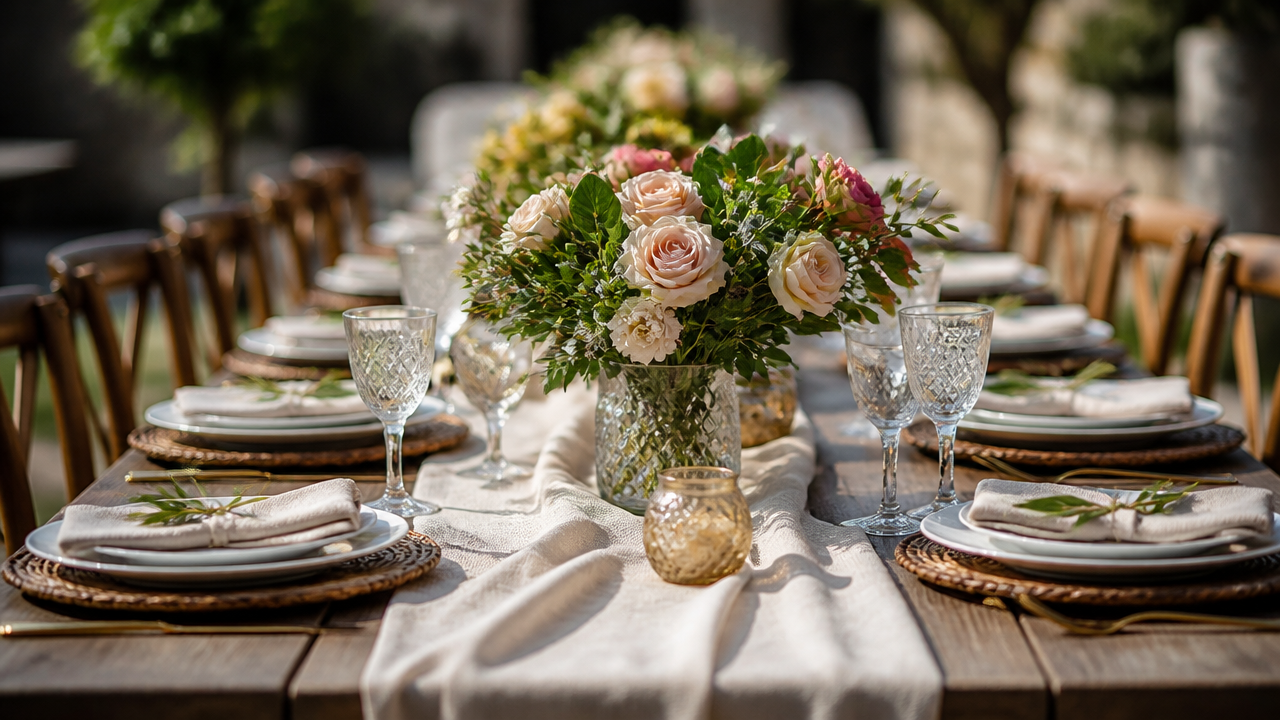
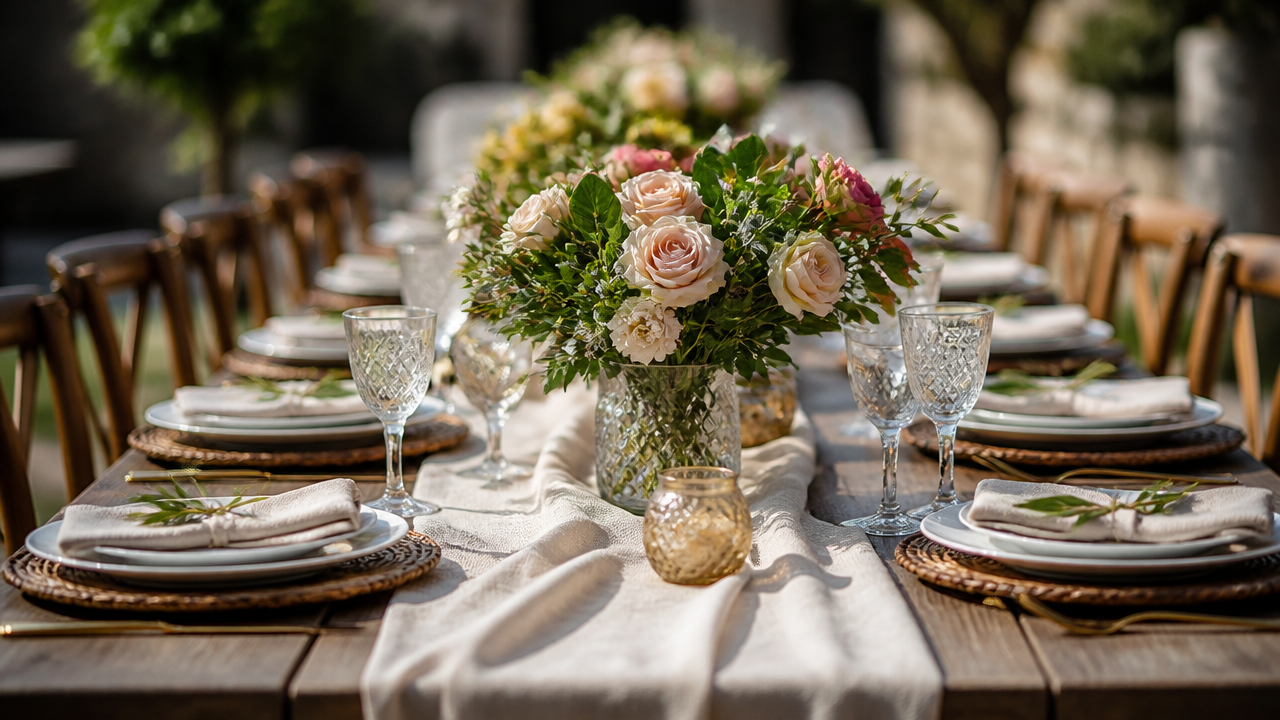
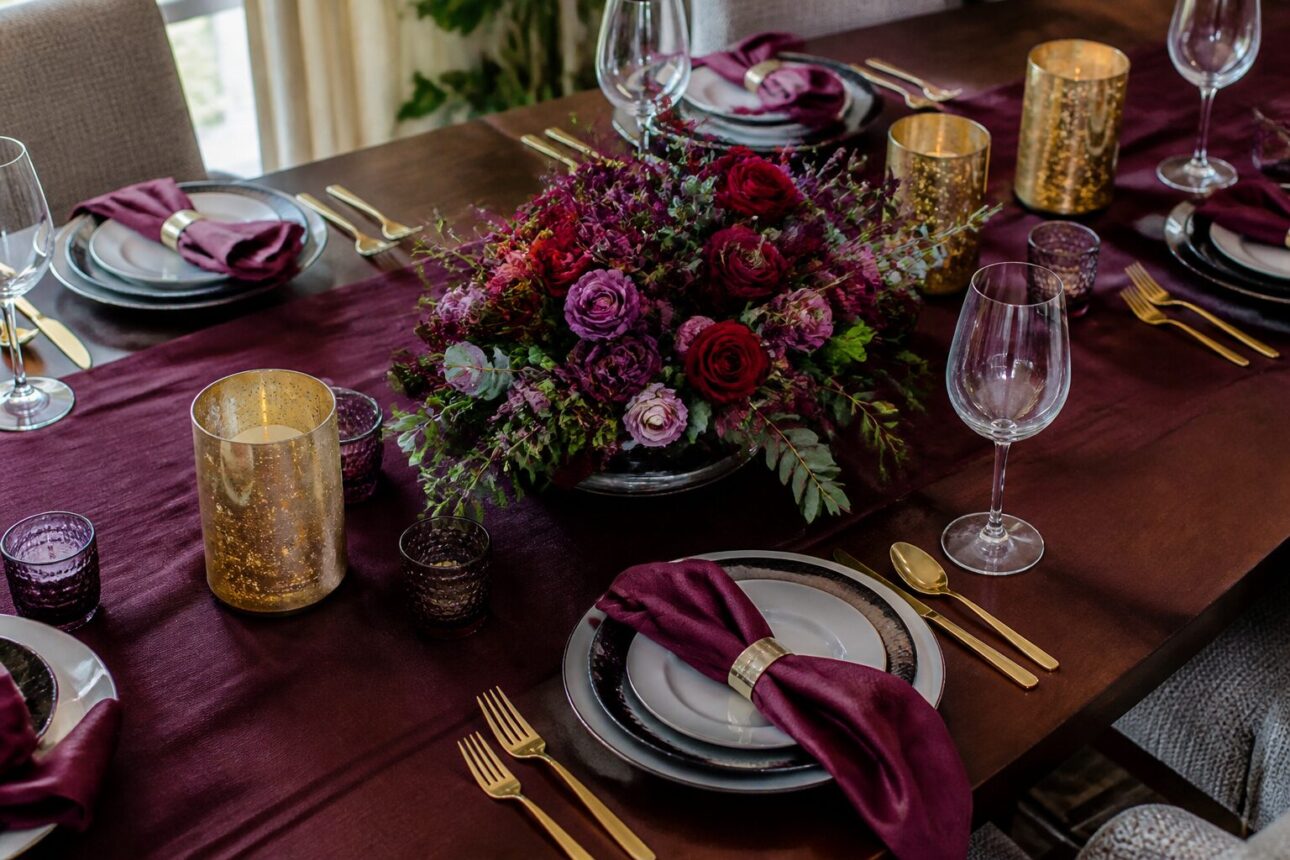
What makes a truly stunning table setting stand out from a plain, empty one? The answer lies in intentional choices that blend creativity with your budget. Whether you’re hosting a summer garden party, a holiday dinner, or just a casual weekday meal, beautiful table decorations don’t require expensive purchases or complicated techniques. The key is picking one clear direction and building everything around it. This guide walks you through nine practical, creative approaches to decorating your table with style—each one adaptable to your occasion, your space, and what you have on hand.
Quick Questions and Answers
Question: What are the easiest table decoration ideas for beginners?
Answer: Simple, adaptable elements work best for newcomers. Flowers, candles, a coordinated runner, and a few mismatched but cohesive dishes or placemats create instant polish. DesignThusiasm recommends starting with one clear concept and building supporting pieces around it, while House Beautiful suggests that monochromatic blooms with a matching vase help beginners succeed.
Question: How can I decorate a table on a budget?
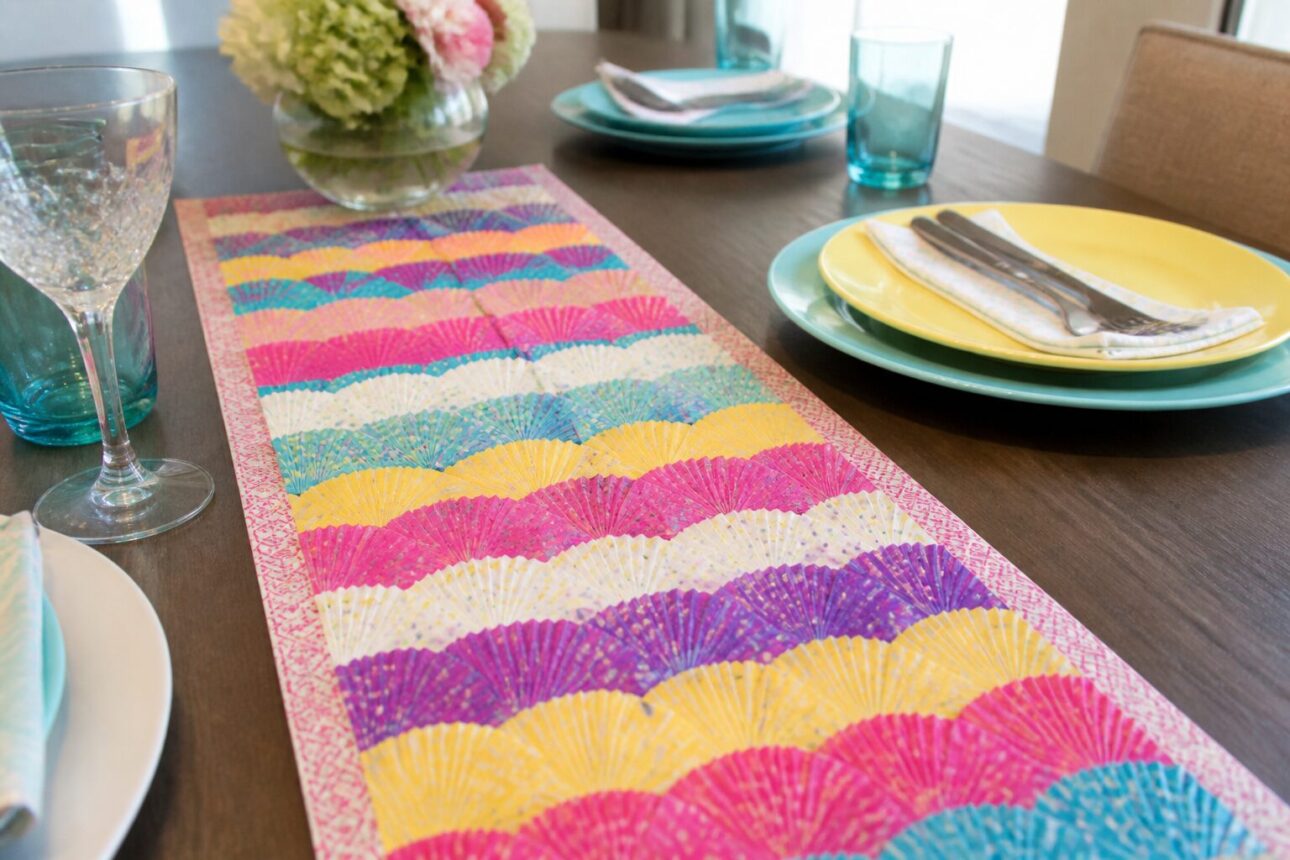
Answer: Budget table decoration works when you use low-cost paper goods, DIY runners, and focus on a single focal point. Thistlewood Farms demonstrates concrete examples: a colorful cupcake-liner runner costs under $2.00, and matching hanging decorations made from folded liners cost about $0.20 each.
Question: Can I make table decor look elegant without spending much?
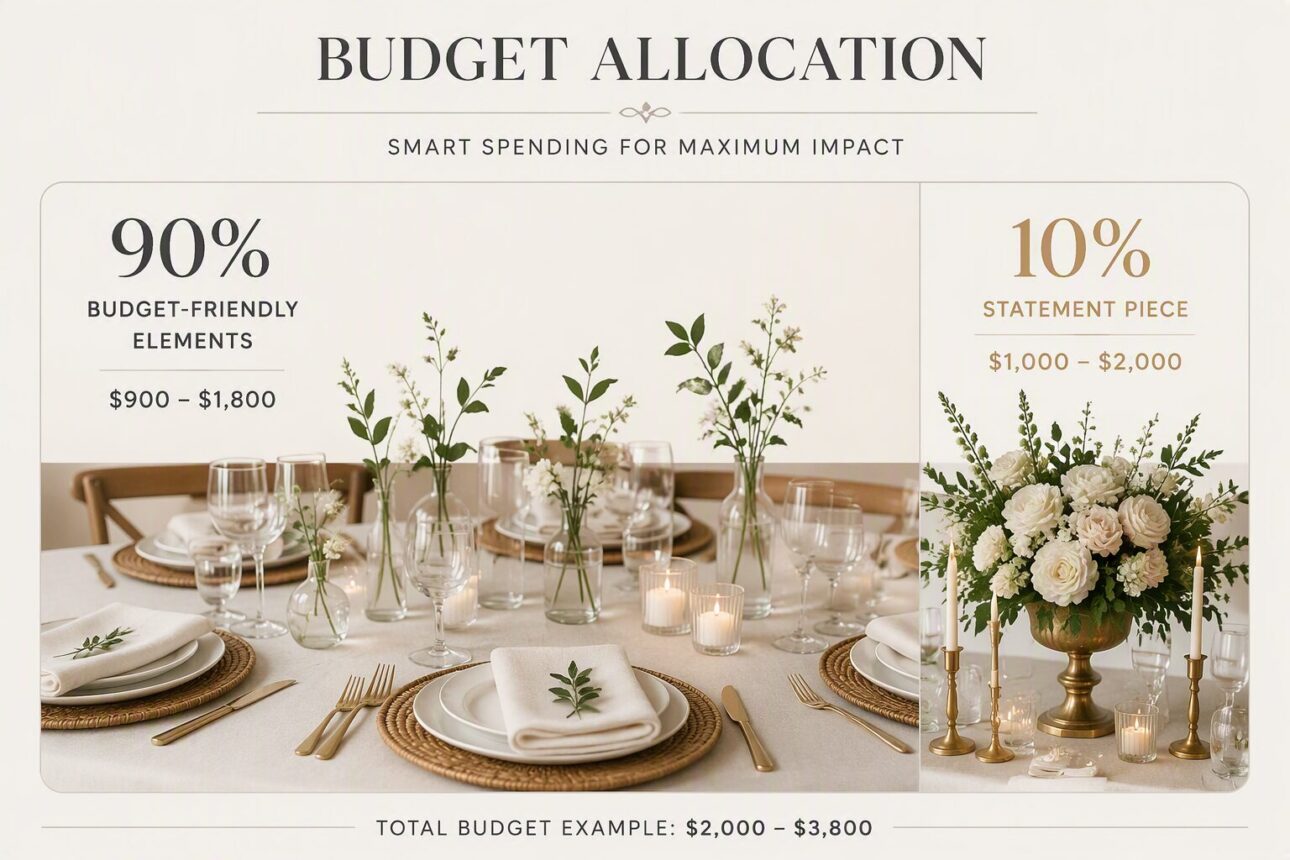
Answer: Yes. The trick is saving money on most of the table while splurging on one standout item that anchors the whole look. DesignThusiasm calls this the 90/10 rule—allocate 90% of your budget to inexpensive basics and invest the remaining 10% in one beautiful, high-quality piece that makes everything else shine.
1. The Single Concept Method
Start every table with a concept. This single decision transforms scattered items into a cohesive arrangement. Your concept might be “botanical garden,” “elegant minimalist,” “playful summer,” or “rustic farmhouse.” Once you name it, every choice that follows filters through that lens.
According to DesignThusiasm, the best tables begin with one clear visual theme, then build a supporting cast of textures, colors, and pieces around it. This prevents the common mistake of mixing unrelated styles or piling on decor elements that fight each other. Your concept acts like a director—it says yes to some choices and no to others.
Start by choosing your concept, then select one primary color or material to anchor it. Everything else should either complement or subtly echo that core idea. A “coastal” table might feature whites, blues, and natural textures. A “jewel-tone” table uses deep emerald, sapphire, or ruby accents. A “garden party” table leans on greenery and fresh blooms. When you work this way, your table feels intentional rather than accidental, even if the pieces cost very little.
2. The 90/10 Budget Rule
Here’s the money move that changes everything: save on 90% of your items and splurge on one standout piece. This approach lets you achieve a polished, high-end look without breaking your budget. It’s the secret behind tables that look expensive but didn’t cost much at all.
DesignThusiasm calls this the budget styling principle. The idea is straightforward—fill your table with affordable basics (paper napkins, simple plates, a basic runner), then invest that freed-up budget into one beautiful anchor piece. Maybe it’s a statement floral arrangement, a high-quality table linen, or an elegant candle holder. That one splurge becomes the visual hero, and everything else supports it quietly.
The math works because your eye goes to the standout piece first. Guests notice the stunning centerpiece or the luxe table runner before they notice that the napkins came from the dollar store. This strategy is especially useful if you’re decorating several tables for a party—go affordable on most of them, then make one table absolutely stunning as the showstopper.
3. Cupcake Liner Runners
A festive, colorful table runner doesn’t have to come from a home décor store. Create one using colorful paper cupcake liners and washi tape, and you’ll spend under $2.00 total. This approach is perfect for casual celebrations, children’s parties, or any gathering where a playful aesthetic fits.
Thistlewood Farms shares the specifics: gather cupcake liners in colors that match your concept, arrange them in a line down the center of your table, and secure them with washi tape that complements your color scheme. The result is a bright, textured runner that looks intentional and fun. You can layer them, overlap them, or alternate colors—there’s room to play.
The beauty here is flexibility. If you want a softer look, choose pastels. If you want bold impact, go with bright primaries or jewel tones. The cost stays under $2.00 whether you use five liners or fifty. This works as a standalone runner, or you can layer it over a plain tablecloth to add visual interest and texture without replacing the entire table covering.
4. Monochromatic Floral Arrangements
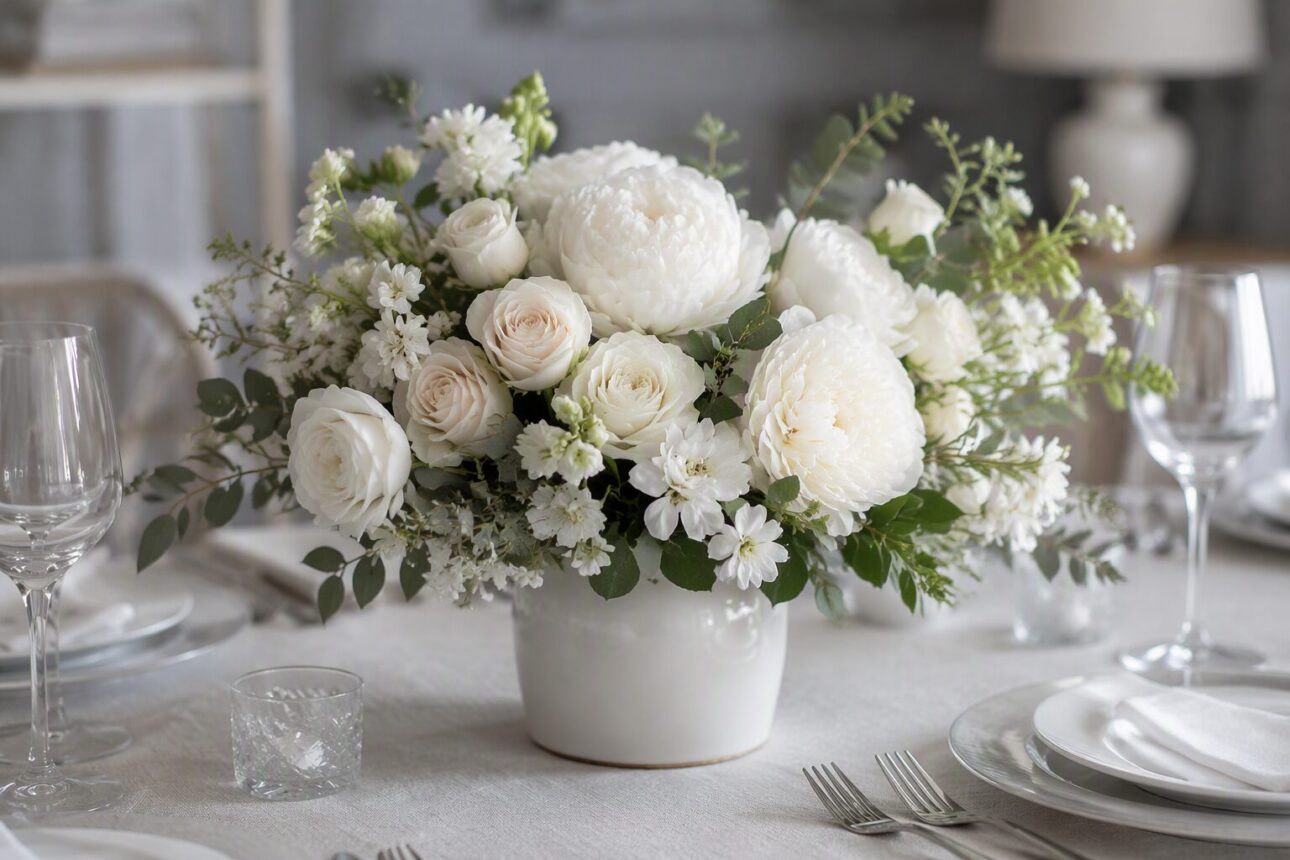
Floristry can feel intimidating, but monochromatic arrangements simplify everything. Pair blooms of one color or tone with a vase in a matching or complementary shade, and you’ve already won. This technique delivers sophistication without requiring knowledge of complex color theory.
House Beautiful recommends this method for beginners who want professional-looking results. Choose your flower color—say, white roses or pink peonies—then select a vase in a matching or slightly deeper shade. The tonal harmony creates instant elegance. A white vase with white hydrangeas, or a blush vase with peach ranunculus, both feel curated and calm.
The advantage is that you can’t really go wrong. Even if you don’t know how to arrange flowers, simply filling a vase with stems of the same flower type and color creates a full, balanced look. You’re not juggling multiple colors or worrying about focal points and filler flowers—the monochromatic palette does that work for you. This approach works for everything from casual dinners to formal events, depending on which flower type and vase you choose.
5. Sightline-Aware Centerpieces
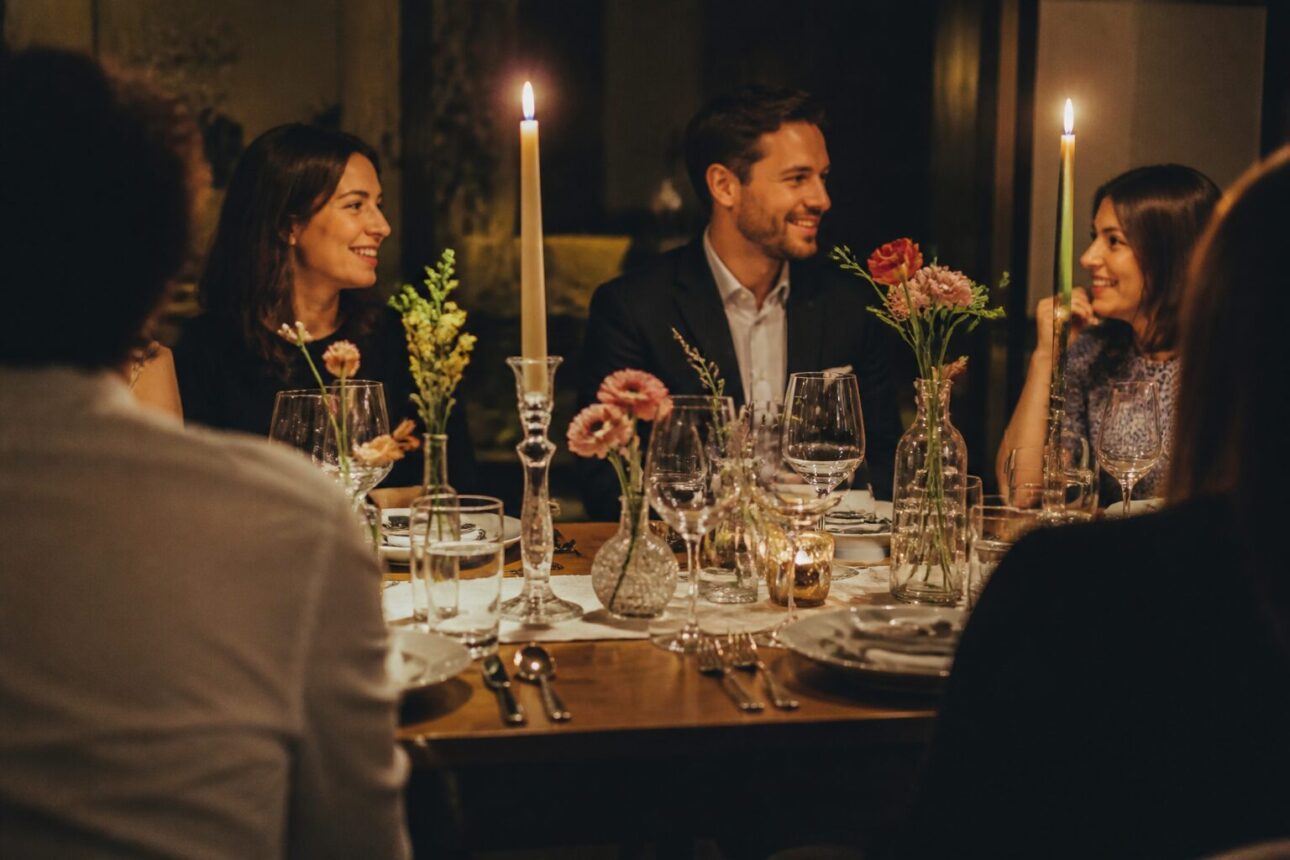
Height adds drama to a table, but tall centerpieces can become barriers between guests. The solution: use height strategically, but keep anything tall thin so conversation isn’t blocked. This balances visual interest with the practical need for guests to see and talk to each other.
House Beautiful advises that you can absolutely play up height—tall candlesticks, elevated floral arrangements, or stacked elements add dimension and elegance. The key is keeping the vertical pieces narrow. A single stem in a thin vase works beautifully. A tall, slender candelabra with thin arms doesn’t block sightlines. Layered branches in a narrow vessel feel sculptural without closing off the table.
Think of it this way: a guest sitting opposite another guest should be able to lean slightly and make eye contact without peering around your centerpiece. Low, wide arrangements (under 12 inches) are always safe for conversation tables. If you want height, use pieces with open structure—branches, delicate stems, or thin candlesticks—rather than dense, solid forms that create a wall down the middle of the table.
6. Textural Layering
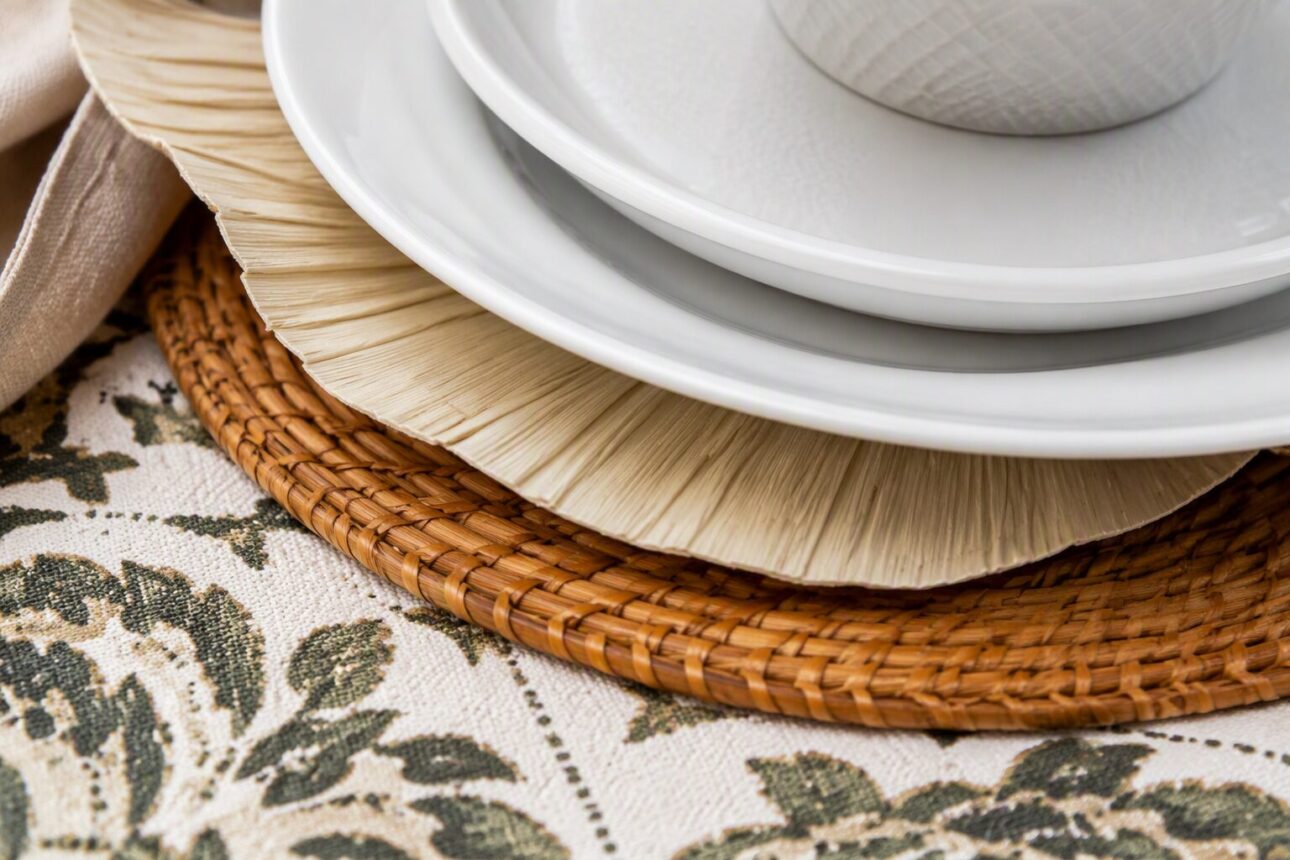
A flat, plain table feels boring. Layering different textures creates visual depth and makes the whole setting feel intentional. Mix materials like rattan chargers, palm-leaf placemats, linen napkins, and patterned tablecloths to build a dynamic, tactile experience.
House Beautiful showcases this approach by combining organic and polished elements. Rattan chargers bring warmth and woven texture. Palm-leaf placemats add a botanical feel. A patterned or solid tablecloth in natural fiber grounds everything. On top, lay clean, modern dinnerware to contrast the organic textures below. The mix of rough and refined, patterned and plain, creates visual interest without chaos.
Start with a base layer—your tablecloth. Add a second layer with placemats or chargers. Then place dinnerware on top. Finally, add napkins, glasses, and small accents. Each layer should feel intentional, with at least one texture that stands out. If your tablecloth is heavily patterned, keep placemats simple. If your chargers are textured, let the tablecloth be solid. This push-and-pull between busy and calm keeps the table from feeling either boring or overwhelming.
Decoration Approach
Best For
Budget
Visual Impact
Skill Level
Single Concept Method
All occasions
Low to high
High (unified look)
Beginner
90/10 Budget Rule
Budget-conscious hosts
Flexible
High (one standout piece)
Beginner
Cupcake Liner Runners
Casual, playful parties
Very low ($2)
Medium to high
Beginner
Monochromatic Floral Arrangements
Elegant, formal settings
Medium
High
Beginner
Sightline-Aware Centerpieces
Dinner parties
Medium
High
Intermediate
Textural Layering
Modern, eclectic tables
Medium
High
Intermediate
Minimalist Neutral Palette
Everyday dining
Low to medium
Medium (calm, clean)
Beginner
Vintage Bottle Bud Vases
Cottage, eclectic styles
Low
Medium
Beginner
DIY Cupcake Liner Ornaments
Playful, seasonal events
Very low ($0.20 each)
Medium
Beginner
7. Minimalist Neutral Palette
Not every table needs to shout. A minimalist approach using neutral tones creates a timeless, sophisticated look that works for everyday dining or formal occasions alike. Restrict your palette to whites, creams, grays, blacks, and soft natural tones.
CUURA Space recommends this method for tables that need to adapt to many occasions or for hosts who prefer calm, uncluttered spaces. Pair your neutral color scheme with clean, simple dinnerware and only one focal-point centerpiece. Skip the extra layers, the patterned napkins, and the competing accent colors. Let negative space and simplicity do the work.
Minimalist tables feel refined because they prioritize what matters. A single elegant vase with one type of bloom. A linen runner in cream or gray. White plates with a gray napkin. Perhaps one candle holder as your focal point. The eye rests on this arrangement instead of jumping between competing colors and patterns. This approach is especially useful if you’re designing a table that you’ll use frequently—invest in quality basics in neutral tones, and you’ve built a foundation that works year-round.
8. Vintage Bottle Bud Vases
Collect unique vintage bottles—old medicine bottles, small wine bottles, apothecary jars—and repurpose them as individual bud vases for small flower stems. This approach is highly flexible, cost-effective, and adds vintage charm and color variation to your table centerline.
House Beautiful shows how vintage bottles work beautifully down a table’s center. Line them up in varying heights and colors, each holding a single stem or small cluster. The mismatched collection feels intentional, like a carefully curated display rather than a random assortment. Pair them with fresh flowers, dried branches, or even greenery for different seasons and occasions.
The beauty is that you’re working with pieces you likely already have or can find cheaply at thrift stores. A blue vintage bottle with a white rose. A clear apothecary jar with a sprig of eucalyptus. A tiny amber bottle with a ranunculus. Each piece contributes to the overall arrangement while standing on its own as a mini centerpiece at each guest’s place. This method is also practical—small arrangements are easy to move, and individual bottles don’t block sightlines like one large central piece might.
9. DIY Cupcake Liner Ornaments
Create delicate, folded hanging decorations using standard baking cupcake liners. Each piece costs approximately $0.20 to produce, making this an extremely affordable decor option. Hang these above the table or incorporate them into a centerpiece for a whimsical, layered aesthetic.
Thistlewood Farms walks through the process: fold cupcake liners into shapes, string them together, and hang them overhead or cluster them as part of your centerpiece. The result is a playful, three-dimensional element that adds movement and softness to your table. Different colors create different moods—pastels feel gentle, bright colors feel energetic, and metallics feel festive.
The cost-to-impact ratio here is unbeatable. For less than $1 total, you can create enough hanging ornaments to transform a plain table into something whimsical and special. These work well for children’s parties, summer celebrations, or any gathering where a playful spirit fits. They’re also quick to make—you can fold a batch while watching TV or chatting with family, then hang them just before guests arrive. You might also enjoy exploring our guide to creative outdoor entertaining with these backyard decoration approaches.
Common Mistakes
Trying to do too much at once is the fastest way to make a table look chaotic. Pick one or two decoration ideas and commit to them instead of layering every technique together. A table with one clear concept and simple execution beats a table stuffed with five competing ideas.
Forgetting about practicality is another common slip. If your centerpiece is so tall guests can’t see each other, or so fragile that one bump spills water across the tablecloth, it’s not working—no matter how pretty it looks in photos. Always prioritize function alongside aesthetics.
Ignoring your concept halfway through is surprisingly easy. You start with “minimalist” and then keep adding accents until the table feels busy. You commit to “playful” but use colors that don’t quite match. Stick with your original vision. If you want to change direction mid-project, restart with a new concept rather than mixing two conflicting ideas on the same table.
FAQ
Q: What flowers work best for table decoration?
Fresh flowers are one of the most reliable decoration choices because they add color, softness, and an instant sense of polish. DesignThusiasm calls flowers the crowning touch to any well-dressed table. House Beautiful recommends using monochromatic blooms—all one color or tone—paired with a vase in a matching hue for a foolproof, sophisticated look that works for beginners and experts alike.
Q: How do I choose a centerpiece for a dining table?
Centerpiece selection depends on three things: the occasion, the table size, and whether you need guests to see across it. House Beautiful advises keeping tall pieces thin so they don’t block sightlines. CUURA Space suggests selecting one elegant, focal piece rather than clustering many small items together. A single vase, one candle holder, or a small arrangement of bottles works better than a crowded middle.
Q: Which table decorations are best for parties?
Layered place settings, candles, fresh flowers, and themed accent pieces tend to work well for celebrations. Veranda’s entertaining guides focus on chic, occasion-based styling that includes items like patterned linens, gilded accents, and bold textures. House Beautiful includes playful ideas such as vintage bottles as bud vases and botanical elements to set a festive mood.
Q: Do candles make table settings look better?
Candles add warmth, softness, and a sense of occasion to any table. CUURA Space recommends scattering candlesticks or holders along the table for a romantic glow. House Beautiful regularly includes candles and branching candlesticks in its styling inspiration. Even unlit candles contribute to ambiance and visual interest.
Q: What is the difference between table decor and table setting?
Table decor refers to decorative items that create mood and visual interest—flowers, runners, centerpieces, and accents. A table setting includes both the decorative pieces and the functional dining items like plates, glasses, napkins, and flatware. House Beautiful and CUURA Space typically discuss them together because they work as one unified whole.
Q: Should a table centerpiece be tall or low?
It depends on your priorities. Low arrangements (under 12 inches) are always safe because they preserve sightlines and conversation flow. If you want height, House Beautiful advises keeping tall pieces thin and open-structured so guests can still see across the table. A single tall stem in a narrow vase works better than a dense, wide arrangement.
Q: What table decoration styles are trending now?
Current table decor balances simplicity with intention. Minimal neutral tables work well for everyday use. Botanical and garden-inspired tables add life and organic texture. Layered texture combinations mixing rattan, linen, and natural materials feel current. House Beautiful, CUURA Space, and DesignThusiasm all show that the trend leans toward elevated casual—mixing budget pieces with one or two splurge items—rather than either extreme of minimalist or maximalist decoration.
My Experience With 13 Beautiful Table Decoration Ideas for Every Budget
I’ve tested most of these approaches, and the 90/10 rule genuinely changed how I think about entertaining. I used to spread my budget thin across everything, which meant nothing stood out and everything felt mediocre. The shift to saving on basics and investing in one beautiful piece made an immediate difference—suddenly my tables looked intentional instead of scattered.
The cupcake liner runner might sound gimmicky, but it actually works. I made one for my daughter’s birthday party for $1.87 and got more compliments than I expected. People assumed it came from a specialty store. That taught me something important: cost and impact don’t have to match.
The real insight, though, is that concept is everything. Before I started with a clear theme, I’d pile things on and the table felt confused. Now I name my concept—”botanical,” “jewel-tone,” “peaceful”—and it acts like a filter for every choice. Suddenly I’m not second-guessing myself. I know what belongs and what doesn’t. The table comes together faster, looks more polished, and honestly feels more fun to create.
My one mistake was trying to use tall centerpieces at a dinner party. Nobody could talk to the person across from them. It taught me that a beautiful table only works if people can actually use it. Practicality first, aesthetics second—that’s the order that matters. What approach are you most interested in trying first?
Conclusion
Beautiful table decoration isn’t about having unlimited budget or advanced design skills. It’s about choosing a clear direction, committing to it, and executing with intention. Whether you pick the 90/10 budget rule, monochromatic florals, textural layering, or one of the other approaches here, the key is consistency.
Start by identifying your concept. Build around one standout piece if budget is tight. Use simple materials—flowers, candles, runners, and textures—to create depth. Keep sightlines and practicality in mind so your table actually works for dining and conversation, not just photos.
You have nine proven approaches to choose from. Pick the one that matches your occasion, your budget, and your style. Your guests will notice the care you’ve taken, and you’ll enjoy a table that feels complete and intentional.
References
DesignThusiasm. (2026). Insanely gorgeous informal table setting ideas on a budget! DesignThusiasm. https://designthusiasm.com/informal-table-setting-ideas/
Thistlewood Farms. (2026). Table decorating ideas on a budget. Thistlewood Farms. https://thistlewoodfarms.com/table-decorating-ideas-on-a-budget/
Veranda. (2026). 40 chic table decorating ideas for every occasion. Veranda. https://www.veranda.com/luxury-lifestyle/entertaining/g33248173/table-decorating-ideas/
CUURA Space. (2026). 40 table decoration ideas for any occasion. CUURA Space. https://cuura.space/blog/table-decoration-ideas
House Beautiful. (2026). 40+ table-setting ideas for literally every occasion. House Beautiful. https://www.housebeautiful.com/entertaining/table-decor/tips/g3619/table-setting-ideas/
Interior Company. (2026). 9+ table decoration ideas to nail every occasion. Interior Company. https://www.interiorcompany.com/in/trends/simple-table-decoration-ideas
Country Living. (2026). 40 table decorating ideas for parties and everyday dining. Country Living. https://www.countryliving.com/home-design/decorating-ideas/g3619/table-decorating-ideas/
Sarah Anderson . J
I’m the mom behind Wise Mom Blogger, where everyday creativity meets real-life motherhood. I share easy DIY crafts, cozy knitting and crochet projects, beginner-friendly sewing ideas, and family-tested recipes—plus quick baking hacks that make homemade feel doable on busy days.