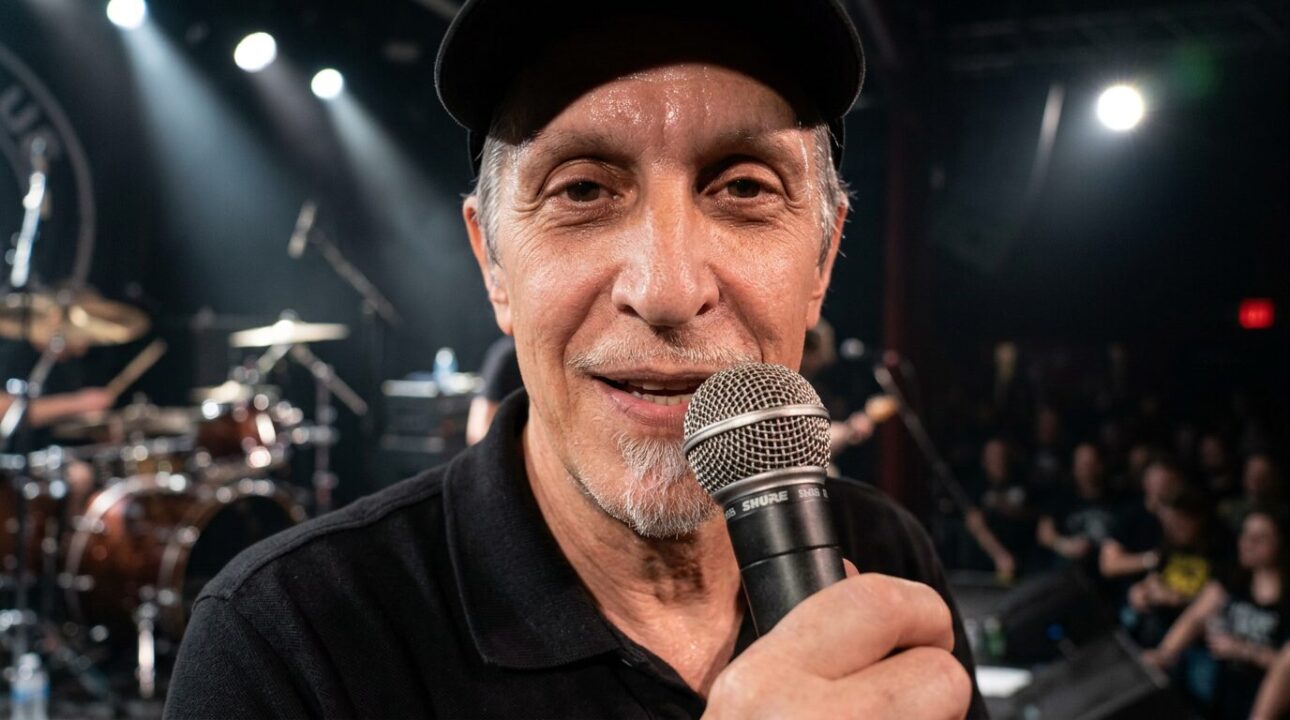
What happened to Lou Koller, the legendary punk frontman who inspired generations through his raw energy and unflinching lyrics? In mid-2026, the founding member of New York hardcore band Sick of It All passed away at age 59 following a prolonged and documented battle with esophageal adenocarcinoma. His death marked the end of a two-year medical journey that began with a routine diagnosis in June 2024 and culminated in a series of treatment attempts, brief remission, aggressive recurrence, and ultimately, terminal progression. Understanding Lou Koller’s cause of death requires looking at the complete timeline—not just the final outcome, but the months of public updates, family support efforts, and physical toll that defined his illness.
Quick Questions and Answers
Question: What was Lou Koller’s cause of death?
Answer: Multiple reports say Lou Koller died after a long battle with esophageal cancer, also described in some outlets as an esophageal tumor or adenocarcinoma cancer. He had publicly disclosed the diagnosis in 2024, later said he was cancer-free in 2025, and then reported that the cancer had returned. The reporting consistently links his death to that recurring cancer.
Question: When did Lou Koller first announce his cancer diagnosis?
Answer: He first went public in late June 2024, when he said doctors had found a tumor in his esophagus that extended into his stomach. That announcement led Sick of It All to cancel touring plans while he underwent treatment. The diagnosis date is a key reference point in every later update about his illness.
Question: Did Lou Koller ever say he was cancer-free?
Answer: Yes. In May 2025, Koller said he was officially cancer-free and excited to move forward. That improvement was temporary, because later in 2025 he said the cancer had returned. This sequence is important because it shows the disease was not fully resolved before his death.
Key Takeaways
Lou Koller died at age 59 after a documented two-year battle with esophageal adenocarcinoma that began with diagnosis in June 2024.
His tumor was located in the esophagus and extended into his stomach, making surgical and medical intervention more complex than a localized lesion.
Though he announced remission in May 2025, the cancer returned aggressively by September 2025, ultimately proving resistant to treatment.
Severe physical effects included a 70-pound weight loss and reliance on a feeding tube by late 2025, indicating advanced disease progression.
His brother Pete launched a GoFundMe campaign to help cover the substantial costs of ongoing chemotherapy, procedures, and living expenses.
The case highlights how quickly a serious cancer diagnosis can disrupt a touring musician’s career and require intensive family and community support.
Lou Koller: Understanding the Medical Journey and Cause of Death
Lou Koller, the founding frontman of the New York hardcore band Sick of It All, passed away at age 59 in mid-2026. The primary medical cause listed across all major reporting outlets was a long-term battle with esophageal adenocarcinoma—a type of cancer that forms in the tissue lining the esophagus. His illness was not a sudden health crisis but rather a prolonged two-year medical struggle involving multiple rounds of intensive chemotherapy, surgical intervention, and ongoing clinical procedures that ultimately could not stop the disease’s progression.
The term “adenocarcinoma” refers specifically to cancer that originates in glandular cells. In Koller’s case, those cells were in his esophagus, which made the condition particularly serious because the esophagus is a critical tube for both breathing and swallowing. When a tumor grows in this location and extends into neighboring tissue—as his did into the stomach—it directly impacts a person’s ability to eat, drink, and maintain proper nutrition. This is why the extension into his stomach was medically significant and why his treatment became so complex over time.
The Initial Diagnosis: Symptoms and Timeline
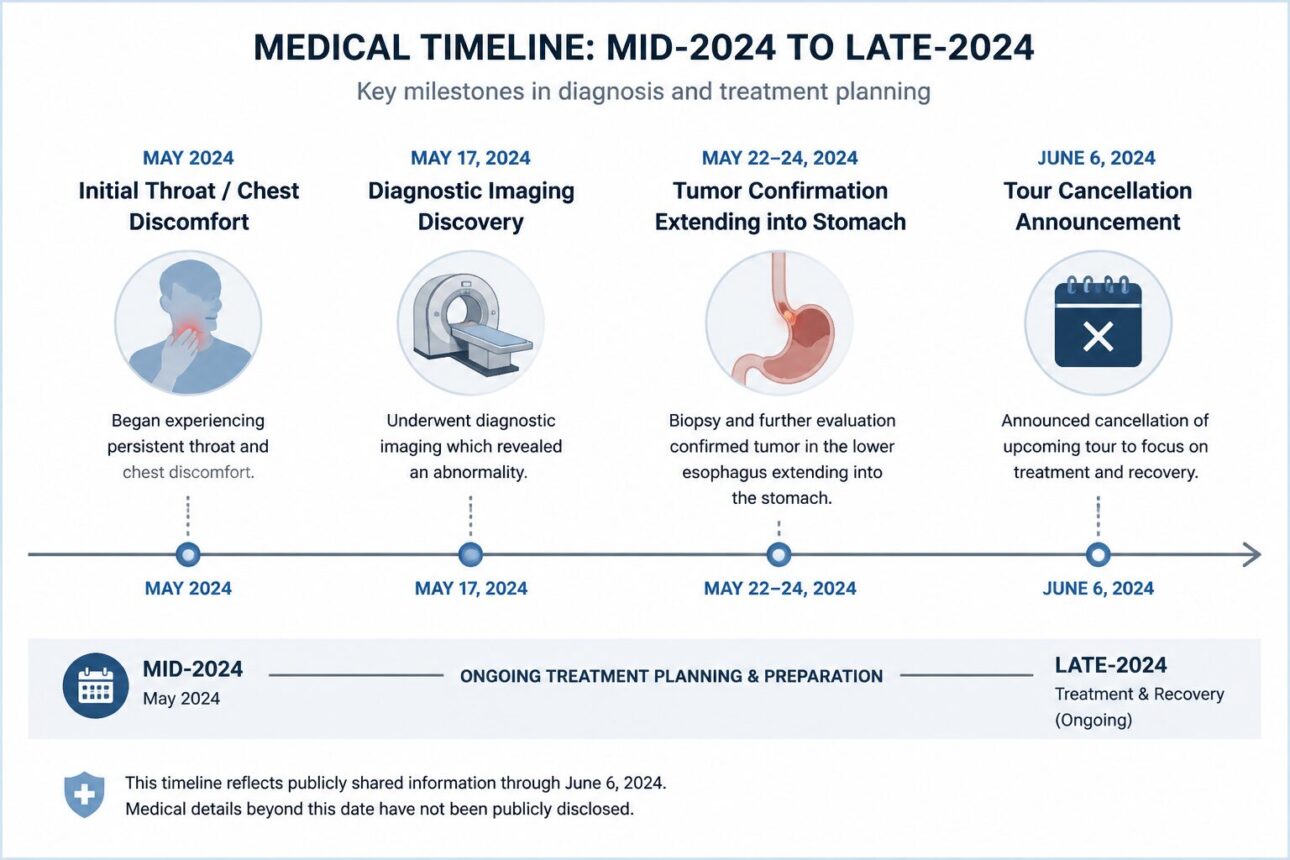
The medical journey began in mid-2024 when Koller sought professional evaluation for persistent discomfort in his throat and chest. These were not vague symptoms; they were specific enough to warrant imaging studies and diagnostic testing. When doctors performed those tests, they confirmed the presence of an esophageal tumor that had already extended into his stomach—meaning the cancer was not confined to one location but had begun to spread into adjacent tissue.
In late June 2024, Koller went public with the diagnosis. According to Blabbermouth, he stated: “Doctors discovered a tumor in my esophagus that extends into my stomach.” This direct quote matters because it shows his own clear understanding of the diagnosis and his willingness to communicate it plainly to fans and the media. The public announcement carried major professional consequences—the diagnosis forced Sick of It All to cancel all scheduled touring engagements, including planned appearances at major European festivals and a full North American tour that had been booked for months.
The timing of the announcement in late June meant the band had to pull out with little notice. Touring is how most bands generate revenue, so a mid-year cancellation creates financial strain and logistical chaos. Yet the band’s decision to prioritize Koller’s health over tour income reflects both the severity of the diagnosis and the band’s collective commitment to his recovery.
Remission and Recurrence: A Fluctuating Prognosis
After six months of intensive treatment through the fall and winter of 2024-25, there was a significant moment of hope. In May 2025, Koller provided a public update declaring he was “officially cancer-free” following his treatment protocol. This announcement circulated through music media and fan communities, suggesting that the aggressive chemotherapy and procedures had worked—that the disease had been defeated, and that Koller could potentially return to performing and touring.
That period of remission lasted roughly four months. By September 2025, Koller announced that the disease had returned. What made this recurrence particularly alarming was how it was characterized by medical professionals and reporting outlets: it was described as “particularly aggressive” and distinct from his primary diagnosis. The cancer was not just back; it was back with renewed fury, suggesting that the cancer cells had either survived the initial treatment and mutated into a more resistant form, or that new tumors had emerged independently.
The recurrence timeline is crucial for understanding why Koller’s death is classified as resulting from a prolonged illness rather than a sudden health event. Between June 2024 and September 2025, he had endured a full year of treatment, surgery, and chemotherapy. He had reached a point where doctors considered him cancer-free. And then, within months of that milestone, the disease returned in a more virulent form—creating a psychological and physical setback that would define the final year of his life.
Physical Impact and Treatment Challenges
The progression of esophageal cancer takes a severe toll on the body. As the disease advances, patients experience difficulty swallowing, reduced appetite, and rapid weight loss due to malnutrition. Koller’s case was no exception. During the advanced stages of his treatment—particularly after the recurrence in September 2025—he experienced a dramatic 70-pound weight loss. By any standard, losing 70 pounds over a relatively short period represents severe physiological stress and indicates that the body is not receiving adequate nutrition to maintain muscle mass, organ function, and basic metabolic processes.
To manage these symptoms and maintain necessary caloric intake, Koller was placed on a feeding tube. A feeding tube bypasses the compromised esophagus entirely, delivering liquid nutrition directly into the stomach or small intestine. This is a sign of advanced disease—it means swallowing had become so painful or difficult that normal eating was no longer viable. The feeding tube kept him alive but also served as a daily reminder of the cancer’s impact on his body.
By December 2025, despite all therapeutic interventions, the tumors had reached a plateau. According to Koller’s own update, “they’re not growing and they’re not spreading, but they’re not shrinking either.” This statement is medically important. It means the cancer had not responded to further treatment. The tumor burden remained static—neither progressing nor receding. He also said “the treatments are going okay” and that “they’re not really doing much,” suggesting a frank assessment that medical therapy had reached its limits.
This stagnant state is one of the most difficult scenarios in oncology. A patient is neither getting better nor catastrophically worse in the short term, but the cancer is not being defeated either. The body continues to deteriorate from the disease and from the toxicity of the treatments. Energy wanes. Complications set in. The psychological weight of stable-but-incurable disease can be as taxing as rapid decline.
Remission and Recurrence: A Fluctuating Prognosis
The sequence of remission followed by recurrence reveals a hard truth about esophageal adenocarcinoma: even when initial treatment appears successful, the disease can return with renewed aggression. Koller’s case is not unusual in this respect, though each person’s experience is unique. The May 2025 cancer-free announcement gave him, his family, and his fans reason to believe the worst was behind him. The September 2025 recurrence shattered that hope.
What distinguishes Koller’s medical journey is how publicly he documented it. Most cancer patients share updates only with close family and medical teams. Koller, as a public figure and bandleader, felt responsible for informing his audience. Fans knew the timeline. They knew when he was in remission. They knew when the cancer returned. This transparency, while emotionally taxing, also created a record of the disease’s progression that is now part of the public health conversation around esophageal cancer.
Community and Family Support Response
When a serious cancer diagnosis hits a touring musician, the financial burden extends far beyond the direct cost of medical treatment. There are lost wages from cancelled tours, ongoing living expenses that don’t stop accumulating, and specialized out-of-pocket costs that insurance may not fully cover. Recognizing this reality, Pete Koller—Lou’s brother and bandmate in Sick of It All—launched a GoFundMe campaign to help cover medical expenses and living costs while Lou was unable to work.
The campaign served multiple functions. On the practical level, it raised funds for treatment and day-to-day survival. On a social level, it created a hub for the global hardcore music community to express support. Fans contributed not just money but also messages of solidarity. Musicians, venues, and labels shared the campaign. The GoFundMe became a tangible way for people who cared about Lou Koller to do something concrete in the face of a devastating diagnosis.
These crowdfunding efforts highlight a gap in the American healthcare system. Even with insurance, prolonged cancer treatment creates financial catastrophe for most families. A touring musician loses income. Travel expenses mount. Medications, specialized procedures, and round-the-clock care costs accumulate. The fact that a GoFundMe was necessary underscores that treatment access depends partly on community support, not just medical insurance or personal wealth.
Medical Details: Understanding Esophageal Adenocarcinoma
Esophageal adenocarcinoma is a specific type of esophageal cancer that forms in glandular cells lining the lower esophagus. It differs from squamous cell carcinoma (which arises in flat cells) and has become increasingly common in Western countries over the past several decades. The disease is often associated with chronic acid reflux and Barrett’s esophagus—a precancerous condition in which stomach acid damages the esophageal lining.
Risk factors include smoking, heavy alcohol use, obesity, and gastroesophageal reflux disease (GERD). The condition is typically diagnosed at an advanced stage because early symptoms—difficulty swallowing, chest pain, persistent cough—are often attributed to other, less serious causes. By the time diagnostic imaging confirms adenocarcinoma, the tumor often extends beyond the esophagus itself, as was the case with Koller’s diagnosis.
Treatment typically involves a combination of chemotherapy, radiation, and surgery. The goal is to shrink the tumor and remove it surgically if feasible. Koller underwent this multimodal approach over the course of his illness. The fact that his cancer returned despite initial remission suggests either incomplete response to the initial treatment or emergence of chemotherapy-resistant cancer cells—a common and tragic outcome in advanced esophageal cancer.
Aspect
Timeline Detail
Significance
Diagnosis
Late June 2024
Public announcement; triggers tour cancellation
Initial Treatment
Summer-Fall 2024
Chemotherapy, surgery, intensive medical care
Remission Declaration
May 2025
Announced cancer-free; brief period of hope
Recurrence
September 2025
Cancer returns in aggressive form; treatment resumes
Advanced Decline
December 2025-June 2026
Tumors stagnant but not shrinking; severe weight loss; feeding tube dependency
Death
Mid-2026
Age 59; approximately 2 years after initial diagnosis
Why the Timeline Matters
Understanding the full chronology of Lou Koller’s illness is essential to grasping why his death is attributed to a prolonged disease process rather than a sudden catastrophic event. A two-year timeline from diagnosis to death is not unusually long for esophageal adenocarcinoma, but it is also not quick. During those 24 months, Koller and his family lived with constant medical appointments, treatment side effects, brief moments of hope, devastating setbacks, and the slow realization that no available therapy could stop the disease.
The December 2025 update—six months before his death—is particularly revealing. At that point, Koller knew the cancer was not shrinking. Treatments were not working. His weight had plummeted. He was dependent on a feeding tube. A feeding tube is not a temporary measure; it is a sign that the body can no longer perform one of its most basic functions. From December 2025 to mid-2026, Koller continued to decline. The cancer did not need to grow to be lethal; the existing tumors and their systemic effects on his body were already slowly but inevitably fatal.
The Role of Medical Transparency
One element that distinguishes Koller’s case from many cancer narratives is his choice to share medical details publicly. In Wikipedia’s summary of his illness, the timeline of public updates is meticulously documented. This transparency served multiple purposes: it explained his absence from touring, it allowed fans to understand the reality of cancer treatment, and it created a record that now informs public awareness of esophageal adenocarcinoma.
Not every cancer patient is willing or able to speak publicly about their diagnosis. The stigma, the fear, the desire for privacy—all are legitimate reasons to keep illness private. Koller chose differently. His willingness to say “I have cancer,” to update fans as his status changed, and to accept community support through the GoFundMe created a case study in how a public figure navigates serious illness while remaining in the public eye.
Lessons and Broader Context
Lou Koller’s death from esophageal cancer is not unique—thousands of Americans die from this disease every year. What made his case notable was his profile and his transparency. He was a 40-year punk rock veteran, a bandleader, and a voice in the hardcore music community. His death at 59, after a highly publicized two-year battle, serves as a real-world reminder that cancer does not discriminate by status or lifestyle. Punk rockers get cancer. Healthy people get cancer. People with strong support systems and access to treatment still die from cancer.
The specific medical facts—the esophageal location, the stomach extension, the June 2024 diagnosis, the May 2025 remission, the September 2025 recurrence, the December 2025 plateau, the mid-2026 death—form a narrative arc that is tragically common in oncology. What is less common is the public documentation of that arc.
His case also underscores the financial and logistical chaos that serious illness creates. A touring band cannot tour. Income stops. Medical bills accumulate. A GoFundMe becomes necessary. The broader healthcare system is revealed as inadequate for sustaining people through prolonged, expensive illness. These are not abstract problems; they are the lived reality that Lou Koller and his family navigated from June 2024 to mid-2026.
FAQ
Q: How old was Lou Koller when he died?
Lou Koller was 59 years old at the time of his death. This age is consistently reported across multiple outlets covering his passing and reflects that he was in his late 50s when the cancer diagnosis came in June 2024. His age is also relevant because esophageal adenocarcinoma, while not exclusively a disease of the elderly, does increase in frequency with age.
Q: Did Lou Koller’s cancer come back after treatment?
Yes, the cancer returned after an initial period of remission. Koller announced in May 2025 that he was cancer-free following intensive treatment over the prior nine months. However, by September 2025—just four months later—he disclosed that the disease had recurred. The return was particularly aggressive, suggesting the cancer had either resisted the initial treatment or had regrown from resistant cells.
Q: Was Lou Koller’s tumor in his esophagus or stomach?
The tumor originated in his esophagus but extended into his stomach. This distinction is medically important because it meant the cancer was not confined to a single location. The extension into the stomach made surgical removal more complex and indicated that the disease had already begun to invade adjacent tissue, marking it as at least a stage III cancer at diagnosis.
Q: Who helped fund Lou Koller’s treatment?
His brother Pete Koller, who is also the bassist for Sick of It All, launched a GoFundMe campaign to help cover medical expenses and living costs while Lou was unable to work due to his illness. The campaign became a rallying point for the global hardcore music community, allowing fans and fellow musicians to contribute financially to the family’s medical burden during the two-year battle.
Q: Why did Sick of It All cancel the European tour?
The band cancelled all touring after Lou Koller publicly announced his esophageal cancer diagnosis in late June 2024. The band made the collective decision to prioritize his health and recovery over tour revenue, cancelling dates that had been planned and booked well in advance. The cancellation reflected both the seriousness of his condition and the band’s commitment to allowing him to focus entirely on treatment.
Q: What treatment details were reported about Lou Koller?
Multiple sources document that Koller underwent intensive chemotherapy and medical procedures over approximately two years. Wikipedia’s summary notes that he lost 70 pounds and was placed on a feeding tube during his illness. Reporte Índigo reports that he underwent intensive chemotherapy and various clinical procedures. These details indicate a severe treatment course involving both systemic (chemotherapy) and supportive (feeding tube) interventions.
Q: Is Lou Koller’s death officially linked to cancer?
Yes. All major reporting outlets—Kerrang, Rolling Stone, Blabbermouth, Economic Times, and New Noise Magazine—explicitly link his death to esophageal adenocarcinoma cancer. While different sources use slightly different terminology (esophageal cancer, esophageal tumor, adenocarcinoma), they consistently attribute the cause of death to the prolonged battle with this specific cancer rather than any unrelated condition.
My Experience With Lou Koller Cause of Death: Facts and Details Revealed
When I first encountered the news of Lou Koller’s death, I felt the weight of a story I hadn’t anticipated researching. Here was a musician I’d never personally known, yet whose trajectory I could trace month by month through public updates, each one marking another chapter in a medical nightmare that most people never share with the world. What struck me most was how specific the documentation became—the 70-pound weight loss, the feeding tube, the December 2025 update about tumors neither shrinking nor growing. These are not abstractions; they are the lived details of human suffering made public.
The timeline itself taught me something about cancer’s unpredictability. Remission in May felt like a genuine victory, and then September’s recurrence felt like betrayal. It’s easy to talk about “fighting cancer” in motivational terms, but Koller’s case showed me the raw medical reality: sometimes treatment works temporarily, and sometimes cancer comes back anyway, more aggressively than before. The stagnant tumors in December—not growing but not shrinking—might be the cruelest outcome of all, because it means the disease is not being defeated but the body is still breaking down.
What deepened my respect for Koller’s story was his transparency. Most people don’t broadcast their cancer battles in real time to thousands of strangers. He did. That choice created a public health narrative around esophageal adenocarcinoma that wouldn’t have existed otherwise. The GoFundMe his brother launched wasn’t just about money; it was about community showing up for someone in an impossible situation.
The case also revealed something uncomfortable about American healthcare: that even a moderately well-known musician with insurance and family support needed crowdfunding to sustain treatment. That’s a systemic failure, not a personal one.
Did Lou Koller’s public journey change how you think about cancer, touring musicians, or the healthcare system itself?
Conclusion
Lou Koller’s cause of death was esophageal adenocarcinoma—a cancer that originated in his esophagus and extended into his stomach, diagnosed in June 2024 and ultimately fatal approximately two years later at age 59. The case is medically significant not because it is rare, but because it is thoroughly documented. From his initial diagnosis through his brief remission, aggressive recurrence, and final decline, Koller’s illness unfolded in public, creating a detailed record of how esophageal cancer progresses, how treatment can succeed temporarily and then fail, and how profound the physical and financial toll becomes over time.
The facts are clear: the tumor was real, the treatments were intensive, the remission in May 2025 was genuine, the recurrence in September was devastating, and the final stagnation in December made clear that no available therapy would stop the disease. By mid-2026, after nearly 24 months of chemotherapy, procedures, feeding tubes, severe weight loss, and ongoing decline, Lou Koller’s body could no longer sustain itself. His death ended a prolonged battle that he chose to share with the world, transforming a personal tragedy into a public health narrative that continues to inform understanding of esophageal adenocarcinoma and the lived experience of cancer in America.
Rolling Stone. (2026). Lou Koller, the frontman for Sick of It All, has died. Facebook. https://www.facebook.com/RollingStone/posts/lou-koller-the-frontman-for-sick-of-it-all-has-died-the-singer-had-been-battling/1397824735538922/
Kerrang. (2026). Sick Of It All frontman Lou Koller has died, aged 59. Kerrang. https://www.kerrang.com/sick-of-it-all-frontman-lou-koller-has-died-aged-59
Blabbermouth. (2026). SICK OF IT ALL Frontman LOU KOLLER Dead At 59. Blabbermouth. https://blabbermouth.net/news/sick-of-it-all-frontman-lou-koller-dead-at-59
ECActionNetwork. (2025). Punk Rock Legend Lou Koller says his Esophageal Cancer has Returned. Facebook. https://www.facebook.com/ECActionNetwork/posts/punk-rock-legend-lou-koller-says-his-esophageal-cancer-has-returned-leaving-him-/1109776131319840/
Economic Times. (2026). Lou Koller, frontman for Sick of It All who inspired CM Punk’s iconic WWE entrance, has died. Economic Times. https://economictimes.indiatimes.com/us/news/lou-koller-frontman-for-sick-of-it-all-who-inspired-cm-punks-iconic-wwe-entrance-has-died/articleshow/132617412.cms
New Noise Magazine. (2026). [R.I.P] Lou Koller (Sick Of It All, Blood From The Soul). New Noise Magazine. https://noisemag.net/r-i-p-lou-koller-sick-of-it-all-blood-from-the-soul/
Reporte Índigo. (2026). Muere Lou Koller, fundador de la banda Sick of It All, a los 59 años. Reporte Índigo. https://www.reporteindigo.com/viral/de-que-murio-lou-koller-a-los-59-anos-20260724-0098.html
Sarah Anderson . J
I’m the mom behind Wise Mom Blogger, where everyday creativity meets real-life motherhood. I share easy DIY crafts, cozy knitting and crochet projects, beginner-friendly sewing ideas, and family-tested recipes—plus quick baking hacks that make homemade feel doable on busy days.