Quick answer: Mark Cuban’s most famous move was an options collar that protected his $1.4 billion in Yahoo stock during the dot-com crash. As for individual stocks today, Cuban has been publicly linked to Amazon, Netflix, and Reading International, but he keeps most of his current portfolio private, saying he holds a lot of cash and stays cautious in this market.
Mark Cuban did not just get lucky in the dot-com era. He got smart. While most internet millionaires watched their paper fortunes vanish when the bubble burst in 2000, Cuban walked away with billions still intact. The reason was a single, well-timed options trade. Here is how that strategy worked, and what is known about where Cuban puts his money today.
Detail
Fact
Signature strategy
Options collar
Stock protected
14.6 million shares of Yahoo (from the Broadcast.com sale)
Value protected
$1.4 billion
Cost of the trade
Costless (put and call premiums offset)
Known public stock ties
Amazon (AMZN), Netflix (NFLX), Reading International (RDI)
Reported approach today
Mostly cash, cautious, private investor
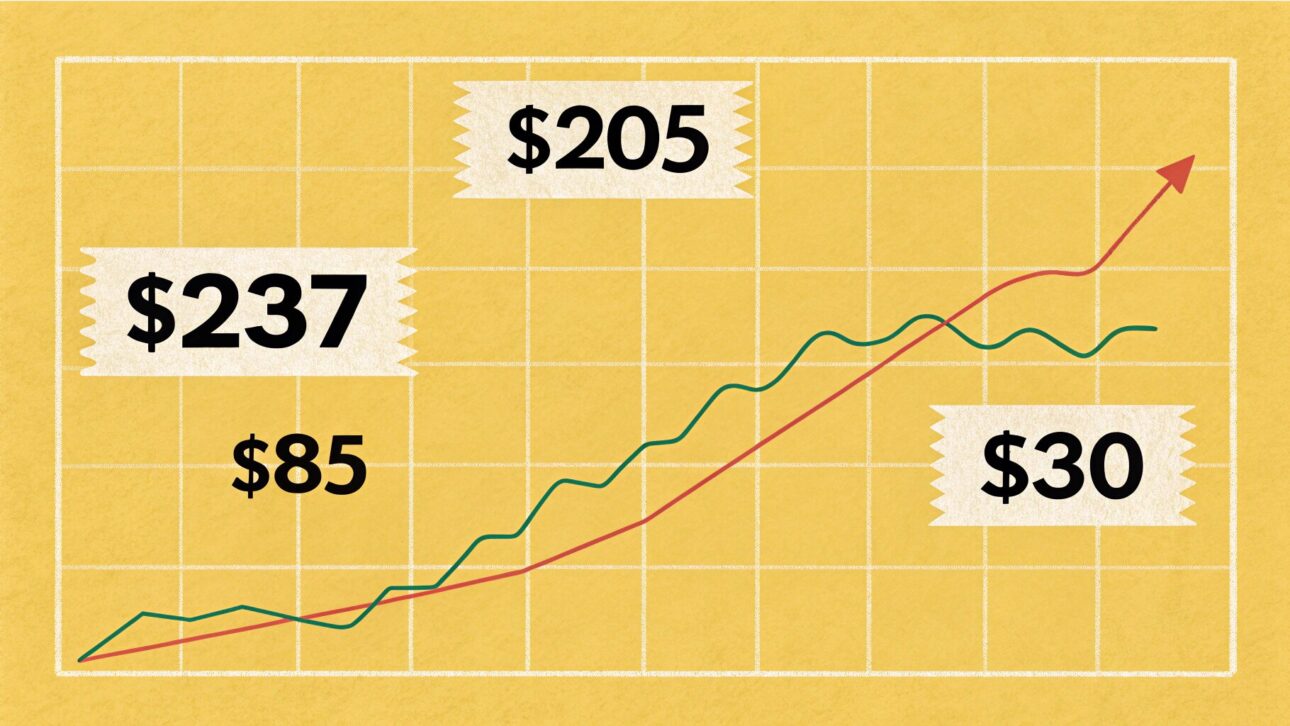
Yahoo Stock Price During Cuban’s Collar Window
Collar strikes set
$85 to $205
January 2000 peak
$237
Late 2000 low
under $30
What was Mark Cuban’s famous options strategy?
Mark Cuban’s famous strategy was a costless options collar that locked in the value of his Yahoo stock before the dot-com crash. In 1999, Cuban and his partner Todd Wagner sold Broadcast.com to Yahoo for $5.7 billion in a stock deal. Cuban personally received 14.6 million shares of Yahoo, worth about $1.4 billion at the time.
There was a catch. As part of the deal, Cuban was not allowed to sell his shares right away. So instead of sitting exposed to whatever happened next, he built a hedge using options. For every 100 shares of Yahoo stock, Cuban bought one put contract with a strike price of $85, and sold one call contract with a strike price of $205. Each option ran for a three year term. This meant no matter how far Yahoo’s stock fell, Cuban had the right to sell his shares at $85. In exchange for that protection, he gave up any gains above $205 a share.
The best part of the trade was the price tag. The premium he collected from selling the call exactly offset the premium he paid for the put, so the whole hedge cost him close to nothing beyond standard trading commissions. That structure is why it is often called a costless collar.
How does an options collar actually work?
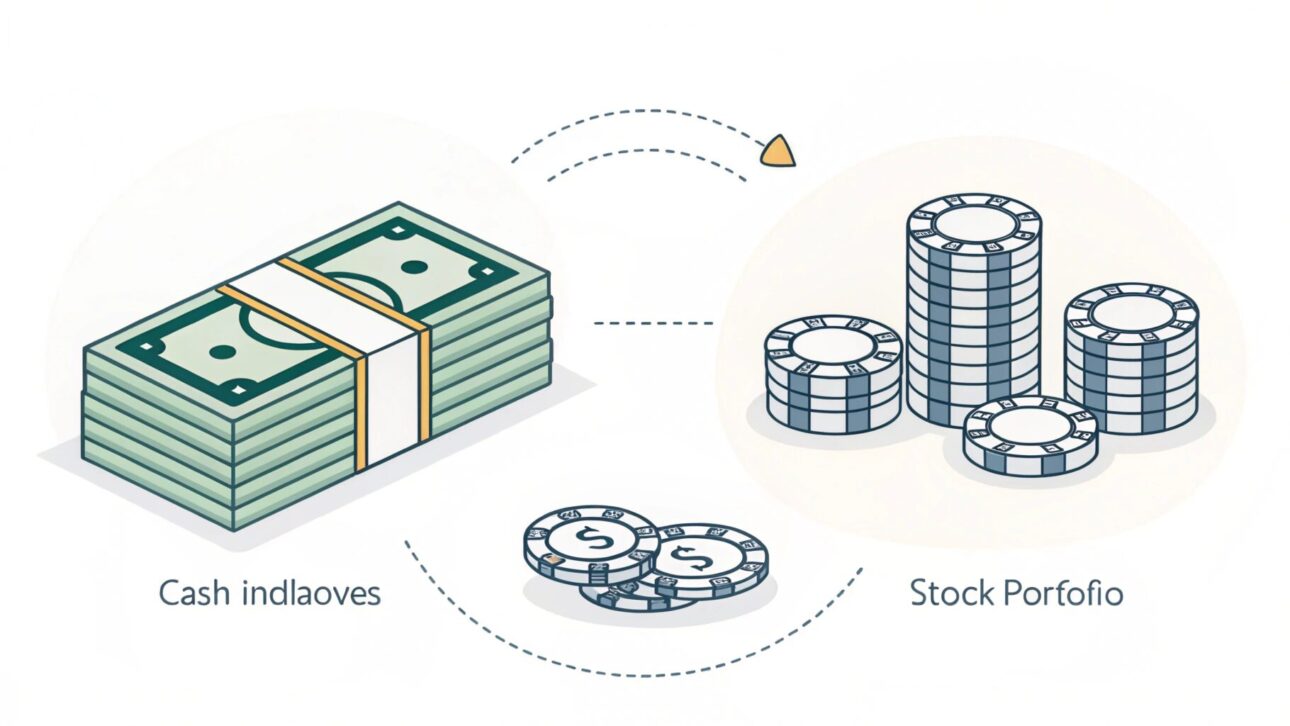
An options collar works by combining two option positions around a stock you already own to protect it from a big drop, in exchange for capping how much you can gain if it shoots up. It has two legs: buying a put option to protect the downside, and selling a call option to help pay for that protection.
The put option acts like insurance. It gives the owner the right to sell the stock at a set price, called the strike price, even if the market price falls much lower. The call option works the opposite way. By selling a call, the investor agrees to sell their shares at a set higher price if the buyer chooses to exercise it, and collects a premium for taking on that obligation. When the premium collected from the call matches the premium paid for the put, the two costs cancel out, making the whole structure “costless.”
The tradeoff is real. If the stock rockets past the call’s strike price, the investor has to sell at that lower strike instead of capturing the full rally. That is exactly what happened to Cuban when Yahoo hit $237 in January 2000, above his $205 call strike. For a while, his hedge looked like it had cost him upside. But once the stock crashed to under $30 later that year, the same trade that looked like a mistake ended up saving his fortune.
Why did Cuban use a collar instead of just selling his shares?
Cuban used a collar instead of selling because his Yahoo shares came with restrictions that blocked him from cashing out right away. Stock received as part of an acquisition deal, like Cuban’s Broadcast.com shares, often comes with a lock-up period that prevents the recipient from selling immediately, partly to keep the seller invested in the new company’s success.
Even without that restriction, dumping 14.6 million shares all at once would have flooded the market, driven the price down, and triggered a massive capital gains tax bill. A collar let Cuban sidestep both problems. He kept ownership of the stock, avoided an immediate tax event, and still locked in a guaranteed floor price if the market turned against him. Given that Yahoo stock lost roughly 87 percent of its value from its January 2000 peak to its low later that year, that floor turned out to be worth a fortune.
What stocks does Mark Cuban invest in?
Mark Cuban’s most consistently cited public stock holdings are Amazon (AMZN) and Netflix (NFLX). Since Cuban invests privately and is not required to publicly disclose most of his personal stock trades, a full, current list of his individual holdings is not publicly available. Financial outlets that track his comments and known positions point to a small handful of confirmed names.
Stock
Ticker
How it’s tied to Cuban
Amazon
AMZN
Confirmed major holding
Netflix
NFLX
Confirmed major holding
Reading International
RDI / RDIB
Confirmed via SEC filings, 10% Class B owner
SPDR S&P 500 ETF Trust
SPY
Mentioned in a 2020 CNBC interview
Live Nation Entertainment
LYV
Mentioned in the same 2020 interview
GameStop
GME
Commented publicly, not confirmed as a personal holding
Reading International is one of the few positions verified through SEC filings, where Cuban is listed as a 10 percent owner of the company’s Class B voting shares. Reading operates cinemas along with retail, commercial, and live theater real estate across the United States, Australia, and New Zealand, though Cuban has stayed quiet about his specific reasoning for the stake.
Back in a 2020 CNBC appearance, Cuban said he was “dipping my toes” into the market during a downturn, putting around 1 to 1.5 percent of his portfolio to work whenever prices dropped. At the time, he said he was mostly buying SPY, the S&P 500 ETF, along with shares of Live Nation. He also mentioned selling puts and calls to take advantage of unusually high options premiums during that volatile stretch, showing that options remain part of how he manages stock positions, not just a one-time trick from the Yahoo deal.
Does Mark Cuban invest in individual stocks or mostly private companies?
Mark Cuban’s money is spread across both, but the bulk of his public activity centers on private companies and startups rather than individual public stocks. Through Mark Cuban Companies, his main investment platform, he holds stakes across sectors like AI, apparel, blockchain, consumer products, food, healthcare, biotech, media, and sports. Tracking sites list well over 100 companies he has personally invested in over the years, including many deals that came out of his run as an investor on “Shark Tank,” where he has backed around 85 companies since the show began.
Cuban has also moved into sports ownership stakes more broadly through Harbinger Sports Partners, a fund where he serves as General Partner and President, aimed at buying minority stakes in professional sports franchises. That fund has reportedly targeted $750 million in total commitments, with more than $450 million secured at its initial close in 2026.
On the public stock side, Cuban has said he keeps a large amount of cash on the sidelines and stays cautious rather than fully invested. He has compared his approach to Warren Buffett’s style of holding cash and waiting for the right opportunity, telling interviewers he wants to be “ready, willing and able” to invest if the market presents a clear opening rather than chasing every rally.
Can regular investors copy Cuban’s options collar strategy?
Yes, an options collar is available to any investor with an options-approved brokerage account, and it works on any optionable stock, not just a billion-dollar position like Cuban’s Yahoo stake. It is a strategy commonly used to protect gains on a stock that has already gone up a lot, without triggering a sale and the tax bill that comes with it.
The strategy tends to fit a specific type of investor best: someone who is moderately optimistic about a stock they already own, but worried about a correction or bad news wiping out their gains. It requires being comfortable writing a covered call, since the biggest tradeoff is capping the upside if the stock takes off. There is also a risk of early assignment on the call if the stock jumps sharply before expiration, which could force a sale earlier than planned. For investors focused purely on downside protection rather than squeezing out every bit of upside, a collar offers a cheaper alternative to buying a put outright, since the sold call helps cover the cost of the protection.
What can investors learn from Cuban’s approach to risk?
The biggest lesson from Cuban’s story is that protecting wealth can matter more than chasing every last dollar of upside. Many other dot-com millionaires had the same chance to get rich that Cuban did. What set him apart was refusing to treat his paper fortune as guaranteed. Even icons like Jeff Bezos watched Amazon’s stock price fall roughly 95 percent when the bubble popped, and most internet-era millionaires never got their money back once the crash hit.
Cuban’s decision to give up some of his potential gains above $205 a share, in exchange for a guaranteed floor at $85, is a classic risk management tradeoff. It is the same tradeoff behind most insurance products: pay a little, or in this case give up a little upside, to remove the chance of a catastrophic loss. When Yahoo shares briefly touched $237, it looked like Cuban had left money on the table. A year later, once the stock had fallen under $30, that same decision looked like one of the smartest trades in financial history.
Cuban has carried that same cautious streak into how he talks about investing today. He has pointed to broad market strength being fueled heavily by retail investors and 401k contributions, and has said plainly that he does not “trust everything that’s going on” in the market. That mindset, staying diversified, keeping cash on hand, and using hedges like collars when a single position gets too large, is the throughline connecting his 1999 Yahoo trade to his public comments about investing decades later.
FAQ
What is a costless options collar?
A costless options collar is a hedge where the premium earned from selling a call option exactly offsets the premium paid for buying a put option, so the trade protects a stock position without any net upfront cost.
How much money did Mark Cuban protect with his Yahoo trade?
Cuban protected roughly $1.4 billion in Yahoo stock, covering the 14.6 million shares he received from selling Broadcast.com in 1999.
Does Mark Cuban still trade options today?
Yes, Cuban has said in interviews he sells puts and calls to take advantage of high options premiums, showing options remain part of his approach beyond the original Yahoo trade.
Is Reading International Mark Cuban’s biggest public stock holding?
Reading International is one of his only confirmed holdings through SEC filings, where he is listed as a 10 percent owner of the company’s Class B shares, but it is not necessarily his largest position overall since most of his stock activity is not publicly disclosed.
References
Liberty Through Wealth, “Mark Cuban Protected His Fortune With Options”
MarketBeat, “How to Use Options Collars to Hedge Your Stock Gains”
Environmental Trading Edge, “Options Collar Explained: The Strategy Mark Cuban Used to Protect His Wealth”
Benzinga, “Mark Cuban Talks Stock Picks, Government Bailouts And Buybacks”
Insider Monkey, “Mark Cuban Stock Portfolio: 8 Best Stocks to Buy”
Insider Monkey, “Mark Cuban Stock Portfolio: 12 Stocks To Consider”
IndustryTap, “Mark Cuban Companies and Investments: A Complete Look at His Business Empire”
Sarah Anderson . J
I’m the mom behind Wise Mom Blogger, where everyday creativity meets real-life motherhood. I share easy DIY crafts, cozy knitting and crochet projects, beginner-friendly sewing ideas, and family-tested recipes—plus quick baking hacks that make homemade feel doable on busy days.