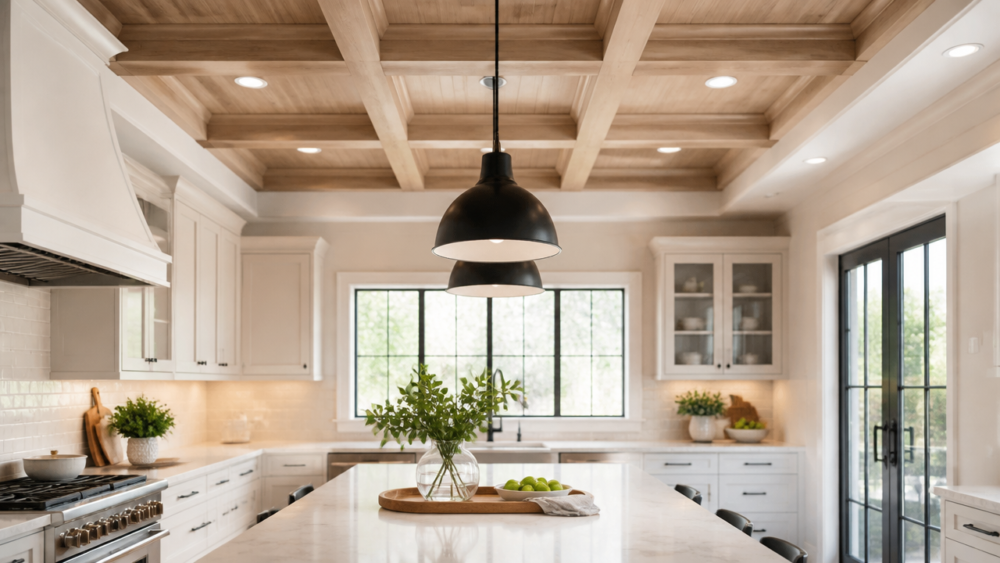
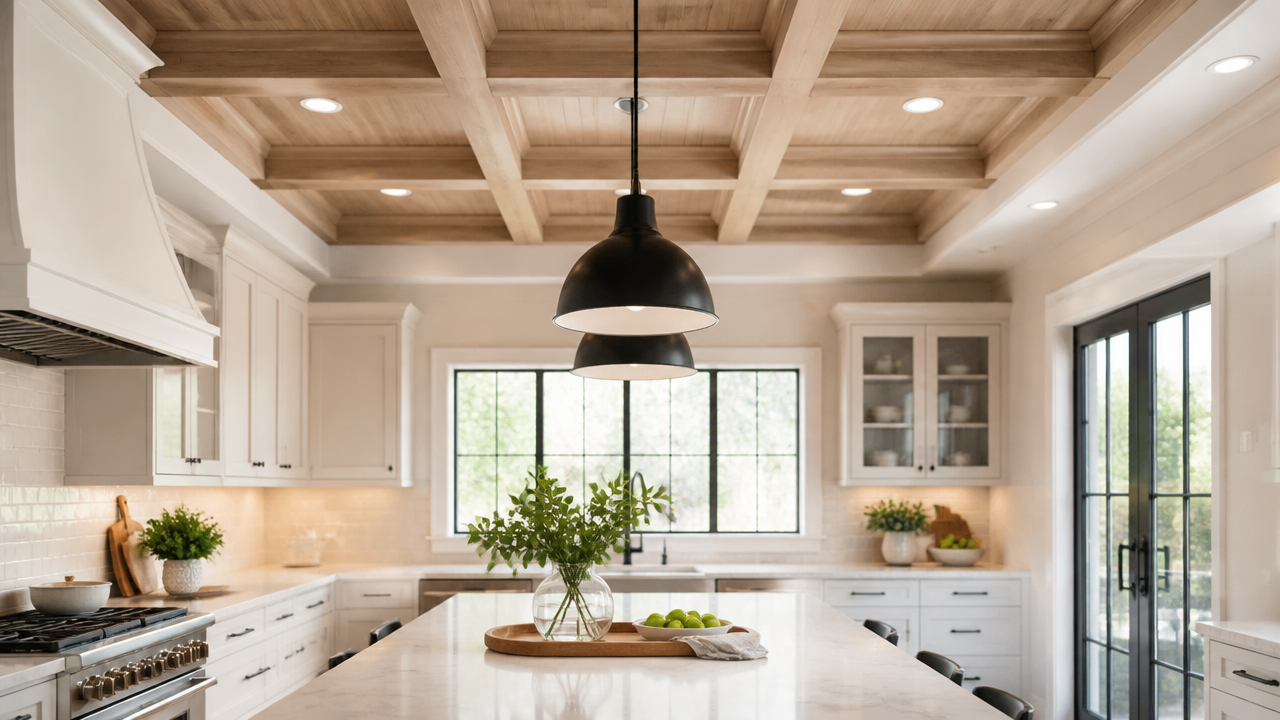
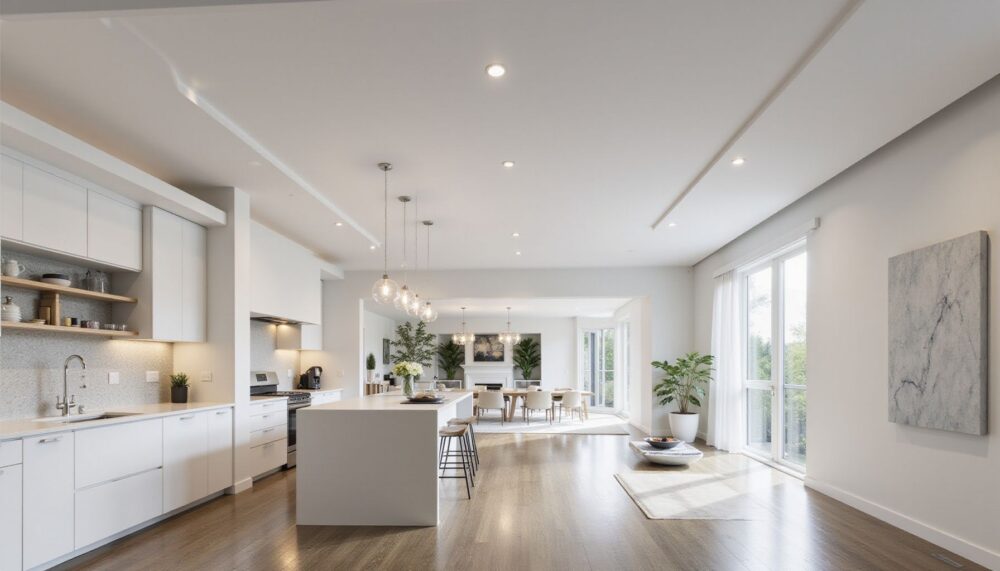
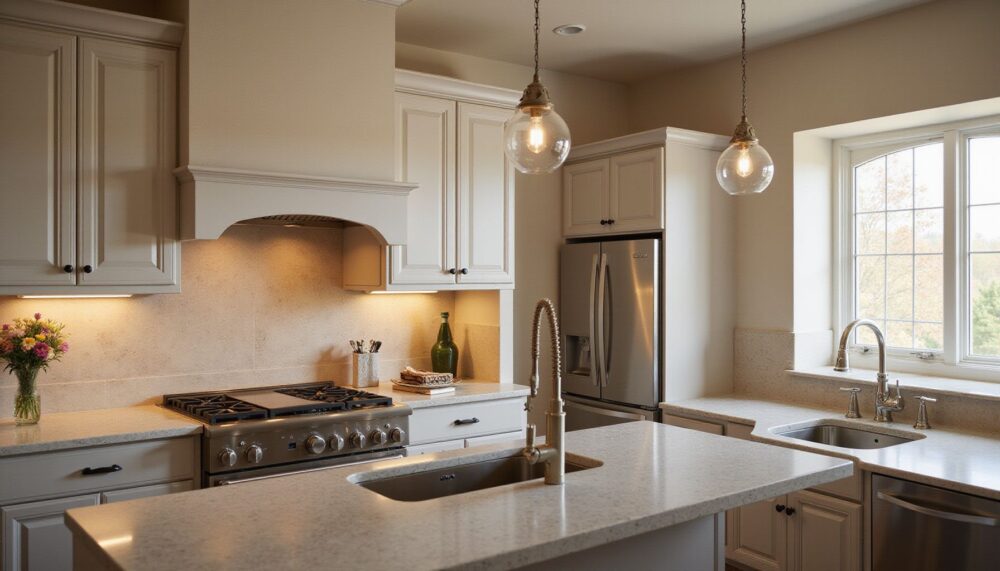
What makes ceiling ideas for a kitchen feel totally different from one renovation to the next—POP ceiling, vaulted ceiling, or ceiling-height cabinets? If you’ve been comparing kitchen ceiling design ideas, kitchen ceiling lighting ideas, and even kitchen ceiling color ideas for months, you’re not alone. The right ceiling choice can make a small kitchen feel taller, a big one feel warmer, and everyday cooking feel cleaner and brighter. Whether you’re hosting a summer cookout or prepping for a holiday dinner, ceiling ideas kitchen directly changes how your space looks and how it feels in use.
Your options range from flat ceilings that keep things easy to vaulted and cathedral ceiling styles that add drama. POP ceilings bring smooth customization and strong design flexibility, while beadboard-style texture and architectural panels help with the overall “sound” of the room. Then there are ceiling-height cabinets that stretch storage up top, plus lighting strategies that match each ceiling type. Keep reading for the ceiling picks, trade-offs, and lighting combos that actually hold up in a real kitchen.
Quick Questions and Answers
Question: Why should I paint my kitchen ceiling a dark color?
Answer: Painting your kitchen ceiling dark, like black or deep navy, creates a moody, intimate atmosphere and adds visual drama. It can make the space feel more cozy and grounded, especially in rooms with high ceilings or lots of natural light.
Question: Can beadboard ceilings work in a modern kitchen design?
Answer: Yes, beadboard ceilings can work beautifully in modern kitchens if painted in crisp white or a sleek neutral tone. Their added texture provides subtle contrast without overwhelming the clean lines typical of contemporary spaces.
Question: Do vaulted ceilings make a kitchen feel too big or empty?
Answer: Vaulted ceilings can make a kitchen feel spacious and dramatic, but they may also feel too large if not balanced with proper lighting and furniture. Adding beams, skylights, or layering lighting helps maintain warmth and visual interest.
Key Takeaways
Your ceiling choice should match your ceiling height, moisture risk, and lighting needs—not just the look you like on a photo.
POP ceiling ideas look smooth and customizable, but moisture resistance is the trade-off you need to plan for.
Vaulted and cathedral styles add volume and drama, yet they can raise heating and cooling costs in a larger cubic space.
Ceiling-height cabinetry gives more storage, but it changes access and often raises renovation cost.
Lighting needs differ by ceiling type; semi-flush fixtures are tidy, while recessed lighting gives better coverage.
10 Kitchen Ceiling Ideas to Transform Your Space
Below are the ceiling ideas I’d actually compare before you start demo day. I’m sorting these by how they change the kitchen’s “feel” (space, texture, storage, and sound) and by how forgiving they are for real life: cleaning, lighting, humidity, and maintenance.
First, a simple selection rule I use: pick the ceiling style that answers your biggest problem. Small kitchen feels cramped? Go vertical with beams or a vaulted ceiling. Kitchen feels flat and echo-y? Add texture or panels. Storage feels tight? Consider ceiling-height cabinetry. Then choose lighting that makes the ceiling’s look work while you cook.
Ceiling idea
What you’ll see
Best for
Main trade-off
1. Smooth flat ceiling
Clean, minimal surface
Most kitchens, easiest install
Less visual drama
2. POP plaster (Plaster of Paris) ceiling
Smooth finish, custom shapes
Custom look on a budget
Moisture risk
3. Vaulted / cathedral ceiling
Height + drama
Spacious homes, open layouts
Higher costs, climate control needs
4. Beadboard ceiling (painted)
Gentle texture lines
Modern farmhouse to modern neutral
Can feel busy if color is wrong
5. Dark ceiling paint
Moody, grounded look
Bright rooms, high ceilings
Dark surfaces show imperfections
6. Wood beams (painted or stained)
Structure + warmth
Vaults, high ceilings, country modern
Needs careful planning around lighting
7. Coffered ceiling
Grid depth + symmetry
Medium to tall ceilings
Needs height to avoid feeling cramped
8. Ceiling-height cabinetry
Storage “wraps” upward
Small storage-starved kitchens
Access to top shelves costs effort
9. Architectural ceiling panels
Texture + quieter room
Kitchens that echo
More planning for fit and structure
10. Semi-flush lighting ceiling combo
Bright without clutter
Low headspace
Light coverage can be limited
1. Smooth Flat Ceiling With a Bright, Clean Finish
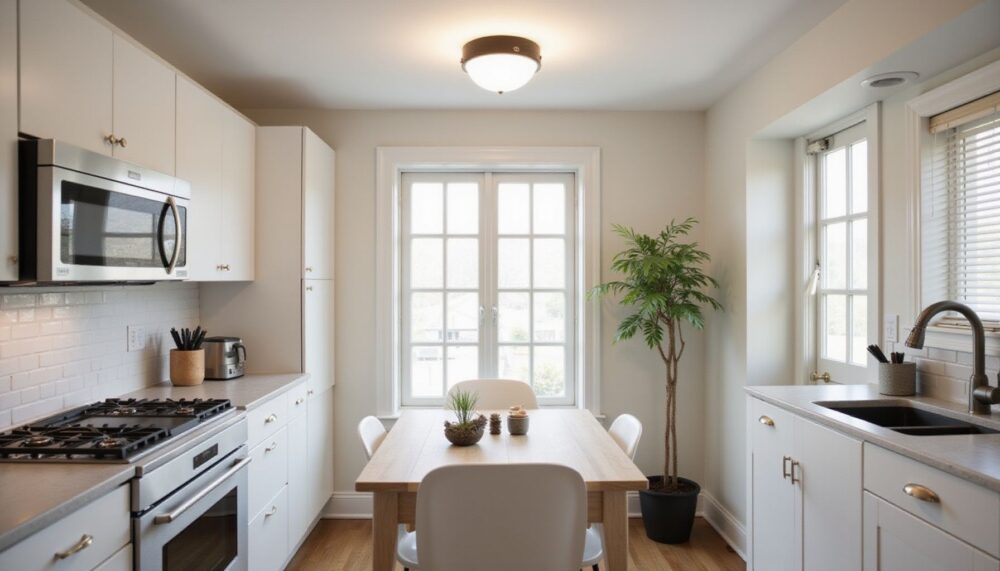
A smooth flat ceiling is the safe choice that keeps your kitchen looking crisp, especially if you want your cabinets and backsplash to do the styling work. It’s also one of the easiest ceilings to install and touch up, which matters when cooking splatters make “maintenance” a lifestyle.
Who it’s best for
This fits best for standard-height kitchens, rental-friendly updates, and kitchens where you’d rather spend design energy on lighting and surfaces.
My pro tip
Go for a kitchen ceiling lighting plan that adds layered light; a flat ceiling won’t hide lighting mistakes the way textured ceilings can.
2. POP (Plaster of Paris) Ceiling for Smooth Custom Shapes
POP ceilings are popular because you can get a smooth, tailored finish and shaped details without going ultra-expensive. In a kitchen ceiling design, that means you can create subtle center focus, stepped edges, or clean transitions around lights.
The trade-off is moisture resistance. POP isn’t naturally made for humid conditions, so you need to think ventilation and material placement before you commit. Simpolo notes POP is favored for cost-effectiveness and design flexibility, but it can struggle in moisture-prone environments.
Who it’s best for
This is best for kitchens that stay dry (good range hood, stable humidity) and for homeowners who want custom looks without custom pricing.
Watch for
Any spot that gets steam regularly—near the range—needs extra planning.
3. Vaulted or Cathedral Ceiling for a Bigger, Airier Kitchen
Vaulted or cathedral ceilings give instant vertical volume. You’re not just changing the ceiling; you’re changing how air and light behave in your kitchen. As a result, the room can feel dramatic, spacious, and easier to decorate.
Who it’s best for
This suits homes with genuine height to work with, and kitchens where you can balance the openness using lighting and furniture. Research from a home design discussion shared cost ranges from $1,200 to $5,000 or more depending on size and location, so budget planning matters early.
Lighting rule
With vaulted ceilings, lighting placement becomes a design decision, not a technical one.
4. Beadboard Ceiling in a Modern Neutral (Texture Without Chaos)
Beadboard brings a classic line-and-groove texture that makes ceilings feel designed instead of plain. In a modern kitchen, the trick is painting beadboard in crisp white or a sleek neutral so the texture adds interest without fighting cabinet lines.
This style plays well with both traditional and contemporary kitchens when color is controlled. If your kitchen already has strong patterns (tiles, hardware, or bold backsplash), beadboard can add texture without adding clutter.
Who it’s best for
Choose this for kitchens that need warmth and visual rhythm while keeping the overall look clean.
Quick paint note
Matte or soft eggshell usually looks better on ceilings than high-gloss because it hides small imperfections.
5. Dark Kitchen Ceiling Paint for Moody Drama
Dark ceiling paint can create that “cozy and grounded” feeling, especially when the walls are light and the kitchen gets lots of natural light. It’s the kind of choice that makes your pendant lighting and cabinet hardware pop.
Who it’s best for
This works well in kitchens with high ceilings or strong daylight, where a dark ceiling balances the brightness. The kitchen Q&A answer for why to paint a kitchen ceiling dark points out the moody, intimate atmosphere and visual drama it creates.
The real-world trade-off
Dark paint shows dust and minor flaws faster, so plan on wiping it down more often.
6. Wood Beams to Add Warmth and Direction
Wood beams (painted or stained) make the ceiling feel intentional and architectural. They also help visually “organize” a kitchen—especially if you use lighting that aligns with beam lines.
Who it’s best for
This suits vaulted ceilings, open kitchens, and homes with farmhouse modern or rustic warmth. If your kitchen feels cold even when it’s clean, beams can fix that feeling fast.
Best pairing
Layer lighting so beam shadows look soft instead of harsh.
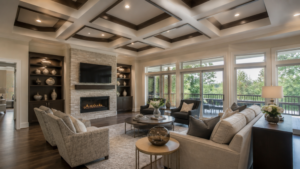
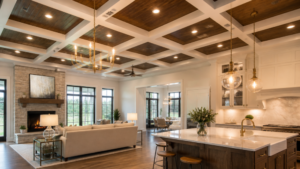
7. Coffered Ceiling Style for Depth and Symmetry
Coffered ceilings bring a grid pattern that adds depth, structure, and symmetry. When the ceiling height supports it, the room looks pulled together and more “finished” in a way flat ceilings can’t match.
Who it’s best for
This is best when you have enough height for the coffer depth to feel balanced. The FAQ answer says a minimum height of 9 feet works best to showcase depth and symmetry, and shallow coffers can still work in 8-foot ceilings without looking cramped.
Quick check
If your kitchen feels already low, go shallow or skip this style.
8. Ceiling-Height Cabinets for Maximum Storage Up Top
Ceiling-height cabinetry keeps storage from stopping too soon. You get a more seamless look, plus extra capacity for things you don’t need daily (holiday bakeware, bulk dry goods, backup serving pieces).
But there are trade-offs: it often costs more, and access to the top shelves takes more effort. Highland Cabinetry explains that ceiling-height cabinets can offer benefits while bringing cost, access, and design limits that affect the final decision.
Who it’s best for
Pick this when storage is your real pain point and you’re okay using a step stool like it’s part of the kitchen toolkit.
Installation reality
Plan for ventilation clearances and whether the ceiling construction allows clean fit.
9. Architectural Panels or Textured Ceiling Treatments for Quieter Rooms
If your kitchen sounds echo-y when you cook, ceiling materials can help shape how sound travels. ASI Architectural points out that a great ceiling can help keep the room quieter, increase headspace perception, and make the space feel larger.
Who it’s best for
This is ideal for open-plan kitchens, high-echo spaces, and homes where the kitchen feels “loud” during prep.
Where to use it
Use panels or textures where the room acoustics matter most—often near hard surfaces like tile and glass.
10. Semi-Flush Lighting Ceilings for Clean Look in Low Headspace
Semi-flush fixtures sit closer to the ceiling, so they work well when headspace is limited. Beams Renovation also notes these fixtures are effective for small kitchens and easier to clean, though they can provide less lighting reach than recessed or pendant options.
Who it’s best for
Choose this when you want a tidy ceiling look without hanging fixtures and you don’t need maximum light spread.
Pairing idea
Use under-cabinet lighting to boost task illumination where you work.
How to Select a Ceiling Style That Fits Your Kitchen
Choosing the ceiling is the moment to be practical, not just aesthetic. I usually start with three constraints: ceiling height, moisture risk, and the lighting you can realistically support.
Evaluate ceiling height impact on HVAC efficiency and heating costs
Higher ceilings increase cubic volume, so your HVAC system has more air to condition. A Reddit discussion about high ceiling kitchens mentions the added challenge of heating and cooling a bigger space, and it also notes it can be more expensive because your structural and framing needs change with height.
So I don’t treat vaulted ceilings as “free drama.” I treat them as a design that requires climate planning. If your home already runs hot or cold, the ceiling choice can amplify the comfort problem.
Consider acoustic properties as a factor for reducing kitchen echo
Kitchen noise isn’t just annoying; it affects how the room feels day to day. ASI Architectural explains that ceiling choices can help keep the room quieter and can make the space feel larger and more comfortable.
Texture and panels often do better than plain flat surfaces when you want the kitchen to feel calmer during meal prep. If you’ve ever heard your voice bounce back at you while chopping, ceiling material selection becomes more than decor.
Assess moisture resistance needs, especially for materials like POP
Moisture is the quiet enemy of many ceiling finishes in kitchens. Simpolo notes POP ceilings are favored for smooth finish and design flexibility, but POP isn’t naturally moisture-resistant.
So if you’re planning POP right above the most steam-prone areas, you’ll want strong ventilation and careful placement. When I’m uncertain, I steer people toward ceiling types that tolerate humidity better rather than relying on “it’ll be fine.”
Factor in the cost-to-storage trade-off for cabinet height extensions
If you’re thinking ceiling-height cabinets, you’re trading convenience for capacity. Highland Cabinetry explains ceiling-height cabinets can bring benefits, but costs, access limits, and design constraints matter in the final decision.
I treat this like a lifestyle choice. If you already use a step stool for chores, ceiling-height cabinetry can feel like a win. If you hate reaching, it can become daily friction.
Popular Ceiling Design Options and Structural Treatments
Here’s how the main ceiling styles usually perform in a kitchen renovation, based on what people love and where the issues show up.
POP Ceilings: Offers smooth finish and design flexibility but is prone to moisture damage
POP ceilings are popular because you can get smooth surfaces and customize shapes around lighting. Simpolo also points out the cost-effectiveness angle: it can deliver a high-finish look without the same budget pressure as some architectural ceiling systems.
Still, POP is not a “set it and forget it” material in a humid or steam-heavy kitchen. If your cooking habits generate lots of moisture, plan ventilation and consider whether POP placement needs to be limited.
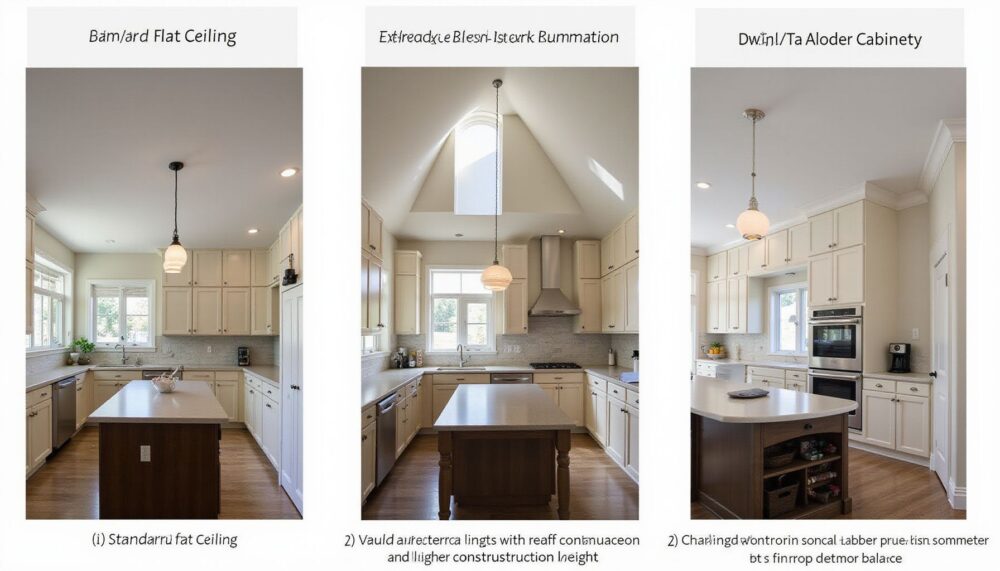
Vaulted/Cathedral Ceilings: Adds significant vertical space and drama at a cost range of $1,200–$5,000
Vaulted or cathedral ceilings create that open, airy feel many people want—especially when paired with beams or skylights. A home design post shared that cathedral ceilings in great rooms and kitchens can cost from $1,200 to $5,000 or more depending on size and location.
That cost range is a reminder: changing structure changes price. If you’re budget-sensitive, confirm framing estimates before you fall in love with one photo.
Ceiling-Height Cabinetry: Creates a seamless look, although it restricts upper-level access and increases renovation costs
Ceiling-height cabinets can make the kitchen look seamless and add storage. Highland Cabinetry notes trade-offs: cost, access, and design limits.
You don’t just pay for the cabinets. You also pay for planning and fit. If you’re trying to keep renovation costs controlled, ceiling-height cabinetry needs careful measurement and a clear storage plan.
Standard Flat Ceilings: The most reliable choice for energy efficiency and ease of installation
Flat ceilings tend to be the most reliable because they’re straightforward structurally and visually. Reddit discussions about ceiling height often circle back to heating and cooling challenges in larger volumes, which is exactly why flat ceilings usually keep life simpler.
If you want a practical update—lighting first, surfaces second—flat ceiling systems make it easier to execute without surprises.
Lighting Strategies for Every Ceiling Type
Lighting is where ceiling ideas either look stunning or fall flat in real life. The ceiling surface affects how light spreads, how shadows fall, and how your kitchen feels when it’s dark outside.
Semi-flush Mounts: Ideal for limited headspace; easier to maintain/clean than complex fixtures
Beams Renovation explains that semi-flush mount fixtures are effective for small kitchens and are easier to clean, though they may not reach as far as recessed or pendant lights.
I like semi-flush for kitchens where you don’t want hanging elements. It keeps visual clutter low, especially when cabinets already bring the visual weight.
Recessed Lighting: Provides superior coverage for larger rooms compared to standard mounts
Recessed lighting gives more even spread, which matters when your ceiling is high, your kitchen is longer, or your countertops are deep. Beams Renovation notes that recessed or pendant options can provide more light coverage than standard mounts.
If you’re choosing recessed lights, plan spacing early so you don’t end up with bright “islands” and darker prep zones.
Pendant Integration: Used alongside vaulted ceilings to bring light closer to work surfaces
With vaulted ceilings, hanging lighting can help bring illumination closer to the work area. The general design consensus is that layered lighting keeps warmth in open volume, and pendant placement helps target where you cook, not just where light lands.
Pendant selection becomes functional design. It’s not just about style; it’s about putting brightness where your hands need it.
Quick Comparison: Pros and Cons of Ceiling Trends
I’d rather compare than guess. Here’s the quick reality check I use before committing.
Material Performance
POP can look smooth and feel custom, but Simpolo’s note about moisture risk keeps it from being a “works anywhere” choice. Architectural panels and some textured treatments can offer acoustics benefits, which ASI Architectural calls out as part of how ceiling choices affect room feel.
Structural Impact
High ceilings feel dramatic, but they change how your home holds comfort. Reddit’s high ceiling discussion ties height to greater heating and cooling demands and potentially higher costs due to framing complexity.
Storage Utility
Ceiling-height cabinets deliver more storage, and Highland Cabinetry highlights benefits alongside access and cost trade-offs. If you’re okay reaching up, the storage payoff is real. If not, it can turn into clutter you avoid using.
Essential Advice for Choosing Your Ceiling Layout
Here’s where most people slow down too late. I’d rather you decide these things before you sign a quote.
Prioritize timeless aesthetics over short-term trends to maintain home value
Trends come and go, but ceiling decisions tend to lock in as part of the home’s permanent look. Highland Cabinetry and Vestabul both discuss popular kitchen design trends through the lens of pros and cons, which is a good reminder to think long-term rather than photo-perfect.
I lean toward styles that still look good five years from now: clean flat ceilings, controlled texture, and lighting that suits the room size.
Use professional structural framing estimates before opting for ceiling alterations
Reddit conversations about high ceilings repeatedly point back to structural framing and added complexity. If you’re considering vaulting, coffers, or beam work, get a real framing estimate before you fall for the visual alone.
A layout you can’t build (or can’t build cheaply) isn’t a layout—you just have a mood board.
Analyze light distribution needs before committing to high-ceiling, low-fixture designs
If you go with semi-flush lighting in a bigger room, you may get a ceiling that looks pretty but a kitchen that doesn’t perform. Beams Renovation notes semi-flush is easier to clean but may not provide the same light reach as recessed or pendant options.
So I plan lighting distribution like a function. The ceiling style should be the finish, not the solution.
Frequently Asked Questions About Kitchen Ceilings
Q: Are metal or tin ceilings durable for busy kitchens?
Metal and tin ceilings are highly durable and low maintenance, making them ideal for busy kitchens. They resist moisture, stains, and wear, and their vintage patterns add charm while staying practical for cooking and cleaning.
Q: How high should my ceiling be for coffered designs?
For coffered ceiling designs, a minimum height of 9 feet works best to showcase the depth and symmetry. However, shallow coffers can still be successfully installed in 8-foot ceilings without looking cramped.
Q: What is the best lighting for a kitchen ceiling?
The best lighting includes recessed lights for general illumination, pendant lights over islands or peninsulas, and cabinet lights to highlight counters. Dimmable recessed lights offer flexibility, while layered lighting creates a functional and inviting atmosphere.
Q: Will a suspended ceiling with lights improve my kitchen?
A suspended ceiling with integrated lights improves a kitchen by offering access to electrical and plumbing lines while providing sleek, modern task lighting. It brightens the space and enhances functionality, especially in areas focused on food prep.
Q: How do I make a small kitchen look bigger with ceiling ideas?
Use horizontal beams, skylights, or recessed lighting to add height and brightness. A white painted ceiling, mirrored fixtures, or light-colored panels reflect light and create an illusion of spaciousness, making the kitchen feel larger.
Q: Is it okay to use false ceilings in a kitchen?
Yes, false ceilings are perfectly acceptable in kitchens and can hide wiring, pipes, or add design features like lighting. They offer versatility in style and can be made from wood, metal, or plastic to match your decor.
Q: What color is best to paint a kitchen ceiling?
White is the best color for a kitchen ceiling because it works with any color scheme, reflects light, and creates a clean, timeless look. However, natural wood tones or bold colors can also work well for specific design styles.
My Experience With ceiling ideas kitchen
I’ve helped friends choose ceiling ideas kitchen styles in two very different kitchens: one was small, bright, and cramped-looking even when it was clean; the other was large enough that every sound bounced like it wanted a spotlight. The small kitchen got a simple flat ceiling plus better lighting spacing, and it instantly stopped feeling “boxed in.” The big kitchen went for more structure and layered light so it didn’t feel empty at night.
One mishap I’ve seen (and one I almost made myself) is picking a ceiling texture without planning lighting reach. Semi-flush fixtures can look tidy, but they don’t always spread light the way you expect. I’d rather you treat lighting as the performance layer and the ceiling as the finish layer.
If you’re doing anything structural—vaults, coffers, beams—get framing estimates early. I’ve watched timelines slip because someone wanted a dramatic ceiling after they already picked fixtures and colors. Also, moisture matters. POP ceilings can look amazing, but moisture resistance planning is not optional.
What ceiling choice did you regret—or love—once the dust settled?
Conclusion
If you want my vote: start with ceiling height + humidity risk + lighting performance, then pick the look. Flat ceilings keep things flexible. POP ceilings win when the kitchen stays dry and you want smooth custom shapes. Vaulted and cathedral styles feel incredible when you can budget for structure and plan climate control. Ceiling-height cabinets solve storage, and they also change access, so decide how much reaching you actually want to do.
Latest updates and small planning tweaks matter too. In 2026, I’m seeing more “quiet design” where ceilings don’t overpower the kitchen but still add texture, controlled shadows, and better lighting zoning. People are also choosing ceiling treatments that handle real kitchen life: cleaning, steam, and day-to-day cooking mess.
Now tell me what you’re working with—low ceiling, standard height, or tall and open?
Sarah Anderson . J
I’m the mom behind Wise Mom Blogger, where everyday creativity meets real-life motherhood. I share easy DIY crafts, cozy knitting and crochet projects, beginner-friendly sewing ideas, and family-tested recipes—plus quick baking hacks that make homemade feel doable on busy days.