Crocheting a bag with beads feels a little like making wearable jewelry. It’s the perfect way to upgrade a simple pattern into something sparkly, fancy, and totally you. When I add beads the right way, I get texture, shine, and structure without having to do complex crafts. This matters most when I’m making something I’ll actually carry—like a cross-body for evenings out or a small purse for parties. You’ll learn bead techniques that keep your spacing even, your tension neat, and your finished bag durable enough to love long-term. Grab a hook and some beads, and let’s make a bag you’ll want to show off.
Key Takeaways
- Pick a purse style first (cross-body, handbag, coin purse) and decide if beads are accents or full beadwork.
- Use a repeatable bead insertion rhythm (work X stitches, add a bead, then crochet the next stitch to pull it into place).
- Keep bead spacing consistent round to round for a clean, professional look.
- Many beaded crochet purses are mostly “crochet only,” with finishing that may include a liner, zipper, or a small hand-seam.
- Match bead size to your crochet thread/yarn so beads don’t distort stitches or get stuck.
- Always check measurements as you go—bag shapes can change quickly when tension shifts.
Quick Answer
To crochet a bag or purse with beads, you follow a bag pattern’s rounds/shape and insert beads at set intervals. The most common beginner-friendly method is: crochet a few stitches, thread a bead onto your working yarn, then crochet the next stitch to pull the bead into position. Repeat that rhythm around the round. Finish by adding a liner and closure (zipper, drawstring, or frame) if your pattern calls for it, then do minimal sewing (often only a final seam).
What You Need
| Item | Purpose | Notes |
|---|---|---|
| Crochet hook (matching your thread/yarn) | Creates stitches with the right tension | With crochet thread, I usually use a smaller steel hook; check your pattern’s hook size. |
| Crochet thread (e.g., Fashion #3) or similar lightweight yarn | Builds the bag body | Lightweight thread helps beads sit nicely and keeps the bag firm. |
| Beads (size/type that fits your thread) | Adds shine and texture | Test one bead with your thread thickness—if it’s hard to thread, switch beads or use a different thread. |
| Tapestry needle | Weaves ends + helps with any assembly | A blunt needle is easiest for finishing. |
| Stitch markers | Marks rounds and repeat points | I like using them to keep bead placement consistent. |
| Scissors | Trims yarn/thread | Keep them sharp so you get clean cuts. |
| Liner fabric (cotton/strong fabric) | Adds durability and structure | Not always required for small coin purses, but it helps for everyday use. |
| Zipper (optional) | Closure for certain styles | If your pattern includes zipper instructions, follow them closely. |
| Bag hardware: chain strap + rings OR metal frame/clasp (optional) | Handles the “purse-ready” finishing | Some patterns sew into frames; others attach straps directly. |
Step 1: What You’ll Make (Pick Your Bag Style + Bead Plan)
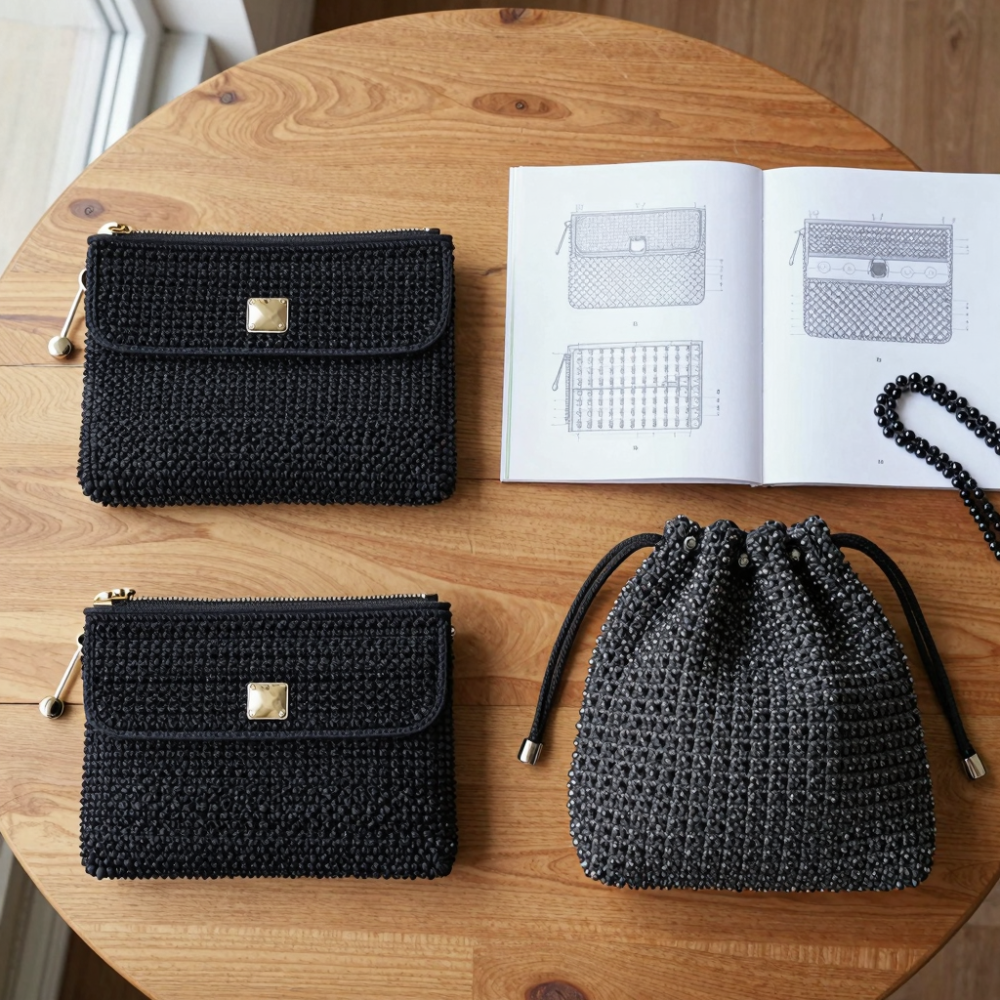
Before I start crocheting, I decide what kind of bag I want—because it changes almost everything (shape, size, closure, and where beads go).
Here are three common beginner-friendly options:
- Cross-body bag: Usually a medium size with enough structure to carry phone/keys. Great for holidays and evenings.
- Handbag (top-handle or short strap): Works well when you want a more classic look.
- Coin purse or small pouch: Faster project, great for learning bead insertion without committing to a huge bag.
Next, I choose how the beads will be used:
- Accent beads: You insert beads at intervals for sparkle without heavy beading.
- Full/solid beadwork look: Beads show across the surface more densely, which takes more time but looks extra glam.
Finally, I pick a closure concept:
- Open top (easy): no zipper, quick access
- Zipper (secure): better for daily use
- Frame clasp + chain (vintage feel): gorgeous, but requires matching hardware
If you’re new to beaded crochet, I recommend choosing a pattern that explicitly teaches bead insertion while you crochet. That “learn as you go” approach saves a lot of frustration.
Step 2: Choose Your Materials (Thread/Hook/Beads Must Match)
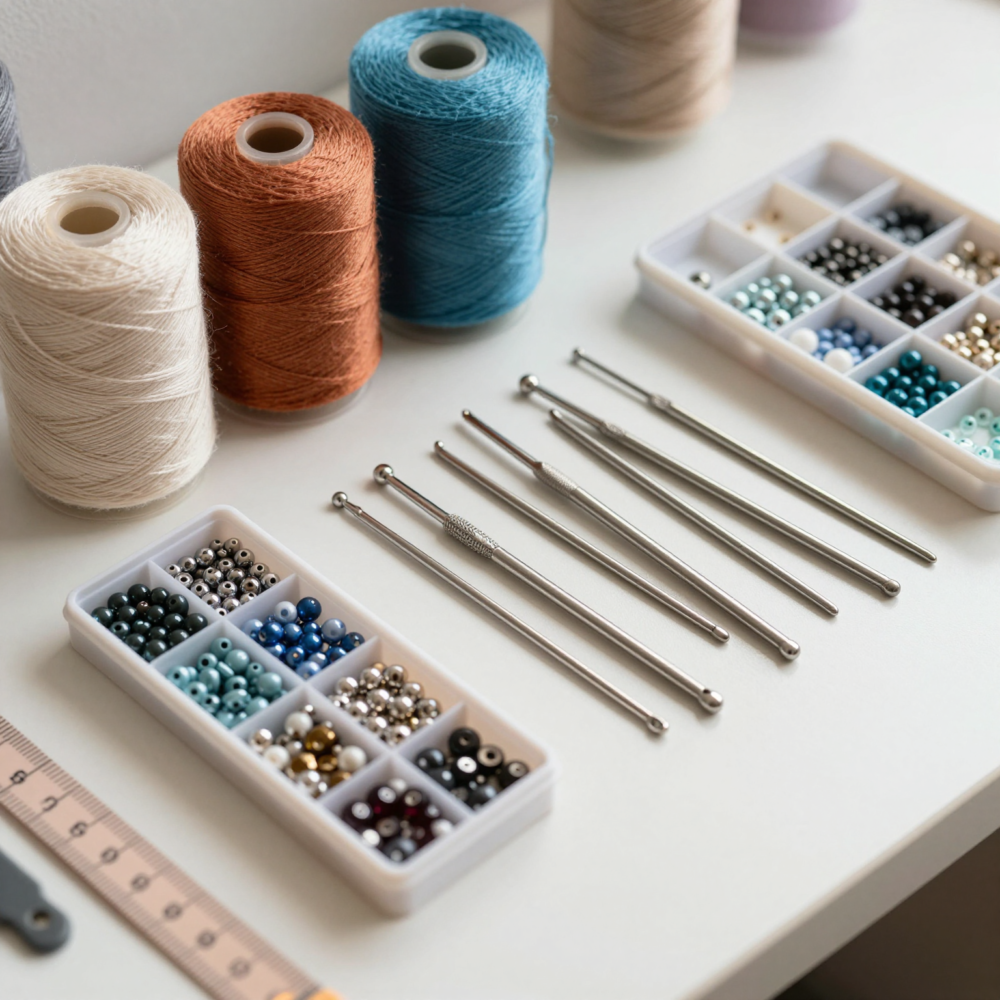
For beaded crochet, materials aren’t just “supplies”—they directly affect how well beads behave.
Thread/yarn choice
Lightweight crochet thread (like Fashion #3) is popular for bead crochet because it holds detail and keeps the bead rows crisp. If you use thicker yarn, beads can pull stitches out of shape, causing gaps or warping.
Bead choice
I always look for beads that:
- Thread easily onto my working yarn/thread
- Sit flat (so they don’t twist and create uneven rows)
- Are the right size for my hook and stitch height
A quick test helps: thread one bead onto your yarn/thread and gently move it toward the hook. If it feels too tight or bulky, switch beads or thread before you waste a full round.
Notions and finishing supplies
You’ll also want:
- Stitch markers for round tracking (especially for bead repeats)
- Tapestry needle for weaving ends and doing any minimal sewing
- Liner fabric if you want a stronger, more “finished store-bought” feel
- Zipper or frame hardware based on your chosen closure
Step 3: Understand Bead Insertion (The Core Technique)
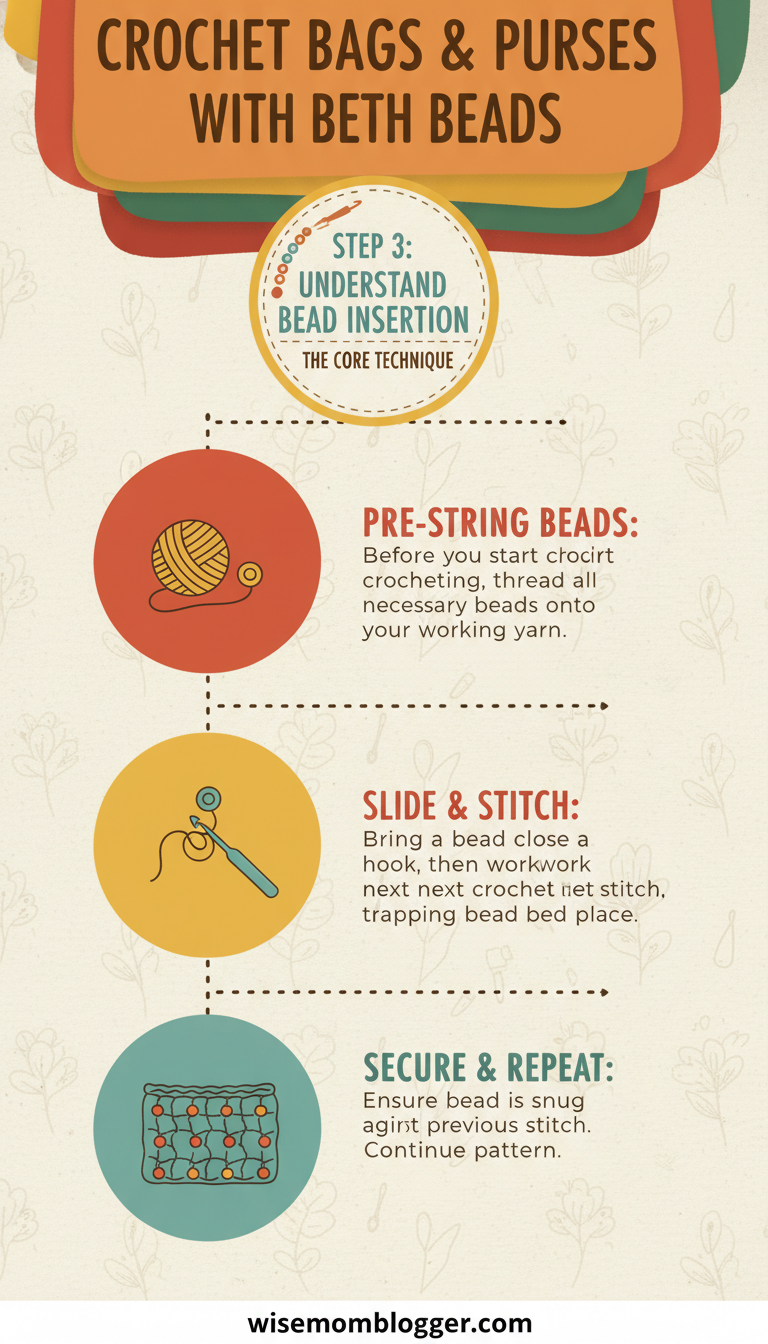
This is the heart of beaded crochet bags: a repeating cycle of stitches and bead placement.
A common pattern rhythm looks like this:
- Work a set number of stitches (for example, 4 single crochets).
- Thread a bead onto your yarn while still holding your working strand.
- Crochet the next stitch so the bead pulls into place.
- Repeat around the round.
Why this works:
- The bead stays attached because it’s caught by the next stitch.
- The crochet tension controls bead position.
- Consistent repeat counts create uniform sparkle.
Tips for bead insertion consistency:
- Keep your bead rhythm steady: don’t “skip ahead” mentally. I count out loud in the early rounds.
- Check placement every few beads: rotate your work and make sure beads align with the row you’re building.
- Avoid stretching the bead row: if you pull too hard while inserting beads, your fabric can pucker.
Also, be aware that some patterns use beads at fixed intervals (like every few stitches), while others cluster them for denser areas. Follow the pattern repeat you chose—it’s what creates the look.
Step 4: Step-by-Step Construction (Foundation to Beaded Body)
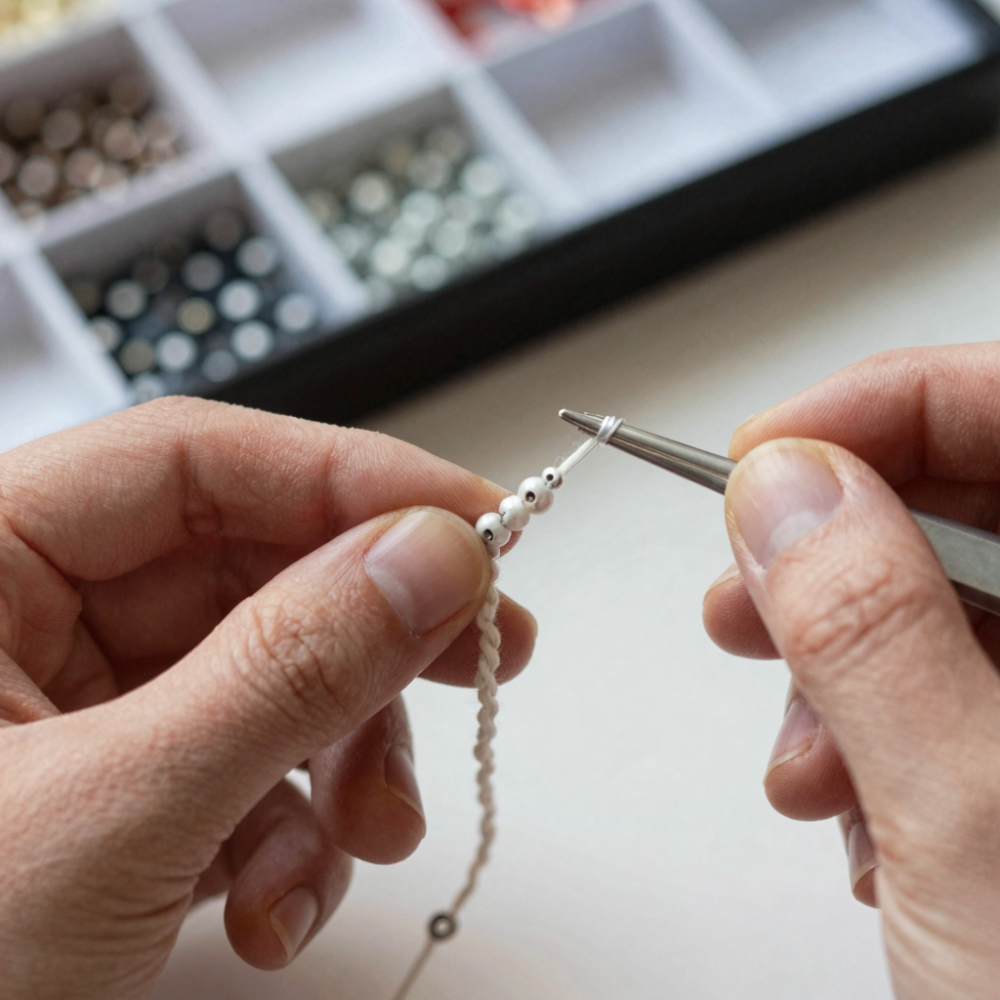
Now I move from planning into the actual bag shape. Even though patterns vary, the workflow is usually similar.
Start with the foundation/base
Most purses begin with:
- a magic ring for round starts, or
- a chain + round method
If the bag shape is a tube or panel, you’ll crochet upward in rounds, gradually shaping the bag wall.
Build the body while adding beads
As I work each round:
- I follow the pattern’s stitch structure (e.g., single crochet rounds, increases/decreases if needed).
- At the exact intervals, I insert beads using the bead insertion rhythm.
For example, in many step-by-step beaded handbag patterns, after a certain number of stitches, I thread on one bead and crochet the next stitch to “lock” it in place. The goal is that beads line up neatly rather than sliding or drifting.
Keep it even: tension + alignment checks
Every few rounds, I do a quick check:
- Does the bag wall look straight or slightly twisted?
- Are beads landing in the same places around the circumference?
- Is my stitch size matching the pattern?
If something feels off, I fix it early—later you’ll have fewer chances to correct alignment.
Continue until you reach the intended height/shape
Once I’m satisfied with the bag’s height, I stop the beaded section according to the pattern. Some patterns add a few non-beaded rounds at the top for finishing.
Step 5: Finishing Steps (Liner, Zipper, and Hardware Options)
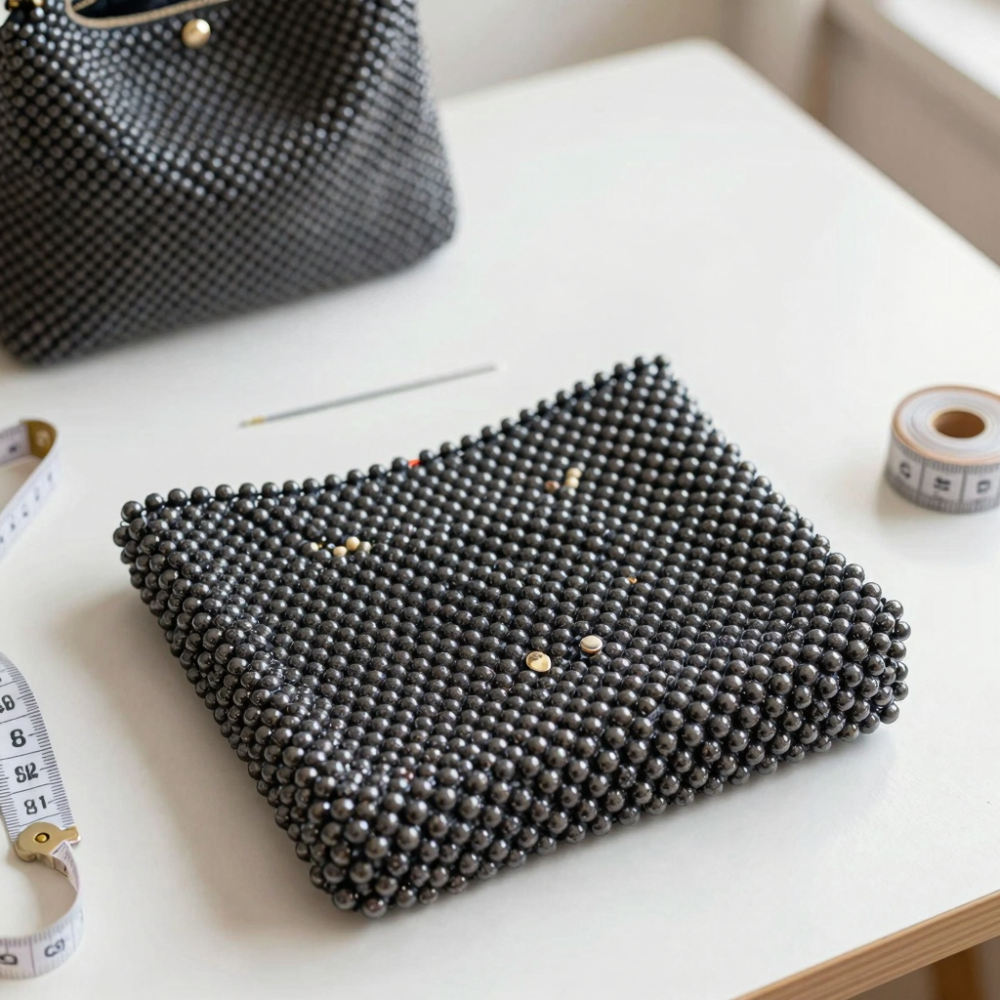
Beaded crochet looks amazing, but crochet alone can be flexible. That’s why finishing matters.
Add a liner (highly recommended)
A liner:
- protects the bag’s edges and bead rows
- keeps items from snagging
- improves structure
If you want a “professional” result, lining is one of the biggest upgrades I can make. Some patterns also recommend a liner tutorial or provide a basic liner approach.
Add a zipper (if your pattern includes it)
When I use a zipper:
- I usually rely on the pattern’s placement instructions
- I make sure the crochet opening is stable before attaching hardware
Zippers need careful measuring—so I don’t rush. If the pattern says how wide to make certain sections, I follow it exactly.
Alternative closures (based on your style)
If you don’t want a zipper, other popular closure choices include:
- Drawstring handles: great for casual pouches and faster builds
- Metal frames with clasps + chain attachment: a classic vintage vibe and sturdy closure
When choosing frames/clasps, I pick hardware that matches my bag opening size. Otherwise, the frame won’t close cleanly.
Step 6: Assembly and Minimal Sewing (Yes, Sometimes It’s Mostly No-Sew)
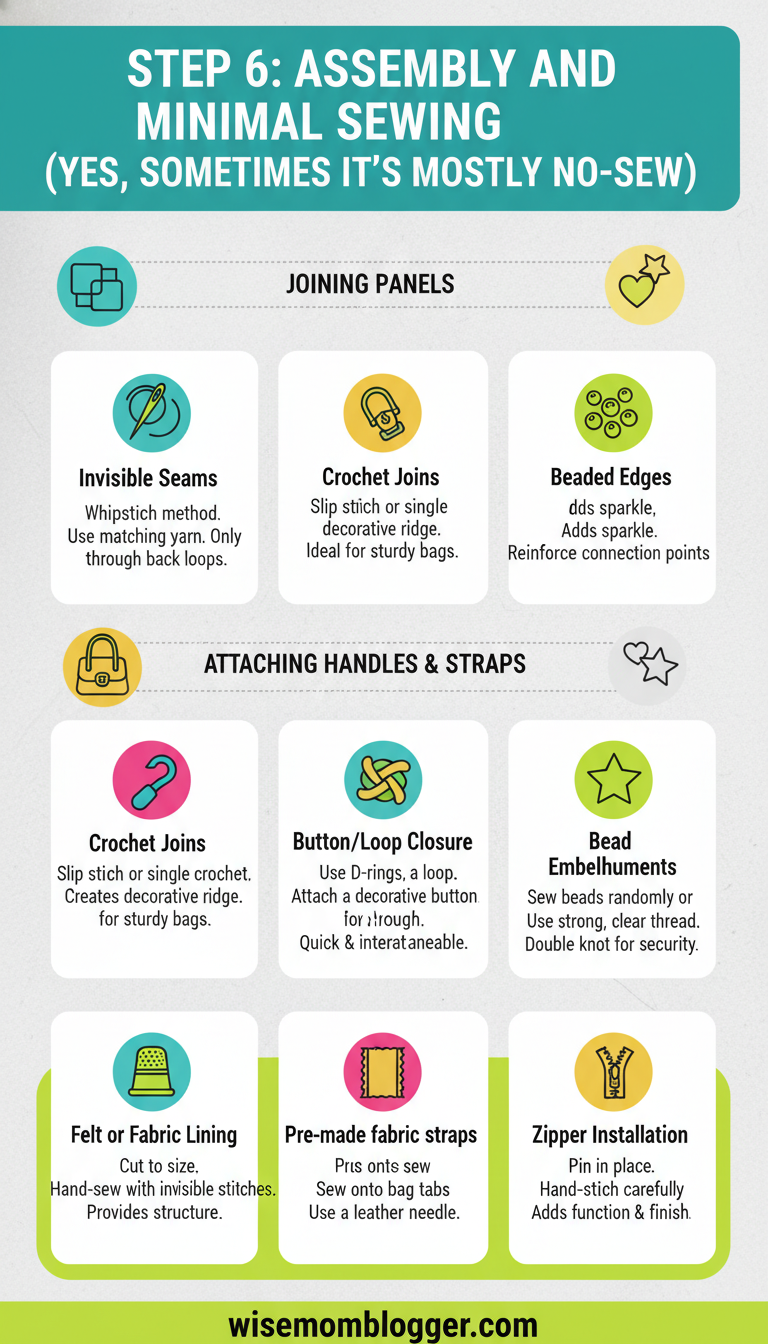
One of the best surprises with beaded crochet bags is that assembly can be simpler than expected.
Many designs are essentially:
- crochet the bag body (and sometimes straps/handles)
- then do a small amount of hand stitching for final construction
A common example:
- you crochet the bag so it forms a tube/panel
- then at the end, you do a final seam to join the bottom
This kind of minimal sewing is usually just a neat hand-stitched join to keep beadwork aligned.
How I make seams look clean:
- I line up bead rows so they match on both sides
- I use a tapestry needle to sew through sturdy stitch points
- I keep tension firm but not tight enough to distort the fabric
If your pattern includes extra assembly steps (like attaching side panels to form a round bag), follow those instructions first—then do any final joining seam as directed.
Step 7: Beginner Tips and Troubleshooting (So Your Beads Behave)
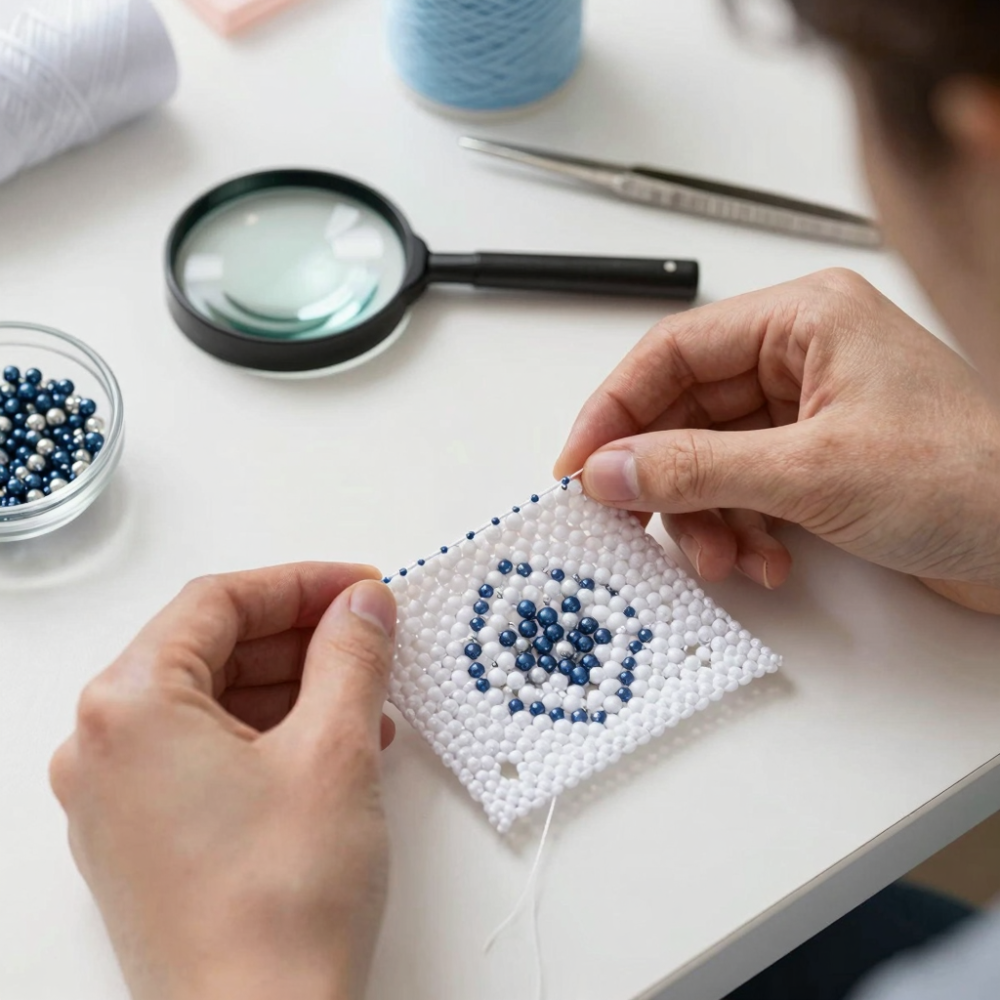
If you’re new to bead crochet, it’s normal to hit a few bumps. Here’s what I’ve learned the hard way—and how I prevent it now.
Tip: Use a beginner-oriented pattern
When I choose patterns, I look for instructions that clearly say:
- when to thread the bead
- which stitch should “catch” the bead
- how to repeat the rhythm
That clarity matters. Beaded crochet is easy when you’re not guessing.
Tip: Match bead size to thread thickness
If beads are too small, they can slip between stitches or pop around. If beads are too large, they can distort the shape and make crochet stiff or uneven. I always do one test row before committing.
Troubleshooting: beads aren’t lining up
If bead placement looks off:
- check your repeat count (most mistakes are counting mistakes)
- slow down and insert beads at the exact stitch moment
- check that you’re pulling beads into place without dragging the yarn sideways
Troubleshooting: fabric puckers or gaps
Puckering often happens when:
- beads create too much tension at insertion
- you crochet tighter/looser than the pattern expects
I fix it by relaxing my grip and keeping stitch height consistent.
Step 8: Project Planning and Make-Ready Checklist
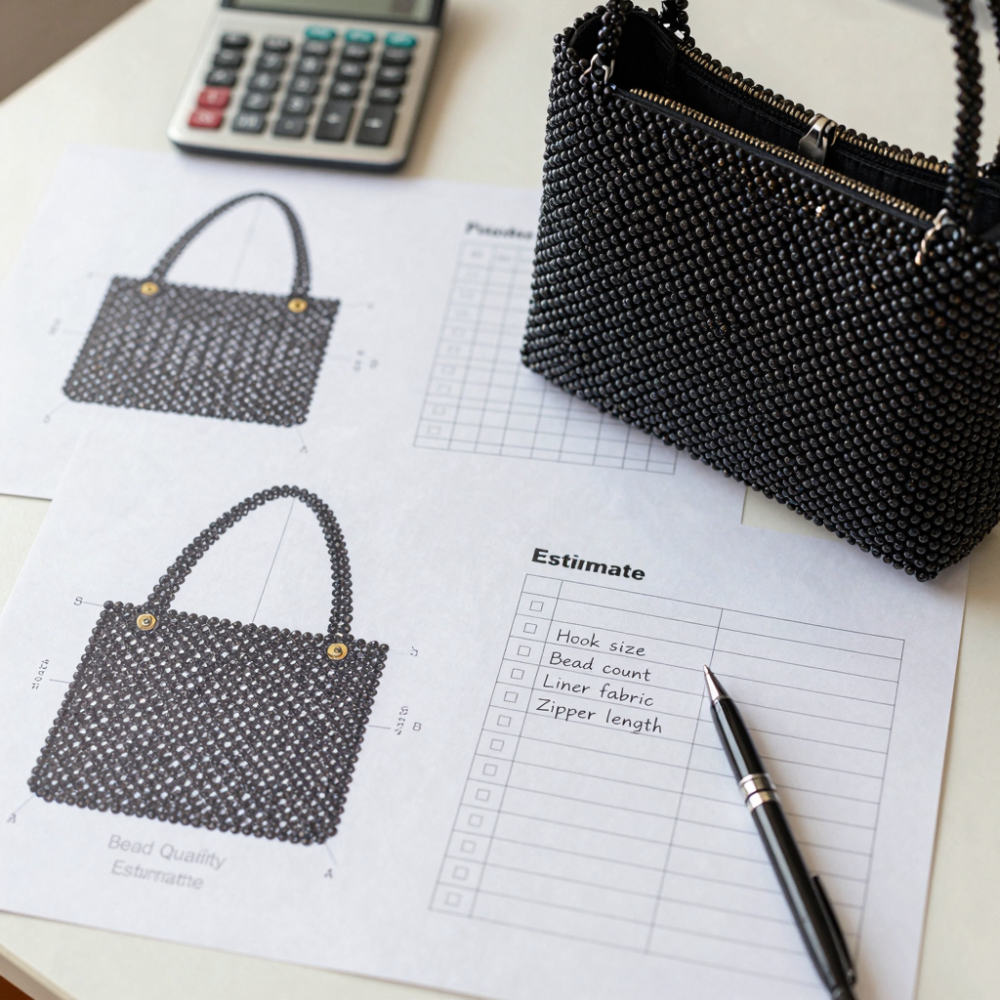
This is where I save myself from running out of supplies halfway through.
Estimate thread + beads
Bead quantity depends on:
- purse size
- bead spacing repeat
- how many rounds/sections use beads
Some patterns include approximate quantities for full-size bags (and suggest smaller amounts for smaller items). If you’re not using the exact same materials, use those estimates as a starting point.
Pre-sort beads (optional but helpful)
If I’m using lots of small beads, I pre-sort them into a tray or organizer. It makes insertion faster and reduces accidental bead drops.
Make-ready checklist before you start
I like to confirm:
- I have enough thread for the full body (plus finishing ends and liner prep)
- My bead size matches my thread and hook
- I have stitch markers for repeat tracking
- I have any hardware planned (zipper/frame/strap)
Final checklist after you finish
Before I celebrate, I quickly verify:
- beads are attached in every required spot
- bag height matches the pattern
- edges are stable and not stretched out of shape
- liner and closure (if planned) are attached securely
- straps/handles are firmly stitched or mounted
Tips
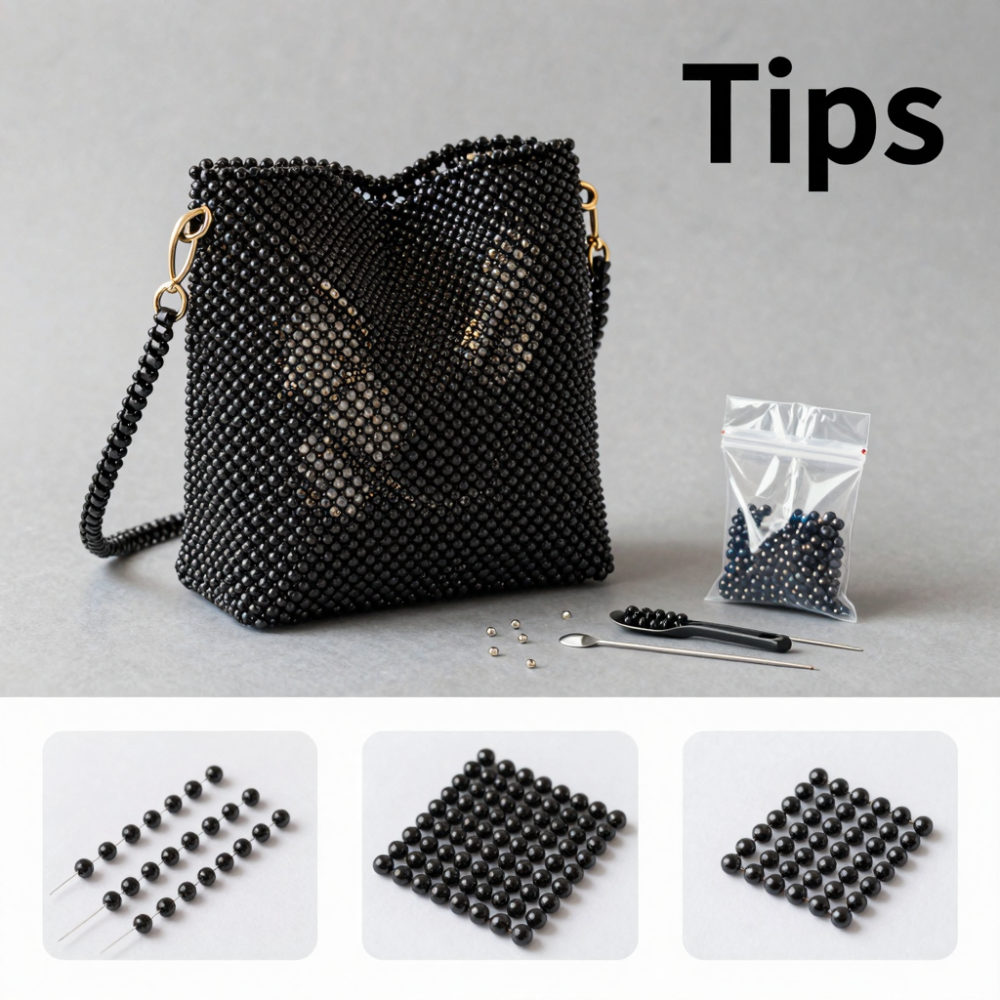
- Work in comfortable “bead moments”: insert beads in small bursts rather than trying to thread a bead far ahead.
- Keep a consistent hook grip: tension changes affect bead placement more than you’d think.
- Use stitch markers for repeat points: if your repeat is every 4 stitches, mark that rhythm early.
- Do a small test swatch first: one short round with beads will tell you if your beads sit right.
- Consider a lining early in your planning: it affects how stiff or flexible your bag needs to be.
FAQ
Can I crochet a beaded bag if I’m a beginner?
Yes. The biggest key is choosing a pattern that teaches bead insertion clearly and uses a simple repeat. Start with an accent-bead design or a small purse so you can learn without feeling overwhelmed.
What’s the easiest bead insertion method for crochet?
The most common beginner-friendly approach is the repeat rhythm:
- crochet several stitches
- thread a bead onto your yarn
- crochet the next stitch to pull the bead into place
Then repeat around the round.
What size beads should I use?
Match bead size to your thread and hook. If beads are too large, they’ll distort stitches. If they’re too small, they may slide or fail to sit neatly. The best method is to test one bead with your thread before starting the full bag.
Do I need a liner?
Not always, especially for very small pouches. But for most purses, I strongly recommend a liner for durability, comfort, and snag protection—especially when beads are used on the outer surface.
Is there a lot of sewing involved?
Often, it’s minimal. Many beaded crochet bags are assembled with one or a few hand-stitched seams (like joining the bottom). More complex builds (like some frames) may require additional attachment work, but it’s still usually straightforward.
Can I use beads as decoration only (not full beadwork)?
Absolutely. Accent beads are a great way to start. You can add sparkle at regular intervals while keeping the base crocheted fabric lighter and faster to make.
Conclusion
Crochet bags and purses with beads are one of those crafts that feel magical—and they’re also totally doable if you follow a clear bead insertion rhythm. I start by choosing a purse style and closure that matches my comfort level, then I make sure my thread, hook, and beads all work together. From there, I crochet the shape while adding beads at the exact stitch moments, checking alignment and tension as I go. When I finish, I upgrade the bag with a liner and closure (if the design calls for it), and I keep assembly simple—often just a neat hand-stitched seam. If you try one test row first and then commit to the repeat pattern, you’ll be surprised how quickly your sparkly bag comes together. Now pick your style, gather your supplies, and make something beautiful you’ll actually carry.

Sarah Anderson . J
I’m the mom behind Wise Mom Blogger, where everyday creativity meets real-life motherhood. I share easy DIY crafts, cozy knitting and crochet projects, beginner-friendly sewing ideas, and family-tested recipes—plus quick baking hacks that make homemade feel doable on busy days.